

Part IV will extend OPM research to new avenues not often addressed in the field of project management, but which are relevant to increase research quality and elevate the level of OPM research, leading to novel insights.
The first chapter of Part IV by Øyvind Kvalnes is “Ethics in Projects” and aims to help managers to make responsible decisions after weighing the ethical dimensions of a situation and balancing them with the economic, reputational, and legal dimensions. It also helps managers to understand when moral wrongdoing can occur while making decisions and how these can be avoided through honest communication.
Karyne Ang and Christopher Biesenthal take up the importance of value creation at multiple levels in organizations to meet stakeholder expectations in Chapter 20, “Multilevel Value Creation in Projects, Programs, and Portfolios: Results from Two Case Studies.” They propose a multilevel, multidimensional perspective of value in organizations. They conclude that value creation and management within OPM is an iterative process in which the final values evolve during the course of managing portfolios, programs, and projects.
Kaye Remington addresses the question of how projects, which are discrete units of delivery with predetermined constraints, can operate in an organizational world that is dynamic and emergent in Chapter 21, “An Inherent Complexity: Projects and Organizations.” The chapter presents two case studies showing how extremely challenging projects can be when delivered in volatile contexts, demonstrating how program and project leaders can manage contradictions and inconsistencies in an OPM environment.
Lynn Keeys and Martina Huemann address how OPM can function in the emerging paradigm of sustainable development, where projects are expected to be delivered in harmony with the natural environment, addressing societal concerns for current and future generations. In Chapter 22, “Organizational Project Management and Sustainable Development (SD): Managing the Interface of Organization and Project SD Benefits,” they suggest that the goals of OPM and sustainable development should be aligned and mutually reinforcing to enhance value creation.
Rodney Turner and Laurene Lecoeuvre, in Chapter 23 on “The Marketing of Organizational Project Management,” discuss the roles that the investor, project organization, and contractor play to market project-related products and services. The authors show the importance of stakeholders in marketing and how marketing not only precedes a project but is an essential activity to be carried out throughout the project life cycle.
Kim van Oorschot discusses the notion of “Shared Space for Organizations: Enablers for Innovative Projects” in Chapter 24, using dynamic strategies and project portfolios that can help to break down traditional learning silos in organizations. She borrows the notion of “shared space” from urban design to suggest how enablers for OPM help to break down silos and increase communication within and across project teams, fostering the flow of knowledge and resulting in increased creativity and innovation.
Helene Delerue and Tom Cronje, in Chapter 25, titled “Social Media and Project Management: Symbolism in Action,” argue that while social media can make a significant contribution to projects, its power is underutilized. Social media can create a symbolic universe in which symbolic objectives could be achieved through symbolic actions. They illustrate the power of social media in a case study featuring a large telecommunications firm.
While Part IV does not cover all new directions that will contribute to OPM, it provides a snapshot of some aspects of OPM that may become important in the near future.
Introduction
There is a growing awareness that organizations need to be prepared for ethical challenges in the management of both single projects and in multiproject management activities. Interaction with a variety of stakeholders with competing agendas, goals, interests, and preferences invariably create ethical tensions that call for responsible resolutions. Pressure to deliver products and solutions on time, and with specific qualities, can generate temptations to take ethically dubious shortcuts. The emission cheating scandal in Volkswagen in 2015 is an example where such pressure led to serious misbehavior from engineers, who were told to create a motor that satisfied strict emission criteria, with failure to do so not being an option. When it became apparent that the criteria could not be met within the scope offered by available technology, it seems that a destructive creativity set in, leading to grave misconduct. In the aftermath of such dramatic events in organizational settings, ethical considerations come to the forefront. Organizations face even stricter compliance demands from authorities and are obliged to produce revised and more precise codes of conduct and ethical guidelines, and to put project managers and employees through ethical training sessions. Organizations can also seek to go beyond compliance and establish governance structures that provide relevant support to the decision-makers when they face circumstances where moral considerations are in tension with economical and strategic goals.
This chapter identifies three knowledge bases for ethical decision-making in organizational project management. Project managers and other decision-makers can build a foundation for responsible judgments and decisions on knowledge about (1) ethical principles and theories, (2) moral psychology, and (3) ethical communication climate. From (1) they can adopt tools to analyze ethically challenging situations, while (2) explains how both character and circumstance dimensions affect conduct, and also how processes of moral neutralization can remove initial moral dissonance experienced by decision-makers, and (3) brings attention to how organizations can encourage individuals to voice their moral convictions and concerns in constructive ways. This chapter explores the three knowledge bases and their contributions to sound ethical decision-making in organizations.
Ethical principles and tools
Ethics can be defined as a systematic approach to issues regarding what is morally right and wrong, permissible, obligatory, and forbidden in human interaction (Kvalnes, Reference Kvalnes2015, p. 11). In an organizational project context, ethics offers conceptual tools and principles with which to analyze concrete situations where the interests of stakeholders may conflict, and the decision-maker needs to prioritize between competing moral considerations. Originally, ethics and morals are the Greek and Latin concepts for what is acceptable and required human behavior, but in recent literature and common language use, they have gradually come to signify different phenomena. Morals are seen as the personal and common beliefs about right and wrong, adopted through upbringing and social interaction (Goodpaster, Reference Goodpaster, Becker and Becker1992, p. 111; Buchholz and Rosenthal, Reference Buchholz and Rosenthal1998, p. 4); ethics is defined as the discipline of systematic thinking about right and wrong, providing language and concepts for analyzing the moral dimensions of a situation that calls for a decision.
Decisions about right and wrong in organizational project settings can be based on moral intuition and gut feeling, or on ethical analysis. This distinction mirrors the one Kahneman (Reference Kahneman2011) draws between fast and slow thinking, or system 1 and system 2 decision-making. As in the more general perspective, decision-makers need to find a balance between quick and intuitive responses, and more thoughtful and analytic responses to challenging situations. Moral intuitions can be flawed and misguided, and may stand in need of being corrected through a more reflective approach, but that activity can be impracticable in that it can significantly slow down the decision process. Finding a reasonable balance between morals and ethics in projects is required in order to establish a foundation for responsible decision-making.
Some of the most common ethical issues experienced in projects fall into three categories (Müller et al., Reference Müller, Andersen, Kvalnes, Shao, Sankaran, Turner and Gudergan2013, pp. 35–36). Transparency issues occur in connection with decisions about the extent to which one should share information and report about project performance issues. A decision-maker may fear that openness can lead to project termination or other dramatic consequences and believe that current schedule problems can be best handled internally, without interference from concerned stakeholders. Relationship issues emerge both internally between colleagues and team members and also in the interaction with suppliers, customers, and authorities. Closeness to other stakeholders may raise the risk of creating real and apparent bribery and corruption instances. Optimization issues arise from questions such as: whether to optimize projects in line with company or project manager’s interests, or in line with current quality standards or others that are within reach. The three categories do not cover all ethical issues in projects, but can serve to identify and distinguish between the most relevant ones.
In encountering ethical issues, a decision-maker can engage in fast and intuitive responses, or slow and analytic ones. For the latter, the discipline of ethics offers principles, concepts, and questions that can guide the process. Within ethics, we can follow Müller et al. (Reference Müller, Andersen, Kvalnes, Shao, Sankaran, Turner and Gudergan2013) and distinguish between three orientations, emphasizing process, outcome, and character, respectively.
Process orientation in ethics builds on the moral philosophy of Immanuel Kant and introduces rules, maxims, norms, and principles to govern conduct (Kant, Reference Kant and Gregor1998). Common labels for this orientation is deontology and duty ethics. It identifies particular moral obligations that individuals and organizations have toward each other, and that are more or less negotiable. Kant sought to establish absolute moral duties and principles to govern conduct, while Ross (Reference Ross and Stratton-Lake1930) introduced a concept of prima facie duties to the process-oriented tradition. These are always contingent upon aspects of the situations and never absolute. Their importance and relevance can differ with the circumstances, although they do express a concern about the quality of one’s decision and behavior, a process concern.
Outcome orientation in ethics is also called consequentialism or utilitarianism, and is founded on eighteenth- and nineteenth-century philosophical contributions from Jeremy Bentham (Reference Bentham1970) and John Stuart Mill (Reference Mill2002). It defines right conduct in terms of the alternative likely to produce the best outcome overall for all stakeholders and applies cost-benefit analysis on behalf of the community of all stakeholders. The decision-maker should prioritize and act with an aim to maximize the common good. In a project management setting, this means to give equal weight to the interests and preferences of all stakeholders, and identify the alternative most likely to produce the best overall satisfaction of these.
The process and outcome orientations are in conflict in situations where the best overall outcome for all stakeholders depends on the violation of some moral norm or requirement held high from a process perspective. The outcome-oriented decision-maker will typically be willing to sacrifice the interest of a minority, in order to serve the interest of a majority. Process orientation, on the other hand, offers moral protection to individuals and groups. Each has human dignity and the right to respectful treatment, according to this tradition of thought. Applied to transparency issues, the process view will be that honesty and truthfulness should be the guiding norm for decisions, even in situations where the optimal outcome from a common good perspective is more likely to occur if the decision-maker hides information from particular stakeholders. A process view on bribery is to deem it morally unacceptable, even in situations where a small bribe in a country where such acts are commonplace is what appears to promote the common good. In a range of circumstances, the recurring pattern is that process orientation holds the principled and respectful quality of one’s conduct to be more important than what results from it, while it is the opposite with outcome orientation. The former ethical orientation rejects the idea that the common good end justifies the means, and the latter embraces it.
Character orientation is the third ethical alternative, and focuses on moral virtues like honesty, integrity, and courage, and how we can develop and nurture them. It stems from classical virtue ethics, as developed in antiquity by Plato (Reference Plato, Ferrari and Griffith2000) and Aristotle (Reference Aristotle and Apostle1984). Their ethical theories guide action to a lesser degree than deontology and utilitarianism, in that they focus on how individuals can develop a stable disposition to do the right and appropriate thing under given circumstances. Virtue ethics addresses questions of right and wrong in particular contexts indirectly, by first asking what constitutes a person of moral virtue, and then inquiring about what that person would do in those contexts. In recent decades, empirically oriented research contributions in moral and social psychology have raised doubt about the viability of the character orientation, highlighting how circumstances can be more predictive of conduct than features of the decision-maker’s character. That research development is particularly relevant for the establishment of an ethics platform for organizational projects, and will be explored in further detail in the next section.
Both process and outcome orientations value consistency in decision-making. They accept the traditional ethical principle of the Golden Mean: Do unto others what you want them to do to you, although interpretations and guidance from that principle can be markedly different with the two orientations. Kant’s consistency formulation of the categorical imperative claims that you should act only according to the maxim by which you can at the same time will that it should become a universal law (Kant, Reference Kant and Gregor1998, p. 422). The idea that our decisions and acts are morally right only to the extent that we can accept that they become the norm for all others who face similar situations also resonates with an outcome-oriented or utilitarian perspective. It is in the concrete interpretation and application of the principle that they will diverge, most notably in the evaluation of respect and openness. The requirement of consistency is nevertheless a common platform, and one that is at the core of an ancient ethical principle commonly named the principle of equality (Kvalnes, Reference Kvalnes2015, p. 33; Kvalnes and Overenget, Reference Kvalnes and Overenget2012, p. 66):
Equal cases should be treated equally. A difference in treatment requires that there is a morally relevant difference between the two cases.
Equipped with this principle, a decision-maker can analyze concrete situations with the aim of reaching a conclusion about what to do. It is a formal principle, neutral with regard to what actually counts as a morally relevant difference. “That would be lying” is considered a sufficient reason for not going ahead with an option in the process tradition, while “that would lead to a better overall state of affairs” would count as an argument for being untruthful in the outcome tradition.
The principle of equality encourages a clarification of where to draw the line between gifts and bribes, white and black lies, proper and improper advantages given to other stakeholders, and so on. From the outset, we can treat all cases where one person receives something from another as an acceptable transaction. Then we know that some of these instances are unacceptable, in that the giver attempts to affect a particular process in his or her favor, at the expense of other stakeholders who have an equally strong case for getting priority. The principle of equality demands a concise demarcation line, and helps us to identify exactly what we need to know in order to determine whether we should say “yes” or “no” to the object on offer. If we are the givers of the object, is it appropriate and right to offer an object of this kind to that person or organization, at this point in time?
Ethics is one significant dimension of decision-making in organizations and projects, but it should not be treated in isolation. One decision-making tool that aims to place ethics in context is the Navigation Wheel (Kvalnes and Øverenget, Reference Kvalnes and Overenget2012; Kvalnes, Reference Kvalnes2015).

Figure 19.1. The Navigation Wheel
The main point of the Navigation Wheel is to serve as a reminder of six potentially important dimensions of a situation. It does not provide a ranking of these dimensions, and so leaves it open which of them should have priority under circumstances where the answer to one of the questions is yes, and to another is no.
The set of questions presented in the Navigation Wheel belongs to a family of such analytic sets, from the simple ones such as Blanchard and Peale’s (Reference Blanchard and Peale1988): “Is it legal, is it fair, can I defend it?,” or Rion’s (Reference Rion1990) “Why is this bothering me? – Who else matters? – Is it my problem? – What is the ethical concern? – What do others think? – Am I being true to myself?” More complex approaches are the 8‐step list of Laczniak and Murphy (Reference Laczniak and Murphy1985), the 12‐step list of Nash (Reference Nash and Andrews1989), and the 10-step list from the Markkula Center of Applied Ethics (2015).
Leaders and employees in organizations and projects can practice applying ethical principles to concrete cases that are likely to occur in their professional work. Ethical training provides an opportunity for participants to think through ethical challenges and to consider what are good and bad justifications in such situations. To make the ethical training realistic, the participants can engage in role-play, where they have to reach a conclusion and defend it in the face of opposition from other stakeholders (Brown, Reference Brown1994). The activity can prepare the participants for tough decisions that they are likely to face in real situations at work.
Ethical theory provides conceptual resources to analyze moral dilemmas, that is, situations that require a choice between two options that in some sense are or seem to be equally undesirable or unsatisfactory (Kvalnes, Reference Kvalnes2015 p. 12). The decision-maker has to give priority to one moral value over another. Moral dilemmas “arise when, faced with a difficult situation (e.g., fair treatment for some versus job security for others), two or more such values conflict in the perception of a decision maker, or when one is assessing another’s moral choice” (Maclagan, Reference Maclagan2003, p. 22). The person who is facing a dilemma must decide with moral duty to prioritize, and “whichever action is taken it will offend an important moral value” (ibid., p. 23).
A different kind of challenge is one where the decision-maker clearly perceives and knows what the right course of action will be, but is tempted or ordered to do something else. It would be misleading to call these situations moral dilemmas, since they consist of a choice between right and wrong. As such, we can name them false dilemmas (Kvalnes, Reference Kvalnes2015, p. 15). They do not pose a test of the decision-maker’s ability to reason well and identify the proper way to prioritize between moral values. Instead, they challenge the decision-maker’s character or ability to do the morally right thing, even under pressure to act wrongly. The knowledge base for understanding human responses to situations of that kind is moral psychology, which is the topic of the next section.
Moral Psychology
One common approach to misconduct in organizations and projects has been to see it as result of the bad character of the decision-makers. This character orientation stems from the virtue ethics tradition in moral philosophy. It explains wrongdoing in projects in terms of bad or weak character. The wrongdoers have typically found themselves in a position where it has been possible to give priority to their self-interest ahead of some ethically important consideration, like honesty, respect, or loyalty. Their wrongdoing is interpreted as evidence of a weakness of character, a failure to do the right thing in ethically challenging circumstances. A person of virtue may in a similar situation experience the temptation to give in to self-interest and sacrifice some moral consideration, but has the moral strength not to do so. The virtuous person has a stable disposition to withstand temptation and respond adequately to the situation at hand. According to this character approach, then, the most effective way to avoid wrongdoing in projects is to give responsibility to people of strong character, and to limit the scope of action for individuals with weak character. In practical settings, it may be difficult to distinguish between people of good and bad character, but that should nevertheless be the main target in organizations that seek to avoid moral wrongdoing and scandal, according to the character approach.
Authenticity has become a central and unifying concept for a range of contributions that seek to find adequate responses to wrongdoing in organizations. Researchers and practitioners have identified authentic leadership as a significant component in organizational settings (Gardner et al., Reference Gardner, Cogliser, Davis and Dickens2011; Hannah et al., Reference Hannah, Lester, Vogelsang, Gardner, Avolio and Walumbwa2005; Hannah et al., Reference Hannah, Avolio and Walumbwa2011; Walumbwa et al., Reference Walumbwa, Avolio, Gardner, Wernsing and Peterson2008; Kiel, Reference Kiel2015). An authentic leader is a person with a particularly strong disposition to do the right thing, and not give in to external pressure or to temptation to prioritize short-term self-interest. We can expect responsible and sound decisions on behalf of the project and the organization from someone who is strongly committed to live and act in accordance with a set of common and shared values. Again, it seems that the rightness or wrongness of the decisions taken within the organizations or project depends on the strength or weakness of character found in the decision-makers.
The character orientation has gained support in the aftermath of ethical scandals in organizations, leading to calls for authentic leadership, but experimental research in social and moral psychology provides reasons to be skeptical of it. One classical experiment set out to test the helpfulness of theology students who had prepared a brief talk about the Good Samaritan story from the Bible (Darley and Batson, Reference Darley and Batson1973). They were individually asked to walk from one part of campus to another, to give their talk about the Good Samaritan. On their way to that location, they all encountered a person in pain, needing help. The researchers wanted to test whether it made a difference to the students’ responses to this situation that they felt they had to hurry to their assigned location, or not. One-third of the students were told that they needed to go fast in order to be at the location on time, one-third was told that they would get there on time if they moved now, and one-third was instructed that they had plenty of time to get there. The researchers’ assumption was that if character is the main driver of behavior, the difference in time frames should not make a significant difference to the helping behavior of the students. Character orientation, then, would predict that there would be little difference between the students in the three groups. The outcome of the experiment, however, was that 10% of the students in the first group, 45% of the students in the second group, and 63% of the students in the third group offered to help the person in pain. There were considerable differences between the groups, then, and the results provided reasons to reconsider the character orientation.
Since the Good Samaritan experiment, researchers have designed a range of similar experiments to explore further the balance in predictive power of character and circumstances (Alderman, Reference Alderman1972; Isen, Reference Isen and Berkowitz1987; Baron, Reference Baron1997; Mazar et al., Reference Mazar, Amir and Ariely2008; Ariely, Reference Ariely2012). The conclusion from this research tradition is that the degree to which people tend to be honest, helpful, and loyal in given situations, depends more upon circumstances than on character (Doris, Reference Doris2002). The assumption that we can distinguish sharply between people who are good or bad, loyal or disloyal, helpful or unhelpful, honest or dishonest has been weakened from exposure to experimental research in moral and social psychology.
The practical implications of the experimental approach found in this research stream, is that character orientation and a call for strong, authentic leadership builds upon a dubious assumption about firmness and stability of character. Circumstances, in the shape of incentives, motivational structures, time restrictions, and other situational dimensions, appear to play a more significant role in affecting decision-making and conduct than virtue ethics acknowledges. Governance structure A can yield different responses to ethical challenges in a project than governance structure B, even if the individual decision-makers are the same. The findings from moral psychology are significant for organizations that have encountered disloyalty and other kinds of wrongdoing in their ranks. The initial, character-oriented response can be that the wrongdoers need to be removed and substituted with people of stronger moral fiber. The circumstance approach, on the other hand, will warn against the solution of kicking some people out and putting new people in, since that leaves intact the structures that created room for wrongdoing in the first place. If circumstances are likely to be the prime drivers of misconduct in projects, then revising them should have precedence over bringing in fresh faces.
Moral psychology is one of three knowledge bases that can serve as a foundation for responsible decision-making in organizational project settings, partly by providing a balanced account of how character and circumstance affect decisions and behavior, and partly by offering explanations of the mental and social processes that can lead to wrongdoing. Studies of wrongdoing in business, academia, sports, and other fields of activity tend to expose a common three-step pattern (Kvalnes, Reference Kvalnes2014; Kvalnes, Reference Kvalnes2015, pp. 77–90):
1. The decision-makers face an option to act against their moral convictions, and they experience moral dissonance, a mismatch between what they think is morally right, and what they are tempted or ordered to do.
2. The decision-makers engage in moral neutralization, an activity where they attempt to convince themselves that the option in question is morally acceptable after all.
3. Once the moral dissonance has been removed through a process of moral neutralization, it opens up for the first act of wrongdoing, and for repetition and a normalization of questionable behavior.
The criminologists Sykes and Matza (Reference Sykes and Matza1957) have provided a theoretical framework for analyzing moral neutralization, a process where the decision-makers seek to overcome initial moral dissonance by finding justifications for going ahead with the dubious option. Ribeaud and Eisner (Reference Ribeaud and Eisner2010) have suggested a broader application of this framework, while Heath (Reference Heath2008) has outlined how it is relevant for understanding unethical conduct in business. The processes identified in the framework involves the use of the neutralization techniques of denying responsibility, injury, and victim, condemning the condemners, and appealing to higher loyalty (Sykes and Matza, Reference Sykes and Matza1957). Donaldson (Reference Donaldson2012) has discussed how the financial institutions’ selling of structured products to their clients in the period leading up to and creating the financial crisis in 2008 followed a pattern of this kind. He explains the process as an example of how “bad practices can become institutionalized, and initial queasiness gives way to industry-wide acceptance” (Donaldson, Reference Donaldson2012, p. 6).
Studies in moral psychology suggest that misconduct in organizations is not so much a result of bad character in the decision-makers, but rather the outcome of circumstances where people have experienced moral dissonance, and have been encouraged or forced to neutralize that initial discomfort. Organizations that are serious about preparing their leaders and employees to behave responsibly in ethically challenging situations, should learn from this research and look for practical ways to counter internal attempts at moral neutralization. It is likely that these situations can occur anywhere, and that a focus on strength of character is not sufficient to avoid a gradual weakening of the resistance toward wrongdoing. Instead, the emphasis could be placed on how one can voice moral concerns and provide critical feedback to neutralization attempts from one’s own colleagues and leaders. The extent to which people are encouraged to express their moral convictions at work will have a major impact on the kinds of activities and behaviors that occur in the organization. The third and final knowledge base of ethics in organizational project settings addresses this issue.
Ethical Communication Climate
A crucial period in a project’s history can be one where things are not going according to plan, and there is a suggestion on the table to save time and resources and bring the project back on track by taking a morally dubious shortcut. The task may be to create a product that satisfied some specific low pollution criteria, and multiple attempts to do so have been unsuccessful. The specific and uncompromising order from top management is that failure is not an option. In response, a group of project workers may explore the possibility of making adjustments that will make it look as if the product meets the criteria, even though in reality it does not. It is technically possible to implement such a solution, but the option creates moral dissonance among the project members, as they would have to act against their moral convictions in order to implement it. Under these circumstances, there may be attempts to engage in moral neutralization, in order to make the initial dissonance go away. Whether those attempts succeed or not, depends on the communication climate in the project, and the extent to which people are able to voice their concerns and challenge the neutralization strategies.
Organizations that take ethics seriously need to establish a communication climate where the normal response for an employee who has moral misgivings about a proposed course of action is for him or her to speak up and address the issue directly. When deciding to voice a moral concern, the employee should ideally not experience fear over what comes next in terms of possible negative sanctions from colleagues and the leadership. Moral muteness (Bird, Reference Bird1996; Bird and Waters, Reference Bird and Waters1989) occurs when people are reluctant to speak their minds in moral matters. “Many people hold moral convictions yet fail to verbalize them. They remain silent out of deference to the judgments of others, out of fear that their comments will be ignored, or out of uncertainty that what they might have to say is really not that important” (Bird, Reference Bird1996, p. 1). Confronting a leader or colleague who is employing neutralization techniques to make moral dissonance go away might also not be a smart career move. When an individual takes the risk of speaking up against such neutralization attempts, all eyes will be on that person, and on how it affects his or her career development. Any negative development is likely to be interpreted as a sign that the top management does not appreciate or welcome dissenting voices.
Gentile has developed the concept of Giving Voice to Values (GVV) as a method for individuals at work to stand up for their moral beliefs and values, even when they are under pressure from colleagues, leaders, customers, and other stakeholders not to do so (Gentile Reference Gentile2010). GVV has generated considerable research interest (Cote et al., Reference Cote, Goodstein and Latham2011; Chappell et al., Reference Chappell, Edwards and Webb2013; Edwards and Kirkham, Reference Edwards and Kirkham2014), and inspired practitioners in organizations. It encourages people to overcome moral muteness and speak their minds when they observe decision-making and conduct that goes against their moral values. It also provides concrete action plans and scripts for people who want to become better at giving voice to their values at work. In many ways, GVV seems designed to address the need to intervene when colleagues engage in moral neutralization and gradually become blind to moral aspects of their own behavior.
One weakness in the GVV approach is that it appears to be essentially monological. The subtitle of Gentile’s book is “How to speak your mind when you know what’s right” and the tone of actually knowing what is right is assumed in the discussion. Gentile offers practical advice to individuals who clearly see how things stand, and what it will mean to stand up for one’s values in the situation, and need to go from conviction to enactment. In organizational settings, people can realistically find themselves in situations where they do not know what is right and have doubts about how to interpret what is enfolding in front of them. They somehow need to give voice to that doubt and not remain passive. The starting position of being a person who knows full well what is right and true does not invite dialogue or attention to how other people see the situation. It is not the position of listening to other perspectives and being open to revise one’s beliefs. An alternative perspective can be to give voice to doubt rather than value, since uncertainty and doubt can be a more constructive starting point for conversations about right and wrong than one where you have made up your mind in advance. One frame of reference can be that of Socratic dialogue, where the aim is to engage in inquiry and questioning in order to reach consensus on an issue. The philosophers Nelson (Reference Nelson1949) and Heckmann (Reference Heckmann1981) have suggested a design inspired by the idea of Socratic dialogue, where search for truth in answer to a particular question is undertaken together. Brinkmann (Reference Brinkmann, Ims and Pedersen2015) proposes a similar approach as a catalyst in conversations about right and wrong in organizations. In essence, the Socratic design invites respect for the myriad perspectives that deserve a hearing when we try to reach a common understanding in a particular situation. Even in situations where there appears to be a need to challenge moral neutralization, the initiator would be well advised to remain open to the possibility that he or she has misunderstood the situation or failed to grasp important aspects of it.
This chapter has identified three knowledge bases for ethical decision-making in organizational project management. Responsible judgments and decisions can build on knowledge about (1) ethical principles and theories, and the three main orientations of process, outcome, and character. The process orientation emphasizes the quality of the decision-making in terms of treating stakeholders with respect and human dignity. With a foundation in Kant’s moral philosophy, it centers on the moral duty never to treat other people as mere means, but always also as ends in themselves. An outcome-oriented ethics, on the other hand, opens up for putting that moral duty of respect aside, if it can serve to promote the common good more effectively. In project settings, the dissonance between these two normative perspectives occurs when the best overall outcome can only be realized by temporarily compromising moral duties to be honest and respectful toward others. The character orientation does not offer any solution to the tension between the other two orientations, but draws attention to how stable and steadfast dispositions to follow particular moral principles can be valuable. An organization can put their leaders, managers, and employees through ethical training and make them familiar with these ethical orientations and their links to everyday practices in projects. This activity can provide the practitioners with a language in which to analyze, discuss, and justify their decisions.
Abilities to provide ethical analysis need to be combined with (2) knowledge concerning moral psychology, partly in the sense of creating awareness of the limitations of the character orientation, and how circumstances affect decision-making and human behavior, and partly in exposing the processes that can go from moral dissonance, through moral neutralization, to a normalization of questionable behavior. Leaders and employees who have been through ethical training may nevertheless be vulnerable to incentives to meet project goals by engaging in some form of moral wrongdoing.
It is in this context that (3) knowledge about the ethical communication climate can make a difference to how processes develop in a project, and the extent to which neutralization attempts are challenged or encouraged. It is in concrete situations where morally dubious alternatives are on the table that the organization and project management are put to the test regarding the three knowledge bases of ethics. All three can contribute to a systematic analysis of the situation at hand and to awareness regarding the responses of moral misgivings and dissonance that can either remain and cause a rejection of the alternatives, or disappear through intricate processes of moral neutralization.
Summary:
The main recommendation from this chapter is that decision-makers in organizational project management settings should turn to (1) ethical principles and theories, (2) moral psychology, and (3) theories about voice and ethical communication climate in order to prepare for ethical dilemmas and challenges at work. These three knowledge bases can serve as a foundation for responsible decision-making and behavior in organizational projects. All three are important, since decision-makers well trained in ethical analysis may still become involved in wrongdoing, due to factors explained in the domain of moral psychology, and the people who are active in projects need to experience that it is normal to voice one’s moral concerns at work if they are to do it themselves.
Introduction
The management of value is an increasingly important process to meet stakeholder expectations on multiple organizational levels. Existing project management research focuses primarily on a single-dimensional perspective of value creation, such that value is either addressed from an organizational or project perspective. From a project portfolio management (PPM) perspective, a key goal is to maximize strategic value across the portfolio to ensure its alignment with organizational strategies. Therefore, seeing the multilevel nature of organizations dealing with multiple projects, programs, and portfolios is to achieve its strategic intent, the single-dimensional approach through typical project management approaches often fails to capture the complexity of value management in a strategic organizational environment. The multiplicity of influences and value expectations of different stakeholders may potentially lead to complex decision conflicts, dilemmas, compromises, and inconsistencies in project, program, and portfolio decisions.
This chapter introduces value as a multilevel, multidimensional concept and explores the mechanisms for dealing with value interdependencies across different organizational levels and stakeholder groups, whose expectations of value are often contradicting. It discusses the dimensions of values (i.e., short-term and long-term strategic value, tangible and intangible) occurring at the micro-, meso- and macrolevels, represented by the project, program, and portfolio levels. It presents two case studies of organizations in two different contexts – the public and private sectors, to demonstrate how value is cocreated across these distinct, yet interconnected, organizational layers. The authors argue that project, program, and portfolio value management in organizations is a reciprocal and interdependent process in which macrolevel values (portfolios) shape and are shaped by the values at the meso- (program) and micro- (project) levels. As such, value management within organizational project management (OPM) becomes an iterative process that includes a sensemaking approach, in which the final values for different stakeholders emerge and evolve during the course of the project, program, and portfolio.
Value creation is the ultimate goal of any project in an organizational setting and therefore the keystone that brings together the different topic areas discussed in this book. In particular, determining what value means for any stakeholder across the different organizational levels should be part of the strategizing process. It is ultimately the stakeholders that determine what value means, when value is created, and how organizations create value for themselves and for other stakeholders across the different organizational levels using an iterative process. As such, value is an important concept that requires further attention and a vital new direction in OPM.
A Multilevel Perspective
The project management literature largely investigates organizational phenomena using a single level of analysis (e.g., individual, team, business unit, organization). While this is appropriate for many inquiries, we argue that when investigating organizational value and value creation, a multilevel perspective is imperative to capture the full complexity of underlying practices and interdependencies. A multilevel perspective further helps us develop a more contextual and holistic picture of organizational value creation, which accounts for different agendas, objectives, and practices (Sydow, Lindkvist, & DeFillippi, Reference Sydow, Lindkvist and DeFillippi2004; Windeler & Sydow, Reference Windeler and Sydow2001).
In most organizations, multiple levels coexist, such as the project (micro), program (meso), and portfolio (macro) levels. Despite their different functions, the levels have a certain degree of interdependence (Brady & Davies, Reference Brady and Davies2004; Keegan & Turner, Reference Keegan and Turner2002; Larson, Reference Larson, Morris and Pinto2004). Project-to-portfolio interdependencies are increasingly acknowledged and understood as important (Collyer & Warren, Reference Collyer and Warren2009; Dahlgren & Söderlund, Reference Dahlgren and Söderlund2010; Elonen & Artto, Reference Elonen and Artto2003; Rungi, Reference Rungi2010; Stummer & Heidenberger, Reference Stummer and Heidenberger2003). These interdependencies, particularly across projects, might include resource interdependencies (where scarce resources are shared by more than one project), outcome dependencies (the outcomes from another project is needed), market or benefit interdependencies (complementary or competitive effects), knowledge dependencies (capabilities and knowledge gained through another project need to be incorporated in the subsequent projects), and financial dependencies (Blau, Pekny, Varma, & Bunch, Reference Blau, Pekny, Varma and Bunch2004; Eilat, Golany, & Shtub, Reference Eilat, Golany and Shtub2006; Verma & Sinha, Reference Verma and Sinha2002). An area that that is seldom explored in the literature is the value dependencies in OPM across different organizational levels. An exploration of value concepts from the literature provides us with a launching point in understanding what value dependencies might mean for OPM.
Concepts of Value
Value concepts are well recognized and applied in various disciplines including project management (e.g., Kelly & Male, Reference Kelly and Male1988; Prasad, Reference Prasad1997; Thiry, Reference Thiry2002), marketing management (Bradley, Reference Bradley1995; Prahalad & Ramaswamy, Reference Prahalad and Ramaswamy2004; Ulaga & Chacour, Reference Ulaga and Chacour2001), portfolio and corporate inventory management (Maizlish & Handler, Reference Maizlish and Handler2010; Michalski, Reference Michalski2008), investment management (which is different from PPM) (Irani, Reference Irani2002), intellectual capital (Petrash, Reference Petrash1996), and strategic management (Kaplan & Norton, Reference Kaplan and Norton2001; Male, Kelly, Gronqvist, & Graham, Reference Male, Kelly, Gronqvist and Graham2007; Moore, Reference Moore1995; Stoker, Reference Stoker2006). These disciplinary studies are focused on devising a systematic process for improving productivity through value engineering and by focusing on economic and customer value in order to gain competitive advantage (Kelly & Male, Reference Kelly and Male1988).
As a strategic planning process where projects are linked to business strategy, Winter and Szczepanek (Reference Winter and Szczepanek2008) studied the various foci of value at three different levels of a business; namely, at the strategic group level (shareholder value); business unit, program or portfolio level (provision of customer service, unit sales, and profits); and project levels (improving service and quality). They argue for the move away from both the traditional product-centric view (e.g., capital assets, systems, or facility) and the “traditional project management triangle” of specifications, cost, and time to a value-centric perspective (e.g., business strategy, organizational effectiveness, and stakeholder benefit realization) (Winter & Szczepanek, Reference Winter and Szczepanek2008, pp. 97–98). They also imply a representational shift from singular to multidisciplinary projects and emphasize the importance of considering multiple perspectives in project management. The move from a product- or goods-centric view to a service-orientated view is also posed by Vargo and Lusch (Reference Vargo and Lusch2008), who apply a service-dominant logic perspective in the marketing discipline to argue that value rather than products, and networks rather than dyads, could shift the way services, processes, and intangibles are viewed. The case for a value-centric perspective in organizations is equally important for OPM and PPM, where a strategic perspective of OPM needs to be orientated around encapsulating the multiple perspectives and expectations of different stakeholders. It implies the need to engage with multiple stakeholders in a relevant and useful way to ensure that value is identified, managed, and optimized. Male et al. (Reference Male, Kelly, Gronqvist and Graham2007) posit that value can be managed following a process-driven, structured, consultative inquiry methodology. The discussions highlight the necessity for a participatory, multidisciplinary representative group of people working together to establish and improve value in the products, services, projects, programs, administrative processes, organizations, and systems.
Dimensions beyond Direct Financial Value
The value generated by projects has long been understood to be more than just the direct financial value. Thiry (Reference Thiry2004) states that there is a need to differentiate between direct and indirect values: “Direct values are financial impacts directly related to the choice of the alternative. Indirect values are elements valued by stakeholders, and especially decision makers that have may have an economic outcome beyond direct economic value” (p. 247). With regard to indirect value, when decision makers take into account value beyond economic value, they need to make trade-offs between various elements of value (Thiry, Reference Thiry2004).
Contemporary researchers are actively working on extending the understanding of value for project portfolio environments (Killen, du Plessis, & Young, Reference Killen, du Plessis and Young2012; Kopmann, Kock, Killen, & Gemuenden, Reference Kopmann, Kock, Killen and Gemuenden2015; Martinsuo & Killen, Reference Martinsuo and Killen2014). Conceptual and developing projects making their way through the portfolio through a selection and prioritization process need to be considered in terms of the potential value they may generate in their life cycles, even before a project commences. For example, value in a portfolio can come from current and developing projects in the organizational pipeline (Delerue, Drouin, Sicotte, & Petit, Reference Delerue, Drouin, Sicotte and Petit2015), such as the potential relational networks, organizational reputation, knowledge, and learning that could be generated through various projects at various points of the project life cycle, even from incomplete or terminated projects (Ang, Killen & Sankaran, Reference Ang, Killen and Sankaran2015). In the case highlighted by Ang et al. (Reference Ang, Killen and Sankaran2015), the value generated by a project initially perceived as “unsuccessful” was acknowledged as pivotal to future investment decisions for other projects in the organization. Moreover, projects and programs can be interdependent (Archer & Ghasemzadeh, Reference Archer and Ghasemzadeh1999; Rungi, Reference Rungi2010), and some projects lag in time in the way they generate long-term contributions to the portfolio. When multiple stakeholders influence value determination from different directions, value may, in practice, emerge from different levels of an organization; for example, from the bottom up, that is, from the micro (projects) to the meso (program) and macro (portfolio) levels. We therefore define multilevel value interdependencies in OPM as the value of a project (micro), program (meso) or portfolio (macro) that is dependent upon or impacted by value generated from other micro to macro organizational elements including the dynamics of their respective stakeholders.
Value in the Eyes of the Beholder
Value is a complex and subjective phenomenon – managers need to deal with multiple stakeholders who have competing, conflicting and often inconsistent interests and value expectations. Different stakeholders interpret value differently across organizational levels; it is not a fixed entity, but rather varies in the ways it is perceived by each stakeholder, and in how each individual’s value perceptions are translated into practice. This notion is also supported through the idea that organizational contribution can be a subjective construct embedded in the values and preferences of stakeholders (Aubry, Hobbs, & Thuillier, Reference Aubry, Hobbs and Thuillier2007). Since the alignment of stakeholder expectations in terms of value creation is crucial when managing projects, programs, and portfolios in a multilevel environment, stakeholder theory serves as a good starting point to investigate this aspect of organizational life.
Stakeholder theory is based on a socially oriented perspective and argues that an organization should be managed in the best interest of all its stakeholders, including all external and internal stakeholders across different levels (i.e., micro to macro level) (Blair, Reference Blair1996; Jones & Wicks, Reference Jones and Wicks1999). Stakeholders are any “identifiable group or individual who can affect the achievement of an organization’s objectives, or who is affected by the achievement of an organization’s objectives” (Harrison & Freeman, Reference Harrison and Freeman1999, p. 91).
We postulate that value management in organizational project management is a reciprocal and interdependent process in which macrolevel values shape and are shaped by the values at the micro- and mesolevels through the management and engagement of multiple stakeholders.
Stakeholder management is a continuous task of balancing and integrating multiple relationships, conflicting demands, and multiple objectives (Freeman & McVea, Reference Freeman and McVea2001, p. 194) and is particularly important in project portfolio management with its multiple-stakeholder focus (Thiry & Deguire, Reference Thiry and Deguire2007; Winter, Smith, Morris, & Cicmil, Reference Winter, Smith, Morris and Cicmil2006). In consideration of the relational interdependencies from the microproject to the macroportfolio levels of the organization, an organization can thus be viewed as interdependent relationships among primary stakeholders (Chakravarthy, Reference Chakravarthy1986; Clarkson, Reference Clarkson1995; Donaldson & Preston, Reference Donaldson and Preston1995). The mechanisms of stakeholder theory address the diversity of stakeholders and their underlying objectives and find a way to balance the different expectations in an effective way. It is therefore crucial for the managing project team to clearly understand what outcomes the different stakeholders expect from the project so that performance drivers can be put in place (Biesenthal & Wilden, Reference Biesenthal and Wilden2014).
A Case Study Approach in Exploring Real-World Practice
We draw upon two practical and distinct case study examples from a public and private (for-profit) organization in Australia to highlight, compare, and contrast scenarios of interdependencies of values in order to demonstrate how value transcends and works across the different levels in practice with multiple stakeholder groups, whose expectations are often contradictory. In the two cases, in-depth exploratory interviews were conducted with project, program, and portfolio members, and their internal and external stakeholders. Stakeholders are instrumental in the identification and evaluation of project and portfolio value, and are a primary source of information for the study. These included project, program, and portfolio members, decision-makers, and other key stakeholders (including suppliers, senior executives, staff, and consultants). To protect the anonymity of the organizations and participants, references made to specific industries, persons, or roles have been generalized, adapted, or de-identified. The participant roles and codenames can be found in Table 20.1. The data was analyzed to identify themes, patterns, and relationships surrounding dependencies in projects, programs, and portfolios with a particular focus on value and stakeholder relationships at the various levels. The interviews contributed thick descriptions to the multiple case studies and allowed for depth of understanding. To strengthen the face validity and credibility of the research (Patton, Reference Patton2002), the participants’ views and experiences are evidenced through extracts from the raw data (Rice & Ezzy, Reference Rice and Ezzy1999).
Table 20.1 Reference to Organizations, Interviewee Codenames, and Roles
| Organizations and Departments | Interviewee Codenames | Roles |
|---|---|---|
| ASSET | SE1, SE2, SE3, SE4, E5 | Senior executive-Standards, Senior executive-Unit, Executive-Unit |
| ASSET – Maintenance (External Supplier) | PrD, TS, PM | Projects Director (Consultant), Technical Supervisor, Project Manager (Engineer) |
| ASSET – Engine (Agency, Internal Supplier and Customer) | SE6 | Senior executive, Project Manager, Project Recipient (multiple roles) |
| FINANCE | PoD, ELC, HoP1, HoP2 | Portfolio Director, External Lead Consultant, former Head of Program Delivery, Head of Program Delivery, Head of Program Delivery |
Synopses of case study organizations – ASSET and FINANCE
This section commences with synopses of the two case organizations including their approach to managing multiple projects, programs, and portfolios. We discuss the themes found in the cases pertaining to multiple interdependencies from the project (i.e. micro) to the portfolio (i.e. macro) levels of the organization.
ASSET is an independent unit established within a state-owned public organization in Australia. The unit is responsible for providing asset stewardship through developing and updating its standards and industry documentation, developing engineering governance and frameworks that support related industries in delivering assurance in areas of public asset design, delivery, and management across a vast range of projects and complexities. The state’s various public assets are currently valued at A$104 billion. ASSET introduced a new approach in integrating and managing the network of projects, programs and portfolios through a “Whole of Life cycle Management of Assets” (WLMA) framework that encapsulates systems thinking and multiple interdependencies.
The framework is illustrated through a typical gated process that appears sequential but is, in fact, iterative. The stages in the gateway are interdependent and iterative as managers make sense of considerations at the back-end and front-end of the life cycle, for the short- and long term, in order to deliver value across the asset portfolio to the various stakeholders including the public taxpayer. In this framework, projects are no longer commissioned in silos but have to be considered in relation to other projects in the pipeline for the “whole-of-life cycle” for the asset. A significant change initiative incorporating a change of mindset through the adoption of the new framework is currently being driven by ASSET across the various stakeholder organizations involved with the state public asset of focus. Regular engagement programs are held with internal and external stakeholders (for example, with planning units, project delivery teams, maintenance and operations suppliers, engineering service organizations, and designers) to ensure that each stakeholder understands their roles and accountabilities in the whole-of-life cycle of the asset.
To provide several stakeholder perspectives, this case includes a privately owned asset maintenance organization (MAINTENANCE), who is a key outsourced supplier of ASSET, and another independent public agency (ENGINE) of the state-owned public organization, who holds a shifting dual role in the projects and portfolios as both the deliverer and receiver of value depending on their position in the ASSET life cycle at a given time. ENGINE elaborates on this:
Sometimes we play different parts. Part of our link with ASSET, is sometimes we can be the recipient of a project. Someone at the higher level may commission somebody to go and do an improvement project. We’re the receiving party. Other times, we might actually do that work, and then our role becomes different. We become the deliverer of the project rather than the recipient of the project. That ever-changing fluid landscape, as change has constantly happened on the network, it’s constantly switching to “am I deliverer of this, am I a recipient of this?
The various stakeholders have different views about what a project or portfolio entails. MAINTENANCE, for example, uses the term “projects” when referring to streams of work or a series in a program. They also term multiple projects under “program of works” for a mix of projects that also include other peripheral nonproject work. Multiple projects in the organization are managed under a Projects Director.
FINANCE is an Australian financial institution established in the 1800s. The institution provides consumer and business/commercial services in Australia, New Zealand, and several Pacific Island Nations including banking and insurance products for consumer, business, and institutional customers.
The business units of the organization are structured as a hybrid around projects, programs, and portfolios, as well as functional units. The portfolios comprise different programs and, within those programs, there are multiple projects. The IT department functions in a matrix structure and works across the different levels in the organization. Within the organization, stakeholders had slightly different conceptualizations of projects, programs, and portfolios. The terms “projects-programs” and “programs-portfolios” were often used interchangeably.
One of the programs incorporates five portfolios of work in the retail and business banking divisions with a total portfolio value of A$350 million. Meanwhile, another program is identified by size and value as “one huge piece of work or many small pieces of work” valued at around A$20 million. When more than twenty programs valued at over A$20 million need to be managed, it is identified as a portfolio.
Another portfolio investigated in this case study deals with regulatory change for the institution. They fund, manage, and prioritize projects and programs in the organization dealing with regulatory reforms. The portfolio consists of around thirty programs that run for up to five years, with seventy to ninety projects in total. Projects usually have an operational and budgetary timeline of no more than twelve months. The Regulatory Portfolio tends to be managed on a top-down basis due to its links with mandates, legislation, compliance, and stringent financial regulations and policies.
An external lead consultant (ELC) commented:
Even in this organization, there were almost no rules around whether you wanted to call something a project or program. You had projects which were clearly programs, but because of the funding arrangement they were continued to be called a project. Others, because they wanted to make it sound important, they called program, but they were still being funded as a project. We implemented guidelines and rules around “Is it a project, a program, subportfolio, or a portfolio?” Broadly, those rules are accepted and followed.
Findings and Discussion: Mechanism for Dealing with Value Interdependencies
The case studies provided us with fruitful insights into the multidimensional nature of value in OPM and the implicit interdependencies of values. Since this chapter is primarily concerned with the mechanisms for dealing with value interdependencies across different organizational levels and stakeholder groups, we will discuss the main mechanisms that emerged from our cases in the remainder of the chapter.
The focus of governance and optimization at the various organizational levels
Project governance is concerned with the alignment of the project with stakeholders’ needs or objectives, making it a crucial factor to deliver value across different organizational levels.
From the case studies, we found that at the microlevel, individual project successes do not always contribute to the overall success of the program or portfolio. There can be a disconnect between projects, whereby even if a project appears to have been successfully completed, it might not meet the stakeholder’s needs. It is important to define and understand the intended contribution of a project toward the bigger picture, as commented by Senior Executive SE6, ENGINE:
We don’t always define very well what it is that we were setting out to do. You get to the end of the project, and yes, you might have met the standards, ticked the boxes. But, did you actually meet the intent of what you were trying to do? The real intent, we need to have it be properly defined … This party, quite rightly is saying, I did everything you asked me to do. I delivered as per the contract. If they’re very focused on just meeting engineering standards, we can end up with something that doesn’t meet our needs, and we don’t necessarily know what to expect, or we have to compromise, or have additional costs.
The quote exemplifies that stakeholder interests and intentions in projects and portfolios can transcend beyond project deliverables. Expectations that are of value to stakeholders can range from purely financial objectives (e.g., return on investment) over political objectives (e.g., keeping a campaign promise) to purely social objectives (e.g., reputation).
The general view of FINANCE is that deliverables are optimized at the project or microlevel, while the business case is optimized at the program level, and strategic objectives at the portfolio level. In practice, FINANCE executives mentioned that there were times when stakeholders from other divisions external to the various portfolios exerted influential executive power on decisions made about project eligibilities, priorities and selection. This also highlights the importance of being aware of and understanding stakeholder interests and their interrelationships in optimizing value across the micro- and macrolevels. In addition to governance mechanisms, interdependencies are impacted by one’s position of power and influence, particularly in attending to and aligning with key stakeholders that can have an impact on an organization’s performance, strategic value generation, and long-term success (Jones, Reference Jones1995).
Identifying and creating value at different organizational levels requires a good understanding of the expectations, relationships, agendas, and objectives residing on each of the levels, as well as the interdependencies between those organizational levels. Many view the relationship between strategy and projects as a one-way downward process from strategy to projects (Bridges, Reference Bridges1999; Dinsmore, Reference Dinsmore2006; Meskendahl, Reference Meskendahl2010; Turner, Reference Turner1999). Others indicate a two-way interaction whereby organizational and project portfolio activities are said to facilitate the two-way interaction (Burgelman, Reference Burgelman1991; Milosevic & Srivannaboon, Reference Milosevic and Srivannaboon2006). Having a macroview of the organization and its microcomponents or projects is strategically crucial. For example, from a macroperspective, a portfolio manager is able to provide a bird’s-eye view or big-picture approach to projects and programs in the portfolio to identify and reduce redundancies while optimizing valuable synergies. When asked how value is enhanced in a particular portfolio, the Portfolio Director (PoD) of FINANCE explained that portfolio value delivery was often evaluated by how much money was saved by eliminating duplicates and integrating synergies. The PoD explains: “Because I am at a portfolio level, I can see when two projects or programs have got a lot of overlap. We would discuss, ‘Can you combine some of the work, leverage on what that one is doing? Can you at least design it once, and both work to the same design?’” Centralizing and combining several projects that have similar requirements and deliverables can generate synergies that translate to financial savings for the portfolio.
Engage with stakeholders to manage and optimize multilevel dependencies
In order to manage various types of project or program value dependencies, Head of Programs (HoP2) suggests that dialogue and engagement with other related project management teams is crucial in order for each party to understand the interdependencies. “You’re engaging and monitoring with the people upon whom you’re dependent or who are dependent on you.” A Unit Executive (E5) of ASSET shares similar perspectives about why it is important to engage with other project groups: “You’re working on one project and you have to keep hold of what other projects are doing, and that’s very difficult and understanding what the pieces are that are going to influence yours. Then they find issues with their piece, so they change. It’s about having briefings … we had briefings for most projects in keeping engaged, informing them of what’s happened in our part.” In these cases, managers highlight the importance of communication across the organizational levels from the top down and the bottom up as a way to manage and optimize multilevel value dependencies.
The challenges at the various levels are exacerbated by the instances when priorities and outcomes for the business and program are unclear or misaligned, as commented by HoP2-FINANCE: “If we need to make decisions about priorities, it isn’t always clear what the highest priority is or what the end net results of the business will be as opposed to the net result for the program, its scope, its business case.” As such, priorities and the achievement of expected results require value to be clearly articulated and tracked more frequently in a disciplined fashion as demonstrated in the next section.
Clarity and accuracy of priorities and promised value deliverables
Issues may arise when projects and programs feed projected financial requirements and value contributions upwards to the portfolio that may not be accurate. At FINANCE, programs report or negotiate business cases by estimating value deliverables from the bottom up, while the portfolio (top down) functioned to review if the estimates and assumptions are justified. A problem that the higher levels sometimes face is where the projected value contributions communicated through the business cases to garner support may not be accurate, as expressed by HoP2: “The guys on the project always talk up the benefits around what they do.” In overcoming this issue, FINANCE suggests reviewing and tracking the assumptions behind the numbers and metrics to evaluate how the figures were derived.
This problem was also observed at the portfolio levels:
The problem we’ve got is in the program business case. The estimates are just gut feelings … From a portfolio point of view that gives us a lot of discomfort because we’d like to know what’s your estimate based on? We always review it. What tasks you are doing? What’s your work breakdown? How many resources, so we can really feel comfortable if I give you 10, 20 or 30 million and I know exactly what you’ll do. The team of portfolio managers can meet with you every month and cross-check (PoD-FINANCE).
Time horizons: Priorities and tracking value in the short- and long-term
In order to drive value throughout the programs and portfolios, FINANCE suggests that more frequent, disciplined approaches in identifying and tracking value is required. “We’re focusing more time on understanding what value looks like, not in twelve months’ time, but in three, six, nine, twelve months and having disciplines upfront in your program, to forecast, provide an actual and then understanding the difference between the two” (HoP1).
The emphasis on interdependencies and long-term planning is critical in ASSET as the public assets could require operations and maintenance for up to forty years or more. Thus the considerations of value for ASSET require attention in the early stages of life cycle management and include a long-term focus of the dependencies. “What you do [projects] in that first six months [concept/design] influences the operations, so we focus on the design stage because that’s where you get the best value for money and that’s where we have influence” (SE6-ENGINE). This comment was supported by ASSET-MAINTENANCE, the external stakeholder who looked after the maintenance and operations of one of the asset groups. Poorly conceptualized and designed assets in the early stages can impact greatly on the latter stages of operations and maintenance as described by the Technical Supervisor (TS): “If the design is not suited to the environment or the maintenance-operator, we will suffer and we have already seen that in many situations here. That a certain thing was designed but the designer had something else in his mind and now we are replacing something every six months just to keep it going.” This continuous replacement is detrimental to any organization’s value realization, as it inefficient and resource intensive, and shows the importance of involving relevant stakeholders (i.e., end users) early in the project. End users (for instance, maintenance and operations personnel) need to be consulted and involved in the design process at the early stages, otherwise this may prove costly to the organization in the longer term, as emphasized by TS: “So we are the end user, if we are not involved in the design process it is going to be hard, because you will end up spending a lot more, so the whole lifecycle cost will go up unless you close the loop at the design level.”
However, in managing multiple stakeholders and projects in a life cycle portfolio like ASSET’s, the implementation of top-down directives from stakeholders can be very challenging, as witnessed in ASSET’s different stakeholder requirements of timeline and scope. External stakeholders, especially suppliers in project delivery teams, struggle with adhering to high-level stakeholder requirements due to the different requirements and value deliverables expected from contractual agreements and delivery time frames that different stakeholders operate on, as explained by TS-MAINTENANCE: “The Whole-of-life is a very different concept to what we are doing. If we have a seven-year time frame, how do we budget for longer term actions? If I do something now that will save money but the payback is 10 years, my management won’t be too keen.” From this example, internal and external stakeholder expectations of short- versus longer-term value returns from project deliverables ought to be reviewed, clarified, and negotiated early to account for the different time frames and conditions that different stakeholders are working within.
Power, politics, and relationships: Relational factors contributing to dependencies, value creation and delivery
Dependencies at the various organizational levels need to consider the relational aspects of various stakeholders. As previously discussed, in order to gain clarity around the issues or expected value, managers need to make sense of the stakeholders’ priorities and issues. A large part of making sense of stakeholder needs is in communicating and engaging with them, as demonstrated through these comments: “You want to uncover what’s working and what’s not working. You talk to all the key stakeholders. You understand where they are all coming from. What the most important issues are … You meet the people, you understand the priorities, a lot of it is in working with people. How you work with people. You work one-on-one” (ELC-FINANCE). To a certain extent, Project Director (PrD)-MAINTENANCE stresses the importance of communicating and connecting with key stakeholders from the onset: “I want to go and meet all the key stakeholders, I want to very quickly know who is important in this project, I want to meet them face-to-face, I want to get a sense of what’s this person like. You talk to the sponsor, that is the first place that I start.”
Where dependencies are identified, it is important to identify the relationships in the flow. Building elements of trust and respect in a stakeholder relationship is key, particularly for managers attempting to deliver multiple programs owned by different stakeholders, as shared by HoP1-FINANCE: “I had a colleague running that program. Understanding those dependencies and building a relationship with the areas where you had the dependency rather than just hoping it will be solved. Now, this is a people game. This means you need to engage with the people who are actually going to make the impact, the outcome that you’re striving for. You’ve got to build those trusted relationships and one of respect.”
The complexities arise when stakeholders exert their power and influence on projects that may be deemed ineligible in a portfolio, but may have an impact on the portfolio from a relational perspective. PoD-FINANCE illustrated the point:
and he needed about 2 million to do a small change but really was not eligible. I had to say no to him. He was very unhappy. He made a lot of phone calls. We ended up funding his change, but logically and clearly, we shouldn’t have done it, but I also realized because he is quite politically placed, and he is a very powerful player. If I don’t help him in the longer term it will be bad for me. I am still a bit sore because I feel I was pushed, almost bullied into it.
Having stronger organizational governance policies and protocols around decisions and accountabilities could help in reducing such incidences from happening in organizations, while protecting those in the position of executing stakeholder requirements.
Power and relationship interdependencies are further highlighted as the norm to influencing and achieving outcomes in large, complex organizations like FINANCE: “People want to get their way because of what it means for them personally and professionally. It’s all about influence and recognition. The people who get to these high levels, effectively more so” (HoP1). This point is supported by ELC about understanding and attending to power bases: “Politics is all wrapped around the power. People getting what they want … it’s to do with someone’s objectives, or what they want to achieve. You have to understand whose power matters, typically, it’s on the basis of track record, have they always got their own way … once they are determined to get an outcome, they get it. You pay a lot of attention to them.”
“It’s a political game … Ours is about winning over influence, getting support from your peers and being placed in a position where you can make decisions. Then, the money will flow” (HoP1).
In the two scenarios, stakeholders are observed to seek out and align themselves to the perceivably effective, important and influential ”power bases” in order to ensure their own success in the organization. However, stakeholder saliency, roles and expectations, attention, and interests can differ at various points of the project, program, or portfolio. As such, value management within OPM becomes an iterative process that includes a sensemaking process, in which the final values for different stakeholders evolve during the course of the project, program, and portfolio.
Sensemaking with different stakeholders at the different stages and levels
Organizational sensemaking is an important factor in the process of managing multilevel value in OPM and helps us to understand and investigate how value can be produced and managed across different stakeholder levels. Weick (Weick, Reference Weick1995, Reference Weick2001; Weick et al., Reference Weick, Sutcliffe and Obstfeld2005) talks about organizations as “sensemaking systems.” Sensemaking in organizations is a complex process of forming and re-forming shared understandings from the ongoing interactions and coordinated actions between people (Easterby‐Smith, Crossan, & Nicolini, Reference Easterby‐Smith, Crossan and Nicolini2000; Weick, Sutcliffe, & Obstfeld, Reference Weick, Sutcliffe and Obstfeld2005). In the context of value, people share feelings, intent, and perceptions of value among themselves and gradually define and create meanings about value. These shared sentiments enable people to make decisions and take actions in their projects, which helps them to achieve the strategic goals of the portfolio and organization. This interaction is an iterative, trial-and-error, sensemaking process built through discussion and conversation, and subsequent actions. In a way, making sense of value occurs both in process and in actuality. For instance, value delivery and realization in actuality might differ from how it ought to happen (creation and proposition) as it is influenced by multiple actors among other organizational factors.
Through sensemaking perspectives, managers attempt to build clarity around what constitutes value in a portfolio of projects in order to prioritize their decisions, and this in turn will help them define, negotiate, and integrate value dimensions with multiple stakeholders that can help determine future decisions and actions. However, decisions made are often determined by people’s preconceptions of their surroundings (Weick, Reference Weick1995, Reference Weick2001). This could lead to portfolio managers focusing on the dominant views of value in decision-making including financial value or shorter-term gains, thus dismissing or neglecting other important factors in the decision process such as the consideration of long-term value generated from the project and program outcomes. These longer-term value contributions to the portfolio are often intangible, and the neglect could exacerbate preexisting blind spots within the teams or portfolio and may lead to project breakdowns and portfolio disasters. This point creates a tension and gulf between what Weick (Reference Weick1995, Reference Weick2001) states about sensemaking practices as a subjective and interpretive practice as opposed to traditional project portfolio processes and decision support tools that offer as “best practices” in determining what is of value in a portfolio. This amplifies the challenge and complexities of understanding value creation interdependencies when there are multiple stakeholders at multiple levels in organizational project management.
We instrumentally link sensemaking practices with exploring how managers at various levels interpret and integrate stakeholder value dimensions from the micro- to the macrolevels to achieve the strategic intents of the organization.
Our version of sensemaking fosters the incorporation of multiple stakeholder expectations when creating value and accepts the evolutionary character of organizational value. Value can and often does change constantly or is characterized, shaped, and verified within the stream of lived experiences that occur throughout the project (Cicmil, Williams, Thomas, & Hodgson, Reference Cicmil, Williams, Thomas and Hodgson2006). Organizational value is therefore fundamentally contextual (Schiller, Reference Schiller1966). We believe sensemaking is a vital aspect to acknowledge, align, and combine viewpoints and activities to create organizational value that represents the best result for all stakeholders involved.
The case studies illustrate several examples of sensemaking through the facilitation of shared understandings and establishing common language across the organizational projects. “It’s not always clear what the right direction is, so it is a case of getting people together and having discussions and going through what makes sense, where is there a common agreement and working from the common agreement and enlarging it until we figure out what we need” (PrD-MAINTENANCE).
PrD uses a collaborative approach in making decisions about the projects. Others describe their process as:
Stakeholder consultation, all the way through, and again in different ways … Actually getting people together to have those discussions, and seek out what it is the stakeholders want … It is talking to the right people, and understanding what their role is, and the limits of their role … A lot of it concerns talking, and really, where projects are working well is where people are getting in a room together and really understanding what everyone’s role in this is (SE6-ENGINE).
PrD-MAINTENANCE emphasizes the importance of stakeholder involvement, alignment, and the understanding of their role in the project. Additionally, due to the often divergent views about projects, it was important to ensure that stakeholders had a common understanding of the project arrangements and ensure that they were aligned since most stakeholders in the projects came from diverse parts of the business and had different interests in the project. At FINANCE, the IT governance group works across a number of business units to collaborate with senior representatives from each business unit. This ensures that when the group is discussing major IT architectural requirements, and priorities, each business unit has a voice.
Sensemaking mechanisms allow managers to combine multiple, different agendas, objectives and practices with practical excellence to successfully cocreate the best value for all stakeholders involved. However, the cases demonstrate that successful value creation for all stakeholders in a multilevel OPM setting require solid, active, and timely communication and engagement across all organizational levels.
Importance of communications and information sharing in a multilevel context
Project and portfolio managers need to actively communicate and share information in order to keep track of projects in an evolving strategic environment (Aritua, Smith, & Bower, Reference Aritua, Smith and Bower2009). Besides interproject communications (Nobeoka & Cusumano, Reference Nobeoka and Cusumano1995; Platje, Seidel, & Wadman, Reference Platje, Seidel and Wadman1994), organizations need to be able to capture and share information (Kim & Wilemon, Reference Kim and Wilemon2007) and view that information from a portfolio perspective (Cooper, Edgett, & Kleinschmidt, Reference Cooper, Edgett and Kleinschmidt2001; Durant-Law, Reference Durant-Law2012; Levine, Reference Levine2007) in order to support decision making. Additionally, information needs to flow from the bottom up, as well as across units. One such example emphasizes the importance of ensuring that other facets of the organization stay connected and informed about the projects or programs so that the value can be understood and further communicated to others: “One of the big things about benefits that we’re driving both through our portfolio now and what we did back then is ensuring the banker and customer awareness around what we’re doing so they can talk to customers about the value” (HoP1-FINANCE).
In another example, information can be used influentially from the micro level up to macro- or mesolevel when harnessed well. “Then once you’ve actually, got that information, you then go leave it to your board to make the decision. Obviously, you influence on the way up … the way influence goes, it goes from low to high as opposed to high to low. It can go both ways, but often in decisions of this magnitude … require a lot of influencing, understanding and trying to ensure that you go to the right people for the right advice” (HoP1-FINANCE). This example indicates the importance and power of reciprocal communication in multilevel organizations. This two-way interaction fosters collaboration and thus value creation across different levels, as all stakeholders are provided with the opportunity to voice their opinion and share relevant information.
Meanwhile, managers need to be very clear about the purpose and problems to solve in order to deliver value, as explained by HoP1: “I’ve got a big belief that any project has got to be about understanding a problem. Once you can articulate the process in which we solve that, then it’s around the execution, and then, achieve the outcome … The best projects that deliver the best outcomes is where you have a very specific purpose and why you established it, and the value which you’re creating as a result of building that asset is very clear and actually is measurable.”
However, how the information is shared for effective decision making is also of importance in a multilevel setting. Projects and programs are dependent on effective and efficient decision making. ASSET and FINANCE have different approaches to project and program information and knowledge sharing. Much of portfolio decision making is around prioritization, and FINANCE needed a more efficient way to make decisions involving multiple stakeholders, as expressed by ELC: “Only because a lot of decisions with portfolios is to do with prioritization. It’s one thing over another. Sitting around a table and arguing over a bit of paper, it’s not effective.” FINANCE reduced the number of meetings with various stakeholders through its adoption of the Agile philosophy, “A lot of the decision-making that we do, now, happens in real time. We’ve actually found a much better communication and information sharing using visualization techniques in real time. Instead of sitting in front of a table, they stand in front of a wall where they can actually see where the issues are, see the impacts. They can see the decisions which have been made … You have very lively discussions in front of the wall, at the end of the day, you make a decision and you move on” (ELC).
Thus, the examples show that projects, programs and portfolios are dependent on the effective and efficient flow of information to engage, influence and support the decisions and value judgments of different stakeholders.
Engagement through driving project value rather than project deliverables
Ultimately, project teams at the micro levels need to be more actively engaged with driving value and not just project deliverables, as commented by HoP1-FINANCE: “Once upon a time, as a project manager, we were seen as building an asset, handing it over to the businesses, and then letting the sponsors drive the value. Whereas now we’re saying, ‘you’re with the project team together with the change management capability. You need to be much more commercially orientated around driving value. You are also responsible for driving the benefit to the shareholders on what you built.’”
In contrast, MAINTENANCE views that value is determined by the sponsor because value might only be realized several years after a project has been completed. The sponsor is viewed as the key stakeholder in recognizing post-project value, as commented by PrD: “That’s usually beyond the life of the project, so which is why the sponsor is really key to the whole thing. They can see the whole thing. At the end of the day the sponsor has to decide whether value was added, was it worth the expense. Within the project it’s sometimes not visible, but within the business that sponsors the project, you would hope that they have ways of measuring it over time.” The two cases demonstrate that while project teams need to engage with driving value for stakeholders, some types of value returns might only emerge after a long time, beyond the life of the project.
Conclusions: Sensemaking as a way to engage, drive, and integrate multilevel organization value creation
The chapter provides an organization-level perspective of value creation by considering the interdependencies at the multiple levels of projects, programs and portfolios. We drew upon two diverse case studies in Australia to demonstrate an OPM perspective of value dependencies in the different levels of an organization. Whether in private (for-profit) or public (government) environments, value dependencies in organizations play an important role, but one that has not previously been studied comprehensively from an OPM perspective.
The findings provide examples of mechanisms that organizations use to manage multilevel value dependencies across projects, programs and portfolios. One of the key capabilities that occur within the outlined mechanisms is stakeholder communication and engagement across the organizational levels from the top down and the bottom up. This can be challenging, especially in a multilevel organizational environment, as it requires a good understanding of the expectations, relationships, agendas and objectives residing on each of the levels, as well as the interdependencies between those organizational levels. One needs to be cognizant of the relational aspects of dealing and engaging with stakeholders. Power, politics and stakeholder relationships can influence and impact on multilevel dependencies, value creation and delivery. Stakeholder and organizational project priorities and the achievement of expected results require value to be clearly articulated and tracked more frequently in a disciplined fashion. To do so, one needs to be aware of and understand the relationships between strategy, projects, and portfolio management to fully grasp the magnitudes of work, the flows of information and the dependent nature between projects, programs and portfolios.
A vital component to manage value interdependencies and to cocreate value for all stakeholders involved is the ability to combine multiple, different agendas, objectives, and practices. This ability reflects organizational sensemaking, which is critical when dealing with complex multilevel organizational project management, particularly when there are multiple stakeholders at the various stages and levels of the organization, from the project, program and portfolio levels, in addition to other organizational activities. Sensemaking is therefore an important area that needs to be further explored in the context of OPM.
To conclude, the cases demonstrate that successful value creation for all stakeholders in a multilevel OPM setting requires solid, active, and timely communication and engagement across all organizational levels. For these reasons, a project team’s ability to be flexible and agile, while considering the longer-term contributions and their engagement with driving project value, rather than just project deliverables, might be better appreciated by higher management. Success – in terms of value creation – in projects, programs, portfolios or the organization is based on a combination of efforts that involves a multilevel perspective on organizational mechanisms, communication and stakeholder engagement. When considering the combinations of efforts involved in optimizing value for OPM, sensemaking becomes a vital capability that helps to integrate the dependencies and relationships from the micro to the macro levels, as value can then be viewed, identified, negotiated, articulated, and integrated more holistically in an organization.
Introduction
Inherent theoretical and practical inconsistencies challenge our understanding of how projects function within organizations, particularly when organizations and projects are analyzed with a lens informed by complexity theory. Strategy, delivered via portfolios, programs, and projects, is accompanied by a seductive illusion of control, the underpinning belief that the future is predictable. How do projects, which by definition are discreet units of delivery, with predetermined objectives, budgets, scope, and schedules, operate in an organizational world that is dynamic and emergent? These inconsistencies present a challenge for OPM.
This chapter explores some of the dissonances that occur when projects are sponsored and delivered within dynamic organizations, which might be operating close to the “edge of chaos.” Finally, two case studies illustrate how complex project challenges were resolved in practice and how the process of resolution resulted in unexpected and far-reaching positive impacts for the host organizations and beyond. Both case studies have been the subject of action research by the author. Both projects are from the government sphere, where extremely high levels of project and organizational complexity can be observed.
Complexity Thinking and Organization Theory
With some exceptions (see, for example, Stacey, Reference Stacey2007, Reference Stacey2012; Uhl-Bien & Marion, Reference Uhl-Bien and Marion2008) the application of complexity thinking to organizational theory has been colored by rational constructivist thinking; in particular, the belief that organizational strategy is fully able to be determined by leaders who have complete knowledge of the system, and that strategy can be delivered using essentially directive approaches (Burnes, Reference Burnes2004; Taylor & Hirst, Reference Taylor and Hirst2001). Perhaps, in order to make the concepts of organizational complexity more palatable to executive leaders operating under the paradigm of central control, descriptions of nonlinearity, self-organization, and emergence are often accompanied by advice on how to keep or regain control.
Stacey (Reference Stacey2012, Reference Stacey2007) argues that this rationalist-constructivist position compromises attempts to explore and explain the effects of nonlinearity and emergence in organizations. Stacey’s earlier attempts to understand organizational complexity applied the lenses of cognitive psychology and psychoanalysis (Stacey, Reference Stacey2012, p. 154). Cognitive psychology is centered on the individual and, from this philosophical position, the manager is viewed as an independent, objective observer and actor. The idea of the manager as a potent and objective player in the system is also implicit in theories of cybernetics (Ashby, Reference Ashby1945, Reference Ashby1956; Beer, Reference Beer1966) and systems dynamics (Forrester, Reference Forrester1961). However, it is the assumption of the “autonomous individual,” who can objectively observe the system and intervene appropriately in a dynamic, emergent system, that raises concern with authors like Stacey (Reference Stacey2007, Reference Stacey2012) and Marion (Reference Marion1999). In challenging his own methodological position, Stacey has drawn upon the work of the German-British sociologist Norbert Elias (Reference Elias1991, Reference Elias2000). Elias argues against the commonly held concept of systems and boundaries defining systems. In so doing, he contests the predominantly spatial quality of a system as a “whole,” because it implies the possibility of completion. Instead, he argues that societies are always in a state of continuous flow; that society was never planned. Rather, society, as we know it, is the result of the interaction of intentions and actions of many interdependent people and groups over time. For Elias (Reference Elias1991), if individuals or groups do attempt to plan events rationally, the stimuli for planning behavior are the changes in society, not the other way round. Societal changes, occurring as a result of myriad events, some random, some purposeful, provide the impetus for individuals and groups to act, and this has implications for organizations, which are collections of individuals, linked with histories.
From his research, Elias concludes that although change in societies over time was unplanned, some kind of order does emerge, which is both orderly and directional (Elias, Reference Elias1991, pp. 146–147); that there was never a grand plan. He demonstrates that as societies developed, constraints advocated or imposed by some people or groups became internalized as self-restraints by others and hence became the norms by which the society governed itself (Elias, Reference Elias2000, pp. 365–366). There is no evidence in his writing that Elias was aware of complexity science; however, his research observations have their parallel in the ideas of self-organization and emergence that are central to complexity science. Many individuals interact with plans and intentions but the large-scale consequences of the interaction of those plans emerge from nonlinear interactions and cannot be truly predicted by any one of those individuals or groups who believed they were planning the future.
Integrating Elias’ research, Stacey and his colleagues propose “a relationship psychology complexity perspective on organisations” that “would put the self-organizing conversational life of an organization at the center of the process through which strategies emerge” (Reference Stacey2012, p. 155). They name this “complex responsive processes” in order to avoid the association with the term “complex adaptive system,” which has been compromised through an association with the idea of the autonomous, objective individual manager (ibid.). Elias’ work on the evolution of human societies has helped to bridge an uncomfortable gap that occurs when research and modeling from the natural sciences is applied to organizations. Stacey and his colleagues have attempted to address the paradoxical idea of the objective manager who can fully direct outcomes while working within a complex system, the organization.
OPM and Organizational Complexity
Modeling organizations in terms of complex adaptive systems reveals emergent entities, interacting dynamically with their environments. Leaders in these dynamic organizations attempt to realize change and address external challenges to the system via portfolios, programs, and projects. Although portfolio and program management can offer various degrees of flexibility in response to dynamic contexts, the dominant paradigm underpinning this approach is control. Several project management authors have also observed nonlinear behavior in projects (see, for example, Clift & Vandenbosch, Reference Clift and Vandenbosch1999; Girmscheid & Brockman, Reference Girmscheid and Brockman2008; Muller & Geraldi, Reference Müller and Geraldi2007; Pryke & Smyth, Reference Pryke and Smyth2006; Remington & Pollack, Reference Remington and Pollack2007; Soderlund, Reference Söderlund2002; Williams, Reference Williams1999, Reference Williams2002). The idea of applying control-based approaches within a dynamic, emergent environment involves two competing paradigms. These competing paradigms operate simultaneously in practice but without serious interrogation. OPM research can foster a deeper understanding of the tensions and inconsistencies that result. The effects of some of these dissonances are explored in the following sections of this chapter, such as: differences in intention; systemic ignorance; accountability; standard rules and processes; and how projects function as attractors.
Differences in Intention
There exists a difference of intention in relation to how and why complexity theory is applied to organizations and projects. For example, organizational theorists and project management theorists put quite a different spin on the phenomenon of emergence. Emergence, referring to new properties that were not present in, or predictable from, the initial conditions (Holland, Reference Holland1998; Stace & Goldstein, Reference Stace and Goldstein2006) can result in exciting new possibilities or catastrophic collapses. Organizational theorists have explored complexity thinking, mainly with the intention of assisting leaders to consciously take advantage of understanding complex behavior to enable them to grow and develop their organizations. Some (Brown & Eisenhardt; Nonaka & Tachuchi, Reference Nonaka and Takeuchi1995) have emphasized how opportunities for learning and creativity are enhanced when leaders are able to manage at least some of their operations “at the edge of chaos.” While learning almost certainly accelerates during rapid emergence, for projects, rapid emergence is seen as something that has the propensity to dramatically alter the course of the project from its predetermined objectives. Therefore, research in the field of project management has focused on how to control or steer the project to reduce the risk of diversion from predetermined objectives. Emergence, particularly emergent risk patterns, has been studied by project management researchers, for postproject litigation (Ackerman, Eden & Williams, Reference Ackerman, Eden and Williams1997), and this research is used to prepare teams to manage complex event patterns, and to help project teams to mitigate potential risks.
For both organizational theory and project management theory. the belief system underpinning this research is rational constructivism. At one level the outcomes work in parallel. Each theoretical position applies complexity thinking with the aim of supporting organizational growth and development. Although the global intention is aligned, there is an uncomfortable mismatch in practice. With notable exceptions, both positions are underpinned by a belief in directive leadership, which can effectively and accurately set goals. However, as this belief is contrary to what is known about the behavior of complex systems, there exists a theoretical dichotomy that provides a shaky foundation for practice.
Problem of Systemic Ignorance
From the perspective of complexity science, it must be acknowledged that there is “whole of system ignorance” (Bernstein, Reference Bernstein2009, p. 17). This effect increases with scale. Thus the cult of the leader, the idea of a single omniscient leader, or even a single, all-knowing, leadership group has been challenged (Taylor, Reference Taylor, Griffin and Stacey2005). It is theoretically and practically impossible for mangers and leaders, no matter how senior their position, to have cognizance of all the information that is relevant to any situation, at any moment in time. At best, a senior leader can have a good partial understanding of critical information and immediate access to others who are willing and able to provide other perspectives. This systemic ignorance is compounded by the reality that most leaders operate in a world in which information is distributed and traded for power and influence (Introna, Reference Introna1997).
Decision-making behavior during periods of uncertainty is also an exacerbating factor. Evidence suggests that executive leaders actually narrow their focus during times of uncertainty and crisis (Boyd & Fulk, Reference Boyd and Fulk1996; Fredrickson & Mitchell, Reference Fredrickson and Mitchell1984). One of the emotions associated with uncertainty is stress (Brown, Stacey, & Nandhakumar, Reference Brown, Stacey and Nandhakumar2007). It is possible that the tendency to narrow focus stems from the need to reduce personal anxiety levels, by restricting attention to areas that are more familiar. Complexity thinking suggests that crises, as well as creativity, occur in times of rapid emergence (Anderson, Reference Anderson1999; Gleick, Reference Gleick1993). Emergence occurs when a series of unexpected events combine to interact in a nonlinear way. Reinforcing feedback loops within the system can quickly amplify effects to produce consequences that are entirely unexpected. A narrowing of focus during times of uncertainty might mean that leaders reduce attention to information that is categorized as irrelevant to the issue (Fordor, de Baets, & Perny, Reference Fordor, de Baets and Perny2000). This forces attention on a narrow portion of what can be perceived, and therefore the response is likely to be local rather than global in effect. In projects, during periods of rapid emergence, local interventions have been shown to have wide-reaching ramifications (Williams, Reference Williams2004) that are neither expected nor desirable.
Portfolio, program, and project management enables strategy implementation to be broken down into “manageable” segments. Projects are, ostensibly, small enough to allow local project leaders to grasp most, if not all, of the information that directly affects each project. For practical reasons, a project leader’s attention is likely to focus on what immediately affects the project. Such an approach is effective while the larger system is relatively stable. An efficient way of getting the work done, this focus allows the leader to create an environment that protects the specialist team workers, so that they can focus on their part of the project, unhindered by external pressures. Nevertheless, the project remains dependent on the larger system for information and resources. In a relatively stable environment, a project leader should be able to develop the necessary relationships to secure needed resources. When times are turbulent, the systems external to the project, such as parts of the organization, behave erratically. The project is then dependent, for the information and products it needs, on entities that may be changing or unstable. Those external entities can be fully functional at one moment in time, then entirely dysfunctional, or even extinct, a short time later. These environments are neither under the project leader’s control nor within his/her capacity to influence. Therefore, in a turbulent organizational environment it is not possible for a project leader and his/her team to have full access to the information needed to complete the work.
Also contentious within dynamic environments are the mechanisms by which organizations and projects capture knowledge for future use. To some extent the inherent complexity of organizations allows innovative leaders to take advantage of emergent event sequences to adapt and learn. Emergent behavior could invite leadership teams to adapt their products or capture new ideas in response to external demands, or to develop new markets. Challenges associated with capture and use of learning in stable project environments have been well documented (Disterer, Reference Disterer2002; Schindler & Eppler, Reference Schindler and Eppler2003). While learning through innovation does occur within the project context, learning is often an unexpected and uncontrolled by-product of process. Capture or transference to the next project is problematic at the best of times, relying on sound, stable organizational support. Periods of organizational turbulence must surely have an impact on this already precarious learning process. Therefore, unless teams are maintained or stable, and reliable organizational support is in place, for example through a well-established PMO, new programs and projects have the propensity to start up, completely ignorant of lessons learned by other project teams.
The Problem of Accountability
Associated with nonlinearity and diffuse leadership is the loss of direct lines of accountability. It is difficult to pin down accountability for actions that have untraceable causal pathways (Kiel, Reference Kiel1994; Radin, Reference Radin2006). Most business units and nearly all programs and projects managed within organizations depend on (1) resources that are controlled by other units within the organization, or (2) external groups that are contracted to the organization. In an organization experiencing change, the resultant diffusion of access and accountability affects even the smallest project. For programs and projects with long durations the accountability pathways can become diffuse.
The issue of accountability is also related to how projects are resourced. As we know, large programs and projects consume vast amounts of money and resources. At the same time, they can drain or deplete existing functions within the organization. Successful adaptation to complex environments requires planned redundancy (Churchland, Reference Churchland2002; Clark & Eliasmith, Reference Clark, Eliasmith and Arbib2002). Nevertheless, building redundancy into large programs and projects is philosophically opposed to the raison d’etre that drives leaders to demand organizational efficiency. Benefit-cost analyses often indicate that the cost of the program or project is quite small compared with the savings or income generated for the organization. However, many large projects are underresourced from the beginning (Papadopoulous & Merali, Reference Papadopoulous and Merali2008. This occurs even when anticipated levels of complexity would strongly support managed redundancy, particularly in resourcing and scheduling (Peterson, Silsbee, & Schmoldt, Reference Peterson, Silsbee and Schmoldt1994). The carrot of the anticipated benefits compared with the actual cost of the project often encourages sloppy underplanning, in the knowledge that additional resources can be sought during the project’s life cycle. This can result in apparent cost and/or schedule blowout later in the project life cycle. Accountability for project overruns rests firmly with the project leaders rather than with project sponsors or whoever constructed the business case.
The intricately networked nature of organizations means that accountability in the larger system is impossible to trace. Therefore, programs and projects may be established purposefully, or used opportunistically, as scapegoats. It has been well documented that projects have been made accountable for broader systemic failure (Halligan, Reference Halligan2007; Lloyd, Reference Lloyd2008). Consider the Global Financial Crisis of 2008. How many corporate heads have actually been prosecuted for crimes involving misappropriation of billions of dollars, extracted under false pretenses from society’s most economically vulnerable people? However, project teams and their leaders are nearly always identifiable and can become clear targets of blame for corporate failure. As research has revealed, program and project failure is most likely to be due to a combination of poorly exercised sponsorship (Crawford, Cooke-Davies, Hobbs, et al., Reference Crawford, Cooke-Davies, Hobbs, Labuschagne, Remington and Chen2008) nesting governance (Hobbs & Miller, Reference Hobbs and Miller2002), inadequate definition and feasibility analysis, and lack of understanding of the effects of emergence by executive leaders (Flyvbjerg, Bruzelius, & Rothengatter, Reference Flyvbjerg, Bruzelius and Rothengatter2003). Project teams and their leaders become accountable simply because they can be traced.
Management Practice in a Mechanistic Paradigm
Emergence, adaptation and evolution allow a complex system to self-organize and acquire a new order. Global structures or patterns appear as a result of interactions from all levels of the system (Bonabeau et al., Reference Bonabeau, Dorigo and Theraulaz1999). This new order is temporary and is itself in the process of evolution. Self-organization then becomes a mechanism for evolution of the organization (Johnson & Lam, Reference Johnson and Lam2010; Kauffman, Reference Kauffman1995). Evolution, in this sense, is critical to an organization’s survival. However, the complexity sciences have demonstrated that the rules of engagement between the interacting units derive from local information, not from overall rules or patterns, as a mechanistic paradigm would suggest (Holland & Melhuish, Reference Holland and Melhuish1999). The arguments for emergence, self-organization and evolution are even more compelling when the system, or organization, under investigation increases in size. This picture fits neatly with Elias’s observations of evolution in society.
A management tool used widely by organizational strategists and an idea that underpins most project management theory, including scope management, time management, budgeting and cost control, is decomposition. The aim is to enhance understanding of the whole system through breaking down and analyzing the component parts of that system. However, many questions about decomposition arise (Ho, Reference Ho2001). There is the question of whether, once having been dissected into smaller parts, which are then operated on separately, can something be reconstructed in any meaningful way? It is possible that recomposition for delivery is itself an adaptive process and therefore might adapt in line with the way the organization is emerging. However, it is also possible that recomposition for delivery might result in deliverables that are no longer relevant to the organizational context.
Another application of the idea of decomposition is the pilot project. Based on the belief that if something works at a local level it can be extrapolated to work at a global level, pilot projects are initiated to test potential responses to intended global project deliverables. The attraction is unification of processes that gives the illusion of simplicity and therefore control. Once delivered successfully, pilot projects are frequently expanded into huge global programs, which themselves assume all the characteristics of a complex system. A pilot project for change, if successful at a local level and then extrapolated to the whole organization, is then in danger of producing a response to perceived organizational needs that are actually local and specific.
Decomposition as an idea comes with another underpinning assumption. It assumes that the manager has complete knowledge of the situation at the time of planning. Decomposition requires categorization, and the process of categorization involves decisions about what to include or what not to include, which categories to select and which to ignore, and how to arrange the hierarchy of categories (Harvey et al., Reference Harvey, Novicevic and Buckley2001). However, managers habitually construct categories dictated by their experience, their particular area of expertise, and bounded by departmental controls. The hierarchies and boundaries are usually imperfect. If, as complexity theorists suggest, no manager is able to have whole-of-system knowledge, it follows that design of fully comprehensive categories is impossible. The challenge increases when the organizational landscape is dynamic. In a complex system, new and surprising behaviors are likely to involve interaction between cross-category entities. Interaction between categorized entities and entities that escaped inclusion in the original decomposition is also likely. The process of decomposition implies exclusion. Research suggests that excluded conditions or factors, either unidentified or ranked of little importance and then ignored, can be implicated in emergent risk patterns (Maytorena & Winch, Reference Maytorena and Winch2010). Other research (Williams, Reference Williams2004) also suggests that rapidly accelerating risk events, involving reinforcing feedback loops can be triggered by contemporaneous triggering of small elements whose potential relationships have been hitherto overlooked.
Nevertheless, decomposition is a useful technique that allows managers to break down large chunks of information into “manageable” bits. As a technique it derives directly from a mechanistic paradigm. Therefore, in a dynamic context, the decomposition process might expose the organization to unpredictable emergent risk patterns because it fails to take notice of elements outside predetermined categories. In addition, illusions of thoroughness and safety that accompany the use of this technique can reduce the need to continue to scan for other potentially undefined categories or rogue interactions.
Rules and Processes
Successful leaders and managers of complex programs and projects are politically very astute (DuBin, Reference DuBrin2009; Kurchner-Hawkins & Miller, Reference Kurchner-Hawkins, Miller, Vigoda-Gadot and Drory2006). They are able to manage complex relationships, they know how to work innovatively to address challenges, and intrinsically they understand when to follow and when to break rules. These skills take years to acquire and not every manager will be able to acquire proficiency at this level (Vigoda-Gadot & Drory, Reference Vigoda-Gadot and Drory2006). Thus, there is a practical need be able to break down portfolios and programs into projects that are small enough and short enough to be managed by inexperienced managers who are able to follow rules. Project management theory and practice has evolved with strong allegiance to such a mechanistic paradigm. Practice has relied on being able to define project goals and objectives through successive processes of definition.
Provided project knowledge can be captured efficiently, best practice rules and processes are based on precedence. Situations of rapid emergence are characterized by novelty. An emergent situation might be unlike anything else that has gone before. There are no real precedents. However, we encourage project teams to apply standardized processes to novel situations. As some authors have pointed out (Snowdon, Reference Snowden2002) applying best practice, based on precedent, to novel complex situations, can cause the project to become critically unmanageable, an effect that multiplies with the size of the project. Therefore, individual projects that are very small in scale, with relatively short durations and low levels of organizational impact, lend themselves to planning and delivery using such a mechanistic paradigm because they can be shut down easily as the host organization evolves. Large-scale projects are less adaptable and therefore less able to change direction or be shut down. Therefore, large-scale projects, especially when conducted in dynamic environments, might be less suited to a mechanistic paradigm. Approaches involving pluralism and multiple paradigms appear to be more applicable (Pollack, Reference Pollack, Drouin, Müller and Sankaran2013).
Many organizations have introduced organization-wide project management processes in an attempt to provide consistency in practice and reporting. However, during times of uncertainty and rapid emergence, do people really follow these rules and processes? Some authors (see, for example, Styhre et al., Reference Styhre, Wikmalm, Olilla and Roth2010) have observed that during such periods, project practitioners and executive leaders abandon standard rules and processes and behave in a seemingly ad hoc manner. During periods of uncertainty, decisions are more likely to be made on the basis of emotion, and decisions previously made based on evidence are often overturned in an apparently arbitrary manner. For example, during high levels of uncertainty, members of executive boards have overturned earlier, carefully thought out, decisions. Other researchers have also observed that organizations operating in uncertain environments use fewer formal learning procedures than those operating in certain environments (Ellis & Shpielberg, Reference Ellis and Shpielberg2003; Hovarth et al., Reference Hovarth, Macmillan, Azumi, Hickson, Hickson and Macmillan1981).
However, emergent events are nonlinear. They do not follow “rules.” Emergent events are difficult to anticipate because they arise from numerous interactions, hitherto considered to be insignificant. Causal events and consequences might be noticed or anticipated but many of their potential relationships will have gone unobserved. Management by exception has evolved to reserve involvement of senior executive decision makers for decisions that are critical and to allocate reasonable responsibility to project leaders. Levels of delegation are preassigned to program and project leaders, based on current organizational knowledge, experience, and culture. In a dynamic environment, project events can emerge and escalate very rapidly. Therefore, the management by exception approach, intended to allow time for executive intervention, may be ineffective. Highly experienced project managers know when to bend or break rules but few organizations have a multitude of project experts at their disposal. Most organizations are staffed by people with limited experience but who are able to follow rules and processes. Rigidly enforced rules and processes may inhibit appropriate responses to emergent situations. This poses a challenge for organizations operating in dynamic environments. Some organizations now routinely categorize their projects according to levels of expected complexity. Leaders are assigned to projects based on their experience with complex projects.
Projects as Attractors
Because groups within organizations with their own histories have evolved and are continuing to evolve, in nonlinear ways, changing aspects of an organization’s culture is challenging (Cameron & Quinn, Reference Cameron and Quinn2005). Group cultures affect the attitudes of a group to change, either inhibiting or stimulating the group’s responsiveness to change (Hammer et al., Reference Hammer, Edwards and Tapinos2012). Projects within portfolios and programs can theoretically be altered, culled, or accelerated in response to changing organizational directions. However, projects, even small projects, are not benign entities. Aside from projects that are initiated with the intention of changing aspects of the organization, many projects can stimulate unexpected, widespread organizational and intraorganizational change. In complexity jargon, projects become “attractors.”
The effects of an “attractor” can be to stabilize an environment through application of order or to destabilize it (Stacey, Reference Stacey2012) or both (Hock, Reference Hock2005). The bigger and more complicated the program or project, the more it comes to resemble a complex adaptive system, further affecting patterns of relationships and dependencies (Barabasi et al., Reference Barabási, Jeong, Néda, Ravasz, Schubert and Vicsek2002). Therefore, programs and large projects wittingly or unwittingly facilitate organizational change. As “attractors,” programs and projects have the capacity to change the host organization in significant ways. Any program or project within the organization must respond to larger and much more complex systems that constitute the organization and its environments. In order to deliver the project goals that were defined at project initiation, the project is affected by the larger systems with which it must interact and on which it depends for information and resources and in turn the program or project affects and changes its host organization and even the organization’s environment. Examples will be discussed in the following case studies.
Case Study 1: How a Complex Project Changed Both Its Organization and the Wider Environment
The Sydney New Year’s Eve Fireworks project illustrates how an annual event project has provided the stimulus for wide-reaching changes, both to its sponsoring organization and across local, regional, and national government. The changes occurred in response to the complex nature of project and its impact on many stakeholder groups. This project was studied using three main approaches: historical evidence, from internal reports and media articles; cognitive mapping with the project team, to explore interconnections and potential emergent risk scenarios; and interviews.
A Short History
The annual Sydney New Year’s Eve fireworks display attracts a huge international audience, because of the spectacular quality of the display on Sydney Harbor and because the international time zone convention makes Sydney one of the first regions in the world to experience the New Year. As a project (or program), it fits the definition of a classical project. Being an event, it has an immovable deadline. It is timed to the minute with an audience of millions monitoring the deadline by counting down the minutes until midnight. It is a highly scrutinized project with a restricted budget. Scope and quality are also determined by high public expectation. Sponsored each year by the Sydney City Council, this program demonstrates levels of complexity that standard programs would rarely encounter. The list of stakeholders alone is daunting. The 2015 annual service review report lists thirty-two internal stakeholders and twenty-two external stakeholders (City of Sydney, 2015). Fifteen of the external stakeholders listed are categories, each involving multiple subcategories of stakeholders. For example, the category labeled “businesses” would comprise all businesses operating in the area that might be affected, including those with potential benefit from the event (shops, restaurants, hotels), buildings engaged as bases from where the fireworks are ignited, businesses that might suffer damage to their premises if crowds were to get out of hand, and businesses whose function might be restricted as a result of the project.
Over the years, the project has become a kind of “temporary organization” within an organization. It now has a small permanent team of six and planning begins for the next event immediately after project delivery. Figures for 2015 indicate that the staff increased to a total workforce of 529 as the deadline approached. Staff comprised: 17.5 percent paid staff (permanent, temporary and casual); 1.5 percent interns (from tertiary institutions); 48.4 percent volunteers engaged by the City; and 32.5 percent volunteers engaged through various community organizations, such as the Girl Guides. For each Sydney New Year’s Eve event, approximately 110 parties are engaged under contract. The annual operational budget for 2015 was just under $A7 million, and, in spite of increases in full-time staff, efficiencies have resulted in a decrease in real terms of the operating budget over the years of operation.
The background of the project is relevant because it illustrates the evolutionary nature of the development of the project. Beginning as a sponsored event in 1989, the event lost it sponsorship in 1995. Long lead times are required for large-scale pyrotechnics displays and much work had been done in preparation for the 1995 fireworks. A coalition formed by pyrotechnician Syd Howard and event producer Ric Birch secured support from the City Council to continue the event. The police had also raised concerns that, without a focus for the New Year’s Eve celebration, antisocial crowd behavior might be of concern. In 1996, following a tender process, the City engaged an event manager to produce a fireworks show on Sydney Harbour, with family friendly viewing areas, a Lord Mayor’s Party at the Sydney Opera House, and a special viewing area at the Royal Botanic Garden for orphans and disadvantaged children. The following year, the event was expanded to include fireworks on the western side of the Sydney Harbour Bridge, a lighting effect on the eastern face of the Bridge, and the first parade of vessels (later to become the Harbour of Light Parade®).
In 1999, the event celebrated the millennium and also featured a light parade of sea creatures on barges on Sydney Harbour. By 2000, the production and delivery of the event was managed fully in-house, by the City Council. The fireworks displays were expanded that year to include pyrotechnics fired from the rooftops of seven city buildings, in addition to the Sydney Harbour Bridge, and also from barges on the eastern and western sides of the Harbour. In 2003 and 2004, the artistic theme was extended and tied to other art installations, such as the City of Light, featuring the lighting of sixteen CBD buildings for eighteen days in January. An Artistic Director role was added in 2002. Initially, the engagement of key creative personnel (Artistic Director, Soundtrack Producer, Performance Director) was done directly by the City, but by 2011 the provision of creative services, such as entertainment, was outsourced via a tender process. As part of creatively refreshing the event each year, changes to the pyrotechnics have occurred over time, including the addition of short displays between the 9 p.m. and midnight displays; Jet Skis firing fireworks; and use of the “sails” of the Sydney Opera House as a firing location.
Partnerships and associations with media organizations, involving radio and television contracts, have been part of the event for many years. There has been a dedicated website for the event (www.sydneynewyearseve.com) since 2008. The website provides up-to-the-minute information about vantage points with links to traffic and transport information. A mobile app was introduced in 2012 under a corporate partnership with a telecommunications company. Planning has taken a risk-based approach and occurred through the collaborative efforts of multiple State agencies and landholders. The City provides leadership for event planning, supported by the NSW Department of Premier and Cabinet. Issues around crowd safety were linked with alcohol consumption and an approach known as “managed access” (no BYO [bring your own] alcohol or glass) to various vantage points has been gradually implemented around the harbor. The most popular vantage points are operated by a range of different landholders including Sydney City, Sydney Harbour Foreshore Authority, North Sydney Council, Sydney Opera House Trust, Royal Botanic Gardens & Domain Trust, and NSW National Parks and Wildlife Service. Other venues around the city and suburbs are equipped with live screens to show the fireworks and to deliver community services announcements. Approximately 1 million people watch the fireworks directly from various vantage points around the Harbour and many more participate at other venues.
In spite of the complexity of the project and the propensity for emergent risk events, the project team has successively developed, consolidated, and refined processes that have resulted in repeated successful delivery of the event. As impressive as is the management of this project is, the main interest for this discussion is the manner in which the project has evolved over time. This has occurred through coalitions of interest responding to emergent risk patterns. One indirect consequence of the successful management of the Sydney Fireworks each year affects the culture of the host organization. Local government departments are generally not known for innovative approaches. Largely because much local government work is concerned with ensuring compliance with statutes and regulations, cultures within local government departments tend to be conservative. However, it has been noted that an unusual culture now exists within many departments in the Council. They “… are more likely to approach extremely challenging creative projects with a ‘can do’ attitude, that was not always there in the past” (Interview with the Producer). This change of attitude applies not only to innovations associated with the Sydney New Year’s Eve Fireworks team, but also to proposals for innovative and technically challenging, large-scale art works across the city. Of course, it is impossible to directly attribute this prevailing attitude to one program, but the change has been noted by interviewees.
However, the most profound consequence that appears to relate directly to the evolution and management of the Sydney New Year’s Eve Fireworks is that it has influenced the way local, state, and federal government agencies now approach a whole range of complex challenges. The stimulus presented by the program has been a significant contributor to a “whole of government” approach to management. The collaborative approach emerged from the need to more effectively manage huge crowds, following some early aggressive behavior, which resulted in injury to people and damage to buildings near the Sydney foreshore. Initially, the process involved bringing to the table the NSW Police, NSW Parks, Sport, and Recreation and the agencies responsible for roads, traffic, and waterways to collaboratively find solutions. Over the years, this was expanded to include several other government departments and key stakeholders. Experience with the Sydney Fireworks became the model and testing ground for crowd management at the Sydney Olympics. “Whole of government” approaches, involving interdepartmental, cooperative management groups, in which no one department or single leader overtly takes the lead, have now become the norm across Australia.
I suggest that the propensity for a program or project to have a strong effect on its parent organization and on its environment is related to the level of complexity that characterizes the project. In the case of the Sydney New Year’s Eve Fireworks the nonlinear behavior stems directly from the number of stakeholders with strong and often competing interests in the project. These powerful stakeholders can interact in unpredictable ways and their actions en masse cannot be accurately predicted, controlled, or even influenced by planners or local managers. The speed at which emergent risk patterns can occur is related to the number of diverse stakeholders and the extreme vulnerability of the project to crisis events, such as panic or “crowd crush” (associated with unexpected overcrowding of some vantage points), aggressive behavior (due mainly to alcohol or drug abuse), or even to potential acts of terrorism. Any of these situations might result in injury or loss of life. The impact of communication and media, particularly the effect of social media, is unpredictable, and might also contribute to rapid escalation of problem situations. However, the media, particularly social media, also provide a major stimulus for the project and good media are critical to its success, nationally and internationally.
Impact on the Host Organization and the Environment
Drawing upon the work of both Elias and Stacey, the Sydney New Year’s Eve Fireworks project can be described as having evolved over time to effect changes to both its host organization and its environment. This has been achieved not through the action of a single leader, but through the action of coalitions of individuals who have addressed challenges as they have emerged. Planning does occur as an intensive ongoing activity; however, the planning process is seen by participants to contribute to adaptation and learning. The focus is on the planning process as opposed to a grand plan because the project team recognizes that collaborative planning activities form the basis for evolution and innovation. Innovation occurs through continuous knowledge exchange involving many different players. These regular exchanges produce unexpected connections and emergent outcomes which are critical to problem solving.
When I asked the Producer (similar role to Program Director), about the “leadership style” that was most successful, he replied that “there had to be a strong emphasis on collaboration” (Interview with the Producer). He viewed his role predominantly as that of a facilitator of dialogue between disparate groups rather than a “leader” who sets direction and drives the project to completion. Learning capture is very high in this project because the project has been repeated over several years, and it has been sponsored, in the main, by one organization. The project has itself become a mini-“temporary organization” with a permanent small team. Unless the sponsoring organization is founded around projects, as in the construction industry, this favorable conjunction is not available to many other projects of this scale. However, the collaborative “whole of government” approach that emerged in the early years of this project has expanded to include many more players and has also meant that critical information transfer is now efficient, not linear but very effective. It is unlikely that the “whole of government” approach would have evolved and expanded to influence other areas of local, regional, and national government, if the project had not been complex, if there were not large numbers of highly influential stakeholders, or if the interaction of those stakeholders and the results of nonlinearity, positive and negative, had not stimulated innovation.
Case Study 2: Application of Cross-sector Collaborative Management
Project (or program) Wickenby is an example of the “whole of government” approach to complex initiatives that has become the norm in many Australian government sectors. This program, led by the Australian Taxation Office (ATO), became the center of a successful global attack on tax fraud using international cooperation to detect, deter, and disrupt the abusive use of tax havens. The high level of complexity associated with this is a multinational, multidepartmental program of projects deriving from the interagency, international nature of Project Wickenby, with its diverse and ever-changing groups of stakeholders. In Australia, the program requires the full cooperation of seven national government departments plus a similar number of departments in each state jurisdiction. Internationally, it involves an alliance of four core countries and a number of other jurisdictions and international forums such as the OECD. Individual projects within the program target individuals, companies, intermediaries, and tax scheme promoters. Stakeholders range from being fully supportive of the Project through to extremely antagonistic. The multitude of stakeholders, including Government, several agencies within each Government, local communities, the media, international tax havens, and tax evaders have competing interests and different cultures. One of the biggest challenges proved to be the distinctly different cultures that had developed in different government departments. For example, the Australian Federal Police shared language, culture, and processes with Interpol and the FBI, but there were clear challenges for sharing of information between key Australian government departments. Privacy legislation, discrete and specialized IT systems, specific professional languages, and different values inhibited knowledge sharing.
Governance of such a complex program meant that normal guidelines for project governance would be difficult to apply. To develop constructive alliances with appropriate agencies, locally and internationally, the ATO adopted a governance philosophy that was highly collaborative. While remaining the lead agency in terms of accountability to Government for the effectiveness of the program, the ATO project team described itself as “first among equals” (Interview with a former Project Director). Although there were single points of accountability within each agency, every significant decision had to be negotiated across agency and internationally. To do otherwise would have jeopardized the alliances, which were critical to success. However, this led to scheduling implications. For example, by the time a tax evasion or fraud was identified, often using the combined intelligence and powers of a number of agencies across international boundaries, the evidence was likely to have been moved to another tax haven via a complex chain of transfers. Project teams could never “act as fast as the money can run” (Interview with a former Project Director). The “whole of government” approach used in Project Wickenby is a now seen as model for future interagency projects. Senior program and project leaders stressed that future projects of this kind will need to incorporate the kind of iterative, collaborative approach to management that was used for Project Wickenby.
The Project operated in a turbulent global financial landscape. The regulatory environment, both in Australia and internationally, is constantly changing. For example, the collection of evidence internationally is bound by legislation and court processes in foreign jurisdictions, which can be difficult to understand. Obtaining the evidence can take years, involving numerous legal challenges, before it even arrives in Australia. In turn, in order to utilize this evidence in Australia it must meet the relevant State or Federal legislation, which is also subject to change as loopholes are revealed. For the project leaders there was constant uncertainty about whether the courts would uphold convictions and, therefore, whether there would be any return for the effort expended. This kind of uncertainty can negatively affect team morale.
Leadership capability for this kind of program required a deep understanding of how complex adaptive systems function. Teams selected tools and methods from multiple paradigms, ranging from “soft systems thinking” to more standard hard systems approaches. Traditional best practice project management approaches were often found to be limited in their effectiveness and were discarded in favor of new tools and strategies developed through a deeper understanding of complex systems. The actions in one project often had a ripple affect across other projects within the program and into the host organization’s business as usual. In order to cope with the uncertainty, the project teams had to learn to be adaptive, respond flexibly, and behave opportunistically, in order to mitigate emergent risk patterns. For example, when access to bank records from a number of tax haven countries around the world was finally obtained, insights were gained into a previously unknown world of finance. This immediately enhanced the ability of countries to work collaboratively across international borders to deal with international tax fraud.
External and internal environmental impacts were frequent and difficult to anticipate. For example, the Project suffered a major reputational setback, and potential loss of government funding, when media attention garnered support for a local celebrity figure, who had been targeted for tax evasion. Project leaders observed that static or rigid approaches to management seemed to prevent teams from being adaptive, hindering them from seizing new ideas or acting rapidly to prevent a project from to spiraling out of control. Mechanistic approaches also seemed to negatively affect teams’ resilience and morale. Project leaders worked to inculcate an iterative approach, in which new learning was rapidly incorporated into management processes. Teams were carefully selected and encouraged to learn to adapt rapidly to be able to manage resources in a timely and efficient manner. At the same time, team members had to be able to work diplomatically, with constantly changing stakeholder groups, in highly sensitive contexts. A climate that supported rapid flexible responses to work was culturally counterintuitive in an organization that normally fosters methodical, rule-bound approaches to work. It was fortuitous for this program that key executive leaders in the ATO had sustained an interest in soft systems thinking and complexity. A deep understanding at the executive level meant that project leaders had the support to enable them to work differently.
Environmental instability also came via pressure from different national governments who used the project as a “fall guy” to discredit previous governments. This, and intermittent disappointing results, resulted in periodic threatened withdrawal of funding. However, this project has been an overall success. It has been instrumental in changing a national culture with respect to taxation fraud and has had significant impact with international jurisdictions. After many years of disappointing results, the statistics are now encouraging. The complex nature of this project and the way it was managed through flexible alliances impacted not only the host organization but also other organizations. “The new Serious Financial Crime Taskforce, which began operating on 1 July 2015, will build on the success of Project Wickenby, which has led to over $2.2 billion in tax liabilities being raised, as well as increased tax collections from improved compliance behaviour following high profile investigations, prosecutions and sentencings” (www.ato.gov.au/General/The-fight-against-tax-crime/News-and-results/Project-Wickenby-has-delivered/; accessed April 17, 2016).
Conclusion: An Open Secret
Because most executive leaders know that the outcomes of strategic planning exercises are educated guesses at best, and that cause and effect are often untraceable, there is increasing interest in holistic management structures similar to the “whole of government” approach discussed in the case studies. Particularly in contested complex environments, such as the public sector, program and project management practice, if it is to remain relevant, needs to work effectively within and alongside dynamic systems. Large programs and projects, delivered within complex organizations, are highly susceptible to failure. This is due to many factors: because the programs or projects were ill-conceived in the first place; because sponsorship is uncommitted or inept; because the environment has changed radically since inception; or because they are managed from a perspective that does not support adaptiveness and emergence. As we have seen, in collapses such as the Global Financial Crisis of 2008, the nonlinear associations between cause and effect in complex contexts reduce the propensity for individual accountability. Projects, however, are highly identifiable elements. Project leaders and their teams are therefore exposed, vulnerable, and in a position to be held accountable for project failures which might, in truth, be due to larger systemic failure.
Project management, as traditionally understood, is predicated upon the idea of an objective, potent, manager and team who plan delivery of predetermined outcomes. This idea of leadership has been challenged. The more complex the program or project, the greater the propensity for emergent behavior. The more complex the program or project, the more wide-ranging its impact on the organization and the more likely that deliverables will diverge and become unaligned with the organization’s trajectory. Even if some programs and projects can be conceptualized in terms of linear relationships within the project jurisdiction, they are often enacted in environments that are dynamic. If we accept that persistent ambiguity, nonlinear relationships and emergence exist in the organizational domain and that the associated uncertainty will affect leaders’ ability to plan strategy and predict the future, we must also conclude that many projects, conceived out of this rational constructivist approach begin life with a fatal flaw. In order to provide value, OPM as a concept must provide insights and approaches that resolve these challenges.
1 Introduction
Sustainable development (SD) is a strategic issue for organizations and integrates and impacts the management of projects at all levels of the project oriented-organization – strategic, portfolio, program, and project levels.
The Rio Declaration on Environment and Development (UNCED, 1992) called on businesses to sustainably manage their enterprises, which requires mainstreaming SD principles throughout their core business operations and activities. SD is defined as meeting the needs for the well-being of the present generation without jeopardizing the ability of future generations to meet their needs. SD places human well-being at the center of sustainable development in an intricate cohesive relationship and is concerned with meeting societal needs for a “healthy and productive life in harmony with nature” (UNCED, 1992) in the short, medium, and long term (WCED, 1987). As a holistic management paradigm, SD is concerned with economic growth, environmental safeguards, and societal well-being aspects of all development activities, commercial and noncommercial. SD is a system concept and focuses attention on the complexity that results from the interaction between environmental systems and social systems, such as companies and projects, which comprise the world SD system.
Projects are increasingly recognized as strategic and instrumental for organizations in bringing about growth, organizational change, and innovation in response to demands in a dynamic and complex environment. Business (organizations and projects) is largely responsible for value creation, growth, and employment generation, and yet, as a SD system actor, it is largely viewed as a major source of or contributors to economic, environmental, and social problems (Porter & Kramer, Reference Porter and Kramer2011; Elkington, Reference Elkington2008). Thus, SD is relevant for companies and the projects they create.
The goals of organizational project management (OPM) and SD are potentially aligned and mutually reinforcing. The OPM goal is the coherent management of the network of projects in an organization to maximize value (Aubry et al., Reference Aubry, Hobbs and Thuillier2007) in relation to the organization’s strategic intent and business objectives. The SD goal at the organization and project level, often called corporate sustainability and project sustainability, respectively, is value and benefits creation for the particular organization while contributing to the sustainable world goal (Dyllick & Hockerts, Reference Dyllick and Hockerts2002; Dunphy, Griffiths, & Benn, Reference Dunphy, Griffiths and Benn2007). SD requires a broad benefits focus that encompasses multiple and varied actors or stakeholders, who influence and determine value and benefits. This requires coordinated, aligned and synergistic efforts linking levels of the organization and influences the structure, process, and management of projects, programs, and portfolios. The integration of SD in OPM in the project-oriented organization offers the opportunity to maximize and transform value creation and benefits to achieve “sustainable” (Hart, 2003) or “shared” (Porter & Kramer, Reference Porter and Kramer2011) value by and in projects.
The integration of SD as a dimension of OPM can enhance value creation by projects but will require a more dynamic management, enabling flexibility for learning, adaptation, emergence, and transformation of approaches at the project, program, portfolio, and strategic levels, and the development of capabilities to manage efforts. The assumption here is that the consideration of SD principles in managing projects does not increase the complexity, but makes the existing complexity more visible. Thus, managing projects becomes increasingly an attempt of decreasing complexity to achieve project benefits, program benefits, and portfolio benefits.
With this aim, this chapter presents a framework for appreciating the issues related to the integration of SD for “shared” or “sustainable” value and benefits creation as a dimension of OPM. Organization governance and strategy are starting points for the foundation for OPM. OPM and SD integration occurs around achieving business results and holistic benefits. It concerns the nature of strategy and structure, stakeholder management, process, capabilities, risk and opportunities, and learning integration in portfolio, program, and project management. Sustainable OPM is a nascent area of research and practice, with little to be found in the literature. This chapter aims to build knowledge, understanding, and insight by drawing on conceptual and empirical research in strategic management, project, and program management, and SD.
Sustainable Development: Dynamics of Management Process and Transdisciplinary Content
SD is a systems concept that illuminates holistically the complexity of the world in which we live. As such, it is intended as a holistic management paradigm for the world system. In this world system, organizations and projects, among other social systems and organisms, are actors in continual engagement with the environmental system that produces the ecology. This engagement occurs in an open environmental system, which is subject to continuous fluctuation as a result of these interactions (Roome, Reference Roome2012). SD concerns transdisciplinary content involving the integrated dimensions of economic, ecological, and social concerns. The Brundtland Report (WCED, 1987), Our Common Future, called for consensus on the macro framework of SD, based on a broad definition yet requires interpretation of the concept at the local level with all those concerned.
Since SD requires interpretation of the issues at the local level or context, the SD content is highly contested in the management area (Gladwin, 1995) in general and is subject to numerous terms, definitions, and interpretations in research and practice (see Ebner & Baumgartner, Reference Ebner and Baumgartner2006). Many terms, such as corporate social responsibility, corporate sustainability, societal issues, corporate responsibility, and triple bottom line are used, along with SD.
Further, philosophical differences underlining the SD concept create tension and disagreements in approaches. These philosophical differences are rooted in three different perspectives: (1) the current SD system is unviable and approaches to development must change; (2) the current system and approaches are viable with the introduction of new technology to mitigate damage and decrease emissions, such as emphasis on “going green”; and (3) the right approach is a middle ground between the former two (see Schaltegger & Burritt, Reference Schaltegger and Burritt2000; Steurer, 2005). Evidence of these philosophical differences are easily discerned at international SD fora concerning climate change, pollution, and other global issues, and in various global, regional, and local standards, such as the UN Global Compact, Global Reporting Initiative, World Business Council on Sustainable Development, ISO Standards on Environmental Management and Social Responsibility, and various stock market SD indices, and the European Union. (See annex for an illustrative list of general SD standards.) Difficulties in integrating SD in core organizational processes can be attributed largely to the ambiguity, distinctions, and disagreements on content, which mutually influence process, made even more complex by the required engagement with multiple SD actors. This chapter cannot resolve this issue but will address the implications of the dynamic between the management process and the SD content when considering SD in OPM.
SD and sustainability are often interchangeably used although their meanings are distinct. As SD is intended as a new management paradigm, it is important to establish a definition for SD that distinguishes content from process. “In essence, sustainable development is a process of change in which the exploitation of resources, the direction of investments, the orientation of technological development; and institutional change are all in harmony and enhance both current and future potential to meet human needs and aspirations” (WCED, 1987). SD is defined here as a process, in particular, as a change process, which is distinct from the favorable outcome of sustainability which is an ongoing dynamic as a result of the SD process. From a systemic point of view, the outcome depends on the process taken to achieve the outcome. The outcome quality increases with the quality of the process. One quality measurement of process quality is the cooperation and engagement of stakeholders.
As a management paradigm, SD prioritizes values of transparency, participation, and equity in the management process regarding its interpretation at the local level, its broad benefits, and intra- and intergenerational focus implied by the definition. As SD is influenced and interpreted at the macro- and microlevels of the SD system, involving, global, regional, national, and local issues, all those who have a stake in the system are involved in its interpretation. Thus, the SD process involves agreement on an operable definition that is constantly evolving with SD system issues and concerns of stakeholders in the system and requires constant learning, adaptability, emergence, and transformation in practice and dynamism in management.
SD and OPM integration will require internal organizational consensus. This organizational consensus begins with the agreement and understanding of strategy. The integration of SD in strategy will align the organization on definition, content, and process. Yet, at the same time, organizations require flexibility, adaptability, and construction with actors to be able to respond to the dynamic environments where organizations and projects operate. In the project-oriented organization, project structures are needed to facilitate strategy alignment along with strategy emergence and transformation with other actors in the organizational (and project’s) operating environment. This will enable projects to address evolving SD challenges and create value and benefits for a broader group of stakeholders, as implied in the macro SD framework.
Sustainable Development: Organization and Project Perspective
SD Strategic Interface
SD presents the opportunity for holistic management, revealing more fully the operational context of organizations and projects, linking the organization and project, at the interface of organization and project strategic intentions, structure, processes, and activities to achieve robust mainstreaming of SD principles at the organization and project level.
Both permanent organizations and temporary project organizations operate in the SD system where knowledge flows from the system macrolevel to the microlevel. The project is defined here as a temporary organization (Lundin & Söderholm, Reference Lundin and Söderholm1995) and social system (Luhmann, Reference Luhmann1995; Gareis, Reference Gareis2005). A project, as a temporary organization and social system operates within two contexts (Bakker, Reference Bakker2010) – the internal environment of the parent organization and the broader social context at the micro level of the SD system. In the SD system, understanding of the problem flows from larger systems to smaller systems (Bagheri & Hjorth, Reference Bagheri and Hjorth2007). Projects can be considered as smaller systems and subsystems within the micro-SD context where the parent organization operates. As a smaller system or subsystem, projects can be viewed as the object of the parent organization’s efforts to mainstream SD principles into core business processes and activities (Keeys et al., Reference Keeys, Huemann, Turner, Silvius and Tharp2013), in the assumption that with a project change can be organized.
From a systems perspective, projects can be considered “faster, smaller cycles of innovation” (Hollings, Reference Hollings2001) than the parent organization and able to respond with greater agility to issues such as risk, and to learn, adapt, and transform regarding SD challenges and opportunities for creative change. The nature of SD requires constant adaptation and innovation, involving the transformation of ideas into new or improved processes, products, and services to meet the value creation needs of the organization and the larger SD goal (Baregheh, Rowley, & Sambrooks, Reference Baregheh, Rowley and Sambrook2009). Therefore, projects are important contributors to the SD integration efforts of the parent organization. As projects operate in the parent context and not in isolation (Engwall, Reference Engwall2003), SD by projects should not be delinked from the parent or investor organization’s SD mainstreaming efforts.
While important contributors to the SD efforts of the parent organization, projects are the subject of their own SD efforts. Operating at the subsystem level, projects are able to engage stakeholders in the project context at ”eye level,” where they are able to identify more closely with SD system actors and identify SD concerns regarding specific project and corporate activities. From this perspective, they are able to inform and form the strategic aims of the parent organization while ensuring its success regarding SD concerns about the project and project outcomes. Here we can also distinguish between the SD outcome in terms of project outcome and internal SD involving the application of SD principles to the project team itself as part of the network of projects and organizational processes within the parent organization. As a social system, a project learns and adapts within the OPM context in response to interaction with stakeholders within the parent organization and outside the project network beyond the boundaries of the organizational superstructure of projects. See Figure 22.1.

Figure 22.1. Illustrative hierarchy of projects as system actors within SD system
As a social system, a project has an identity and perspective – as asserted by Luhmann (Reference Luhmann1995) and concluded by Grabher (Reference Grabher2002) – as a collaboration in examining projects with identity and perspective. A project is distinct from its environment and at the same time related to it (Luhmann, Reference Luhmann1995); or, as Engwall (Reference Engwall2003) puts it, “no project is an island.” Thus, managing the (social) contexts of any project is essential for achieving the objectives and desired outcomes.
Projects are capable of integrated thinking and acting with stakeholders – learning, adapting, considering strategic options and cocreating with stakeholders in response to complexity in the operating environment (Artto et al., Reference Artto, Kujala, Dietrich and Martinsuo2008; Keeys & Huemann, Reference Keeys and Huemann2017). Figure 22.1 shows the individual project engaged in the project and parent organization contexts. In the parent context, the individual project responds to the aims, structure, norms, and culture of the parent organization. The interaction within the parent organization environment includes interaction with the network or hierarchy of projects, as illustrated in Figure 22.1. In the parent organization, the project must find its niche or competitive place which enables it to strive, achieve its objectives, and meet the needs of the parent organization that created it. In the larger environment, as an SD system actor, the project must interact with other SD actors, each having an impact on the SD system and each with its own aims and strategic position. See Figure 22.2. Project interaction with actors in this larger SD environment, illuminating the complexity that exists, requires defining SD concerns and defining and delivering benefits to different stakeholder groups regarding the larger SD goal and project-specific concern. This interaction is not isolated from the project’s interaction within the parent environment. The project interaction requires alignment with parent organization concerns with a view to adapt and adjust, emerge, or even reconstruct its aims and strategy with other SD system actors within the larger SD system.

Defining Project SD
To date, SD in and by projects has largely been addressed from the individual project perspective, with less attention to organizational strategy and issues of integration of SD at the corporate level, and portfolio and program levels as an overall organizational project management approach. At the same time, literature on corporate sustainability strategy (or SD at the organizational level) is significant but does not specifically address how projects influence the integration of SD throughout the organization (for example, see Dyllick & Hockerts, Reference Dyllick and Hockerts2002; Linnenluecke, Russell, & Griffiths, Reference Linnenluecke, Russell and Griffiths2009). Project, program, and portfolio management (PPPM) standards and organizational project management maturity models, in general, do not specifically define how SD relates to the management of projects (Silvius, Reference Silvius and Thomas2015). However, important approaches and models have been identified in research which help to define SD at the project level and impacts on particular project management processes.
Research shows that project SD is challenged by multiple definitions and approaches as with the broader SD concept and SD at the corporate level. These are influenced by industry (Eid, Reference Eid, Silvius and Tharp2013); the predominance of particular SD issues, such as environment, and the search for project-level frameworks (Labuschagne, Brent, & Claasen, Reference Labuschagne, Brent and Claasen2005); criteria, indicators, and assessment tools to guide SD integration (Presley, Meade & Sarkis, Reference Presley, Meade and Sarkis2007; Silvius & Schipper, Reference Silvius and Schipper2010; Talbot & Venkataraman, Reference Talbot and Venkataraman2011). Pertinent SD issues, primarily environmental and to a lesser extent social, have driven SD research. SD in the construction industry (e.g., Edum-Fotoe, Reference Edum-Fotoe2008; Khalfan, Reference Khalfan2006) is an important focus, since it is often viewed as having an important impact on the environment. Research also focuses on specific tools, such as life cycle management (Labuschagne & Brent, Reference Labuschagne and Brent2004) and value management (Al-Saleh & Taleb, Reference Al‐Saleh and Taleb2010; Zainul & Pasquire, Reference Zainul and Pasquire2007) for applying SD principles to project processes. Researchers have offered distinct definitions for SD in projects, focusing on assessment tools and frameworks for SD process and content (e.g., Tam, Reference Tam, Silvius and Tharp2013; Silvius & Schipper, Reference Silvius, Schipper and Pantowakes2012). The literature differs in discussion on content and process (see Silvius and Schipper, Reference Silvius and Schipper2014, for a structured review of literature on sustainable project management).
In differentiating the process versus content challenge, six guiding principles of SD that can be applied to managing projects and programs have been distilled (Gareis et al., Reference Gareis, Huemann and Martinuzzi2013; Silvius et al., 2012): (1) balancing economic, social and ecological orientation; (2) balancing short-, medium- and long-term orientation; (3) balancing local, regional, and global orientation; (4) risk reducing; (5) values and ethics based; and (6) participation and capacity building. This process definition, considered in conjunction with the transdisciplinary content definition and guidance from standards, is helpful for identifying SD issues for projects as well as for the corporate SD level.
In essence, SD is a value-based concept; it broadens the scale and the time frame and asks for different behavior. This is why authors hold that considering SD principles in managing companies requires a paradigm shift (Gareis et al., Reference Gareis, Huemann and Martinuzzi2013). However, project-oriented organizations seem to be quite well-equipped to deal with these values, especially when it comes to stakeholder-orientation, learning and change (Huemann, Reference Huemann2015). See Table 22.1 on project-oriented culture.
Table 22.1 Project-Oriented Culture
While project research shows that corporate SD support influences how SD is integrated into project management, it has not yet been addressed holistically in projects from a strategic perspective within the context of corporate SD mainstreaming aims and organizational project management. The integration of SD principles in the project initiation process where the investment proposal is assessed was proposed (Gareis et al., Reference Gareis, Huemann and Martinuzzi2013), so that it becomes relevant at the project portfolio level. It is a strategic decision to take on new projects into the project portfolio. The business case plays an important role in these decisions. However, if corporate sustainability strategy is not considered in the portfolio management, it will most probably not find its way into the business case: thus might easily be overlooked in the project initiation process.
Research by Silvius, Schipper, and Nedeski (Reference Silvius, Schipper, Nedeski, Silvius and Tharp2013) on the application of an SD maturity model for project management in fifty-six case studies suggests that the inclusion of SD principles in projects is related to the existence of SD in corporate strategy but the desire alone for SD in projects is not sufficient. This seems to support the idea that SD approaches in projects need to be situated within the context of corporate strategy.
Project SD is linked by an interdependent relationship with SD at the corporate level and strategy. SD in and by projects needs a strategic focus for successful SD integration that proceeds from the governance level of the organization down through strategy, portfolio, program, and project levels. OPM is about managing the network of projects for beneficial change and innovation. Many businesses have yet to achieve this strategic focus, which is the missing link or SD nexus that integrates SD in projects and in parent corporations. This strategy nexus can be address with the integration of SD in OPM at the benefits interface as a function of the project-oriented organization.
Managing OPM and SD Interface: The Benefits Realization Keystone
Both OPM and SD are concerned with the longer-term impact of project outputs or the realization of benefits. The benefits approach opens SD to the strategy realm where OPM operates and where SD inroads have been difficult. Benefits are defined as “strategic improvements in the business” as “increments in business value” from multiple perspectives including those of shareholders, suppliers, customers, and society (Zwikael & Smyrk, Reference Zwikael and Smyrk2011). The realization of benefits requires determining with stakeholders what is a benefit and what is of value, which is in line with a stakeholder approach of management that includes as many stakeholders as possible and tries to create win-win situations in cocreation processes on projects (Huemann, Eskerod, & Ringhofer, Reference Huemann, Eskerod and Ringhofer2016).
Benefits creation is viewed as important for project success and according to research conducted by Silvius and Schiffer (Reference Silvius and Schipper2014), SD benefits should be included in project success measures.
The individual project is not viewed traditionally as producing benefits for the organization, where benefits realization is usually considered a deliverable of programs. Benefits realization management is considered a postproject concern where the owner accepts delivery of the project outputs (Sera and Kunc, Reference Serra and Kunc2015). However, benefits realization management should begin at the project initiation phase where the project is first linked to the business objective. This connection to business objectives continues throughout the project planning process and project execution (Badewi, Reference Badewi2016; Breese, 2012). According to Breese, benefits management is steeped in ambiguity and complexity and takes places in a dynamic context involving a multiplicity of stakeholders to determine benefits. Thus, SD and benefits management alike require adaptive and emergent approaches. This departs from the traditional “plan and then implement” approach, which is based on control and predictability in the project environment that separates planning from implementation (Mintzberg & Waters, Reference Mintzberg and Waters1985). SD places a mirror on the true complexity and ambiguity in the project environment where there is a need for adaptation and emergence of approaches. Benefits realization that embraces the need for interacting with stakeholders in context in an adaptive and emergent fashion appears key to SD benefits realization.
Taking a benefits approach to SD and OPM enables projects to take a long-term perspective that is commensurate with the short-term, medium-term and long-term concerns of SD and longer-term value creation and benefits horizon of organizations. Projects are not traditionally viewed as compatible with the longer-term orientation of SD, given the focus on outputs and operational orientation around the iron triangle of scope, schedule and budget. However, understanding the relation between project and investment, which is that a project initializes an investment, the relationship of the short-term project to a long-term perspective becomes evident. The life-cycle planning and management approach are key elements of SD (Robert et al., Reference Robert, Schmidt-Bleek, de Larderel, Basile, Jansen, Kuehr, Thomas, Suzuki, Hawken and Wackernagel2002), which focuses on the impact of the project output transcending the product or service life cycle, and is related to value creation and the realization of benefits beyond the project. Table 22.2, illustrates how a benefits perspective enables a longer-term view commensurate with the concerns of SD and OPM and requires the engagement of stakeholders to determine the broad value creation and benefits intended by SD.
Table 22.2 SD, OPM, and Project Compatibility

Figure 22.3. SD-OPM benefits keystone
Thus, benefits realization is proposed as the “keystone” for the integration of SD in OPM. A benefits approach to OPM and SD links SD to organization strategy and business objectives. As an important dimension in organizational governance, OPM would ensure the alignment of organizational objectives and appropriate support for projects to obtain these business objectives and benefits. Given the system nature of SD, continual flux of the state of the SD system and context-based interpretation of the issues, determination of benefits, and understanding of value, benefits realization in SD OPM will require dynamic management of keystone dimensions. These dimensions are strategy, structure, stakeholders, process, resources, risk and opportunity, and learning integration across the framework of projects, programs, and portfolios.
There will be a need for an iterative interaction within projects and across program and portfolio to learn, adapt, align, and realign within established boundaries of the parent organization and the organizational context of the network of projects.
Strategy
The Rapid Rail Transportation Project (pseudonym), a multibillion dollar (equivalent) project was a public private partnership to build an 80 kilometer passenger rail line. The project brought together three private global corporations (one of local origin) and the local provincial department of transport and public works, who was the project owner. The project owner specified 22 targets for socio economic development, including environmental sustainability. Each company had individual SD aims which established its priorities and value concerns, only one with a formal strategy which was not fully integrated in core business processes. No one individual company’s strategy totally aligned with the SD aims in the project. According to the first CEO of the project management company, “There was no big writing on the wall saying this is what our corporate sustainability means … There was no sustainability charter set out in the beginning.” As part of the consortium, each private company had to adapt and contextualize its strategy for the local project context and partnership.
SD integration in projects cannot be fully appreciated outside of the corporate strategy context. Typically, the network and hierarchy of projects are expected to align with organization strategy from a linear perspective, from planned strategy followed by implementation. Research has shown that the individual project’s desire alone for SD is not sufficient to ensure SD by projects (Silvius, Schipper, & Nedeski, Reference Silvius, Schipper, Nedeski, Silvius and Tharp2013). SD as integral to the project owner’s core business strategy is important for project SD. An organization approach to the management of projects ensures links between projects and organization strategy, business objectives, and benefits realization. Yet at the same time, SD strategy integration in projects cannot be understood fully from a strategic alignment perspective based on planned strategy. SD issues for strategy formulation arise out of a multistakeholder context where understandings are related to project identity rooted in the participants and their affiliations (Grabher, Reference Grabher2002) and varying perspectives concerning what constitutes value and challenges of delivery of benefits to a broad plurality of stakeholders (Winter et al., Reference Winter, Smith, Morris and Cicmil2006). According to Mintzberg and Waters (Reference Mintzberg and Waters1985), emergent strategy is more appropriate for environments characterized by multiple, strong stakeholders while Stead and Stead (Reference Stead and Stead2014) indicate that the nature of SD requires “planned emergence” regarding sustainable strategic management. Thus consideration of SD in OPM would require a perspective of strategic alignment, emergence, and realignment to enable adjustment or contextualization of strategy to the organization and project context, or the practice of “strategizing in context,” in order to form appropriate project strategy to address the benefit creation concerns of the project. Again, this requires dynamic management in response to learning at the project level. As a temporary organization and social system, a project can be concerned with its success in its operating environment.
Structure
The Sustainable Agriculture Intensification Project (pseudonym) was an internal project of the Balanced Plant Nutrition Company (pseudonym), a global company headquartered in Norway, that it conducted in partnership with private and government entities. The project was to contribute to the development of the company’s sustainable business model for sustainable agriculture in Africa. This was to be done from an environmental and social perspective in optimizing the use of fertilizer in a manner sustainable and compatible with the environment and climate change. The project evolved as BNPC quickly began the fertilizer trials and brought in partners who contributed knowledge and resources to the project. The project took on a more formal structure as the partners were able to figure out what was possible.
As SD requires learning and adaptation according to the context, projects require flexibility, which has implications for structure at the project, program, and portfolio levels. Learning, adaptation, and transformation are important dimensions of SD as a process. As a social system, a project’s internal structure determines how it manages it external relations with stakeholders and is able to engage for learning and adaptation. Similarly, the structure of programs of which a project can be a constituent, requires flexibility to respond to changes at the project level which are managed in the project interface. Project structure can be task based, based on prior planning, or goal oriented, which enables the project to choose options as it learns in its environment. Thus, each level of the project hierarchy – project, program, and portfolio – needs to be fashioned to enable the identification of issues and learning and the subsequent adaptation at each level of the project hierarchy that arises from interaction with SD actors regarding interpretation of SD issues and determination of SD benefits.
Stakeholder Management and Engagement
The Sustainable Agricultural Intensification Project (pseudonym) brought together commercial, university and government partners in a collaborate process. No one stakeholder had complete knowledge and skills for achieving the project objectives. At the same time, stakeholders brought to the project different value creation aims and perspectives concerning possible project benefits. The project owner was committed to a transformative approach with its partners, rooted in a non-hierarchical approach. The stakeholders worked at “eye to eye” level which required building trust and employing engagement methods that considered the individual practices, routines and norms of the actors, as well as their particular knowledge, resources, and value creation concerns, to enable a co-creation of innovative approaches and outcomes.
Although associated with SD, stakeholder management is a dimension of strategic management of the organization, developed by Freeman (Reference Freeman1984), an approach to create innovative approaches in collaboration with organization stakeholders in dynamic and uncertain environments. The integrative thinking and action requirements of SD requires stakeholder management approaches that incorporate multiple perspectives in the project to address SD concerns and ensure societal as well as individual organization value creation. Stakeholder management involves the approaches to relating to stakeholders at the organizational level and how projects identify and relate to stakeholders at various levels of the project hierarchy. SD is about value creation and benefits to a broad group of stakeholders beyond the individual organization and its shareholders. This requires integrated thinking and acting on the part of SD system actors (Roome, Reference Roome2012). Understanding SD system needs in relation to its actors would also call for evaluating SD system needs in relation to the project and stakeholders as actors in the SD system. Stakeholders should be identified and engaged early at the initiation phase in projects and programs.
The manner in which stakeholders are engaged is an issue at the project, program, and strategic level of the organization. SD requires stakeholder engagement approaches that enable incorporation of multiple points of views in the development of projects, programs, and portfolios regarding the realization of benefits. Appropriate engagement of stakeholders will enable the cocreation of benefits with a broad group of stakeholders, maximizing organization value creation and benefits realization. Information access and transparency that are symmetrical between the broad group of stakeholders, project organization, parent organization and network of projects is the basis for a cocreation approach to benefits. Knowledge about SD issues is distributed; in a pluralistic context, stakeholders may have better information and knowledge concerning “correct” SD approaches and priorities in their subject areas. However, not all concerns can be addressed and trade-offs may be necessary. Stakeholder engagement that supports cocreation will require the development of routines and dialogue that converge the SD value system (which includes values of participation and transparency) with commercial value systems in order to accommodate the values of diverse stakeholders.
Process
The Balanced Plant Nutrition Company (pseudonym) as project owner, had set specific targets for fertilizer optimization, crop production, nutrition and protection. However, as part of the learning process with stakeholders, the project had to make adjustments—some targets were added; others deleted. The project had core targets related to the optimization of fertilizer with decreased environmental and climate impact which could not be changed. The project strategy was to be practical. The project manager indicated they needed at least one target to which each stakeholder would commit in writing. Others could be of particular interest to the stakeholders. In explaining an iterative process, the project manager indicated they needed to go through stages repeatedly and agree. They would need “to decide with stakeholders what should be in or taken out …. This will depend on the results … Planning should be there ideally, but sometimes you have to adapt even the stage of strategizing to the development of the outcome of the project.”
Project management research has shown that SD objectives and targets are best included at the project initiation phase (Gareis et al., Reference Gareis, Huemann and Martinuzzi2013; Silvius, Schipper, & Nedeski, Reference Silvius, Schipper, Nedeski, Silvius and Tharp2013). It is at this point that the project is conceptualized, the relationship to strategy and investment cycle is identified, and the business case is articulated. Here, the value concerns of the project participants become clear. Appropriate project structure would facilitate the participation of a broader set of stakeholders at this point, which would enable the process for elucidation and elaboration of value concerns. SD targets can be set which would have originated in strategy, flowing from portfolio selection to program to project. However, this represents the beginning of the process. As projects engage their context and SD concerns are clarified or emerge with stakeholder engagement, targets will need to be adapted, revised, and added in response to stakeholder value concerns, knowledge, and skills. Keeys and Huemann (Reference Keeys and Huemann2017) report that targets are important for SD benefits cocreation. The transparent setting and adjusting of benefits targets are based on learning with stakeholders and stakeholder agreement and commitment to targets that are interesting to them; this could mean adding targets not previously envisioned based on new learning. Interest can be related to incentives, penalties, risks, or value concerns and must be within acceptable bounds of the project owner. This means that targets set at the portfolio and program level need to be regularly discussed throughout the project network and hierarchy to ensure flexibility for appropriate changes at the project, program, and portfolio levels and, when appropriate, the integration of new targets and determination of boundary limits for the organization. This needs to be managed at the portfolio, program, and project interface and could represent new opportunities rather than risk.
Although projects are not viewed as creating benefits, projects engage in the process of shaping benefits through interaction with the plurality of stakeholders at the project, program, and portfolio level and the broader SD agenda as guided by SD standards. See Figure 22.4. SD objectives help projects to take a longer-term view of the impact of project outputs as part of a life-cycle orientation. This shaping process occurs throughout each phase of the project and feeds into the organizational project network of programs and portfolios concerning value creation and benefits realization.

Figure 22.4. SD benefits cocreation process.
Capabilities
Successful integration of SD in individual projects and throughout the hierarchy and network of projects through OPM requires new capabilities on the part of the project manager, program manager, portfolio manager, and sponsor. Each has a role in ensuring that SD principles are integrated in projects and that value creation and benefits realization are maximized for broad SD impact as a combined goal of SD and OPM. While they are not necessarily experts on the transdisciplinary content of SD, their understanding of SD content and process orientation will have an important impact on how SD issues are considered in projects. This understanding will be influenced by how the corporate organization views SD and how it is captured in the strategy and business objectives of the organization. Companies often have difficulty integrating SD in activities, processes, and operations because SD is not integrated into core business strategy and is handled as philanthropic or parallel to core strategic processes. Aligning and integrating SD with OPM will help project, program, and portfolio managers to have an understanding of corporate intentions, which can often be misunderstood at the various levels of the organization without a clear strategy (Linneleucke, Russell, & Griffiths, Reference Linnenluecke, Russell and Griffiths2009). The project sponsor will play a critical role in spanning project, business strategy, and the broader SD agenda to influence project outcomes, value creation, and benefits in relation to the SD OPM integration. Benefits realization provides a focus for management of project interface at the program and portfolio levels. Due to the context-based definition of SD, project, program, and portfolio managers will need to be sensitive to the project context and the need to contextualize strategy. This means that project managers must be able to define strategy for benefits shaping at the project level, which is viewed as contrary to the more considered operational or execution role of project managers. Project managers do not always participate in project initiation decisions and therefore are not often in a position to formulate project strategy at project start but will need to be able to adapt and have a longer-term view to be able to shape benefits throughout the project life cycle. As the project manager will need to make sense of corporate and business aims for benefits realization at the project level, program and portfolio managers will need to dynamically manage programs and portfolios to learn from the integration of knowledge from the project as a smaller system (Koskinen, Reference Koskinen2012). Project, program, and portfolio managers will also need to develop the ability to apply inclusive stakeholder management as an important learning and cocreation dimension of SD in OPM for value and benefits creation. This area is covered in the section Stakeholder Management and Engagement.
The issue of scheduling and sequencing of projects needs to be managed at the program and portfolio level and is linked to benefits shaping at the project level. Robert et al. (Reference Robert, Schmidt-Bleek, de Larderel, Basile, Jansen, Kuehr, Thomas, Suzuki, Hawken and Wackernagel2002) propose flexible platforms (which are referred to here as programs and portfolios) to create investments that provide the basis for building future value in SD. The actual scheduling and sequencing of projects is an important function of portfolio management. However, this issue also can occur at the project level in regards to how benefits are scheduled and sequenced in terms of targets and benefits shaping with stakeholders. Capability needs to exist throughout the project hierarchy and network to manage scheduling and sequencing of benefits.
Management of budget or financial resources would appear to be a capability already addressed in the normal business of PPPM. However, the holistic consideration of complexity through the three-dimensional lens of the SD economic, ecological, and social pillars can reveal the true cost of individual and network of project activities, as it uncovers hidden risk as well as opportunities. Taking a life cycle approach to a transportation project would consider many of the downstream costs related to operation and impact on the SD system not considered otherwise and should be factored into PPPM decisions.
Risks and Opportunities
The Rapid Rail Transportation Project (pseudonym) had 22 targets for socio economic development, along with environmental sustainability. SD approaches in the project had cost, management and risk implications which needed to be considered at project initiation involving the initial bid and throughout the project and product lifecycle. These were included on the standing risk register. According to the project manager, socio economic development was not a normal criterion in commercial projects and, as part of the adjudication criteria for the public private partnership, it had the potential to be a huge financial disaster. The project was taking place in a high skills-deficit context. At the same time, the project created opportunities to maximize local content and employment.
Risk is often viewed as an approach to SD at the project level to ensure achievement of project success as defined by the key stakeholders. However, SD also brings to the foreground the true costs of project and organizational activities regarding the SD system and different stakeholders and opportunities for innovation, value creation, and benefits realization as a result of identifying risks in the project context. Risks can be process risks or include the risks posed by the content or outcome of the project deliverable. Or, risk can indicate a disbenefit to a group of stakeholders as well as opportunities for new value creation and benefits. However, risks and opportunities need to be identified at the organizational level and the interface with projects, programs, and portfolios need to be managed. In regard to considering SD in managing risks, some principles have been suggested (Huemann and Ringhofer, Reference Huemann, Ringhofer, Bodea, Purnus, Huemann and Hajdu2016), including for project management:
-
Explicitly considering economic, social, and ecologic risks
-
Balancing how much risk a project needs to reduce and how much a project can explicitly take and manage, as the reduction of risk might also reduce the value of the project result/outcome (Murray-Webster & Pellegrinelli, Reference Murray-Webster and Pellegrinelli2010)
-
Identifying and managing risks iteratively, not only the project risks but also those risks that may arise during the project or after the completion of the project for project stakeholders
-
Application of a multimethods approach, which not only is based on quantitative estimations, but also on qualitative methods including, for example, systemic constellations (Huemann et al., Reference Huemann, Eskerod and Ringhofer2016; Kopp, Reference Kopp, Bodea, Purnus, Huemann and Hajdu2016). By this multiperspective a more comprehensive understanding can be achieved, and the complexity that is there will become more visible to the project manager and the team.
Learning Integration
The consortium partners came to the Rapid Rail Transportation Project (pseudonym) with different notions of corporate sustainability and SD, without SD integrated into core business strategy. Each member had to adapt to the project context, where the owner had an integrated and holistic approach involving all three SD dimensions and with the concerns of stakeholders. By project end, one of the civil works partners had formalized the integration of SD in its corporate strategy using the project as a model. According to the company’s bid leader, “You need project experience that feeds corporate policy and vice versa; it goes both ways.”
SD is context-based as macro-issues need to be interpreted at the microlevel. As the system is in continual flux and issues are transdisciplinary, organizational strategy needs to adjust to the project context. The project context makes it difficult to track the realization of organization SD aims in projects without translating the organizational aims to the project context. The project has a social reality, where the project participants negotiate and construct SD understandings with other actors, source expertise and knowledge essential to identify SD concerns, determine value and benefits, and make accommodations regarding, constraints, risks, and opportunities. This constitutes elements of a contextualization process. The SD learning, which results from this interaction between the project and actors in its context, needs to be integrated into the larger parent organization network of projects, programs, portfolios, or network of systems, as per Koskinen (Reference Koskinen2012), as an iterative two-way process, so adjustments can be made. Learning is important for enabling emergence and realignment of organizational strategy in relation to the individual project and the organizational network of projects, programs, and portfolios. Learning integration requires an organizational strategy for change that includes the design of appropriate project management and project processes and structures throughout the OPM hierarchy to support regular assessment of project learning concerning SD and benefits and adjustments throughout the organizational project hierarchy.
Summary
This chapter has addressed the integration of SD for “shared” and “sustainable” value, and benefits creation as a dimension of OPM that goes beyond traditional ideas of sustainable competitive advantage and business sustainability. SD is a holistic concept, built on the interrelated and interdependent economic, ecological, and social dimensions that illuminate the complexity of the world system where all social systems, organizations, and projects, operate. SD is relevant and an essential aspect of the strategy of organizations and projects that organizations create to bring about strategic change, value creation, innovation, and growth. The SD concept has been discussed in terms of distinguishing the management paradigm or process from the SD content. OPM has been presented in terms of the coherent management of the network of projects with the aim to contribute to an organization’s strategic intent and business objectives. The goals of SD and OPM are potentially aligned and mutually reinforcing regarding the maximizing of benefits for a broad group of stakeholders as important to sustainable development. This means SD at the organization and project level creates benefits for the particular organization while contributing to the sustainable world goal of meeting the needs of current generations without jeopardizing the well-being of future generations, in balance with the well-being of nature. The successful integration of SD for sustainable OPM requires dynamic management related to strategy at the organization and project level, enabling alignment and flexibility for learning, adaptation, emergence, transformation, and realignment of approaches involving SD actors or stakeholders. A framework, SD OPM Benefits Keystone, has been presented as an approach for appreciating the issues related to integrating SD throughout the OPM structure. These dimensions have been presented in terms of strategy, structure, stakeholders, process, capabilities, risks and opportunities, and learning integration. Case examples have been presented which help to illuminate the dimensions within the discussion. The framework has been presented, based on conceptual and empirical research, grounded in the literature on project management, strategic management, and SD and sustainability. The framework has been presented as a guide to issues of process and management regarding the individual project and relationship to the hierarchy of projects in the OPM structure within the governance, business objectives, and strategy context of the organization.
Conclusions: Investigating the Actuality of SD and OPM
The integration and alignment of SD in organizations from an OPM perspective offers a viable approach to manage the interface between SD by project and SD at the corporate level. This is a relatively new perspective and supports a robust approach to achieving total integration of SD in organizations and projects. The focus on maximized value creation and benefits realization from the perspective of the broad group of stakeholders envisioned by the SD definition provides viable avenues for more robust SD by and in projects and integration of SD at the core of organization activities. This is the fulfillment of the SD mainstreaming objective – SD management paradigm. Benefits realization is a fairly new and less researched area of project management but is at the heart of project success. Issues of how value is determined and benefits identified, regarding the world SD system, involving social and environmental systems, are at the heart of the debate on SD and underscored by philosophical perspectives on the state of the system. From a system perspective, managing the interface between the project as a smaller and faster cycle of innovation with the larger and slower parent organization will enhance opportunities for positive change and continued adaptation and innovation toward ongoing SD by projects, programs, and portfolios. This will contribute toward a sustainable world goal where well-being is a broadly realized benefit.
Importantly, the framework does not take the traditional tools or iron triangle approach to project management and to SD. The framework focuses on actual issues related to the realization of benefits as encountered by the project as a social system and thus prioritizes the actuality of what happens in the project context, which merges the parent organization environment with the micro SD context where projects operate. This is important because general SD standards exist, tools for environmental SD and related concerns have been developed, and industries and governments have instituted voluntary and compulsory standards and guidelines. Yet, organizations and projects continue to confront issues that impede robust integration of SD as a new management paradigm. In research and practice, SD by and in projects is largely viewed in isolation of the parent organization’s SD concerns or lack thereof. The contextual issues presented by the framework speak to the creation of a foundation where tools related to content-specific SD can be supported and regularly considered, accounted for, and used from project initiation to project delivery and in programs and portfolios. This foundation supports cocreation with other SD actors, which is needed to achieve on a continual basis the sustainability goal. The intended result is benefits that meet the goal of flourishing organizations within a continuing sustainable world for present and future generations.
A number of dimensions have been identified as related to the central SD–OPM focus on benefits realization that provides new areas for research. First, dynamic management of systemic SD in OPM. This will involve multilevel research that looks at how the establishment of SD objectives as integrated in organizational objectives creates alignment in the hierarchy of projects. Second, how PPPM and project processes and project structures are designed to enable planned emergence and even entrepreneurial approaches to addressing SD concerns. Third, stakeholder management perspective and stakeholder engagement approaches at portfolio, program, and project level. Fourth, how OPM enables the employment of progressive and flexible platforms for increasing SD at the organizational level through the use of the hierarchy and network of projects. These are only a few illustrative areas for further research. Applying the SD–OPM benefits framework to different industries, organizations, project orientation (internal or external), perspective (owner or contractor), and project contexts will provide further knowledge and insight and contribute to developing models for sustainable OPM as enhancing and broadening SD benefits created by organizations and projects. As SD is a system issue, applying a complex systems management lens to research will reveal the dynamic nature of OPM and SD and how the integration of the two produces benefits beyond the combining of two singular concepts. Sustainable competitive advantage and sustainable business can take on new meaning when sustainable development is accepted as the new management paradigm.
Introduction
In this chapter, we describe project marketing as done by the organizations involved in the management of projects. In Chapter 6, Rodney Turner and Ralf Müller introduced three types of organizations involved in the management of projects: the project, the contractor who does the work, and the investor who initiates the project, owns the project output, and receives the benefit. All three organizations need to market their project-related products and services to other projects, to other organizations, and to a cacophony of stakeholders.
Within the project marketing literature there has been a discussion about whether project management is part of project marketing or project marketing is part of project management. In fact, these two things have a different focus. Project marketing as part of project management is marketing by the project to engage with its stakeholders. Stakeholder engagement is part of project management, and the project needs to market with the stakeholders to engage with them. Project management as part of project marketing is contractors doing marketing to win new work. In fact, it is not really that project management is part of project marketing, but both are part of project portfolio management. As part of managing its project portfolio, the contractor does marketing to win new business. If it is successful, then a project arises as a result of the project marketing. Project marketing results in the project and continues after the project is finished. This discussion focuses on marketing by the project and the contractor. We also introduce marketing by the investor.
In this chapter, we show how principles of marketing can be applied to marketing by the project to engage with stakeholders, marketing by the contractor to win new business, and marketing by the investor to win support from a range of stakeholders for the new investment they are making. One of the nine schools introduced by Turner, Huemann, Anbari and Bredillet (Reference Turner, Huemann, Anbari and Bredillet2012) was the marketing school. They suggested that project marketing is a recent addition to the project management anthology and an area for new research. Through this chapter, we aim to point to project marketing as a new area for consideration in the field of organizational project management.
Organizations Involved in the Management of Projects
In Chapter 11, Rodney Turner and Ralf Müller suggest that there are three organizations involved in the management of projects (see Figure 23.1):
1. The investor: This is a permanent organization that initiates the project. It makes an investment to deliver some change which will be operated to deliver benefit to repay the investment. The change is often a physical asset but may be a new product, a computer system, or a new organizational structure.
2. The project: This is a temporary organization through which the investor makes the investment. The investor creates the project and assigns resources in the form of money, people, and materials, to deliver the change.
3. The contractor: This is a permanent organization that undertakes the work of the project. The investor usually does not have the competencies to undertake the project. Its business is in the operation of the project’s output, not in doing the work of the project. It therefore draws on the services of a contractor to provide the people to do the work.

Figure 23.1. Three organizations involved in the management of projects
All three of these organizations need to undertake marketing. There are many definitions of marketing. The American Marketing Association (2014) describes marketing as a process for creating, communicating, delivering, and exchanging offerings that have value for customers, clients, partners, and society at large. This comes closest to what we will discuss here.
1. The investor is making an offering, the change, which it expects will be of value to partners, financiers, customers, suppliers, and society at large. It needs to win the support of these various parties for the change that is being introduced by convincing them that the change will provide them with benefit. The main concern here is to create the right narrative that enables people to see the investment in a positive light.
2. The project is also making an offering, the change again. It needs to win the support of various stakeholders, sponsors, financiers, contractors, operators, customers, and the general public to support the work of the project and to accept the change once it is implemented. However, now the focus is on convincing the stakeholders that the project, and its output and outcome, will provide them with a valuable service that compensates them for the value they place on the input they will make to the project.
3. The contractor is offering a completely different service. It is offering its competence to do the work of the project and thereby provide the investor with value.
Marketing is not about providing products or services but is about providing benefits to meet the changing needs of customers (Kotler & Lane, Reference Kotler and Lane2008). Project participants need to identify, anticipate, and satisfy customer requirements (Dalcher, Reference Dalcher and Turner2014), and to satisfy their customers’ needs through a process of exchange. However, there is a very low appreciation of the importance of project marketing among project practitioners. In this chapter, we describe the results of research we have done into marketing by the three organizations.
Marketing of the Project: Marketing by the Investor
The investor initiates the project to make an investment. The investment is a change the investor undertakes to create a new asset, which will be operated to provide benefit. The asset is operated to generate the revenue that repays the cost of building the asset. The asset is usually decommissioned at the end of its life. The investor usually owns the new asset for its life and operates it to receive the benefit to repay the investment. However, there are other variations. In particular, the original investor may sell the new asset at the end of the project to a new investor, who we call the owner, and who will operate the asset. The first investor then receives their revenue and benefit for the sale, whereas the owner receives their revenue and benefit from the operation. In this case, the first investor does marketing throughout the project, and the owner during the operation stage.
Figure 23.2 illustrates that the project produces three levels of results (Turner, Reference Turner2014).
The output: This is the change that the project introduces, usually in the form of a new asset. It may be a physical asset, such as a new piece of infrastructure (a road, bridge, or railway line), a new production process, a new product, or a computer system. Or it may be something more abstract such as a new design, a new organization structure, or trained managers. Or it may be an event such as a sporting or cultural event.
The outcome: The output is not produced for its own sake. The investor wants new competencies to do something better, and the operation of the asset provides those competencies. The new competencies are known as the outcome. The outcome provides the revenue stream from which the initial benefit is obtained.
The goals: With time, the operation of the outcome will enable the investor to achieve higher level strategic goals, which will lead to further performance improvement.

To illustrate this model we use two simple examples:
(a) A company thinks that if it can improve its marketing, it can improve its profits. It believes that a customer requirements management computer system will help it improve its marketing. The project output is the customer requirements management system, the outcome is improved marketing, and the goal is improved profits. The revenue and benefit will come from greater sales and improved profits.
(b) The Chinese government wanted increased economic development on the north side of the Yangtze River near Shanghai. Shanghai is the most economically developed part of mainland China, but the area on the north side of the river was much less developed. The reason was transport across the river was poor, so people would not build their factories on the north side of the river. If they did, it would be difficult to get their products to Shanghai to be shipped. So the government built a bridge across the river to improve transport. The project output was the bridge; the outcome was better traffic flows; and the goal was economic development on the north side of the river. The initial revenue stream was from tolls on the bridge, which provided some benefit. But the longer-term goal and performance improvement came from economic development on the north side of the river.
Figure 23.2 also shows an expanded project process. There are five steps:
1 Concept: Somebody has an idea that a change can be made that will provide benefit.
2 Feasibility: The technical and financial feasibility of the change is explored.
3 Front-end design: Initial design is done to prove the investment: At the end of front-end design the execution of the project and construction of the asset (project output) will be sanctioned.
4 Execution: The detail design and construction of the new asset is performed.
5 Commissioning: The new asset is brought into operation.
Rodney Turner and Roxanne Zolin (Reference Turner and Zolin2012) suggest that there are several stakeholders involved in a project. Table 23.1 shows the ones we consider here. These stakeholders need to be engaged in the project at different stages of the project process, as shown in Table 23.1.
Sponsor: The initial idea for the project may come from a more junior person in the user department. But it is necessary to identify a senior person to act as the primary ambassador for the investment. This person needs to be engaged during the concept stage. Rodney Turner and Ralf Müller discuss the role of the sponsor in Chapter 11. Their role includes being the primary ambassador, selling the project to many of the other stakeholders listed below, persuading the investor and financiers to provide the necessary money and other resources to do the project, and making sure the flow of money and resources continues throughout the project. The sponsor needs to be persuaded that the project is technically feasible and that the revenues will justify the cost. Once engaged, the sponsor becomes primarily responsible for marketing the investment. In the case of the customer requirements management system, the sponsor is a senior manager from the marketing department; in the case of the bridge it is somebody from the economics department in central government.
Investor: The investor is going to make the investment, provide the money to deliver the project’s output (new asset), and they will receive the profit from the operation of the asset. Usually the investor will be the owner of the asset during its operation and will receive the revenue from the sale of the outcome. But we said earlier that the initial investor may sell the output at the end of the project to a new owner. The initial investor then receives their profit from the sale price. The new owner receives the revenue from the operation of the outcome. In the case of the customer requirements management system, the investor is the company’s board. The primary investor is the Finance Director, but the primary owner is the Marketing Director. In the case of the bridge, the investor is the national government, but the owner is the provincial government. The sponsor needs to persuade the investor during the concept stage to fund the feasibility study.
Financiers: Often the investor will have access to sufficient funds to pay for the investment, but sometimes they will need to get extra funding from external financiers. The financiers need to be engaged during the feasibility study. They need to be persuaded, by the sponsor and investor, that the project is technically and financially feasible. They will provide funds for all the subsequent stages.
Owner: If the initial investor is going to sell the project’s output at the end of the project, they need to market it to potential owners. The owners might be engaged quite late in the process, but they may be engaged as early as the feasibility study to see what interest there is.
Operators/users: These are the people who will operate the output to achieve the outcome. They can make failure a self-fulfilling prophecy. If they say it won’t work, it won’t work. They may be engaged as early as feasibility to give guidance on designing an asset that is operable and be persuaded that it is useful and feasible. In the case of the customer requirement management system, there will be people in the computer department who actually maintain the system. In the case of the bridge, the operators are the management team of the bridge.
Consumers: These are the people who will buy the outcome and thereby provide the revenue that provides the benefit. In the case of the customer requirements management system, it is people from the marketing department who use the system to make better decisions. In the case of the bridge, the primary users are the motorists. But secondary users are people who build their factories on the north side of the river. In the actual case, no marketing was done to either of these groups initially, so there was little traffic on the bridge, and few factories were built on the north side of the river. The Chinese government realized it was necessary to make individuals responsible to marketing to both groups. This is a governance issue, Chapter 6. Not only did they need the project manager responsible for achieving the project’s output, they needed a sponsor responsible for achieving the outcome and a senior manager responsible for achieving the goal.
Project Manager: The project manager needs to be engaged. It is critical that he or she supports the project. There may indeed be several project managers. The project process is not one project. There are usually at least three: feasibility; front-end design; and execution. Even detail design and construction may be separated, and there may be a deputy who takes over commissioning. Table 23.1 suggests the managers of the early stages need to be engaged in the preceding stage, but all the managers for execution (detail design, construction, and commissioning) need to be engaged during front-end design.
Contractors: Similarly, with contractors. Part of the feasibility of the project is that there are contractors able to do it, and contractors can help with buildability during the design process. So they need to be engaged before procurement actually starts. The contractors also have to want to bid. They need to be persuaded that the project is feasible, and it will provide them with a reasonable profit. The investor also has to persuade the contractor that they are a client the contractor wants to work with.
Public: The support of the public is required throughout the entire process.
Politicians: Sometimes the concept for the project will come from politicians. Rodney Turner interviewed the road building authority in the Netherlands, Rijkswaterstaat. They said often in the Netherlands the initial suggestion comes from politicians, and regardless they need to be engaged at a very early stage in the planning process. The concept stage can last for decades for a large road scheme. One of the people Rodney interviewed said his project had been mooted for fifty years before work started. Politicians will be engaged through that entire process. During that time, we expect politicians will change and have different political persuasions and views. It is necessary to work with them continuously.
Table 23.1 Stakeholders in the Investment, and Their First Engagement
| Stakeholders | Stage of Their First Engagement | |
|---|---|---|
| Sponsor | Concept | |
| Investor | Concept | |
| Financier | Feasibility | |
| Owner | (Second investor) | Feasibility |
| Operators/users | Feasibility | |
| Consumers | Commissioning | |
| Project Manager | Feasibility | Concept |
| Front-end design | Feasibility | |
| Detail design | Front-end design | |
| Execution | Front-end design | |
| Commissioning | Front-end design | |
| Contractors | Feasibility | Concept |
| Front-end design | Feasibility | |
| Detail design | Front-end design | |
| Execution | Front-end design | |
| Commissioning | Front-end design | |
| Public | Feasibility | |
| Politicians | Concept | |
The Narrative
In marketing of the investment, storytelling is important. In order to get someone to accept the investment you want to make, you have to get them to give you permission to do it. You need to influence them to your way of thinking. In order to do that, you should communicate with them, but communicating should be storytelling with a purpose. The future is not written; you must write the future. In order to do that, you need to know two things:
1. The desired outcome: the future you want
2. The cause: the emotional plant that will make other people want it too. Human beings are emotional, not logical, so you need to find the emotional plant that will make them want the future you want. Ideally, they should want it, not just accept it.
So you need to compose the story that will help you achieve that. The story will consist of a vision, anecdotes, and facts and figures.
There are two current projects in the United Kingdom where the narrative is important: the project with the wrong name and the expansion of Heathrow Airport.
The project with the wrong name: This is the proposed high speed line from London to Birmingham to Manchester. It is called High Speed 2 or HS2. High Speed 1 was originally called the Channel Tunnel Rail Link, CTRL, the line from St Pancras Station to the Channel Tunnel. HS2 is a new line from London Euston to Birmingham New Street and then on to Manchester Piccadilly. It will chew up virgin countryside. Because it is called HS2, people assume the purpose is to get to Birmingham ten minutes quicker. People say, probably rightly, that there is no need to get to Birmingham ten minutes quicker. There is Wi-Fi on the trains, you can spend the time doing emails. Anyway, who wants to get to Birmingham ten minutes quicker? Some people think it is not a very nice place. Perhaps, you want to get back from Birmingham ten minutes quicker. But the story is we don’t need to chew up virgin countryside and destroy peoples’ homes to get to Birmingham ten minutes quicker.
However, the purpose is not to get to Birmingham ten minutes more quickly. The West Coast Mainline is at capacity. More trains are needed for the short distances, such as to Watford, and the medium distances such as to Rugby, and for freight. But there is no more space on the lines. Two more tracks are needed in each direction, but those tracks can’t be put alongside the existing tracks. A new line is required, and if you are building a new line you might as well make it high speed. So the name needs to be “more trains to Rugby and Watford,” and the people of Rugby and Watford need to be brought on board so they are actively campaigning for increased capacity. If they were shouting from the rooftops that they want it, it would make the case for the project stronger. People need to be actively saying they want it.
Expansion of Heathrow Airport: The story is that there are two options: 1. maintain the current size of the airport or 2. build a third runway – and if a third runway is built it will lead to more noise, which will damage people’s health. But those are not the two options. The two options are to: 1. expand the airport or 2. have it decay. The airport employs 500,000 people, and contributes 1 million jobs to the local community. If it is not expanded, it will decay and, with time, those jobs will be lost. So the local community has the choice between jobs with noise or no jobs with no noise. But in fact the expansion will in the first instance lead to less noise as the same number of planes is spread over three runways and not two. The popular perception is that the number of planes using the airport will jump by 50% overnight, but of course it will only grow slowly, and during that time aircraft technology may improve so the noise drops. So the popular story is that the choice is between the status quo and expansion, and expansion will lead to more noise. The alternative story is the choice is between expansion and decay. Decay means fewer jobs. Expansion means less noise because the same number of planes will be spread over more runways. The story is critically important.
Marketing by the project: Marketing by the Project
Marketing by the project is also about engaging with stakeholders (Eskerod, Reference Eskerod2013; Huemann, Eskerod, & Ringhofer, Reference Huemann, Eskerod and Ringhofer2016; Turner, Reference Turner2014), but with a different focus. Figure 23.3 shows the project management process adapted from the Project Management Institute (PMI, 2013). Marketing to the stakeholders only occurs during the execution phase of the project, from initiation to closure (whether that is a project at the feasibility, front-end design, or execution stage of the project process). A stakeholder is anybody who has an interest in any of the steps of the project or investment cycle, or as illustrated in the boxes in Figure 23.2: concept, feasibility, front-end design, detail design, construction, commissioning, operation, resources, output, outcome, goal, benefit, and performance improvement. Figure 23.4 shows a stakeholder engagement process. The steps are:
1. identify potential stakeholders and their interests
2. predict their responses
4. communicate with the stakeholders
5. monitor their responses
6. and hopefully that leads to a successful project
7. but if there are changes it may require you to revisit your communication strategy


Figure 23.4. A stakeholder engagement process.
Marketing occurs at all the steps. At steps 1 and 2, we identify the potential customers for the project and segment the market (Kotler & Lane, Reference Kotler and Lane2008). Different customers will have different needs and respond in different ways. At steps 3 and 4, we develop and implement the advertising campaign. At steps 5, 6, and 7, we monitor what effects it is having and make the necessary adjustments.
Rodney Turner and Laurence Lecoeuvre (Reference Turner, Lecoeuvre and Levin2015) invoke the 4Ps of marketing (Kotler & Lane, Reference Kotler and Lane2008):
Product: The project organization needs to understand the benefit that stakeholders perceive they will obtain from the project and how they will perceive the value of that benefit. People do not buy products, they buy benefits, and it is the same with projects. The project manager needs to understand what benefit each of the stakeholders will perceive from the project, and it must be from the stakeholders’ perspectives. This requires an element of emotional intelligence (Turner, Reference Turner2014), which we will return to shortly.
Price: The stakeholders perceive the commitment they make to the project as a price they pay. From their perspective, the benefit they think they will receive must justify the price. The commitment can take many forms, including time and resource, emotional support, political support, and others. Not only must the project manager be able to understand the benefit the stakeholders perceive they will obtain from the project, but the project manager must also know the value the stakeholders place on the commitment they have to make and whether it is justified by the perceived benefit.
Promotion: So the project manager needs to develop a communication plan, tailored to each stakeholder (market segmentation). The project manager needs to persuade the stakeholders to make the desired commitment and persuade them that the value they perceive from the benefit is worth the value they place on the commitment they will make.
Place of sale: The project manager needs to communicate with the stakeholders where the project impacts on their lives.
We have suggested that marketing to the stakeholders requires emotional intelligence (Turner, Reference Turner2014). Figure 23.5 shows a model for emotional intelligence (adapted from Goleman, Boyatzis, & McKee, 2000). There are four major elements, with nineteen associated competencies, Table 23.2. First, the project manager needs to be aware of his or her emotional responses to situations, and to be able to manage the responses. If something is making him or her angry, be aware of that, don’t react, but manage the situation. Then he or she needs to be aware of the emotional responses in others. Others may respond differently to the project manager. If the project manager can be aware of and manage his or her emotional responses and be aware of the emotional responses of others, he or she will be better able to build relationships with the others. The objective is to build relationships with and engage the stakeholders. Figure 23.4 also shows how the ten competencies associated with social awareness and relationship management contribute to the stakeholder engagement process.
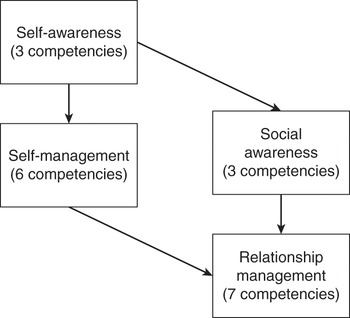
Figure 23.5. A model for emotional intelligence.
Table 23.2 A Model for Emotional Intelligence
There are two subsidiary competencies of social awareness we would like to focus on:
Empathy: This is the most important element of emotional intelligence required by the project manager. We said earlier that the project manager must be able to see the project from the stakeholders’ perspective; the project manager needs to be able to understand what benefit the stakeholders perceive from the project and what value they place on their contribution. The stakeholders need to think that the value they place on the benefit from the project is greater than the value they place on their contribution. The project manager needs to see that from the stakeholders’ perspective. Also, the project manager needs to be aware of how the stakeholders are responding emotionally.
Service: The project is providing a service to the stakeholders, and the project manager needs to be aware of that. The service-dominant logic of marketing (Vargo & Lusch, Reference Vargo and Lusch2004; Lusch, Vargo, & O’Brien, Reference Lusch, Vargo and O’Brien2007) suggests that if you are providing a service, you should market with people (building relationship) rather than market to them, to collaborate with customers and partners to co-create value for all parties. That is the aim of stakeholder engagement. Further, you try to overcome resistance by cocreating networks and processes to create mutually beneficial value and conversations and dialogue to work together so that you can offer the stakeholders a service they value. The service-dominant logic is management for stakeholders rather than management of stakeholders (Huemann et al., Reference Huemann, Eskerod and Ringhofer2016).
Marketing for the Project: Marketing by the Contractor
Contractors exist to undertake work on projects that the client (investor) cannot do for themselves. Contractors have knowledge, competencies, and skills that clients do not have internally, and the ability to use these to provide value to the client gives them a competitive advantage. The contractor provides these services to the client to enable the investor to undertake its projects. The services-dominant view of marketing (Lusch et al., Reference Lusch, Vargo and O’Brien2007) would therefore suggest that contractors exist to integrate and transform their specialist competencies into services that are demanded in the market place and which can provide their customers with value.
Marketing by the contractor necessarily takes place at the project portfolio level (Turner & Lecoeuvre, Reference Turner, Lecoeuvre and Levin2015). Project marketing researchers suggest that while project management deals with organizational and management issues, project marketing deals with sales and marketing issues of projects. They define a project strictly from the marketing perspective, suggesting that a project is a complex transaction covering a package of products, services, and works, specifically designed to create capital assets that produce benefits for a buyer over an extended period of time (Cova & Salle, Reference Cova and Salle2005). They link project marketing to the management of projects (Morris, Reference Morris1997), suggesting it should start at the very early preproject phase. However, Cova and Salle’s life cycle for project marketing has just three phases, taking place before the project starts:
1. independent of any project
2. pre-tender
3. tender preparation
During the “independent of any project” phase, emerging projects are detected among the customers. The marketing approach here is defined as anticipation. The next stage is the pre-tender stage where project screening should take into consideration project characteristics and strategic intent. Once the project has been screened and requirements reviewed, we enter into the project development phase. According to this school of thought, the first goal of the project marketing process is to win the contract. But project marketing is a continuous process that occurs throughout the project portfolio, during the realization and project follow-up phases as well. The follow-up phase, which occurs after the project has been delivered, is crucial since this determines customer satisfaction and key account development, and its success will reduce the discontinuity of project activities (Cova et al., Reference Cova, Ghauri and Salle2002; Lecoeuvre & Deshayes, Reference Lecoeuvre and Deshayes2006; Lecoeuvre, Deshayes, & Tikkanen, Reference Lecoeuvre, Deshayes and Tikkanen2009). For this reason, Lecoeuvre and Deshayes (Reference Lecoeuvre and Deshayes2006) added a fourth phase to the project marketing process, the postproject phase, Figure 23.6, giving four phases of project marketing:
1. Preproject marketing: The project does not exist yet, but the supplier anticipates the customer’s requirements, develops themes for the potential bid (Bernink & Turner, Reference Bernink, Turner and Turner1995), and maintains the relationship with the client.
2. Marketing at the start of the project: The supplier starts with coconstruction of rules beside and within the network of influential relationships.
3. Ongoing project marketing: The supplier, client, and subcontractors proceed with renegotiation, modifications, follow-up, and meetings following one another with constant relationship exchanges until the end of the project.
4. Creating the conditions for future projects: The supplier maintains the relationship with the client, through logistics support and “sleeping relationships” which enables it to manage discontinuity in project business and prepare for future projects.

Figure 23.6. Four phases of project marketing.
Project marketing is part of portfolio management, trying to secure a continuous stream of projects into the project portfolio. As the project marketing literature suggests, project marketing is about marketing and sales, not of projects, but of the competencies that the contractor has that can provide the customer with value (Lusch et al., Reference Lusch, Vargo and O’Brien2007). Those competencies will be provided to the customer through a project, but the focus of the marketing should be the competencies and the value that they can provide the customer.
Turner, Lecoeuvre, Er, and Sankaran (2016) confirmed these four phases. The contractor should be constantly scanning for new opportunities, independent of any project, and aim to ensure they are on the tender list for new opportunities. The tender is the process by which the actual sale is made and is related to a specific project, so it can be said that project marketing results in a project. It is during the project that the actual service is provided, but as Lusch et al. (Reference Lusch, Vargo and O’Brien2007 p. 7) suggest, “There is no benefit until the offering is used.” It is the customer who realizes the value after the project. It is also after the project that the relationship returns to the portfolio level, independent of any project.
Lecoeuvre and Deshayes (Reference Lecoeuvre and Deshayes2006) suggest that there are six elements of project marketing, which are applied through the project marketing process (see Figure 23.6):
1. Relationship management (Rel)
5. Training (Tra)
6. Going with (providing mentoring, coaching and support) (Gwi)
Thus the focus is on marketing with the client (Lusch et al., Reference Lusch, Vargo and O’Brien2007), by collaborating with them to produce and sustain value for the client. The contractor collaborates with the client so that it can draw upon resources that the contractor provides. As with marketing by the project, this helps in the cocreation of networks and processes to create mutually beneficial value and conversations and dialogue to work together, so that the contractor can offer the client a service it values. Turner et al. (Reference Turner, Sankaran, Er, Lecoeuvre, Huemann and Eskerod2016) demonstrated the importance of these six enablers of cooperation in supporting the marketing activity.
Turner and Lecoeuvre (Reference Turner, Lecoeuvre and Levin2015) build on the work of Bernink and Turner (Reference Bernink, Turner and Turner1995) to identify three key stakeholders who are the target of project marketing (see Figure 23.7). This is a form of market segmentation (Kotler & Lane, Reference Kotler and Lane2008):
The strategic decision makers: These are the people who will ultimately decide to do the project and determine which contractor will be awarded the contract. These people are interested in the project’s goal. The contractor’s board of directors should target these people, with the help of the marketing department.
The operations managers: They are both the users and the consumers. There may be one set of operations managers who will operate the project’s output (the users), and another set who will make use of the project’s outcome and obtain the benefit (the consumers). These people are not interested in the technology. The consumers want the project’s outcome to satisfy their requirements and provide them with adequate benefit. The users want ease of operation. It will usually be the role of the sales and marketing department to communicate with these people, though the project manager may also be involved. It is essential to make them comfortable that the project’s outcome will satisfy their requirements and provide them with the benefit they want and that the output will be easy to operate.
The technical managers: These are the people who will judge the contractor’s technical solution and will be able to determine whether the project’s output will work to provide the outcome. The contractor’s technical managers must communicate with these people to persuade them of the contractor’s technical competence.

Figure 23.7. Three customers for the contractor’s account team.
There are three similar groups of people in the contractor’s account team (Turner et al., Reference Turner, Sankaran, Er, Lecoeuvre, Huemann and Eskerod2016): the strategic managers, the marketing managers, and the project and technical mangers. The strategic managers tend to form the relationship with the strategic decision makers above, the marketing managers with the operations managers, and the project and technical managers with the technical managers. Their involvement also evolves throughout the four phases of project marketing: the strategic and marketing managers are involved during the “independent of any project” phase; the marketing and technical managers during the bid phase; the technical managers are involved during project execution; and all three are involved in the follow-up phases.
Conclusions
As we have seen, there are three organizations involved in the management of projects: the investor, who makes an investment that they expect will provide them and other stakeholders with benefit; the project through which the investor makes the investment; and the contractor who provides the investor with competencies to undertake the work of the project. All three of these organizations need to market their project-related products and services.
(a) The investor needs to win the support of stakeholders for the investment, including the financiers who will provide the money, the contractors who will do the work and consumers who will buy the projects output and outcome. Different stakeholders need to be engaged at different stages of the investment life cycle. In order to get stakeholders to buy into the future you want, it is important to create the correct narrative, which will stimulate the emotional plant that will make the stakeholders desire the future the investor wants.
(b) The project needs to engage with stakeholders and win their support for the project, by convincing them that the perceived benefit of the project (product) justifies the input they have to make (price). It is essential that the project manager sees this balance from the stakeholders’ perspective. The concept of marketing for the stakeholders suggests that the project manager and project team should see themselves as providing a service to the stakeholders, marketing with them and not to them. They should try to overcome resistance by cocreating networks and processes to create mutually beneficial value and conversations and dialogue to work together, so that they can offer the stakeholders a service they value.
(c) The contractor’s aim is to win new business by selling the services they can provide to the investor. Marketing begins before the project, continues throughout the project life cycle and after project completion to maintain an ongoing relationship with the project focused on future projects. It is necessary to market to three groups of people – the decision makers, the operators, and the technical experts – who engage with the project in different ways. The contractor’s account team will consist of strategic managers, marketing managers, and technical managers marketing to the different groups.
Introduction
Many organizations execute a multitude of projects simultaneously and managing such a portfolio of new product development projects is critical to new product success. Over the years, project management has been professionalized, leading to the development of tools and structures for guiding projects toward desired outcomes (March, Reference March2006). Further, portfolio management has become one of the most important senior management functions (Cooper, Edgett, & Kleinschmidt, Reference Cooper, Edgett and Kleinschmidt2001). Barczak, Griffin, and Kahn (Reference Barczak, Griffin and Kahn2009) found that only about 59 percent of newly commercialized products are considered successful. This rate of success remained largely unchanged between 1990 and 2004, even though the number of firms using formal processes, methods, and techniques to improve new product development increased from 54 percent to 69 percent during the same period. To survive in a dynamic business environment, organizations need projects that focus on exploitation (reusing existing knowledge) and those that are centered around exploration (delivering new knowledge) (Damanpour, Walker, & Avellaneda, Reference Damanpour, Walker and Avellaneda2009; Leonard-Barton, Reference Leonard-Barton1992; Walrave, van Oorschot, & Romme, Reference Walrave, van Oorschot and Romme2011), although the mix between these two types of projects is dynamic. Sometimes more focus on exploitation is required (Yadav, Prabhu, & Chandy, Reference Yadav, Prabhu and Chandy2007); sometimes attention must shift to exploration (Lee & Makhija, Reference Lee and Makhija2009; Sidhu, Volberda, & Commandeur, 2004). This dynamic process of strategizing and organizing is an aspect of what is referred to as organizational project management (Aubry, Hobbs, & Thuillier, Reference Aubry, Hobbs and Thuillier2007). Organizational project management acknowledges that strategy and structure are linked together in a dynamic process. The organizational structure should follow its strategy. However, when the strategy is dynamic, in the sense that the mix of exploitation and exploration projects constantly needs to be adapted to the business environment, what does this mean for the structure? Organizational structures typically increase demarcations between projects or departments. These demarcations lead to learning silos that negatively affect knowledge sharing across these silos (Hobday, Reference Hobday2000; Sydow, Lindkvist, & DeFillippi, Reference Sydow, Lindkvist and DeFillippi2004). The central question is this chapter is therefore: what structure can deal with strategic changes and in turn changes in the product portfolio, while breaking down learning silos between departments and projects?
In urban design, a similar problem is found: when large numbers of pedestrians and vehicles need to interact, different lanes are built; traffic signs and lights are used to manage the flow of traffic. However, in recent years a new concept called “shared space” has been introduced in urban areas in The Netherlands, Denmark, Sweden, and the United Kingdom. In such a shared space, demarcations, rules, lanes, and signs are strongly reduced. In the absence of rules, street users need to rely on other signals. Communication and eye contact become the norm, while the speed of motorized traffic is reduced (Hamilton-Baillie, Reference Hamilton-Baillie2008; Moody & Melia, Reference Moody and Melia2014). As a result, shared space not only increases safety, but it also increases the flow of traffic (resulting in less delays).
In this chapter, an analogy is drawn between demarcations and rules used in traffic and those used in organizations that execute innovative projects. Several “shared space” examples from a project management context are discussed that have similar effects as their counterparts in traffic. These so-called enablers for organizational project management also remove demarcations (rules and structures), thereby creating “space” in organizations that benefits knowledge sharing, creativity, and innovation. This will help organizations to dynamically balance their portfolio of exploitation and exploration projects.
Dynamic Balance between Exploitation and Exploration
Firm growth is associated with the capacity to constantly renew the product portfolio (Aubry, Hobbs, & Thuillier, Reference Aubry, Hobbs and Thuillier2007) at an ever-increasing rate because product life cycles are becoming shorter (Eling, Langerak, & Griffin, Reference Eling, Langerak and Griffin2013). Together with a continuous increase in product complexity, this means that many industries are facing a dynamic and competitive landscape in which performance depends on the organizational ability to change and innovate as well as achieve returns on investments in these innovations (Damanpour, Walker, & Avellaneda, Reference Damanpour, Walker and Avellaneda2009; Leonard-Barton, Reference Leonard-Barton1992; Walrave, van Oorschot, & Romme, Reference Walrave, van Oorschot and Romme2011). As a result, many organizations execute many projects simultaneously, and managing such a portfolio of new product development projects is critical to new product success. In fact, portfolio management has become one of the most important strategic management functions (Cooper, Edgett, & Kleinschmidt, Reference Cooper, Edgett and Kleinschmidt2001; Kaiser, El Arbi, & Ahlemann, Reference Kaiser, El Arbi and Ahlemann2015). Consequently, new organizational forms appeared in the 1990s, such as the project-based organization (Aubry, Hobbs, & Thuillier, Reference Aubry, Hobbs and Thuillier2007; Hobday, Reference Hobday2000).
Compared with the functional and matrix organization, this project-based organization is better suited for managing increasing product complexity, fast-changing markets, cross-functional business expertise, customer-focused innovation, and market and technological uncertainty (Hobday, Reference Hobday2000). In the project-based organization, the project is the primary unit for production organization, innovation, and competition (Hobday, Reference Hobday2000). This kind of organization is very appropriate for the development of high-value, complex industrial products and systems (Hobday, Reference Hobday1998). These developments are often also referred to as exploration, which involves the pursuit and acquisition of new knowledge (March, Reference March1991; Walrave, van Oorschot, & Romme, Reference Walrave, van Oorschot and Romme2011); creating adaptability by developing new offerings (Benner & Tushman, Reference Benner and Tushman2003; Jansen, Van den Bosch, & Volberda, Reference Jansen, Van Den Bosch and Volberda2006). However, as stated above, firms also need to generate returns on their investments in these new offerings. In addition, they need to invest in low-risk activities to reliably generate returns. This is also referred to as exploitation: exploiting current offerings by incrementally improving existing knowledge (March, Reference March1991; Walrave, van Oorschot, & Romme, Reference Walrave, van Oorschot and Romme2011). This ambidextrous capability, i.e., finding the right balance between exploitation and exploration, is one that many firms struggle with (Helfat, et al. Reference Helfat, Finkelstein, Mitchell, Peteraf, Singh, Teece and Winter2007).
A number of reasons why this balance is difficult to find and maintain can be found in the literature. Organizations that have shown strong performance in exploitation over a long period may be reluctant to change their exploitation activities that have brought them stable success over the years. This is also known as the ”success trap” (Levinthal & March, Reference Levinthal and March1993). Firms can stay caught in this trap even when changes in the business environment requires them to focus on more exploration activities (March, Reference March1991). The opposite (failure trap) can also occur, although it is less common (Levinthal & March, Reference Levinthal and March1993). Exploration projects often result in failure. These failures may increase the search for even more novel ideas, which in turn may trigger new failures. As such, exploration may lead to even more exploration (Gupta, Smith, & Shalley, Reference Gupta, Smith and Shalley2006). It is argued that top managers can get caught in these kinds of traps because of myopic tendencies. These tendencies limit managers’ ability to adapt strategy (i.e., to modify the portfolio of projects in favor of more exploitation or more exploration) to environmental changes (Hannan & Freeman, Reference Hannan and Freeman1984; Levinthal & March, Reference Levinthal and March1993; Tushman, Newman, & Romanelli, Reference Tushman, Newman, Romanelli, Tushman and Anderson2004). However, as Walrave, van Oorschot, and Romme (Reference Walrave, van Oorschot and Romme2011) point out, myopia is likely to delay a strategic adaptation, but it will not suppress a strategic change. These authors further explain that it is more plausible that the reluctance to change is caused by the interplay between top management and the board of directors (the owners of the firm). The board of directors often demand short-term results, which forces top management to direct focus on exploitation activities. This holds especially in times of environmental decline (Hendry & Kiel, Reference Hendry and Kiel2004; Walrave, van Oorschot, & Romme, Reference Walrave, van Oorschot and Romme2011; Westphal & Fredrickson, Reference Westphal and Fredrickson2001).
Nevertheless, even when top management and the board of directors have managed to establish a project portfolio that consists of a balance between exploitation and exploration projects, it is unlikely that this balance is stable over time. That is, the right mix of projects depends on the business environment of the firm, or the course of the business cycle. For example, more attention should be given to exploration in a recession because business opportunities are relatively scarce (Lee & Makhija, Reference Lee and Makhija2009; Sidhu, Volberda, & Commandeur, 2004). On the other hand, in an economic recovery, more attention should be given to exploiting business opportunities (Yadav, Prabhu, & Chandy, Reference Yadav, Prabhu and Chandy2007). As such, changes in the environment or business cycle require strategic adaptations, which in turn call for rebalancing the project portfolio.
This dynamic process of strategizing and organizing is central to organizational project management (Aubry, Hobbs, & Thuillier, Reference Aubry, Hobbs and Thuillier2007). Organizational project management is a new sphere of management where dynamic structures in the firm are articulated as means to implement corporate objectives through projects in order to maximize value (Aubry, Hobbs, & Thuillier, Reference Aubry, Hobbs and Thuillier2007, p. 332). Organizational project management does not necessarily imply that all organizations should be project-based; rather, it acknowledges that strategy and structure are linked together in a dynamic process. The organizational structure should follow its strategy. However, when the strategy is dynamic, in the sense that sometimes more weight needs to be given to exploration, followed by periods in which exploitation needs to be prioritized, what does this mean for the structure? The project-based organization is probably best for exploration activities (large innovative and complex projects), whereas the functional matrix fits exploitation, routine production, engineering tasks, and achieving economies of scale (Hobday, Reference Hobday2000). Interestingly, both structures may possess the same disadvantage: structures lead to learning silos. In the functional matrix, demarcations between departments (R&D, engineering, production, and maintenance) may prevent learning across departments. In the project-based organization, demarcations between projects may prevent cross-project learning (Hobday, Reference Hobday2000; Sydow, Lindkvist, & DeFillippi, Reference Sydow, Lindkvist and DeFillippi2004). So what structure can deal with strategic changes and in turn changes in the product portfolio, while breaking down learning silos between departments and projects? The answer to this question may be literal: no structure.
Shared Space
The problem of urban design is an interesting context to find a structure that can deal with frequent strategic changes that are required in dynamic environments (like the upturns and downturns in business cycles). In the past century, the introduction of motorized vehicles increased the volume of these vehicles, causing the need to balance safety and accessibility (Hamilton-Baillie, Reference Hamilton-Baillie2008). As a result, streets became more and more regulated by government – using rules, control systems, and markings. Motorized traffic needed to be separated from pedestrians and social activities. This segregation was intended to reduce the number of accidents. In Figure 24.1, this intended effect of segregation is depicted as a balancing feedback loop (B1). This balancing loop indicates that government tried to solve the problem of traffic volume by segregation that was supposed to bring the system back in balance. However, in recent years, an unintended side effect of separation has been recognized. The rules, signals, barriers and controls have reduced the accessibility of roads for nonmotorized traffic (Hamilton-Baillie, Reference Hamilton-Baillie2008). Streets become less attractive for nonmotorized traffic and perceptions of safety declined. Pedestrians and cyclists prefer to take the car for even short distances, which only increases the volume of motorized traffic, the likelihood of accidents, and even more need to give space to cars. This unintended effect is shown as a reinforcing feedback loop (R). This reinforcing loop indicates that the segregation solution may only make the problem of motorized traffic volume worse.

Figure 24.1. Intended and unintended effect of segregation in traffic and the shared space solution.
To prevent this unintended side effect (the reinforcing loop) and to stimulate nonmotorized traffic, a new concept has been introduced in urban design, called “shared space.” Dutch traffic engineer Hans Monderman introduced this concept in 1982. His aim was to reduce accidents and congestion and to increase the flow of traffic (Moody & Melia, Reference Moody and Melia2014). Shared space is “an approach to improving streets and places where both pedestrians and vehicles are present, with layouts related more to the pedestrian scale and with features encouraging drivers to assume priority having been reduced or removed” (Kaparias et al., Reference Kaparias, Bell, Miri, Chan and Mount2012, p. 297). Shared space promotes a sense of vigilance and responsibility by reducing demarcations and physical distinction between the streets and pedestrian areas. On the one hand, attractive features can be added to shared space environments to provide a pleasurable area that stimulates pedestrians to walk to their destinations (Anvari, Bell, Sivakumar, & Ochieng, Reference Anvari, Bell, Sivakumar and Ochieng2015). On the other hand, features that are associated with highways, such as road markings, traffic signals, and signs, can be removed. This affects the relationship between people, places, and traffic (Hamilton-Baillie, Reference Hamilton-Baillie2008). In the absence of rules, and the predictability and certainty that traffic demarcations used to provide, street users need to rely on other signals. Communication and eye contact become the norm, while the speed of traffic is reduced. Alternatively, as Hamilton-Baillie (Reference Hamilton-Baillie2008) points out: “The less the manifestations of ‘the highway’ are evident, the more drivers rely on their remarkable ability as humans to read situations and adapt to circumstances” (p.133). Nowadays, examples of shared space can be found in The Netherlands, Denmark, Sweden, and the United Kingdom. Traffic flows are claimed to be improved, accidents reduced, and public life encouraged (Hamilton-Baillie, Reference Hamilton-Baillie2008), although little research has been done yet (Moody & Melia, Reference Moody and Melia2014). This shared space solution is shown in Figure 24.1 by balancing loop B2. The loop is balancing because the need for more safety is satisfied by reducing rules, predictability, and certainty, which increases communication and eye contact and reduces speed of motorized traffic. This makes streets more attractive for nonmotorized users, thereby reducing the volume of motorized traffic and the number of accidents that in turn reduce the need for more safety (the system is in balance without making the problem even worse).
Sharing Space in Organizational Project Management
The analogy between managing the flows of traffic in urban design and the flows of projects in organizational project management becomes apparent when we consider motorized traffic as analogous to exploitation projects and nonmotorized traffic (pedestrians, cyclists) to exploration projects. Similarly, accidents can be viewed as the success trap of ever-increasing efforts devoted to exploitation projects. As described previously, top management of a firm is usually aware (although this awareness may take some time) that exploration projects are necessary to fulfill new needs in a dynamic market. So, they are aware that “accidents” (investing too much in exploitation) need to be prevented and that they need to focus on a balanced portfolio of exploitation and exploration projects. However, investments can usually only be made once, and an increase in exploitation projects will reduce the resources available for exploration projects (March, Reference March1991). As such, the segregation begins: resources, such as people, budgets, or test equipment, are often tied to one project. In addition, in large organizations, projects that are similar are usually grouped together in programs, roadmaps, or departments. The highly innovative, exploration projects are often executed in specialized R&D departments, whereas the exploitation projects are allocated to engineering departments. Likewise, as Hamilton-Baillie (Reference Hamilton-Baillie2008) noted, in urban design, traffic engineering is responsible for the efficient movement of motor vehicles, whereas design professions are focused on creating a lively public realm. These two activities are often separated in distinct departments, in different buildings, into different levels of government. Further, to control this portfolio of different projects, organizations use specific rules, methods, and reporting procedures that apply to all projects, such as stage gates.
Although the investments in rules and in separate types of projects may seem to prevent the success trap, the opposite can also occur unintentionally. Exploitation and exploration activities need each other to blossom. Engineers working on exploitation projects may have good ideas for future exploration projects, either through their own experiences or through conversations with customers and suppliers. Exploration projects may provide the foundation for future exploitation projects in which each project incrementally improves the big breakthrough product. Separation does not help this transfer of knowledge between departments. Further, the divide between these two types of activities is not fixed. In some periods of the business cycle, it is better to invest more in exploration; while in other periods, exploitation is better. As in traffic, sometimes there are more cars on the road, and other times there can be more pedestrians. It does not make sense to wait for a red light as a pedestrian when there are no cars in sight. Similarly, it does not make sense to have an exploitation department full of engineers, when there is more need for exploration projects.
Separation between two activities is likely to work in favor of exploitation and against exploration. Exploitation projects are often easier to execute and are more repetitive (routine). They will yield results in the short term and as a result will gain support from the board of directors. Exploration projects take much more time to develop, they are more difficult to execute, and more likely to be terminated before completion because of lack of results, or lack of budget in the initial stages, or too high risks (Van Oorschot, Sengupta, Akkermans, & Van Wassenhove, Reference Van Oorschot, Sengupta, Akkermans and Van Wassenhove2010). As stated earlier, demarcations between activities promote learning silos and hamper communication between people performing these activities. Because exploration is in essence an activity that requires learning and the creation of new knowledge, it is expected that when learning is impeded, this activity will suffer more than exploitation: an activity that mostly reuses existing knowledge. Going back to Figure 24.1, investing in separation will likely not prevent “accidents”; instead, over time, it may aggravate the problem by only strengthening exploitation.
How can organizations be structured in such a way that they can quickly and smoothly adjust to changing market needs in terms of exploitation and exploration? And further, how can both activities be stimulated such that they will bring return on investments? When the urban design analogy is used again, the fundamental solution may be shared space. Literally translating this concept to organizations, it would mean that there is one big pool of human resources that is willing and able to do both exploitation and exploration activities. In a recession, or when the market demands more exploration, more engineers would start working on radical, innovative projects. In a recovery, or when more exploitation is requested, more engineers would move toward exploitation. No walls, floors, or departments should separate these two activities. Following the analogy, the situation could allow ideas, knowledge, and people to float more freely. Engineers who do not know what to work on or have a problem that needs to be solved cannot follow rules because there would be no rules. Uncertainty is high; predictability is low. This situation would force engineers to communicate with each other to figure out what to work on or how to solve the problem at hand. Lack of structure in urban design leads to more eye contact and communication between different street users. Likewise, lack of structure in organizational project management is expected to boost communication and learning between engineers working within and across projects and hence would result in more successful projects. Note that the lack of structure may reduce the development speed of some projects (because engineers are pulled away to solve problems in other projects), but on average the flow of projects may be increased, as is the case in traffic.
Enablers for Sharing Space in Organizations
Removing demarcations between departments, groups or even projects is easier said than done. Hamilton-Baillie (Reference Hamilton-Baillie2008) writes, in his plea to overcome the separation between traffic engineers and design professionals, that organizational, cultural, and educational change is required. “Shared space, and the creation of a public realm free of barriers to simple day-to-day movement and interaction, requires a change in the ‘mental map’ of every person as they step outside their front door” (p. 138). Asking organizations to take a big leap, remove all structure, and see what will happen on the long term is not realistic. Nevertheless, organizations can take small steps, one at a time: removing rules or parts of the structure bit by bit, evaluating (also waiting for long-term effects to surface), redesigning, and trying again. The impact of the success of a small step can help change this mental map toward a shared space structure. In the following section, a number of examples of such small steps, labeled as “enablers” for organizational project management, will be given. These enablers are not new; they come from a long tradition in project management research. However, it is new to view these enablers as stepping stones toward a structureless (or less structured) organization that is dynamic and capable of dealing with different types of projects. All these enablers have one thing in common: they enable (or even force) people to communicate and share knowledge with each other. In other words, they break down the learning silos.
Enablers within a Project
Even within a single project, learning silos can occur. Many organizations use a staged approach for moving projects from idea to launch and beyond. The stage-gate approach, for example, consists of a series of stages wherein a project team undertakes the work, obtains the needed information, and performs data integration and analysis. Each stage is followed by a gate at which a “go/kill” decision is made on whether to continue with the project (Cooper, Reference Cooper2008). As such, these stages and their gates function as demarcations in the project. Not only are stages in some projects developed by different, stage-specific teams (Kaisti, et al. Reference Kaisti, Rantala, Mujunen, Hyrynsalmi, Könnölä, Mäkilä and Lehtonen2013), which can hamper knowledge transfer from stage to stage, but the desire to “survive” the next gate meeting, may induce a team to focus on the short-term, the next gate, only. Decisions can be made favoring reaching the next gate, as opposed to the project as a whole, which can have devastating consequences for the project in the long term (Sethi & Iqbal, Reference Sethi and Iqbal2008; Van Oorschot, Akkermans, Sengupta, & Van Wassenhove, Reference Van Oorschot, Akkermans, Sengupta and Van Wassenhove2013).
Instead of a sequential approach, the project team may choose to overlap different project stages. This approach is also known as concurrent engineering (Akkermans & Van Oorschot, Reference Akkermans and van Oorschot2016; Cooper, Reference Cooper2008; Loch & Terwiesch, Reference Loch and Terwiesch1998; Terwiesch, Loch, & De Meyer, Reference Terwiesch, Loch and De Meyer2002). In concurrent engineering a downstream stage begins before the upstream stage is completed; as such, it uses preliminary information from this previous upstream stage. Because the information is incomplete, engineers from both stages are forced to communicate with each other. As such, a short-term focus on one specific stage is avoided. The upstream engineers need to keep the downstream engineers updated about new information that is discovered in their stage. The downstream engineers can provide early feedback about how they may or may not use the information passed on by the upstream engineers. Accordingly, learning cycles between the two stages arise. There is the risk that these learning cycles may turn into never-ending rework or problem-solving oscillations, which is why many researchers discourage concurrent engineering in settings with high levels of uncertainty (Cantamessa & Villa, Reference Cantamessa and Villa2000; Krishnan, Eppinger, & Whitney, Reference Krishnan, Eppinger and Whitney1997; Loch & Terwiesch, Reference Loch and Terwiesch2005). However, recent research suggests that in highly uncertain (explorative) projects, the benefits of the learning cycles outweigh the disadvantages of rework oscillations (Akkermans & Van Oorschot, Reference Akkermans and van Oorschot2016).
When project teams do prefer the sequential approach but still want to prevent short-term, gate-oriented thinking, Gersick (Reference Gersick1994) recommends time-oriented gates or milestones, instead of event-oriented gates that are most common in staged approaches. In projects with high levels of certainty and predictability, what needs to be done in each stage can be clearly identified, and therefore, also what needs to be evaluated at each gate. In projects with high levels of uncertainty, such event-oriented gates are not recommended, because it is uncertain when an event will occur or even if the event will occur. Therefore, in these projects, time-oriented gates or review points are much more useful. Temporal pacing is useful in situations in which the path to and specification of the final outcome are at least partly indeterminate (Gersick, Reference Gersick1994). These projects can still consist of stages and gates, but the gates are scheduled, for example, every month, forcing the project team to evaluate and adjust project progress on a regular basis, without focusing on surviving the gate. It is suggested that the better the match is between the temporal pacing and rate of environmental change, the more adaptive the team will be (Gersick, Reference Gersick1994; Vigden & Wang, Reference Vigden and Wang2009).
In recent years, this temporal pacing has become the core component of agile development methods. An agile method focuses on adapting to change through highly iterative development and test cycles (Conboy, Reference Conboy2009; Dingsøyr, Dyba, & Moe, Reference Dingsøyr, Dyba and Moe2010). Product requirements are discussed and prioritized with customers and placed in the backlog for the next iterative cycle (Dingsøyr, Dyba, & Moe, Reference Dingsøyr, Dyba and Moe2010; Fowler & Highsmith, Reference Fowler and Highsmith2001). These cycles often have the same length (a so-called “sprint”). Because testing is done much earlier (and more frequently) in the project than in sequential approaches, these agile approaches are also a way to breakdown the learning silos between developers and testers. Although agile approaches originated in software development projects, manufacturing firms are also introducing this approach (Sommer, Hedegaard, Dukovska-Popovska, Steger-Jensen, Reference Sommer, Hedegaard, Dukovska-Popovska and Steger-Jensen2015). Recent work by Cooper and Sommer (Reference Cooper and Sommer2016) explains how a hybrid agile-stage-gate model can be beneficial for the development of physical products. Improved communication and increased learning within the team also play a critical role in this model.
Enablers within the Organization
The most obvious solution to prevent learning silos in organizations is to literally implement a shared space, or in other words, colocate everyone working on either exploitation or exploration projects. Raffi (Reference Rafii1995) argued that if workers cannot be colocated, they might as well be miles apart, since even a small distance (even a different floor in the same building) between them will negatively affect the degree of trust and cooperation (McDonough, Kahn, & Barczak, Reference McDonough, Kahn and Barczak2001). Face-to-face communication is especially desirable when coordinating complex tasks (Olson et al., Reference Olson, Teasley, Covi, Olson, Hinds and Kiesler2002). Srikanth and Puranam (Reference Srikanth and Puranam2014) found that colocated projects depended mainly on ongoing communication for coordinating. Face-to-face communication is not only powerful; it is also essentially free (Mani, Srikanth, & Bharadwaj, Reference Mani, Srikanth and Bharadwaj2014). A specific instance of colocation is resource pooling, in which engineers are cross-trained and capable of a variety of tasks. Resource pooling is usually described as a mechanism to reduce quueing (Loch & Terwiesch, Reference Loch and Terwiesch1999), but it can also break down demarcations between engineering specialties. When engineers are pooled or colocated it will be easier for them to ask for help and provide feedback to each other. Recently, Harrison and Rouse (Reference Harrison and Rouse2015) have demonstrated the connection between feedback and creativity. Their findings suggest that feedback is the result of the interaction between feedback providers and creative workers, and not a one-sided passing of information. Colocation supports this interaction.
However, when creativity leads to new ideas for exploration projects, it is important that these projects are not killed prematurely. Many organizations rely on financial tools to make go/kill decisions. These tools favor exploitation projects whose financial forecasts are reliable (Cooper, Reference Cooper2013). To prevent this financial focus, it is recommended that the organization’s executive and board levels are aligned in terms of a shared long-term vision and strategy regarding the exploitation–exploration balance (Rosenblatt, Rogers, & Nord, Reference Rosenblatt, Rogers and Nord1993; Walrave, Van Oorschot, & Romme, Reference Walrave, van Oorschot and Romme2011). Instead of acting as gatekeepers, board members need to engage in developing a long-term perspective on shareholder value to prevent too strong a focus on exploitation projects (Walrave, Van Oorschot, & Romme, Reference Walrave, van Oorschot and Romme2015). As such, it is not only at the level of engineers that learning silos between specialties need to be removed to increase feedback, learning, and creativity. Research suggests that demarcations between top management and board members also need to be eliminated to make sure that creative ideas will find support and can lead to new breakthrough innovations.
Enablers within the Project Network
Besides enablers within one project or within one organization, enablers can exist between organizations or within a project network. Projects are rarely executed by one organization alone. Typically, organizations work together with suppliers and with customers, and in some cases customers may even be suppliers in the same project; e.g., in embedded systems development, a software provider delivers software to a hardware provider (customer), but this hardware provider is often also responsible of delivering test equipment (supplier).
Collaboration in projects between two or more organizations requires knowledge sharing and trust (Hsu & Chang, Reference Hsu and Chang2014; Zimmermann and Ravishankar, Reference Zimmermann and Ravishankar2014). However, knowledge sharing in product development can be problematic, because this knowledge may be about core technology of one of the organizations; that is, knowledge that defines the organization’s competitive advantage. This is usually the type of knowledge that organizations want to protect (Connelly, Zweig, Webster, & Trougakos, Reference Connelly, Zweig, Webster and Trougakos2010). Without rules that protect intellectual property, organizations face the risk of imitation (Butler & Grahovac, Reference Butler and Grahovac2012; McGaughey, Liesch, & Poulson, Reference McGaughey, Liesch and Poulson2000). However, as in traffic, where rules may reduce instead of increase the flow of traffic, rules and formal contracts that protect knowledge may not only reduce the knowledge flows about core technologies, but also about potentially new product ideas. Reduced knowledge sharing will reduce trust between the collaborating organizations and this stands to negatively affect the creativity of these organizations (Černe, Nerstad, Dysvik, & Škerlavaj, Reference Černe, Nerstad, Dysvik and Škerlavaj2014; Nielsen & Nielsen, Reference Nielsen and Nielsen2009; Potter & Lawson, Reference Potter and Lawson2013). This can cause a declining number of exploration projects in the long term (Anderson & Lewis, 2014). When organizations do not use knowledge-protection mechanisms, there will be imitation, but because of the increased trust, feedback, and learning between organizations, creativity is likely to be positively influenced in the long term (Černe, Nerstad, Dysvik, & Škerlavaj, Reference Černe, Nerstad, Dysvik and Škerlavaj2014).
An interesting example of customer collaboration without knowledge protection comes from the Dutch company ASML. This organization provides leading-edge imaging solutions to enable manufacturing processes in the semiconductor industry. In 2011, despite macroeconomic uncertainty, ASML posted record sales for the second year in a row – €5.65 billion. Answering customer needs through rapid innovation is credited as the reason for this remarkable performance (Chick, Huchzermeier, & Netessine, Reference Chick, Huchzermeier and Netessine2014). To continue this strategy, and thus to keep accelerating the development of new lithography technologies, ASML and three of its large customers – Intel, TSMC, and Samsung – agreed in 2012 to launch the Customer Co-Investment Program. The three participating customers agreed to fund €1.38 billion of ASML’s research and development projects from 2013 through 2017. This program not only creates risk sharing with some of the largest customers, the results of ASML’s development programs will also be made available to every semiconductor manufacturer with no restrictions (ASML’s corporate website). Sharing risks and knowledge with customers is one thing, but making new knowledge available to every semiconductor manufacturer with no restrictions is a bold move, nevertheless, a move that fits perfectly with the idea of “shared space.” It will be interesting to analyze what the effects of this strategy will be for ASML in the future.
Conclusions
In this chapter, I discussed the concept of shared space within organizational project management as a way to boost creativity and innovation. Changes in the business environment require organizations to make strategic adaptations that in turn call for (re)balancing the project portfolio. During some periods in the business cycle, more exploitation projects are necessary; other periods require more focus on exploration. The balance between these two is not static but dynamic; therefore, executing a dynamic strategy needs to be supported by an organizational structure that can handle a changing focus. Usually, organizational structures create demarcations between groups, teams, departments, or projects that automatically lead to learning silos. Consequently, this chapter examines what kind of structure can deal with strategic changes and in turn changes in the product portfolio, while breaking down learning silos between departments and projects. The ideal structure for this may be no structure at all, or a removal of the existing structure. An example from urban design, called “shared space,” is used as a source of inspiration. The concept of shared space in traffic has shown that removing rules, traffic signs, and demarcations in streets leads to more eye contact between motorized and nonmotorized traffic that slows down the speed of motorized traffic, increases safety, and increases the average traffic flows. Counterintuitively, reducing street demarcations originally meant to reduce accidents, increases safety and traffic flows. Several examples from a project management context were discussed that have similar effects. These so-called enablers for organizational project management remove demarcations (rules and structures) between projects and organizations, thereby increasing communication within and across project teams and organizations. This increases the flow of knowledge and as such benefits creativity and innovation. In their quest for a good, balanced project portfolio, organizations struggle most with executing a sufficient number of exploration projects. Therefore, enablers that support creativity and innovation are extremely important for innovative organizations.
The list of enablers that is provided in this chapter is not conclusive. The objective is to provide the reader with a new frame of mind, inspired by urban design, demonstrating that more rules and structures are not always helpful and may have counterintuitive and more importantly, counterproductive results. In this chapter, several examples of rules and structures in a project management context have been discussed that may have similar counterproductive results. In addition, organizational enablers have been presented that reduce rules and structures and increase learning between engineers, projects, and organizations. Hopefully, the examples and enablers may inspire researchers and practitioners to think differently about structures, learning silos, and knowledge flows. This may benefit innovation rates in organizations in the future.
Summary
This chapter examined what kind of organizational structure can deal with dynamic strategies that lead to constantly changing project portfolios (in terms of the number of exploitation and exploration projects the organization invests in) while breaking down learning silos. To stimulate communication and learning in traffic situations, urban designers have introduced the concept of “shared space.” This example shows that removing street demarcations, rules, and traffic signs (originally meant to reduce accidents), counterintuitively increases safety and traffic flows. Several examples from a project management context are discussed that have similar effects. Examples are taken from previous research and focus on different levels: within projects, within organizations, and within project networks. In addition, enablers for organizational project management have also been presented. These enablers remove demarcations (rules and structures), thereby increasing communication within and across project teams and organizations. This increases the flow of knowledge and as such benefits creativity and innovation. In their quest for (re)balancing their project portfolio, organizations struggle most with exploration projects. Therefore, enablers that support creativity and innovation are extremely important for innovative organizations.
Introduction
This chapter examines some reasons why project teams would use social media. Social media were just beginning to be co-opted by business interests in the 2010s (Kiron, Palmer, Phillips, & Kruschwitz, Reference Kiron, Palmer, Phillips and Kruschwitz2012): early adopting firms – the ones that tend to adopt social media applications – can be viewed as innovators, driven by efficiency and profit gains (e.g., Delerue & Cronje, Reference Delerue and Cronje2015; Perrigot, Kacker, Basset, & Cliquet, Reference Perrigot, Kacker, Basset and Cliquet2012). Social media generally provide:
Web-based platforms that allow workers to (1) communicate messages with specific coworkers or broadcast messages to everyone in the organization, (2) articulate a list of coworkers with whom they share a connection, (3) post, edit, and sort text and files linked to themselves or others, and (4) view the messages, connections, text, and files communicated, articulated, posted, edited and sorted by anyone else in the organization at any time of their choosing.
The development of complex products, services, and processes with very short time-to-market combined with needs for cross-functional expertise have compelled increasing numbers of organizations to implement their business operations as projects (Kerzner, Reference Kerzner2002). Projects have been described as temporary organizations that are strongly focused on a defined task, and therefore very agile. In addition, projects are ephemeral in the sense that the knowledge that is gained through the project quickly evaporates after the project team is disbanded (Gemünden, Reference Gemünden2013, p. 2). An essential component of project execution is the information that feeds decision making and knowledge creation. Some researchers therefore view social media – which are used to convey information – as valuable for project management (Harrin, Reference Harrin2010; Remidez & Jones, Reference Remidez and Jones2012; Rimkuniene & Zinkeviciute, Reference Rimkuniene and Zinkeviciute2014). For instance, Rimkuniene and Zinkeviciute (Reference Rimkuniene and Zinkeviciute2014) demonstrate how social media can enhance effective communication in temporary organizations by addressing specific project-based needs. Remidez and Jones (Reference Remidez and Jones2012) emphasize that project managers must understand the relationships between communication practices and trust development, and how they are affected by social media. According to Harrin’s (Reference Harrin2010) study on social media in project environments, over two-thirds of 181 project managers surveyed across thirty-two countries believed that social media constitute a key issue for their industry (Harrin, Reference Harrin2010). However, despite the anecdotal evidence on the importance of social media for projects as well as the growing interest by practitioners in the potential benefits of social media for their projects, only a few project management studies have addressed this topic or explored how organizations use social media for internal communications and social interaction between project team members.
On the one hand, successful project management requires forming and maintaining relationships between and among project team members and various stakeholders. Therefore, it is critical to ensure good-quality communication among team members as well as the capacity to capture, retain, and index project-related information and knowledge (Weiser & Morrison, Reference Weiser and Morrison1998). On the other hand, the use of social media is considered an effective approach to communication and collaboration among individuals and groups both within and outside the firm (Huy & Shipilov, Reference Huy and Shipilov2012; O’Leary, Reference O’ Leary2011). Further, social media generally come with tools that capture and retain information for later retrieval (Treem & Leonardi, Reference Treem and Leonardi2012). Some project management practitioners therefore see similarities between project management and social media: both are strongly focused on communication and engagement (Stronach, Reference Stronach2012).
Yet despite the potential advantages of social media for projects (Sponselee, Reference Sponselee and Silvius2016), these applications are rarely used. In fact, Harrin (Reference Harrin and Silvius2016) notes that social media use in the workplace is actually declining. In an empirical study based on the opinions of experts and professionals in Europe and Australia on social media use in projects, Rimkuniene and Zinkeviciute (Reference Rimkuniene and Zinkeviciute2014) find that temporary organizations continue to prefer traditional modes for direct communication, tending to stick to combinations of emails and the telephone. Only one-third of the respondents used an intranet. This low use of social media tools in temporary organizations suggests the presence of restraining factors that may discourage temporary organizations from using them.
Why do some project teams choose to use social media whereas others do not?
Projects create universes, in which the acts of seeking and using information, as well as initiating and developing interactions have important symbolic value for the actors. Indeed, knowledge and information are symbols of competence – in the sense that individuals and groups with more information and knowledge are considered better off than those with less – and hence symbols of social efficacy (Feldman & March, Reference Feldman and March1981). Interactions are also symbolic, as they are conducted in terms of the meanings that people assign to things (Blumer, Reference Blumer1969). The development of social media means that information and information systems are increasingly enabling human activity and symbolic action in order to build identities, coordinate relationships, and make sense of the environment (Aakhus, Ågerfalk, Lyytinen, & Te’eni, Reference Aakhus, Ågerfalk, Lyytinen and Te’eni2014). As Aakhus et al. (Reference Aakhus, Ågerfalk, Lyytinen and Te’eni2014) point out, “from a symbolic action perspective, information systems are theorized not simply as information processors and conduits of transmission but as part of ‘meaning engagement practice’” (Reference Aakhus, Ågerfalk, Lyytinen and Te’eni2014, p. 1188).
In this chapter, we propose that symbolic meanings and actions can explain why project teams use social media. Several studies have been conducted on enterprise social media (ESM) and social media in work organizations (Leonardi et al., Reference Leonardi, Huysman and Steinfield2013). However, studies that focus specifically on the project level are rare. Organizations may be “conceptualized as bundles of activities grounded in language and communication” (e.g., Aakhus et al., Reference Aakhus, Ågerfalk, Lyytinen and Te’eni2014). In a project, which may be considered an organization, social media can help symbolically manage relationships, information exchange, and sharing.
To understand why project teams use social media, we illustrate with a case study of a project team working in a large telecommunications company (approximately 8,000 employees). The company developed a social media policy in 2010 and uses social media tools to conduct its projects. Data were collected from semistructured interviews held with a focus group comprising five of the fifteen members of a project team (including the manager) that was mandated to develop an information system.
Understanding Social Media Use in Projects
Although new forms of information and communications technology (ICT) are increasingly available to project managers and project team members, they have not been universally embraced. Social media, including blogs, wikis, social networking sites (SNS), and microblogs, are being used to facilitate project communication (Harrin, Reference Harrin2010). Carlson, Zivnuska, Harris, Harris, and Carlson (Reference Carlson, Zivnuska, Harris, Harris and Carlson2016) find that the more the use of social media, the more the improvements in task-oriented behaviors (e.g., mental skills and capacities that can enhance employees’ abilities to perform their job) as well as in relationship-building behaviors (e.g., behaviors intended to build and maintain work-related relationships and professional networks).
However, some social media tools seem to be more appropriate than others for daily activities. For instance, Harrin (Reference Harrin2010) argues that, in a project setting, the blog is the equivalent of the project notebook or shared project log. Blogs can build relationships between team members, making them feel that they are part of a greater whole. Blogs can also provide a way for people outside the project team to keep abreast of project progress. On the other hand, “SNS have very little to do with the day-to-day running of projects” (Harrin, Reference Harrin2010, p. 18). However, other authors propose that SNS can be used to get information from selected colleagues based on shared interests, affinities, or expertise. Go and You (Reference Go and You2016) conclude that not all social media are the same: organizations employ diverse social media applications in a combinatory manner – closely linked to organizations’ social media strategies – in order to maximize the synergistic effects.
The deployment of social media tools requires several conditions, as identified by Harrin (Reference Harrin and Silvius2016): access control, to ensure that the right people have access to the right data; backups, to ensure that project data can be retrieved; audit trails, to see who has logged into the system and what tasks they have performed; authorized software, to ensure that project teams use products that have been vetted and approved by a corporate IT department or equivalent; and policies for handling system abuse, in order to define acceptable uses. Therefore, in order to integrate social media into an information system, both organizational and managerial support are needed (O’Connor, Schmidt, & Drouin, Reference O’Connor, Schmidt and Drouin2016). According to one of the interviewees in the case study:
Sharepoint was used from project outset, since all relevant project documents are posted on this platform, but I believe that not all the project participants necessarily comply with this requirement, due to either personal reasons or because they are not convinced about the advantages of a fully shared document platform. Our company has drawn up and implemented a social media policy, but even though there’s a formal document, it doesn’t establish a situation of total trust, which is required for everyone to share their information. Collaboration is still required for social media to be used effectively.
Generally, the social media that companies use are private systems developed as in-house applications and, as such, they are not accessible by external audiences (Leonardi et al., Reference Leonardi, Huysman and Steinfield2013). These private systems are usually installed on company servers or hosted in the cloud. Some examples are Sharepoint (Microsoft), Yammer, Connections (IBM), Jive (Jive Software), Social Network (Oracle), Webex Social (Cisco), Jibbr (Tibbco), and BlueKiwi (Atos). These social media systems integrate the full range of public social media functionality (Leonardi et al., Reference Leonardi, Huysman and Steinfield2013). For instance, DiMicco et al. (Reference DiMicco, Millen, Geyer, Dugan, Brownholtz and Muller2008), in their examination of the Beehive system developed by IBM, conclude that the overall site design is similar to social networking sites such as Facebook and MySpace in that it supports a user-created articulated social network with content sharing and customized profiles. Because social media are used for a variety of reasons, the definition of social media may reflect how technologies are mutually constituted with the organizational context in which they are embedded (Leonardi, Reference Leonardi2009). Treem and Leonardi (Reference Treem and Leonardi2012) argue that visibility, persistence, editability, and association (or relationship) are four affordances that, in combination, describe the new social media and their potential consequences for organizational communication processes. These combined affordances allow people to communicate in new ways and to adjust media functions to the content of the message. As one interviewee points out:
We use different social media functions and tools … It depends on what we want, exactly, for instance, the information we want to communicate or share and how we want to communicate it … It also depends on the project cycle phase … Sharepoint is used from project outset, since all relevant project documents are posted on this platform … But only a small group has access … And then we use Yammer more as a microblog, but Yammer also helps us coordinate tasks during the execution phase … All employees have access to Yammer … This way we can find “people” who are not members of the project but who can also help … [people who] can just provide information or their experience … so we can develop other relationships outside the project itself.
Project Social Media and Symbolic Meanings
One of the basic tenets of symbolic interactionism is that individuals act based on the meanings that they have assigned to objects. These meanings are developed through interactions with other individuals and with society, and are continuously created and recreated as they are reinterpreted during interactions with others (Blumer, Reference Blumer1969). In this perspective, social media may be considered as objects that are given meanings. “The object’s meaning is the effects it has on the world” (Hodder, Reference Hodder and Pearce1994, p. 12). The use of social media would therefore depend on the symbolic meanings that they are given. Indeed, studies have shown that the medium of communication is often selected for its symbolic meaning and representation, which transcend the explicit message. A manager’s choice of media therefore becomes a symbolic communication behavior (Stryker & Staham, Reference Stryker, Statham, Lindzey and Aronson1985). In other words, media carry symbolic cues beyond the obvious content of the message (Stryker, Reference Stryker and Turner2001), such that the medium itself is a message (McLuhan, Reference McLuhan1964; Trevino, Lengel, & Daft, Reference Trevino, Lengel and Daft1987). Case studies by Stocker, Richter, and Riemer (Reference Stocker, Richter and Riemer2012) provide many illustrations of these symbolic meanings, which guide the choice of one social media platform over another. An employee at Capgemini, a French multinational management consulting corporation, explains the use of Yammer as follows: “As soon as I heard that this tool was being used it seemed to transcend most of the geographical boundaries. I just jumped on it because of that sense of global community …” (Reference Stocker, Richter and Riemer2012, p. 208). Stocker et al. (Reference Stocker, Richter and Riemer2012) point out that: “Yammer in Capgemini is neither used to inform others about themselves (like we see with Twitter) nor to inform about immediate task/team context as is the case in the next example below [Commundardo]. Rather, it is an open discussion space that serves the purpose of context building, information sharing and problem-solving.”
As one of our interviewees puts it: “I think that social media such as Yammer help develop group cohesion and trust.”
Therefore, the choice of an application can have different meanings, and applications may be used for different purposes. According to Neilsen and Rao (Reference Neilsen and Rao1987), the legitimization of these meanings creates a symbolic universe that incorporates representations and realities. For example, some team members equate social media use with innovation and dynamism. Project teams who do not share this representation are considered backward and obsolete.
Communication is the most elementary component of the project team and has long been considered one of the critical process skills for project success (e.g., White & Leifer, Reference White and Leifer1986). High-quality communication takes place when team members spend sufficient time communicating with each other, exchanging information both formally and informally, and talking directly to each other, all in the aim of understanding the internal and external environment. In projects, symbolic communication is important for multidisciplinary cooperation, because negotiations about task divisions or design specifications, for example, are formulated mainly in symbols and structured by symbolic order (Duncker, Reference Duncker2001). For instance, the order of tasks is established based on shared symbolic representations that are reconstituted from symbolic repertoires (Schwartz et al., Reference Schwartz, Eichstaedt, Kern, Dziurzynski, Ramones, Agrawal, Shah, Kosinski, Stillwell, Seligman and Ungar2013). Repertoires have been defined as discourses mechanisms, or linguistic varieties that enable actions within a given group or community (Duncker, Reference Duncker2001).
As one of our interviewees puts it:
I recently read that the key to making headway on a project is to find a shared language … I was very comfortable when we started using social media at work … I am completely sure that chat, microblogs, blogs, and so on, because they make us write simply and specifically, allow us to create a common language, and … also allow us to share specific project management terms with anyone else who doesn’t have this culture within the team.
Project Social Media and Symbolic Objectives
Whereas users of information systems act with symbols (which are either embedded in or surround the system), these actions are in turn enabled and conditioned by symbols and their interpretation (Aakhus et al., Reference Aakhus, Ågerfalk, Lyytinen and Te’eni2014). Thus, the symbolic nature of social media systems creates a symbolic universe in which social media may enable or constrain specific forms of action: actions are mediated by symbols and given their meaning by symbols, and these meanings in turn influence behaviors. The social media themselves are thus at the core of the symbolic actions.
We argue that project teams use social media to carry out symbolic actions in order to accomplish implicit symbolic objectives such as group identification, transparency, reviewability, and knowledge management.
Group Identification
It has been suggested that social media can improve team identification (Yardi & Boyd, Reference Yardi and Boyd2010), or the degree to which team members perceive a sense of “oneness” with a particular group (Ashforth & Mael, Reference Ashforth and Mael1989). The team identification concept stems from social identity theory, according to which people tend to classify themselves and others into social categories based on individual characteristics, such as personal interests (Tajfel, Reference Tajfel1978). In this sense, individuals identify with particular groups and differentiate themselves from other groups.
First, media tools can foster stronger engagement by conferring in-group status (they can also foster the development of community feelings). The result is team identification, which has motivational and behavioral consequences. Specifically, individuals who identify strongly with the team are more liable to engage in behaviors that are congruent with and expressive of the team identity. Team identification encourages individual members to contribute to the collective by acting in team-typical ways (Janssen & Huang, Reference Janssen and Huang2008). As one interviewee explains:
Everyone can make social media comments. This allows others to respond with questions or alternatives. For example, say that someone says that he or she couldn’t do something because of some problem … then someone else might respond by saying, “Thanks, we didn’t think about that. I’ll think about the problem and try to resolve it and get back to you as soon as possible.” … or maybe suggest changes that might make it possible, or even suggest which other people could help with the problem if it’s critical. The responder might also ask more questions to get more information about the situation so they can give their advice. These micro-interactions make us feel part of the team, and they build group cohesion and trust.
Second, social media also create a symbolic universe in which the technology applications and their functionalities are available to all members who can use them autonomously, moderately, and appropriately, according to communication needs. This is an important factor for project management. Indeed, it has been shown that effective communication and interaction are affected by the project’s degree of uncertainty (e.g., lack of information for managing a given task; Galbraith, Reference Galbraith1973) and equivocality (e.g., multiple and possibly conflicting interpretations of the information or its interpretive framework Sakka, Barki, & Côté, Reference Sakka, Barki and Côté2016). When both uncertainty and equivocality are high, a project manager may interact more with the project team members in order to clarify project information and issues and to encourage collaborative solution making (Sicotte & Langley, Reference Sicotte and Langley2000). When uncertainty and equivocality are low, less interaction may be needed, as it would waste the team’s time and efforts and generate information overload (Chong, Reference Chong1996), which could negatively affect project performance (Sakka et al., Reference Sakka, Barki and Côté2016). As one project team member explains:
Anybody can respond … no one is left out … Anybody can use the tool when they want, if they think it’s necessary. It’s all this freedom of action that increases both project flexibility, because it’s possible to resolve problems more quickly when they arise, and makes it possible to adapt the communication and interactions to the different tasks and project steps.
Another team member adds:
This lets us manage the duality within the team. There are tasks that we do together, that have to be coordinated, but there are also tasks that we have to do by ourselves at times.
Autonomy can also develop within projects. Projects often include experts who are responsible for making critical decisions. Autonomy is therefore one of their most important qualities (Chasserio & Legault, Reference Chasserio and Legault2010). Nevertheless, although autonomy is required for R&D projects and innovation, it can create tension in terms of control over the work (Guérin, Wils, & Lemire, Reference Guérin, Wils and Lemire1996). For example, some members of our focus group thought that “the problem with social media is that project managers can feel like there’s a loss of control[,] … not sure if their role should be as head of the orchestra or as controller.”
Transparency
Social media also facilitate interactions that are driven by individual interest in acquiring knowledge, such that actions tend to be better grounded (Goles & Hirschheim, Reference Goles and Hirschheim2000). Unlike traditional ICT, for example emails, which only the participating parties can see, social media render communications visible, conferring greater transparency. As one team member explains:
The discussion is open. Everyone can contribute in real time, and it’s easy to interact … Before, we didn’t know who to contact if we needed to make a change. We had to plan a meeting … So, social media not only increase the operational flexibility of the project, but also flexibility of communication.
Another project team member adds:
We use ActionNote a lot between meetings so we can update everybody on our progress and the work that has been completed. The status of all the project components is therefore known at the start of the next meeting. It allows us to have more informed discussions at the meetings, and it prevents needless extra communications and interactions.
Social media are metacommunicative in the sense that, as information systems, they symbolize and signal communicative metaroles and interrelations that actors can engage in (Ågerfalk, Reference Ågerfalk2004). Further, they allow metaknowledge, or knowledge of who knows what and who knows whom (Leonardi, Reference Leonardi2014). Metaknowledge plays a significant role in effective transactive memory systems (Yuan, Fulk, & Monge, Reference Yuan, Fulk and Monge2007), or collective systems that are used by closely connected individuals to encode, store, and retrieve knowledge (Hollingshead, Reference Hollingshead1998). DiMicco et al. (Reference DiMicco, Millen, Geyer, Dugan, Brownholtz and Muller2008), in an investigation of how IBM employees use an internal SNS called Beehive, show that the system helps employees learn more about coworkers’ backgrounds, interests, and activities. As one of our interviewees explains: “The other advantage is also, that we know where this information comes from, who gave it … which increases transparency, in the end.”
Transparency is one way of overseeing what gets done. As one project manager explains:
Everybody provides updates on what they’ve done so far. Everybody reports their status, and me, when I come in, as project head, I just review all the comments. Sometimes, there are comments about certain actions, or they’ll ask questions: “I couldn’t do such and such,” or “A problem came up,” and somebody else will respond, “OK, we’ll look at this after the meeting,” so all this lets me check and correct when we have to make a change.
Reviewability
The Project Management Body of Knowledge (PMBOK® Guide) published by the Project Management Institute (PMI) underscores the importance of collecting and documenting lessons learned and implementing process improvements (PMI, 2008). However, it is unclear how lessons learned from projects can be disseminated throughout an organization and incorporated into organizational practices (Duffield & Whitty, Reference Duffield and Whitty2015). As Treem and Leonardi (Reference Treem and Leonardi2012, p. 155) point out “When a poster to a blog or SNS logs out, that information remains available to users and does not expire or disappear … Because social media enable conversations that persist past the time of their initial posts, communicative acts can have consequences long past the initial point of presentation.”
The use of social media not only enables knowledge to be accumulated throughout project execution, it also enables building a database for future reference. As one project team member explains: “So! All the information will be retained. Everyone can re-consult it at will. It constitutes an information pool, or simply, we could call it the memory of the project.”
Knowledge Management
Social media can be viewed as informal knowledge management systems (Cao, Vogel, Guo, Liu, & Gu, Reference Cao, Vogel, Guo, Liu and Gu2012) as well as “second-generation knowledge management” systems that can facilitate the creation of new knowledge by the community (Isuru, Reference Isuru2010). In fact, recent studies have found that developing close relations with others facilitates knowledge sharing and creation (e.g., Chow & Chan, Reference Chow and Chan2008). Therefore, the more the social interaction ties between users, the more the knowledge-sharing activities within social media environments (Kwahk & Park, Reference Kwahk and Park2016).
Some authors view the project as a problem-solving process (e.g., Aladwani, Reference Aladwani2002; Khatri, Vessey, Ramesh, Clay, & Park, Reference Khatri, Vessey, Ramesh, Clay and Park2006). In this view, projects require interdisciplinary collaboration as well as knowledge sharing and transfer between business and technology experts (Lin et al., Reference Lim, Hwang, Kim and Biocca2015). Project team performance is therefore determined by the extent to which a team can cope efficiently and effectively with problems as they arise (Thomke & Fujimoto, Reference Thomke and Fujimoto2000; Lin, Chen, Hsu, & Fu, Reference Lin, Chen, Hsu and Fu2015) as well as the team’s capacity to share and transfer knowledge across domains (Tesch, Sobol, Klein, & Jiang, Reference Tesch, Sobol, Klein and Jiang2009; Lin et al., Reference Lin, Chen, Hsu and Fu2015). Social media offer potential solutions for sharing information quickly, globally, and among large numbers of individuals, and for supporting organizational knowledge flow (Wasko & Faraj, Reference Wasko and Faraj2005). Consequently, by means of electronic practice networks – collections of geographically separated individuals who share common interests but are loosely affiliated and who communicate via technology-mediated channels (Wasko & Faraj Reference Wasko and Faraj2005) – ESM can foster interpersonal knowledge exchanges among employees (Leonardi et al., Reference Leonardi, Huysman and Steinfield2013). They are therefore promising solutions for improving knowledge exchange among colocated employees (Beck, Pahlke, & Seebach, Reference Beck, Pahlke and Seebach2014) and distributed coworkers (McCreery, Vallett, & Clark, Reference McCreery, Vallett and Clark2015). Knowledge sharing and transfer become active knowledge construction processes involving symbolic action and the use of questions and answers (Beck et al., Reference Beck, Pahlke and Seebach2014). Social media can therefore change how humans interact within a symbolic social interaction system (Ågerfalk, Reference Ågerfalk2010).
According to Biocca, Harms, and Burgoon (Reference Biocca, Harms and Burgoon2003), social media can enable new forms of symbolic action that express social presence and the belief that one has access to other people’s knowledge. Social presence (Short, Williams, & Christie, Reference Short, Williams and Christie1976) is widely believed to be rooted in the social psychological mechanisms that have evolved to enable unmediated human interactions (Biocca, Harms, & Gregg, Reference Biocca, Harms and Gregg2001). Because people can feel present in either real (unmediated) or artificial (mediated) situations, social presence may be regarded as the psychological sense of being in contact with a perceived intelligence that simulates other minds (Biocca et al., Reference Biocca, Harms and Burgoon2003). The “other” is a symbolic construction that is created through interaction (Biocca et al., Reference Biocca, Harms and Burgoon2003). The more the user interaction resembles in-person communication, the higher the perceived social presence (Kruikeme, van Noort, Vliegenthart, & de Vreese, Reference Kruikemeier, van Noort, Vliegenthart and de Vreese2013). Beck et al. (Reference Beck, Pahlke and Seebach2014) find that the more that knowledge seekers engage in symbolic action to establish their social presence within a network, the higher their perceived quality of the knowledge that is exchanged. In an investigation of social media tools, Lim, Hwang, Kim, and Biocca (Reference Lim, Hwang, Kim and Biocca2015) also find that the level of engagement via social media is positively associated with feelings of social presence. In our interviews, the role of social presence is revealed in comments such as:
It’s a little like a vicious circle. Everybody has to use the tool, so I find it ridiculous to write messages when there’s no response … or nobody pays any attention … It happens sometimes. Not only does this hinder project performance, but it’s very discouraging. Social media should be used regularly, and not just when they feel like it.
As Isuru (Reference Isuru2010) points out, “Social media adoption is less about the tools but rather the strategies and the attitudes of the people and the community driving it.” The norm of reciprocity, also called the rule of reciprocity, is the expectation that the provision of favors to others will be reciprocated in the future (Chiu, Hsu, & Wang, Reference Chiu, Hsu and Wang2006). This norm underlies the creation and preservation of cooperative behaviors (Wasko & Faraj, Reference Wasko and Faraj2005). Miranda and Saunders (Reference Miranda and Saunders2003) investigated reciprocity in the context of shared meanings created from information shared over the Internet. They contend that “… intersubjective construction of meaning necessitates reciprocity” (Reference Miranda and Saunders2003, p. 89), and they show that the lack of social presence in electronic communications impedes reciprocity and interactivity. Social presence therefore legitimizes the use and usefulness of feedback, or the extent to which people believe that feedback helps them improve their performance on a particular task (Geister, Konradt, & Hertel, Reference Geister, Konradt and Hertel2006). According to Walter, Ortbach, and Niehaves (Reference Walter, Ortbach and Niehaves2015), perceived social presence has a direct positive effect on the perceived usefulness of feedback. And when people feel that feedback is useful, they are more likely to change their behavior accordingly and to take the feedback into consideration when performing tasks in the future. Social presence can also be viewed as a group construct (Garrison, Anderson, & Archer, Reference Garrison, Anderson and Archer2010). This perspective introduces a new dynamic: the group’s capacity to work together on a problem-solving activity and the amount of time that individual group members spend on the activity (McCreery et al., Reference McCreery, Vallett and Clark2015). The variation in time spent can affect individual members’ perceptions of social presence. In this sense, the group representation is dynamically recreated in individual members’ minds and, consequently, influences perceived social presence over time (Remesal & Colima, Reference Remesal and Colomina2013). A mental representation of social presence can be maintained through regular use of social media, whereby an individual’s “breadth of perspectives” increases through contact with other members and their experience and knowledge. According to Warshay (Reference Warshay and Rose1962), individuals with broader perspectives are better role-takers and have larger action repertoires. These skills are even more important for projects, where tasks are informed by heterogeneous and often complex sets of knowledge (Patnayakuni, Rai, & Tiwana, Reference Patnayakuni, Rai and Tiwana2007).
Conclusion and Discussion
In this chapter, we argue that social media are adopted based on their symbolic meanings, and they are applied in order to accomplish symbolic objectives through symbolic actions.
Project teams therefore develop their use of social media through a dynamic process involving symbolic actions. This process is strengthened and accentuated in groups that seek to accomplish several implicit symbolic objectives. Figure 25.1 presents an influence diagram that maps this dynamic system in terms of reinforcement or feedback loops (R1, R2, R3, R4, and R5). According to Slater (Reference Slater2007, p. 288), in a perfectly closed system, “the spiral of [social] media selectivity and effects should work to maximize use of a given type of media to the maximum permitted by available time and access and to maximize levels of the cognitions or behaviors impacted to those permitted by available capacity.”

Figure 25.1. The dynamic development process for the use of social media by project teams.
The loops represent feedback relationships that positively influence the behavior of the system (Forrester, Reference Forrester1975). With respect to social media use, it is difficult to distinguish between causes and effects: causes trigger subsequent events which, in turn, affect the original causes. Thus, causes become effects and effects become causes. In other words, writing and sharing via social media are shaped by symbolic objectives that are themselves the consequences of social media use. For instance, social media use reinforces group identification (R1) while allowing team members to feel connected to the team, which increases transparency which, in turn, reinforces feelings of belonging and identification (R2), which then reinforces the use of social media. In addition, when discussions and information are archived, projects that are conducted by distributed teams located at different sites can be informed by the team’s accumulated knowledge. These distributed team members can then provide feedback via social media, which reinforces reviewability (R3). Furthermore, the use of social media to share knowledge increases the use of informal knowledge management mechanisms and allows developing knowledge capital, which constitutes the project memory (R4). Knowledge sharing increases with increasing social presence and engagement. In this way, the perceived usefulness of feedback reinforces the use of social media (R5).
The use of social media in projects cannot replace face-to-face meetings. Instead, social media can complement traditional communication modes in projects, particularly when large numbers of individuals are involved. Social media can also enhance communication because they reduce the time required for meetings. Both offline and online environments are integral components of project management. Social media appear to be used optimally when a team has what Abfalter, Zaglia, and Mueller (Reference Abfalter, Zaglia and Mueller2012) call a “sense of virtual community,” or “feelings of membership, identity, belonging, and attachment to a group that interacts primarily through electronic communication,” despite having a significant and regular offline dimension. According to Jurgenson (Reference Jurgenson2012), social media can “augment” offline interactions, and should not be thought of as oppositional to face-to-face interactions. On the contrary, they appear to improve overall communication and interaction.


