

The management of people is as a key factor that contributes to the success of projects at any level in an organization. Part III includes topics from prominent authors from areas that are allied to OPM, such as sociology, psychology, and human resource management, where the authors discuss various aspects of people and their activities in OPM.
Part III starts with Chapter 11 “Human Resource Management in Organizational Project Management: Current Trends and Future Prospects” by Anne Keegan, Martina Huemann, and Claudia Ringhofer. Their chapter discusses recent research linking HRM and OPM to identify key themes that differentiate HRM at a project level from OPM at an organizational level. The authors also identify current gaps in research related to HRM and OPM and propose a research agenda that would help in enhancing the OPM capability of an organization.
This is followed by Chapter 12, “Stakeholders” by Pernille Eskerod, who highlights the importance of changing the approach for dealing with stakeholders in an OPM environment. She proposes a stakeholder-centric approach in dealing with a network of stakeholders, which is more effective in an OPM environment, as opposed to a project-centric approach that focuses narrowly on the relations between a project and its stakeholders at the project level.
Chapter 13 deals with another important aspect of the people aspect of OPM – leadership. Ralf Müller, Johan Packendorff, and Shankar Sankaran emphasize the need for a balanced attitude to leadership in an OPM context in this chapter, “Balanced Leadership: A New Perspective for Leadership in Organizational Project Management,” by proposing the need for a balance between the leadership of a vertical leader (at management level) and horizontal leaders (at team level). They propose a four-step process, outlining the intra- and interpersonal activities for vertical and horizontal leaders at each of these steps.
This chapter is followed by a discussion on teams in the context of OPM, “Project Teams and Their Role in Organizational Project Management.” Nathalie Drouin and Shankar Sankaran argue in Chapter 14 that while the project management literature has focused on studying teams within projects, we also need to consider the relationship between functional teams and project teams in an OPM environment as there will be need for cross-functional collaboration.
Managing knowledge acquired and created by people for organizational purposes is another key aspect of OPM. This is illustrated in Chapter 15 by Ed Hoffman and Jon Boyle, “REAL Knowledge at NASA: A Knowledge Services Model for the Modern Project Environment.” It describes how knowledge management is implemented in NASA to create an effective project environment in the context of OPM.
Julien Pollack argues that we need to examine the different roles that change management plays in OPM as opposed to the basic process of delivering a project technically in Chapter 16, “Change Management as an Organizational Project Capability.” He argues that a fundamentally different approach is required to successfully implement change management at an organizational level, which will need engagement and emergence as opposed to the current control-focused view used in managing change in projects.
In Chapter 17, “The Behavioral ‘Glue’ in OPM: A Review of Productive Behaviors of Project Team Members,” Timo Braun discusses the behaviors required in OPM. The chapter discusses four types of antecedents required for productive behavior: trust, culture, team characteristics, and environmental conditions. It also proposes a research agenda to carry out interdisciplinary research in OPM.
Following a discussion on behavioral aspects, Chivonne Algeo and Julia Connell propose the establishment of special interest groups within industry clusters to facilitate knowledge sharing – an innovation to contribute to the theory and practice of OPM – in Chapter 18, “Developing Organizational Project Management Competencies through Industry Clusters.”
The eight chapters in Part III cover an array of interdisciplinary concepts and strategies that can help to increase the capability of OPM in an organization to successfully deliver its strategies.
Introduction
It is increasingly common for work activities to take place in projects, and projects are therefore of growing importance as sites for career development, for leading and managing professional workers, and for individual and organizational development. Links between human resource management (HRM) activities that occur on projects, and their broader implications for project-based organizations in terms of knowledge, learning, and competence development, are therefore important foci for research. Projects are also important from the perspective of the well-being, ethical treatment, and motivation of workers.
Projects are established within and between organizational functions (Bredin & Söderlund, Reference Bredin and Söderlund2011) but also span organizational boundaries (Lundin & Steinthórsson, Reference Lundin and Steinthórsson2003; Swart & Kinnie, Reference Swart and Kinnie2014). Projects involve people from within and between organizational departments and also within and between disciplinary specialties. The implications of project-based organizing for managing human resources would appear to be significant (Huemann, Reference Huemann2015; Keegan, Huemann, & Turner, Reference Keegan, Huemann and Turner2012; Palm & Lindahl, Reference Palm and Lindahl2015; Söderlund & Bredin, Reference Söderlund and Bredin2006; Vicentini & Boccardelli, Reference Vicentini, Boccardelli and Russ2014), and yet traditional HRM models, where projects are not a key consideration, continue to dominate mainstream HRM theorizing (Swart & Kinnie, Reference Swart and Kinnie2014). In mainstream HRM theorizing, traditional long-term and stable employment relationships are assumed and focal organizations are those with clearly defined internal and external boundaries.
Project management literature has also traditionally downplayed what could be called the human factor – human capital or people aspects of project organization and management (Keegan & Turner, Reference Keegan, Turner and Turner2003). A shift from the mainly technical to increasingly people-focused aspects of project management has, however, been discernible in the past decade (Huemann, Keegan, & Turner, Reference Huemann, Keegan and Turner2007). Project management researchers have started to explore more systematically HRM issues and their possible contribution to the performance of organizations that do most of their work in projects (Bredin & Söderlund, Reference Bredin and Söderlund2011). The systematic study of project professionals’ careers has developed recently, reflecting an increased appreciation of the importance of projects as a major part of many organizations (Crawford, French, & Lloyd-Walker, Reference Crawford, French and Lloyd-Walker2013; Hölzle, Reference Hölzle2010) and the resulting increased importance of HRM issues and “people capabilities” (Bredin, Reference Bredin2008) required of project-based organizations is slowly increasing. Similarly, even though HRM theorists have not, to date, fully embraced the importance of the project context for practices, processes, and outcomes, this too appears to be changing as studies of HRM become more contextually sensitive. We are witnessing what might be regarded as the beginning of a general reorientation away from universal best practices and toward more contextually sensitive HRM research (Boxall & Purcell, Reference Boxall and Purcell2011; Kroon & Paauwe, Reference Kroon and Paauwe2014; Paauwe, Reference Paauwe2004; Watson, Reference Watson2010).
Our goal in this chapter is to provide an added stimulus to recent efforts to bridge the separate literatures of HRM and OPM. While the links between these fields are slowly attracting sustained interest from researchers operating from both domains (Bredin & Söderlund, Reference Bredin and Söderlund2011; Huemann, Reference Huemann2015; Keegan et al., Reference Keegan, Huemann and Turner2012; Pinto, Dawood, & Pinto, Reference Pinto, Dawood and Pinto2014; Swart & Kinnie, Reference Swart and Kinnie2014), much remains to be done in terms of research on HRM practices and processes in a project-based context. We therefore discuss findings from recent research on HRM in Organizational Project Management (OPM) and identify key themes and areas for further investigation.
This chapter is organized along two major themes that are of significance in recent work on HRM in OPM. First, we identify a distinction in the literature regarding HRM at the project level (Huemann, Reference Huemann2015; Keegan et al., Reference Keegan, Huemann and Turner2012; Palm & Lindahl, Reference Palm and Lindahl2015) and HRM at the broader organizational level (Bredin & Söderlund, Reference Bredin and Söderlund2011; Swart & Kinnie, Reference Swart and Kinnie2014). While highlighting research that deals with the processes and practices at both levels, we also discern a growing interest in the project level. The second major theme is the multiactor nature of HRM (Meijerink, Bondarouk, & Looise, Reference Meijerink, Bondarouk and Looise2013), which is perhaps more evident in project-based organizations than in other settings. We discuss research that indicates there is considerable complexity in terms of HRM influence distribution (Dany, Guedri, & Hatt, Reference Dany, Guedri and Hatt2008) in a project context and review findings from research on the actors involved in project-based HRM and the challenges they face. We then draw out the dominant theoretical lenses used to study HRM in terms of OPM. We highlight gaps that exist between these approaches in the project management literature and those evident in the broader HRM literature. On this basis, we offer a research agenda for how to go forward and deepen knowledge and insights on this important area of project management and HRM research.
HRM, Projects, and Organizations
We can distinguish between two foci in the literature on HRM and project-based organizations. One focus is that of HRM processes and practices on projects. The second is a focus on the organizational level whereby links between HRM in projects and HRM issues in the broader organization such as corporate strategy, strategic and functional capability development, and organizational development, are important (Bredin, Reference Bredin2008; Swart & Kinnie, Reference Swart and Kinnie2014). Our contention is that both these foci are vital to understanding the impact of HRM on OPM in practice and in theory.
HR Processes and Practices on Projects
Until recently, the project has to some extent been seen as a black box in terms of HRM. This is likely because of the inherently temporary or finite nature of projects (cf. Bakker, Reference Bakker2010; Turner & Müller, Reference Turner and Müller2003; Winch, Reference Winch2014) and the assumption that HRM policies and practices should have a permanent character. This assumption is in line with the fact that HRM research developed over several decades in the context of functional and permanent organizational structures and these continue to dominate how HRM is understood to work (Keegan & Boselie, Reference Keegan and Boselie2006). An exploration of the project itself as a site for HRM-related activity has in turn been viewed in terms of generally narrow technical aspects such as, for example, training techniques (Tabassi & Bakar, Reference Tabassi and Bakar2009) and safety requirements for projects (e.g., Lai, Liu, & Ling, Reference Lai, Liu and Ling2011).
Explicitly conceptualizing the project as a temporary organization (Bakker, Reference Bakker2010; Huemann, Reference Huemann2015; Turner & Müller, Reference Turner and Müller2003; Winch, Reference Winch2014) has created a basis for researchers exploring HR processes and practices specific to projects in a more strategic manner (Bredin & Söderlund, Reference Bredin and Söderlund2011), and also in terms of broader issues such as the ethical treatment of workers and their well-being (Huemann, Reference Huemann2007; Turner, Huemann, & Keegan, Reference Turner, Huemann and Keegan2008). Articulating the idea of the project as a workplace (Palm & Lindahl, Reference Palm and Lindahl2015 or as a career (Huemann, Reference Huemann2015) changes the focus on project-specific HRM practices and processes from a largely technical and resource allocation issue to a focus on whether and how project-specific practices contribute to the long-term development of personnel, satisfaction of career goals, and achievement of competence development of broader relevance to the organization. The project, when viewed as a temporary workplace, can be seen as a specific work context with characteristics including high goal orientation, uncertainty, high degree of responsibility, and multirole assignments. These features create opportunities but also challenges for project professionals. Following Huemann (Reference Huemann2015), the project as a workplace has the following characteristics as presented in Table 11.1.
Table 11.1 Challenges and Potentials of Project Work
For example, according to Asquin et al. (Reference Asquin, Garel and Picq2010), projects elicit high levels of individual commitment because the time-limited nature of projects creates urgency and stirs individuals to action, giving them clear objectives to be fulfilled against challenging deadlines and through teamwork. A similar conclusion is drawn by Lindgren and Packendorff (Reference Lindgren and Packendorff2006), who studied project personnel in an IT consultancy context. They found that the project work practices are premised on rationality, efficiency, and control as well as high levels of personal commitment to project work. As a result of project work structures eliciting high degrees of personal responsibility, researchers hold that the challenges of project overload are especially high in organizations that perform small- to medium-sized external projects, where project personnel work simultaneously in more than one project (Lindgren & Packendorff, Reference Lindgren and Packendorff2006; Turner et al., Reference Turner, Huemann and Keegan2008; Zika-Viktorsson, Sundström, & Engwall, Reference Zika-Viktorsson, Sundström and Engwall2006). Project personnel need to take greater responsibility for their work (in terms of task completion), their work–life balance (including their personal health-related well-being), and their careers (Bredin & Söderlund, Reference Bredin and Söderlund2011; Turner et al., Reference Turner, Huemann and Keegan2008).
However, projects also represent opportunities for project professionals. If projects, supported by professional project management methods, are introduced in an organization, this can lead to increased commitment, dynamism, support, and solidarity among personnel working in project teams toward joint goals (Hovmark & Nordqvist, Reference Hovmark and Nordqvist1996). Projects are motivating for project personnel (Bredin, Reference Bredin2008). The time-limited goal-orientation they construct provides the members of the project organization with clear objectives to be fulfilled using teamwork. Project work can create a sense of meaning for project personnel as their own contribution to achieving project outcomes is often highly visible for them due to the immediate and holistic aspects of project work compared with functionally structured work (Huemann, Reference Huemann2015). However, using projects to organize work requires new and different HRM practices and processes compared with traditional, functionally structured organizations.
Huemann et al. (Reference Huemann, Keegan and Turner2007) developed a broad framework for considering HRM practices and processes specific to the project, including processes for assigning personnel to projects, for managing performance on projects (e.g., developing, appraising, and rewarding), and for dispersing personnel from projects. Assigning personnel to the project constitutes the project from a human resource perspective and helps the project to come into existence. While formal assignment processes often exist in practice, they found that practices and processes for dispersing personnel at the end of projects are often not explicitly organized by companies. The dispersal function we envisage may be similar in nature and principle to the outplacement function in traditional organizations, where employees are facilitated to move from work to work in organizations with active employability processes (Peters & Lam, Reference Peters and Lam2015). Failure to actively facilitate project-to-project mobility creates the potential for insecurity among personnel and loss of valuable knowledge and expertise acquired by personnel who leave the organization at this time. This is also the case for project personnel working on projects on a secondment or contracting basis which is quite common (Keegan & Turner, Reference Keegan and Turner2001).
The topic of project-related training and development (e.g., Brière, Proulx, Flores, & Laporte, Reference Brière, Proulx, Flores and Laporte2015 Buganza, Kalchschmidt, Bartezzaghi, & Amabile, Reference Buganza, Kalchschmidt, Bartezzaghi and Amabile2013; Tabassi & Bakar, Reference Tabassi and Bakar2009; Tabassi, Ramli, & Bakar, Reference Tabassi, Ramli and Bakar2012) has also been described in some detail in the literature. Research by Tabassi and Bakar (Reference Tabassi and Bakar2009) suggests that most of the workers involved in construction projects are unskilled and that fundamental problems and barriers exist in terms of offering integrated training for project personnel. Barriers include:
high expenses of construction training courses, financial problems, short-term contracts of the workers, large number and various types of construction learning points, low level of labor education, lack of incentive among the workers for training, inadequate relations between the contractor or client and the labor, little attention from the client on the importance of skilled labor in projects, and time-consuming” (Tabassi & Bakar, Reference Tabassi and Bakar2009, p. 476).
Their research suggests that 77 percent of construction projects faced financial problems due to the use of unskilled project personnel and indicates that skilled labor plays an important role in decreasing the cost of construction projects.
Research by Buganza et al. (Reference Buganza, Kalchschmidt, Bartezzaghi and Amabile2013) pointed to the important effect that training can have in improving project manager behaviors. Their research provided evidence that the relationship between training effectiveness and the frequency of displays of effective managerial behavior is influenced by the compatibility between training activity and the role of trainees on the one hand and the context in which trainees operate on the other. They suggest organizations should pay close attention when designing (managerial) training activities so these are consistent with trainees’ roles and the environmental conditions in which trainees operate, as these have an impact on the effectiveness of the training.
Reward and performance management practices and processes, including appraisal, are somewhat underdeveloped as topics in both mainstream HRM writing on the project context and in project management literature dealing with HRM issues. Huemann et al. (Reference Huemann, Keegan and Turner2007) found that project managers have limited formal discretion for rewarding personnel for project-related performance. Their discretion extends mainly to formal use of budgets for celebrating project successes (e.g., achieving a milestone) or informally using their influence to suggest to others (e.g., line managers) that a project professional deserves some form of additional compensation. Considerably more research is needed on issues such as appraisal and reward practices and processes on projects.
Table 11.2 lists the practices and processes associated with HRM in projects reported in the literature.
| Project HRM Processes | Project HRM Practices | Relevant Publications |
|---|---|---|
| Assigning | • Project resource planning | Bredin & Söderlund, Reference Bredin and Söderlund2011; Eskerod & Jepsen, Reference Eskerod and Jepsen2005; Huemann, Reference Huemann2010; Huemann, Reference Huemann2015; Keegan et al., Reference Keegan, Huemann and Turner2012; Laslo, Reference Laslo2010; Turner, Huemann, & Keegan, Reference Turner, Huemann and Keegan2007; Turner et al., Reference Turner, Huemann and Keegan2008 |
| • Recruiting people for project | ||
| • Voluntary enrolment in projects | ||
| • Use of skill matrices | ||
| Developing | • Team-building: e.g., practices for encouraging team members to meet up during the project | Brière et al., Reference Brière, Proulx, Flores and Laporte2015; Buganza et al., Reference Buganza, Kalchschmidt, Bartezzaghi and Amabile2013; Calamel, Defélix, Picq, & Retour, Reference Calamel, Defélix, Picq and Retour2012; Huemann, Reference Huemann2010; Huemann, Reference Huemann2015; Keegan et al., Reference Keegan, Huemann and Turner2012; Lai et al., Reference Lai, Liu and Ling2011; Minbaeva, Reference Minbaeva2005; Popaitoon & Siengthai, Reference Popaitoon and Siengthai2014; Tabassi & Bakar, Reference Tabassi and Bakar2009; Tabassi et al., Reference Tabassi, Ramli and Bakar2012; Turner et al., Reference Turner, Huemann and Keegan2007, Reference Turner, Huemann and Keegan2008 |
| • Training: diversity training, training in evaluation and refocusing self-learning interviews, conflict resolution techniques, intercultural awareness | ||
| • Training on project-related skills | ||
| • On-the-project training, sending trainers on site | ||
| • Organizing opportunities for learning on a project | ||
| • Opportunities to exercise project leadership | ||
| • Opportunities to develop professional reputation | ||
| Appraising | • Feedback – 360-degree feedback | Huemann, Reference Huemann2010; Huemann, Reference Huemann2015; Keegan et al., Reference Keegan, Huemann and Turner2012; Medina & Medina, Reference Medina and Medina2014; Turner et al., Reference Turner, Huemann and Keegan2007, Reference Turner, Huemann and Keegan2008; Wickramasinghe & Liyanage, Reference Wickramasinghe and Liyanage2013 |
| • Formal project appraisals | ||
| Rewarding | • Rewarding the team: e.g., group bonus-based on project team performance | (Huemann, Reference Huemann2010; Huemann, Reference Huemann2015; Keegan et al., Reference Keegan, Huemann and Turner2012; Lai et al., Reference Lai, Liu and Ling2011; Popaitoon & Siengthai, Reference Popaitoon and Siengthai2014; Turner et al., Reference Turner, Huemann and Keegan2007, Reference Turner, Huemann and Keegan2008; Zwikael & Unger-Aviram, Reference Zwikael and Unger-Aviram2010 |
| • Rewarding team members for their accomplishments | ||
| • Nonmonetary rewards: e.g., social events, awards certificates, extra holiday time, additional training or development opportunities, explicit links to future project opportunities; chance to contribute to important decisions | ||
| Dispersing | • Practices for capturing knowledge at the end of project – particularly from temporary workers | Eskerod & Jepsen, Reference Eskerod and Jepsen2005; Huemann, Reference Huemann2010; Huemann, Reference Huemann2015; Keegan et al., Reference Keegan, Huemann and Turner2012; Turner et al., Reference Turner, Huemann and Keegan2007, Reference Turner, Huemann and Keegan2008 |
| • Assign to a new project | ||
| • Return personnel to the line to perform functional duties | ||
| • Send personnel to the bench |
HRM Practices and Processes Linking the Project and the Organization
Where project-based organizations and HRM are a focus of attention, Vicentini and Boccardelli (Reference Vicentini, Boccardelli and Russ2014) note that issues are often framed in terms of latent forms of organization of relevance to projects. Theorists therefore focus on the (more) stable context within which projects are embedded including, for example, project ecologies (Grabher, Reference Grabher2004) and networks (Swart & Kinnie, Reference Swart and Kinnie2014). Researchers have sought to determine how the broader structures (e.g., networks and project ecologies) provide the backdrop to finite project-based relationships and offer continuity and stability for the finite and transient conditions facing mobile project workers (Borg & Söderlund, Reference Borg and Söderlund2015).
Processes and practices linking HRM in the project and HRM in the permanent organization are described in literature (Huemann, Reference Huemann2013; Huemann et al., Reference Huemann, Keegan and Turner2007; Swart, & Kinnie, Reference Swart and Kinnie2014; Turner et al., Reference Turner, Huemann and Keegan2008). From the perspective of the broader organization, Swart and Kinnie (Reference Swart and Kinnie2014) conceptualize a networked HRM model in which human capital can be deployed by organizations operating within a network at a network level as well as within individual firms (Swart, & Kinnie, Reference Swart and Kinnie2014). Their work highlights the reliance of the network on the human capital of each firm while at the same time focusing on the network implications of human capital development and deployment. Bredin (Reference Bredin2008), in a similar fashion, addresses the question of how project organizations might build broad capabilities for managing projects by exploiting more effectively people capability across projects and maintaining a focus on the strategic interactions between different forms of capability. People capability is seen as emerging at the intersection of strategic capability, project capability, and functional capability (Bredin, Reference Bredin2008).
In this stream of work, HRM practices and processes at the organizational level – at the cross-project and even cross-organizational levels – are the key focus. For example, Ballesteros-Pérez, González-Cruz, and Fernández-Diego (Reference Ballesteros-Pérez, González-Cruz and Fernández-Diego2012) discuss the use of sociometric techniques for HRM allocation across multiple projects. This method supports the project manager in decision making regarding the selection of the project team, from the perspective of social interactions. Ballesteros-Pérez et al. (Reference Ballesteros-Pérez, González-Cruz and Fernández-Diego2012) aimed to further develop the sociometric technique, focusing on the need to assign staff to different projects from a pool of available human resources, with the objective to choose the most effective combination of people from the perspective of social interaction.
One of the major themes dealt with in recent literature is the necessity of conceptualizing the integration between HRM practices at the level of the project (e.g., assigning personnel to a project) and the broader implications of such decisions at individual and organizational levels. The links between specific project assignments and career development of the individual (Calamel et al., Reference Calamel, Defélix, Picq and Retour2012; Crawford et al., Reference Crawford, French and Lloyd-Walker2013) or knowledge sharing and transfer for the organization (e.g., Borg & Söderlund, Reference Borg and Söderlund2015) are some examples. In terms of HRM in the project and links to careers, Dainty, Raidén, and Neale (Reference Dainty, Raidén and Neale2009) describe the importance of relationships between the deployment of project personnel and broader career management processes at the organizational level. They suggest that for effective management, a systematic and concurrent combination of organizational, project, and employee data is required in order to make appropriate resource allocation decisions. Similarly, Bredin (Reference Bredin2008, p. 573) argues that “finding ways to match the short-term requirement of the projects, with the careers and individual development of employees ought to be important activities of the people management system” (emphasis added). Keegan et al. (Reference Keegan, Huemann and Turner2012) support this idea with their assertion that decisions made regarding project assignment are of strategic importance to meeting individual career interests of project professionals. A development strategy for project personnel may be premised on projects being explicitly used as learning opportunities and stepping stones within the career paths that organizations offer. Career systems and incentive systems suitable for supporting OPM could therefore be built on using experiences developed on projects in different career fields to support project management careers and professionalization (Hölzle, Reference Hölzle2010; Jones & DeFillippi, Reference Jones and DeFillippi1996; Larsen, Reference Larsen2002).
Decisions regarding the assignment of personnel to projects also have fairness implications for employees and managers and may shape employee diversity outcomes at the organizational level. The reasons for this include that informal processes emerge from empirical evidence as playing an important role in project assignment (Bredin & Söderlund, Reference Bredin and Söderlund2011; Keegan et al., Reference Keegan, Huemann and Turner2012). As employees seek to arrange assignment to projects for personal and career-related reasons, they are motivated to be proactive in seeking out suitable assignments and often need to manage these processes at an informal and highly decentralized level. This creates a possible disconnect between the formal processes of project assignment arranged at an organizational and at an intended level (Purcell, & Hutchinson, Reference Purcell and Hutchinson2007) and practices realized by the actions of decentralized actors including employees (Arthur & DeFillippi, Reference Arthur and DeFillippi1998; Keegan et al., Reference Keegan, Huemann and Turner2012). Therefore, an area of significant research in terms of links between HRM in projects and HRM at the broader organizational level is the research describing processes and practices for the management of careers in project-based organizations.
In light of this, researchers have recently suggested a number of specific interventions for career development that consider the links between project-specific and broader organizational aspects. For example, in a recent study, Calamel et al. (Reference Calamel, Defélix, Picq and Retour2012) describe practices including the appointment of career-tracking officers to monitor project professionals’ movements between projects and career implications. They emphasize the importance of regular interviews for evaluating project professionals’ desire to move from one project to another. Crawford et al. (Reference Crawford, French and Lloyd-Walker2013) also identify the need for tailored career interventions, including the appointment of mentors, to address specific issues facing project managers with different characteristics, i.e., in terms of gender and age. Hölzle (Reference Hölzle2010) identifies career interventions for developing social and leadership competencies of project professionals and recommends integration of a mentoring model for project managers with mandatory support of project managers by higher-ranked project managers. This is needed so that development on projects is integrated into overall development in terms of the strategic needs of the organization.
While the literature indicates the importance generally of linking HRM in the project with career development issues, we think care is required in avoiding the suggestion that one-size-fits-all frameworks necessarily work. Bredin and Söderlund (Reference Bredin and Söderlund2013), for example, theorize that the type of project-based organization might moderate the appropriateness of particular career management models. They differentiate two archetypes of career development models known as the competence strategy model and talent management model. The emphasis of the competence strategy model lies on the needs of the organization, the strategic evolution, and growth areas. In contrast, the talent management model focuses more on the individual requirements and the ways to support the individual development process and less on the strategic evolution of the firm.
In earlier work, Bredin and Söderlund (Reference Bredin and Söderlund2011) found that line managers act as both technical leaders as well as mentors to project workers. This happens in intrafunctional projects while line managers in interfunctional projects tend to focus on longer-term competence development and career development in their units. The latter focus less on technical leadership and day-to-day mentoring activities. As such, their empirical research suggests that the specific type of career support required is likely to differ from setting to setting.
In their empirical study, Keegan et al. (Reference Keegan, Huemann and Turner2012) highlighted the HRM roles of both line and project managers. They saw a clear HRM role for project managers in terms of employee well-being and career development, given the proximity of project managers to employees and their line of sight to employees’ career-related concerns and decisions. They identified tensions between the long- and short-term foci of project managers’ HRM responsibilities as a source of potential difficulties, with career development of particular concern for project workers as an issue spanning different specific projects.
Dainty et al. (Reference Dainty, Raidén and Neale2009) highlight the interactions between practices for project assignment and practices for career development to make an explicit link between what happens in projects and how this influences competence development more broadly for OPM. They recommend practices for aligning project assignment practices to ensure individual and organizational needs are dual foci of project assignment and career decisions. Broader fairness and transparency as well as equity issues involved in project assignment decisions and their links with diversity management and career development were also noted in the study by Keegan et al. (Reference Keegan, Huemann and Turner2012).
Recent research theorizing on the kinds of competencies project professionals require for successful careers raises some interesting issues. For example, based on an exploratory study of workers’ interpretations of the nature of their work in engineering consultancies, Borg and Söderlund (Reference Borg and Söderlund2015) identify levels of “liminality competence” of different project workers. These are seen as influential in how workers approach assignments. They are also relevant for workers’ framing of assignments, and this in turn shapes the opportunities they see and can exploit in terms of their careers and opportunities. These competencies are therefore important for organizations in managing knowledge transfer. Liminality competence refers to the ability of project workers to cope with the transient nature of project work, an issue also raised in research by Keegan and Turner (Reference Keegan, Turner and Turner2003). While Bredin and Söderlund (Reference Bredin, Söderlund, Klimoski, Dugan, Messikomer and Chiocchio2014) do not provide concrete suggestions for how HRM professionals might support the development of liminality competence of employees, their work suggests a potential for further theoretical and practical developments in this area. Huemann (Reference Huemann2015) describes more generally that project-oriented careers are fragmented careers and stresses that the responsibility for career development rests primarily with the project professional, which points to a need for research that examines how HRM professionals align to these emerging types of career models where liminality, transience, and fragmentation are key features. Finally, the specifics of dynamic bridging HRM processes and practices may also change with the project maturity of an organization (Huemann, Reference Huemann2010).
Table 11.3 Summary of HRM Practices and Processes Linking the Project and the Project-Based Organization
| HRM Process | HRM Practice | Relevant Publications |
|---|---|---|
| Recruiting/selecting | • Considering project management relevant behaviors when recruiting/selecting future project personnel | Brière et al., Reference Brière, Proulx, Flores and Laporte2015; Dainty et al., Reference Dainty, Raidén and Neale2009; Huemann, Reference Huemann2010; Huemann, Reference Huemann2015; Kang, Snell, & Swart, Reference Kang, Snell and Swart2012; Keegan et al., Reference Keegan, Huemann and Turner2012; Lai et al., Reference Lai, Liu and Ling2011; Medina & Medina, Reference Medina and Medina2014; Turner et al., Reference Turner, Huemann and Keegan2007, Reference Turner, Huemann and Keegan2008 |
| Allocating | • Company-wide portfolio management (resource planning), many models | Ballesteros-Pérez et al., Reference Ballesteros-Pérez, González-Cruz and Fernández-Diego2012; Costa, Reference Costa2013; Dainty et al., Reference Dainty, Raidén and Neale2009; Huemann, Reference Huemann2010; Huemann, Reference Huemann2015; Keegan et al., Reference Keegan, Huemann and Turner2012; Turner et al., Reference Turner, Huemann and Keegan2007, Reference Turner, Huemann and Keegan2008 |
| • Categorization of project types in order to match adequate project personnel | ||
| Developing | • Standardized PM training; leadership training | Bredin & Söderlund, Reference Bredin and Söderlund2013; Brière et al., Reference Brière, Proulx, Flores and Laporte2015; Buganza et al., Reference Buganza, Kalchschmidt, Bartezzaghi and Amabile2013; Dainty et al., Reference Dainty, Raidén and Neale2009; Foss, Minbaeva, Pedersen, & Reinholt, Reference Foss, Minbaeva, Pedersen and Reinholt2009; Huemann, Reference Huemann2010; Huemann, Reference Huemann2015; Keegan et al., Reference Keegan, Huemann and Turner2012; Medina & Medina, Reference Medina and Medina2014; Popaitoon & Siengthai, Reference Popaitoon and Siengthai2014; Tabassi & Bakar, Reference Tabassi and Bakar2009; Tabassi et al., Reference Tabassi, Ramli and Bakar2012; Thompson & Heron, Reference Thompson and Heron2006; Turner et al., Reference Turner, Huemann and Keegan2007, Reference Turner, Huemann and Keegan2008; Wickramasinghe & Liyanage, Reference Wickramasinghe and Liyanage2013 |
| • Assessment/development centers of Project Managers and team members | ||
| • Developing work experiences | ||
| • Training on the project (site) | ||
| • Internal promotion (co-location) | ||
| • PM certification | ||
| • Career management | ||
| Appraising | • Recognition of competence required on project | Huemann, Reference Huemann2010; Huemann, Reference Huemann2015; Keegan et al., Reference Keegan, Huemann and Turner2012; Turner et al., Reference Turner, Huemann and Keegan2008 |
| • Performance measurement | ||
| • Performance appraisals | ||
| Rewarding | • Establishment of payment structures, incentive system, performance management system that consider projects explicitly | Calamel et al., Reference Calamel, Defélix, Picq and Retour2012; Huemann, Reference Huemann2010; Huemann, Reference Huemann2015; Keegan et al., Reference Keegan, Huemann and Turner2012; Lai et al., Reference Lai, Liu and Ling2011; Medina & Medina, Reference Medina and Medina2014; Popaitoon & Siengthai, Reference Popaitoon and Siengthai2014; Turner et al., Reference Turner, Huemann and Keegan2008 |
| • Reduction of status differentiation | ||
| • Recognition of competences acquired on projects | ||
| • Assignment to a project to enable learning | ||
| Releasing | • Capture knowledge at the end of project, particularly from temporary workers | Huemann, Reference Huemann2010; Huemann, Reference Huemann2015; Keegan et al., Reference Keegan, Huemann and Turner2012; Turner et al., Reference Turner, Huemann and Keegan2008 |
| • Some companies maintain network of temporary workers |
HRM Actors in OPM
The second major theme emerging in recent years is that of HRM actors in project management and the roles they play. The prevailing understanding of HRM actors in mainstream HRM literature is that multiactor HRM systems are important (Meijerink et al., Reference Meijerink, Bondarouk and Looise2013), and also that there is a golden triangle between HRM practitioners (specialists), line managers, and employees (Jackson, Schuler, & Werner, Reference Jackson, Schuler and Werner2011).
This golden triangle provides a dominant framing of HRM actors and influences distribution (Dany et al., Reference Dany, Guedri and Hatt2008). It has become gradually translated into a generalized conceptualization that HRM specialists develop intended policies, line managers are mainly responsible for actual or implemented practices, and employees perceive practices (Nishii & Wright, Reference Nishii and Wright2007; Purcell & Hutchinson, Reference Purcell and Hutchinson2007).
Empirical research in the context of project-based organizations suggests a much wider range of actors as having roles in both policy development, and in HRM enactment and implementation tasks in OPM. Actors identified include line managers, senior managers, project managers, specialist HR personnel, and employees (Bredin & Söderlund, Reference Bredin and Söderlund2011; Keegan et al., Reference Keegan, Huemann and Turner2012; Lai et al., Reference Lai, Liu and Ling2011). Given the high levels of decentralization in terms of tasks and supervision, and the extent of boundary spanning work activity in project-based organizations, HRM tasks and influence over policies and practices appear to be quite diffuse and spread across actors in and beyond the HR department and line management.
A useful framework for capturing this increased complexity is the “HR Quadriad” developed by Bredin and Söderlund (Reference Bredin and Söderlund2011), which highlights the roles of line managers, employees, project managers and HR specialists. Huemann’s work (Reference Huemann2010) further identifies the diffuse nature of actors involved in HRM when she describes the importance of the portfolio group, expert pool managers, the project management office, and the project academy, as shaping HRM processes and practices. The project owner/client may also play an important role in HRM practices and processes, and project workers/team members are clearly involved in implementing HRM tasks (Keegan et al., Reference Keegan, Huemann and Turner2012).
HRM Task and Influence Distribution
The project-based organization is an especially challenging HRM context because of the interplay of actors carrying out different HRM tasks and influencing different levels of policy and practice development. Added to this, very little empirical research has been carried out to date on the overarching role of the HRM function in this context, or how HRM specialists coordinate the activities of different actors. Bredin and Söderlund (Reference Bredin and Söderlund2011, Reference Bredin and Söderlund2013) stress that HRM should be a collaboration between HR specialists, line managers, project managers, and project workers. They differentiate two configurations of HRM coordination based on whether project work is intrafunctional or interfunctional. As more work in an organization is carried out in projects, more of the HRM responsibilities of the HRM specialist are handed over to others, including line managers and project workers and, to some extent, to project managers (Bredin & Söderlund, Reference Bredin and Söderlund2013). To the extent that situational factors encourage a task rather than people orientation in project manager leadership behavior (Yukl, Reference Yukl, Rowe and Guerrero2012), this could form a barrier to effective HRM in an OPM context. The role of the HRM department is also clearly changing in this context, but details are lacking regarding precisely what this means for HRM actors or the possible configurations of HRM-related activities.
In the mainstream literature, there is an increased tendency to highlight the devolution of HRM to line managers. In the project-based context, the HRM department needs to set policy and provide guidance, consultancy, and advice not only for line managers but for all actors involved. Given the diffusion of responsibilities, it is also likely it needs to advocate and protect employee well-being and act as an arbiter in disputes and conflicts (Keegan et al., Reference Keegan, Huemann and Turner2012; Turner et al., Reference Turner, Huemann and Keegan2008). Whether and how it does this remains unclear from current research. Limited empirical research does suggest there are contextual differences in HRM role distribution and interplay, depending on the organizational structure of the company and particularly on the kinds of projects that are undertaken (Keegan & Turner, Reference Keegan and Turner2002). The average size and duration of projects and the understanding or philosophy of the HRM department all appear to play a role in how HRM in these settings takes shape and can, or does, influence OPM (Bredin & Söderlund, Reference Bredin and Söderlund2011; Keegan et al., Reference Keegan, Huemann and Turner2012).
The HR roles of project managers remains somewhat unclear from current literature. Keegan et al. (Reference Keegan, Huemann and Turner2012) argue that project managers carry out HRM tasks de facto, which is unsurprising given their daily contact with and influence over the motivation and performance of project workers. However, they also acknowledge that in most cases project managers are not given formal responsibility for HRM. Bredin and Söderlund (Reference Bredin and Söderlund2011) also see a possible role for project managers, but emphasize the changing role of line managers much more in their framework, leaving the HRM role of project managers somewhat underspecified.
Brière et al. (Reference Brière, Proulx, Flores and Laporte2015) conceptualize at a general and quite abstract level a range of competencies that project managers operating in international nongovernmental organizations need, including change management, team building, and communication skills. Zhang, Zuo, and Zillante (Reference Zhang, Zuo and Zillante2013) studied the social competencies of project managers in construction projects and argue that leading others and social awareness is important for project managers.
To the extent that project managers’ leadership behavior influences project workers’ abilities, motivation and opportunities to perform, the HRM roles of project managers remains a critical issue. Researchers to date, with few exceptions, have not yet adequately explored this issue. The project management office may play a more or less important role in the HRM system depending on the level of readiness of the HRM department to embrace a project-orientation (Huemann, Reference Huemann2010). Academic research highlights the importance of the HRM tasks by the PMO office, especially if the HRM department does not provide adequate HRM support for OPM (Huemann, Reference Huemann2010; Huemann, Reference Huemann2015). To support a high level of project orientation, Huemann (Reference Huemann2010) suggests that the HRM function needs to be structured as a project-oriented HRM unit. This involves a more networked form of operating in terms of dealing with and supporting a wider range of HRM relevant actors including project managers and workers. Research by Swart and Kinnie (Reference Swart and Kinnie2014) also provides suggestions in this direction.
The distance of HR specialists from operations in intrafunctional project settings can prevent the effective coordination of different HR actors. Bredin and Söderlund (Reference Bredin and Söderlund2011), for example, showed that HRM specialists are valued as expert advisors in interfunctional project settings, and that HR should acknowledge and support HRM roles of project managers in intrafunctional settings more substantially, a finding also supported by the work of Keegan et al. (Reference Keegan, Huemann and Turner2012).
Swart and Kinnie (Reference Swart and Kinnie2014) conceptualize the boundaries of contemporary HRM models at an extraorganizational network level and argue that as work activities take place across organizations in networks, appropriate HRM models need to be developed for these contemporary contexts. They identify three models: buffering the network, borrowing, and balancing.
Finally, the operationalization of ”management by projects” as an explicit HRM strategy impacts the organization of HRM, especially in terms of the HR department. The HR department can no longer be seen as a functionally organized administrative function. It should acquire an increasingly networked character to manage cooperation among multiple actors in a distributed, networked HRM setting.
Arguably, the HRM department must itself operate in a project-oriented manner, and the HR department will increasingly need to apply projects and professional project management to organize the required cooperation between actors in networked project-based settings (Huemann, Reference Huemann2015). To date however, few studies of HRM in OPM have addressed these emerging issues.
A more networked form of HRM system with a clear interplay between HR managers, the project management office, and project managers is perhaps required. This would facilitate a viable structure for raising the HR-related issues that support OPM, project managers, project workers, and others operating in tandem in this context. The systematic incorporation of project learning opportunities, and seeing projects as sources of potential employee motivation and opportunity to perform (Appelbaum, Bailey, Berg, & Kalleberg, Reference Appelbaum, Bailey, Berg and Kalleberg2000) would be more likely to occur.
In addition, the HRM function could play a role in addressing systematically the well-being and personal challenges of managing projects for project personnel (Pinto et al., Reference Pinto, Dawood and Pinto2014). These challenges emanate from the uncertainty/novelty of project work, fragmented careers, and multirole assignments (Keegan et al., Reference Keegan, Huemann and Turner2012; Turner et al., Reference Turner, Huemann and Keegan2008; Zika-Viktorsson et al., Reference Zika-Viktorsson, Sundström and Engwall2006). The search for balance between organizational and employee well-being needs (Francis and Keegan, 2006), which exist in a paradoxical relationship to each other (Aust, Brandl, & Keegan, Reference Aust, Brandl and Keegan2015), would be actively stimulated when the HRM specialists focus on employees also as a key stakeholder.
Discussion
In the past decade, more attention has been paid by researchers to HRM in project-based organizations. However, despite calls for increased contextual sensitivity on the part of HRM researchers (Boxall & Purcell, Reference Boxall and Purcell2011; Keegan & Boselie, Reference Keegan and Boselie2006; Paauwe, Reference Paauwe2004), the context of project work is still not a mainstream topic in HRM research. While there is an increased interest in project work and the project work environment (Vicentini & Boccardelli, Reference Vicentini, Boccardelli and Russ2014), HRM theorists do not focus a great deal on this context, and mainstream HRM theorizing is still based mainly on assumptions that tend not to hold in the project context (Huemann et al., Reference Huemann, Keegan and Turner2007; Swart & Kinnie, Reference Swart and Kinnie2014). From recent research, which we have discussed throughout the chapter, some recurring issues arise that merit discussion in the following sections.
Based on an examination of research linking HRM and OPM, more attention should be given to HR practices and processes in projects. We do not mean that attention should be paid only to the technical aspects of project management, such as allocating people to projects using simulation models, or project-specific technical training. Rather, attention should be focused on the importance of the project as a site of work activity from the perspectives of motivation, ability, opportunity, well-being, fairness, and development, which are core to HRM theorizing in general. Undoubtedly, some of these issues are beginning to attract researchers’ attention (Bredin, Reference Bredin2008; Pinto et al., Reference Pinto, Dawood and Pinto2014), but much remains to be done.
A stronger emphasis on HRM specifically focused at the project level would be a positive development for the following reasons. First, the current discussion in mainstream HRM theorizing focuses on the difference between intended and implemented HRM practices (Nishii & Wright, Reference Nishii and Wright2007; Purcell & Hutchinson, Reference Purcell and Hutchinson2007). A focus on HRM activities specifically in projects can address a gap between the kinds of HRM processes and practices at an organizational-, network-, and macrostructure level as reported by HRM managers, and those practices and processes that multiple actors are engaged in day to day, in terms of project HRM. Line managers and project managers have different perspectives on how HRM is implemented. These perspectives need to be acknowledged and, where necessary, aligned.
Second, HRM practices at the project level are the practices that are most proximal to workers. These are the practices that workers perceive and encounter. They may therefore have large effects in terms of outcomes of interest, including project and organizational performance. In terms of the well-being of project professionals, fairness and the sustainability of work practices are important (Ehnert, Reference Ehnert2009). More team-based research would also be valuable, given the growing prominence of project-based work in general, and especially in knowledge-based industries.
However, to the extent that HRM theorists have begun to systematically address the project work context, in the past few years we observe that this has mainly been from a managerialist perspective (Delbridge & Keenoy, Reference Delbridge and Keenoy2010; Greenwood, Reference Greenwood2013). The emphasis is focused on how to improve the functioning of organizations by developing appropriate HRM systems to enhance efficiency and effectiveness of resource deployment and development. Swart and Kinnie (Reference Swart and Kinnie2014, p. 293) argue, for example, that “[t]he raison d’être of a configuration of HRM practices is to enable effective working both individually and collectively,” and put forward an organizational and managerial perspective.
The theoretical perspectives that dominate the study of HRM in OPM are quite narrow compared with the range of theories used generally in the HRM field that include theoretical approaches from both managerial and critical perspectives (Deetz, Reference Deetz1996). While managerial and unitarist perspectives tend to dominate HRM research (Keegan & Boselie, Reference Keegan and Boselie2006; Lengnick-Hall, Lengnick-Hall, Andrade, & Drake, Reference Lengnick-Hall, Lengnick-Hall, Andrade and Drake2009; Marchington, Reference Marchington2015), there has been a broadening of perspectives in recent years to include critical HRM perspectives (Delbridge & Keenoy, Reference Delbridge and Keenoy2010); ethical HRM perspectives (Greenwood, Reference Greenwood2013; Guest & Woodrow, Reference Guest and Woodrow2012); and perspectives such as sustainable HRM (Ehnert, Reference Ehnert2009; Kramar, Reference Kramar2014). To date, these theoretical lenses have not been widely adopted by theorists studying HRM in OPM.
One exception is the article by Asquin et al. (Reference Asquin, Garel and Picq2010) exploring the question of when project-based management causes distress to actors in the organization. The authors focus on the emergence of “dual” organizations and argue that the use of projects to achieve competitive advantage has a cost for organizations as well as employees in HR systems. Both have to evolve in order to accommodate new and more cross-cutting operating systems that challenge their personnel in many ways. Considering that permanent and temporary organization coexist, they argue that the HRM function needs to move from a uniform bureaucratic model to flexible and tailor-made, temporary, project-based HR support: “[t]hus an organization’s ability to operate effectively on a cross-functional basis relies on the ability of HRM systems to incentivize and recognize the human resources involved in activities that diverge from the standard organizational models” (Asquin et al., Reference Asquin, Garel and Picq2010, p. 172). There is much opportunity still for enriching the field of HRM in OPM with insights on issues such as worker health-related well-being associated with HRM systems (Ehrnrooth & Björkman, Reference Ehrnrooth and Björkman2012) and sustainable employment practices (Ehnert, Reference Ehnert2009) in project-based organizations. Whether and how discourses of HRM and/or OPM enable or constrain balanced attention to well-being and ethical HRM issues as well as performance HRM issues is a question that requires further exploration. If studies on the emerging “textscape” of HRM business partnering are an accurate reflection, then prevailing managerial discourses of HRM constrain discussion and debate on well-being and ethical HRM issues (Keegan & Francis, Reference Keegan and Francis2010). Given that project-based organizations are characterized by both uncertainty and ambiguity, which is likely to influence employees’ experiences of their workplace in not always a positive way (e.g., Pinto et al., Reference Pinto, Dawood and Pinto2014; Zika-Viktorsson et al., Reference Zika-Viktorsson, Sundström and Engwall2006), explicit attention to employee issues of well-being and ethical treatment are very important (Greenwood, Reference Greenwood2013). Structural breaks between temporary and permanent parts of the organization require balancing many aspects such as short-term- and long-term orientation, stakeholders with different interests, social and economic interests, and individual and organizational interests (Huemann, Reference Huemann2015). These are likely to create pressures at emotional and cognitive levels for organizational members. However, project management discourses themselves, which are highly rationalistic and functionalistic (cf. Hodgson & Cicmil, Reference Hodgson and Cicmil2006) in orientation, may constrain attention to these aspects. This is also worth considering in future research endeavors.
Within the more traditional managerial domain, HRM research is inspired by a wide variety of micro- and macrotheories (Wright & Boswell, Reference Wright and Boswell2002), including economic theories (e.g., resource-based view, human capital theory), institutional theory (Boselie, Brewster, & Paauwe, Reference Boselie, Brewster and Paauwe2009), and in the past ten years especially organizational psychology and organizational behavior theories (Godard, Reference Godard2014; Marchington, Reference Marchington2015). The focus on employee behavior as a key factor mediating the link between HRM practices and organizational performance is now one of the main topics in HRM theorizing (Bowen & Ostroff, Reference Bowen and Ostroff2004; Purcell & Hutchinson, Reference Purcell and Hutchinson2007). A focus on individual behavior includes attention to the importance of organizational citizenship behaviors (OCBs); e.g., helping and courtesy, proactivity, and prosocial behavior. Factors contributing to individuals’ motivation, ability and opportunity to perform are seen as critical foci for HRM research in the mainstream literature (Purcell & Hutchinson, Reference Purcell and Hutchinson2007). However, these theoretical approaches are only beginning to inform writing on HRM and OPM. Pinto et al.’s (Reference Pinto, Dawood and Pinto2014) study on how managerial and supervisory support buffers employees’ well-being is one of the rare studies informed by an organizational behavior (OB) perspective on HRM in a project setting (Geare et al., Reference Geare, Edgar, McAndrew, Harney, Cafferkey and Dundon2014).
Overall, project management research on the topic of HRM is still mainly approached from a narrow technical perspective focused on efficiency in resource allocation in project management. The use of critical theoretical perspectives on HRM in OPM is not well developed and this contrasts greatly with developments in the broader field of HRM. There is evidence in current research of an emphasis on unitarism and managerialism, and these perspectives could usefully be challenged or at least supplemented by more critical theoretical perspectives (e.g., Hodgson & Cicmil, Reference Hodgson and Cicmil2006). Perspectives on HRM in OPM that pursue a stakeholder perspective and emphasize issues such as fairness and legitimacy (Godard, Reference Godard2010) would also be merited in a context where it appears that employees and managers often confront serious challenges in terms of levels of work stress and intensity (e.g., Zika-Viktorsson et al., Reference Zika-Viktorsson, Sundström and Engwall2006). Given that the wider field of project management has begun to systematically incorporate insights from critical theory (Hodgson & Cicmil, Reference Hodgson and Cicmil2006) perhaps there is potential for a more critical or dissensus-oriented perspective on HRM in OPM to be developed in the future (Keegan & Boselie, Reference Keegan and Boselie2006). The incorporation of a capabilities theoretical perspective for HRM (Bredin, Reference Bredin2008) is also promising as an indication that new insights on HRM in a project-based context are being developed, as is the focus on the individual employee level and the incorporation of a perspective on well-being in the recent work of Pinto et al. (Reference Pinto, Dawood and Pinto2014).
In terms of research designs and methodologies, most work on HRM and project-based organizations is centered on fairly conventional qualitative and quantitative methods. Interview-based (e.g., Keegan et al., Reference Keegan, Huemann and Turner2012) and case study approaches (e.g., Bredin & Söderlund, Reference Bredin and Söderlund2011) are common. Studies based on surveys (e.g., Calamel et al., Reference Calamel, Defélix, Picq and Retour2012) are also common.
Less evident as research methods are, for example, (critical) discourse analysis (Alvesson & Karreman, Reference Alvesson and Karreman2000; Fairclough, Reference Fairclough2003; Keegan & Francis, Reference Keegan and Francis2010), multilevel statistical analysis (Sanders, Shipton, & Gomes, Reference Sanders, Shipton and Gomes2014), diary studies (Tadić, Bakker, & Oerlemans, Reference Tadić, Bakker and Oerlemans2014), and ethnographies (McCann, Granter, Hassard, & Hyde, Reference McCann, Granter, Hassard and Hyde2014), to name just a few. We see potential for enriching the study of HRM in OPM when researchers expand their repertoire of methods to explore novel and interesting research questions in a contextually sensitive way, developing new knowledge in this emerging field of management activity.
A Research Agenda for HRM in OPM
Based on our discussion of current issues and the trends in the literature on HRM in OPM we have presented, we use this section to offer a research agenda based on four sets of priorities that we see as salient for the development of this field of study. These priorities demonstrate a need for a broader range of theoretical lenses to study HRM in OPM, for broader research methods and designs, for the range of actors involved, and their interactions, and finally for the dynamic and paradoxical aspects of managing HRM in OPM.
A Broader Range of Theoretical Lenses for Studying HRM in OPM
The HRM literature, whether mainstream, critical, or ethical in orientation, provides rich intellectual resources for HRM research and theorizing in the context of project-based organizations. Insights from mainstream OB-inspired HRM can enrich our understanding of the roles of line and project managers in facilitating employee behavior (Keegan & Den Hartog, Reference Keegan and Den Hartog2004; Purcell & Hutchinson, Reference Purcell and Hutchinson2007). Insights from critical management studies, for example, from labor process perspectives, remind us of the conflicting outcomes in HRM systems, which are currently at least as plausible as mutual gains (Ehrnrooth & Björkman, Reference Ehrnrooth and Björkman2012; Ramsay, Scholarios, & Harley, Reference Ramsay, Scholarios and Harley2000). Research on the differences between intended, enacted, and perceived HRM practices are likely to help us understand the gaps that may occur between the development of HRM policies and how individual workers perceive them (Bowen & Ostroff, Reference Bowen and Ostroff2004; Nishii & Wright, Reference Nishii and Wright2007). However, we caution against the wholesale importing of ideas from mainstream and critical or ethical HRM as, without adequate recontextualization to a project setting, this is not likely to lead to insights that help researchers or practitioners.
To that extent, a thorough understanding of the literature on project management, project management philosophy and discourse, and project based/project-oriented organizations from a contextual perspective is essential. This should underpin systematic and novel theoretical insights on HRM in OPM. Finally, although social systems theory has rarely been used in research on OPM and HRM, we see potential for further development of this perspective (Huemann, Reference Huemann2015).
A Broader Range of Research Methods for Studying HRM in OPM
Mainstream OB-inspired HRM research drawing on sophisticated multilevel analysis can be of value in testing if the outcomes found in nonproject contexts that are linked to HRM practices are replicated in a project context. There are gaps in our knowledge currently about how HRM actors in project settings interact (Keegan & Den Hartog, Reference Keegan and Den Hartog2004). Understanding of their priorities as well as the values shaping them (Pohler & Willness, Reference Pohler and Willness2014) is not well developed. Inductive and context-sensitive research methods are needed. The use of discourse analysis, for example, is low in studies of HRM in a project setting. Discourse analytic studies have been valuable in showing how the framing of HRM practices can lead to certain practices and processes developing in organizations compared with others (e.g., practices and processes for protecting employees) (Alvesson & Kärreman, Reference Alvesson and Kärreman2007; Keegan & Francis, Reference Keegan and Francis2010; Watson, Reference Watson2010). Discourse analysis could help reveal the values framing how project and line managers orient to the HRM roles and what priorities are emphasized in a project setting as well as how these link to broader societal discourses (Alvesson & Karreman, Reference Alvesson and Karreman2000).
Attention to a Broader Range of Actors Involved in HRM in OPM
Mainstream HRM writing is increasingly acknowledging the importance of multiactor HRM systems (Meijerink et al., Reference Meijerink, Bondarouk and Looise2013). The emerging research on the range of HRM actors in a project-based organization can clearly inform this type of research. Insights on how they interact and coordinate their activities would be welcome (Bredin & Söderlund, Reference Bredin and Söderlund2011; Keegan et al., Reference Keegan, Huemann and Turner2012; Swart & Kinnie, Reference Swart and Kinnie2014). This is a highly dynamic area of HRM in OPM. The complexity of HRM roles and tasks, and influence distribution between actors are only slowly beginning to emerge. Much more research is required to untangle the interactive effects of project, line management, employee, and HRM interactions in terms of the outcomes they shape. Research in this complex field is currently rare (cf. Den Hartog, De Hoogh, & Keegan, Reference Den Hartog, De Hoogh and Keegan2007) but likely to be of practical and theoretical value to understanding how HRM might facilitate OPM as well as the outcomes for employees of management practices and processes in this field.
The Need for Increased Focus on Dynamic Aspects of HRM for OPM
The dynamic aspects of linking project HRM and the broader organizational aspects of HRM, and also to the experiences of individual project professionals and workers, are currently undertheorized. Recent research suggests the importance of linking not only project and organizational HRM, or project and individual-level outcomes, but also of placing project organizational HRM in an even broader context of the networks and project ecologies (Grabher, Reference Grabher2004) within which project-based organizations are embedded (cf. Swart & Kinnie, Reference Swart and Kinnie2014). This indicates a vast area of research that still needs to be done in terms of how HRM unfolds at different levels in the organization and the linkages between these levels. Further, this research is required not just to ensure the development of the project management body of knowledge but also the development of the HRM body of knowledge, which must gradually adapt its orientation toward organizations to consider more systematically the importance of context generally, and particularly the contexts of the project, and the project-based organization.
Conclusion
The topic of HRM in OPM is an important and dynamically emerging area of research. In this chapter we have discussed that it is increasingly common for work activities to take place in projects and described research on the links between HRM activities that occur on projects and broader implications for project based organizations. While it is clear that, to date, the implications of project-based organizing for managing human resources are somewhat underexplored, we see trends suggesting that HRM aspects of project organizations are beginning to attract sustained systematic attention. Findings from recent research on HRM in OPM suggest that research on HRM at the project level is gaining attention in light of the idea of the project as temporary organization (Turner & Müller, Reference Turner and Müller2003). The attention being paid to HRM at a broader organizational and network level (Swart & Kinnie, Reference Swart and Kinnie2014), reflecting the ideas of projects and project professionals as embedded in a broader, more permanent context (Sydow, Lindkvist, & DeFillippi, Reference Sydow, Lindkvist and DeFillippi2004), is also a critical area of development and fertile discussion. The multiactor nature of HRM in project-based organizations aligns with well-developed discussions in mainstream HRM writing on the increased tendency to devolve HRM to line managers (e.g., Larsen & Brewster, Reference Larsen and Brewster2003; Renwick, Reference Renwick2003). The increasing importance of other actors in HRM systems that has gained attention in mainstream HRM theorizing in recent years (Meijerink et al., Reference Meijerink, Bondarouk and Looise2013) is clearly of great importance in understanding HRM in OPM.
We have offered suggestions for research on HRM in OPM to increase our knowledge and enrich our insights on this important area. Broader theoretical insights, more and innovative research methods, and research that goes beyond managerialism, are all potentially valuable for improving the quality of research on HRM in OPM. Finally, we encourage an increased focus on the dynamic and emergent aspects of HRM in OPM to provide insights that shed light on how project workers and managers can cope cognitively and emotionally with the uncertain and ambiguous aspects of working and managing human resources in this setting, which is linked with dualistic short- and long-term pressures, and contradictory people and project performance pressures. Finally, there is reason to be optimistic that with a willingness on the part of researchers to adopt wider theoretical perspectives, and draw insights from critical as well as mainstream HRM research methods and findings, the prospects for future research on HRM in OPM are positive indeed.
Introduction
Purposeful interactions with people who can affect or be affected by project processes or project outcomes, i.e. the project stakeholders, within a project-based organization, is a core task in all project management (Littau et al., Reference Littau, Jujagiri and Adlbrecht2010; PMI, 2013; Huemann et al., Reference Huemann, Eskerod and Ringhofer2016) – and has been so since Cleland (Reference Cleland1985, Reference Cleland1986) wrote about ongoing project evaluation and project stakeholder management.
In order to understand how project-based organizations can integrate multiproject management activities to enhance strategic alignment, proper portfolio and program management and governance, i.e. can apply an Organizational Project Management (OPM) approach (Aubry et al., Reference Aubry, Hobbs and Thuillier2007), an understanding of how to deal with the stakeholders is of utmost importance.
Realizing that OPM is dealing with the how-question, in terms of how project, and portfolio management practices can strategically help firms realize organizational goals (Chia, Reference Chia, Drouin, Müller and Sankaran2013), a stakeholder management perspective on OPM must deal with stakeholders involved in project, program, and portfolio management practices. In line with the recommendation of going beyond the management of single projects by additionally considering management of networks of projects, internal as well as external, and multiple projects (Andersen & Jessen, Reference Andersen and Jessen2003), and realizing that skillful and competent project management of the single projects is not enough (Cooke-Davies et al., Reference Cooke-Davies, Schlichter and Bredillet2001), the starting point of this chapter is to understand the limitation of a classical project-centric approach to stakeholder management within project-based organizations. This chapter proposes that the project-centric approach should be replaced with a stakeholder-centric approach.
In the next section, the basic tenets of project stakeholder management are presented. Thereafter follows a section on stakeholder behavior. Afterwards, a section on stakeholder management issues in project-based organizations is offered. This is followed by a section in which a case study is used to illustrate the challenges and solutions related to stakeholder management in project-based organizations. Next comes a section that contrasts a project-centric approach with a stakeholder-centric approach. Finally, the chapter is concluded by pointing to managerial implications.
The Basic Tenets of Project Stakeholder Management
Many definitions on project stakeholders exist. In this chapter (and inspired by Freeman, Reference Freeman1984; Eskerod & Jepsen, Reference Eskerod and Jepsen2013; and Eskerod, Reference Eskerod, Lundin and Hällgren2014), a project stakeholder is defined as any individual, group, or entity who can affect or be affected by the project process or the project outcomes. It is important to notice that the definition includes all individuals, groups, and entities related to the project, regardless of whether they are internal or external to the project-based organization at hand. Further, the definition points to the fact that a stakeholder is not necessarily a single human or a homogeneous unit, but may be a group or an entity. This implies (which is an important insight for understanding stakeholder management in an OPM approach) that the stakeholder – in the same way as the focal organization – may consist of multiple layers.
Project stakeholders play an important role in project-based organizations for a number of reasons. Four significant reasons (Eskerod et al., Reference Eskerod, Huemann and Savage2015b) are:
(1) the project needs contributions (financial and non-financial) that are controlled by the stakeholders, e.g. project funding, manpower, expertise, approvals, good ideas, compliance, and correct usage of project deliverables;
(2) stakeholders’ (potential) resistance may cause risks and negatively affect the project process or outcomes;
(3) the project may affect stakeholders in many ways, both negative and positive, intended and non-intended; and
(4) stakeholders establish their individual criteria for assessing the success of the project.
Based on the above reasons for dealing with project stakeholders, two purposes of interacting with them become clear: (1) to procure contributions controlled by the stakeholders and needed by the project, and (2) to ensure that stakeholder interests and concerns are carefully considered (so that they are not putting the project at risk; they are not harmed unintentionally; and they will assess the project as a success) (Eskerod & Larsen, Reference Eskerod and Larsen2016).
The basic idea underlying project stakeholder management is that the people acting on behalf of the project – let us call them project representatives – can increase the likelihood of success (regardless of the measures of success applied) by influencing the stakeholders (see e.g. PMI, 2013). The stakeholder is assumed to have free will, that is, the power of choice (Barnard, Reference Barnard1938) on whether to provide the contributions they control or not. Therefore, the project representatives must try to figure out how they can make the stakeholders provide their contributions. (Realizing that the stakeholder may consist of multiple individuals and layers that may not be aligned within the stakeholder entity makes this task even more difficult.)
It would be much easier to perform effective stakeholder management if it was possible to predict the stakeholders’ behaviors and attitudes, meaning: Will they contribute as needed? Will they take any actions against the project? andWill they assess the projects as successful? Unfortunately, such a prediction will of course never be fully possible. Neither human behaviors nor attitudes are entirely predictable, and there is typically much we don’t know about the stakeholders (Eskerod & Jepsen, Reference Eskerod and Jepsen2013). In the next section, we dig deeper into theories on stakeholder behavior.
The Basic Tenets of Stakeholder Behavior
As already mentioned, whether we are dealing with a single project, a program, a project portfolio, or the whole project-based organization, specific contributions from the stakeholders are needed, regardless of whether the stakeholder is an individual, a group, or an entity (Freeman, Reference Freeman1984; Eskerod et al., Reference Eskerod, Huemann and Ringhofer2015a). At the same time, the project representatives may control resources that are attractive and beneficial to the stakeholders, e.g. payment, interesting challenges, potential project deliverables the stakeholder wants, and more. As both parties are controlling something that is of interest to the other, it makes sense to see the relationship between the stakeholder and the project representative as a series of exchange processes in which both parties give and take. The stakeholder (if we for simplicity see this as a single or united voice) and the project representative, e.g. the project manager, both have a ‘power of choice’ (Barnard, Reference Barnard1938 [1974], p. 13) and can therefore decide whether they want to take part or continue to take part in the processes or not. Stakeholders can provide, withhold or withdraw their contributions, and thereby represent both a threat and an opportunity (Slatter, Reference Slatter1980), whereas the project representative (in the ideal world) can decide whether or not to provide aimed-for benefits for the stakeholder (Eskerod & Jepsen, Reference Eskerod and Jepsen2013).
Classical economics theory (Smith, Reference Smith and Sutherland2008) states that stakeholders (as well as project representatives, we add) will continue the exchange processes if they perceive this to be in their self-interest. In common parlance, they will ask: What’s in it for me? Contributing to the project-based organization will take place if the benefits from contributing are perceived to be equal to or exceed the costs of doing so, and at the same time the stakeholders (and the project representatives) will seek to maximize their own benefits. Examples of stakeholder benefits are return-on-investments for investors; payment and renewed contracts for suppliers; salary, interesting tasks, and career opportunities for project team members; and a new and better product for the customer.
Unfortunately, project activities may also involve disbenefits (i.e. negative side effects) that may discourage stakeholders from contributing to the project-based organization. Examples are fewer resources available for alternative “investments”; noise from the construction site for construction site neighbors; stress and burnouts for project team members in an overdemanding work environment; and environmental damages.
When stakeholders pursue their self-interests (“What’s in it for me?”), they follow a so-called logic of consequentiality (March & Heath, Reference March and Heath1994). Which is to say that “they act according to expected consequences of contributing and whether they believe that these consequences will maximize their self-interests” (Eskerod & Jepsen, Reference Eskerod and Jepsen2013, p. 18). A special case of the logic of consequentiality is the logic of appropriateness (Cyert & March, Reference Cyert and March1992; March & Heath, Reference March and Heath1994). This concept implies that a stakeholder’s behavior will be motivated by the stakeholder’s understanding of What a person like me/a unit like ours would do in a situation like this? This means that the self-interest also concerns preserving the person/units’ social identity, and that we can expect that each stakeholder will act in a way believed to preserve their social identity (Rowley & Moldoveanu, Reference Rowley and Moldoveanu2003).
Even though the concepts logic of consequentiality and logic of appropriateness may appear to have good explanation power about forces driving stakeholder behavior, research shows that they cannot fully explain or predict a stakeholder’s behavior. Newer theory on organizational behavior suggests that individuals consider perceived fairness of treatment in their relationships (Bosse et al., Reference Bosse, Phillips and Harrison2009). To deem a certain treatment fair, the person or group at hand must perceive fairness to be present on three dimensions: (1) distribution of benefits among the parties involved, (2) procedures, and (3) ways of interacting. The interesting claim (Bosse et al., Reference Bosse, Phillips and Harrison2009) is that stakeholders will refrain from taking action to maximize their self-interest if they perceive fairness to be present. Instead, they will settle for benefits that are “good enough” i.e. “satisficing” (Simon, Reference Simon1956) instead of maximizing their interests. In addition, Bosse et al. (Reference Bosse, Phillips and Harrison2009) claim that fairness will be judged over long periods of time.
With these pieces of inputs to understand stakeholders, the next section discusses stakeholder management in project-based organizations.
Stakeholder Management in Project-Based Organizations
Project stakeholder management in an organization containing projects, programs, portfolios and/or operations that share common resources requires an overview of the whole landscape of stakeholders as well as strategic choices on how to deal with each of them, including each of the subunits of each stakeholder if they are groups or entities like organizations. As suggested for single projects (Eskerod & Jepsen, Reference Eskerod and Jepsen2013), a viable way to do stakeholder analysis is to use the following framework:
(1) Project stakeholder identification:
Who can affect or be affected by the organization’s project processes or deliverables?
(2) Project stakeholder assessment:
How should each project stakeholder contribute to create success?
What are the motivations of each stakeholder?
(3) Project stakeholder prioritization:
Which project stakeholders are currently most in need of attention?
Many researchers (e.g. Ang & Killen, Reference Ang and Killen2016; Beringer et al., Reference Beringer, Jonas and Kock2013; Blichfeldt & Eskerod, Reference Blichfeldt and Eskerod2008) have dealt with topics related to stakeholders in multiproject environments. The topic of stakeholder motivations and self-interest is also central to this discussion, but with one additional dimension – the fact that the ultimate goal is maximizing the value of the overall portfolio, rather than just a single project. Blichfeldt and Eskerod (Reference Blichfeldt and Eskerod2008) define Project Portfolio Management (PPM) as “the managerial activities that relate to (1) the initial screening, selection and prioritiation of project proposals, (2) the concurrent reprioritisation of projects in the portfolio, and (3) the allocation and reallocation of resources to projects according to priority” (p. 358). In that sense, every stakeholder in a PPM situation has an extra task – to decide how time and resources will be distributed across the various projects. This task is further complicated by the fact that different stakeholder groups have different pet projects (Beringer et al., Reference Beringer, Jonas and Kock2013), see different value in each project (Ang & Killen, Reference Ang and Killen2016), and have different motivation levels for each project (Blichfeldt & Eskerod, Reference Blichfeldt and Eskerod2008). Choosing a certain way to relate to the project stakeholders in one project may enhance the chances for success in this particular project, but damage the overall portfolio value, if the wrong project is prioritized.
Ang and Killen (Reference Ang and Killen2016) have studied the way stakeholders perceive value and how it affects PPM decision-making. Their multiple case study approach resulted in a framework with seven dimensions of value perception (Ang & Killen, Reference Ang and Killen2016, p. 7): Singular (Transactional) value; Generative value; Transformational value; A Value Spectrum (Range); Retrospective-Reflective-Future Orientated value; Value Networks and Relationships; and Preventative value. The authors found that only the first type of value perception (Singular/Transactional Value), i.e. a simplistic often short-term concept of the direct relationship between the labor input and the output, is recognized in real-life PPM decision-making. In such cases, value can be seen in return-on-investment from the specific project, or in the manner in which the project demonstrates its direct contribution to strategy (Ang & Killen, Reference Ang and Killen2016). In contrast, the remaining six types of value all have a longer term and more global outlook, looking at, for example, how the different values from different projects may influence later projects (generative value), or how value can be transformational. However, as mentioned, it is the simplistic value that is most often recognized in PPM decision-making, and “in practice, the findings demonstrate that portfolio managers struggle with determining value for their portfolios when project members are unable to identify and articulate value in alignment with organisational strategies and stakeholder expectations upfront” (Ang & Killen, Reference Ang and Killen2016, p. 35). This leads the authors to suggesting several questions that managers should ask, such as What would happen/would not happen if the portfolio did/did not include a particular project? Of course, this also relates to the stakeholders’ understanding of the benefits they are aiming for when interacting with the focal organization.
The question of the overall effect and importance of projects in a portfolio in Ang and Killen’s (Reference Ang and Killen2016) analysis corresponds to some of the issues Blichfeldt and Eskerod (Reference Blichfeldt and Eskerod2008) and Beringer et al. (Reference Beringer, Jonas and Kock2013) also stress. The former focus on the fact that even companies identified as good examples of proper PPM struggle to provide resources for all of their concurrent projects, and one of the key reasons is that many small projects are not considered when allocating both financial and human resources, as only big projects are seen as part of the portfolio (Blichfeldt & Eskerod, Reference Blichfeldt and Eskerod2008). This is where stakeholders’ motivation also comes in play, as top managers attempt to prioritize the projects in the portfolio based on various criteria, but middle managers and project execution personnel often reprioritize their own work, based on their perceptions and motivation (Blichfeldt & Eskerod, Reference Blichfeldt and Eskerod2008). Given the fact that smaller projects with more immediate and visible results often are perceived to be more fulfilling and rewarding by the people working on them, while at the same time the big projects are the ones given priority by a different stakeholder group (Blichfeldt & Eskerod, Reference Blichfeldt and Eskerod2008), it is easy to see why some stakeholders in the companies studied felt like resources were never enough.
Beringer et al. (Reference Beringer, Jonas and Kock2013) had a slightly different take on prioritizing in a PPM situation; namely, that the stakeholder group of the senior management tends to pay more attention to their pet projects. Similarly to Ang and Killen (Reference Ang and Killen2016), Beringer et al. (Reference Beringer, Jonas and Kock2013) argue that what a particular group may see as a very valuable project may not necessarily be the most valuable project for the entire organization’s portfolio, and prioritizing it would be wrong from the organization’s overall perspective. The authors also look at other aspects of PPM, such as stakeholder role clarity and the necessary level of involvement of each stakeholder group depending on the project phase to maximize project success. They found that, alongside the existence of pet projects, one of the biggest hurdles to maximizing portfolio success is the lack of stakeholder role clarity, a criteria for measuring PPM maturity (Beringer et al., Reference Beringer, Jonas and Kock2013). They reach the conclusion that: “stakeholder engagement affects performance only in environments with sufficiently defined roles and responsibilities. In firms with low PPM maturity and unclear roles, stakeholder engagement may be misguided” (Beringer et al., Reference Beringer, Jonas and Kock2013, p. 843). Gemünden (Reference Gemünden2015) echoes this sentiment in an editorial on the foundations of project management research, highlighting that the roles of project and portfolio managers are changing, as is the understanding of them.
In the next section, we illustrate project stakeholder management-related challenges in a project-based organization by presenting a case study conducted in a Danish company.
A Case Study
A case study was undertaken in one of the largest industrial companies in Denmark. The company, which is a global leader that develops and manufactures mechanical and electronic products for several industries, employs 22,000 people worldwide. The company is divided into three business divisions and one service division. Each business division has its own IT department, and on top of this the service division contains a corporate IT department which serves business units within the various divisions on a project contractual basis. Even though the corporate IT department offers recommendations and can be consulted on any IT question, all decisions related to IT usage in the divisions are decentralized, and each division is free to choose IT systems, solutions, and providers. This makes the corporate IT department a potential but not mandatory internal IT provider.
Based on project contracts, the corporate IT department accomplishes development projects with internal customers from divisional units all over the world. Annually, the IT department runs about 18 large projects (defined as projects with 100+ IT person-days or classified as strategically important). The projects deal with matters that are either within or across divisions.
The case study involved interviews and document studies. The key informant was a manager of the project manager resource pool within the corporate IT department. The project manager resource pool consisted of fifteen persons who all worked full-time as project managers for the large projects. Besides the large projects, a number of small projects were undertaken. Both the large and small projects drew on other employees in addition to the project managers from the expert pool to accomplish the projects.
In the following vignettes, the corporate IT department’s challenges and related coping strategies are presented.
Challenge 1: No Overview of Projects or Project Stakeholders
Even though the corporate IT department undertook a number of projects that had many similarities, it was not possible to benefit from synergies across the projects, as nobody had an overview of the IT infrastructure and the IT-related projects within the company. Each project was seen as a unique and isolated effort, and no methods to collect and capture information about either projects (ongoing, planned and expected) or project stakeholders across the divisions existed. To establish an overview, i.e. to cope with Challenge 1, a two-person team from the corporate IT department, i.e. the head of the project manager resource pool and the relevant key account manager, contacted relevant stakeholder representatives within all the divisions and asked them for their expectations of demands and requests for future projects. Informed by the feedback from all business units within the divisions, the team made a spreadsheet of all projects mentioned. Further, the IT department made a rough resource estimate on every project and an estimate for the total IT corporate budget.
Challenge 2: Too Many Projects
After the corporate IT department had made the total project portfolio list and the related IT budget, it presented the results to two permanent decision-making units within the company, i.e. the so-called IT Corporate Committee and the Executive Committee Plus (EC+). The former consists of the vice presidents of Finance and IT in the divisions, while the later consists of the company’s four Executive Committee members and the presidents of the divisions. Both committees though that the budget and the number of projects were much too high. Even though IT-related decisions were decentralized, they thought that the amount of resources spent on IT in the various divisions was too high, and they couldn’t accept that the activity level would require the corporate IT department to increase their capacity by hiring new employees. The unanimous message from the two important stakeholders, i.e. the IT Corporate Committee and the EC+, was that the company needed to find a way to reduce the number of projects in order to establish an overall acceptable IT budget and a suitable project portfolio for the corporate IT department. To reduce the number of projects, i.e. to cope with Challenge 2, decision makers within the corporate IT department produced a list of prioritized projects, based on their insights in the company’s IT infrastructure and their understanding of where the business of the company was moving. The IT Corporate Committee approved the proposed project portfolio.
Challenge 3: Division Presidents Felt Left Out
Even though the divisions were involved in the project prioritizations due to the vice presidents’ membership in the IT Corporate Committee, a stakeholder group of major importance for the corporate IT department, i.e. the presidents of the divisions, felt that the divisions were not sufficiently involved in the project-selection process. The presidents could not always understand the decisions made; nor did they agree with all the decisions. Both managers within the IT corporate department and the Corporate IT Committee agreed that it would be beneficial if the presidents were more involved in the decision-making process. Therefore, the company needed to find a way to involve the division presidents somewhat more. Hence, it was decided that the EC+ should be involved in the project-selection process instead of the Corporate IT Committee.
Challenge 4: Power Struggles among Heavy Stakeholders
The corporate IT department presented the project portfolio proposal to the EC+. However, the committee members did not agree on the prioritizations suggested. Fierce discussions followed in which rational arguments to some extent were replaced by power struggles in which the ones who could shout the loudest or had the most stars on their shoulders (expressions stated in interviews) would get their projects on the list. This process was very exhausting and unpleasant for the participants, and many feared that the outcomes for the company might not be good. To avoid the selected projects for the project portfolio being the result of enforcement by heavy stakeholders (the members of the EC+), i.e. to cope with Challenge 4, it was decided that a business case analysis should be carried out for each project proposal so that the EC+ could base their decisions on comparisons of expected business benefits and cost-benefit calculations.
Challenge 5: Tedious Calculations Without Effect
The various divisions tried to carry out business case analyses for their project proposals. However, it was difficult and demanded a huge effort. In many cases the analyses were not done. At the EC+ meetings the participants were not willing to fully base their decisions on the (inadequate) business case analyses. Sometimes, the following argument could be heard: “This project is important. Everybody can see that, so we have to do it!” The business case analyses did not fully solve the power struggle problems. Further, it was realized that more soft criteria for project selection were needed. To be able to reach selection decisions without the tedious work on the business case analyses and at the same time give valid and objective inputs to the selection process, i.e. to cope with Challenge 5, the company needed to find a way to incorporate more soft criteria in the prioritization process while not reigniting the power struggles. As a result, the corporate IT department began to interact with the divisions in a different way. Further, they presented the results differently in their meetings with the EC+. (The search for soft criteria will be dealt with in Challenge 7.)
Challenge 6: Inputs to Establishing the Project Portfolios
As a new process, the head of the project manager resource pool and an account manager started to visit every division once a year to discuss with them which potential projects to undertake within the next year or eighteen months. Follow-up meetings were also conducted. Some projects were new; some were active, previous-year projects or on-hold projects. If the sum of the demanded budget to run all the projects was too high, a prioritization process took place within each division. As a result, a prioritized portfolio of projects, including budget, within each division was established and approved by the president of the particular division.
After the prioritization and budget decisions within each division were completed, the corporate IT department presented the results in a pie chart to the EC+ to get their approval on the summed budget. This pie chart, together with a list of the major projects within each division, was presented at the EC+ meetings. However, all projects and all financial details were not presented to the EC+ anymore. If the summed budget, i.e. “the pie” to be shared, seemed reasonable to EC+, it was confirmed; otherwise the pie needed to be shrunk. If the pie needed to be reduced, decisions on the common portfolio were postponed so that the corporate IT department could undertake new negotiations with each division. Afterwards, a new EC+ meeting was held. This process was iterated until the EC+ accepted the budget. The various stakeholders (EC+, division managers and employees, and corporate IT department managers and employees) were very satisfied with this process, not least because they could see that their part of the pie to a large extent resembled their part of the earnings of the company. In other words, they thought the distribution was fair, as well as the processes to reach the final decision. They also found the individual communication processes much more pleasant. However, the divisions asked for help on how to select and prioritize the projects within their project portfolio. In order to find a way to help the single divisions in their PPM processes, i.e. to cope with Challenge 6, the corporate IT department began to search for new ways to undertake project selection and prioritizations.
Challenge 7: Making Good Use of the Project Manager Expertise
The corporate IT department introduced a project type categorization in order to help the divisions get a better overview of their IT-related project needs. The categories were: Business Development, Business Platform, IT Platform and Maintenance, and Merger & Acquisitions. Further, the corporate IT department started to identify more soft selection criteria. The criteria had to represent business drivers that would enable the company to reach its strategic goals, and it had to be possible to assess the project proposals on business drivers scaled as low, medium, and high. The company also established contact with a consultancy that could help the corporate IT department in developing and implementing a decision support system and process based on a scorecard and a project portfolio server solution.
Another challenge identified, however, was that some of the project managers within the project manager expert pool were much better in attracting competent project team members within the corporate IT department than other project managers. Thus, the project management success of the other project managers was at stake due to their less experienced project team members. In order to enhance project management success in the long run for all project managers within the company, i.e. to cope with Challenge 7, it was decided that all positions as project team members should be announced in an internal job announcement, and that a formal assignment process should be established within the corporate IT department so that all project teams got both more experienced and less experienced employees assigned to them.
Analysis of the Case Challenges
A common characteristic for many of the challenges is that a struggle between the single project perspective and a different perspective can be identified. An example from the first challenge is that each project proposal is deemed beneficial in its own right, but when all the proposed projects are entered into the project portfolio list, the resource demands become unacceptable, and it is realized that too many projects may appear attractive when seen in isolation. Processes to select and prioritize among the projects are needed. However, a “global” process, i.e. a process that deals with all project proposals for the corporate IT department, is not acceptable to some of the most influential stakeholders, i.e. decision makers in the divisions, because the risk of having only a global process is that one division will get more projects on the particular year’s portfolio list than the other divisions perceive to be fair due to the divisions’ varying contributions to the company’s earnings. The distribution of benefits in the form of getting support from the corporate IT department must be perceived to be fair across the divisions in order for the division presidents and other key stakeholders to accept a “good enough” amount of benefits from the year’s project portfolio, in contrast to a self-maximized amount of benefits. The new procedure, in which each division’s project portfolio is negotiated and approved individually and prior to the EC+ meetings, is contributing to perceived fairness as the division representatives feel that their interests as stakeholders are put in the center, instead of letting power struggles and shouting at the EC+ meetings decide the common project portfolio. The new procedure also helps the division representatives to apply a logic of appropriateness in the form of considering What would a person/an entity like me/us do in a position like this? when they realize that their part of the yearly budget pie to a large extent resembles their part of the company’s earnings.
Another example of the limitations of a project-centric perspective is offered in Challenge 7. Here it becomes clear that each project manager’s ability to attract the best project team members internally may be helpful for some of the projects but harmful for other projects. Therefore, a perspective that sets the individual employee in the center (asking questions like How can this employee be developed as a project team member? or How can this employee enhance the development of other project team members?) is more beneficial for the company in the long run (i.e. providing generative and transformative value).
The attempt to do business case analysis can be seen as an example of application of a reductionist approach. By demanding analysis with a limited number of quantitative measures, the initiators try to streamline the project-selection process and make it easier to conduct. The stakeholders in the form of committee members cannot accept this simplification, however. They want richer pictures as the foundation for their decision making.
The replacement of the Corporate IT Committee with EC+ in the project-selection process shows that each division as a stakeholder can be represented by various individuals, and that the selection of representative for this stakeholder makes a difference for the perceived fairness.
The analysis of the case challenges shows that it seems reasonable, valuable, and relevant to replace a project-centric approach with a stakeholder-centric approach in a project-based organization. In the next section, the two approaches are contrasted.
Contrasting a Project-Centric with a Stakeholder-Centric Approach
Due to its origins within Scientific Management, project management was built on a reductionist approach, i.e. an approach used to simplify the description of a complex phenomenon to better be able to grasp it (Engwall, Reference Engwall2003). The purpose was to help the project manager (and other project representatives) focus – and not get overwhelmed by the complexity of the task at hand. A core part of the project management reductionism was to see a project as “nothing but” a temporary endeavor – with activities to be planned, organized, directed, and controlled (Engwall, Reference Engwall1995). As Engwall (Reference Engwall2003) says, “Limited attention has been paid to structures and procedures spanning over successive projects. The project as a unit of analysis has been conceptualized as a lonely phenomenon, with neither history nor future” (Reference Engwall2003, p. 793). This is what we in this chapter call “a project-centric approach.”
Engwall (Reference Engwall2003) argues further that “… in order to understand the inner life of a project in depth, it also needs to be analyzed in relation to (1) experiences from past activities; (2) politics during the preproject phases; (3) parallel courses of events happening during project execution; (4) ideas about the postproject future; and (5) institutionalized norms, values and routines of the project’s organizational context” (p. 791). This implies that the project should not be seen as a single unit of analysis isolated from both environmental and – as we argue – temporal (past, present, and future) contexts.
Our claim is that contemporary stakeholder theorizing within project management to a large extent, and in line with the original understanding of a project, is based on the reductionist framework, meaning that forces underlying stakeholder behavior are “nothing but” cognitive considerations about What is in it for me/our unit? and Is it fair – in terms of benefit distribution, procedures, and ways of interaction? – in other words, the ‘here and now’ of this particular project. The reason is that the dominant unit of analysis within project management is the individual project. Only a few publications, like e.g. Blomquist and Packendorff (Reference Blomquist, Packendorff, Lundin and Midler1998) and Engwall (Reference Engwall2003), point out that this perspective is too narrow and that the context and environment that the project operates in also must be taken into account. In line with this, we believe that a project stakeholder’s behavior cannot be deeply understood or predicted without taking the history, the present, and the expectations of the future into account. Examples of new research within project stakeholder management that takes a broader view can be seen in Beringer et al. (Reference Beringer, Jonas and Kock2013), who studied the behavior of internal stakeholders in PPM and its impact on success; Davis (Reference Davis2014, Reference Davis2016), who focused on the difference between different stakeholders’ perceptions of project success; Aaltonen et al. (Reference Aaltonen, Kujala, Havela and Savage2015) who carried out a thorough analysis of stakeholder dynamics at the front-end of two nuclear waste repository projects; and Purvis et al. (Reference Purvis, Zagenczyk and McCray2015), who concluded that the intensity of stakeholder engagement (active support, token support or counterimplementation actions) is related to both the organizational psychological climate and the personal psychological climate of each stakeholder.
Fearon (Reference Fearon1998), who has done research within “cooperation theory,” suggests that the shadow of the future, i.e. expectations of future interactions, will influence the current interaction between two parties. The phrase was coined by Axelrod (Reference Axelrod1984). In the same line, concepts like shadow of the past and shadow of the present add to understanding the forces underlying a person’s behavior. Blending the concept of the shadow of the future with the previously mentioned perceived fairness of treatment, Deng et al. (Reference Deng, Kang and Low2013) argued that even the perception of future fairness of treatment can influence stakeholder involvement in project success. Looking at the role of stakeholders in companies undergoing acquisitions, the authors found that acquisitions by companies with a high corporate social responsibility are more likely to maximize stakeholder value, as such companies are more likely to honor implicit contracts and offer continuity to existing stakeholders, thus ensuring a smooth transition and keeping the stakeholders motivated and involved to maximize future success and ultimately benefit shareholders (Deng et al., Reference Deng, Kang and Low2013).
In order to understand project stakeholder motivations and behaviors in project-based organizations better, our claim is that the stakeholder analysis needs to include analysis of the stakeholder’s past experiences and, more importantly, of the perceptions and interpretations of the past, i.e. shadow of the past, as well as expectations to the future, i.e. shadow of the future. Together with the perception of concurrent possibilities and threats as well as the networks the stakeholder is involved in, i.e. shadow of the present, these concepts add up to the concept of shadows of the context (Eskerod & Larsen, Reference Eskerod and Larsen2016). These authors propose that “project representatives that take into account that stakeholders’ behavior is influenced by the Shadows of the Context, will be more likely to predict a stakeholder behavior when it comes to getting needed stakeholder contributions” (p. 10).
In order to better “hear” the stakeholders’ voices, Walker et al. (Reference Walker, Steinfort and Maqsood2014) propose construction of so-called rich pictures, i.e. pictures produced with an artistic and cultural flow of color, diagrams, and symbols to better communicate with the stakeholders. The concept rich picture originates from the Soft Systems Methodology (SSM) developed by Peter Checkland and coauthors (see e.g. Checkland, Reference Checkland1999; Checkland & Winter, Reference Checkland and Winter2006) and has been used by several researchers (e.g. Steinfort, Reference Steinfort2010; Steinfort & Walker, Reference Steinfort and Walker2011; Walker & Steinfort, Reference Walker and Steinfort2013).
Rich pictures give the project representatives and the project stakeholders a broader basis for communicating by bringing more information into the conversation, not only through spoken words but also through colors, drawings, and symbols. Instead of talking about a real physical picture, the concept rich picture can also be thought of as a symbol of having a thorough dataset (Eskerod & Larsen, Reference Eskerod and Larsen2016). Thereby, it becomes clear that a stakeholder analysis relying on shadows of the context, instead of only the classical elements in the form of logic of consequentiality and perception of fairness, will produce a much more complex dataset on the stakeholder’s motivations and behaviors, i.e. a rich picture.
The risk of considering shadows of the context and drawing rich pictures is that the project representatives who are supposed to interact with the stakeholder get paralyzed due to data overflow, and thereby become worse off compared with a situation where they use reductionist analysis tools, such as What’s in it for me? seen in a narrow way from the perspective of the stakeholder.
A project-centric approach to stakeholders relies on the recommendations from Scientific Management in the form of gaining better focus and overview through reductionism. In other words, every project, and sometimes even activity, is seen as taking place in a vacuum, and many stakeholder analysis tools are reductionist analytical tools. In a stakeholder-centric approach, it makes sense to draw from concepts like shadow of the past, shadow of the future, and shadows of the context as proposed by Eskerod and Larsen (Reference Eskerod and Larsen2016).
In a project-centric approach, it is common to see the relationship between the stakeholder and the project as a dual relationship (originally proposed by Rhenman, Reference Rhenman1964). Due to the fact that each stakeholder may have a relationship to other stakeholders within the organization that are stronger than the relationship with the project, it is important to apply a network approach instead of a dual approach when it comes to the relationship between the project and each stakeholder.
A classical implicit assumption within the project-centric approach is that if sufficient communication exists and the stakeholder managers demonstrate enough honesty and stakeholder empathy (Strong et al., Reference Strong, Ringer and Taylor2001), then stakeholder satisfaction will prevail. In a stakeholder-centric approach, it must be realized that power struggles among various actors (stakeholder managers as well as stakeholders) are inevitable. The implication is that conceptual frameworks for stakeholder analysis and management need to take a power dimension into consideration. This is done for example by Mitchell et al. (Reference Mitchell, Agle and Wood1997), who point to three attributes of a stakeholder’s claim that are important to take into consideration when strategically deciding what to do. The attributes are Power, Legitimacy, and Urgency. Another conceptual framework, proposed by van Offenbeek and Vos (Reference van Offenbeek and Vos2016), links stakeholder groups with the issues they usually raise and measures the commonality of issues between stakeholder groups, allowing for a coherent analysis of issues as they emerge in different project stages.
Based on the various inputs above, Table 12.1 provides an overview of the differences between a project-centric and a stakeholder-centric view when it comes to stakeholders and stakeholder management.
Table 12.1 Contrasting a Project-Centric Approach and a Stakeholder-Centric Approach
Summary
In order to understand how project-based organizations can integrate multiproject management activities to enhance strategic alignment, proper PPM and governance, an understanding of how to deal with the stakeholders is of utmost importance.
Project stakeholder management within an OPM approach means interacting with stakeholders of all project management-related activities throughout the organization in integrated ways that build organizational effectiveness, where organizational effectiveness is defined as stakeholders contributing as needed by the organization, while at the same time the stakeholders perceive they are being dealt with in a satisfactory way.
According to organizational behavior theory, stakeholder behavior (in terms of contributing financial and nonfinancial resources as needed by the project) is driven by the force “logic of consequentiality,” meaning that the stakeholder will contribute if he/she/the unit expects that the consequences of contributing are positive and that these consequences will maximize the self-interests. According to the literature, this force includes a subforce, “logic of appropriateness.” This force concerns the stakeholder’s self-interest in preserving his/her/the unit’s social identity. The behavior will be influenced by the stakeholder’s understanding of ”what a person/unit like me/us would do in a situation like this.” Therefore, the stakeholder may contribute to the project even though the benefits on the surface don’t equal or exceed the costs. Finally, the stakeholder’s behavior is driven by the force “perception of fairness,” meaning that if the following three dimensions – (1) distribution of benefits among the parties involved, (2) procedures, and (3) ways of interacting – are perceived to be fair by the stakeholder, then the stakeholder will contribute financial and nonfinancial resources to the extent that the benefits are ‘good enough’ but not necessarily ones that maximize the stakeholder’s interests.
Replacing the project with the stakeholder as the main unit of analysis due to the fact that “no project is an island” is a core message in this chapter. The managerial implication is that stakeholder management must be based on the fact that the project is embedded in the stakeholders’ perception of experiences in the relationship with the project representatives, expectations of the future, and other concurrent activities, relationships and networks the stakeholder is involved in – i.e. shadows of the context. The claim is that the shadows of the context add up to be a major force influencing project stakeholder behavior within a project-based organization. This means that to predict stakeholder behavior it is important to understand the stakeholder’s perceptions of the relevant past, present, and future. This can be done by creating rich pictures of the stakeholder. The risk of considering shadows of the context and drawing rich pictures is that the project representatives who are supposed to interact with the stakeholder get paralyzed due to data overflow, and thereby become worse off compared with a situation where they use reductionist analysis tools, such as What’s in it for me/the unit?, seen in a narrow way from the perspective of the stakeholder. Another managerial implication is therefore that project representatives doing stakeholder management (and stakeholder analysis as part of it) should be aware of the challenge of finding the right balance between having a rich picture and getting paralyzed by data overflow.
For future research, a next step for understanding stakeholder management in an OPM approach would be to unfold the concept stakeholder even more, realizing that a stakeholder consisting of multiple layers cannot automatically be assumed to “speak with one voice,” implying that achieving strategic alignment across organizational levels can be as much a challenge for the stakeholder as for the focal organization. This is out of the scope of this chapter, however.
Introduction
Leadership is an interpersonal, person-oriented, social influence (Endres & Weibler, Reference Endres and Weibler2016), which guides in direction, course, action, and opinion (Bennis & Nanus, Reference Bennis and Nanus1985). To that end, it is different from management, which is task oriented in the sense of bringing about or accomplishing something, being responsible for, or conducting something (Bennis & Nanus, Reference Bennis and Nanus1985).
Leadership requires a leader, but leaders do not operate in a vacuum, nor do they need to be formal managers. For a long time, the terms “leader,” “leadership” and “manager” were used almost interchangeably, and only recently has there been a distinction in their use (Alvesson & Sveningsson, Reference Alvesson and Sveningsson2003; Crevani et al., Reference Crevani, Lindgren and Packendorff2010). The development of leadership research over the years has also focused on different aspects of leadership, ranging from an interest in the traits, characteristics, and competencies of individual leaders, to an interest in how leadership is practiced in social settings by leaders, co-leaders, and followers in interaction (Carroll et al., Reference Carroll, Levy and Richmond2008).
Recent years have brought much insight about the importance of leadership as a complement to management in projects and has added a variety of perspectives to leadership. Examples include the traditional view of project and program managers as leaders and their associated leadership styles. This person-centric perspective has addressed the particular leadership styles of these roles (e.g., Keegan & Den Hartog, Reference Keegan and Den Hartog2004) as well as personal characteristics that bring about certain leadership styles (e.g., Dulewicz & Higgs, Reference Dulewicz and Higgs2005). We call this the vertical leader and his or her leadership style.
Other research has looked at leadership that emerges from teams or individuals in a team and complements the leadership of the vertical leader. Examples of this include the studies on shared leadership (Pearce & Conger, Reference Pearce and Conger2003; Crevani et al., Reference Crevani, Lindgren and Packendorff2007) and its related processes (e.g., Cox, Pearce, & Perry, Reference Cox, Pearce, Perry, Pearce and Conger2003). We call this approach the horizontal leader and his, her or their leadership style.
Most recently, researchers have started to investigate the balance and situational contingency of vertical and horizontal leadership in projects. They showed the particular circumstances under which vertical leaders in projects make way for horizontal leaders to temporarily partake in leading the project (e.g., Müller et al., Reference Müller, Nikolova, Sankaran, Zhu, Xu, Vaagaasar and Drouin2016). We call this balanced leadership, i.e., a situation in which the balance between vertical and horizontal leadership is appropriate.
In this chapter, we acknowledge and integrate these different perspectives by distinguishing between a person’s intent and the leadership the person is practicing in interaction with others. Here, leader intent addresses the related intrapersonal processes and activities that are carried out by the leader prior to exercising leadership to others in practice. Practiced leadership is the subsequent social exchange as defined above, thus a social exchange or interpersonal activity between the leader and the follower(s). Combining this distinction with the perspectives of vertical and horizontal leadership identifies:
Leader intent by the vertical and horizontal leaders as personal internal processes, antecedent of their social interaction known as practiced leadership
Practiced leadership by the vertical and horizontal leaders, as a social exchange that exercises influence on one or several team members
In this chapter, we address the interaction of leader intent (both vertically and horizontally) and practiced leadership (both vertically and horizontally) in the context of balanced leadership in projects. We model this interaction in order to clarify the different stages of balanced leadership and their nature as being intrapersonal (leader intent) or interpersonal (practiced leadership).
Balanced Leadership
Balanced leadership is when the vertical leader temporarily enables and allows for horizontal leadership to happen in some situations, for example, for a team member to take the lead on a problem for which he or she is an expert, and it is seen as advantageous for the project. This typically happens for a short period in a project, after which the vertical leader assumes his or her role as leader again. Horizontal leadership is the social process through which one or several members of the project team influence the project manager and the rest of the team (and potentially other stakeholders) to carry the project forward in a particular way. For example, a team member may highlight a risk that the project manager has overlooked but that the team member became aware of. Accordingly, we define vertical leadership as the interpersonal process through which the project or program manager influences the team and other stakeholders, to carry the project forward.
There are three criteria that influence the emergence of balanced leadership in projects (Müller et al., Reference Müller, Nikolova, Sankaran, Zhu, Xu, Vaagaasar and Drouin2016):
1. The vertical leader’s attitude toward horizontal leadership. Some project managers, in their role as vertical leaders, are skeptical about the idea of surrendering authority to a team member. Reasons include that they are appointed as project manager because of their superior knowledge. Granting leadership rights to members of the team might compromise their perceived status. Others see themselves as “in charge” and like to have full control over the developments in the project. Hence, the presence of balanced leadership depends on the vertical leader’s attitude toward horizontal leadership.
2. The nature of the leadership situation. Empirical studies show that those project managers who allow for horizontal leadership often limit the scope and authority of the horizontal leader to merely questions of a technical nature, and only those in areas of decision making that do not influence the project’s objectives in terms of time, cost, and scope. Hence, they retain the right as sole leader in those aspects that influence their project manager objectives and status.
3. The trust that the vertical leader has in one or several members of the team to lead successfully or contribute effectively to the management of the project. Trust is the “willingness of a party to be vulnerable to the actions of another party based on the expectation that the other will perform a particular action important to the trustor, irrespective of the ability to monitor or control that other party” (Mayer, Davis, & Schoorman, Reference Mayer, Davis and Schoorman1995, p. 712). Project team members gain the trust of the project manager through particular competences of which the project manager becomes aware through reputation, interaction, and monitoring or earlier collaboration.
Given the restriction that horizontal leadership is most often limited to situations requiring leadership in technical aspects of the project, it is typically a technical competence that makes individuals or subteams trusted by the project manager. This trust manifests itself in several ways. Trusted members are often assigned additional tasks, which are typically also of a technical nature (Müller et al., Reference Müller, Nikolova, Sankaran, Zhu, Xu, Vaagaasar and Drouin2016). In these tasks, the trusted members can develop and show their self-leadership capabilities (Cox et al., Reference Cox, Pearce, Perry, Pearce and Conger2003). The latter is required for acceptance by the other team members and the project manager, once a situation for their horizontal leadership arises. That means, a team member must first learn to lead himself or herself before being accepted by other team members as horizontal leader (Manz, Reference Manz1986). In addition, the empowerment through the project manager indicates to the rest of the project team the trusted status of the particular team member. This contributes to the other team members’ shared mental model of “who can do what” in a project. This mental model is a further requirement for horizontal leadership to function, as it allows for deciding when to transfer leadership from one member to another (Burke, Fiore, & Salas, Reference Burke, Fiore, Salas, Pearce and Conger2003).
In summary, we can say that the balance between vertical and horizontal leadership is enabled through the project manager by empowerment of one or several potential horizontal leaders. The balance between vertical and horizontal leading takes place in the cognitive space of the project manager and team members where the nature of the empowerment, self-management of the empowered, and shared mental model of the team members’ capabilities interact for the determination of the scope of this balance (Müller et al., Reference Müller, Nikolova, Sankaran, Zhu, Xu, Vaagaasar and Drouin2016).
Vertical Leaders and Their Leadership
Project and program managers, in their role as vertical leaders, possess authority, which manifests itself in their simultaneous management and leadership. Contingent on the particular situation, they increase the extent of management or leadership (Müller & Turner, Reference Müller and Turner2010b). In this chapter, we do not address the management aspect but focus on the leadership. On the leadership aspect, we address leadership intent as the intrapersonal self-leading of leaders, which is difficult to observe, and interpersonal practiced leadership as a social exchange process, which is easier to observe.
Research on vertical leaders has been done for thousands of years. For example, Confucius in 500 BC described the four virtues of leaders as: relationships (jen), values (xiao), process (li), and moderation (zhang rong) (Collinson, Reference Collinson2000), which reflects the intrapersonal leadership as discussed above. Two hundred years later, Aristotle turned the perspective from the leader to interpersonal leadership by outlining the process of building relationships (pathos), selling of values (ethos) and then, and only then, persuade with logic (logos) as the way to lead people. And now, 2,300 years later, we find this process still being used in sales and other related management training (Covey, Reference Covey1992; Müller & Turner, Reference Müller and Turner2010b).
More recent intrapersonal leadership literature often describes project managers in terms of their traits, such as an integrator with a good understanding of technology, who is able to make a bridge between administration and other parts of the organization (Gaddis, Reference Gaddis1959). Other scholars describe them as a problem solver, results-oriented leader, energetic, self-confident, strategic thinker with good communication and negotiation abilities (Turner, Reference Turner2009). Yet others portray them as thick-skinned pragmatists (Hauschildt, Keim, & Medcof, Reference Hauschildt, Keim and Medcof2000).
Another school of thought looked at the personality of project and program managers in an attempt to identify the impact of personality on interpersonal leadership styles. For example, Dulewicz and Higgs (Reference Dulewicz and Higgs2003) developed fifteen dimensions of leadership competences and clustered them under emotional (EQ), intellectual (IQ), and managerial (MQ) leadership competences. They showed that different personality combinations of these competences lead to different leadership styles, and these styles fit differently to organizational change projects of various levels of complexity. Thus, they linked the particular combinations of project managers to three different leadership styles:
Goal-oriented style, which is similar to transactional style, and is most effective on low-complexity projects. These leaders possess high levels of IQ and medium to high levels of EQ and MQ.
Involving style, which is similar to the transformational style, and is most effective on medium-complexity projects. These leaders show high levels of EQ and medium levels of IQ and MQ.
Engaging style, which is best on high-complexity projects and is often applied by managers with high levels of EQ and MQ, and medium levels of IQ.
A different view emerged through the investigation of the link between these leadership competences and project success (Müller & Turner, Reference Müller and Turner2010b):
Engineering and construction projects are strongly impacted by project managers with a sense of duty and good interpersonal communication skills. This is characteristic of project managers who have (a) conscientiousness (an EQ competence), that is, a clear commitment to a course of action in the face of challenges, shown by matching “words with deeds” and encouraging others to support the chosen direction, and (b) interpersonal sensitivity (another EQ competence), which is the awareness of, and accounting for, the needs and perceptions of others in arriving at decisions and proposing solutions to problems and challenges. The former constitutes an intrapersonal leading characteristic and the latter an interpersonal leadership characteristic.
Information technology and telecom projects require finding the right “tone” with others, together with a project manager’s good control over his or her own feelings and helping project team members to take on challenging tasks. This is characteristic of project managers who are (a) aware of their own feelings and able to recognize them (an EQ competence), (b) approachable and accessible, engaging others to win their support through communication tailored for each audience (an MQ competence), and (c) encourage others to take on ever more demanding tasks and roles (an MQ competence). Here, the first is an intrapersonal leadership characteristic, while the latter two are interpersonal leadership characteristics.
Business and organizational change projects require project managers who actively create the required dynamics for change, together with accommodation of those involved. This is characteristic of project managers who are (a) approachable and accessible, engaging others to win their support through communication tailored for each audience (an MQ competence), and motivated, as shown through their drive and energy to achieve clear results and make an impact. The former constitutes an interpersonal and the latter an intrapersonal leadership characteristic.
Hence, leadership of projects requires vertical leaders who possess both intrapersonal and interpersonal leadership characteristics.
Studies on leadership styles in projects often address transactional and transformational styles. Here, transactional leadership emphasizes contingent rewards, that is, the team members are rewarded for meeting performance targets. These leaders typically only get involved when tasks are not going according to plan. On the contrary, transformational leaders exhibit charisma, develop a vision, engender pride, respect and trust, provide inspiration, motivate by creating high expectations and modeling of appropriate behaviors. They give consideration to the individual, pay personal attention to followers, and give them respect (Bass, Reference Bass1990). Hence, transactional leaders address the lower levels and transformational leaders the upper levels of Maslow’s (Reference Maslow1943) hierarchy of needs.
Keegan and den Hartog (Reference Keegan and Den Hartog2004) showed that project managers on average prefer transactional over transformational styles, which they found a bit strange in light of the uniqueness of projects. This would suggest that more transformational styles are applied. Later studies looked at leadership at different levels of project complexity and identified transactional styles as prevalent in relatively simple, often maintenance and engineering type of projects, whereas transformational styles are preferred in the more complex and organizational change type of projects (Dulewicz & Higgs, Reference Dulewicz and Higgs2003; Müller & Turner, Reference Müller and Turner2010b).
Summarizing the literature about the project and program manager as vertical leader, we see that the writers identified both intrapersonal leader intent characteristics as well as interpersonal leadership characteristics practiced as prerequisites for successful project management. However, the literature has been largely indifferent as to the differences between the two perspectives. In this chapter, we look at the way these managers lead themselves as part of their overall role as leaders.
Horizontal Leaders and Their Leadership
Recent years have shown a diversity of new perspectives toward leadership in projects (Müller & Turner, 2005; Lindgren & Packendorff, Reference Lindgren and Packendorff2009). These views originate from recent developments in general leadership theory, driven both by epistemological reorientations and empirical observations (Gronn, Reference Gronn2002; Cunliffe & Eriksen, Reference Cunliffe and Eriksen2011; Drath et al., Reference Drath, McCauley, Palus, Van Velsor, O’Connor and McGuire2008; Pearce & Conger, Reference Pearce and Conger2003; Raelin, Reference Raelin2011; Endres & Weibler, Reference Endres and Weibler2016). The traditional vertical leadership approaches as described above are thus increasingly supplemented by approaches that also include horizontal, and thereby collective, leadership. The point is not to deny the existence of vertical leadership, but to show that, in practice, leadership involves several individuals acting simultaneously and that these actors do not necessarily have to be formal managers or leaders.
Horizontal and collective approaches to leadership studies share the notion that leadership should not be defined only as the actions taken by single, vertical leaders. Instead we must be open to the notion that leadership work involves many different actors and that such an insight provides us with opportunities to not only understand leadership practice better, but also to devise more effective ways of organizing leadership in complex, knowledge-intensive settings (Crevani et al., Reference Crevani, Lindgren and Packendorff2010) requiring, for example, organizational ambidexterity (Havermans et al., Reference Havermans, Den Hartog, Keegan and Uhl-Bien2015). In their extensive overview, Denis et al. (Reference Denis, Langley and Sergi2012) identify four streams of research based on such a perspective, which we present here to also link to what it would mean in project situations:
(1) Sharing leadership for team effectiveness, that is, an approach focusing on members of a team and how together they may lead each other in pursuit of favorable outcomes (Pearce & Conger, Reference Pearce and Conger2003). The basic stance is that it could be more effective to involve several team members in the management of the project, usually in situations characterized by high task interdependence and complexity. In such situations, a single vertical leader might not possess all the expertise and control needed, but will play an important role in fostering effective shared-leadership behaviors.
(2) Pooling leadership at the top to lead others. This approach is mainly concerned with top management echelons in organizations, emphasizing the positive effects of joint organizational leadership in terms of role specialization, complementarity, and legitimacy (Gronn, Reference Gronn2002; Denis et al., Reference Denis, Lamothe and Langley2001). Organizations within culture, media, higher education, health care, and software development often tend to make use of such leadership practices. If we consider a project to be a temporary organization, this approach would mean that dyadic or triadic project management constellations could be favorable in some circumstances; for example, in projects operating across different technologies, industries, or institutional logics.
(3) Spreading leadership across levels of time. This approach is concerned with processes where different individuals are involved in leading the project at different stages or episodes (Huxham & Vangen, Reference Huxham and Vangen2000). In project settings, this could be relevant; for example, in large infrastructure projects – which often go through several, quite distinct stages with different actors and stakeholders involved in the journey from idea to completion – where relaying leadership between different leaders could work better than having the same vertical leader running the entire process.
(4) Producing leadership through interactions. This approach disassociates leadership from distinct individuals, instead studying how leadership work is unfolding and practiced – thus locating leadership as something that emerges in interactions between team members rather than being exercised by these members. In a relational leadership view from an organizational perspective (Uhl-Bien, Reference Uhl-Bien2006, p. 655), leadership is not viewed as a hierarchical position but “as a process of relational dynamics throughout the organization.” Such a relational view in projects would be concerned with how well interactions in a project team unfold; that is, to what extent issues, identities, time frames, and spaces of action are thoroughly processed and understood in the team (Lindgren & Packendorff, Reference Lindgren and Packendorff2011; Packendorff et al., Reference Packendorff, Crevani and Lindgren2014).
These streams of research are all of quite recent origin, but they have still resulted in a number of central concepts and perspectives in leadership research that are important to include in our analysis of balanced project leadership. We name a few exemplary perspectives.
Shared Leadership
Shared leadership, or its related concept of distributed leadership, is closely linked to horizontal leadership, and complementary to vertical leadership in balanced leadership. This leadership emerges in projects when the situation requires temporary and dedicated leadership by a specialist(s) in the project team (Pearce & Sims, Reference Pearce, Sims and Beyerlein2000). Cox, Pearce, and Perry (Reference Cox, Pearce, Perry, Pearce and Conger2003) describe it as a collaborative, emergent process of group interaction. In this process, team members engage in peer leadership during collaboration (Crevani et al., Reference Crevani, Lindgren and Packendorff2007). It implies that team members have significant authority to chart the team’s path forward; thus it requires empowerment granted by the vertical leader and self-management from those team members exercising shared leadership.
Authentic Leadership
This addresses the intrapersonal or felt experience of the followers, with the intrapersonal characteristics of the leader. For example, when a leader is perceived to possess strong positive values, leads from the heart, sets highest levels of ethics and morality, and goes beyond his or her personal interests for the well-being of the followers, then he or she is often seen as authentic. Their leadership style is based on trust and motivated by the well-being of their followers. Through their intrapersonal leading they build an environment of mutual trust, optimism, and altruism, which is then reflected through interpersonal leadership based on trust, transparency, and openness. (Toor & Ofori, Reference Toor and Ofori2008).
Aesthetic Leadership
This addresses the holistic felt experience of the follower and takes into account the influence of a leader together with a wide range of nonhuman aspects. It includes spaces, places, and other influences perceived through the senses. Hence, it perceives leadership to happen sociomaterially by adding symbols, memories, feelings, physical qualities of places, as well other situational influences into a perceived leadership by the follower (Hansen, Ropo, & Sauer, Reference Hansen, Ropo and Sauer2007). This perspective of leadership goes beyond the scope of the present chapter and is addressed, among others, in the current research on the impact of physical space on leadership styles (e.g., Paoli, Vaagaasar, & Müller, Reference De Paoli, Vaagaasar, Müller, Söderlund and Müller2013).
Distributed Leadership
While this concept is used differently in different contexts and subfields (Bolden, Reference Bolden2011; Cope et al., Reference Cope, Kempster and Parry2011), it has a common denominator in the view of leadership as a collective phenomenon, which is by default distributed to the actors involved, rather than an individual phenomenon emanating from a single vertical manager (Gronn, Reference Gronn2002). Applied to project leadership inquiry, it means that project leadership could be studied as activities emerging in the social interaction in and around the project team, while acknowledging the leadership work done also by other team members and opening up empirical inquiries for a multitude of potentially differing views of the same processes. In these inquiries, leadership should be studied in terms of practices; that is, the everyday activities that constitute project leadership (Cicmil et al., Reference Cicmil, Williams, Thomas and Hodgson2006; Blomquist et al., Reference Blomquist, Hällgren, Nilsson and Söderholm2010), with a focus on interaction processes as such, rather than on the formal organizational in which unit they unfold (Lindgren & Packendorff, Reference Lindgren and Packendorff2009).
When refocusing from individual leaders to leadership processes, we are able to discern far wider social interactions in which project leadership is constructed. In the studies conducted by Lindgren and Packendorff (Reference Lindgren and Packendorff2011) and Packendorff et al. (Reference Packendorff, Crevani and Lindgren2014), it appeared that several individuals, both inside and outside the companies, involved themselves in the ongoing construction of project direction. Instead of viewing, for example, changed technical priorities, agreements with inspection authorities or the division of duties at laboratories as formal decisions made by the project leader, far more complex interactions leading up to these decisions could be acknowledged in terms of leadership. When going beyond the formally defined project as the unit of analysis, it could be observed that project leadership activities also involved actors that would elsewhere have been seen as more or less external stakeholders or part of the governance structure. Projects – or any other formal organizational unit for that matter – are important to actors in the sense that they are boundary constructs that contribute to a desired sense of order and clarity (Lundin & Söderholm, 1995). This means that while it is important to understand that formally defined organizational boundaries are constantly co-constructed by actors, empirical fieldwork and analysis on, for example, leadership or organizing processes should not be confined to these boundaries alone. Again, the formally designated project leader may be a part of leadership work “external” to the project, just as “external” actors may be a part of project leadership activities.
In a quantitative study of team effectiveness, Mehra et al. (Reference Mehra, Smith, Dixon and Robertson2006) investigated the effects of distributed versus vertical leadership and also the effects of coordination within a network of horizontal leaders. They concluded that distributed leadership forms could not be associated with higher performance per se, as the optimal balance between vertical and distributed leadership was different from situation to situation. Within the category distributed leadership configurations, however, it was clear that coordinated networks of horizontal leaders yielded better performances than fragmented networks – thereby also highlighting an important role for vertical leaders in situations characterized by a high degree of horizontal leadership.
Relational Leadership
Relational leadership (Fletcher, Reference Fletcher2004; Uhl-Bien, Reference Uhl-Bien2006; Cunliffe & Eriksen, Reference Cunliffe and Eriksen2011; Endres & Weibler, Reference Endres and Weibler2016) is closely connected to the notion of leadership as essentially a distributed phenomenon, emerging in interactions between people. It is usually described in contrast to “entitative” perspectives, in which the focus of interest is placed on the individuals interacting. Central issues studied in this tradition are social interactions, usually from a social constructionist viewpoint. Examples include the exploration of how relational practices in organizations are developed and how ethical and respectful ways of relating can be harnessed (Crevani, Reference Crevani, Carroll, Ford and Taylor2015).
Although the literature concerned with different aspects of horizontal leadership is not as well established and empirically well researched as that on vertical leadership, we can still make some concluding remarks on the issues of leader intent and practiced leadership. First, it is important to acknowledge that leader intent is not formed in a vacuum; it is formed in interaction with others and involves both traditional expectations on vertical leadership as well as expectations on responsible “coworkership” and the exercise of technical seniority/superiority. Second, practiced horizontal leadership will, from time to time, involve different sets of people depending on the situation at hand – for example, through different successive leadership configurations or through relaying leadership (Denis et al., Reference Denis, Langley and Sergi2012). Third, what are processed in the continuous construction of leader intent and practiced leadership are not only formal decisions on project planning, control and deliveries, but also organizational complexities, technical issues, and identities (Lindgren & Packendorff, Reference Lindgren and Packendorff2011). The next section shows how the interaction of leader intent and practiced leadership can be modeled as a process.
Modeling the Interaction of Leader Intent and Practiced Leadership in Leadership
Figure 13.1 shows a sequential process model that starts in quadrant 1 in the lower left with the qualification of possible candidates for horizontal leadership and the subsequent selection of a candidate when the need for horizontal leadership arises. Both activities are internal decisions by the two leaders. The potential horizontal leaders qualify themselves, for example, through reputation and/or superior performance or otherwise and make an intrapersonal decisions, often based on their self-efficacy, to accept or decline the offer to lead when selected by the vertical leader. The intrapersonal decision by the vertical leader to select one or a particular group as horizontal leader(s) is similarly made.
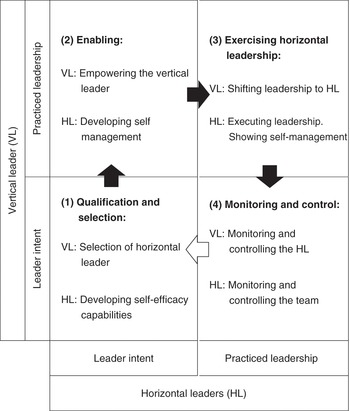
Figure 13.1. Leading and leadership, vertically and horizontally.
The empowerment of the horizontal leader(s) to their temporary role marks a social activity by the vertical leader and is addressed in quadrant 2 in the upper left of Figure 13.1. The vertical leader appoints (or grants the authority to) one or several horizontal leader(s). This activity is visible to the rest of the team and constitutes an interpersonal leadership activity on the part of the vertical leader. The person(s) empowered now has the chance to develop his or her self-management capabilities, and thus need to develop internally to the extent that the other team members will trust and accept the new horizontal leader, once he or she starts to exercise leadership.
Quadrant 3 in the upper right addresses the next step, that is, the leadership of both horizontal and vertical leaders. Here the vertical leader’s handover of leadership authority and the associated acceptance of it by horizontal leaders becomes visible to the team (and potentially other stakeholders). The horizontal leader(s) take(s) on the devised role and exercise(s) their leadership. Now the leadership styles of the vertical and horizontal leaders need to be synchronized in front of the other members of the team and other stakeholders, and clashes need to be avoided.
Once the horizontal leaders have taken over, the vertical leader’s monitoring and control of the horizontal leaders sets in, as shown in quadrant 4, lower right. This is an internal leading activity by the vertical leader and continues until the horizontal leaders finish their temporary role and the leadership authority goes back to the vertical leader. Then the circle repeats itself for the next occasion of balanced leadership.
In the following section, we discuss the model in more detail.
Quadrant 1: Qualification and Selection
In the above section we described the project manager’s decision to trust individual team members to lead the project or parts of it temporarily, and we noted a few criteria for trust (such as extraordinary skills, or good experiences in prior collaborations). The decision to trust (and subsequently empower the trustee) is made personally by the project manager and is therefore an intrapersonal decision of the vertical leader. Empirical evidence shows that trust is not absolute and, depending on the level of trust, the vertical leader may choose different levels of acceptance of horizontal leadership. This can include blind acceptance of what the horizontal leader does; verification of the horizontal leader’s actions by third parties, such as validation by another team member(s) or outside parties; review of the horizontal leader’s actions by the project manager together with his or her supervisor; giving time for the horizontal leader to prove the viability of his or her actions; or denial by the project manager (Müller et al., Reference Müller, Nikolova, Sankaran, Zhu, Xu, Vaagaasar and Drouin2016).
A precondition for being selected by the vertical leader is the potential horizontal leader’s intrapersonal decision (i.e. leader intent) to put himself or herself up to a possible leadership position. The potential horizontal leader’s positive decision supports his or her motivation for extraordinary performance, which needs to be visible to the vertical leader, as a potential candidate for horizontal leadership. This decision can be supported or hindered through a number of factors. Ample evidence exists that individuals often gradually take on more and more horizontal leadership roles until they can be considered a professional project manager, a phenomenon known as the accidental project manager (e.g., PMI, 2016). It describes the gradual role change from technical expert to leading technical expert, who, with increasing frequency, gets granted horizontal leadership authority until he or she is considered a project manager and becomes formally appointed to a vertical leadership role. Another condition for a positive decision to become a horizontal leader is the person’s belief that he or she has the abilities to successfully complete the task of horizontal leadership. This is known as self-efficacy and is described by Bandura (Reference Bandura1977, Reference Bandura1982). Here, the individual’s capacity to anticipate future consequences of his or her actions provides a cognitively based source of motivation for a certain type of behavior. Self-efficacy comes to bear in the subsequent intrapersonal decision whether one can successfully execute the behavior that leads to desired outcomes. A person’s strength in the conviction that he or she can be effective in their activity affects “whether they will even try to cope with given situations” (Bandura, Reference Bandura1977, p. 193). This positions self-efficacy as a major aspect for prospective horizontal leaders in their decision whether or not to accept such a role.
The literature on leadership has a long tradition in addressing this aspect. The ability to build self-efficacy in others is often described as a characteristic of successful (vertical) leaders and is measured as part of assessment models, such as vertical leaders’ competences in empowerment and development as described by Dulewicz and Higgs (Reference Dulewicz and Higgs2003) in their cluster of MQ competence. Here, empowerment is described as giving staff autonomy to take on personally challenging tasks. It is often exhibited by encouraging others to solve problems, and develop their own ideas and vision. Development is the vertical manager’s belief that others have the potential to take on ever more demanding tasks and roles. These managers then coach and support people in the development of their competences, so that they can contribute effectively and develop themselves (Dulewicz & Higgs, Reference Dulewicz and Higgs2005).
In summary, quadrant 1 describes qualification and selection as the preconditions for horizontal leadership to emerge. These are intrapersonal (leading) activities and decisions by both vertical and horizontal leaders.
Quadrant 2: Enabling Horizontal Leadership
Quadrant 2 comprises the vertical manager’s interpersonal leadership activity of enabling horizontal leadership and announcing (or at least indicating) the potential horizontal leader. At the same time, it is the interpersonal leading of the horizontal leader toward a level of self-management that qualifies him or her for this role in the eyes of the other team members.
The way the vertical manager enables a horizontal leader to take over is a question of leadership style. Styles are known to be contingent on a number of factors, such as the personality of the vertical leader (as described above using the example of Dulewicz and Higgs, Reference Dulewicz and Higgs2003), project type (Müller & Turner, Reference Müller and Turner2010a), project complexity (Turner & Müller, Reference Turner and Müller2006; Cavaleri & Reed, Reference Cavaleri and Reed2008), status of the project (e.g., Turner & Müller, Reference Turner and Müller2004), and national culture within which the project is executed (e.g., Müller & Turner, Reference Müller, Turner, Slevin, Cleland and Pinto2004), to name a few. Developing a theory on the combination of all these factors would go beyond the scope of this chapter. However, we would like to point out the need for a careful evaluation of the situation by the vertical leader before enabling or announcing a horizontal leader, as there might be rivalry for the role and the resulting tension might negatively impact team performance.
For the horizontal leadership candidate, the intrapersonal self-leading toward a level that convinces others that they want to be led by the candidate marks this stage of the process. Self-leading is the process through which people influence themselves to achieve the self-direction and self-motivation needed to perform (Manz, Reference Manz1986). Houghton, Neck, and Manz (Reference Houghton, Neck, Manz, Pearce and Conger2003) describe it as being at the heart of shared leadership and carried out by individuals through devising strategies to influence and motivate themselves. The authors describe three categories of strategies:
Behavior-focused strategies try to increase self-awareness for behavior needed to accomplish certain tasks. This is often done through self-observation, self-goal setting, self-reward, self-correcting feedback, and practicing.
Natural (or intrinsic) reward strategies focus on the positive aspects of a task or its inherently rewarding aspects. This is often done by shifting the focus to the pleasant aspects of work.
Constructive thought strategies influence and control the cognitive thought processes to facilitate the formation of constructive thought patterns or habits of thinking in order to impact positively on one’s performance. This is often done through self-analysis and improvement of belief systems (i.e., identify, confront and replace dysfunctional beliefs and assumptions), mental imagery of successful performance outcomes, and positive self-talk (e.g., replacing discouraging self-talk with encouraging optimistic self-dialogs).
The three categories of self-leadership interact with self-efficacy and contribute to the enhancement of self-efficacy perceptions, which should lead to higher performance.
When the horizontal leadership candidate reacts positively to the offer of leadership by the vertical leader, the next step in the process is reached.
Quadrant 3: Exercising Horizontal Leadership
At this stage of the process, vertical leadership is reduced and horizontal leadership increased. Here, the vertical leader steps out of the limelight without surrendering the responsibility and accountability for appropriate leadership – project managers’ responsibilities are part of established project governance structures and can be delegated but never transferred. Vertical leadership is still there, just not performed in the forefront. At the same time, horizontal leadership steps into the limelight and leads in synchronization with vertical leadership.
The vertical leader reduces his or her own visible leadership, but is still involved in making sure that the project develops in the desired way. For this, the vertical leader facilitates the process of balancing vertical and horizontal leadership, monitors the horizontal leader(s), and ensures the presence of the leadership style(s) required for the project in its current state. This may include traditional styles such as directive, transactional, or transformational (Houghton et al., Reference Houghton, Neck, Manz, Pearce and Conger2003), or more contemporary styles such as visionary, coaching, affiliative, democratic, pace-setting, or commanding (Goleman, Boyatzis, & McKee, Reference Goleman, Boyatzis and McKee2002). Especially when appointing less experienced horizontal leaders it becomes important to provide the required support to allow the candidates to be successful.
The horizontal leader(s) accept the power, step(s) into the limelight, and attempt to exercise the leadership positions they are appointed to. This is the time horizontal leaders are most influential and visible. The experiences gained during this period shape the self-efficacy beliefs and attitudes that impact on future decisions about accepting additional horizontal leadership opportunities, or even foster the desire to move into a management role in the future. As discussed above, the repeated appointment to a temporary leadership role in projects often paves the way for team members to become formally appointed as project manager in the future.
Quadrant 4: Monitoring and Control
This step is interwoven with step 3 in that it is the monitoring and control of the leadership exercised at step 3. For the vertical leader, this includes the intrapersonal leading activity of determining the scope, style, and duration of horizontal leadership. For the horizontal leader, it includes the implementation of monitoring and control as part of the interpersonal leadership he or she executes.
At this stage, the vertical leader leads himself or herself through a number of intrapersonal decisions. These include: the amount of power to be granted to horizontal leaders and entire team, the frequency and extent of monitoring of the horizontal leader’s activities, the ways of giving feedback, possible corrective actions, and the duration of the horizontal leadership. The amount of power refers to the degree the vertical leader steps back and leaves the field to the horizontal leader. Stepping back too much may be perceived by some vertical leaders as a sign of weakness or even a career-limiting move. This needs to be balanced by the minimum level of power that is needed for the horizontal leader to be motivated to take on the task and be accepted by the team. Too little power reduces confidence and the desire to engage in horizontal leadership (Houghton et al., Reference Houghton, Neck, Manz, Pearce and Conger2003). The monitoring and control must be in line with the level of power and the leadership style used. Claiming a high level of trust and then controlling on an hourly basis does not motivate or encourage the horizontal leader, especially not when done in front of the team. Feedback and possible corrective actions must also be adjusted in light of the power that is granted to the horizontal leader, possibly in one-on-one talks rather than team meetings. Finally, the vertical leader must agree with the horizontal leader when to hand back the leadership to the vertical leader or transfer it to another horizontal leader.
The horizontal leader’s role at this stage is to implement a monitoring and control system as part of his or her leadership style. Do people follow him or her? Do they respect the horizontal leader? Is he or she really “in charge”, or is the vertical leader (or someone else) actually leading the project? These types of questions must be addressed as part of the interpersonal leadership by the horizontal leader. An important aspect for this is the level of transparency in the project. The interaction between the two leadership roles (i.e., balanced leadership) should be visible and understandable by the team members, so that they view the temporary transfer of leadership as a legitimate and transparent move. This includes transparency in possible changes in leadership styles, monitoring and control approaches (such as a switch from outcome to behavior control [Ouchi, Reference Ouchi1980]), success factors, possible escalation procedures in case of problems with the temporary leader, and so forth. Finally, transparency in the distribution of power and authority between the two leadership roles is a necessity for coordinated and predictable leadership during the time the horizontal leader is in charge.
The above process shows the interaction of intrapersonal and interpersonal aspects of balanced leadership. It portrays balanced leadership as a four-step process, where each step comprises different, albeit synchronized, activities of the horizontal and vertical leaders. To that end, we addressed some of the limitations in the existing literature, which often only takes either an intra- or an interpersonal perspective, and showed the need for further studies to understand and theorize on the activities that go on in each of the four steps.
The process outlined here provides important insights for practitioners, such as the need for timely synchronization of the activities in each of the four steps, and the anticipation of the needs and activities of the subsequent step when executing balanced leadership. Moreover, it introduced the concept of balanced leadership, which is relatively new to the world of project management, but applicable at many layers in the organizational project management hierarchy or network. What has been described from the perspective of project manager as vertical leader and team member as horizontal leader is proposed as equally applicable for the program manager as vertical leader and the related project managers as horizontal leaders, or the portfolio manager and the respective program and project managers. To that end, we provided a new perspective to leadership in organizational project management, which will increase in importance due to the increasing specialization and diversity in projects.
We conclude that the process and systemic perspective of this chapter provides for a new and deeper understanding of the intra- and interpersonal dynamics in balanced leadership: it is a first step toward a more holistic understanding of balanced leadership in projects. This contributes to the development of more realistic leadership theories, which provide for more deliberate and successful leadership approaches.
Introduction
Amy Edmondson, who is a prominent management researcher on teams, states that organizations are increasingly using teams to get more complex work done, deliver better organizational performance, and create a more engaging and satisfying work environment. Projects also rely on effective teamwork to deliver results. However, research in projects has been mostly focused on studying teams within a project and on differentiating team development in projects from their development in functional teams or “permanent organizations.”
In this chapter, we look at teams from both a project perspective and a wider perspective by viewing their role in organizational project management and whether the relationship between project teams and functional teams needs to be reconsidered from an integration perspective. We touch upon the notion of cross-functional teams, which may become a necessity when you plan to integrate portfolio, program and/or project management teams with functional teams in an organization to deliver successful projects aligned to their strategy. We also present an analysis based on interviews with five experienced project managers on integrated teams, cross-functional teams, and how teams have evolved over a period of three decades from colocated teams to virtual, intergenerational and multicultural teams. We conclude with some ideas for further research into project teams from an OPM point of view.
Aim of the Chapter
The purpose of this chapter is therefore to understand the relationship between OPM and project teams through the lens of OPM and an illustrative case study on the changes or evolution in the management of project teams.
The chapter is structured as follows. First, we define what we understand by a “team,” and then expand our discussion on project teams and their key characteristics; second, we outline the relationships between OPM and project teams; third, we present the results from an analysis of interviews with five experienced project managers from different sectors; fourth, we compare the results from the interviews with the literature; and finally, we conclude with some ideas on further research that can be conducted from an OPM perspective on teams.
What Is a Team?
Teams have existed for hundreds of years and have been the subject of countless books. The benefits teams offer to organizational effectiveness have been well recognized (Katzenbach & Smith, Reference Katzenbach and Smith1993). More specifically, there is over fifty years of psychological research – literally thousands of studies – focused on understanding and influencing the processes that underlie team effectiveness (Kozlowski & Ilgen, Reference Kozlowski and Ilgen2006, p. 77). Several taxonomies of team types have been discussed in the literature (e.g., Cohen & Bailey, Reference Cohen and Bailey1997; Devine, Reference Devine2002; Hackman, Reference Hackman1990), for instance, teams who recommended things, teams who make or do things, and teams who run or manage things (Katzenbach & Smith, Reference Katzenbach and Smith1993). They could be projects teams, executive teams, cross-functional teams, and dispersed or virtual teams. Teams could consist of homogeneous or heterogeneous members (Mathieu, Maynard, Rapp, & Gilson, Reference Mathieu, Maynard, Rapp and Gilson2008). Teams are recognized as organizational units dedicated to organizational performance and are one of the most commonly used means for achieving organizational integration (Child, Reference Child2005).
But, what is a team? A few definitions of teams found in the literature are discussed next. From a systems point of view, teams are “complex dynamic systems that exist in a context, develop as members interact over time, and evolve and adapt as situational demands unfold” (Kozlowski & Ilgen, Reference Kozlowski and Ilgen2006, p. 78). From a role and responsibility point of view, they “are two or more individuals who socially interact (face-to-face or virtually); possess one or more common goals; are brought together to perform organizationally relevant tasks; exhibit interdependencies with respect to workflow, goals, and outcomes; have different roles and responsibilities; and are embedded together in an encompassing organizational system, with boundaries and linkages to the broader system context and task environment” (Kozlowski & Ilgen, Reference Kozlowski and Ilgen2006, p. 79) (see also: Alderfer, Reference Alderfer1977; Argote & McGrath, Reference Argote and McGrath1993; Hackman, Reference Hackman1992; Hollenbeck et al., Reference Hollenbeck, Ilgen, Sego, Hedlund, Major and Phillips1995; Kozlowski, Gully, McHugh, Salas, & Cannon-Bowers, Reference Kozlowski, Gully, McHugh, Salas and Cannon-Bowers1996; Kozlowski et al., Reference Kozlowski, Gully, Nason, Smith, Ilgen and Pulakos1999; Salas, Dickinson, Converse, & Tannenbaum, Reference Salas, Dickinson, Converse, Tannenbaum, Swezey and Salas1992). Looking further into the relationship between teams and the organization, organizational teams are “collectives who exist to perform organizationally relevant tasks, share one or more common goals, interact socially, exhibit task interdependencies, maintain and manage boundaries, and are embedded in an organizational context that sets boundaries, constrains the team, and influences exchanges with other units in the broader entity” (Kozlowski & Bell, Reference Kozlowski, Bell, Sessa and London2008, p. 334). A more recent definition also takes up a system view by defining teams as:
complex open systems forming entities characterized by two or more individuals who exist to perform organizationally relevant tasks, who interact socially, dynamically, recursively, adaptively, and often virtually; who have shared or common valued goals; who hold meaningful and high levels of task, feedback and goal interdependencies; who are often hierarchically structured; whose group has a limited life span; whose expertise, roles and responsibilities are distributed and who are bounded by and embedded within an organizational/environmental context that sets top-down constraints and that influences and is influenced by bottom-up phenomena occurring over time and enacted by competencies and processes, emergent cognitive and affective states, performance outcomes, exchanges with other teams, and stakeholder judgments of team member and team effectiveness.
From these definitions, one can conclude that teams operate in an organizational context that, in turn, influences their functioning; they have some levels of interdependencies (Mathieu et al., Reference Mathieu, Maynard, Rapp and Gilson2008); and they are complex dynamic systems with shared common goals with the team members interacting socially and often virtually (Bourgault & Drouin, 2009). Indeed, the increasing and constant evolution of technology has facilitated teams to be distributed across time and space (Bourgault et al., Reference Bourgault, Drouin, Daoudi and Hamel2009; Powell, Piccoli, & Ives, Reference Powell, Piccoli and Ives2004). Multicultural teams or diversity among team members are becoming common as teams are being linked around the globe by technology. Teams are also embedded in multilevel (individual, team, and organizational) systems (Kozlowski & Ilgen, Reference Kozlowski and Ilgen2006). This broad environmental context influences team efficacy or effectiveness. Team efficacy can be defined as a shared belief in the team’s collective capability to organize and execute courses of action required to produce expected levels of goal attainment (Bandura, Reference Bandura and Ramachandran1994, Reference Bandura1997). Over forty years of research has conceptualized team effectiveness based on the logic of an input–process–output (I-P-O) heuristic, formulated by McGrath (Reference McGrath1964). Inputs, here, refer to the composition of the team in terms of the constellation of individual characteristics and resources at multiple levels (individual, team, organization). Processes refer to activities that team members engage in, combining their resources to cope with task demands. They mediate the translation of inputs to outputs. Output has three facets: (a) judging performance by relevant others external to the team; (b) meeting of team-member needs; and (c) viability, or the willingness of members to remain in the team. Kozlowski and Ilgen (Reference Kozlowski and Ilgen2006) adopt a more contemporary perspective of team effectiveness by conceptualizing the team as embedded in a multilevel system that has individual-, team-, and organizational-level aspects; focusing centrally on task-relevant processes; incorporating temporal dynamics encompassing episodic tasks and developmental progression; and viewing team processes and effectiveness as emergent phenomena unfolding in a proximal task or social context that teams in part enact, while also being embedded in a larger organization system or environmental context.
Earlier in this section, we used several definitions of teams to pinpoint some key features (multilevel systems, diversity, virtuality, etc.). However, we only cover the tip of the iceberg to show the complexity in managing organizational teams. Working together in pursuing a common goal across multiple divisions in rapidly changing environments with dense interdependencies, organizations, teams are facing dizzying challenges. We will now conclude our discussion on teams in general, and move on to discuss project teams. For a deeper understanding of team-related topics such as team effectiveness, we invite the readers to look up the following references: Belbin (Reference Belbin2012); Kozlowski and Bell (Reference Kozlowski, Bell, Sessa and London2008); Kozlowski and Ilgen (Reference Kozlowski and Ilgen2006); Mathieu et al. (Reference Mathieu, Maynard, Rapp and Gilson2008); Mathieu and Schulze (Reference Mathieu and Schulze2006); McGrath (Reference McGrath1964, Reference McGrath1991); Tesluk and Mathieu (Reference Tesluk and Mathieu1999).
What is a Project Team?
In the previous section, we pointed out that several taxonomies of teams exist and a project team is one type among these (Cohen & Bailey, Reference Cohen and Bailey1997). But, what is a project team? Are there distinguishable features that differentiate project teams from other teams? According to PMI (2004) “the project team is composed of the people who have assigned roles and responsibilities for completing the project and is composed of the project manager, the project management team and for some projects, the project sponsor” (p.199). Lawler III (Reference Lawler1996), takes a product–consumer–service perspective by defining project teams as “teams typically formed to manufacture a particular product, develop new products, redesign existing ones, or deliver a service that has a known limited life expectancy. Team members can be on several project teams at once” (pp. 137–138). Englund and Graham (Reference Englund and Graham1997) discuss the nature and life of project teams by explaining that they are made up of a “core project team that is composed of representatives for each department involved in developing and implementing the new product or application: they stay on the project from beginning to end to direct the work of the people in the departments” (pp. 92–93), while Devine et al. (Reference Devine, Clayton, Philips, Dunford and Melner1999) include an external aspect by stating that they are ongoing project teams that are “standing teams with relatively stable membership that solve problems, make plans or decisions, or interact with clients or customers” (pp. 683–684). After analyzing the definitions of teams and project teams, Chiocchio et al. (Reference Chiocchio, Kelloway and Hobbs2015) propose the following definition:
A project team unites people with varied knowledge, expertise and experience who, within the life span of the project but over long work cycles, must acquire and pool large amounts of information in order to define or clarify their purpose, adapt or create the means to progressively elaborate an incrementally or radically new concept, service, product, activity, or more generally, to generate change.
For a good review of project team definitions see Chiocchio et al. (Reference Chiocchio, Kelloway and Hobbs2015).
Three distinguishing features emerge from these definitions. First, the notion of a core team that implies that some team members carry out the project from the beginning to end, either face-to-face or virtually. Team members stick together for the whole duration of the project and are responsible for the execution and completion of the project phases – initiation, planning, execution, and termination (PMI, 2008). Second, the notion of integration or integrative role that refers to bringing additional, more specialized individuals or teams at various project phases to fill knowledge gaps (Hoegl, Weinkauf, & Gemuenden, Reference Hoegl, Weinkauf and Gemuenden2004). This implies that the core project teams have an integrative role as they manage the project with additional teams from time to time (Clark & Wheelwright, Reference Clark and Wheelwright1992). Chiocchio et al. (Reference Chiocchio, Kelloway and Hobbs2015) coined the term component project team to refer to people or teams who contribute to the project for specialized tasks at specific times. Third, the notion of multiteam systems, as depicted by Connaughton, Williams, Shuffler, Zaccaro, Marks, and DeChurch (Reference Connaughton, Williams, Shuffler, Zaccaro, Marks and DeChurch2011), referring to the fact that teams are also embedded in large, complex, dynamic organizational systems, and teams operate autonomously as well as in coordination with other teams within an organizational context to carry out their tasks.
Projects can be carried out by single or multiple teams. Project success is dependent on achieving set project goals. The organization can help in achieving these goals by empowering the project teams with needed decision-making, assigning appropriate resources, and by creating a productive climate. This will also contribute to a team’s success. Specific team behaviors leading to project- as well as team success include: cooperation, commitment to project, project ownership, and trust between team members (McDonough, Reference McDonough2000). Team leadership (Turner & Müller, Reference Turner and Müller2005) and organizational support to teams (Drouin & Bourgault, Reference Drouin and Bourgault2013) are also mentioned as important enablers of project success.
As project teams are getting more dispersed, it is also necessary to consider the role of virtual teams in project success. For virtual project teams, key success factors could be summarized as follows. It is important to select, develop, and retain managers with managerial skills to build effective and efficient virtual teams (Gilley et al., Reference Gilley, Morris, Waite, Coates and Veliquette2010). The literature on virtual teams pays specific attention to social dimensions or team building and social cohesion (Lin et al., Reference Lin, Chen, Hsu and Fu2015). Research shows that a virtual team’s potential success factors and organizational support perceived by the team are positively correlated and influence each other (Drouin & Bourgault, Reference Drouin and Bourgault2013; and Shelton et al., Reference Shelton, Waite and Makela2010), and that increasing the power of a team and organizational support can increase productivity (Shelton et al., Reference Shelton, Waite and Makela2010). The importance of structural and relational factors in virtual work ensures the adaptation of members to the virtual workplace. The project manager must pay particular attention to matters concerning the type of work interdependencies between virtual workers, how individuals are assessed, how trust can be generated, and how organizational connectivity with virtual workers can be maintained (Raghuram et al., Reference Raghuram, Garud, Wiesenfeld and Gupta2001).
To ensure performance, all interdependent tasks performed by project teams require integration (Hoegl et al., Reference Hoegl, Weinkauf and Gemuenden2004). In addition, organizations need processes that integrate project-management-related activities and the project teams in charge of executing these tasks and in meeting common goals. The next section discusses the relationship between OPM and project teams, and explores the concept of integration as a core component of this relationship.
What Is the Relationship between Project Teams and OPM?
Integration as a Key Component of the Relationship between Project Teams and OPM
So far, we have discussed three aspects of project teams: core teams, their integrative role, and multiteam systems. At the project level, project managers in a single project manage the interdependencies within the team members and with the organizational level to execute the project. At the program level, program managers will also manage the interdependencies with the organization and with the multiple team members of each project that are part of the program, and govern the execution of all related projects in the program. At the project portfolio level, there is no direct management or integration of project or project teams by project portfolio managers. The role of the project portfolio managers is to make sure that the organization is selecting the right projects and programs and that these projects have the adequate resources to execute their tasks. Projects are carried out by single or multiple teams to perform interdependent tasks that require integration (Hoegl et al., Reference Hoegl, Weinkauf and Gemuenden2004).
OPM plays an integrative role for project team systems executing organizational projects, programs and portfolios, using different types of project teams (single or multiple teams). OPM is the structure and processes by which all organizational projects and groups of projects (projects, programs, and portfolios) are governed (Drouin et al., Reference Drouin, Sankaran and Müller2016; Müller, Reference Müller and Müller2016). More specifically, OPM processes emphasize integration that ensures adequate coordination between different project management activities, control that sets goals and monitors their attainment and, finally, reward to motivate project team members (Child, Reference Child2005). Child (Reference Child2005) also highlights that, in the organizational context, there is an emphasis on managing relationships between roles and units to achieve a creative and proactive synergy between them, implying that greater attention should be paid to integration. Further, according to Child (Reference Child2005, p. 79), “integration signifies coordination, cohesion and synergy between different roles or units in an organization whose activities are different but interdependent in the process of creating value.” The concept could be applied to vertical relations (e.g., a cohesive process of control) or to horizontal relations across an organization. Integration is recognized as being essential to avoid failure (Child, Reference Child2005) and should not be left to chance, for then it is not likely to happen (Reference Child2005, p. 79). According to Child (Reference Child2005), there are various mechanisms for strengthening integration, from simple arrangements for people to meet periodically to complex, multidimensional structures in which the contributions of specialized units are coordinated through a matrix arrangement. Teams (all types of teams: project teams, cross-functional teams, etc.) are one of the most commonly used means for achieving integration. Success in achieving integration using OPM lies primarily in its ability to integrate the project management resources, processes and systems and apply them flexibly to manage project activities strategically within the organization. Integrative processes facilitate the coordination across project management activities and across the organization.
Analysis of Five Illustrative Interviews
The authors interviewed five experienced project managers drawn from various industry sectors, using a set of questions derived from the project management literature on project teams to understand what happens in practice. A review of this literature used to construct questions for the interview is presented in Table 14.1.
| Authors | Title | Codes | Question Number |
|---|---|---|---|
| Adams & Anantatmula (Reference Adams and Anantatmula2010) | Social and behavioral influences on team process | Self-identity; social identity; group emotion; emotional intelligence | 1 |
| Jassawalla & Sashittal (Reference Jassawalla and Sashittal1999) | Building collaborative cross-functional new product teams | Cross-functional teams; collaboration | 1, 3 |
| Baiden, Price & Dainty (Reference Baiden, Price and Dainty2006) | The extent of team integration within construction projects | Fragmentation, integration; team performance | 11,12 |
| Bourgault, Drouin, Daoudi & Hamel (Reference Bourgault, Drouin, Daoudi and Hamel2009) Bourgault, Drouin, & Hamel (Reference Bourgault, Drouin and Hamel2008) | Decision making within distributed project teams: an exploration of formalization and autonomy as determinants of success | Decision making; distributed teams; formalization; autonomy | 10 |
| Drouin & Bourgault (Reference Drouin and Bourgault2013) | How organizational support distributed teams | Organizational support, team effectiveness | 7, 13 |
| Buvik & Rolfsen (Reference Buvik and Rolfsen2015) | Prior ties and trust development in project teams: a case study from the construction industry | Trust; teamwork; prior ties; | 2 |
| Chiocchio et al (Reference Chiocchio, Forgues, Paradis and Iordanova2011) | Teamwork in integrated design project: understanding the effect to trust, conflict and collaboration on performance | Collaboration; trust; conflict | 2, 3, 4, 6 |
| Eskerod & Blichfeldt (Reference Eskerod and Blichfeldt2005) | Managing team entries and withdrawals during the project life-cycle | Team composition; entry; withdrawal; cohesiveness | 6 |
| Gelbard & Carmeli (Reference Gelbard and Carmeli2009) | The interactive effect of team dynamics and organizational support on IT project success | Project success; performance; team dynamics; organizational support | 7, 13 |
| Henderson (Reference Henderson2008) | Validation and extension of a research model for virtuality, satisfaction and productivity on project teams | Communication; competency; team satisfaction; geographic dispersion | 11 |
| Hoegl & Weinkauf (Reference Hoegl and Weinkauf2005) | Managing task interdependencies in multi-team projects; A longitudinal study | Task interdependency | 14 |
| Hsu et al. (Reference Hsu, Chang, Klein and Jiang2011) | Exploring the impact to team mental models on information utilization and project performance in systems development | Teamwork mental models; team building; information utilization | 1, 8, 9 |
| Schneider (Reference Schneider1995) | PM in international teams; Instruments for improving cooperation | Cultural differences | 10, 19 |
| Lin et al. (Reference Lin, Chen, Hsu and Fu2015) | The impact of team knowledge on problem solving competence in information systems development team | Problem solving competence; knowledge complement; knowledge location; knowledge deployment | 8, 9 |
| Loo, R (Reference Loo2003) | Assessing ‘‘team climate’’ in project teams | Team climate; team building; team training | 1, 7, 15 |
| Mueller (Reference Mueller2015) | Formal and informal practices of knowledge sharing between project teams and enacted cultural characteristics | Knowledge sharing; organizational learning; | 8, 9 |
| Nordqvist et al. (Reference Nordqvist, Hovmark and Zika-Viktorsson2004) | Perceived time pressure and social processes in project teams | Time pressure; team processes | 9 |
| Ochieng & Price (Reference Ochieng and Price2010) | Managing cross-cultural communication in multicultural construction project teams: The case of Kenya and UK | Multiculturalism; intercultural; communication, project success | 11 |
| Peterson (Reference Peterson2007) | Motivation: How to increase project team performance | Team performance; project success; motivation | 7 |
| Ratcheva (Reference Ratcheva2009) | Integrating diverse knowledge through boundary spanning processes – the case of multidisciplinary project teams | Multidisciplinary project teams; knowledge diversity; boundaries | 17, 18 |
| Shapira, Laufer, & Shenhar (Reference Shapira, Laufer and Shenhar1994) | Anatomy of decision making in project planning teams | Decision-making | 10 |
| Shazi, Gillespie, & Steen (Reference Shazi, Gillespie and Steen2015) | Trust as a predictor of innovation network ties in project teams | Innovation; social networks; trust and trustworthiness | 2, 16 |
| Shelley (Reference Shelley2012) | Metaphor interactions to develop team relationships and robustness enhance project outcomes | Performance behavior; reflection; learning | 7,8 |
| Sommerville & Dalziel (Reference Sommerville and Dalziel1998) | Project teambuilding the applicability of Belbin’s team-role self-perception Inventory | Teambuilding | 1 to 6 |
| Thamhain (Reference Thamhain2008) | Team leadership effectiveness in technology based project environments | Team leadership; teamwork; project performance | 8 |
| Thamhain (Reference Thamhain2012) | The changing role of team leadership in multinational project environments | Team leadership; teamwork; project performance | 8, 19 |
| Tseng et al. (Reference Tseng, Huang, Chu and Gung2004) | Novel approach to multifunctional project team formation | Team formation; grey decision making | 10, 19 |
| Zhang & Cheng (Reference Zhang and Cheng2015) | Effect of knowledge leadership on knowledge sharing in engineering project design teams: The role of social capital | Knowledge sharing | 8, 9 |
| Berg & Karlsen (Reference Berg and Karlsen2014) | How project managers can encourage and develop positive emotions in project teams | Positive emotions, project leadership | 5 |
| Aapajoa, Herala, & Haapsalo (Reference Aapaoja, Herrala, Pekuri and Haapasalo2013) | The characteristics of and cornerstones for creating integrated teams | Collaboration; integrated team | 2, 4 |
| Messner (Reference Messner2015) | Measuring existent intercultural effectiveness in global teams | Intercultural effectiveness; international teams | 19 |
| Anantamula & Shrivatsav (Reference Anantatmula and Shrivastav2012) | Evolution of project teams for Generation Y workforce | Generation Y, baby boomer generation; generation X; veterans | 18 |
| Müller, Spang, & Ozcan (Reference Müller, Spang and Ozcan2009) | Cultural differences in decision making in project teams | Multicultural management; decision making | 10, 19 |
| Thamhain (Reference Thamhain1999) | Effective project leadership in complex self-directed team environments | Leadership style | 8 |
A purposeful sample of five experienced project managers who had more than fifteen years of experience representing different industry sectors was carried out in Sydney in December 2015. The questionnaire that was developed is attached in Appendix 15.1. It is based on a review of the literature as well as the authors’ own knowledge and experience of working in projects. The questions were divided into three sections:
1. Team autonomy and team building that is supported by topics such as self- and social identity, group emotion, collaboration, team autonomy, teamwork mental models and team building. (See question numbers 1 to 6 for key references in Table 14.1)
2. Team effectiveness and project success that cover topics such as team dynamics, organizational support, different ways of managing at different phases of the project, team climate, motivating environment, use of metaphors for team interactions, and team work environment. (See question numbers 7 to13 for key references in Table 14.1)
3. Other issues that came up when designing the questionnaire, such as the relationship between project teams, projects, programs, portfolio and project management offices, time pressure, team perception, teams and generation gaps, multicultural environment. (See question numbers 14 to 19 for key references in Table 14.1).
Interviews were held in Australia, at the UTS Business School, by the authors of this chapter. The five managers came from the following sectors: Telecommunication/banking, banking and defense, public sector, construction management/education, and IT industry/change management.
The reason for conducting these interviews was to confirm what was found in the literature with a diverse sample of experienced practitioners. The sample was purposefully chosen based on personal knowledge of these project managers, who were associated with UTS as researchers as well as industry advisory board members of the university’s Master of Project Management Program. Each interview lasted between forty-five minutes to an hour and was recorded and transcribed. The interviewees were also asked to add their own views on project teams in addition to answering the interview questions. The researchers used a two-step approach to analyze the interview transcripts: looking for themes that were found in the literature; and open coding from the ground. NVIVO qualitative analysis software was used to analyze the data. First, the interviews were coded by one of the authors of the paper, based on codes derived from the interview questions. An independent researcher, who was not involved in the interviews, analyzed the transcripts using NVIVO software, looking for new themes that were not found from the interview questions. Files in Microsoft Word were created for each node identified during the analysis, in which quotes corresponding to the node were included. Using these files, prominent themes that arose from these interviews were identified.
Data Analysis
While the interviews conducted covered a variety of topics, this analysis will focus on the responses to three questions related to this chapter:
1. Integration of team wherever they may be located
2. Relationships between project teams and other teams; i.e., cross-functional relationships
3. How the management of teams has changed over the years as the teams have moved away from being collocated to dispersed teams, which is the norm these days.
Integrated Teams
While teams may be formed and dispersed as a project moves along its phases, one of the project managers, CS, felt that a core team is likely to be present in long-term projects, often supported by teams of subject matter experts who may join and leave the project as required: “There will be some people that will be there from concept through to delivery and there will be – like subject matter experts, that may be there once, for a short period” (CS). Despite this transitional nature of teams, the integration of teams during the project was considered to be of utmost importance: “If we don‘t have that integration of the team, I think you wouldn’t be able to get anything done” (GS).
It was also observed by the managers that teams nowadays are not necessarily colocated due to the nature of projects: “we’re not necessarily co-located. That is typical these days [with] project teams as well. They’re located in various places” (MN). However, core people may have to be colocated at certain critical times: “If you have to co-locate core people at certain times, then that’s what you actually have to do to get the outcome” (MN).
More specific to virtuality (MN) highlighted: “There is no more difference between project team and virtual team, virtuality is assumed … And the technology to communicate and collaborate is taken for granted.” (CS) added: “Team members are not co-located anymore … We do not see the person anymore which is sometimes a challenge that requires more communication.”
Cross-Functional Teams
Project managers seem to enjoy working with people from other parts of an organization from a learning perspective: “To me, it gave the project additional interest and also allowed me, as well as running the project, to actually learn something from a different functional area that I hadn’t been involved with closely before” (PT).
Cooperation between cross-functional teams is expected to promote integration as well. “So projects, I think, and programs, need to be integrated into the organization so that the chief operating officer today says, yes, we need to advance this service or this product” (PT).
However, these relationships often develop through informal networking due to need rather than being formally supported. “The relationship exists because of the process … [from] the outside it looks like that, but on the inside, it is like, I have worked with him for a couple of projects, I build a relationship with him and … So you can create a relationship and that shadow relationship is what makes things go when things are really bad” (PT).
However, not all cross-functional relationships work well. MN expressed the opinion that the way the organization is structured could be a hindrance to projects, especially in public sector projects. For example, “the PMO becomes a hindrance because they don’t actually [foster cross-functional collaboration] – and you probably realize that … because of the way they’re structured. It becomes almost like a bureaucracy.” This was confirmed by another manager, MK, who felt that “The PMO in most programs I see tends to be very mechanistic and operational in nature. They gather the data, they do the accounting, they do the reports, they do the on-boarding. There’s very little higher order stuff that they’re actually doing.”
This is a pity because, according to PT, “the PMO is a vital part of the organization. It provides support to the project manager who may not be getting all the support from people below that he requires.” MK also confirmed this: ‘The PMO really should be supporting the knowledge management system. They should be gathering the metrics and doing the analysis around performance and continual improvement. These are the higher order things which will make the project and program much more successful.”
Thus, it looks like organizational structures and rules stand in the way of cross-functional collaboration, and any such cooperation often happens informally.
Changes Over Time
The managers interviewed had worked in a project management environment for over twenty- to twenty-five years. When they looked back on their careers, they stated that, over time, project teams started getting more and more dispersed and virtual. Managing projects used to be much simpler: “In my initial stages [as a project manager], the schedule meant not extreme task-by-task breakdown. There were no distributed teams. The engagement of teams and engagement of a project was also … typically an organization would embark on only a few projects. Then the pipeline was not crowded and the organization had a very clear vision of dedicated resources, even from the business, to manage the project, to be part of the project. But that has all changed’” (CS).
Outsourcing has really changed the nature of team work especially in IT projects, which has had a change in the roles and responsibilities of project managers: “We are talking about software which is automated and which has various types of scheduling and mind-mapping tools to think and conquer the parts, and then the teams are distributed, and then the outsourcing has taken over almost the entire IT industry around the world in a very shocking way. Everything is outsourced. As an organization we are collaborators, we are integrators. We look after the organizational interest in a contractual as well as delivery aspect” (GS).
The way teams work has also been influenced by generational differences in teams, which also poses challenges to project managers: “Actually, the generational change within projects as well, because when we first started, there was a different way that you managed projects” (MN).
As teams get dispersed, communication becomes a very important aspect of any project. “It is also difficult to get people involved when you are unable to communicate fact to face. But I think you’ve got to – this is building the rapport, actually getting people to communicate with you. It is a two-way street. You’ve got to keep people involved” (MN). This certainly makes it difficult for team building: ”I think because of the geographic dislocation and the virtual teaming, teambuilding’s even more important than it was when we had a co-located model’”(MN). But the attention to team building which was there in earlier years is not taken seriously by organizations. “I think there are going to be industries or instances out there where team building is right at the top, but not where I’m working at the moment. Which is kind of interesting, because I think once we get serious about innovation it’s going to bring it all back in again” (MK).
Another aspect of teams that has changed is that they have become more multicultural. The project managers interviewed did not see that such diversity affected their work. On the contrary, they enjoyed this diversity. “I get invigorated by working with people from different backgrounds, educational backgrounds, different races, and different ways of thinking” (MK).
Over the years, tools used to work with teams have become more sophisticated to deal with virtuality more effectively. “I think some of the tools we’ve got available now are more effective, easier to understand, than they were years ago’” (MK).
Discussion
In this section, we compare what we found from the interviews with what we found in the literature review. We also highlight some new areas that have not been covered in the literature that could point to new research directions about project integration of core teams and component teams (or teams of specialists or subject matter experts) as contributing to project success by the managers interviewed, which was in line with the literature, and is evident from the quote, “If we don’t have that integration of the team, I think you wouldn’t be able to get anything done” (CS).
Virtuality was viewed as the norm and not the exception by the managers, especially in software work, where the work was also outsourced and teams were not colocated anymore. One of the points made by the managers, which was not found in the literature, is the value of tools that can help collaboration between dispersed teams and can also help in team development. This was confirmed by MK, who stated that “I think some of the tools we’ve got available now are more effective, easier to understand, than they were years ago.”
The managers interviewed also pointed out the necessity for building close relationships between project teams and other teams in the organization, but to which insufficient attention has been paid. Often, this is achieved through personal relationships and building trust. These relationships often develop through informal networking due to need rather than being formally supported. It seems that organizational processes that integrate project-management-related activities and project teams in charge of executing these tasks and in meeting common goals do not formally exist in organizations.
Two of the managers interviewed felt that the PMO could be the agency to foster cross-functional collaboration. This idea did not come up in the literature reviewed. MN stated that “the PMO becomes a hindrance because they don’t actually [foster cross-functional collaboration] – and you probably realize that … because of the way they’re structured. It becomes almost like a bureaucracy.” Similar views were also expressed by MK.
The managers did find that the nature of teams has changed over time, and teams have become more diverse, intergenerational, and multicultural, with virtuality taken for granted. While these changes posed some issues initially, they have become part of the norm these days. MK stated: “I get invigorated by working with people from different backgrounds, educational backgrounds, different races, and different ways of thinking.” However, the attention given to team development has diminished while it is even more important when diverse teams work together.
Concluding Remarks
The aim of this chapter is to understand what could be the relationship between OPM and project teams through the lens of OPM and an illustrative analysis of interviews with a diverse sample of experienced project managers. Overall, our results show that there are no formal integration processes within organizations to manage the horizontal relations across project teams and multifunctional teams. Integration is based on the informal relationships developed by project managers and their capability to build a strong network within the organization. Similarly, adequate coordination that could be expected vertically between project-management-related activities for instance, under the responsibility of the PMO, seems not to meet the expectations. Organizational processes need to be developed in this regard; some rethinking of the PMO role could be part of this reflection. Our case study also demonstrates that core teams are essential for the success of the project. Core teams have the responsibility to integrate the activities within the project. Project managers should be capable of bringing and attracting additional or specialized individuals as the “component project team” (Chiocchio et al., Reference Chiocchio, Kelloway and Hobbs2015) at various project phases to fill the gaps in expertise that is needed for success of the project (Hoegl, Weinkauf, & Gemuenden, Reference Hoegl, Weinkauf and Gemuenden2004).
From our investigation, we can also highlight that OPM could fill the empty space or formal link between project teams and the organization by playing an integrative role. This integrative role focuses on facilitating through formal and informal mechanisms the dynamic and virtual relationships and exchanges between team members and cross-functional teams, and enables interdependencies between project teams and organizational functions. OPM could also help define common goals and shared values between team members. It could support teams in insuring that feedback is provided to team members by project managers, program managers, and portfolios leaders and making team members understand what environmental concerns and organizational constraints could influence their functioning (Mathieu et al., Reference Mathieu, Maynard, Rapp and Gilson2008). Since teams are often embedded in multilevel organizational systems they need support to navigate through these levels. Team efficacy is dependent on the shared belief in the team’s collective capability to organize and execute its tasks (Bandura, Reference Bandura and Ramachandran1994, Reference Bandura1997). The integrative role also signals that OPM should manage interdependencies and be responsible to develop proactive synergy between project management activities (projects, programs, and portfolios), which are different but interdependent, in the process of creating PM-related activities’ effectiveness and value for the organization. Integration should not be left to chance (Handy, 1993). Success in achieving integration lies in OPM’s ability to facilitate the integration of PM resources, processes, and systems and apply them malleably to manage and coordinate across the organization PM teams’ activities.
An additional role for OPM could be in ensuring team effectiveness in developing input–process–output mechanisms related to all PM-related activities and their team effectiveness. This means that OPM could be involved in the composition of teams, in terms of making sure that sufficient resources with adequate profiles are available for the PM-related activities. OPM could mediate the translation of inputs into outputs by meeting team member needs to perform their tasks. By focusing on task-relevant processes, OPM not only supports team effectiveness but also provides support to PM-related activities and helps team members to be better embedded in the larger organizational system and reach their common goals among the PM-related activities and across the organization (Kozlowshi & Ilgen, Reference Kozlowski and Ilgen2006). Finally, OPM’s integrative role should evolve with the teams’ changing environment, in terms of new challenges that project teams will face such as cultural diversity and intergenerational issues. OPM should be responsible and support the development of mechanisms for PM team members to adapt to the changing environment and teams’ new trends so that team members can become aware of these changes to improve team effectiveness.
In terms of future research, research on OPM is at an early stage. They are plenty of challenges, issues, and research topics that can be explored. OPM’s integrative role needs to be refined and deepened. With this chapter, we have opened up a window of a possible relationship between OPM and its integrative role and PM teams as a vehicle of integration with the support of OPM processes. More research is needed in this regard. We have only explored the tip of the iceberg.
Introduction
How can organizations and practitioners best leverage project knowledge and knowledge services (KS) to get things done in the modern complex project environment? Practitioners say it is increasingly difficult to bring ideas to fruition and projects to successful completion. Strategic initiatives fail and projects are not aligned to strategy; bureaucracy, regulations and politics, paralyze action; and the pace of decision-making, progress, and management of change are not what they could or should be.
This chapter focuses on Project Management (PM) as the most flexible and adaptable framework through which organizations and individuals can achieve realistic outcomes and results in an environment where a rapid pace of change impacts organizational, social, technical, strategic, and administrative systems. This management methodology is flexible and adaptable enough to span the operational and strategic contexts to accommodate change, yet rigorous enough to ensure that progress continues toward goals and objectives in the most efficient and effective way possible. In addition, a project knowledge systems perspective that focuses on accelerated learning best addresses handling complexity within a complex environment of increasingly constrained resources for projects that matter within an organizational hierarchy or network.
The case for emphasizing accelerated learning through knowledge services to improve performance in the modern complex project environment is strong. From a global perspective, learning as an overall activity is rapidly expanding in all parts of the world, but is difficult to define because of a diverse set of learning agents; a wide array of institutional and financial sponsors; a wide chasm of learning needs; a diverse set of laws, policies, rules, regulations, and cultures that influence the application of knowledge; and an increasingly large number of ways for people to participate in learning activities. Moving to an organizational projects perspective, learning is alternately enabled and hindered by the rapid development and implementation of technological tools and the accompanying relentless pace of change and churn. Organizations are struggling with the requirement that learning be accelerated to accommodate the explosion of data, information, knowledge, and wisdom so that pragmatic solutions can be implemented for projects that matter within an organizational hierarchy or network.
This chapter helps answer the question of how best to leverage project knowledge and knowledge services to get things done, implementing projects that matter in the modern complex project environment. The Rapid Engagement for Accelerated Learning (REAL) Knowledge Model is presented as a descriptive model of how knowledge flow and knowledge services can work in a particular organizational context, allowing organizations to formulate knowledge activities that address identified strategic knowledge imperatives, achieve buy-in across diverse communities, and accelerate learning to reduce complexity and ensure that risks based on knowledge are identified and mitigated or eliminated. It is anticipated that future research can advance the understanding of the components of this model to achieve normative assumptions, definitions, and standards that promote effective and efficient knowledge practices that reduce complexity and accelerate learning to achieve successful outcomes.
The Project Knowledge Environment
How can organizations and practitioners best leverage project knowledge and knowledge services to get things done in the modern complex project environment?
Based on research, experiences and conversations across public, private, government, industry, academia, and professional organizations, practitioners say it is increasingly difficult to bring ideas to fruition and projects to completion. This difficulty is reflected through several facets of recent research. One study found only 56 percent of strategic initiatives meet original goals and business intent in surveyed project organizations, and 48 percent of projects that are not highly aligned to organizational strategy succeed (Project Management Institute, 2014). NASA collaborated with Aviation Week and industry leaders on the second annual Young Professionals Study and discovered that the top frustration of the under-35 workforce was bureaucracy and politics and that there is no time to innovate and create (Anselmo and Hedden, Reference Anselmo and Hedden2011).
Experience at NASA over thirty years suggests that significant improvements can be gained through a focus on the capture and flow of project knowledge in terms of organizational, individual, and team project factors within an organizational systems perspective. For NASA, knowledge involves the unique requirements, solutions, and expertise shared across individuals, teams, projects, programs, Mission Directorates, and Centers, often defined as codified knowledge (scientific knowledge, engineering and technical knowledge, and business processes) and know-how (techniques, processes, procedures, and craftsmanship), presenting the classic dichotomy of explicit and tacit knowledge where Polanyi (Reference Polanyi1966) first says of tacit knowledge, “we can know more than we can tell.” There are also other relevant types of knowledge that play a significant role, such as that in a social context. In one example, Neffinger and Kohut (Reference Neffinger and Kohut2013) emphasized the importance of perceptions of strength and warmth in interpersonal and team environments and how an optimal balance of these characteristics informs social situations. A better understanding of the social context of project knowledge can serve as a basis for improved prioritization and a more pragmatic approach to problem solving. Organizational disregard for this type of knowledge can lead to project failures such as the NASA Challenger and Columbia shuttle disasters (Hoffman and Boyle, Reference Hoffman and Boyle2013), where the technical root causes were investigated but the underlying causes were poor team communications and lack of organizational learning.
NASA, at the end of the day, is a project organization. The driving motivation concerning knowledge is ultimately mission success. Complexity works against this focus on mission success, and it can take many forms:
Confusing, vague, poorly defined priorities, strategies, lines of authority, governance, policies, roles and responsibilities and support, characterized by iterative reorganizations, constant budget changes, constant resource level adjustments, a proliferation of administrative burdens, and endless requirements.
A proliferation of customers, stakeholders, and strategic partner interfaces at multiple levels of interest, involvement, and responsibility.
Technical complexity and system integration issues within and across multiple disciplines and systems.
Increased amount and availability of data and information for process input, throughput, and output.
Multiple overlapping, conflicting, outdated processes and procedures that involve multiple points of contact distributed across multiple organizational levels and across multiple oversight and advisory entities, characterized by competing priorities, strategies, lines of authority, governance, policies, roles and responsibilities, and support requirements.
Complexity drives a rapid pace of change that impacts organizational social, technical, strategic and administrative systems. Davenport and Prusak (Reference Davenport and Prusak1998) recognized this when they defined future success in terms of organizations that know how to do new things well and quickly. The shelf-life of products and services is increasingly shortened, requiring a management methodology that is flexible and adaptable across the operational and strategic contexts to accommodate change, yet rigorous enough to ensure that progress continues toward goals and objectives in the most efficient and effective way possible. PM is a discipline often applied to achieve this flexibility and adaptability, thus handling the knowledge requirements for projects to better perform under these increased burdens makes sense. For NASA, a project knowledge systems perspective best addresses handling complexity within an environment of increasingly constrained resources.
As mentioned, one form of complexity is the amount of available data and information. According to the independent research organization SINTEF (Dragland, Reference Dragland2013), 90 percent of the data in the world at that point had been generated in the past two years, an incredible statistic that reinforced a claim by former Google chief executive officer Eric Schmidt at the 2010 Techonomy conference (Kirkpatrick, Reference Kirkpatrick2010) that humans currently create as much information in two days as they did from the dawn of man through the year 2003. Regardless of competing perspectives from diverse organizations, it is an accelerating revolution of data, information, and knowledge that demands effectiveness and efficiency in the core processes of how it is captured and retained, shared and applied, and results in discovery and creation.
Change is accelerated by this expansion of data and information and requires organizations to better address strategy and decisions. Learning is alternately enabled and hindered by the pace of technological change. On the one hand, it ensures data and information availability 24 hours a day, seven days a week. On the other hand, the capability to process the data and information into usable and actionable knowledge and wisdom and to focus organizations and practitioners on implementing solutions suffers. This wealth of data and information interferes with focusing, prioritizing, and moving confidently into the future because planning often suffers when new data and information obscures the original intent. The inductive process of building a list of good ideas is worthless without the deductive prioritization of what is truly important in terms of context, urgency, and relevance – the magic that is delivered through good leadership.
This burden of change is ultimately placed squarely on the shoulders of what is termed the NASA technical workforce, practitioners possessing specialized skills that contribute to engineering efforts involving the disciplines of math, science, and technology. Over the years, their responsibility has shifted from a focus on the operational project objectives of scope, technical performance, quality, schedule, and cost to a more encompassing responsibility of functional activities that includes business management, commercialization, new technology identification and development, strategy development, and much more.
What is the nature of these barriers and complications originating from multiple sources on the path to achievement? Some are political, others are related to competence at the organizational, team, and individual levels. Some concern leadership capability accompanied by poor communications up, down, or laterally in the organization. Perhaps there are incorrect, ill-defined expectations and a lack of strategic alignment in the project or across the larger organization. Others may reflect significant external market or business change. Regardless, they conspire in the dark corners of organizations to create a lack of focus and mission, a fragmenting of common purpose into special interests and personal agendas, and ultimately stasis, a potential death knell for modern organizations in a volatile competitive world.
A strategic knowledge systems perspective is essential to uncover and define project relationships and the risks inherent in project knowledge interfaces. This is critical, since it provides insight into the nature of the realities that others live in. Unless this is analyzed and contingencies are planned for, the risk of failure increases. Fortunately, the message is getting through to senior executives. In a Conference Board (Hackett, Reference Hackett2000) research report on Knowledge Management (KM), 80 percent of surveyed organizations had KM activities underway, 60 percent expected an enterprise-wide KM system within the next five years, and 25 percent had a chief knowledge officer (CKO) or chief learning officer in place. At the end of the day, capturing and effectively relating the journey to achieve outcomes is a story that each individual and team creates and shares. For NASA, key knowledge imperatives and knowledge tools have been developed over the years to help project teams in their efforts. Relating this context helps in understanding where NASA is today and how these lessons can inform other project organizations.
Historical Context of Project Knowledge Services at NASA
In pursuit of what really works in project knowledge, how did NASA evolve to the point of appointing the first CKO for the Agency and establishing Center and Mission Directorate CKOs across the organization?
Many organizations face defining events that can drive organizational change and provide lessons for the future. For NASA, these defining events at a macro level are well known not only to employees but also to the general public. However, the changes that these events drove in the fabric of the organization are not as evident, especially through the lenses of knowledge and organizational learning.
As discussed in previous articles addressing the historical context, governance, and priorities of the Agency knowledge services (Hoffman and Boyle, Reference Hoffman and Boyle2013), there are several events that have shaped the Agency. One was the Challenger disaster in 1986 that killed seven astronauts and forced the Agency into brutal introspection. It resulted in the creation of a training program called the Program and Project Management Initiative (PPMI) that promoted PM capabilities in advance of Agency needs. At a time where large, expensive, long-duration programs and projects developed project practitioners through individual experience, coaching, and mentoring, this disaster forced a change toward systematized, codified, and vastly improved individual preparation.
Another defining event comprised the Mars Mission Failures in 1998–1999 (the Climate Orbiter, Polar Lander, and Deep Space 2 probes) that occurred during the era of Faster, Better, Cheaper (FBC), a management paradigm adapting NASA to increasing mission demands in an environment of diminishing resources. These mission failures and the resulting investigations changed the Agency focus from individual to team capabilities and shifted emphasis to shared stories; the development of new policy guidance to prevent the operational mistakes that drove the failures; and a more disciplined approach to include better testing in science missions that did not involve crew safety issues.
The Columbia disaster echoed the Challenger in 2003, where the detaching foam damaged the wing on ascent of the vehicle and ultimately resulted in vehicle disintegration upon descent, killing seven astronauts. The Columbia Accident Investigation Board (CAIB) discovered that NASA managers made assumptions that were technically indefensible, such as that the leading edge materials were tougher than the thermal tiles and could not be easily compromised. They also found that team processes, communications, and interpersonal dynamics were ineffective and NASA managers heard but did not listen to engineering and safety concerns (National Aeronautics and Space Administration, 2003). As a result, technical options were not fully explored and the vehicle and crew were lost. This forced a relearning of lessons from case studies, new multidisciplinary knowledge sharing forums, and major governance and policy changes such as: the creation of the NASA Engineering Safety Center (NESC) to support technical knowledge and capability; a change in NASA governance on the balance of power in technical missions; and an emphasis on defining technical authority in mission decisions. NASA also adopted mechanisms to improve communications and interpersonal dynamics that can defeat Organizational Silence, the tendency to say or do little despite the presence of significant organizational threats, and Normalization of Deviance, the organizational acceptance of risky situations and behavior due to increased frequency over time (Vaughan, Reference Vaughan1996).
The ghosts of Challenger and Columbia still haunt the Agency. In 2011, the NASA Aerospace Safety Advisory Panel (ASAP) reported that the Agency needed to create a more systematic approach in capturing implicit and explicit knowledge and recommended the appointment of a formal Agency-level CKO, supported by a set of appointed CKOs at each Center and Mission Directorate. This panel was established in 1968 to iteratively evaluate NASA, through direct observation of operations and decision-making, in terms of safety performance and providing advice to NASA senior leadership on how to improve that performance. In the aftermath of the Columbia accident, Congress required that the ASAP submit an annual report to the NASA Administrator and to Congress. The annual report examines Agency compliance with the recommendations of the CAIB, as well as management and culture factors related to safety.
Recently, the ASAP review team asked NASA project personnel, “What is being done to ensure these lessons are being formally and systematically captured and made accessible across the whole organization?” The responses indicated there was no system that effectively captured, shared, and allowed other projects to find these critical lessons. The issues of searchability, findability, and applicability continue to be a great challenge. Projects are committed to identifying and sharing critical knowledge and lessons within a team, but it is rare to find knowledge across a system of systems and across project boundaries. In an increasingly complex and interconnected world, this integration can spell the difference between success and failure.
The Agency readily concurred with the CKO recommendation in 2011, focusing the Agency KS effort by appointing an Agency CKO within the Office of the Chief Engineer and designating CKO positions across Centers, Mission Directorates, and Functional Offices. The OCE evolved its functions toward serving as an enterprise-wide Project Management Office (PMO), creating a structure responsible for developing and implementing the strategy, policy, standards, workforce development, advanced concepts, mission architecture, integration across program and mission boundaries, and program assessment for overall technical workforce development that supports project and program success at an enterprise level (PMI, 2012).
NASA Knowledge Services Governance and Strategic Imperatives
Any NASA knowledge management approach needs to be adaptable and flexible to accommodate the varied requirements and cultural characteristics of each Center, Mission Directorate, and Functional Office. A Federated model was the best fit for the Agency, defining the NASA CKO as a facilitator and champion – not an overseer or direct manager – for Agency knowledge services. It struck a balance between autonomy and responsibility, where Centers, Mission Directorates, and Functional Offices were free to determine the knowledge approach that best fit their particular needs, but were responsible to share knowledge that benefitted the overall Agency. The governance document for NASA Knowledge (National Aeronautics and Space Administration, 2013) was collaboratively rewritten because NASA had greatly expanded its knowledge activities over the past several years to include a wider array of services than simply capturing and retaining lessons-learned.
The new policy ensured that NASA manages knowledge resources in a way that enables the Agency to execute programs, projects, and missions with the highest likelihood of mission success, emphasizing a KS-integrated strategic framework. It also defined the roles and responsibilities for CKOs at the Centers, Mission Directorates, and Functional Offices. The new policy addressed a set of KS priorities that clarified NASA objectives for project knowledge and emphasized the development and implementation of future knowledge initiatives, measures, and metrics (Figure 15.1):
In terms of people, sustain and expand the use of the agency’s intellectual capital across NASA’s enterprises and generations through better networks, alliances, and communities of practice.
In terms of people, increase collaboration across organizational barriers through promotion of a culture of openness.
In terms of systems, support the technical workforce in executing NASA’s missions efficiently and effectively through lessons learned, mishap reports, and promulgation of best practices.
In terms of systems, create an integrated infrastructure of knowledge that identifies the value of information and aligns practitioner and organizational imperatives through accessible information and user-friendly services.
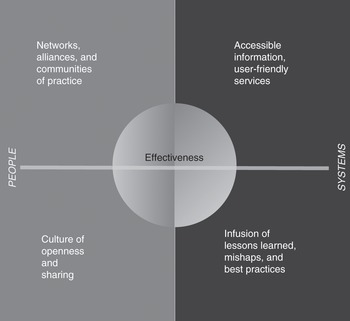
Figure 15.1. Knowledge services strategic framework.
One of the most striking things that the Agency’s knowledge community discovered was the sheer depth and breadth of activity underway across the Agency. Some was found through self-service, such as typing a query in a search box and getting answers that point in the right direction, involving one person at a time, and worked best with explicit knowledge that does not require a lot of context or personal judgment. At the other extreme, tacit knowledge that was dependent on context and personal judgment was transmitted through social interaction at meetings and storytelling.
Given this range of knowledge activities, the NASA knowledge community identified an initial set of knowledge categories that addressed most of the activities taking place across NASA that could be populated on the first-ever Agency Knowledge Map (Figure 15.2):
Online Tools – Include but are not limited to: portals; document repositories; collaboration and sharing sites; video libraries.
Search/Tag/Taxonomy Tools – Dedicated search engine for knowledge (e.g., Google Search Appliance) and any initiatives related to meta-tagging or taxonomy.
Case Studies/Publications – Original documents or multimedia case studies that capture project stories and associated lessons learned or best practices.
Lessons Learned/Knowledge Processes – Any defined process that an organization uses to identify or capture knowledge, lessons learned, or best practices, including: Lessons Learned Information System vetting process; organization-specific lessons learned processes; benchmarking; cases; knowledge sharing recognition programs; knowledge product validation processes; communications about expectations related to knowledge sharing.
Knowledge Networks – Any defined knowledge network, such as: a community of practice; expert locator; mass collaboration activity; workspaces specifically designed to enable exchanges and collaboration.
Social Exchanges – Any activities that bring people together in person to share knowledge (e.g., forums, workshops, Lunch and Learn/Pause and Learn). The reach of these activities can be multiplied through online tools such as videos and virtual dialogues.
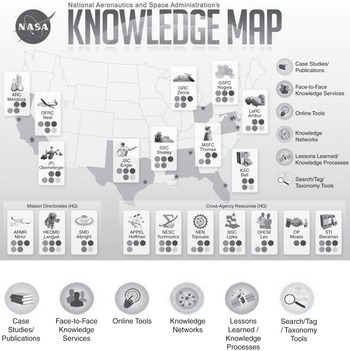
Figure 15.2. NASA Knowledge Map and legend.
The Agency is now linking all identified products and series to the map and creating active links to the resources. The categories are not a perfect fit for every type of knowledge activity across diverse organizations and multiple disciplines, but the hurdle cleared was the awareness that the perfect is the enemy of the good. The knowledge community used these categories as an initial starting point that could be institutionalized, modified, and clarified during subsequent iterative reviews.
The NASA knowledge community also recognized that there are valuable lessons to be learned from other domestic and international organizations in the Federal government, industry, academia, and professional organizations. In extending the community beyond the core NASA footprint, the CKO Office is involved with several important communities of practice, two examples of which are: the Federal Knowledge Management (KM) Community that meets quarterly for sharing best practices and leveraging lessons learned; and the International Project Management Committee (IPMC) and Knowledge Management Technical Committee under the International Astronautical Federation (IAF).
Strategic Imperatives in the Modern Project Knowledge Environment
With the NASA historical context in mind and reflecting on its journey to project excellence, what has emerged as driving strategic imperatives that inform the development of KS at NASA and, through analogy, other organizations?
At its core, NASA is a project organization fixated on mission success. There are 12 mutually reinforcing strategic imperatives that have emerged from interviews, studies, and experience. These guide the design, implementation, and evaluation of KS for NASA, and are discussed in no particular order of priority.
One critical strategic imperative is Leadership. It is ironic that one of the more fragmented disciplines provides valuable answers for the application of KS in organizations. Without effective leadership, KS and its results are at best serendipitous, at worst failures. The essence of leadership occurs with an insight that things should change, but also with a profound realization that the reasons for change may be clear to leaders themselves but not necessarily to others. There exists an external stakeholder community as well as a core internal project team to lead, and both should be understood and managed. Additionally, good leaders align projects with organizational strategy, mission and goals, admittedly easier said than done in the modern environment of information overload and change. Successful implementation happens with a carefully articulated vision, leadership focus on that vision, and attention to detail on implementation.
It is a Project World. Varied organizations worldwide require a methodology allowing for rigor in managing temporary, unique initiatives toward the achievement of defined requirements and project goals and outcomes that are aligned to organizational strategy in an era of constrained resources. In this context, PM is uniquely positioned as an adaptable discipline that fits these requirements and can maximize the use of learning to promote efficiency and effectiveness. Again, the alignment of project goals to organizational strategy through good leadership is critical.
Knowledge is the essential element for the creation of successful physical and virtual products and services. It can be viewed as an organized set of content, skills, and capabilities gained through experience as well as through formal and informal learning that organizations and practitioners apply to make sense of new and existing data and information. Knowledge can also exist as previously analyzed and formatted lessons and stories that are already adaptable to new situations. The ascendance of leaders who can validate the realities to which projects they are able to apply knowledge and base decisions on, is key.
Talent Management addresses the specification, identification, nurturing, transfer, maintenance, and expansion of the competitive advantage of practitioner expertise and competence. It encompasses the broad definition of diversity that goes beyond the classic categories of color, race, religion, and national origin to domestic and international variables important to geographically dispersed multicultural teams, such as multigenerational, cross-disciplinary, and cross-experiential variables. This allows diverse groups to bring a diversity of experience, attitudes, knowledge, focus, and interests to the table, strengthening both inductive and deductive problem-solving approaches and nurturing innovation. Good leaders link talent management with executive sponsorship, organizational strategy, and the core work of the organization. They also achieve operational efficiencies by learning, working, and collaborating together at a distance independent of time and geography and leverage smart networks that provide content, access, and connection to project data, information and knowledge. For NASA, talent management is represented as the variables of Abilities, Assignments, Attitudes, and Alliances (Figure 15.4).

Figure 15.3. NASA REAL Knowledge Model.

Figure 15.4. The 4A Word Cloud.
Portfolio Management integrates projects with strategy and creates an organizing framework and focus that drives organizational purpose and activities. It provides a centralized function that promulgates a systems view of knowledge, where stove-piped disciplines and activities can transcend boundaries and discover and apply cross-disciplinary knowledge to increase competitive advantage and better achieve results. Organizational expectations can also be tested against reality at this level and adjusted and communicated accordingly to eliminate or mitigate errors and achieve better decisions.
Certification establishes objective, validated standards and functions to benchmark achievement in defined categories of practitioner performance and capability. It also provides organizations and practitioners a way to establish trust with superiors, peers, team members, customers and stakeholders, and provides a framework for adapting to change as well as a method to address emerging performance requirements. For practitioners, it provides a roadmap for individual development and serves to link organizational performance and individual capability (Duarte et al., Reference Duarte, Lewis, Crossman and Hoffman1995). Since people are essential in projects, certification allows for objective definitions of the four Talent Management variables of Abilities, Assignments, Attitudes and Alliances. An example of a discipline standard is the Project Management Body of Knowledge (Project Management Institute, 2013), which specifies the 10 knowledge areas that currently define the framework of the discipline.
Transparency is an important consideration as the network of organizational portfolio sponsors, project team-members, customers, stakeholders, strategic partners, suppliers, and other interested parties tie into organizational strategy and project operations through information and communication technology tools. In this environment, nothing is hidden for long and errors travel at the speed of light. Communications with each interface should be carefully defined across intensity and frequency dimensions; for example, where external stakeholder communities may expect to be informed about progress at a higher level, but not as frequently or as in-depth as internal leadership. Transparency that is formally built into the strategic business process encourages innovation, translating economies of scale and a breadth of experiential lessons into innovation and flexibility.
Frugal Innovation (The Economist, 2010) is a mindset that views constraints in an era of restricted and diminished resources as opportunities, leveraging sustainability and a focus on organizational core competencies to reduce complexity and increase the probability of better outcomes. Sustainability, in particular, has gained momentum as the cost to the planet and availability of resources increasingly impact business decisions. Organizational core competencies for a product or service involves what it must do in depth rather than what it can do in breadth, ensuring that organizational capacity in areas such as technological, social, political, economic, and learning dimensions are part of the frugal innovation process. In a mutually reinforcing perspective, imperatives such as Transparency allow the broader team to share knowledge and experience to improve and innovate in terms of products and services, supporting the Frugal Innovation effort.
Accelerated Learning is the tactic of employing state-of-the-art digital technologies, traditional knowledge-sharing activities, modern learning strategies, social media processes and tools, and cross-disciplinary knowledge into the broadest possible view of learning for an organization. The operational knowledge process is closely linked to key internal and external knowledge sources and serves to clarify organizational expectations to optimize knowledge searchability, findability, and adaptability.
A Problem-centric Approach emphasizes a non-partisan, non-biased, non-judgmental, and pragmatic orientation toward problems and solutions, keeping the focus on achievement, improvement, and innovation. Organizational expectations are kept pragmatic and constructive when a problem-centric approach is encouraged and expected. At the end of the day, it is about problems, communications, power and building a community of support focused on credible challenges. This orientation serves as the fuel for change while addressing competing agendas and administrative barriers, and directly addresses the issue of bias and heuristics that may introduce error in decisions.
Governance, Business Management and Operations provide for pragmatic alignment, oversight, approvals, and implementation of project operations and establishes rigor and processes. In an era of Frugal Innovation, management of the budget and clarity of funding requirements that supports the overall effort must be visible and valued by the leadership and the workforce. Nothing brings trouble faster than mismanagement of funds and a lack of focus on funding flow, so the oversight, tracking, and implementation of project activities need definition. Defined governance addresses the issue of siloed implementation and raises executive awareness as well as formalizing successful localized grassroots efforts.
Digital Technology makes it possible to examine new frontiers of potential knowledge and access multiple sources of data and information, but simultaneously causes organizations to be increasingly buried in data and information and have less time for focus and reflection. Technology is necessary but not sufficient for KS, but wonderful things can result from the application of technology, such as open, social network-centric, non-proprietary, adaptable, and flexible frameworks that accelerate learning processes to deliver the right knowledge at the right time for particular needs while respecting context. The proper application of technology helps achieve learning results and better decisions at a lower cost.
The REAL Model
With the project environment, strategic knowledge imperatives, and defining events serving as a framework, there was a critical need for a project KS Model that describes the interfaces, variables, and components. However, the last thing needed was a normative model prescribing knowledge methods specific to siloed processes and tools as opposed to broader integrated approaches that are able to accommodate complex organizational strategies.
What analogy could another discipline provide in terms of a systems approach for better understanding the role of knowledge and learning in organizations? The entanglement principle of quantum theory suggests that the measurement of the state of a qubit (a unit of quantum information) determines the potential states of other qubits it is linked to regardless of distance, but itself is only definitively defined when observed, prompting Einstein’s famous description of “spooky action at a distance” (Bell, Reference Bell1987). In extending the analogy, information can be understood when local knowledge is applied, but can be misunderstood if the information exists across levels of organization and time that lack context and drives interpretations colored by assumptions, biases, politics, personal agendas, and emotions. In this analogy, leaders applying an incorrect measure in defining the data and information could corrupt the original meaning and extract the wrong lessons, just as applying the wrong measure in physics would corrupt the hypothesis being tested. Retaining and learning not only the lesson but also the context allows practitioners the potential to adapt lessons to diverse project environments.
According to the Conference Board (Hackett, Reference Hackett2000), executives may not be familiar with or possess experience in the KM discipline, resulting in a lack of specific knowledge objectives and goals that can be integrated, measured and managed, thus leading to the potential extraction of the wrong lessons. KS suggests a facilitative approach that not only addresses the topic of knowledge, but also emphasizes learning as an organization and ties the importance of knowledge as a resource across operational and strategic imperatives, reinstating the critical context of the information.
The NASA CKO Office developed the Rapid Engagement through Accelerated Learning (REAL) Knowledge Model (Figure 15.3) to promote the capabilities of more comprehensively and accurately define a problem; to encourage a pragmatic orientation that informs better decision-making; and to help to address the issues of bias, ego, special interests, and personal agendas. At the core of the REAL Knowledge Model is the operational KM cycle activities of capture, share, and discover, but with an effectiveness measure paired with the knowledge activity. For example: capturing knowledge is the action and retaining it is the measure; sharing knowledge is the action and applying it is the measure; and discovering knowledge is the action and creating outcomes is the measure. Surrounding the REAL Knowledge core activities are the Individual/Team Knowledge factors and the Organizational/Societal Expectations that mitigate the journey of the Challenge/Opportunity from inception through the knowledge cycle to successful project outcomes. Note that the process arrows are bidirectional in terms of influence and input, a guarantee of continuous change, learning and adaptation.
In describing the REAL Knowledge Model, the following top-level generic flow serves to illustrate a potential progression of knowledge activity:
1. A Challenge/Opportunity is selected and prioritized (characterized by Leadership, Knowledge, Project World, Portfolio and Problem-centric imperatives).
2. A learning project plan that complements the project charter and project plan is initiated (characterized by Knowledge, Accelerated Learning, Frugal Innovation and Governance, and Business Management and Operations imperatives).
3. The functional communities of practice are recruited with points of contact identified (characterized by Leadership, Project World, Knowledge, and Talent Management imperatives).
4. The core operational KM cycle is supported by specific KS learning strategies, methods, models, and technology tools to better define the opportunity; aggregate the data, information and knowledge; populate the alternatives for project decisions; provide appropriate online and traditional environments to spur and support innovation through discovery and creation; and support implementation through progressive and iterative knowledge support as the project proceeds through the lifecycle (characterized by Knowledge, Digital Technology, Frugal Innovation, and Accelerated Learning imperatives).
5. Individual and Team Knowledge is leveraged, encouraged, supported, and enhanced through KS activities (characterized by Knowledge, Talent Management, Accelerated Learning, Transparency, Frugal Innovation, and Certification imperatives).
6. External environment Expectations in terms of the organization and broader society are identified and operationalized into objective definitions of performance over time and space (characterized by Leadership, Knowledge, Transparency, Frugal Innovation, Accelerated Learning, Digital Technology, and Governance, Business Management and Operations imperatives).
7. Project Outcomes are achieved in terms of improvement and innovation, and the activity proceeds through closeout to capture and retain lessons for upcoming projects (characterized by Knowledge, Portfolio Management, Transparency, Accelerated Learning, Governance, Business Management and Operations, and Digital Technology).
The REAL Knowledge Model component definitions are provided along with associated keywords and concepts to aid potential future research in taxonomies and ontologies related to the narrower model and to the broader knowledge and learning disciplines:
The Challenge/Opportunity is a problem-centered issue in terms of a product or service that presents a potential for action toward defined outcomes. Possible keywords and concepts include: Vision and Possibilities; Requirements; and Organizational Capacity in Technological, Social, Political, Economic, and Learning.
Individual and Team Knowledge are formal and informal individual and collective education, professional development, and lessons from direct and indirect experience applied to a Challenge/Opportunity. Possible keywords and concepts include: Assignments; Abilities; Formal Education; Professional Development; and Mentoring.
Attitudes and Values are the predispositions based on learning, experience, and the Challenge/Opportunity to evaluate the environment in particular ways. Possible keywords and concepts include: Personality and Inclination; Resilience; Open-mindedness; Curiosity and Skepticism; and Tempered Optimism. Note that these attitudes and values may also be collectively reflected in Organizational and Societal Expectations.
Heuristics and Biases are cognitive shortcuts and simplifications by individuals, teams, and organizations used to reduce complexity. Possible keywords and concepts include: Normalization of Deviance; Problem-Solving and Decision-Making; Fundamental Attribution Error; and Culture of Silence. These may be collectively reflected in Organizational and Societal Expectations.
Abilities and Talent are learned or natural patterns of action for both individuals and teams that possess the potential to achieve goals. Possible keywords and concepts include: Critical Thinking and Creative Thinking; Problem Solving and Decision Making; Creating Alliances; and Leadership and Persuasion. These may be collectively reflected in Organizational and Societal Expectations.
Project Knowledge is the sum of the formal and informal individual and team knowledge as previously discussed within the project context that is applied to existing and new data and information to a Challenge/Opportunity to gain efficiency and effectiveness toward project outcomes. Possible keywords and concepts include: Success Stories and Failure Stories; Learning through Analogies; and Organizational Learning. These may be collectively reflected and applied through Organizational and Societal Expectations.
Expectations are assumptions on the probability of event occurrence for individuals, groups, organizations, and societies based on learning and experience. Possible keywords and concepts include: Adaptation to Change; Reputation; Executive Communications; and Past Performance.
Knowledge Capture and Retention is a core knowledge step involving the identification and storage of relevant content and skills. Possible keywords and concepts include: Alliances, Communities and Networks; Cases and Publications; Risk records, Mishap reports, Organizational communications; and Stories.
Knowledge Sharing and Application is a core knowledge step involving the representation, promulgation, and utilization of searchable and findable relevant content and skills. Possible keywords and concepts include: Digital Technology Tools; Informal Learning; and Best and Emerging Practices.
Knowledge Discovery and Creation is a core knowledge step that covers original content and skills derived and developed from previous relevant content and skills that result in project outcomes. Possible keywords and concepts include: Searchability and Findability; Taxonomies; and Innovation.
Project Outcomes are the achievement of original or improved products or services as defined by the project charter and validated by organizational expectations. Possible keywords and concepts include: Value; Improvement; Innovation; and Learning, Knowledge, and Growth.
One of the components in the REAL Knowledge Model, Organizational and Societal Expectations, needs to be discussed due to its importance when addressing the topic of complexity. Human cognition is colored by inherent hardwired preferences in thinking and in shortcuts that accompany decision-making processes, a product of choices and evolution. Biases and heuristics serve to reduce the amount of complexity, but also may introduce error. Additionally, these predispositions may differ across cultures. NASA represents a complex technical organization consisting of several divergent domestic and international cultures with different perceptions. Understanding these perceptions is important for the success of NASA’s projects, especially since 80 percent of NASA programs and projects are international in nature.
Biases and heuristics are not just cognitive distortions that affect decisions, but also are social biases that affect individual and organizational behavior as well as learning and memory tendencies that affect perceptions and explanations of the world. In our interview with Nobel Prize-winning scientist Daniel Kahneman on his recent New York Times bestseller Thinking Fast and Slow (Reference Kahneman2013), he clarified how humans address increasing levels of complexity in the project environment through heuristics that can introduce errors into decisions, a veritable catalog of fundamental predispositions that characterize human cognition. System 1 thinking is fast, instinctive and emotional, while System 2 thinking is slower, more deliberative, and more logical. Kahneman delineates cognitive biases associated with each type of thinking, starting with his own research on loss aversion, the unsettling tendency of people and organizations to continue funding a project that has already consumed a tremendous amount of resources but is likely to fail, simply to avoid regret. From framing choices to substitution, Kahneman’s book highlights several decades of academic research to suggest that people place too much confidence in human judgment, resulting in different outcomes even given the same information input.
Biases and heuristics should be viewed not exclusively in a negative context, but one where these distortions and shortcuts can also provide positive outcomes. Many projects would not be started if executives waited until all the data and information were available to make a rational decision. Biases and heuristics serve in creating an environment where possibilities and vision can drive an idea toward reality. Busenitz and Barney (Reference Busenitz and Barney1997) found that there is a fundamental difference in the way that entrepreneurs and managers in large organizations make decisions, and that biases and heuristics drive entrepreneurial decisions and are used to reduce complexity in the project environment, simplifying decision-making, and preventing data and information from overwhelming programs and projects, as well as serving to achieve buy-in and motivating practitioners. This often morphs into a tremendous disadvantage as projects mature from start-up activities to implementation and sustainability requirements. A brief set of examples from a rather extensive catalog are:
Availability: Making judgments on the probability of events by how easy it is to think of examples and their consequences.
Substitution: Substituting a simple question for a more difficult one.
Optimism and loss aversion: Generating the illusion of control over events and fearing losses more than we value gains.
Framing: Choosing the more attractive alternative if the context in which it is presented is more appealing.
Sunk-Cost: Throwing additional money at failing projects that have already consumed large amounts of resources in order to avoid regret.
Mental Filter: Focusing on one feature of something that influences all subsequent decisions.
Fundamental Attribution Error: The tendency to overemphasize personality-based causes of behavior and underemphasize situational-based causes of behavior.
Egocentric Bias: Recalling prior events in a favorable light to one’s self rather than an accurate objective analysis.
Another important facet of the REAL Knowledge Model is in what NASA refers to as the four: Ability, Attitude, Assignments, and Alliances. These components of the model are extracted from the Interpersonal and Team Knowledge, Attitudes and Values, Abilities and Talent, Knowledge Capture and Retention, and Knowledge Sharing and Application components. They are represented in Figure 15.4 across the personal and interpersonal dimensions of effectiveness:
REAL Knowledge Examples at NASA
The problems that NASA projects seek to solve are often novel in nature, “firsts” or “onlys” that increasingly demand the application of strategic imperatives such as frugal innovation, findable and searchable knowledge, and accelerated learning. REAL KS derived from the Model are designed to promote excellence in PM and engineering by building a community of practitioners who understand the knowledge flow framework of the organization and are reflective and geared toward sharing. By facilitating and integrating agency-wide KS through interviews, forums, conferences, publications, research, and digital offerings, the CKO Office helps ensure that critical lessons and knowledge remain searchable, findable, and adaptable. The CKO knowledge network extends beyond NASA as well, to include expert practitioners from industry, academia, other government agencies, research and professional organizations, and international space agencies. This section covers three examples of REAL Knowledge KS activities.
NASA Critical Knowledge Activity
These are based on discussions with NASA senior leaders and are conducted by the NASA CKO Office to identify and understand high priority lessons learned from the executive point of view that have significant impact on programmatic and engineering mission success for the overall Agency. The intent is to identify an executive most-critical lessons list and ensure that list is appropriately captured in Agency-level policies, standards, and learning and development programs. The REAL Knowledge framework represents this as executive knowledge that creates organizational expectations for ongoing and future projects as well as informing all three of the central operational knowledge process elements and activities. Note that these lessons are heavily informed by previous program and project outcomes. This effort is driven primarily by the strategic knowledge imperatives of Leadership, Knowledge, Portfolio Management, Transparency, Accelerated Learning, Problem-Centric Approach, and Technology.
This activity was initiated across Centers, Mission Directorate, and Functional Office leadership in response to an Aerospace Safety Advisory Panel (ASAP) recommendation for a continuous, risk-informed, prioritized, and formal effort in knowledge capture and lessons learned that will make them highly visible and easily accessible across NASA, supplemented by formal incorporation into appropriate policies and technical standards of those lessons that are most important to safety and mission success.
To achieve buy-in at executive level, the process begins with interviews of senior leaders, designed to promote a discussion that identifies critical mission knowledge and high priority lessons learned. For NASA, it turned out that executives were very enthusiastic to share their views on these lessons but did not feel they had the time or a process to ensure retention, sharing, and discovery of them for the technical workforce. Examples of sources for data, information, and knowledge for these lessons were identified as:
Program and project reviews
NASA Engineering and Safety Center (NESC) Technical Reports
Mishap findings
Lessons-Learned Information System (LLIS) submissions
ASAP recommendations
Interviews
Knowledge-sharing forums
Other technical findings as appropriate
This activity addresses a factor in the original question of managing projects in an increasingly complex project environment. Examples of complex environments abound: the management of the London Olympics; the development of new pharmaceuticals; the engineering of new airliners such as the Boeing 787; and the development of new weapons systems such as the Joint Strike Fighter. The multidisciplinary aspect of integrating the technologies required for these systems is daunting and requires project managers to juggle several balls in terms of which choices will result in the best outcomes for their project. The more disciplines that are involved, the deeper and faster is the data and information stream. Managing teams in this environment is another facet of complexity, as well as managing all of the other project interfaces in the broader environment, so that the expectations of customers and stakeholders remain reasonable. Finally, since rarely does a plan remain immutable, changes of all magnitudes and bandwidth must be factored into the project equation. Critical Knowledge services at the front end of the process help to set and promulgate organizational expectations as well as identify and leverage existing and potential digital channels of distribution and engagement. They also function to identify critical biases and heuristics at the executive level that can potentially be mitigated or translated into improved project measures and metrics.
As the Critical Knowledge activity progresses, the characteristics of appropriate Agency lessons were defined in coordination with executives and the ASAP. To qualify as Critical Knowledge within this framework, the lessons would need to fit the following criteria:
Possess broad applicability across the Agency that does not only refer to narrow information and knowledge essential only to a specified discipline community.
Represents the top 5 percent of updateable knowledge that is most important for programmatic & engineering missions to learn and implement.
Involve knowledge that keeps evolving toward new applications and missions within a cost-constrained organizational environment.
Lends itself to a formal process under current and future NASA knowledge services for formal incorporation into appropriate policies and technical standards, as well as to technical workforce learning and development products and activities to prevent skills dissipating over time.
Once the interviews were completed and analyzed, the NASA CKO and Deputy CKO reported the results back to NASA executives and presented a proposal for the Knowledge Referee process (Figure 15.5) that would determine lesson applicability, importance, evolution, and integration. This process is envisioned to occur biannually at NASA Headquarters and iteratively briefed to the NASA Deputy Administrator and the ASAP as well as the Centers, Mission Directorates, and Functional Offices.

Figure 15.5. NASA Knowledge Referee process.
Knowledge Forums
Communication about the effective use of knowledge is central to all leadership and management challenges and is critical to the success of NASA’s missions and the organization’s long-term sustainability. The complexity of NASA’s programs and projects demands an open, vigorous culture where communication is continuous, empowering individuals and teams at all levels to ask questions, share information, and raise concerns.
One form of KS that particularly lends itself to multiple requirements and formats is the Knowledge Forum. This format is particularly adaptable across organizational constituencies and is cooperatively designed to promote open communications through a number of channels about best practices, lessons learned, and new developments at NASA and throughout the world. These Forums range from small, engaging one-day events at Centers to Agency-wide synchronous and asynchronous discussions with leading practitioners, which are captured digitally and modularized through multiple distribution channels such as NASA TV. The Forum service is driven primarily by the strategic knowledge imperatives of Leadership, Knowledge, Talent Management, Portfolio Management, Transparency, Frugal Innovation, Problem-Centric Approach, Accelerated Learning, and Technology.
Each customized Forum features leading experts and practitioners selected by the particular organizational entity and involves relevant knowledge-related challenges, relevant case studies, formal and informal discussions, and networking in order to accelerate learning and cultivate a vibrant knowledge network that can benefit NASA and its partners, customers, and stakeholders. Attendance is both virtual and physical, and leverages social media for concurrent and follow-on engagements.
Just months before the retirement of the Space Shuttle, a Forum entitled Passing the Torch provided an opportunity for master practitioners from the Space Shuttle and Constellation programs to reflect on some of the lessons learned from the formulation, development, and operations of their programs and to look forward to and anticipate future space transportation systems requirements. As with most KS activities, it was a collaborative effort across the Academy and the Public Affairs Offices of Kennedy Space Center and NASA Headquarters. The program included several panel discussions, including one dedicated to Young Professionals from various NASA centers and academia.
A final Forum example was the Principal Investigator (PI) Team Forum, an iterative collaborative effort between the NASA CKO and the Science Mission Directorate (SMD) that brought together teams from the Discovery mission Announcement of Opportunity (AO) process and the Mars 2016 Trace Gas Orbiter mission to gain a better understanding of the role of a PI in NASA. Expert practitioners from past science missions shared stories, perspectives, lessons learned, and best practices with their colleagues. The proceedings from the forum were published in a multimedia wiki that keeps the knowledge updated and relevant. SMD currently views this activity as critical and it is a mandatory event for new NASA PIs.
Project HOPE (Hands-On Project Experience)
An example of an Agency-wide knowledge priority that focused on Talent Development as a priority was a cooperative workforce development program sponsored with the SMD, called Project HOPE (Hands-On Project Experience). Project HOPE was driven primarily by the strategic knowledge imperatives of Leadership; Project World; Knowledge; Talent Management; Frugal Innovation; Problem-Centric Approach; Accelerated Learning; Governance, Business Management, and Operations; and Technology.
This KS was designed to provide an opportunity for a team of early-entry NASA managers and engineers to propose, design, develop, build, and launch an actual suborbital flight project over the course of 18 months, enabling practitioners in the early stage of their careers to gain the knowledge and skills necessary to manage NASA’s real future flight projects. All of the organization’s governance, business management, and operations policies, procedures, standards, and sources of knowledge were applied to the project, yielding critical lessons within a real-world context.
One example project was the joint Ames Research Center (ARC) and Langley Research Center (LaRC) Radiation Dosimetry Experiment (RaD-X), which was designed to obtain the first-ever, high-altitude dosimetric measurements of cosmic ray interaction in the upper atmosphere, while combining LaRC’s unique capabilities in space weather applications, radiation effects on air transportation, and microsatellite development to create a low-risk, high-fidelity mission that addressed Agency programmatic goals. Public and private entities currently use the NASA Nowcast of Atmospheric Ionizing Radiation for Aviation Safety (NAIRAS) model for informed decision-making about radiation exposure safety for flight crews, the general public, and commercial space operations. RaD-X improves NAIRAS by obtaining data to perform verification and validation activities that enhance this capability. The project also strengthens microsatellite development at LaRC. The RaD-X microsatellite structure developed at LaRC flies on a scientific research balloon for 24 hours at approximately 36 km (~120,000 ft), validates low-cost sensors for future missions, and provides data to improve the health and safety of all future commercial and military air crews that transit the poles.
The High Energy Replicated Optics to Explore the Sun (HEROES) project was a joint effort by Goddard Space Flight Center (GSFC) and Marshall Space Flight Center (MSFC). It involved a balloon-borne hard X-ray telescope observing solar flares, with 100 times better sensitivity and 50 times more dynamic range than the best solar observations to date. The instrument provided new views (improved angular resolution and sensitivity) of hard X-ray astrophysical targets. The HEROES team modified and flew the HEROES telescope to perform solar observations while taking advantage of night-time for astrophysical observations. The project built on previous knowledge from past flight projects at MSFC and previous GSFC experience in developing instrumentation for solar observations and performing quality solar data analysis. It paved the way for future generations of both solar and astrophysics space-borne hard X-ray imager missions, and the scientists and engineers to support them.
The Development and Evaluation of Satellite Validation Tools by Experimenters (DEVOTE) project was flown by LaRC. This project successfully achieved its science goals of: enabling evaluation of next-generation satellite retrievals focusing on the ACE Decadal Survey Mission; developing an in situ measurement platform that would be available for frequent and relatively low-cost flights; developing advanced instruments; and comparing measurements to satellite and ground-based instruments. At the project’s end, the DEVOTE team had successfully completed all planned modifications to the aircraft, enabling both in situ and remote sensing platforms; flown twelve science flights for over sixty-nine hours; and successfully completed all of its science and training objectives.
The Coastal and Ocean Airborne Science Testbed (COAST) project was flown by ARC over Monterey Bay, California. The team integrated and simultaneously flew three instruments in the testbed: a sun photometer; an imaging spectrometer; and radiometers. The instrument suite obtained data during the mission coincident with measurements from existing satellite sensors, measurements from a research vessel, and a small set of ground calibration sites.
A final example is the Terrain-Relative Navigation and Employee Development (TRaiNED) project by the Jet Propulsion Laboratory. In 2006, an initial development test was conducted onboard a sounding rocket flight that collected analog ground imagery during the descent portion of the rocket trajectory and positional data from launch to landing. This data was then used to further develop and test Terrain-Relative Navigation (TRN) computer algorithms. The TRaiNED project was the next step in the development of this new technology. As a second developmental test flight, the TRaiNED project advanced the first flight results by expanding the data set to include exo-atmospheric imagery in addition to descent imagery. Key members from the initial project acted as mentors for the TRaiNED team and assisted with the design, fabrication, and testing of the payload.
Summary and Future Research
How can organizations and practitioners best leverage project knowledge and knowledge services to get things done in the modern complex project environment?
For NASA, KS was a steady progression of maturity influenced by the requirements of specific missions over time. The Agency today is not the same one that went to the Moon. Individual capability driven by internal experts fit the organization at the beginning, but that soon morphed into a team-based approach driven by diverse mission requirements as the purpose of the Agency changed over the years.
The complexity of the project environment addressed in this chapter forces KS to adjust to the new realities of knowledge findability, searchability, and adaptability, highlighting the need for accelerated learning within a systems perspective and revealing the synergy between the disciplines of KM and Organizational Learning. Recent stakeholder messages from 2002 to 2012 have indicated that NASA needs to take advantage of opportunities for greater coordination and collaboration across the organization (ASAP, 2011). The Agency formally recognized this need by designating the first NASA CKO to serve at the executive level.
The strategic imperatives that guide the development of NASA KS are a product of their times, addressing the realities and requirements for planning and action concerning leadership, complexity, limited resources, communication, knowledge, individual and organizational capability, and process. These imperatives can take different forms, depending on specific organizational characteristics and needs at the strategic, operational, and tactical levels.
For NASA, the Federated approach allowed an effective balance of autonomy and responsibility. With this approach, the knowledge community generated common definitions and purpose and developed reinforcing products and services that addressed both local and Agency knowledge considerations, to include: a new knowledge policy; an Agency knowledge map; chairmanships of the Federal Knowledge Community; and the development of the NASA REAL Knowledge Model. This model allowed the Agency to formulate KS activities that addressed the strategic knowledge imperatives, achieve buy-in across diverse communities, and accelerate learning to reduce complexity and ensure risks based on knowledge were identified and mitigated or eliminated.
The REAL Knowledge Model was presented as a descriptive model of how knowledge flow and knowledge services work at NASA. Future research can advance the understanding of the components of this model to achieve normative assumptions, definitions, and standards that promote effective and efficient knowledge practices that reduce complexity and accelerate learning to achieve successful outcomes. Accordingly, the following future research initiatives should advance understanding and yield practical benefits for project organizations:
1. What are the characteristics of Challenges and Opportunities that achieve organizational and individual commitment, align individual and organizational agendas, and promote effective PM?
2. How should organizations systematically address talent development in terms of Abilities, Attitudes, Assignments, and Alliances?
3. What are the metrics and measures that best capture effectiveness and efficiency in the Knowledge Processes and Outcomes of Capturing and Retaining, Sharing and Applying, and Discovering and Creating?
4. Can biases and heuristics that drive Organizational and Societal Expectations be identified and addressed to inform how organizations can make better decisions and design better measures for the Challenge/Opportunity, the core Knowledge Processes, and Project Outcomes?
5. What are the operational definitions and certification parameters of knowledge behaviors for project practitioners and how does that address talent development and capability requirements?
6. How can the characteristics that make data and information searchable and findable and result in adaptable knowledge in a systems approach to organizational knowledge and learning be operationalized to effective requirements and behaviors?
7. What is the nature of the relationship between KS, accelerated learning, and reducing complexity?
In conclusion, there is much work and research needed for addressing how organizations and practitioners can best leverage project knowledge and KS to get things done in the modern complex project environment. The potential mitigating and complicating variables that reduce the power of knowledge and learning are too numerous to list, but a descriptive model from an organizational systems perspective can serve as a framework to ensure that the breadth of relevant components are identified and operationalized, as well as serving as a map for future research toward informing a normative project knowledge model.
Introduction
Organizational project management can generally be considered to be the management of initiatives that contribute to the achievement of strategic objectives (Chia, Reference Chia, Drouin, Müller and Sankaran2013), involving the multilevel integration of portfolio management, strategic alignment, and governance issues (Aubry et al., Reference Aubry, Hobbs and Thuillier2007). It has also been described as an integration of project-related work throughout the hierarchy of an organization (Drouin et al., Reference Drouin, Sankaran and Müller2016). It can be argued that all projects involve an element of organizational change, as the larger organization expands and contracts around an internal temporary project organization. For example, Hornstein (Reference Hornstein2015) commented that “… change is an inevitable consequence of project implementations, and how the change is ‘managed’ impacts how successful the project will be” (p. 295). Söderlund (Reference Söderlund2010) identified that there are an increasing number of business projects that involve some element of change. Change is a fundamental part of organizational project management, and although in some cases the products of a project may be effectively distinct from the delivering organization, this is rarely the case in organizational project management.
Both project management and change management have a role to play in the management and delivery of organizational changes. Many authors have identified the potential ways in which these two management disciplines can potentially collaborate to deliver organizational changes (Leybourne, Reference Leybourne2006; Boddy & Macbeth, Reference Boddy and Macbeth2000; Levasseur, Reference Levasseur2010; Pádár et al., Reference Pádár, Pataki and Sebestyen2011; Winch et al., Reference Winch, Meunier, Head and Russ2012; PMI, 2013a). Parker et al. (Reference Parker, Charlton, Ribeiro and Pathak2013) have stated that using a project-based approach is a business imperative, as it increases the chances for the success of organizational changes, while Hornstein (Reference Hornstein2015) has made a case for change management to be a fundamental part of the training of project managers, commenting that “… they are complementary and mutually supportive disciplines that contribute to the successful implementation of a wide variety of projects” (p. 295). It has also been identified that “Rigorous change management practices are essential for a standardized organizational project management practice…” (PMI, 2013a, p. 1). This suggests some need to integrate these approaches.
Differences between the Disciplines
Although there are an increasing number of advocates for greater unity between project management and change management, they are traditionally perceived as separate ways of delivering organizational changes. Practitioners are commonly associated with one discipline or the other, with a minority crossing this professional boundary. Both of these disciplines are used to create change in organizations, but “… project management and change management have been, and in most cases are, sold, practiced, and managed as two almost mutually exclusive project disciplines” (Jarocki, Reference Jarocki2011).
This divide can be examined in terms of:
– the theoretical underpinnings that support the disciplines;
– the heritage and capabilities of the practitioners of these disciplines; and
– the emphases that these disciplines bring to the management and delivery of organizational change.
The two fields are supported by significantly different academic literatures, and this has contributed to the different world views that are associated with proponents of these fields (Garfein & Sankaran, Reference Garfein and Sankaran2011; Lehmann, Reference Lehmann2010), with some suggesting that these roles should be managed by different people in some cases (Crawford & Nahmias, Reference Crawford and Nahmias2010). Project management, and later developments such as portfolio management and program management, have been strongly influenced by early developments in the systems thinking movement, a branch of thinking that predominantly developed in the United Kingdom following the Second World War. In particular, Urli and Urli (Reference Urli and Urli2000) identified that project management has been influenced by cybernetics. Morris (Reference Morris2002) has also stated that project management has been influenced by techniques from systems analysis and systems engineering. All three of these systems approaches are examples of hard systems thinking. Hard systems thinking is a branch of the broader systems movement that emphasized control, quantitative analysis, the assumption that problem definition is not fundamentally problematic, and the tendency to perceive problems as discrete from the broader environment (Checkland & Holwell, Reference Checkland and Holwell1998).
The early development of project management has also been influenced by the industries in which it was originally practiced, such as the aerospace industry (Morris, Reference Morris2013), and later widespread application in construction. In these environments, problems are often of an engineering type, involving quantifiable questions related to tangible product and material performance. As a result of the clarity that comes with more easily measurable outputs, contracts are often signed with a minimum of margin, leading to a focus on delivery efficiencies. The heritage of application in these industries has influenced many project management tools and techniques. Yeo (Reference Yeo1993) identified that project management tends to specialize in quantitative tools that can be used to control the quality, budget, and schedule of the delivery of a product. Given the considerable differences between the delivery of an aircraft and delivery of a cultural transformation, one might question whether the traditional form of project management can provide a complete response to organizational change.
Change management is a significantly younger field than project management, and draws on a substantially different intellectual heritage. Crawford and Nahmias (Reference Crawford and Nahmias2010) described the influence of organizational development, strategy, communication, and human relations in the development of the field. Influential works include those by Phillips (Reference Phillips1983) and Connor (Reference Connor1993). The field is arguably less clearly defined that project management, and there is a wide assortment of tools and techniques available to practitioners (Mento et al., Reference Mento, Jones and Dirndorfer2002). A more detailed discussion of the development of change management as a discipline has been conducted by Cao and McHugh (2005). Change management has been developed exclusively within the context of creating change within organizations, focusing on strategic alignment, developing and communicating a vision, developing change ownership, and engaging leadership in a change effort. Unlike the focus on method and technique common in much of the project management literature, change management places a greater degree of emphasis on the organizational dynamics experienced during change (Lehmann, Reference Lehmann2010). The field arguably does not bring disciplinary baggage to the practice of organizational project management that is not directly relevant to an organizational project management context.
At an interpersonal level, it has also been found that different skills are needed in the practice of change management and project management (Alsene, Reference Alsene1998; Garfein & Sankaran, Reference Garfein and Sankaran2011). These disciplines have been found to require different competencies and skills (Crawford & Nahmias, Reference Crawford and Nahmias2010). Hornstein (Reference Hornstein2015, p. 295) has also identified that their “… respective proponents arise out of different parts of the organization and have different functional and educational backgrounds.” Practitioners of these two disciplines have found that they have significantly different areas emphases (Pollack & Algeo, Reference Pollack and Algeo2014a, Reference Pollack and Algeo2016), with project management focusing on supplier, budget, planning, resourcing, schedule, and risk-related issues. By contrast, change management was found to focus on alignment, communication, reconciling viewpoints, politics, and training. These different areas of interest, the relatively small amount of time that these disciplines have been working together on organizational change projects, and a lack of commonly accepted guidelines on how these disciplines should cooperate, have contributed to the different opinions that practitioners of these disciplines hold regarding how they should relate to each other (Pollack & Algeo, Reference Pollack and Algeo2014b). Survey of practitioner perspectives found that while project managers tended to assume that change managers should report to them, change managers worked with the assumption that there should be an equal and cooperative relationship between the disciplines. In addition, while project management was seen as an operational activity, change management was perceived as strategic. This is consistent with the normative project management literature, with PMI (2013a) implying that change management functions should report to project or portfolio management (pp. 10, 61, 98).
In summary, project management and change management appear to view the management of organizational change projects significantly differently. The disciplines have developed based on significantly different intellectual heritages, which have shaped their respective views on what organizational change is, and how it should be managed. Inevitably, this has translated into practitioners of these disciplines working in different ways, with disparate suites of tools and techniques. The disciplines do not appear to share a common perspective on each other’s role in the delivery of organizational change projects, with differences in opinion with regard to the reporting relationship between the disciplines and their respective contributions to different project stages and activities.
However, there is also similarity and common ground between the disciplines. Crawford (Reference Crawford2011) found that there are strong similarities between the roles that change managers and project managers play in organizations. This can partly be explained through the common emphasis in the disciplines on delivering specific, defined changes, within a set time frame. In addition, there is some evidence that the fields are converging. For example, Urli and Urli’s (Reference Urli and Urli2000) research found that there is an increasing emphasis in the project management literature on topics that could be considered more typically indicative of change management. Similar findings were echoed in Pollack and Adler’s (Reference Pollack and Adler2015) research. There has been an increase in the emphasis that can be seen in the project management literature on topics such as teams, motivation, and leadership (Kloppenborg & Opfer, Reference Kloppenborg and Opfer2002), and an increasing emphasis on people over process (Leybourne, Reference Leybourne2007). A shift is also apparent when specific topics within project management are examined. For example, Lehmann (Reference Lehmann2010) examined the ways that communication was discussed in the project management literature and found that there was a growing convergence in how the literatures discussed communication. The study by Pádár et al. (Reference Pádár, Pataki and Sebestyen2011) produced comparable results when examining the ways in which stakeholder roles are discussed in the respective literatures. The publication of the Project Management Institute’s Managing Change in Organizations: A Practice Guide (PMI, 2013a), and the reissue of the Project Management Body of Knowledge (PMI, 2013b), which is arguably the world’s most recognizable text on project management practice, including a key knowledge area on stakeholder management, suggest a further shift in the discipline.
The intellectual convergence of the disciplines, and the tendency for practitioners of both to be singly, or jointly, given responsibility for the delivery of organizational change projects, has led to some crossover between them. Jarocki (Reference Jarocki2011) described an “… obvious overlap between the two disciplines …” leading to a lack of clarity about the boundary between them. Perhaps as a result of this lack of clarity about the boundary and working relationship between the disciplines, it has been identified that “… there is evidence of a degree of rivalry between Project Managers and Change Managers concerning who should be managing business change” (Crawford & Nahmias, Reference Crawford and Nahmias2010). Review of the literature indicates that there is a lack of consensus, and perhaps some conflict, regarding the forms that cooperation between these disciplines should take (Jarocki, Reference Jarocki2011).
The Need for Integration
Some level of integration between project management and change management is necessary if organizational project management is going to consider and address the whole organization during the conception, initiation, delivery, and maintenance of any organizational change. Project management and change management each only respond to some of the factors that are relevant to successful delivery. The Project Management Institute has identified that “Project management, in terms of simply focusing on scope, time, and budget, is not sufficient for managing the scale and rate of change that is the norm in most organizations” (PMI, 2013a, p. 23). Using either approach to the exclusion of the other seems, not necessarily doomed to failure, but leaves a greater proportion of success to chance than would otherwise be the case.
The divide between these disciplines, and they ways in which they can play a complementary role will be discussed in terms of focus on:
the project output versus the context the output will occupy; and
delivery to a goal versus a response to strategy.
Project management is fundamentally focused on the product to be delivered. Although there is argument that some aspects of project management are shifting toward a service-dominant logic (see Sankaran & Agarwal, Reference Sankaran and Agarwal2012), the majority of tools and techniques used in traditional project management start with the assumption that there is a clearly definable product that will be the central output of the project. If the product cannot be clearly defined, then comprehensive deconstruction of a product into work packages becomes problematic. Early definition of project goals is typically seen as a positive factor, and although Turner and Cochrane identified as early as 1993 that projects with clear goals and methods are only one of four types of projects, the assumption of clear goals and methods, commonly valid within an engineering-type environment, continues to pervade project management thinking, even in contexts where the validity of the assumption is legitimately open to question. In project management, a reductionist perspective presupposes that goals can be clearly defined. The centrality of the tendency toward reductionism can be seen in the pivotal role that work breakdown structures play in the standard project management process. The most commonly used scheduling techniques are based on the breakdown of work into smaller packages. Contracts for subcontractors are often based on a work breakdown structure, with the prime contractor playing an integrative role. Accordingly, budgets are typically monitored on a component-by-component basis. Testing and commissioning processes progress from lower levels in the breakdown structure, up the hierarchy, until properties can be tested that are only present at the level of the whole system. Abstract organizational qualities do not lend themselves to breakdown, and a consequence of this focus on the tangible product of a project is that the product can be seen as an end in itself. The original need, which the product was designed to satisfy, may become lost during the development process. This is not an issue if the success of the project remains contingent on its ability to satisfy the original need, but it is significantly simpler to assess a product’s compliance to specification than a project’s satiation of a need, and the latter may readily become lost.
Change management does not have a suite of practitioner tools and techniques that are as universally accepted and consistently applied as project management does. This makes discussion of the norm in change management more open to question. However, it is safe to say that a reductionist definition of any products associated with a change does not play a central role in approaches to change management. The scope of work of change is usually significantly different to that of project management, focusing on increasing support for a change, rather than directly implementing the change. For example, a common change management technique, the change readiness survey, will provide information about the current organizational climate, knowledge, and acceptance of a change. It can be used to highlight divisions in an organization where dissent may be forming, or topics that have not received effective communication or training. Change management focuses on developing stakeholder engagement and support, removing roadblocks to change, and harnessing and aligning leader support. The context is created in which change can happen. This can be a very effective approach, but it implies a different approach to control. Change is not directed. The conditions under which change can occur are created. The embodiment of the actual change often relies on the staff in the organization who are the subject of the change initiative, rather than staff assigned to a change management team.
The contrast is that while project management focuses attention on delivery of the product, it does not emphasize the context the product will occupy. Change management emphasizes creating the conditions under which change can occur, but does not directly create the change. Contracting, scheduling, budgeting, and delivery are not a core focus of change management. Project management might be used to efficiently deliver a product, but without consideration for user uptake. Change management might be used to create a climate where change can occur, but without management of the delivery or control of the complicated outputs that might be needed to create the change. Both approaches together could be used to assist in efficient delivery and in acceptance and uptake.
The difference between the disciplines can also be understood through reference to the roles they traditionally play in the process, from initial conception of an idea to organizational-benefits realization. The project management life cycle typically begins after the initial conception of a project. The point at which a project manager becomes involved varies, but it may be after the goals are set, after specifications are defined, and even after contracts have been awarded. At the opposite end of the life cycle, although the length of a project manager’s involvement with a project varies, it typically concludes with, or soon after, a product is accepted at practical completion. The process of capturing the lessons that have been learned on a project is often an afterthought, given a fraction of the attention that consideration for organizational learning would require. In addition, project evaluation typically occurs at, or soon after, the product of the project has been delivered. Projects are typically assessed in terms of the iron triangle of the time taken to completion, the cost of the project, and the quality (or scope) of what has been produced. These are important metrics, but should surely take a subordinate position to consideration of the contribution that the project has made to the client’s and supplier’s organizational strategies (Fahri et al., Reference Fahri, Biesenthal, Pollack and Sankaran2015). The contribution to strategy is rarely assessable at completion. It may only be assessable years after delivery when the impact of a project on an organization can be understood. However, long-term project impact assessments appear to be rarely conducted. The focus of project management is primarily on the delivery of a unique and predetermined output. This results in efficiencies in the project delivery process, but little focus is typically given to how this connects to broader organizational strategy.
Again, change management takes a different, but complementary, approach. Change management is also a goal-focused activity, but is typically described as starting much earlier in the life-cycle of a change. Texts on change management focus on building a vision for the change that can be clearly and effectively articulated. This may involve moving from a vague and undefined position to a clear expression of intention, but stops significantly short of detailed definition. Expression at the level of vision allows for greater alignment with organizational strategy than detailed definition, because of the shared level of abstraction. Change management focuses on enabling change, helping others in an organization move to another state, rather than specifying or directly delivering products that create the change. Alternatively, change management may be coupled to the end of a project management process as a way of increasing uptake or transitioning to business as usual. PMI (2013a, p. 27) describes this process as: “Change management requires undertaking activities that align projects and programs with the strategy of the organization as well as activities that transition project results into operations to realize benefits.” A consequence of this approach is the maintenance of clear links to strategy, but a lessened emphasis on direct control over the actual products that are developed to enable or create a change.
Project management and change management have different foci, and this provides great opportunities for complementarity. Project management focuses on the product, while change management focuses on the context in which a change will take place. Together, they can ensure that a product is delivered efficiently and effectively, and that the climate and context are ripe to receive it. Project management focuses on delivery to predetermined goals, while change management focuses on the expression and communication of a vision for change. Together, they could help to bridge the divide between strategy and project goals, at both the front- and back-end of projects. “Key factors for successfully building a competitive advantage with the strategy execution framework of organizational project management are embedded with change management” (PMI, 2013a, p. 23). However, obstacles stand in the path of the complementary use of these approaches. One obstacle relates to the way in which change management is portrayed within the project management normative literature.
Differing Perspectives on Change Management
To understand how these two approaches can complement each other, the remainder of this chapter will first discuss how change management is represented in the project management literature, and contrast this with how change management represents itself. The chapter will then argue that a reconceptualization of change management within the project management literature is needed, if the benefits of change management are to be realized for organizational project management.
Change Management in Managing Change in Organizations
The Project Management Institute’s Managing Change in Organizations (2013a) is a substantial work that has significantly contributed to the awareness of change management within the project management community. This guide presents a summary of change management processes for a project management audience. It is structured as follows: it provides a broad overview of change management, then separately discusses aspects of change management that are relevant at the portfolio, program, and project levels of an organization. It describes change as follows:
… it [change] typically stems from strategic objectives that are part of an overall organizational strategy and are set at the portfolio level. Programs and stand-alone projects begin with the formulation of the change and its planning; change is then implemented through one or more projects that produce tangible deliverables (products, services, and results) for the business.
From this perspective, change management occurs at all three of the portfolio, program, and project levels. Change agendas may be created and developed at the portfolio of projects level. Change is then created in an organization through specific projects, which produce outputs that are absorbed back into the organization to become part of the new stable process of business as usual.
Program management is also identified in this guide as a key way that change management can be used in organizations. PMI (2013a) comments that the focus on stakeholder engagement, benefits management, governance, and strategic alignment in program management can be of assistance in implementing change strategies. “Due to its cyclic nature and its capability to address high ambiguity and uncertainty in a structured way, program management is ideally suited to deal with the complexity of change management” (PMI, 2013a, p. 65). The guide appears to be suggesting that of portfolio, program, and project management, program management is most comparable with change management. Readers may be interested in contrasting this with alternative perspectives on portfolio management in Chapter 7 and program management in Chapter 8 of this book.
PMI (2013a) provides some critical success factors that are applicable to a whole-of-organization approach to change management, but there is little discussion of change management processes other than in the context of portfolio, program, and project management. The discussion of change management in this guide is structured around the Project Management Institute’s existing guides: Standard For Portfolio Management; Standard For Program Management; and PMBOK Guide. As a result, this interpretation of change management shares many of the emphases present in these earlier publications. The guide has a strong emphasis on process, particularly focusing on documents that should be prepared at various stages of an organizational change. A hard systems thinking approach is also apparent in the guide, particularly in the use of a repeated discussion of the inputs to, and outputs of, processes. Although the guide takes an interesting approach in discussing change management in the context of portfolio, program, and project management, the imposition of this framework seems to have been more limiting than illuminating. It reads as if the authors were trying to incorporate change management, while making a minimum of alterations to an established, organizationally embedded, and socially accepted hierarchy between portfolios, programs, and projects.
Change Management in Leading Change
There is a broad selection of models and processes for the management of organizational change (Buchanan, Reference Buchanan1993, p. 684; Pillay et al., Reference Pillay, Hackney and Braganza2012, p. 59; Smith, Reference Smith2011, p. 115; Sikorko, Reference Sikorko2008, p. 307; Stewart and Kringas, Reference Stewart and Kringas2003, p. 676). Readers who are interested in a comprehensive comparison of these models are referred to Brisson-Banks (Reference Brisson-Banks2010) and Stewart and Kringas (Reference Stewart and Kringas2003). Of the many models available, Kotter’s (Reference Kotter1996) Leading Change is one of the most widely recognized texts on change management. In this section, Kotter’s text is reviewed as broadly representative of change management. It is far from the only approach to change management, but is arguably one of the most influential. In addition, Kotter’s text has been chosen as representative as it has adopted a process-based approach to change. This is more comparable with the approach to change management adopted by the Project Management Institute than many other change models, such as the critical success factor approach adopted by Hiatt’s (Reference Hiatt2006) ADKAR.
Kotter’s (Reference Kotter1996) eight-stage process of creating a major change has been recognized as one of the most well-known approaches to organizational transformation (Mento et al., Reference Mento, Jones and Dirndorfer2002, p. 45), as the mainstream wisdom for leading change (Nitta et al., Reference Nitta, Wrobel, Howard and Jimmerson-Eddings2009, p. 467), and the most compelling formula for success in change management (Phelan, 2005, p. 47). Kotter’s model has gained significant popularity with organizational leaders looking to implement changes to their organizations (Brisson-Banks, Reference Brisson-Banks2010, p. 248). This approach to change “… became an instantaneous success at the time it was advocated and it remains a key reference in the field of change management” (Appelbaum et al., Reference Appelbaum, Habashy, Malo and Shafiq2012, p. 765).
Kotter’s eight-stage process of creating a major change is summarized as the follows in Leading Change (Reference Kotter1996) and his subsequent publications:
1. Establishing a sense of urgency
2. Creating the guiding coalition
4. Communicating the change vision
5. Empowering broad-based change
6. Generating short-term wins
7. Consolidating gains and producing more change
The eight-stage process describes a set of steps that can be taken to implement a top-down mandated change in an organization (Day & Atkinson, Reference Day and Atkinson2004, p. 258; Choi et al., Reference Choi, Holmberg, Lowstedt and Brommels2011, p. 12; Abraham et al., Reference Abraham, Sullivan and Griffin2002, p. 36). It has been described “… as a vision for the change process” (Mento et al., Reference Mento, Jones and Dirndorfer2002, p. 45), that emphasizes the role of leadership in the change process (Choi et al., Reference Choi, Holmberg, Lowstedt and Brommels2011, p. 12; Raineri, Reference Raineri2011; Pillay et al., Reference Pillay, Hackney and Braganza2012, p. 61). This approach to change has been described as typical of private sector change models (Stewart & Kringas, Reference Stewart and Kringas2003), and one that focuses on the culture of an organization (Casey et al., Reference Casey, Payne and Eime2012, p. 112). There is broad support for the efficacy of the process in the literature (e.g., Cegielski et al., Reference Cegielski, Hall and Rebman2006, p. 311; Ansari & Bell Reference Ansari and Bell2009, p. 160). Several case studies can be found in the literature of changes that have been managed using Kotter’s process (e.g., Ansari & Bell, Reference Ansari and Bell2009; Day & Atkinson, Reference Day and Atkinson2004; Joffe & Glynn, 2002; Lintukangas et al., 2009; Pollack & Pollack, Reference Pollack and Pollack2015; Springer et al., 2012), and the process has frequently been used as a framework for post hoc analysis of why changes have, or have not, been successful (e.g., Casey et al., Reference Casey, Payne and Eime2012; Goede, Reference Goede2011; Gupta, Reference Gupta2011; Nitta et al., Reference Nitta, Wrobel, Howard and Jimmerson-Eddings2009; Sikorko, Reference Sikorko2008; Smith, Reference Smith2011; Yauch & Steudel, 2002).
A review of Kotter’s process shows no clear divisions between the aspects which relate to the portfolio, program, and portfolio levels of an organization. Kotter’s process is a whole-of-organization approach to change management – a single process that can be used to guide change, rather than a set of different processes at separate organizational levels. Research has suggested that this process can be used in an iterative way, replicating the process with different management and stakeholder groups throughout an organization, but the process remains broadly unchanged at different levels of the organization (Pollack & Pollack, Reference Pollack and Pollack2015). This is a significantly different approach to change management to that presented in PMI (2013a).
In Kotter’s model, a vision is created, groups are formed to lead and represent the change, key messages are communicated, successes are reinforced, obstacles are removed, and effort is invested into embedding and sustaining the change process. The model is applicable to small management groups, whole-of-organization initiatives, or to iterative application cascading throughout an organization. Comments within PMI’s guide to change management suggest that it was intended that their model for change management should be a whole-of-organization response. “The change process spans all levels of a business …” (PMI, 2013a, p. 29). However, their discussion of change management remains limited to the hierarchical separation between portfolios, programs, and projects, with different processes and activities mandated at each level, focusing on a cascading system of control throughout the organizational hierarchy.
Fitting Change into a Project Management Mould
A central issue associated with trying to fit change management into a structure predetermined by project management has to do with compatibility between the paradigms that have informed these two disciplines. Control at a micro level, delivery to a predetermined and detailed plan, and minimization of variation, are key themes within project management. This emphasis on control is barely present in change management. Control is only exercised at a macrolevel in leader-led approaches like the Kotter process and is almost entirely absent in approaches that take an emergent or consensual approach to change. This fundamental difference between the approaches suggests that there is a degree of paradigmatic incommensurability between the disciplines.
This difference is acknowledged in PMI (2013a, p. 11). This guide comments that “Project management tools such as change control processes for adjusting scope or requirements are not sufficient to address the types of change needed” (PMI, 2013, p. 11). As mentioned above, hard systems thinking has influenced the development of project management. Beeson and Davies (Reference Beeson and Davies2000, pp. 178–179) have noted that systems theories and cybernetics models both emphasize the maintenance of order, and where change is allowed, it occurs as small adjustments that are allowed as they increase or stabilize a larger order of control. These approaches “… have generally given an impoverished account of change” (p. 178).
The text of PMI (2013a, p. 11) can be taken as implying that some project managers may not be comfortable with the levels of ambiguity found in organizational change. The techniques of traditional project management are not designed for high levels of ambiguity, and thus the training that many project managers receive is less likely to prepare them for such situations. Project managers are typically trained to work within the hard systems thinking paradigm. Being able to move comfortably between a traditional project management paradigm and one that takes a fundamentally different view of the virtue of control would involve a level of pluralism that many practitioners would find difficult to achieve. Psychologically, barriers to adoption relate, in various ways, to the “… problems of an individual agent moving easily from one paradigm to another” (Mingers, Reference Mingers, Mingers and Gill1997a, p. 13). The adoption of pluralist practice is heavily influenced by a practitioner’s previous experience (Brocklesby, Reference Brocklesby, Mingers and Gill1997, p. 203; Mingers & Brocklesby, Reference Mingers and Brocklesby1997, p. 507; Munro & Mingers, Reference Munro and Mingers2002, p. 369), and their beliefs and values (Mingers & Brocklesby, Reference Mingers and Brocklesby1997, p. 499). Correspondences have also been identified between personality types and the approaches developed within the different paradigms (Mingers & Brocklesby, Reference Mingers and Brocklesby1997, p. 500; Mingers, Reference Mingers2003, p. 246). Pluralist practice is also dependent upon the specific abilities of the practitioner. (Mingers, Reference Mingers, Mingers and Gill1997b, p. 416), and requires “… comfort with several styles of engagement” (Mingers, Reference Mingers2003, p. 246). A manager may be required to assume different roles or guises, associated with different paradigms (White & Taket, Reference White, Taket, Mingers and Gill1997, p. 392), and not all managers have this level of psychological flexibility. Insights cannot necessarily be transferred easily between approaches from different paradigms (Wolstenholme, Reference Wolstenholme1999, p. 424) because of the different epistemologies involved. Knowing and operating within a paradigm requires that the manager becomes bodily involved in the paradigm through experience and practice (Mingers & Brocklesby, Reference Mingers and Brocklesby1997, p. 501), a process which “… may be said to require both a learning and an unlearning” (Brocklesby, Reference Brocklesby, Mingers and Gill1997, p. 209 – original italics). Changing the basic assumptions of what one considers to be knowledge and how one constructs premises concerning the status of reality is no simple feat, something which, “… although manifestly possible, is not often achieved in practice” (Burrell & Morgan, Reference Burrell and Morgan1979, pp. 24–25).
Change management is more than a set of tools to supplement the existing portfolio, program, and project management suite. It entails a significantly different mindset. To apply change management tools with a project management mindset risks losing many of the advantages that change management could otherwise provide. To use Reed’s (Reference Reed1985, p. 174) terminology, using change management, but maintaining project management’s emphasis on control and deviation minimization would entail a form of imperialism that would mean that many of the benefits of the second paradigmatic perspective would be lost. However, it is just this way of combining project management with change management that is suggested by PMI (2013a).
The approach to change management implied by PMI (2013a) is represented on the left side of Figure 16.1. In this model, there is a simple hierarchical progression from strategic management to portfolio management processes. The parts of change management that are relevant to portfolio management help at this level of the organization. Portfolio decisions are then passed down to program management processes, and the parts of change management that are relevant to program management help at this level of an organization. A similar process happens at the project level, before the results of the project are handed over to operations. A significant issue with this approach is that only those aspects of change management that align with a particular level of portfolio, program, or project management are applied at each of these levels. However, change management, as discussed in the change management literature, makes little reference to the levels of portfolio, program, or project management. Change management is one activity, used to manage the delivery of organizational change across the whole of an organization. It can, and is, used to deliver change projects without reference to portfolio, program, or project management. Restructuring it to suit a portfolio, program, and project management framework distorts its intent, and arguably reduces its efficacy. PMI (2013a) provides a useful framework for introducing change management into organizations with a mature approach to portfolio, program, and project management, but is simultaneously restrictive in how change management is described.

Figure 16.1. Models of the relationship between project management and change management.
The right side of Figure 16.1 provides a fundamentally different approach to that suggested by PMI (2013a). In this model, the organization maintains a mature hierarchy – from strategy, to portfolio, to program, to project management – with outputs of organizational project management taken up by operations. Change management sits alongside these areas, working with them to achieve shared organizational project management objectives. Change management will take direction from senior leaders about organizational objectives, but will also work with them to develop and communicate the vision for change, form and coordinate guiding coalitions, and set the context for change. Change managers will work with project and program delivery to communicate early wins and build momentum around a change. They will also work with operations to make sure that the context in which a change will be created is ripe to receive it. Some of this activity may involve building awareness and removing barriers to adoption or uptake, or empowering actions that support the change. Some might involve lower levels of an organization, such as users of project outputs, but it could equally involve work with senior management to make sure that organizational communication, senior management behavior, and organizational structural mechanisms are consistent with the change intent. A simple hierarchical progression from the top of an organization down is not consistent with change management. For a change manager to be effective, they must operate at a variety of different organizational levels at once. Many practitioners will not be comfortable operating from a traditional project management perspective and a change management perspective at once, and it is suggested that in many cases a joint project management and change management response to organizational project management will require separate specialists, each taking responsibility for the change.
Conclusion
In this chapter, it has been argued that effective organizational project management needs to find a balance between project management and change management. Each of these approaches can be used to deliver organizational change projects independent of the other. However, using one to the exclusion of the other risks losing opportunities that a combined approach could provide. It was argued that although project management and change management are based on significantly different intellectual heritages, and are supported by different techniques, they provide complementary perspectives that can be of benefit in providing a more effective response to the challenges of organizational project management.
Project management and change management share macrolevel goals; namely, the achievement of specific, unique organizational goals, within time constraints. However, they interpret the best actions to take to achieve these objectives in significantly different ways. Project management assumes that goal definition is both unproblematic and usually substantially complete before the project starts, then takes a microlevel perspective on control and minimization of deviation from objectives. Change management acknowledges the contested nature of organizational objectives, and places significantly less emphasis on defining, and controlling subsequent delivery to, a plan for action. The focus is instead on communicating the change, developing support, and removing obstacles that would inhibit the change.
In this chapter, it was also argued that there is a conflict between how change management is represented in the Project Management Institute’s Managing Change in Organizations (PMI, 2013a) and how change management is represented by disciplinary experts in the field. PMI (2013a) is an important text because it raises the awareness of change management within the project management community. In addition, it acknowledges the strategic role of change management. However, superimposing change management onto a portfolio, program, and project management framework risks diluting some of the existing strengths of change management. It risks representing change management as an optional extra to established portfolio, program, and project management approaches. In addition, this representation could be considered a kind of imperialism, imposing a hard systems thinking paradigm on change management, that is, a tactic for combining the approaches that would result in the loss of benefits to be found in the more emergent, context-focused emphases that change management provides.
Introduction
Research in project management has a long tradition of studying the competencies and leadership styles of the project manager – in the belief that project success is to a large extent manageable by a single individual, often described as being almost heroic (Loufrani-Fedida & Missonier, Reference Loufrani-Fedida and Missonier2015). Research in related disciplines such as leadership and entrepreneurship suggests that organizational processes and effectiveness are strongly influenced by more distributed processes, e.g. collective behavior and practice (Bolden, Reference Bolden2011). That means that the importance of productive behavior of “regular” team members as individuals, as well as project-related practices performed at the team level, are often overseen or underestimated. This is particularly true for organizing which blurs organizational boundaries and also disrupts organizational hierarchies, as is regularly the case in interorganizational projects involving the participation of many individual employees from different organizations (Grimshaw, Marchington, Rubery, & Willmott, Reference Grimshaw, Marchington, Rubery, Willmott, Marchington, Grimshaw, Rubery and Willmott2005). In such a constellation, project partners rely on the engagement and cooperativeness of others. For the sake of project success, in many situations project members need to work beyond their contractual obligations or the requirements of their job descriptions, and are thus not considered in the remuneration systems. Nonetheless, behavior of this nature ultimately makes a project work or fail (e.g., in terms of delays, extra costs or poor quality). The typical kind of behavior that promotes productivity is, for example, being generally helpful and showing a sense of loyalty, fairness and initiative (Braun, Müller-Seitz, & Sydow, Reference Braun, Müller-Seitz and Sydow2012). Against this background, the current chapter aims to provide a review of studies that explore the behavioral “glue” in OPM. I use the “glue” metaphor because previous research suggests that this kind of “extra role” behavior may only have a small effect on performance measures, but certainly has a much greater effect on organizational functioning; i.e., it holds organizations together and prevents business interruptions (Podsakoff, MacKenzie, Paine, & Bachrach, Reference Podsakoff, MacKenzie, Paine and Bachrach2000). More specifically, three research streams on productive behavioral patterns in project teams have been identified: (1) sharing, (2) improvising, and (3) extra-productive behavior. The aim of this study is to provide a systematic overview of these three patterns, focusing on the distinctive characteristics of productive behavior in a project setting as well as their antecedents and consequences. At the same time, this overview serves as a knowledge base and guide for future research agenda.
The chapter is structured as follows: In the next section, the behavioral underpinnings of project-based work (as opposed to a widespread technical perspective on project management) are set forth while pointing to their relevance for project performance. Thereafter, the method of the bibliographic search is briefly presented. The results of the bibliographic analysis are presented in the subsequent section, providing an overview of recent research that addresses the characteristics, antecedents and consequences of sharing, improvising and extra-productive behavior. Finally, based on the bibliographic analysis, an agenda for future research is developed.
The Human Side of Projects: Why Behavior Matters for Project Performance
The ubiquity of project management and ongoing “projectification” (Midler, Reference Midler1995) of organizations does not generally mean that project-based work, project teams, and the ways organizations make use of projects are well understood (Chiocchio, Kelloway, & Hobbs, eds., Reference Chiocchio, Kelloway and Hobbs2015). And despite the fact that project management research and practice aim at providing guidance to enable the execution and completion of successful projects, an alarmingly high percentage of projects overshoots deadlines and budgets or fails (Sage, Dainty, & Brookes, Reference Sage, Dainty and Brookes2014).
One major reason for our lack of understanding is the fact that projects are mostly managed as technical processes rather than as behavioral systems. Even though researchers in the field of project management have become interested in factors that may affect project management performance, their efforts fall short of addressing the “human side.” In many cases, project management scholars have mainly technical or business backgrounds, yet they are largely unaware of recent findings in work and organizational psychology. Even industrial psychologists who analyze groups and teams tend to ignore contextual influences such as the project size or type, the underlying organizational structure, and the characteristics of the industry – all of which may have an influence on human behavior and, ultimately, on how a project unfolds (Chiocchio et al., eds., Reference Chiocchio, Kelloway and Hobbs2015).
In recent years, however, project management research as well as practice (see current versions of the PMBOK Guide by PMI or the IPMA Competence Baseline) increasingly consider behavioral issues. Stevenson and Starkweather (Reference Stevenson and Starkweather2010), for example, identified six critical competencies in the behavior of project managers: Their leadership style, the ability to communicate at many levels, verbal skills, written skills, attitude, and the ability to deal with ambiguity and change. What is more, there is a tendency toward focusing increasingly on “softer” behavior and skills which may help to deal with high complexity in projects. Most of this research, however, addresses the role of the project manager (for an overview, see Turner and Müller, Reference Turner and Müller2005) and not the behavior of other team members, or distributed practices at the group level (Loufrani-Fedida & Missonier, Reference Loufrani-Fedida and Missonier2015). Previous studies have reported effects of team behavior, such as interaction and collaboration skills, on project performance (Jha & Iyer, Reference Jha and Iyer2007; Melkonian & Picq, Reference Melkonian and Picq2010, Reference Melkonian and Picq2011; Ruuska & Teigland, Reference Ruuska and Teigland2009). Thus, successful projects are those that utilize collective competence (Ruuska & Teigland, Reference Ruuska and Teigland2009; Ruuska & Vartiainen, Reference Ruuska and Vartiainen2003). Recently, Müller, Vaagaasar, Nikolova, Sankaran, and Drouin (Reference Müller, Vaagaasar, Nikolova, Sankaran and Drouin2015) go one step further and outline a sociocognitive space, where the vertical leadership of a project manager relates to distributed, i.e. horizontal forms of leadership. For different perspectives on leadership in projects, please also see Chapter 14. Taken together, the behavioral side of projects, specifically the behavioral pattern of project team members which might be as important as the leadership role of the project manager, deserves more attention from project management researchers. In the following sections of this chapter, these behavioral patterns will therefore be further investigated.
Bibliographic Search Method
The search was guided by the objective to find research articles which (1) focus on highly productive behavior of project team members and which (2) seriously regard project-based organizations to be an important factor for determining their behavior. The latter is often not the case in research in the domain of general organizational behavior. Thus, as a first step, research articles published in the International Journal of Project Management and Project Management Journal from 2006 to 2016) and dealing with the issue of productive behavior (i.e., performed voluntarily/going beyond contractual requirements/promoting organizational functioning) in project-based organizations were systematically screened. In this initial search, it emerged that productive behavior occurs predominantly along three lines: (1) sharing, (2) improvising, and (3) extra-productive patterns. Based on this insight, the search was continued by focusing on double-blind peer-reviewed articles in English journals from the database EBSCOhost (http://search.ebscohost.com). This is a common bibliographic search strategy to allow for the emergence of unexpected matches from a diverse set of journals, and from other scientific disciplines (e.g., Müller-Seitz, Reference Müller-Seitz2012). As key words, “sharing,” “improvising,” and “extra-productive” were separately combined with “project.” As for the term extra-productive which is less established than the other two terms, synonyms were applied as well (e.g., “citizenship behavior” or “extra-role behavior”). Finally, the snowball technique was used to identify additional references that appeared to match the research interest. This search produced twenty-five relevant publications (see Table 17.1).
Table 17.1 Publications with a Focus on Productive Behavior in Projects, 2006–2016
| Journal | Number of Articles |
|---|---|
| International Journal of Project Management | 14 |
| Project Management Journal | 2 |
| Journal of Construction Engineering and Management | 2 |
| Research Policy | 1 |
| Journal of Change Management | 1 |
| Scandinavian Journal of Management | 1 |
| International Journal of Human Resources Management | 1 |
| Journal of Product Innovation Management | 1 |
| International Journal of Operations & Production Management | 1 |
| Journal of Information Science | 1 |
Types of Productive Behavior
Productive behavior in line organizations that goes beyond the expectations of the employer has been a major stream of research in work and organizational psychology in the past. Various theoretical constructs such as extra-role behavior (Van Dyne, Graham, & Dienesch, Reference Van Dyne, Graham and Dienesch1994), prosocial behavior (Brief & Motowidlo, Reference Brief and Motowidlo1986), organizational spontaneity (George & Jones, Reference George and Jones1997), contextual performance (Borman & Motowidlo, Reference Borman, Motowidlo, Schmitt and Borman1993), and organizational citizenship behavior (OCB) (Organ, Podsakoff, & MacKenzie, Reference Organ, Podsakoff and MacKenzie2006) have been developed to describe and explain this type of behavior. For example, OCB tends to have a positive impact on a collective level. Bolino, Turnley, and Bloodgood (Reference Bolino, Turnley and Bloodgood2002) propose that OCB can enhance social capital in organizations – in a structural dimension, by establishing and configuring network ties; in a relational dimension, by elevating mutual liking, trusting and identifying; and in a cognitive dimension, by supporting a shared language or adding shared narratives. Even though most of the research on productive behavior focuses on individuals, additional levels have been taken into consideration. For example, the team and organizational unit level have been examined (see e.g., Ehrhart, Bliese, & Thomas, Reference Ehrhart, Bliese and Thomas2006; Pearce & Herbik, Reference Pearce and Herbik2004). However, the organizational context of these studies, particularly project-based work, is not part of the investigation (for the specific features of project teams, see Chapter 15). Other studies have accounted for the interorganizational dimension of organizing; however, yet again the project-based character (e.g., time-boundedness and termination) has not been considered (Autry, Skinner, & Lamb, Reference Autry, Skinner and Lamb2008).
Looking at the research in project management, there have been a number of studies in recent years which seem to investigate the “behavioral glue” involved in projects and they are inspired by several academic disciplines and subdisciplines including organization theory, organizational psychology, innovation management, etc.
An initial screening of the twenty-five articles produced three piles of publications with specific foci on individual behavior, namely (1) sharing behavior, (2) improvising behavior, and (3) extra-productive behavior. In the following section, these articles are reviewed and the nature of these behavioral traits is assessed.
1 Sharing Behavior
Project-based work is characterized as a team effort, often interdisciplinary and more often than not even reaching across organizational boundaries. In such a context, project success heavily depends on the willingness of team members to share – meaning that project members provide necessary information, knowledge or material resources to partners, even though there is no contractual obligation to do so. Sharing behavior, especially related to knowledge, is often essential in order fulfill the project objectives and to meet the expectations of the project sponsors. Knowledge appears to be a critical component in sharing practices, since knowledge is an important organizational resource that may lead to sustainable competitive advantages (for an overview, see Wang & Noe, Reference Wang and Noe2010). Moreover, knowledge sharing is a mechanism by which employees contribute to knowledge application, innovation, and competitiveness (Jackson, Chuang, Harden, Jiang, & Joseph, Reference Jackson, Chuang, Harden, Jiang, Joseph and Joseph2006). The acquisition and preservation of knowledge is particularly important in a project environment since projects have an institutionalized termination and thus there is a need to transfer knowledge to other projects (cross-project learning), to the parent organization (project-to-organization learning) or to a project network (Brady & Davies, Reference Brady and Davies2004; Söderlund, Reference Söderlund2008, see also Chapter 19). In fact, projects are “powerful generators of new knowledge” (Wiewiora et al., Reference Wiewiora, Murphy, Trigunarsyah and Brown2014, p. 48) for both the parent organization (Söderlund & Tell, Reference Söderlund, Tell, Cattani, Ferriani, Frederiksen and Täube2011) and for parallel or future projects (Fong, Reference Fong, Becerra-Fernandez and Leidner2008). Knowledge and insights from project work are valuable because projects are more often than not characterized by complex and nonrepetitive tasks (Lundin & Söderholm, Reference Lundin and Söderholm1995). Thus, they often comprise unexpected practices, unique actions, and creative problem solving in a world of threat (see Chapter 16).
Thirteen studies were found, published in the past ten years, that explore the nature of sharing behavior in OPM (see Table 17.2). Therein, various methods such as conceptual reasoning, large-scale quantitative studies, case studies, and expert interviews were applied in a range of sectors including the construction industry, the oil and gas industry, and consulting and business services (see Table 17.2). These studies have a behavioral focus which is predominantly assessed at the level of project teams instead of at the individual level. Exceptions are Hartmann and Dorée (Reference Hartmann and Dorée2015), Nesheim and Hunskaar (Reference Nesheim and Hunskaar2015) and Wiewiora, Murphy, Trigunarsyah, and Brown (Reference Wiewiora, Murphy, Trigunarsyah and Brown2014). A broad variety of theoretical lenses is used in these studies which, among others, are concepts of organizational culture (Adenfelt, Reference Adenfelt2010; Adenfelt & Lagerström, Reference Adenfelt and Lagerström2006; Hartmann & Dorée, Reference Hartmann and Dorée2015; Müller, Reference Müller2015; Wiewiora et al., Reference Wiewiora, Murphy, Trigunarsyah and Brown2014), individual or team conditions such as self-esteem (Ding, Ng, & Li, Reference Ding, Ng and Li2014; Koskinen, Pihlanto, & Vanharanta, Reference Koskinen, Pihlanto and Vanharanta2003), practices or mechanisms of sharing (Bosch-Sijtsema & Henriksson, Reference Bosch-Sijtsema and Henriksson2014; Müller, Reference Müller2015; Nesheim & Hunskaar, Reference Nesheim and Hunskaar2015) and contextual conditions such as complexity or contingencies (Park & Lee, Reference Park and Lee2014; Ruuska & Vartiainen, Reference Ruuska and Vartiainen2005; Wang & Ko, Reference Wang and Ko2012; Zhang, He, & Zhou, Reference Zhang, He and Zhou2013). Another remarkable difference in these studies is the scope of sharing. While the majority of studies focus on sharing mechanisms within the boundaries of projects and/or of organizations, a considerable number of studies deals with the interproject and interorganizational dimensions of sharing. Hartmann and Dorée (Reference Hartmann and Dorée2015), for example, conceptualize cross-project learning as a social activity embedded in organizational and cultural context. Thereby, project-overarching ambitions and trajectories are found to serve as an important context binder. Müller (Reference Müller2015) also focuses on the role of cultural characteristics and how they shape mechanisms and informal practices of knowledge sharing. Nesheim and Hunskaar (Reference Nesheim and Hunskaar2015) focus their analysis on a specific example where interorganizational collaboration is part of the daily routine; namely, the relationship between internal employees and external consultants. They argue that the perception of in-group and out-group membership has an impact on knowledge sharing. Ruuska and Vartiainen (Reference Ruuska and Vartiainen2005) assess knowledge sharing communities in project organizations which are semiformal social structures that often cut through single projects. Finally, Zhang et al. (Reference Zhang, He and Zhou2013) investigate the construction industry and find that knowledge sharing is associated with flexibility and dynamic capabilities. Integrated project delivery, an approach where architects, general contractors and owners work collaboratively from the early stages of a project, serves as an example for this claim.
Table 17.2 Reviewed Studies on Sharing Behavior
| Behavior | Study | Focus | Theoretical Foundations | Organizational Level of Analysis | Method |
|---|---|---|---|---|---|
| Sharing behavior | Adenfelt Reference Adenfelt2010 | Effect of knowledge sharing on performance in transnational projects | Knowledge sharing | Transnational project team | Single case study of a transnational project |
| Adenfelt, Lagerstrom Reference Adenfelt and Lagerström2006 | Conditions that enable knowledge sharing in transnational projects | Organizational culture as antecedent of knowledge sharing | Transnational project team | Single case study of a transnational project | |
| Bosch-Sijtsema, Henriksson Reference Bosch-Sijtsema and Henriksson2014 | Quality and quantity of interactions in project team meetings | Practice based, interaction view on knowledge transfer | Project teams | 31 interviews in oil and gas industry, visualization of interaction patterns in meetings | |
| Ding et al. Reference Ding, Ng and Li2014 | The role of team-based self-esteem and team identification for trust and knowledge sharing | Two research streams: trust/knowledge sharing and team identification/team self-esteem | Project teams | 203 surveys from architectural firms; structural equation modeling, parallel mediation | |
| Hartmann, Doree Reference Hartmann and Dorée2015 | The role of contextual influences of cross-project learning | Learning as a social activity embedded in historical, organizational and cultural context | Interproject learning based on immediate practices by individuals | Multiple-case study of construction firms | |
| Koskinen et al. Reference Koskinen, Pihlanto and Vanharanta2003 | Project situations which stimulate the sharing of tacit knowledge | The holistic concept of man, cognitivist vs. autopoietic epistemology | Project work | Conceptual | |
| Muller Reference Müller2015 | Mechanisms for knowledge sharing across project boundaries and the role of cultural characteristics | Formal mechanisms and informal practices for knowledge sharing | Project teams | Case study | |
| Nesheim, Hunskaar Reference Nesheim and Hunskaar2015 | Knowledge sharing between employees and external consultants | In-group vs. out-group theory | Individuals: employees and external consultants | Empirical study of 117 employees and consultants | |
| Park, Lee Reference Park and Lee2014 | The role of dependence and trust for knowledge sharing in IT projects | Environmental complexity, domain expertise, similarity of project value, communication frequency | Project team members | Partial least square analyses, data from 135 project teams in two IT firms | |
| Ruuska, Vartiainen Reference Ruuska and Vartiainen2005 | Knowledge sharing communities in project organizations | Communities as semiformal social structures | Multiplemembership of individuals in communities | Analysis of eight communities in three project organizations | |
| Wang, Ko Reference Wang and Ko2012 | Knowledge sharing mechanisms (communities of practice, documentation, mentoring systems) and how they are influenced by contingency factors | Contingency theory | New project development teams | In-depth case of project teams in two organizations | |
| Wiewiora et al. Reference Wiewiora, Murphy, Trigunarsyah and Brown2014 | Effect of trustworthiness and organizational culture on inter-project knowledge sharing | Competing values framework | Culture at the project management unit level, behavior at the individual level | Multicase study | |
| Zhang et al. Reference Zhang, He and Zhou2013 | Knowledge sharing as an antecedent of team flexibility | Integrated project delivery, dynamic capabilities | Interorganizational project | Case study of construction project; social network analysis |
2 Improvising Behavior
The research stream on improvising behavior tracks back to the longstanding dilemma of whether managerial action is more effective if it is based on analytical rather than intuitive judgments. The latter is frequently the case, as managers more often than not make decisions in rather loosely structured situations with limited information; i.e., with a high level of uncertainty or when time is restricted. In such a context, the individuals are required to utilize their intuitive decision-making skills as well as their improvisatory capabilities (Leybourne & Sadler-Smith, Reference Leybourne and Sadler-Smith2006).
There has been a growing interest in how improvisation is used within organizations (Chelariu, Johnston, & Young, Reference Chelariu, Johnston and Young2002). Originally, improvisation was acknowledged as a phenomenon in the context of jazz music and in theatrical plays, from where it was transferred to organizational contexts (Pina e Cunha, Vieira da Cunha, & Kamoche, Reference Pina e Cunha, Vieira da Cunha and Kamoche1999). With an increasing scholarly interest in the temporal dimension of improvisation, the stage was set to bring improvisation into project-based organizations. Improvisation is intertwined with aspects of time, in particular regarding the pressure to comply with a dense timetable. Even though projects are guided by the “iron triangle” of time, cost, and quality targets, the temporal dimension of project delivery seems to be subjected to the highest level of scrutiny (Leybourne, Reference Leybourne2006). Improvisation combines creativity, intuition, and bricolage. In a project environment, this includes moving away from a project plan in order to enhance the quality of project work or, and in particular, to accelerate the implementation of actions (Moorman & Miner, Reference Moorman and Miner1998; Pina e Cunha et al., Reference Pina e Cunha, Vieira da Cunha and Kamoche1999). Improvising behavior does, however, need some structured framework within which it can unfold. It is not realistic to expect employees to improvise effectively without any degree of control. Still, improvisation is increasingly seen as a means of fulfilling tasks within organizations, especially in new product development, implementation of corporate strategy, and the design of new processes or routines. These tasks are often carried out by projects and/or through the use of project management techniques in order to improve implementation effectiveness (e.g., Leybourne & Sadler-Smith, Reference Leybourne and Sadler-Smith2006).
As for the domain of improvising behavior in projects, six influential studies identified that were published in the last ten years (see Table 17.3). These studies are very diverse regarding the methods applied (qualitative and quantitative empirical studies) as well as the investigated level (individuals and teams). As for the theoretical background of these studies, it appears to be more homogeneous than that on the above-mentioned issues of sharing. For example, the research stream on improvisation draws from research on flexibility and intuition. Unlike the other two types of productive behavior, improvising has been predominantly investigated within isolated projects; e.g., projects in the UK financial sector (Gallo & Gardiner, Reference Gallo and Gardiner2007; Leybourne, Reference Leybourne2006), new product development projects (Gross, Reference Gross2014; Magni, Maruping, Hoegl, & Proserpio, Reference Magni, Maruping, Hoegl and Proserpio2013), or distinctive projects in various sectors (Leybourne and Sadler-Smith, Reference Leybourne and Sadler-Smith2006). However, there are two studies which contain cross-project aspects: the study by Magni et al. (Reference Magni, Maruping, Hoegl and Proserpio2013) investigates how dispersed IT project teams collaborate by means of improvisation. They find that a higher degree of freedom enables improvisation. However, if team dispersion is too extensive, this link may be attenuated. Magni, Proserpio, Hoegl, and Provera (Reference Magni, Proserpio, Hoegl and Provera2009) show that the integration and cohesion of teams are important antecedents of individual improvising behavior.
Table 17.3 Reviewed Studies on Extra-Productive and Improvising Behaviors
| Behavior | Study | Focus | Theoretical Foundations | Organizational Level of Analysis | Method |
|---|---|---|---|---|---|
| Extra-productive behavior | Aibinu et al. Reference Aibinu, Ofori and Ling2008 | Perceived fairness as an antecedent of cooperativeness in claim management processes | Social exchange theory/reciprocity and procedural fairness | Organizational level (subcontractor relationships) | Data on 41 projects in Singapore, structural modeling |
| Braun et al. Reference Braun, Ferreira and Sydow2013 | How cooperative behavior affects project success and long-term cooperation beyond single projects | Organizational citizenship behavior | Individuals | Cross-sectional, quantitative study of 247 project managers and workers | |
| Braun et al. Reference Braun, Müller-Seitz and Sydow2012 | Adaptation of the OCB context to projects and project networks (i.e. project and network citizenship behavior) | Organizational citizenship behavior | Individuals | Cross-sectional, qualitative study | |
| Ekrot et al. Reference Ekrot, Rank and Gemünden2016 | Organization-based self-esteem and affective commitment as antecedences of voice behavior | Self-consistency theory; voice behavior; affective commitment | Individuals | 618 project managers and 154 portfolio coordinators; moderated hierarchical regression analysis | |
| Ferreira et al. Reference Ferreira, Braun and Sydow2013 | The link of citizenship behavior and project performance varies according to the cultural context | Organizational citizenship behavior; cultural clusters | Individuals | Project managers from Germany (n = 119) and Portugal (n = 128); structural equation modeling | |
| Kissi et al. Reference Kissi, Dainty and Tuuli2013 | How transformational leadership of portfolio managers enhances project performance | Transformational leadership; innovation climate and championing | Individuals | 112 project managers in a UK project-based organization | |
| Improvising behavior | Gallo, Gardiner Reference Gallo and Gardiner2007 | Acceptance of a flexible PM approach including improvisation based on sectoral characteristics | Improvisation and flexibility | Sectoral characteristics and individual behavior | Qualitative interviews with representatives from three organizations of the UK financial service sector |
| Gross Reference Gross2014 | Effective and efficient use of improvisation in the case of complex and familiar projects or in the case of many unplanned changes in the phase of production launch | Improvisation in new product development | Individuals and new product development teams | 183 surveys filled by middle and top managers of large enterprises | |
| Leybourne Reference Leybourne2006 | Tensions between the “plan then implement” project management paradigm and improvisation | Foundations of improvisation and support for improvisation | Individual and team improvisation | Qualitative study of six organizations | |
| Leybourne, Sadler-Smith Reference Leybourne2006 | The role of intuition and experience on improvisation and performance | Intuition and improvisation | Individuals | 163 members of the UK association of project management; mediated multiple regression analyses | |
| Magni et al. Reference Magni, Maruping, Hoegl and Proserpio2013 | How the effect of team improvisation on performance is influenced by structurally/psychologically dispersed teams | Team improvisation, new product development teams | Teams | 299 surveys on 71 IT projects | |
| Magni et al. Reference Magni, Proserpio, Hoegl and Provera2009 | How team behavioral integration and team cohesion positively affect individual improvisation | Multi-level approach to team processes and improvisation | Team-level processes affecting individual improvisation | 138 team leaders and members belonging to 38 information system development teams; hierarchical linear modeling |
3 Extra-Productive Behavior
Extra-productive behavior describes behavioral patterns which are not part of the work contract or the job description of employees, but which go beyond the expected performances. The differentiation between in-role behavior, which is based upon formal contracts, job descriptions, etc. and extra-role behavior, which goes beyond that, is sometimes quite difficult, as the two phenomena are not always mutually exclusive. Still, extra-productive behavior does not have an immediate positive or negative effect (e.g., it is not subject to the formal reward system of the organization). In addition, such behavior occurs on a voluntary basis (e.g., the employee has the choice to behave one way or another). Finally, extra-productive behavior, especially citizenship behavior, promotes the functioning of organizations (Braun et al., Reference Braun, Müller-Seitz and Sydow2012; Organ et al., Reference Organ, Podsakoff and MacKenzie2006). Functioning means that processes can be performed more smoothly, without disturbance and with less hassle, yet scholars argue about whether or not this also has an effect on performance or productivity measures (Braun, Ferreira, & Sydow, Reference Braun, Ferreira and Sydow2013; Organ et al., Reference Organ, Podsakoff and MacKenzie2006).
As for the domain of extra-productive behavior in projects, the bibliographic search found six studies that were published in the past ten years (see Table 17.3). With the exception of Aibinu, Ofori, and Ling (Reference Aibinu, Ofori and Ling2008), all these studies focus on the behavior of individuals in projects (unlike the studies on sharing behaviors above). The vast majority of these studies are quantitative, survey-based studies (Aibinu et al., Reference Aibinu, Ofori and Ling2008; Braun et al., Reference Braun, Ferreira and Sydow2013; Ekrot, Rank, & Gemünden, Reference Ekrot, Rank and Gemünden2016; Ferreira, Braun, & Sydow, Reference Ferreira, Braun and Sydow2013; Kissi, Dainty, & Tuuli, Reference Kissi, Dainty and Tuuli2013), which is typical for studies on extra-productive behavior in line organizations (Organ et al., Reference Organ, Podsakoff and MacKenzie2006). An exception is the study by Braun et al. (Reference Braun, Müller-Seitz and Sydow2012), who apply the OCB concept based on a qualitative empirical study on the context of projects as well as on project networks, and thereby identify four dimensions for project citizenship behavior (helping, loyalty, compliance, proactiveness), and three dimensions for network citizenship behavior (network loyalty, relationship maintenance and self-development). Theoretical lenses that were applied by these studies were citizenship behavior (Braun et al., Reference Braun, Ferreira and Sydow2013; Braun et al., Reference Braun, Müller-Seitz and Sydow2012; Ferreira et al., Reference Ferreira, Braun and Sydow2013), social exchange theory and reciprocity (Aibinu et al., Reference Aibinu, Ofori and Ling2008), self-consistency theory in combination with voice behavior (Ekrot et al., Reference Ekrot, Rank and Gemünden2016), and transformational leadership in combination with an innovation climate (Kissi et al., Reference Kissi, Dainty and Tuuli2013). Quite similar to the studies on sharing behavior, there are some publications which focus on the behavior of the individual in projects as a unit in and by itself (Ekrot et al., Reference Ekrot, Rank and Gemünden2016; Kissi et al., Reference Kissi, Dainty and Tuuli2013), while the majority of studies points to the project-overarching influence of extra-productive behavior. Aibinu et al. (Reference Aibinu, Ofori and Ling2008) emphasize the role of perceived fairness as an antecedent for cooperative behavior in the relationship between general contractors and their subs in the construction and engineering sector. The studies by Braun et al. (Reference Braun, Müller-Seitz and Sydow2012), Braun et al. (Reference Braun, Ferreira and Sydow2013) and Ferreira et al. (Reference Ferreira, Braun and Sydow2013) explore how citizenship behavior not only improves the functioning and performance of single projects but also how it shapes relationships beyond projects and maintains project networks.
Antecedents
There has been a considerable amount of research on the preconditions for or antecedences of productive behavior. These findings are not only relevant to project management scholars, but also offer direct implications for project management practice. In particular, conditions that prove to have an effect on performance measures may be considered as “best practices” or even success factors. However, and not surprisingly, these conditions often appear to be rather complex, organizationally embedded, or historically grown, and thus difficult to replicate. In the following section, the major antecedents which have been investigated by project management scholars are reviewed (see also Table 17.4).
Table 17.4 Antecedences of Productive Behavior
| Antecedent | Publications | Dependent Variable |
|---|---|---|
| Trust | Park, Lee (Reference Park and Lee2014) | Sharing behavior |
| Wiewiora et al. (Reference Wiewiora, Murphy, Trigunarsyah and Brown2014) | Sharing behavior | |
| Culture | Adenfelt, Lagerström (Reference Adenfelt and Lagerström2006) | Sharing behavior |
| Müller (Reference Müller2015) | Sharing behavior | |
| Ferreira et al. (Reference Ferreira, Braun and Sydow2013) | Extra-productive behavior | |
| Personal and team characteristics | Aibinu et al. (Reference Aibinu, Ofori and Ling2008) | Extra-productive behavior |
| Bosch-Sijtsema, Hendriksson (Reference Bosch-Sijtsema and Henriksson2014) | Sharing behavior | |
| Ding et al. (Reference Ding, Ng and Li2014) | Sharing behavior | |
| Ekrot et al. (Reference Ekrot, Rank and Gemünden2016) | Extra-productive behavior | |
| Kissi et al. (Reference Kissi, Dainty and Tuuli2013) | Extra-productive behavior | |
| Leybourne, Sadler-Smith (Reference Leybourne and Sadler-Smith2006) | Sharing behavior | |
| Magni et al. (Reference Magni, Maruping, Hoegl and Proserpio2013) | Improvising behavior | |
| Nesheim, Hunskaar (Reference Nesheim and Hunskaar2015) | Sharing behavior | |
| Ruuska, Variainen (Reference Ruuska and Vartiainen2005) | Sharing behavior | |
| Zhang et al. (Reference Zhang, He and Zhou2013) | Sharing behavior | |
| Environmental conditions | Gallo, Gardiner (Reference Gallo and Gardiner2007) | Improvising behavior |
| Gross (Reference Gross2014) | Improvising behavior | |
| Hartmann, Doree (Reference Hartmann and Dorée2015) | Sharing behavior | |
| Koskinen et al. (Reference Koskinen, Pihlanto and Vanharanta2003) | Sharing behavior | |
| Leybourne (Reference Leybourne2006) | Sharing behavior | |
| Wang, Ko (Reference Wang and Ko2012) | Sharing behavior |
Trust
Research shows that trust or trustworthiness is an important precondition for the exchange of knowledge with other team members, who may even be employees from other companies. Park and Lee (Reference Park and Lee2014) found in an empirical study that trust is often closely related to dependence on other team members, and that both trust and dependence influence sharing behavior if there is a high frequency of communication, if the projects are of similar value and if a corresponding level of expertise is involved. Wiewiora et al. (Reference Wiewiora, Murphy, Trigunarsyah and Brown2014) show that elements of culture, trustworthiness, and knowledge sharing behavior are interrelated. They provide empirical evidence that culture affects the perception of the value of trust during cross-project sharing. Moreover, this study provides evidence on how a friendly and noncompetitive atmosphere at work is likely to promote mutual trust between project managers. In contrast, competitiveness and achievement (“market type culture”) are less likely to encourage trustfulness. In contrast to improvising and extra-productive behavior, trust has not yet been the subject of investigation as an antecedent in the domain of project management.
Culture
The notion of organizational and project culture is closely connected to trust. While trust is often a matter of (dyadic) interpersonal relationships, culture can be found at the level of organizational units. Adenfelt and Lagerström (Reference Adenfelt and Lagerström2006) found that organizational culture is the most important enabler for knowledge sharing. Other enablers are the structural design of the organization, individual characteristics, and communication technology. These other enablers are interdependent and their importance varies during the course of a project. Müller (Reference Müller2015) shows in a case study that the formal and informal enactment of knowledge sharing practices are shaped by cultural characteristics. In particular, she finds a positive influence of trust in colleagues and employees, collegiality, and solidarity on cross-boundary knowledge sharing actions. Analogously to trust, there is very little research that assesses the influence of culture as an antecedent for improvising and for extra-productive behavior in the project management domain. One exception is a study by Ferreira et al. (Reference Ferreira, Braun and Sydow2013) which shows that citizenship behavior is determined by the culture of the individual’s nation of origin (e.g., Latin countries cluster versus Germanic cluster).
Personal and Team Characteristics
Individual traits and skills as well as team configurations turn out to have a very strong influence on all three types of behavior, whether with reference to sharing, extra-productive or improvising behavior. This contains structural properties, e.g., the in-group versus the out-group perception of team membership (Nesheim & Hunskaar, Reference Nesheim and Hunskaar2015), formal organizational structure versus semiformal structures such as communities (Ruuska & Vartiainen, Reference Ruuska and Vartiainen2005), project delivery modes (Zhang et al., Reference Zhang, He and Zhou2013), or the structural dispersion of project teams (Magni et al., Reference Magni, Maruping, Hoegl and Proserpio2013; see also Chapter 15 in this book). Moreover, certain traits of the individual or the team also influence productive behavior. In particular, intuition and experience (Leybourne & Sadler-Smith, Reference Leybourne and Sadler-Smith2006), team-based self-esteem (Ding et al., Reference Ding, Ng and Li2014), organization-based self-esteem in combination with affective commitment (Ekrot et al., Reference Ekrot, Rank and Gemünden2016) and team cohesion (Magni et al., Reference Magni, Proserpio, Hoegl and Provera2009) have proven to be significant antecedents. Finally, the interaction of the team members has also proved to be an antecedent. The quantity and quality of interactions (Bosch-Sijtsema & Hendriksson, Reference Bosch-Sijtsema and Henriksson2014), the perceived fairness of interaction (Aibinu et al., Reference Aibinu, Ofori and Ling2008), and a transformative team leadership (Kissi et al., Reference Kissi, Dainty and Tuuli2013) were identified as drivers of productive behavior.
Environmental Conditions
Behavioral patterns in projects are also influenced by the broader project or organizational environment. This includes, of course, contingencies which arise from the unique historical, organizational, and cultural context in which project work is embedded (Hartmann & Dorée, Reference Hartmann and Dorée2015). Wang and Ko (Reference Wang and Ko2012) identify knowledge categorization and indexing, the overall management style and the level of task complexity as the main contingencies for knowledge sharing practices. In a similar vein, the study by Koskinen et al. (Reference Koskinen, Pihlanto and Vanharanta2003) suggests that the specific situations in which project work takes place needs to be considered. They identify the opportunity for face-to-face interaction, a common language, and mutual trust and proximity as being important situational factors. Similar findings were made relating to improvising behaviors. Gallo and Gardiner (Reference Gallo and Gardiner2007) investigated the sectoral influence of the highly structured and legally regulated UK financial industry in terms of its constraining and facilitating effects on improvising behaviors (for the influence of industry clusters on OPM, please see Chapter 19). Accordingly, Leybourne (Reference Leybourne2006) finds that in spite of the rigid “plan, then implement” of project management, this structure allows extensive improvising efforts by project members. Gross (Reference Gross2014) argues that improvising works best in complex or familiar projects, or in the case of unplanned changes in the course of a project.
Consequences
Although the majority of studies on productive behavior in a project setting focus on the antecedents, recent research has also devoted an increasing amount of attention to the consequences of productive behavior. In this regard, foremost research interest tackles the question as to whether productive behavior in fact really has a positive outcome at the team level, and if it enhances project performance. However, the performance link is not self-evident and is at least somewhat controversial (Podsakoff et al., Reference Podsakoff, MacKenzie, Paine and Bachrach2000). For example, knowledge sharing behavior may also lead to bad consequences if knowledge floats away to competitors who can then use it in order to be first on the market. Although extra-productive behavior may well be “nice to have,” and create a good, friendly work atmosphere, whether or not it is likely to increase productivity is questionable. Finally, improvising behavior might stimulate ideas and fresh thinking, even though it is not in line with the corporate strategy of a project’s parent organization. Nevertheless, some studies offer empirical evidence proving the positive outcome of productive behavior in projects – this applies to all three types of productive behavior that have been investigated (see Table 17.5).
Table 17.5 Consequences of Productive Behavior
| Consequence | Publications | Independent Variable |
|---|---|---|
| Team flexibility | Adenfelt (Reference Adenfelt2010) | Sharing behavior |
| Zhang et al. (Reference Zhang, He and Zhou2013) | Sharing behavior | |
| Within project and beyond project performance | Braun et al. (Reference Braun, Ferreira and Sydow2013) | Extra-productive behavior |
| Ferreira et al. (Reference Ferreira, Braun and Sydow2013) | Extra-productive behavior | |
| Magni et al. (Reference Magni, Maruping, Hoegl and Proserpio2013) | Improvising behavior |
Team Flexibility
There is evidence that productive behavior can make organizing smoother, i.e. it enhances problem-solving and helps to increase flexibility within project teams when having to maneuver through difficult situations or cope with changing environmental conditions. Zhang et al. (Reference Zhang, He and Zhou2013), for example, show that tacit knowledge sharing increases the flexibility of the project team. Thereby, the team’s dynamic capabilities are improved which improves the chance of succeeding in dynamic environments. Adenfelt (Reference Adenfelt2010) argues that knowledge sharing is also a precondition in itself. Only if the relevant knowledge is shared among the team members will future knowledge sharing work effectively.
Within-Project and Beyond-Project Performance
A few studies have tested the effect of improvising and extra-productive behavior on performance measures. These measures can be differentiated into the project level; e.g., whether the project was completed on time, on budget and with the given qualitative specifications (“iron triangle”) and the beyond-project level; i.e., whether productive behavior has an impact that goes beyond the impact on a single project. For example, it may perhaps influence the functioning of future projects or permanent relationships (e.g., subcontractor relations). In fact, Braun et al. (Reference Braun, Ferreira and Sydow2013) and Ferreira et al. (Reference Ferreira, Braun and Sydow2013) present evidence that extra-productive behavior has an effect on the within-project measures of the iron triangle, but also helps to improve and stabilize relationships that reach beyond single projects. The effect on the iron triangle was also confirmed by Magni et al. (Reference Magni, Maruping, Hoegl and Proserpio2013), who analyzed the effect of improvisation on the success of new product development projects. Thus, it should be considered that the effect of productive behavior is in some cases not observable initially, but it may still have an important long-term effect on interpersonal and interorganizational relationships.
Where To Go from Here? Future Research Directions
This review offers a structured picture of the state-of-the-art (“Where are we now?”) in this field of research. Based on these insights, the next step should be to develop a future research agenda (“Where do we go from here?”). During the bibliographic analysis, two distinctive research patterns became increasingly evident. Both lines of reasoning use established ideas or concepts from one field of application (within/between projects) or from one discipline (project management research/work and organizational psychology) in order to fertilize the other respective field or discipline.
Within- and Between-Project Cross-Fertilization
Classic project management research and practice very much focused on analyzing and improving structures and practices within the project as a distinctive unit of analysis. In this tradition, a couple of the reviewed studies analyze antecedents at the project team level or investigate the effect of productive behavior on project-related outcomes, particularly on the measures of the iron triangle. Nonetheless, and following Engwall’s (Reference Engwall2003) call to look at projects in their organizational, relational and historical context, an increasing number of studies look beyond the boundaries of a distinctive project. For example, the flow of knowledge across organizational boundaries has become a widespread topic of analysis (Braun et al., Reference Braun, Ferreira and Sydow2013; Braun et al., Reference Braun, Müller-Seitz and Sydow2012; Hartmann & Dorée, Reference Hartmann and Dorée2015; Müller, Reference Müller2015; Nesheim & Hunskaar, Reference Nesheim and Hunskaar2015; Ruuska & Vartiainen, Reference Ruuska and Vartiainen2005). But many studies, particularly large-scale cross-sectional survey studies, do not systematically reflect this important differentiation between a within-project versus a beyond-project perspective (see Figure 17.1). However, contingencies like the shade of the future in the form of a follow-up project or contract, or in the form of constraints due to parallel projects which consume resources, of course have an impact on current projects. Against this background, various research questions can be raised which account for the premise of embeddedness and contingency. Some of these questions are: What are the differences in productive behavior in the case of internal versus interorganizational projects? How does the shade of future events influence current organizing in projects? How do temporal organizing and permanent structure relate to behavioral patterns?

Figure 17.1. Within- and between-project cross-fertilization.
Interdisciplinary Cross-fertilization
Another option for cross-fertilization arises from the multidisciplinary nature of research on project organizing. This is partly due to the manifold character of this organizational form (see Lundin, Reference Lundin2011; Söderlund, Reference Söderlund2011), which starts already with the diversity of productive behavior. This review shows that the research streams on sharing behavior, extra-productive behavior, and improvising behavior are growing very fast, but to a degree these remain isolated. For example, the scholars who work on extra-productive behavior hardly acknowledge the findings on improvising and sharing behavior. This applies to the other types of productive behavior as well. Against this background, it might prove fruitful to learn from related research streams. For example, there is an abundance of results on culture as an antecedent for sharing behavior, while little research has been done on the role of culture for improvising in projects, which is quite surprising. It seems plausible that an organizational culture that offers a high degree of freedom or, on the other hand, a structure that enforces creative actions, may also stimulate improvising behavior. Another example is extra-productive behavior which turns out to have consequences beyond the termination of the project in terms of relationship building (Braun et al., Reference Braun, Ferreira and Sydow2013). In a similar way, the impact of sharing behavior on long-term business and/or personal relationships could be subject to future studies (see Figure 17.2). Thus, some future research questions are: How does project or organizational culture affect improvising behavior? What is the effect of sharing behavior on project-overarching relationships?

Figure 17.2. Interdisciplinary cross-fertilization.
Another, more authentic view on interdisciplinary cross-fertilization may ask for a further integration of original project management research on the one hand and organizational behavior research, particularly through work and organizational psychology, on the other. As shown in Table 17.1, studies on behavioral issues in projects are increasingly published in general management or industry-related journals (e.g., information systems, construction). Moreover, concepts that were developed in organizational psychology; for example, citizenship behavior or voice behavior, are increasingly applied in the domain of project management research. Nevertheless, there is still plenty of room to investigate how the two disciplines may benefit from one another. In fact, behavioral issues that are prevalent in project management research are hardly published in journals of organizational psychologists, even though they also look at (project) teams, but without accounting for the particular implications of this organizational form. Why not consider publishing behavioral project management topics in renowned organizational behavior journals such as the Journal of Applied Psychology, Personnel Psychology, Journal of Organizational Behavior, or Leadership Quarterly? Possible research questions that could be addressed in this regard would be: How does temporality in general and the termination of certain project types in particular affect productive behavior? How do contingencies of project-organizing affect productive behavior? How does productive behavior contribute to performance beyond single projects? In recent years, we can see promising attempts to bring these disciplines closer together. One notable example is the book edited by Chiocchio et al. (Reference Chiocchio, Kelloway and Hobbs2015), to which organizational behavior and project management scholars have jointly contributed.
Summary
The objective of this study was to provide a detailed review of studies from 2006 to 2016 on the nature of productive behavior in a project setting, and its antecedents and consequences. The review shows that there is scholarly interest in this behavioral “glue” that makes projects work or not. The reviewed studies turned out to be diverse, using different methods and theoretical lenses, and the analytic levels and foci also varied extensively. Three distinctive behavioral patterns emerged from the analysis; namely: (1) sharing behavior, (2) improvising behavior, and (3) extra-productive behavior. Most of the research focuses on antecedents of these behaviors and shows positive influences derived from relationships based on trust, and the organizational and project culture, and on team characteristics as well as environmental conditions. It is evident that OPM research and research in organizational behavior run parallel to one another to a certain extent, but do not sufficiently acknowledge each other. Against this background, a future research agenda is developed based on the principles of a “within” versus “between” project cross-fertilization as well as an interdisciplinary cross-fertilization of research on productive behavior in OPM.
Introduction
This chapter investigates people-related issues that span across organizations and projects by exploring relevant literature on the reported roles, skills, and competencies of project managers (PMs) and project portfolio managers (PPMs). The application of specific principles that are considered to support PMs and PPMs toward effective organizational project management (OPM) will be outlined, before describing how industry clusters may provide a further mechanism for knowledge sharing and project management competency development.
Young and Conboy (Reference Young and Conboy2013) suggest that there has been increasing interest in project management competencies in recent times, with PMs seeking guidance on desired project management competencies, in addition to credentials that will enhance their careers. They also point out that, although competency standards have been developed by the relevant industry bodies for PMs (Association for Project Management, 2006; Australian Institute of Project Management, 2010) as a way of identifying basic performance requirements, there has not, as of 2017, been any attempt to develop a set of project portfolio management competencies. Given that PMs are likely to be responsible for more than one project concurrently, a move away from project management toward project portfolio management is suggested as relevant for contemporary organizations. Jonas (Reference Jonas2010) states that a project portfolio constitutes a group of projects that compete for scarce resources and are conducted under the sponsorship or management of a particular organization. Whereas Jonas (Reference Jonas2010) focuses on the roles and responsibilities of PPMs, particularly senior management involvement, Young and Conboy (Reference Young and Conboy2013) focus on the development of competency standards for PPMs.
This chapter aims to propose a set of principles for OPM based on a review of accepted project management competencies. These principles are intended to form the basis for PMs and PPMs to improve their knowledge and competencies in OPM.
One of the key problems with project management is the transitory nature of project teams. Team members join together to work on a project; the team is then disbanded when the project is completed, and members move on to join a new team and begin a new project. Thus, collective knowledge is unlikely to be perpetuated in this context. Grabher (Reference Grabher2004) points out that projects are predicated on a dense fabric of lasting ties and networks that provide key resources of expertise, reputation, and legitimization relying on an intricate project ecology. Further, Grabher (Reference Grabher2004) suggests practices of knowledge creation and distribution in project ecologies span organizational (or indeed departmental) boundaries in different ways. Knowledge sharing can improve access to knowledge within one’s own organization as well as knowledge residing in other organizations (Cummings, Reference Cummings2003, p. 1). The benefits of organizations moving away from closed to more open innovative behaviors is increasingly being understood, with clusters complementing and facilitating more cooperative exchanges between member organizations (Chesbrough, Reference Chesbrough2006). Consequently, while traditional project management accreditation in project management and project portfolio management can be achieved through study and tasks undertaken with industry bodies such as the Project Management Institute, we propose that knowledge sharing through industry clusters can help to develop project ecologies, support the development of PMs and PPMs, as well as provide insights into innovative OPM practices.
Thus, we set out to answer the following questions:
1 What are the skills and competencies considered essential for PMs and PPMs to effectively deliver OPM outcomes?
2 What are the key challenges that are likely to prevent the achievement of the above, and what strategies can be applied to counter these challenges?
3 What role can industry clusters play in supporting the development of project management and project portfolio management competencies?
Answering these questions will assist in eliciting support mechanisms for PMs and PPMs. Ultimately, through a cycle of continuous development, it is intended that knowledge capital will be generated so that OPM can flourish within complex environments.
OPM Roles, Skills, and Competencies for PMs and PPMs
OPM has a functional role to deliver strategy, and relies on PMs and PPMs to possess the competencies “… needed to fulfil these activities … [within] … the internal cultural context” (Drouin et al., Reference Drouin, Besner, Aubry, Sicotte, Drouin, Vidot-Delerue and Besner2012, p. 190). The link between business performance and competently managed projects was identified by Morris (Reference Morris2000, p. 22). After analyzing 763 papers and book reviews, he suggests there is:
… a need, fundamentally, to refocus the discipline and its research paradigm. We need to understand better, in particular, the linkages between project management and business performance, and project management’s generic responsibilities and actions in the area(s) of technology and design, IT, supply chain management … and the way we deal with and build knowledge, learning and competency is key.
Competencies are “… individual and measurable skills demonstrated and assessed against agreed standards of competence” (Cairns, Reference Cairns2000, p. 2) that describe “… performance criteria for workplace performance” (Crawford, Morris, Thomas, & Winter, Reference Crawford, Morris, Thomas and Winter2006, p. 723). Similarly, Parry (Reference Parry1996, p. 52) describes competencies as the knowledge, skills and abilities that are driven by behavior to produce outputs that yield results.
The various levels of competency required to fulfill the project or portfolio outcomes reflect the “… complexities of project arrangements” (Cicmil, Williams, Thomas, & Hodgson, Reference Cicmil, Williams, Thomas and Hodgson2006, p. 678). The link between skill (an ability) and competency (a standard to measure skill against) is represented by the four phases of competency described by Flower (Reference Flower1999, p. 64):
1. Unconscious incompetence: you do not know how little you know, and express this as ‘This is no big deal, it’s just like …’
2. Conscious incompetence: you realize how little you know, and express this as ‘This is impossible. I will never learn this …’
3. Conscious competence: you know what you need to know, and express this as “Step 1, Step 2” or equivalent phrases verbally or cognitively.
4. Unconscious competence: you “just do it” without thinking or verbalizing an action.
Although not stated by Flower (Reference Flower1999), potentially an “ideal state” would be for PMs and PPMs to become unconsciously competent while continuously learning new skills and competencies, or even just remaining open to new ideas (i.e., Step 3).
The skills required of PMs and PPMs to competently perform certain tasks is defined by competency standards and bodies of knowledge (BOK). If PMs and PPMs are competent they are described as being “… properly qualified; capable” (The Macquarie Dictionary, 2009, p. 352), and these capabilities can be assessed against a set of standards and established BOKs. These BOKs are often developed by industry associations and are generally accepted standards of knowledge. However, the BOKs are also transient, as new knowledge is developed and accepted, and there are known and unknown gaps in this knowledge. The dominant global BOK for PMs and PPMs is A Guide to the Project Management Body of Knowledge (PMBOK® Guide) (Project Management Institute, 2013b). In addition, an international standard for project management was released in 2012 by the International Organization for Standardization (ISO) group (ISO, 2011). The Draft International Standard ISO/DIS 21500 Guidance on Project Management “… provides generic guidance on the concepts and processes of project management that are important for and have impact on the achievement of projects” (ISO, 2011, p. 5).
Educational qualifications are a separate form of standard that provides recognition of capability and varies between countries. An industry-based certification is time limited and assesses competency, whereas an educational qualification issued by a government-registered provider, such as a university or private institution, exists for the life of the recipient. To develop appropriate levels of project management competency the “… necessary mixture of skills should be supported by project management education … beyond merely providing technical skills for project managers” (Ramazani & Jergeas, Reference Ramazani and Jergeas2015, p. 44).
Takey and de Carvalho (Reference Takey and Carvalho2015, p. 784) point out that these competency frameworks recommend mapping both hard (technical), and soft (social) skills, noting the number of studies focused on the social competency domains is increasing. Project management competencies have been grouped by Brière, Proulx, Flores, and Laporte (Reference Brière, Proulx, Flores and Laporte2015) into three categories: (1) organizational and management competencies, (2) project management or technical competencies, and (3) human skills, soft skills, or behavioral competencies. These competency categories were tested empirically when interviewing twenty-eight PMs who were working in eighteen Canadian NGOs in Quebec and Montreal. The results indicate eleven competencies, with adaptability ranked as the most important among the PMs, see Table 18.1 (Brière et al., Reference Brière, Proulx, Flores and Laporte2015, p. 124) below with the highest ranked competencies starting from 1.
Table 18.1 Details of PM Competencies
In a study of ninety-seven PMs using a competing values model (CVM), Trivellas and Drimoussis (Reference Trivellas and Drimoussis2013) identified three competency categories that led to an increase in the delivery of successful project outcomes. These categories included: behavioral competencies (efficiency, values appreciation, and openness); managerial competencies (teamwork, customer service, and system control); and emotional competencies (social awareness). Correlating project success with the potential for career advancement was directly impacted by national culture, ethnicity, and managerial competencies in a study of one hundred British private sector managers and 120 Singaporean public sector managers (Chong, Reference Chong2013). The differences between what competencies were considered important in the public and private sector were of particular interest. Integrity and reading and written communication skills were highly valued in the public sector, while business sense, achievement orientation, and tenacity were considered important in the private sector.
Further, Takey and de Carvalho (Reference Takey and Carvalho2015) state that the Australian Institute of Project Management is the only accreditation body to differentiate project management competencies at three professional levels: project practitioner (PP); project manager (PM); and project director (PD). Recently, other bodies have expanded their competency assessments beyond arbitrary knowledge tests. Clearly, competencies performed by junior professionals in less complex contexts (e.g., straightforward, routine projects) require different levels of proficiency than more complex scenarios. These levels of proficiency have been categorized by Cicmil et al (Reference Cicmil, Williams, Thomas and Hodgson2006, p. 680) into the following five levels, from least to most competent. See Appendix 1 for details:
1. Novice: The rules are necessary for gaining initial experiences, but they can quickly become a barrier to acquiring skills at higher levels.
2. Advanced Beginner: Personal experience via trial and error becomes more important than context-independent, verbally formulated facts and rules.
3. Competent Performer: The individual learns to apply hierarchical, prioritizing procedures for decision-making on the basis of set priorities rather than on the total knowledge of the given situation. Choosing the goal and plan is not unproblematic – it implies personal involvement in actions, hence the need for responsibility/ethics.
4. Proficient Performer: Intuitively understands and organizes the tasks in the local situation in the living present, but continues to reflect analytically on what will happen as the emergent situation unfolds.
5. Expert or Virtuoso: Characterized by effortless performance at the level of virtuosity; no thinking/doing, decision/action, or plan/implement divide; action based on logic replaced by experientially based action; intuitive and rational at the same time.
Organizational and Management Competencies
To identify competencies appropriate for PMs and PPMs in the context of OPM, the actual operating structures of the organization need to be considered. Kersiene and Savaneviciene (Reference Kersiene and Savaneviciene2015, p. 58) suggest the following operating structures impact competency in an organization:
the main function of subsidiaries is to deliver organization products and to carry out headquarters strategies;
subsidiaries perform according to the headquarters’ instructions, though flexible to the local environment;
decentralized structure with independently acting subsidiaries; and
integrated network of different but equivalent subsidiaries, where there are large flows of resources, people and information among them.
To develop competency across these multiple structures, Kersiene and Savaneviciene (Reference Kersiene and Savaneviciene2015, p. 60) suggest the following competencies are critical:
1. the ability to adapt in different cultural environments;
2. the ability to absorb, spread and create knowledge; and
3. the ability to execute successful international assignments.
To be internationally competitive and respond appropriately to a demanding global economy, organizations require PMs and PPMs to possess these critical organizational competencies across multiple organizational structures. In addition, PMs and PPMs must possess competency at the individual and organizational level to generate collaborative awareness (J. Barnes & Liao, Reference Barnes and Liao2012).
When delivering projects, an organization relies on “… competent and qualified personnel … to work in the field with different cultures and sometimes in difficult conditions and complex environments” (Brière et al., Reference Brière, Proulx, Flores and Laporte2015, p. 116). Within these organizations, project leaders, which includes PMs and PPMs, must be skilled in the project management processes and techniques. Brown (Reference Brown2008) identifies this requirement as one of seven organizational dimensions. Collectively these dimensions “… significantly influence the practice and ultimately the success of the management of projects” (Brown, Reference Brown2008, p. 1). To aid the project leader in delivering successful projects “The role of the mentor is deemed extremely important to assure conformance to accepted generic protocols and best practices and procedures” (Brown, Reference Brown2008, p. 3). At this organizational level, successful cross-functional teams “… employ multiskilled, flexible, versatile, and mature project team members” (Brown, Reference Brown2008, p. 8).
However, a number of researchers have pointed out the temporary nature of projects and project teams. For example, Silvius and Schipper (Reference Silvius and Schipper2014) maintain that “… projects are, as temporary organizations, related to a nontemporary “permanent” organization, and are generally created to bring about changes that benefit the strategy or goals of the organization” (Reference Silvius and Schipper2014, p. 42). In a permanent organization, strategic management includes not just goal setting, but also evaluating the business performance of the organization against these goals. Hence, if performance is not satisfactory then projects and project teams are likely to be created to address performance deficits and PMs can take on the important role of change agents in organizations (Silvius & Schipper, Reference Silvius and Schipper2014). However, as pointed out previously, collective knowledge may not be shared beyond the project team members, or may not be perpetuated once a project has been completed, underscoring the need for project networks and clusters to fulfill this role.
Technical Competencies
Formal educational courses offer learning opportunities that predominantly include technically focused content based on BOKs. Project management BOKs have historically focused on ”hard” or technical skills when defining project management competency standards, “… stressing the need for documentation, measurement and control of a project during its life cycle” (Carvalho, Patah, & de Souza Bido, Reference Carvalho, Patah and de Souza Bido2015, p. 1511). The PMBOK® Guide (Project Management Institute, 2013a) documents the “Technical know-how [which] includes the importance of applying project management PM skills” (Carvalho et al., Reference Carvalho, Patah and de Souza Bido2015, p. 1511). These skills are often based on knowledge areas that are described in BOKs and can be grouped according to transferable functions. The 10 knowledge areas defined by the PMBOK® Guide (Project Management Institute, 2013a) include: scope; time; cost; quality; HR; risk; communications; procurement; stakeholders; and integration. Transferable functions, as defined by Edum-Fotwe and McCaffer (Reference Edum-Fotwe and McCaffer2000), include: leading; communicating; negotiating; and problem-solving (Reference Edum-Fotwe and McCaffer2000, p. 114). Moreover, de Carvalho (Reference Monteiro de Carvalho2013) highlights the importance of soft skills when managing projects, especially in relation to communication and stakeholder management.
Behavioral Competencies
The relationships required to communicate and effectively manage stakeholders requires “… non-technical and often social-oriented skills” (Edum-Fotwe & McCaffer, Reference Edum-Fotwe and McCaffer2000, p. 112). These can be seen, for example, in the “… societal expectations for environmentally responsible behavior, and maintaining the right relationships that will have a positive impact on the project outcome” (Edum-Fotwe & McCaffer, Reference Edum-Fotwe and McCaffer2000, p. 112). The behavioral competencies of PMs and PPMs are developed through the “… competency practitioners display in unique, uncertain, and conflicted situations in practice” (Schön, Reference Schön1987, p. 13). These competencies include: “… human skills, mainly communication, influence, leadership, motivation, negotiation, creativity, ethics, and managing group processes or team building” (Brière et al., Reference Brière, Proulx, Flores and Laporte2015, p. 118). Yet these factors rely on the ability of a PM to recognize, judge, and then deliver while project managing, which is also referred to as “reflection-in-action.” At a team level, individuals are “… mutually accountable for their results [and] generally have complementary skills or knowledge and an interdependence that requires that they work together to accomplish a common team goal (Parker, Zielinski, & McAdams, Reference Parker, Zielinski and McAdams2000, p. 17). The dynamic and complex nature of OPM requires not only “… the selection of team members based on individual skills and performance in alignment with task characteristics” (Hsu, Weng, Cui, & Rand, Reference Hsu, Weng, Cui and Rand2016, p. 82), but also an understanding of the non-linear social behavior between project team members and their environment.
Challenges and Principles in Achieving Effective Levels of Skill and Competency for PMs and PPMs
In order to manage projects simultaneously, in particular to manage the implications stemming from each project’s wider organizational context, PMs and PPMs require current and appropriate levels of skill and competency. Appropriate skills, as outlined previously, will assist PMs and PPMs when: competing for resources; obtaining and maintaining management attention; mastering power struggles with other PMs and PPMs or line managers; coping with politics; and so on.
Attempting to improve project outcomes in alignment with an organization’s strategy can be challenging for PMs and PPMs. Through balancing project and business management practices, and potential overlaps with OPM, PMs and PPMs can aim to achieve this outcome. The relationships between disparate yet aligned foci can bring “… balance and coordination … leading to better performance, better results, and a sustained competitive advantage”(Project Management Institute, 2014, p. 3).
Organizational structures can present a challenge to OPM where “… functionally structured organisations do not have staff sufficiently skilled to confidently act as project leaders for the implementation project” (Brown, Reference Brown2008, p. 3). In addition, the skills required for project leaders, who are often taken from a functional role to manage a project, “… are completely different from that of their occupation” (Brown, Reference Brown2008, p. 3). To address this issue, PMs and PPMs can develop relationships within most organizational structures for the specific projects being managed; ensure appropriate project staff are engaged and trained in both the technical “hard” skills and social “soft” skills; and for the duration of the project aim to ensure that there are experienced mentors available to guide less experienced project team members. In addition, prior to any project organization “… managers should be as aware as possible of how interdependent relationships are distributed across a cohort [as] these interdependencies may have as much or more effect on team performance than individual knowledge, skills, and abilities, and yet are often overlooked” (Hsu et al., Reference Hsu, Weng, Cui and Rand2016, p. 92).
To develop the social competencies of PMs and PPMs toward the implementation of successful projects, “… it is necessary to combine both hard and soft skills” (Monteiro de Carvalho, Patah, & de Souza Bido, Reference Monteiro de Carvalho, Patah and de Souza Bido2015, p. 1511 as cited in Söderlund & Maylor, 2012). This requires senior management to commit to development programs that are aligned with the culture of the organization. To assist senior management in establishing such programs, “… potential lessons for management development policy” (Edum-Fotwe & McCaffer, Reference Edum-Fotwe and McCaffer2000, p. 112) need to be embedded in their development planning.
Prior to and during the life of a project, it is recommended that a mentor be engaged to act “… as an expert advisor on best practises” (Brown, Reference Brown2008, p. 3), to develop both technical and social competencies. The relationship between a “master and an apprentice” is dynamic and often evolves as competency is attained, with the ability to think and reflect incorporated into work practices. This process of reflection-in-action can become elliptical, “… using shorthand in word and gestures to convey ideas that to an outsider may seem complex or obscure” (Schön, Reference Schön1987). In a project management context, the “… transfer of wisdom and PM knowledge is assisted by … creating balance between existing expertise and creativity through apprenticeships, stretch assignments, coaching and mentoring” (Bourne & Walker, Reference Bourne and Walker2004, p. 238). It is also suggested that the needs of the individual can be balanced with the needs of the organization through dynamically “… matching project management skills to appropriate projects; and apprenticeships, coaching and mentoring” (Bourne & Walker, Reference Bourne and Walker2004, p. 239).
When considering how to enhance the skills and competencies of PMs and PPMs, assumptions have often been based on the expectation that there is a limited knowledge base which must be further developed. A significant challenge is to identify what the required competency levels are for changing project tasks, and how to align these to the skills of project team members. To manage this potential disconnect in the varying levels of competency, Edum-Fotwe & McCaffer (Reference Edum-Fotwe and McCaffer2000) suggest experience is required “… for achieving, maintaining and renewing skills and competency … to address the changing conditions and requirements” (Reference Edum-Fotwe and McCaffer2000, p. 123), and that the ongoing attainment of these appropriate levels of competency requires “… the combination of knowledge acquired during training, and skills developed through experience and the application of the acquired knowledge” (Edum-Fotwe & McCaffer, Reference Edum-Fotwe and McCaffer2000, p. 112).
What Role Can Industry Clusters Play in Supporting the Development of PMs and PPMs Competencies?
Contemporary business projects generally rely on interactions between various networks of actors both within and between organizations. To help make these interactions more effective, knowledge sharing is important. Knowledge needs to flow between individuals, groups, and organizations in different locations, as well as within companies, in order to be used effectively (Connell, Kriz, & Thorpe, Reference Connell, Kriz and Thorpe2014). A particular focus of knowledge sharing in recent years has been on promoting innovation in collaborative ventures. Whether collaborative ventures refer to interactions within organizations, networks, strategic alliances, or industry clusters, they generally require project management at various levels. Researchers have recognized this phenomenon and have been dedicating increasing efforts toward studying the relationships between industry cluster knowledge management and innovation over the past few decades (Lai, Hsu, Lin, Chen, & Lin, Reference Lai, Hsu, Lin, Chen and Lin2014). Porter’s (Reference Porter1998) cluster definition refers to organizations that are ”interconnected.” These connections refer to the market exchange of goods and services, face-to-face interaction and cooperation, which requires a high level of mutual trust, proximity, and a meshing of horizontal and vertical complementarities of activities.
However, project-based organizations pose complex problems for information and knowledge sharing due to the fragmentation and lack of uniformity of organizational structures, processes, practices, and technologies (Almeida & Soares, Reference Almeida and Soares2014). Notably, Almeida, and Soares (Reference Almeida and Soares2014) maintain that the ineffectiveness of knowledge sharing between project teams over time is probably the most important issue project-based organizations must deal with, as relevant knowledge can be trapped in an “informational limbo” out of reach of and unused by the organization. Project-based organizing involves a multiplicity of organizational and personal networks (Grabher, Reference Grabher2004), with networking (the key aspect of clusters) proposed as the “mantra” of project ecologies.
Cluster strategies have become an integral part of sustainable regional development, particularly in Europe, mainly as a means to enable small to medium enterprises (SMEs) to compete internationally (Montana & Nenide, Reference Montana and Nenide2008; Organisation for Economic Co-operation and Development, 2005; Yusuf, Reference Yusuf, Yusuf, Nabeshima and Yamashita2008). Gains can be accrued from knowledge sharing and cooperation, creating greater synergies between cluster members, among other things. Knowledge management generally refers to how organizations create, retain and share knowledge through acquisition, integration, and distribution, as well as the application of that knowledge in order to improve the operational effectiveness and competitive advantage of organizations (Albers & Brewer, Reference Albers and Brewer2003). Knowledge sharing is the means by which an organization obtains access to its own and other organization’s knowledge, emerging as a key research area from a field of study on technology transfer, innovation, and strategic management (Cummings, Reference Cummings2003). Effective knowledge sharing is seen as occurring through a dynamic learning process where organizational (or in this case cluster) members continually interact with customers and suppliers to innovate or creatively imitate (Connell & Thaarup, Reference Connell, Thaarup and Soliman2014; Cummings, Reference Cummings2003).
One of the reasons for the proliferation of industry clusters in recent years, particularly in Europe, has been to support collaborative projects where workers are brought together from different organizations. Calamel, Defélix, Picq, and Retour (Reference Calamel, Defélix, Picq and Retour2012) maintain that interorganizational collaboration has been advocated for various underlying reasons, such as: resource diversification; risk mitigation; access to complementary competencies; and knowledge transfer. However, to date, there has been a lack of any discussion concerning the potential for industry cluster members to be supported so they can achieve effective project management outcomes and develop their own project management capabilities. This is surprising, given that the reason many members and member organizations join a cluster is due to the possibility of interorganizational project collaboration. Moreover, given that the nature of project management frequently requires managers to move from project to project (even within the same organization), with different project team members, an industry cluster can provide a form of stability and mentoring that may not otherwise be accessible to PMs and PPMs.
Mentoring was referred to earlier in this chapter as one way a PM may be able to improve their effectiveness and levels of skills and competencies. However, if PMs and PPMs work for SMEs, they may find it difficult to gain access to a mentor and mentoring, due to a lack of expertise or time, as identified by Matlay and Barrett (Reference Matlay and Barrett2006). Mentoring has been considered as one aspect of support that may be available for SMEs (Bisk, Reference Bisk2002) and formed part of an action learning process initiated by one of the authors with a 200-member industry cluster (see Connell & Voola, Reference Connell and Voola2013). Although the mentoring program focused on new cluster members, both the mentors and mentees reported that they benefited from the relationships formed. The results showed that knowledge sharing within the cluster was an opportunity to build relationships more informally than when undertaking day-to-day business, and it also helped to enhance member relationships. One mentor/mentee described how they formed a project team with other cluster organization members to write tenders, as some of the members possessed skill sets that others did not, and vice versa, so each was able to share their own expertise as an additional resource (Connell & Voola, Reference Connell and Voola2013).
However, not all cluster relationships prove to be successful. To enable cooperation and collaboration between members, trust has been identified as a fundamental characteristic of networks that can significantly influence the quality of information and knowledge flows between members (Connell & Voola, Reference Connell and Voola2013; Murphy, Reference Murphy2006). Trust has also been identified as an important prerequisite for developing interorganizational relationships that can facilitate intermember, and thus interorganizational, knowledge (Fukuyama, Reference Fukuyama1995). Trust is also an important component affecting the types of managerial practices and cultures in both project teams and organizations in relation to the type of communication and resources shared between parties, and the specific knowledge-sharing activities through which the parties seek to facilitate knowledge. It can of course take considerable time to develop trust among project partners, and may require repeated collaborations for it to occur (Barnes, Pashby, & Gibbons, Reference Barnes, Pashby and Gibbons2002). Barnes, Pashby, and Gibbons’ (Reference Barnes, Pashby and Gibbons2002) multicase evaluation of collaborative research and development projects also indicated that the greatest number of project success factors focused on clearly defined project objectives, project monitoring, planning, and effective communication.
Calamel et al. (Reference Calamel, Defélix, Picq and Retour2012) report on the French innovation clusters (the “pôles de compétitivité”), where the core activity is collaborative projects in a particular sector – such as health or aerospace. They found that over a two-year period, collaboration in the projects was dependent on the PMs’ and PPMs’ coordination efforts as well as the various actors’ motivation to cooperate. Connell and Voola (Reference Connell and Voola2010) identify the importance of social interaction as a means to social capital building in their study of knowledge sharing within a strategic alliance. They suggest that “… relationships (such as those that occur within project teams) may be contractual between organizations but it is the interaction of people that plays out the relationship. Hence, if the social interaction is positive it will assist in strengthening trust” (Connell & Voola, Reference Connell and Voola2010, p. 63). People in networks, including industry clusters, share knowledge more effectively with members than with outsiders, as the networks enhance the denseness of social ties, creating more opportunities to share knowledge and experience, and develop trust. However, collaborating and sharing experiences benefit from structured networks, clusters or organizational arrangements rather than through ad hoc processes (Niu, Reference Niu2010; Tallman, Jenkins, Henry, & Pinch, Reference Tallman, Jenkins, Henry and Pinch2004). Thus, it is suggested that cluster managers and facilitators actively set up special interest groups dedicated to the development of skills and competencies for the effective management of projects. Projects often focus on the actual tasks (technical aspects) and the requirements to achieve them rather than on the dynamics related to managing projects (interpersonal aspects), PMs and PPMs. Therefore, strategic reflection processes identified at various project points may also prove to be an effective way to provide mentoring and development through feedback within clusters that can be facilitated by mentoring.
Conclusion and Implications
This chapter aimed to answer three questions about: the skills and competencies that are considered essential for PMs and PPMs to effectively deliver OPM outcomes; the challenges that might affect the acquisition and/or effectiveness of those skills and competencies, and the strategies to overcome them; and the role that industry clusters might play in supporting PMs and PPMs.
What is clear from the key literature reviewed in this study is that OPM is a complex activity, and a great deal is expected of PMs and PPMs to deliver effective outcomes. In relation to the key skills and competencies required of PMs and PPMs, Brière, Proulx, Flores, and Laporte (Reference Brière, Proulx, Flores and Laporte2015) argue that, in broad terms, they can be classified into three main areas: (1) organizational and management competencies; (2) project management or technical competencies; and (3) human skills, soft skills, or behavioral competencies. As discussed earlier, different expectations of PMs and PPMs are likely to be attributed according to their career stage, as categorized by Cicmil et al. (Reference Cicmil, Williams, Thomas and Hodgson2006, p. 680); i.e., a novice would not be expected to “perform” at the same level as an expert.
Challenges for PMs and PPMs are more likely in the area of social competencies; i.e., human, social, or behavioral competences. It was reported in a number of studies that the focus of skill development has been on technical skills, whereas employers rate social competencies higher, in particular, team skills, leadership, and verbal communication (Freudenberg, Brimble, & Cameron, Reference Freudenberg, Brimble and Cameron2011; Jackling & De Lange, Reference Jackling and De Lange2009). Such generic social competencies are also important when PMs and PPMs move on from the ”novice” level to fight for resources; gain and maintain management attention; master power struggles with other PMs and PPMs or line managers; cope with politics; and so on.
Consequently, it is suggested that PMs and PPMs, and their respective organizations, would benefit from joining or forming relevant strategic alliances or industry clusters, as membership can support knowledge sharing and mentorship beyond an individual’s organization. This is especially important if a PM is situated within an SME or moves from project to project without organizational support, as people-related issues span across organizations and projects.
This chapter has added to current research on the topic of developing the competencies of PMs and PPMs by identifying the need for building social skills to balance the historical reliance on technical skills. Social skills are also required for networking in clusters and for the necessary collaboration required to provide access to a greater breadth and depth of knowledge sharing. The role of informal structures to develop OPM competency, such as mentors and networks, and more formal educational models, can support this shift in focus. As the strategies proposed are based on relevant literature they represent a limitation which can be redressed through undertaking additional research. The authors acknowledge there are also limitations concerning the range of literature from different countries, cultures, and disciplines. Therefore, future research will ideally build, broaden, and apply flexible frameworks to restore this imbalance. It is suggested that further research would also benefit researchers and professionals on the topic of building and managing collaboration for PMs and PPMs, and others interested in knowledge sharing both within and across organizations.


