Cambridge Companions are a series of authoritative guides, written by leading experts, offering lively, accessible introductions to major writers, artists, philosophers, topics, and periods.
To save content items to your account,
please confirm that you agree to abide by our usage policies.
If this is the first time you use this feature, you will be asked to authorise Cambridge Core to connect with your account.
Find out more about saving content to .
To save content items to your Kindle, first ensure no-reply@cambridge.org
is added to your Approved Personal Document E-mail List under your Personal Document Settings
on the Manage Your Content and Devices page of your Amazon account. Then enter the ‘name’ part
of your Kindle email address below.
Find out more about saving to your Kindle.
Note you can select to save to either the @free.kindle.com or @kindle.com variations.
‘@free.kindle.com’ emails are free but can only be saved to your device when it is connected to wi-fi.
‘@kindle.com’ emails can be delivered even when you are not connected to wi-fi, but note that service fees apply.
This chapter explores Christ’s cry of dereliction as an access point to important theological issues related to the passion of Christ. Several historic and contemporary proposals are summarized and evaluated.
Throughout the long history of Christianity, Christians have celebrated their faith in a myriad of ways. This Companion offers new insights into the theological depths of the liturgical mysteries that are the essence of Christian worship services, rituals, and sacraments. It investigates how these mysteries order time and space, and how they permeate the life of the Churches. The volume explores how Christian liturgy, as a corporeal and communal set of activities, has had a profound impact on spiritualities, preaching, pastoral engagement, and ecumenical relations, as well as encounters with religious others. Written by an international team of scholars, it also explores the intrinsic connections between liturgy and the arts, and why liturgy matters theologically. Ultimately, The Cambridge Companion to Christian Liturgy demonstrates the inextricable link between theology and liturgy and provides incentives for critical and constructive reflections about the relevance of liturgy in today's world.
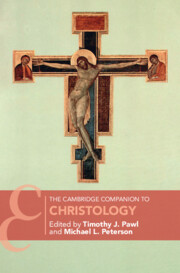
The idea that God became incarnate as a human is a doctrine at the core of historic Christianity. Defined by the Great Councils and Creeds of the Christian church, the study of this doctrine, christology, has been a focus of inquiry for two millennia. This Companion reflects the most recent paths of inquiry for our understanding of christology. Covering Biblical and other sources, it explores the reception of christology over the course of Christianity's history, from the early patristic ages to postmodernity, as well Jewish and Islamic treatments of the christological claims. The volume also considers the recent contributions of systematic theology, metaphysics, and political theology to the study of christology. It demonstrates how the conceptual substance of christological doctrine interacts with a range of areas on the intellectual landscape. Designed for use by students and experts, The Cambridge Companion to Christology also points to the new and dynamic directions in scholarship on this topic.
This essay explores two movements that developed in reaction to naturalism and its mimetic logic of stage realism at the turn of the twentieth century. Symbolism sought to represent the unrepresentable essence of the human experience, turning to allegories, fables, and mystical images to conjure spirits from both the natural and supernatural realms. Expressionism likewise aimed at an alternative aesthetic for representing the unrepresentable but did so with an eye towards the epistemological uncertainty of knowing oneself in relation to the modern world. It featured an abstract palette of skewed lines and woodcut shadows to depict the anxious experience of unpredictability, ironically projecting movement as stasis onto an increasingly stylised mis-en-scène.
In the nineteenth century, playwrights began to consider speech not only as a prelude to action and conflict but to exploit its potential as a site of action and conflict. The result was the burgeoning of a more discursive and dialectical theatre that directly engaged with social, political, and philosophical debates, leading to the development of such forms as the problem play, the discussion play, and the play of ideas. While these genres have often been considered the conventional types of realist theatre against which other forms of modernism reacted, this chapter argues that they were in fact significant innovations that responded to crises of modernity. In so doing, the chapter traces their circulation as they were adopted and adapted in cultures beyond their origins in Europe.
In the introductory volume of The History of Sexuality, Michel Foucault counters the prevailing view of the Victorian era as sexually repressive, noting instead a proliferation of discourses that coalesced into a science of sexuality. The emergence of modern drama in the late nineteenth century bears out Foucault’s challenge to the repressive hypothesis. This chapter considers the relation between modernist theatre and the history of sexuality as articulated by Foucault, tracing a shared concern with the intertwined figures of the hysterical woman, the sexualised child, the perverse adult, and the reproductive couple. Foregrounding representations of these figures in modernist plays across a range of styles and genres, the chapter suggests the integral role of modernist theatre in the production of modern sexual identities and how, through revivals, adaptations, and performative responses, the modernist dramatic and theatrical archive continues to shape/shift the living, corporealised repertoire of contemporary sexualities/theatricalities.
The modernist encounter with classical tragedy challenges received notions about tragic form and tragic sensibility: that it is incompatible with modernity (George Steiner) and that it is primarily a European/Eurocentric legacy. In engaging with classical Greek tragedy, modernist writers and theatre-makers (from T. S Eliot, W. B. Yeats, H. D., Ezra Pound, Edward Gordon Craig, and Isadora Duncan, to George Abyad, Tawfiq al-Hakim, Bertolt Brecht, Antonin Artaud, and the later postcolonial iterations of Wole Soyinka, Athol Fugard, John Kani, and Winston Ntshona) create a set of relationships that radically rewrite ideas of influence and tradition and gesture towards an understanding of tragedy as a form of theatricality rather than as a play-text. This theatricality, read in conjunction with primitivism and orientalism, is not a quest for authenticity or for the lost humanism of the classics but helps to construct an experimental laboratory in translation, in performance, and in adaptation. From the Cambridge Ritualists to the later postcolonial readings, modernism helps to revision tragedy as part of world theatre.
Between the turn of the twentieth century and the outbreak of the Second World War, avant-garde theatre artists challenged traditional norms through experimentation and radical innovation. Blurring the boundaries separating drama, theatre, and performance, these artists employed deliberate provocations and welcomed the audience’s displeasure. In subject matter, the theatrical avant-garde was equally pathbreaking, addressing a number of issues crucial to early twentieth-century modernity: war and revolution, gender roles, technology, rationality and the subconscious, futurity and the new, and the role of art in a rapidly transforming world. Futurism, Dadaism, and surrealism – three of the leading avant-garde movements – incorporated new materials and activities; brought theatre into dialogue with cabaret, variety show performance, circus, and the art of declamation; and dramatically redefined the actor’s role. Their innovations inspired contemporary experiments in non-realist staging, environmental theatre, performance art, and immersive performance.
This epilogue offers a rumination on the continuing place of the modernist theatre in the plays and performance practices of the latter twentieth century and beyond. It begins with the aesthetic disputes staged within Lorraine Hansberry’s The Sign in Sidney Brustein’s Window, written and set at the cusp of the transition from the modern to the postmodern. The shadow of modernism looms large over Hansberry’s characters, just as it does over many of the plays and productions to follow. From the evergreen influence of the avant-gardists to the long-lasting legacy of a figure like Bertolt Brecht to the perpetual restagings and radical rewriting of works by Henrik Ibsen or August Strindberg, the figures and aesthetics of the modernist era permeate and help give shape to the postmodern. Far from a retrograde revolution, modernism may best be regarded as a still-living mode of aesthetic and theatrical practice.
The academic concept of ‘intermediality’ presents a challenge to traditional artistic boundaries, offering a refreshed sense of the relationship between different kinds of media. This chapter relates such ideas to modernism, considering the work of a group of writers who showed a fascination with the stage but primarily achieved fame in genres other than performed drama. It begins by examining a tension within Ezra Pound’s work: his desire to engage with the stage and yet to dismiss the significance of theatre. The discussion then references the work of James Joyce, D. H. Lawrence, Virginia Woolf, Rabindranath Tagore, and Kōbō Abe. Ultimately, although ‘intermediality’ is sometimes assumed to apply more specifically to a later historical era of advanced media technology, this chapter shows how intermedial thinking can apply productively to modernist cultural products of the earlier twentieth century.
Interests, desires, and appropriations by modernist theatre practitioners of aspects and materialities of other cultures for the renovation of their theatre traditions cohered under the term ‘orientalism’. Later twentieth-century postmodernist theatre practitioners revived the practice in a largely postcolonial world, but under the umbrella term ‘interculturalism’. Using the tenets of postmodern theories (simulations and bricolages) or the principles of rituals from traditional cultures, intercultural theatre thrived in a globalised world. While globalised culture came under critique for appropriation and exploitation, early twenty-first-century scholars sought to revive interest in the study of otherness in theatre but operated again under such new terminology as ‘interweaving performance cultures’ and new interculturalism from below. Simultaneously, scholars from the Global South and from Asia further contested West/East axes of intercultural borrowing and theorising as well as the trajectory of western-centric modernism. This chapter traces those trajectories and their histories.
While modernism has been historically bounded by time and characterised by shared aesthetic and philosophic elements in Europe and the United States, the project of identifying modernism in other contexts around the globe is less straightforward. While modernism in the theatre of Europe influenced modernism throughout the world, the modernist movements of East and South Asia, Africa, and Latin America are not derivative. Rather, they are unique and organic, borrowing and blending European themes and forms with indigenous ones and adapting the material to the tastes and politics of each region. The timelines of these modernist movements also unfold differently within different regional and national contexts, sometimes extending well beyond the traditional endpoints of modernism in a European context. This essay examines several key developments in Japan, China, India, the Republic of Côte d’Ivoire, and Argentina as case studies of the modernist theatre in non-European contexts.
The introduction makes the case that while theatre has tended to be ignored or marginalised in modernist studies, it deserves a central place in accounts of modernism alongside poetry, prose, cinema, and the visual arts. It further contends that while there is an impressive variety amongst its practitioners, the hallmarks of modernist theatre are antagonism and provocation. Indeed, modernist theatre-makers rebelled against dominant genres, conventions, institutions, and audiences by creating new artistic forms and advocating for different values and worldviews. In so doing, this chapter argues that scholars need to go beyond the usual Euro-American cultures to consider how modernist theatre was manifested in the wider world and to recalibrate the historical trajectory of modernism that such broader geographies demand.
This chapter traces naturalism, a radical outgrowth of realism and one of the earliest movements in modernist theatre, beginning with its first articulations by Émile Zola and his French contemporaries through to manifestations, variations, and subversions of naturalist ideas across Europe, the United States, China, and India. Based in scientific epistemologies and a rejection of aesthetic idealism, naturalism introduced still potent innovations in dramatic form, scenography, audience experience, and the division of labour in theatre. Through confronting depictions of character and agency as fundamentally shaped by physiological, hereditary, and environmental forces, naturalism paved the way for later reformist theatre while seeding subsequent modernist movements that rebelled against its physicalist and materialist accounts of human experience.
This chapter discusses the variety of modernist theatrical practices grouped under the rubric ‘Theatre of the Absurd’ by Martin Esslin in the 1960s and demonstrates that absurdist theatre was a much more politically attuned and transnational phenomenon than commonly acknowledged. Esslin’s original aim was to understand theatrical practices in France that were related to, but stood outside of, the boundaries and timelines of the symbolist and surrealist movements, in particular the work of Samuel Beckett, Eugène Ionesco, Arthur Adamov, and Jean Genet. The chapter sets French absurdist drama of the 1950s and 1960s in a wider historical context and calls for the better recognition of a global absurdist canon, tracing the blossoming of a new absurdist drama through playwrights including Virgilio Piñera (Cuba), Halide Edib (Turkey), Issam Mahfouz (Lebanon), Osvaldo Dragún (Argentina), Kobo Abe (Japan), Yusuf Idris and Tawfiq al-Hakim (Egypt), and through the contemporary legacies of Beckett’s absurdist model.