To save content items to your account,
please confirm that you agree to abide by our usage policies.
If this is the first time you use this feature, you will be asked to authorise Cambridge Core to connect with your account.
Find out more about saving content to .
To save content items to your Kindle, first ensure no-reply@cambridge.org
is added to your Approved Personal Document E-mail List under your Personal Document Settings
on the Manage Your Content and Devices page of your Amazon account. Then enter the ‘name’ part
of your Kindle email address below.
Find out more about saving to your Kindle.
Note you can select to save to either the @free.kindle.com or @kindle.com variations.
‘@free.kindle.com’ emails are free but can only be saved to your device when it is connected to wi-fi.
‘@kindle.com’ emails can be delivered even when you are not connected to wi-fi, but note that service fees apply.
A large majority of India's population – 72 per cent according to the 2001 census – live at least partially rural lives and derive a significant portion of their income from agriculture. Some village residents migrate seasonally or occasionally for urban employment, and significant numbers of village households have family members already located, permanently or temporarily, in urban areas. Rural-to-urban migration trends are ongoing, but demographic shifts have not been as dramatically rapid as some had predicted. While global flows and urban cultures seem to epitomize the twenty-first century, rural life remains of vital significance to understanding Indian modernity. Tremendous changes have continuously affected India's rural spaces from the agrarian revolutions of the 1960s to the communications revolutions of the present. These changes permeate every aspect of life from domestic relations to cropping patterns; entertainment choices to employment opportunities; social and gender hierarchies to political formations. Government development projects as well as a multitude of non-governmental organizations concerned with improving agricultural productivity, primary education, adult literacy, health care, gender equity and environmental sustainability – to mention only a few major foci of ongoing interventions – are at work modernizing rural India.
To survey all such manifestations of change, or to outline comprehensively the concrete, quantifiable elements of rural modernity is not possible in one chapter. Here, drawing on ethnographic fieldwork, I focus on people's perceptions of and responses to change as they experience it. Specifically, I aim to highlight the ways that residents of one small region in central Rajasthan have described to me transformations which they understand to be both material and moral.
‘Notwithstanding the fact that she has studied in and been deeply influenced by the West, Miss Sher-Gil's work must be considered as a clear sign of the artistic awakening in India’, wrote the art critic Charles Fabri in 1937. Fabri, an Indologist by training and a Hungarian citizen by birth, was a partisan of modern art and Gandhian nationalism. His overwhelmingly positive review of the painter Amrita Sher-Gil's exhibition in Lahore indexed dominant understandings of Indian art, modern art and the relationship between India and the West in the 1930s. The idea that Sher-Gil's art heralded a national renaissance despite its incubation in the West reflected the way in which, by the early twentieth century, Indian art and Western art had come to be viewed as mutually exclusive cultural forms.
The idea of Indian art as decorative and fundamentally opposed to the naturalistic impulses of Western art was promoted by British colonial authorities from the middle of the nineteenth century. This opposition between Indian art and Western art was seized upon by anti-colonial nationalist artists, notably in Bengal, to produce a modern art that claimed to be ‘Indian’ by rejecting Western models. By the 1930s, when Sher-Gil came to practise art in India, however, there was a growing sense that this rejection could not by itself serve as the basis of what Fabri called an ‘artistic awakening’. There had to be a critical engagement with the forms of Western modernity alongside those of India's pre-colonial past.
The economic and political position of tribal populations in modern India is not unusual. It is familiar enough from what we know of similarly marginalized peoples in other parts of the world. What is perhaps less obvious is how tribes in India utilize language and religion to express their identity in the ongoing encounter with modernity.
Tribal populations
Tribes constitute only about 8 per cent of India's total population, and they are unevenly distributed (1 per cent of Tamil Nadu but 95 per cent of Mizoram is tribal, for instance). These roughly ninety million people are largely concentrated in two regions: the central and eastern hills of Chhattisgarh, Orissa and Madhya Pradesh; and the mountainous states in the north-east. Sizeable populations also live in Rajasthan, Gujarat and Jharkhand. Among these approximately 500 tribal groups, the variety of social practices, cosmologies, rituals and material culture is staggering. And the ethnographic record is still far from complete.
Such heterogeneity is not easily categorized, and we have known for a long time that the term ‘tribe’ is imprecise. For some anthropologists, the salient criterion in defining a population as a ‘tribe’ is its type of political authority, while for others it is social organization, descent system or religious belief; and many definitions ultimately rely on a specious spectrum stretching from simplicity to complexity. Confusion arises, in part, because the concept of ‘tribe’ is inseparable from modernity. As a convenient shorthand for pre-industrial societies, it helped to define, by contrast, the new world of rational, wage-earning citizens.
For decades, Soviet scholarship insisted that the national character of the Russian theatre was unmistakable and that its origins were to be found in pagan ceremonials and the agrarian cycles of peasant life. Actually, from the very beginnings, Russian performance, as opposed to ritual, was initiated and molded by foreign influences. The wandering jesters or skomorokhi had Byzantine antecedents; the occasional Orthodox liturgical “mysteries,” as well as the first court dramas, were fashioned on Latin plays of the Jesuit academies in Poland and Ukraine. Even the earliest folk dramas can be shown to have been affected (contaminated, to use the term in its dramaturgical sense) by contact with non-Russian models drawn from the touring repertoires of the Englische Komedianten (professional companies of players from London) or European puppet shows.
What does make the Russian theatre stand out from other national theatres is its secular bias and the cross-fertilization of court and popular theatres. Theatre in the West can be shown to have evolved from two distinct strains, the professional (embodied by itinerant troupes of motley entertainers) and the amateur (represented by performances sponsored initially by Church, then by school or court). In Russia, the two strains would coexist and commingle: although professional theatre was often hampered by its governmental ties, the amateur was frequently productive of reform and fresh impulses.
The Russian Orthodox Church was doctrinally hostile to any kind of enactment and countenanced plays within its precincts only for a brief period in the sixteenth century. Amateur performance was therefore to be found under the patronage of the court, and even when its subjects were biblical, the atmosphere was secular.
Written in 1974, Raymond Williams's Television: Technology and Cultural Form was to become for many academics, and particularly for academics who approached popular culture from the perspective of the humanities, one of the foundational texts of the study of television, the first and even the only book on reading lists, the book which introduced the concept of ‘flow’ as a way of identifying ‘the defining characteristic of broadcasting’. While, almost forty years later, many of its formulations have worn thin with over-use, Williams's observation on the centrality of televisual dramatic fiction to modern experience still has the force of defamiliarisation: it is still surprising to consider, as if for the first time, how much of our time is spent with, how many of our references are drawn from, or how much the structure of contemporary feeling is shaped by television dramatic fiction in its various forms. ‘It seems probable’, says Williams,
that in societies like Britain and the United States more drama is watched in a week or a weekend, by the majority of viewers, than would have been watched in a year or in some cases a lifetime in any previous historical period. It is not uncommon for the majority of viewers to see, regularly, as much as two or three hours of drama, of various kinds, every day. The implications of this have scarcely begun to be considered. It is clearly one of the unique characteristics of advanced industrial societies that drama as an experience is now an intrinsic part of everyday life, at a quantitative level which is so very much greater than any precedent as to see a fundamental qualitative change. Whatever the social and cultural reasons may finally be, it is clear that watching dramatic simulation of a wide range of experiences is now an essential part of our modern cultural pattern. Or, to put it categorically, most people spend more time watching various kinds of drama than in preparing and eating food.
It was widely averred in the nineteenth century that the novel was the century's dominant form; indeed, at the end of this period critics spoke of the ‘tyranny’ of the novel. But this was only a partial truth, insofar as for much of this period the novel maintained complicated symbiotic relationships with other cultural forms, particularly drama: in this respect, popular plots, characters and settings were amphibious, gliding from novel to stage, and, more rarely, from stage to novel. The reading of novels aloud in the family home was an aspect of Victorian literary culture that already contained elements of theatricality, and this was still more the case with the commercially run, public readings that swelled the finances of popular novelists, notably Dickens. But by the time audiences heard Dickens read from his favourite works (the death of Nancy from Oliver Twist (1837–9) was his tour de force) many of them would have already seen full, sometimes unauthorised, dramatic adaptations of the same texts: Nicholas Nickleby (1838–9) as Smike; The Cricket on the Hearth (1845) as Dot; other novels and shorter pieces under their original titles. The work of other novelists, from Bulwer Lytton, to Elizabeth Gaskell, to M. E. Braddon, was also quickly revamped for the stage; the vogue of ‘sensation’ in the 1860s coincides with an especially lively period of adaptation, as the reign of the Newgate Novel had in the 1830s and 1840s.
Any national literature is to some significant extent a mirror held up to its people's collective countenance: its myths, aspirations, national triumphs and traumas, current ideologies, historical understanding, linguistic traditions. But it is also more than that – more than a reflection in the glass of what has come before and what is now, even as one glances into it, passing from view. It is, in a real sense, generative of new meaning, and thus capable of shaping that countenance in the future. For the society that takes its literary products seriously, the text of a novel or poem can be a kind of genetic code for predicting, not concrete outcomes or actual progeny, but something no less pregnant with future action: the forms of a culture's historical imagination. The variations seem limitless, and yet how is it we are able to determine any given work of literature is clearly identifiable as Russian? Why could Flaubert's Emma Bovary in some sense not be imagined by the great realist who created Anna Karenina? How is Dostoevsky's Marmeladov both alike, but more importantly, unlike Dickens's Micawber? What, in short, can be shown in a mirror that speaks back?
Few societies have been more dependent on their literature for overall meaning (social, psychological, political, historical, religious, erotic) than the Russia of the modern period (1800 to the present). For a variety of reasons we will touch upon in the pages to follow, Russians have turned repeatedly to their literature as the principal source of their national identity and cultural mythology. But this relationship to the written word is a two-edged sword. It gives Russian literature both a high seriousness that can be genuinely inspiring and at times an intrusive didacticism that can be annoying to a more pluralistic (or “secular”) Western audience.
What are the lessons of Russian culture, what does it have to offer us and our time? Fortunately, Russian cultural studies have a rich history that provides orientation and points of engagement in answering such questions. In spite of a rich diversity of approaches that have changed over time and in reaction to historical and social context, most cultural analysts depend on certain basic vantage points they assume in common, whether in part or in whole. They are: the language foundations of a culture, its geographic location, its religious and ideological attachments, and its broadly based folk ethos. Yet other points of view exist in aesthetic texts that are equally open to history and later uses but that have some material permanence in their media of transmission.
Such is the basis of the present book's structure. It is divided into two parts: the first combining major approaches to culture which influence both observers and participants; the second, offering brief histories of Russian contributions to the arts and emphasizing the modern period from 1860 on. The intersections of these analytical and creative concerns as well as the intersections within them of different personalities, events, and artifacts provide a comprehensive overview, although considerations of space and general readership have limited the contributors to introductions of many of the complex and varied parts of the Russian cultural experience.
Recent discussions of cinema and national identity in the ‘third world’ context have tended, by and large, to cluster around the concept of a ‘third cinema’. Here the focus is on recovering or reinventing local aesthetic and narrative traditions against the homogenizing impulses of Hollywood in its domination over markets and normative standards. One of the hallmarks of third-cinema theory has been its firmly unchauvinist approach to the ‘national’. In its references to wider international aesthetic practices third cinema asserts but also problematizes the boundaries between nation and other. In the process, it also explores the ways in which the suppressed internal others of the nation, whether of class, sub- or counter-nationality, ethnic group or gender, can find a voice.
A substantial lacuna in this project has been any sustained understanding of the domestic commercial cinema in the ‘third world’. This is important because in countries such as India the commercial film has, since the dawn of the ‘talkies’, successfully marginalized Hollywood's weight in the domestic market. This is not to claim that it has functioned within an entirely self-referential autarchy. The Indian popular cinema stylistically integrated aspects of the world ‘standard’, and has also been influential in certain foreign markets. But it constitutes something like a ‘nation-space’ against the dominant norms of Hollywood, and so ironically fulfils aspects of the role which the avant-garde third cinema proclaims as its own.
Writing in 1936 of his memories of working in a second-hand-bookshop-cum-lending-library, George Orwell painted a horrified pen portrait of a typical reader of popular fiction:
He read four or five detective stories every week for over a year, besides others which he got from another library. What chiefly surprised me was that he never read the same book twice. Apparently the whole of that frightful torrent of trash (the pages read each year would, I calculated, cover nearly three-quarters of an acre) was stored for ever in his memory. He took no notice of titles or authors' names, but he could tell merely by glancing into a book whether he had ‘had it already’.
Undiscriminating, without judgement, a passive consumer gulping down rubbish by the gallon: this is the reader of popular fiction as we most often see him (or, more usually, her) in the accounts of concerned commentators down the centuries. From anxieties about the salacious reading of early modern apprentices to imprecations against the novel-reading habits of Victorian middle-class girls, popular reading is repeatedly rendered through tropes of danger, passivity and lack of control. The reader is imagined as solitary, obsessed, his or her engagement with texts virtually masturbatory in the intensity of its self-pleasuring. But an examination of the lived experiences of what I shall call popular readers demonstrates something rather different: a more subtle, nuanced, critical engagement with texts – and one that is surprisingly often not solitary at all, but located within an active community of readers.
R. K. Narayan (1906–2001), the great stalwart of Indian English fiction, wrote over a dozen novels set in the mytho-poetic town of Malgudi; one of them, The Vendor of Sweets (1967), is a prescient parable for Indian writing in English. The novel is about the generation gap between a father and son, one that hinges on the differences of living in a new way as opposed to a more established one. Narayan's works are known for their subtle humour, and in this novel, it comes in the form of a story-writing machine that a young man, Mali, brings back to India after having gone to America to study creative writing. Before Mali leaves for America, his father, Jagan, questions why he has to go there to learn the art of fiction in the first place. Jagan complains to a sympathetic cousin: ‘Going there to learn storytelling! He should rather go to a village granny’; and then he asks, ‘Did Valmiki go to America or Germany in order to learn to write his Ramayana?’
Here, Narayan captures the tension between two sorts of fabrications – modernity and tradition – as he invariably pits the allure of the foreign against seemingly stable home truths. But this easy East–West opposition gets much more interesting and funnier when Mali returns to Malgudi not as a writer, but as a businessman looking for investors to produce and sell an indigenous version of an American storytelling machine.
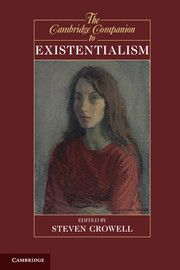
Existentialism exerts a continuing fascination on students of philosophy and general readers. As a philosophical phenomenon, though, it is often poorly understood, as a form of radical subjectivism that turns its back on reason and argumentation and possesses all the liabilities of philosophical idealism but without any idealistic conceptual clarity. In this volume of original essays, the first to be devoted exclusively to existentialism in over forty years, a team of distinguished commentators discuss the ideas of Kierkegaard, Nietzsche, Heidegger, Sartre, Merleau-Ponty and Beauvoir and show how their focus on existence provides a compelling perspective on contemporary issues in moral psychology and philosophy of mind, language and history. A further sequence of chapters examines the influence of existential ideas beyond philosophy, in literature, religion, politics and psychiatry. The volume offers a rich and comprehensive assessment of the continuing vitality of existentialism as a philosophical movement and a cultural phenomenon.
This is the first comprehensive survey of the history of the book in Britain from Roman through Anglo-Saxon to early Norman times. The expert contributions explore the physical form of books, including their codicology, script and decoration; examine the circulation and exchange of manuscripts and texts between England, Ireland, the Celtic realms and the Continent; discuss the production, presentation and use of different classes of texts, ranging from fine service books to functional schoolbooks; and evaluate the libraries that can be associated with particular individuals and institutions. The result is an authoritative account of the first millennium of the history of books, manuscript-making and literary culture in Britain which, intimately linked to its cultural contexts, sheds vital light on broader patterns of political, ecclesiastical and cultural history extending from the period of the Vindolanda writing tablets through the age of Bede and Alcuin to the time of the Domesday Book.
Each generation revises literary history and this is nowhere more evident than in the post-Second World War period. This 2011 Companion offers a comprehensive, authoritative and accessible overview of the diversity of American fiction since the Second World War. Essays by nineteen distinguished scholars provide critical insights into the significant genres, historical contexts, cultural diversity and major authors during a period of enormous American global political and cultural power. This power is overshadowed, nevertheless, by national anxieties growing out of events ranging from the Civil Rights Movement to the rise of feminism; from the Cold War and its fear of Communism and nuclear warfare to the Age of Terror and its different yet related fears of the 'Other'. American fiction since 1945 has faithfully chronicled these anxieties. An essential reference guide, this Companion provides a chronology of the period, as well as guides to further reading.
This collaborative History aims to become the standard work on Victorian literature for the twenty-first century. Well-known scholars introduce readers to their particular fields, discuss influential critical debates and offer illuminating contextual detail to situate authors and works in their wider cultural and historical contexts. Sections on publishing and readership and a chronological survey of major literary developments between 1837 and 1901, are followed by essays on topics including sexuality, sensation, cityscapes, melodrama, epic and economics. Victorian writing is placed in its complex relation to the Empire, Europe and America, as well as to Britain's component nations. The final chapters consider how Victorian literature, and the period as a whole, influenced twentieth-century writers. Original, lucid and stimulating, each chapter is an important contribution to Victorian literary studies. Together, the contributors create an engaging discussion of the ways in which the Victorians saw themselves and of how their influence has persisted.