To save content items to your account,
please confirm that you agree to abide by our usage policies.
If this is the first time you use this feature, you will be asked to authorise Cambridge Core to connect with your account.
Find out more about saving content to .
To save content items to your Kindle, first ensure no-reply@cambridge.org
is added to your Approved Personal Document E-mail List under your Personal Document Settings
on the Manage Your Content and Devices page of your Amazon account. Then enter the ‘name’ part
of your Kindle email address below.
Find out more about saving to your Kindle.
Note you can select to save to either the @free.kindle.com or @kindle.com variations.
‘@free.kindle.com’ emails are free but can only be saved to your device when it is connected to wi-fi.
‘@kindle.com’ emails can be delivered even when you are not connected to wi-fi, but note that service fees apply.
The intricacies and challenges of musical performance have recently attracted the attention of writers and scholars to a greater extent than ever before. Research into the performer's experience has begun to explore such areas as practice techniques, performance anxiety and memorisation, as well as many other professional issues. Historical performance practice has been the subject of lively debate way beyond academic circles, mirroring its high profile in the recording studio and the concert hall. Reflecting the strong ongoing interest in the role of performers and performance, this History brings together research from leading scholars and historians and, importantly, features contributions from accomplished performers, whose practical experiences give the volume a unique vitality. Moving the focus away from the composers and onto the musicians responsible for bringing the music to life, this History presents a fresh, integrated and innovative perspective on performance history and practice, from the earliest times to today.
The most celebrated American novelist of the past half-century, an indispensable figure of postmodernism worldwide, Thomas Pynchon notoriously challenges his readers. This Companion provides tools for meeting that challenge. Comprehensive, accessible, lively, up-to-date and reliable, it approaches Pynchon's fiction from various angles, calling on the expertise of an international roster of scholars at the cutting edge of Pynchon studies. Part I covers Pynchon's fiction novel-by-novel from the 1960s to the present, including such indisputable classics as The Crying of Lot 49 and Gravity's Rainbow. Part II zooms out to give a bird's-eye-view of Pynchon's novelistic practice across his entire career. Part III surveys major topics of Pynchon's fiction: history, politics, alterity ('otherness') and science and technology. Designed for students, scholars and fans alike, the Companion begins with a biography of the elusive author and ends with a coda on how to read Pynchon and a bibliography for further reading.
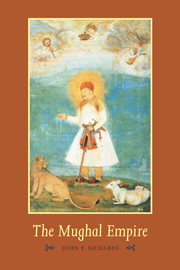
The Mughal empire was one of the largest centralised states in pre-modern world history. It was founded in the early 1500s and by the end of the following century the Mughal emperor ruled almost the entire Indian subcontinent with a population of between 100 and 150 millions. The Mughal emperors displayed immense wealth and the ceremonies, music, poetry, and exquisitely executed paintings and objects of the imperial court created a distinctive aristocratic high culture. In this volume, Professor John Richards traces the history of this magnificent empire from its creation in 1526 to its breakup in 1720. He stresses the dynamic quality of Mughal territorial expansion, their institutional innovation in land revenue, coinage and military organisation, ideological change and the relationship between the emperors and Islam. Professor Richards also analyses institutions particular to the Mughal empire, such as the jagir system, and explores Mughal India's links with the early modern world.
Fantasy is a creation of the Enlightenment, and the recognition that excitement and wonder can be found in imagining impossible things. From the ghost stories of the Gothic to the zombies and vampires of twenty-first-century popular literature, from Mrs Radcliffe to Ms Rowling, the fantastic has been popular with readers. Since Tolkien and his many imitators, however, it has become a major publishing phenomenon. In this volume, critics and authors of fantasy look at its history since the Enlightenment, introduce readers to some of the different codes for the reading and understanding of fantasy, and examine some of the many varieties and subgenres of fantasy; from magical realism at the more literary end of the genre, to paranormal romance at the more popular end. The book is edited by the same pair who produced The Cambridge Companion to Science Fiction (winner of a Hugo Award in 2005).
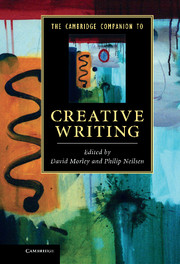
Creative writing has become a highly professionalised academic discipline, with popular courses and prestigious degree programmes worldwide. This book is a must for all students and teachers of creative writing, indeed for anyone who aspires to be a published writer. It engages with a complex art in an accessible manner, addressing concepts important to the rapidly growing field of creative writing, while maintaining a strong craft emphasis, analysing exemplary models of writing and providing related writing exercises. Written by professional writers and teachers of writing, the chapters deal with specific genres or forms - ranging from the novel to new media - or with significant topics that explore the cutting edge state of creative writing internationally (including creative writing and science, contemporary publishing and new workshop approaches).
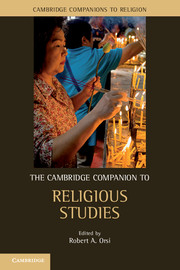
The Cambridge Companion to Religious Studies is both informative and provocative, introducing readers to key debates in the contemporary study of religion and suggesting future research possibilities. A group of distinguished scholars takes up some of the most pressing theoretical questions in the field. What is a 'religious tradition'? How are religious texts read? What takes place when a religious practitioner stands before a representation of gods or goddesses, ghosts, ancestors, saints, and other special beings? What roles is religion playing in contemporary global society? The volume emphasizes religion as a lived practice, stressing that people have used and continue to use religious media to engage the circumstances of their lives. The volume's essays should prove valuable and interesting to a broad audience, including scholars in the humanities and social sciences and a general readership, as well as students of religious studies.
H. G. Wells opens his satirical, visionary novel The Food of the Gods, published at the turn of the twentieth century in 1904, with a backward glance at a singular novelty that has emerged in the previous fifty years:
In the middle years of the nineteenth century there first became abundant in this strange world of ours a class of men, men tending for the most part to become elderly, who are called, and who, though they dislike it extremely, are very properly called ‘Scientists’. They dislike the word so much that from the columns of Nature, which was from the first their distinctive and characteristic paper, it is as carefully excluded as if it were – that other word which is the basis of all really bad language in this country.
Wells nips at the heels of this new class of ‘men’, so unworldly, but so insistent on each his own achievement that they dislike being classed in the gross – and, with a sly refusal to name it, he imports his own gross allusion to that ‘other word’ that asserts the body. Scientists, he suggests, see themselves as all intellect, but are trapped in their shuffling mediocre bodies and their anxious self-assertion.
In Sartor Resartus, as Carlyle reconstructs the auto/biography of Diogenes Teufelsdröckh from the scraps and fragments of his subject’s life, he pauses to wonder at ‘these autobiographical times of ours’. The phrase captures the expressivist turn of the early Victorian era and the explosion of writing in an autobiographical mode. As a word, ‘autobiography’ was virtually a neologism when Sartor Resartus was published in Fraser’s Magazine in 1833–4. In 1797 it had appeared (negatively) in the Monthly Review as a ‘pedantic’ term; it reappeared (positively) in 1809 in the Quarterly Review when Robert Southey praised the life of the Portuguese painter Francisco Vieira as a ‘very amusing and unique specimen of autobiography’. By 1826 the publishers John Hunt and Cowden Clarke had launched a popular series, Autobiography: A Collection of the Most Instructive and Amusing Lives Ever Published, Written by the Parties Themselves, and by 1828 Carlyle was musing, ‘What would we give for such an Autobiography of Shakspeare.’ The increasingly frequent use of the word ‘autobiography’ in the Victorian period is matched by the increasing number of periodical articles and reviews on the subject: 34 in the 1820s, 127 in the 1840s, 304 in the 1860s, and 433 in the first decade of the twentieth century, according to the Periodicals Index Online. Indeed, from the French perspective, even in 1866 ‘autobiography’ was an English invention, ‘still rare in France but conspicuously common across the Channel’.
‘What is the question now placed before society with a glib assurance the most astounding? The question is this – Is man an ape or an angel? My Lord, I am on the side of the angels.’ It was with this pithy, reductive summary that Benjamin Disraeli characterized the popular conception of the challenge that evolutionary explanations of man’s origin and descent offered to Victorian religion. Tennyson put the matter rather more bluntly: ‘We shall all turn into pigs if we lose Christianity and God.’ Darwin’s hypotheses appeared to challenge man’s claim to be more than the sum of his physical and rational parts, raising questions as to where to locate humanity’s inclinations to the mystical, ethical, moral, and aesthetic. Disraeli’s quip reveals the clarity of an assimilated Anglican Jew’s recognition that mid nineteenth-century Britain’s religion was both a very public concern, central to the sense of national culture, and a matter of highly individualized belief.
‘Spirituality’ is nowadays employed as an inclusive term for indicating metaphysical longing, or a sense of the transcendent not easily aligned with, or confined within, particular histories of institutionalized affiliation. Confronted with aeons of geological change, the theory of natural selection, imperial encounters with alternative cultures, and technological advances that challenged previous conceptions of the possible, the Victorian age also witnessed movement away from the orthodoxies of Bible, Church tradition, and shared liturgy, and towards privatized belief systems.
During the Victorian period the landscape of Britain was utterly transformed by unprecedented urban expansion, the movement of populations away from rural areas, and the proliferation of new industrial cities in the north of England. By the middle of the nineteenth century, for the first time in any country in human history, over half the population resided in towns or cities, tipping the balance away from a rural nation. For those Britons used to an agricultural economy and cottage industry, migrating from country to city meant learning how to subsist in a wholly new environment, in which traditional modes of working, dwelling, and even eating were all dramatically altered. Urban dwellers confronted overcrowding, strange and often dangerous working conditions, primitive and filthy living arrangements, polluted water and air, and rapidly spreading epidemic diseases. Factory work meant getting accustomed to new machines, new spaces and rhythms of labour, and reliance on inadequate wages. The configuration of the family changed as women and older children were hired more readily than their more highly paid husbands and fathers and left the home to work. Wives suffered the humiliation of demeaning work conditions, husbands faced unemployment, and, with mothers working outside the home, babies were farmed out to minders. Industrial production created new classes of employers and workers – ‘masters’ and ‘men’ as they were called – and London witnessed the growth of sweated industries and, especially in the last decades of the century, casual labour.
The last book that the eighty-nine-year-old novelist Rebecca West published during her long and distinguished career was 1900: a beautifully illustrated account of the most decisive cultural and political events that occurred not only in Britain but also across the globe during this pivotal year. Amid her wide-ranging discussion of such dispersed phenomena as the Second Anglo-Boer War, the Boxer Rebellion, the tidal wave that swept the Texas coast, and the evident decline in Queen Victoria’s health, West – who took her professional name from Henrik Ibsen’s forthright heroine in Rosmersholm (1886) – turns her attention to the unsettled literary climate in England at the turn of the century. Her inquiries for the most part focus less on drama and poetry and more on fiction: the genre in which she would firmly establish her reputation, some years after she started contributing her frequently irreverent articles – ones that did not hesitate to attack established figures such as George Bernard Shaw, Mary Augusta Ward, and H. G. Wells – to the Clarion (a socialist newspaper founded by Robert Blatchford in 1891) and the Freewoman (a sexually progressive feminist journal published in 1911 and 1912). ‘In Great Britain’, West writes, ‘the literature of 1900 did little to dispel the curious preoccupation of the time. Fiction was the thing and it had developed along perilous lines.
These people speak our language, use our prayers, read our books, and ruled by our laws, dress themselves in our image, are warm with our blood … They are our sons and daughters, the source of our greatest pride, and as we grow old they should be the staff of our age.
(Anthony Trollope, North America, 1862)
On 22 March 1775, Edmund Burke rose in the House of Commons with the aim of restoring ‘the former unsuspecting confidence of the colonies in the mother country’: the occasion for his speech was a debate on the wisdom of restricting American trade with England. In a graphic deployment of the familiar metaphor of nation as body, Burke describes England as a fertile but exhausted mother being fed by her American colonies, and to those fellow members of the House who charge America with having unnaturally drawn life from the colonial mother, responds that in 1775 she sustains the nation that was once the selfless protector of her dependent outposts; now is the time for a grateful England to treat those colonies as political allies not as commercial competitors. Whereas at the beginning of the eighteenth century, the American colonies imported corn and grain from England, now the New World feeds the Old, and England should remember that she would have faced a ‘desolating famine, if this child of your old age, with a true filial piety, with a Roman charity, had not put the full breast of its youthful exuberance to the mouth of the exhausted parent’.
Given the long-standing ubiquity in British literature of metaphors of the body and colonization – one thinks, for instance, of Donne’s ‘To His Mistris Going to Bed’ in which the speaker celebrates his lover’s body as ‘O my America! my new-found-land, / My kingdome, safeliest when with one man man’d, / My Myne of precious stones, My Empirie, / How blest am I in this discovering thee!’ – it is hardly surprising that Burke fuses body and family when advancing his American argument for collaboration in place of confrontation.
On 13 November 1849, Charles Dickens witnessed the execution of Marie and Frederick Manning at the Horsemonger Road Goal in Southwark, South London. He had rented a flat with a good view for the purpose, he claimed, of observing the responses of the thirty thousand people who had gathered together to watch the occasion – and he described what he saw in a letter to The Times later that day:
I believe that a sight so inconceivably awful as the wickedness and levity of the immense crowd collected at that execution this morning could be imagined by no man, and could be presented in no heathen land under the sun. The horrors of the gibbet and of the crime which brought the wretched murderers to it faded in my mind before the atrocious bearing, looks, and language of the assembled spectators.
He describes the ‘screeching, and laughing, and yelling in strong chorus of parodies on negro melodies, with substitutions of “Mrs Manning” for “Susannah”, and the like’, and the ‘fightings, faintings, whistlings, imitations of Punch, brutal jokes, tumultuous demonstrations of indecent delight when swooning women were dragged out of the crowd by the police, with their dresses disordered, [which] gave a new zest to the general entertainment’.
The first Victorian generation witnessed what many of them recognized as unprecedented change in the physical and political world about them. It was a sentiment famously described by Thackeray in his ‘Roundabout Paper’ of October 1860 entitled De Juventute. For Thackeray, the coming of the railways in the 1830s seemed to demarcate one age from another and not just his own youth from his middle age:
We who have lived before the railways were made to belong to another world. In how many hours could the Prince of Wales drive from London to Brighton, with a light carriage built expressly, and relays of horses longing to gallop the next stage? … It was only yesterday, but what a gulf between now and then! Then it was the old world. Stage-coaches, more or less swift, riding-horses, pack-horses, highwaymen, knights in armour, Norman invaders, Roman legions. Druids, Ancient Britons painted blue, and so forth – all these belong to the old period. I will concede a halt in the midst of it, and allow that gunpowder and printing tended to modernise the world. But your railroad starts a new era, and we of a certain age belong to the new time and the old one. We are of the time of chivalry as well as the Black Prince or Sir Walter Manny. We are of the age of steam.
In the final decades of the nineteenth century, William Blake’s work was rescued from its long obscurity by those, like Algernon Charles Swinburne and William Butler Yeats, who found within it the possibilities for a humanist aesthetic practice that could engage (and possibly transform) the world without being bound to it. Swinburne’s seminal William Blake: A Critical Essay (1868) and Yeats’s eclectic edition of The Works of William Blake, Poetic, Symbolic, and Critical (1893) are landmarks of fin-de-siècle literary culture. Together they provide an index to Blake’s importance for late Victorian writers; they also afford insight into many of the period’s characteristic preoccupations and concerns. ‘To him all symbolic things were literal, all literal things symbolic’, Swinburne writes, adding that Blake ‘walked and laboured under other heavens, on another earth, than the earth and heaven of material life’. As Swinburne makes clear, the crucial distinction is not between (material) earth and (immaterial) heaven but between a mind shackled to material life by the ‘mechanical intellect’ and a mind liberated from that life by what Yeats, referring to Blake, described as ‘the visionary realism’ of the imagination. For these later poets, Blake’s work was most compelling for its recreation of the world – all of heaven and of earth too – within the space of the imagination, a recreation that was also a redemption. Blake knew that ‘imagination was the first emanation of divinity’, writes Yeats, and that ‘the imaginative arts were therefore the greatest of Divine revelations’.