To save content items to your account,
please confirm that you agree to abide by our usage policies.
If this is the first time you use this feature, you will be asked to authorise Cambridge Core to connect with your account.
Find out more about saving content to .
To save content items to your Kindle, first ensure no-reply@cambridge.org
is added to your Approved Personal Document E-mail List under your Personal Document Settings
on the Manage Your Content and Devices page of your Amazon account. Then enter the ‘name’ part
of your Kindle email address below.
Find out more about saving to your Kindle.
Note you can select to save to either the @free.kindle.com or @kindle.com variations.
‘@free.kindle.com’ emails are free but can only be saved to your device when it is connected to wi-fi.
‘@kindle.com’ emails can be delivered even when you are not connected to wi-fi, but note that service fees apply.
Why should the emerging creative writer bother with translation? Or to put it another way, why is translation ‘creative’? Surely it simply repeats what's already been written by someone else: reproducing their ideas, their imagery and insight in a way that's almost mechanical? And moreover, wouldn't one need to be an accomplished linguist to do this?
Many writers in English avoid translation because of their assumptions about what's involved. Literary translation forces us to shift our literary worldview a little – and that, of course, is one of its benefits. British schools still teach a curriculum that can make it seem as if English Literature and literature itself are synonyms. I remember how the public library where I got my real literary education reinforced this impression: lined with English-language novels, it had a single set of shelves for foreign literature. I was into my teens before I stopped believing that ‘literature’ was one of those things, like cricket, that Britain did well but many other countries not at all. Ridiculous, yes. Yet while today's emerging writer may be more widely travelled than ever before, he or she often has no sense of entering a particular tradition within the world context. Quite aside from social or existential consequences, this matters creatively.
For having some sense of what's going on among your peers in the rest of the world not only opens up a world of creative alternatives: paradoxically, it can also serve to throw your own literary tradition into sharper relief. Seeing what other ways of writing do is a way of seeing what your own practice leaves out. It helps focus creative choices, especially those to do with register and form.
When I was a young writer, writing teachers and books all said to ‘write what you know’. That is, your writing is best if it is ‘authentic’, if it reflects the people you have met and the places you have been. To that end, as an American writer, I have often been advised only to write about black characters. My instinct as a student was always to rail against such advice. I sought joyfully to write what I could imagine – about people I'd never met and places and times I'd never been.
Decades and many published novels later, some editors were still subtly advancing the workshop admonition – ‘write what you know’, by suggesting that I delete from my novel Douglass’ Women Ottilie Assing, a character based upon a nineteenth-century German woman with a Jewish and Christian heritage. The assertion was that as a woman of colour, I didn't ‘know’ such history, such people, and my readers – all black, of course! – could not have cared less about the white mistress of abolitionist, Frederick Douglass. The novel, Douglass' Women, ultimately (and gratefully) published by Atria Books, became an award-winning and critical success.
Of course, a writer should write about whomever and whatsoever they please, whether it be unknowable aliens, or ethnic and racial groups from far afield. If race, itself an artificial construct, prevents us from ‘knowing’ and writing about one another, then we are suggesting that people are not a common family. Equally dangerous is the notion that readers, too, only want to read what reflects their cultural reality. Letters from readers – within and without America’s borders – of diverse cultural and religious backgrounds, have long disabused me of this silly notion.
This chapter introduces techniques that are used in travel writing to create a strong sense of place and a meaningful, engaging narrative of a journey. I raise and briefly define well-established terms of modern rhetoric – that is, exposition, description, narration – with the aim of showing that a distinctive and enduring feature of travel writing lies in the ways it mixes these modes of writing. For example, Clive James, who has built a brilliant career working across genres (from poetry to novels to reviews and essays), has commented that it was in travel writing that he was able to bring his various skills as a writer together. He was able to do so, I think, because the best travel writing is a combination of forms – as Rory Stewart has pointed out, the staple of travel books today is ‘the blend of reported speech, historical digressions, landscape portraiture, theorizing and … comedy’, what he sees as a kind of patchwork ‘burlesque’. As in theatrical burlesques, travel writing is often an extravaganza of parody and mixed forms, and so comes with a playfulness that offers great freedom to writers.
However, like all blends, the key lies as much in finding a strong unifying element as it does in the choice of the component parts. Towards the end of the chapter, I will suggest that humour and analysis offer the travel writer ways of effectively joining the different styles they use, and of establishing an engaged, humanist attitude to the people and places they encounter, even if the journey has been a difficult one. Finally, you will find writing exercises drawn from the key techniques that I suggest.
In recent years, the development of creative writing as a discipline in higher education has changed the shape of literature departments in universities across the globe. It has also changed the development of literary studies through creative reading (‘reading as a writer’) and through practice-led teaching. As Jonathan Bate explains, many of our best critics were creative writers. Creative writing is a rearrival at a balance in which the practice of writing is placed on an equal platform to its study. An act of criticism can also be an act of creativity, and vice versa. It is a falsification of how our minds work to suggest it could be otherwise.
Creative writing as a discipline has also begun to find its way beyond literature and humanities departments. Creative writing is not some add-on to literary studies, nor are its students schooled solely in the study of novels, plays and poems. Creative writing can be an education in the craft of writing in a larger sense. Writers, at their best, are creative writers whether they are writing journalism, plays, philosophy, novels, history, poetry or scientific nonfiction. These creative writers are found not only among the teachers of these subjects but also among their students; and not only in the academy but in the world at large. Whatever its setting, the act of writing is almost always an uncertain process. As one cultural commentator has argued, creative writing is best suited to people who have a high toleration of uncertainty.
I am in a stuffy room in a poorly maintained building which is, like so many poorly maintained buildings, intended to be a community resource. I am sitting in a rectangle of shabby desks and seats with a group of visually impaired young people – they are making a video about being visually impaired. Their choice. The filming has been completed, we are at the end of another very long day, full of unexpected technical challenges and small triumphs – we are now all tired, hot, and battering at the long prose poem which will make up our narration. It isn't quite right. It needs one more word which – if we're being technical – has to be an amphibrach. We aren't being technical. We're writing. We are spending a good deal of time saying du-DA-du – which feels right. It could be built out of one, or two, or three words, we don't know and we wouldn't mind which – the rhythm is the thing. The sense and the rhythm – we need them both. We have the rest of the sentence, the rest of the piece … we tap the rhythm. We repeat the rhythm. We think the rhythm. We sit. We continue to be tired and hot. And then, here comes the word. We can almost feel it – there is a sense, in fact, of it falling, beautifully and effectively, into the head of a dark-haired young man – who, as it happens, hasn’t been too committed to the wordy side of the project – and then emerges, as we might say, wearing his voice. It is confident and his and itself and ours and the perfect word, the one that sits well in the sentence and in our spines – regardless.
Two hundred years ago life writing was already highly popular in the form of autobiography, memoir, biography, journals, essays and diaries. It now commands a huge share of the publishing market, as there is an enormous demand from readers for narratives based directly on ‘real lives’.
There is a lot of common ground between the two main forms – autobiography/memoir and biography: both require skilled storytelling (rather than listing facts and events), research and imagination. The quality of the writing itself is crucial to the impact on the reader. A person can have an exciting, worthy life but unfortunately write about it (or be written about) in a dull way. And how a person is remembered and valued can be a factor of life writing about or by them. This chapter will define and contextualise life writing, look at specific detailed examples, and offer guidance on how to write effectively.
Key concepts and strategies in life writing
These will help you think through what is required of each form, which form best suits you, and what aspects to address in your writing. Life writing is primarily a way of making an individual's life and times – either one's own or someone else's – ‘matter’ to others, and to reflect on what is important about that life. It makes a story about a ‘self’ that develops in some way. Finally, life writers use the organising principles of narrative to give shape to a life. (Biography also can be a story about a group of people, a city, animal or object.)
Long fiction and the traditional writing programme
Novelists write novels to evoke the world as they see it, or to move beyond received ideas to understand that world more deeply. They may draw from life, using words, voices and narratives that come with long histories attached, but (if they have literary aspirations) the trajectory they take will be theirs and theirs alone. How to teach such a difficult and fragile art? How to encourage students to go their own way without forcing them down the paths forged by other writers or (even worse) imposed by other cultures?
Creative writing programmes first began in the United States; it is not surprising, therefore, that they reflect American cultural attitudes. The traditional fiction workshop, which continues to sit at the heart of most writing programmes, requires that all students submit work to be scrutinised on a rota basis by the entire class. The expectation is that a monthly dose of group criticism will toughen them up, fostering a pioneering independence of mind. But it can be a brutalising experience, even in the United States. In cultures where discourse traditionally proceeds along less combative lines, it can be entirely inappropriate. If students must defend unfinished work before a committee of peers, they may opt for safe writing, concealing all that makes their imaginations unique, and stunting any idea that might cause consternation. The challenge being issued to us is to use the physical process and world of the outer story (plot/motor) to discover the inner story (character/freight). We don’t know the characters, we only know we have a flat tyre and we will use that problem to find our way towards what we do not know. (There are three examples included below.)
Poetry, our oldest language art and perhaps the most recognisable, should be easy to define. And yet seemingly it isn't. Poetry cannot be defined, or so Borges says, without oversimplifying it: ‘it would be like attempting to define the colour yellow, love, the fall of leaves in autumn’. In this albeit idealised view, poetry is more than a set of formal features. It is something to be experienced. Part of the problem, then, in defining poetry is that it seems to refer to two distinct things: a verbal artefact and something that is more difficult to define because it is less determinate. Poetry, as Paul Valéry points out, also ‘expresses a certain state of mind’. Perhaps this is what Emily Dickinson meant when she famously remarked: ‘If I read a book and it makes my whole body so cold no fire ever can warm me, I know that is poetry. If I feel physically as if the top of my head were taken off, I know that is poetry. These are the only way I know it. Is there any other way?’
Of course not all poems aspire to nor achieve the spectacular effects, however metaphorical, that Dickinson describes. Light verse, for instance, is happy enough with a laugh. But Dickinson's observation has endured because those who love poetry know something of what she is gesturing at. The poem, with its roots in ritual, brings speech and vision together in such a way that the person experiencing it might be transported into an alternative awareness. For Les Murray this is the raison d’être: ‘the poem exists’, he says, ‘to contain the poetic experience’.
What are the historical connections between creative writing and science? Is it possible for science to be a catalyst for imaginative writing? To explore these issues we must first open our minds to a conjunction of knowledge and work that some might find unusual. This poem is an illustration of possibility:
Fulcrum / Writing a World
While I talk and the flies buzz,
a seagull catches a fish at the mouth of the Amazon,
a tree falls in the Adirondack wilderness,
a man sneezes in Germany,
a horse dies in Tattany, and twins are born in France.
What does that mean? Does the contemporaneity
of these events with one another,
and with a million others as disjointed,
form a rational bond between them,
and write them into anything
that resembles for us a world?
I wrote this poem and published it in a collection called Scientific Papers. It was later featured as posters on London's Underground trains to celebrate the 350th anniversary of the Royal Society. It is a ‘found poem’, an excerpt spliced from the prose of William James's Reflex Action and Theism then arranged into lines. It is scientific prose and it is a poem; it is the work of the living and the dead; like Schrödinger's cat it is both there and not there. It is a thought experiment. But the poem presented itself, as poems do if you're lucky or receptive. Like science, creative writing requires apprenticeship, patience and practice to allow that receptivity to begin to feel like luck.
This chapter is all about writing genre fiction. In that statement lies our first problem: genres are often defined by what is common, reused or similar; creative writing is often defined as the pursuit of originality, especially when being conceived, theorised and taught in tertiary institutions. Generic expectations are often viewed as ‘a constraint on textual energy’ and this perspective can act as a disincentive to write in genres. I argue here for a recognition of the pleasures and possibilities of genre and offer you some ways to approach the creation and composition of texts within one of the most widely read genres: speculative fiction.
When creative writers choose to write genre fiction – fantasy, historical, crime and so on – they have to grapple with unique complexities regarding how their work is positioned in a literary community that still delineates between writing for art's sake and writing for a market. The term ‘genre fiction’ is often used interchangeably with ‘popular fiction’. The reason the two terms are considered synonymous is because the marketplace is presumed to be a significant influence over both popularity (in the form of sales) and genre (in the form of marketing categories).
Writing drama appears in various guises on creative writing courses: as ‘screenwriting’, ‘scriptwriting’, ‘playwriting’, ‘writing for performance’. Often two or more of these categories are conflated: ‘writing for stage, film, radio and TV’, as if the media-specific skills were simply interchangeable.
This chapter is very deliberately entitled ‘Writing drama’, in order to mine a clear path through these attempts to pinpoint the third of the core genres of imaginative writing: prose fiction, poetry and drama. It's important to do that in order to understand what is involved in writing drama, in the distinctive ways it circulates from imagination to page to stage to page to imagination. These ways are radically different from prose fiction and poetry. I will argue also (contentiously for some, but argument is always a good thing) that, like prose fiction and poetry, writing drama is a discrete literary activity and process. This is notwithstanding the necessity of performance in relation to drama as a fictional genre.
Publication and pedagogy
Unlike the novel and poetry, where publication is on the page and in the book, writing drama reaches its audience through performance (live or recorded) before (if ever) attaining publication in print. Indeed, this is part of the excitement of writing drama – a passion for the power and magic of performance. Performance excites the drama-writing process, and ways of thinking about performance have expanded considerably in recent decades. However, these very expansions, while illuminating many aspects of performance, have also served to confuse and mystify the imaginative and material role of the dramatist.
University Creative Writing Course seeks published writer.
It starts, like many modern dilemmas, with a line from a specialist website. You are a writer of prose fiction or nonfiction, or possibly a playwright or a poet, and you subscribe to jobs.ac.uk or the Higher Education Chronicle or www.unijobs.com.au. You too are desperately seeking something. You want to make ends meet, and answering this ad may be the structural breakthrough your life as a writer needs, the beginning that leads to the middle and the happily-ever-after.
There is, however, a snag. This is not a transaction without complications. You set out, perhaps some time ago, ambitious to be a writer. You're now about to apply for a job as a teacher.
Me. I am. I want to describe my thinking when I applied for a University Creative Writing post at the end of 2008. I'd published four novels and three books of nonfiction, all with mainstream houses, but was yet to be distracted by extravagant sales or the glittering prizes. My books, which in the dread phrase of Iain Sinclair seemed pre-forgotten, turned out to have a secondary value as the job-specific ‘proven track record of publication’.
Academic institutions offer writers another chance. The writer–teacher John Gardner, in his essential The Art of Fiction, argues that ‘every true apprentice writer has, however he may try to keep it secret even from himself, only one major goal: glory’.
Writing has always involved forms of technology, whether the pen, the typewriter or the computer. But the growth of new media technologies is offering many exciting possibilities for experimentation and innovation in creative writing. In new media writing – or networked and programmable writing, e-literature or digital writing as it is variously called – the screen replaces the page. In such writing environments we can make words kinetic, pursue new forms of interactivity and link disparate web pages. We can also interweave text, sound and image, and create environments in which readers/viewers transform texts through their bodily movements. Most radically, we can program the computer to compose fiction or poetry, thereby shifting our conception of authorship. Consequently, new media writing is a very diverse and challenging field which stretches from animated poetry and interactive fiction to computer-generated text and computer-interactive installations.
However, new media writing does not constitute a break with the literary tradition, rather it shows the influence of twentieth-century experimental writing from the modernists to the postmodernists. It incorporates techniques drawn from modernist collage, and visual and sound poetry, as well as the syntactical dislocations of American Language poetry. It can project alternative storylines like those we find in postmodern fiction, though to a higher degree of complexity, and its linking system provides an excellent environment for cross-genre writing, that is writing which mixes prose and poetry or critical and creative writing.
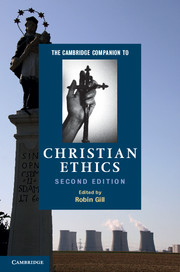
In this second edition of the best-selling Cambridge Companion to Christian Ethics, Robin Gill brings together twenty essays by leading experts, to provide a comprehensive introduction to Christian ethics which is both authoritative and up to date. This volume boasts four entirely new chapters, while previous chapters and all bibliographies have been updated to reflect significant developments in the field over the last decade. Gill offers a superb overview of the subject, examining the scriptural bases of ethics as well as discussing Christian ethics in the context of contemporary issues, including war and the arms trade, social justice, ecology, economics, medicine and genetics. All of the contributors have a proven track record of balanced, comprehensive and comprehensible writing making this book an accessible and invaluable source not only for students in upper-level undergraduate courses, graduate students and teachers, but anyone interested in Christian ethics today.