To save content items to your account,
please confirm that you agree to abide by our usage policies.
If this is the first time you use this feature, you will be asked to authorise Cambridge Core to connect with your account.
Find out more about saving content to .
To save content items to your Kindle, first ensure no-reply@cambridge.org
is added to your Approved Personal Document E-mail List under your Personal Document Settings
on the Manage Your Content and Devices page of your Amazon account. Then enter the ‘name’ part
of your Kindle email address below.
Find out more about saving to your Kindle.
Note you can select to save to either the @free.kindle.com or @kindle.com variations.
‘@free.kindle.com’ emails are free but can only be saved to your device when it is connected to wi-fi.
‘@kindle.com’ emails can be delivered even when you are not connected to wi-fi, but note that service fees apply.
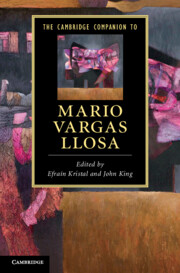
One of the major novelists in world literature over the last five decades, Mario Vargas Llosa (b. 1936) is also one of Latin America's most engaging public intellectuals, a critic of art and culture, and a playwright of distinction. This Companion's chapters chart the development of Vargas Llosa's writings from his rise to prominence in the early 1960s to the award of the Nobel Prize for Literature in 2010. The volume traces the development of his literary trajectory and the ways in which he has re-invented himself as a writer. His vast output of narrative fiction is the main focus, but the connections between his concerns as a creative writer and his rich career as a cultural and political figure are also teased out in this engaging, informative book.
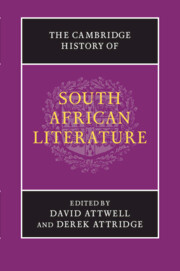
South Africa's unique history has produced literatures in many languages, in both oral and written forms, reflecting the diversity in the cultural histories and experiences of its people. The Cambridge History offers a comprehensive, multi-authored history of South African literature in all eleven official languages (and more minor ones) of the country, produced by a team of over forty international experts, including contributors from all of the major regions and language groups of South Africa. It will provide a complete portrait of South Africa's literary production, organised as a chronological history from the oral traditions existing before colonial settlement, to the post-apartheid revision of the past. In a field marked by controversy, this volume is more fully representative than any existing account of South Africa's literary history. It will make a unique contribution to Commonwealth, international and postcolonial studies and serve as a definitive reference work for decades to come.
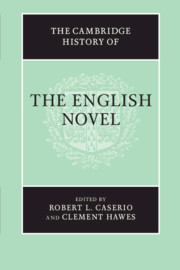
The Cambridge History of the English Novel chronicles an ever-changing and developing body of fiction across three centuries. An interwoven narrative of the novel's progress unfolds in more than fifty chapters, charting continuities and innovations of structure, tracing lines of influence in terms of themes and techniques, and showing how greater and lesser authors shape the genre. Pushing beyond the usual period-centered boundaries, the History's emphasis on form reveals the range and depth the novel has achieved in English. This book will be indispensable for research libraries and scholars, but is accessibly written for students. Authoritative, bold and clear, the History raises multiple useful questions for future visions of the invention and re-invention of the novel.
The proper relation between law and order has long been a contested one. Attempting to determine the proper relation between international law and international order is an even more difficult task. Does international law exist to create and maintain international order? Should this be one of the functions of international law? If so, what kind of order is international law designed to secure and maintain? Does constituting order always take priority over all other goals, values or interests? Who decides? These are particularly difficult questions for international lawyers, because international law has predominantly been understood as a means of governing relations between sovereign states. In this view, states are the authors of law and the bearers of pluralism. International law only exists to the extent that sovereign states consent to be bound by specific obligations. International law, like private law, is thus portrayed as a system for governing relations between equals. In the case of international law, the equality of subjects plays an even more fundamental role than in domestic legal systems, where the idea that agreements must be honoured finds a guarantor in the state. Because international law is a system in which there is no higher guarantor, international jurisprudence is strongly shaped by the notion of consent and by the idea that law only exists to bind states to their commitments. According to this view, international lawyers fulfil their function when they find ways for these alienated entities to express their national interests or their instrumental objectives in the law they bring into being.
Although structuralism is no longer the fashionable critical mode it was in the 1960s and 1970s, it still underlies most theoretical discourse (everything labelled ‘poststructuralist’, ‘semiotic’ or even ‘deconstructionist’ builds upon structuralist concepts) and is of particular relevance to the study of fantasy. The very origins of the structural analysis of literature are tied to traditional fantastic genres such as fairy tale and myth, and structuralist approaches remain useful as correctives to critical assumptions about the pre-eminence of realism as a literary mode.
Most histories of structuralism trace it back to linguistics. Ferdinand de Saussure's lectures on language, assembled by his students as the influential Course in General Linguistics (1916), sorted out syntax, speech sounds and even the generation of meaning into orderly systems of parts and features. Saussure's scientific approach to language was imitated by other disciplines, including anthropology, art history, psychology and literary criticism. In each case, the approach was to break down a cultural product or expression into a set of constituent parts and then examine the way those parts were articulated, like boiling a body down to a set of bones and then assembling the bones into a skeleton. One might as easily describe the structure of a skyscraper or a psyche; a kinship system or a myth. This approach was both liberating and limiting: liberating because it did not assume that the essential structure of a thing was related to its apparent form or to the conscious intentions of its creator, and limiting because it tended to flatten out differences and to mistake the structure for the functioning whole.
In his short story ‘Novelty’ (1983), John Crowley explores a counterfactual about religion and history. A writer who may be a self-portrait of Crowley sits in a New York bar and ponders the subject of his next work. He imagines an alternate story of Christianity, where Christ refused to take up his cross and instead lived on – making, in a sense, a fuller commitment to humanity that way. In doing so, he imagines another kind of religion from Christianity: at another point in the story, his editor mistakes this for pantheism. The writer responds:
‘No. No. The opposite. In that kind of religion the trees and the sky and the weather stand for God or some kind of supernatural unity. In my religion, God and all the rituals and sacraments would stand for the real world. The religion would be a means of perceiving the real world in a sacramental way. A Gnostic ascension. A secret at the heart of it. And the secret is – everything. Common reality. The day outside the church window.’
A religion of this kind – created from what we might call an aesthetic and moral critique of Christianity as it is – could perhaps never exist in the real world, or even in a sustained work of fiction. The work Crowley embarked on following ‘Novelty’, the four-book Ægypt sequence, is in part an embodiment of this idea of making the everyday sacramental, but Ægypt takes on so many other ideas that it is hard to see it as the sole motivation for the series. However, there are other works that have the same relationship to religion as that described in Crowley's story above.
‘Law without courts’ seemed to Hugo Grotius an entirely coherent approach to the juridification of international relations. The first edition of his Law of War and Peace (De jure belli ac pacis, 1625) reflects an intense commitment to framing claims and rules for conduct outside the state in terms of legal rights and duties, but not to judicialisation, even though arbitration between sovereigns was addressed in earlier works he had read, such as Alberico Gentili’s Law of War (De iure belli libri tres, 1612 [1933]). Yet in modern times international judicialisation – the creation and use of international courts and tribunals – has been not only a significant component of liberal approaches to international order, but for some an indispensable concomitant of juridification.
The opening section of this chapter provides an overview of the formation of what are now ten basic types of international courts. The following section offers some balance to the tendencies (implicit in the approach taken in the first section) to acclaim each flourishing legal institution as an achievement and to study only what exists, by considering the marked unevenness in the issues and in the ranges of states currently subject to juridification through international courts and tribunals. The final section addresses the question whether the density and importance of the judicially focused juridification that now exists has implications for politics, law and justice that are qualitatively different from what has gone before. This is explored by examining some of the main roles and functions of international courts, considered not simply as a menu but as a complex aggregate.
The reputation of the Goths has followed a strange trajectory, such that the adjective formed from their name now means (variously): a people; their language; a medieval style of architecture; the modern revival of that architectural style; a late eighteenth- and early nineteenth-century mode of novelistic literature (the chief concern of this essay); a sanserif printing font; and a contemporary youth subculture centred on a particular sort of rock music and a penchant for black clothing and make-up. We might begin by asking: who were they?
Edward Thompson provides a textbook answer: the Goths were ‘a Germanic people who left their original homes in southern Scandinavia about the beginning of the Christian era, and settled around the lower Vistula [in Poland] … in the period ad 150–200 they migrated to the lands north of the Black Sea and in 238 at latest they began to raid the Roman Empire’. They divided into two groups: Visigoths and Ostrogoths. The Visigoths, who warred and settled along the Danube, moved into Greece, and thence to Italy, where (under the leadership of Alaric I) they sacked Rome in 410, finally settling in southern France. The Ostrogoths built a large empire in what is now the Ukraine, and after various military victories their king, Theodoric, ruled Italy from the beginning of the sixth century. By the end of the sixth century rule in Italy passed to another Scandinavian/Germanic people, the Lombards; but by this time the Goths had colonized much of Europe and, through interbreeding with other peoples, became simply European.
Warfare has always been a central preoccupation and presented a kind of ultimate test for international law. It is hard to think of international law governing the relations amongst states without having something to say about war – when war is and is not an appropriate exercise of sovereign authority, how war can and cannot be conducted, which of war’s outcomes will and will not become components of a post-war status quo, and so on. It is conventional to imagine that international law restrains war by making distinctions: this is war, and this is not; this is sovereignty, and this is not; this is legal warfare, and this is not. The terms with which these legal distinctions are drawn change over time. The vernacular may be more or less sodden with ethical considerations, more or less rooted in the specific treaty arrangements entered into by states. The distinctions may be drawn more or less sharply, may be matters of kind or degree. What goes on one or the other side of these distinctions may change, but the idea that law is about distinguishing war from peace, sovereign right from sovereign whim, legal from illegal conduct, on the battlefield and off, endures.
Discussions about international law and war usually unfold as if the participants were imagining an international law which would be able to substitute itself for sovereign power in a top-down fashion, first to distinguish legal from illegal violence and then, perhaps not today but eventually, or perhaps not directly but indirectly, to bring that distinction to bear in the life of sovereigns, extinguishing sovereign authority for war at the point it crosses a legal limit. The idea is that the articulation of right will discipline, limit and restrain sovereign power when it turns to violence. International law proposes to bring this about through a series of doctrines, definitions and arguments which say where war begins and ends, and then through an apparatus of institutions and relationships which are linked in one or another way to these doctrines and which are the locus for or the effect of these sayings.
C.L.R. James’s book The Black Jacobins tells the story of the Haitian revolution of 1791–1803, the only slave revolt in history that brought permanent emancipation and a new independent state (James 1963). Central to the story is the magnificent figure of Toussaint L’Ouverture. A former slave, he became the pre-eminent leader of the revolt, but lost the chance to lead it to its conclusion when, in 1802, he was arrested and taken to France. Imprisoned in the mountains of the Jura with deficient heating and reduced rations, he died nine months after arriving there.
James’s book was originally published in 1938, and then revised and reissued in 1963. In a recent work, David Scott calls attention to an intriguing feature of the revisions that James made for the book’s second edition, namely that he shifted the register of his story from romance to tragedy (Scott 2004). Whereas in the original version James told a romantic tale of revolutionary triumph, in the revised edition there was a new emphasis on Toussaint’s tragic predicament, and on the dilemmas, disappointments, ironies and uncertainties of enlightenment and liberation.
The aspect of international law which is the subject of this chapter is human rights, and I shall be showing how, in that very different context, something similar can be observed.
This study was conceived and planned in 2008–2009 when we were colleagues at Cambridge, during Martti’s tenure as Goodhart Distinguished Professor of Law. We were able to discuss some of the contributions in draft at a mini-conference held at the Lauterpacht Centre for International Law in February 2010.
In selecting authors for the Companion, we sought to incorporate a wide range of views, including interdisciplinary and critical approaches, as well as ensuring a reasonable coverage of the various sub-fields of international law. As the reader will observe, the discipline/profession of international law is approached in different ways by different scholars: the subject looks subtly (and sometimes unsubtly) different from India or the United States or Australia than it does from different parts of Europe or Africa. We would have wished for an even more catholic range of contributors, but the demands of space and time precluded this.
We are grateful to Cambridge University Press, notably the responsible subject editor, Sinead Moloney, for a judicious combination of support, encouragement and patience. Much of the editorial burden fell on our graduate student at NYU and Cambridge, Surabhi Ranganathan, to whom we owe a lot. Lesley Dingle produced an admirable guide to electronic sources of international law; the guide is also available at the website of the Squire Law Library* where the links will be periodically updated: they were correct when the manuscript was submitted to the Press.
Thematic criticism is a form of archaeology that excavates the layers of a text and compares that text with those found in other excavations: it is almost always comparative. As such, thematic criticism can be powerful and threatening, and sometimes limited and self-limiting. Thematic criticism is not a theoretical approach to fiction in itself, but can be situated within theoretical approaches such as modernism, deconstruction, postmodernism and structuralism; it is very strongly linked to psychoanalytic and political interpretations of fantasy. It is discussed in this book because thematic criticism may be the most common approach to the literature of fantasy among both academics and fans.
Thematic criticism can focus on just one text, but is far more often deployed in comparative work, in order to create clusters of texts which can be discussed together. In a field where tropes, style, fantastical location and magical systems vary widely, thematic criticism has proved a very powerful way of creating a collectivity of texts. For example, in John Clute and John Grant's Encyclopedia of Fantasy,1 the thematic essay on reincarnation by Brian Stableford (808) or the essay on story, by John Clute (899–901) lay the basis for further exploration, offering a variety of pathways through a diverse field and demonstrating the multiplicity of pathways through individual texts, as different thematic filters open different windows into books, and different clusters emerge. The result, when thematic criticism is collected together, is a mosaic of fantasy.
The process of thematic criticism can be understood as a deconstructionist route into a text's deeper meaning, finding it richer and more meaningful than it might otherwise be read. This notion of the deeper, often metaphorical meaning in the fantastic is one of the classic defences of fantasy to the outside world.
From an exotic specialisation on the fringes of the law school, international law has turned during the twentieth century into a ubiquitous presence in global policy-making as well as in academic and journalistic commentary. With internationalisation first, globalisation later, questions about the legality under international treaties or customary law of this or that action were posed with increasing urgency in the media and by citizen activists as well as by governments and international institutions. International law exited the chambers of diplomacy to become part of the debates on how the world is governed. With good reason, the last ten years of the old millennium were labelled by the United Nations General Assembly the ‘Decade of International Law’. The decade saw such impressive developments as the establishment in 1995 of the World Trade Organisation (WTO) with a powerful system for settling trade disputes. In 1998 the Rome Treaty was adopted that led to the setting up of the International Criminal Court (ICC) to try suspected war criminals and those committing grave violations of human rights. The system of multilateral human rights and environmental treaties expanded and, as many said, henceforth needed more deepening rather than widening. The UN Security Council arose from its Cold War slumber to take action in many regional crises, sometimes with more, sometimes with less success, but always surrounded by much legal argument. Cooperation in development and in the organisation of international investment took a legal turn: the rhetoric of ‘rule of law’ penetrated everywhere. The same trends continued in the first decade of the new millennium. At the same time, however, new concerns emerged. Violations of human rights and humanitarian law kept occurring, especially in the Third World but also in Europe, while only little progress was attained in the eradication of poverty and global economic injustice. Some activities led by the Great Powers such as the bombing of Belgrade by the North Atlantic alliance (NATO) in 1999 or the campaign to oust Saddam Hussein from Iraq’s leadership in 2003 became the subject of heated debate. The relationship between the fight against terrorism and the protection of human rights divided opinions in Europe and elsewhere. While the number of democratic countries increased, democracy also brought popular restlessness and conflict out in the open.