To save content items to your account,
please confirm that you agree to abide by our usage policies.
If this is the first time you use this feature, you will be asked to authorise Cambridge Core to connect with your account.
Find out more about saving content to .
To save content items to your Kindle, first ensure no-reply@cambridge.org
is added to your Approved Personal Document E-mail List under your Personal Document Settings
on the Manage Your Content and Devices page of your Amazon account. Then enter the ‘name’ part
of your Kindle email address below.
Find out more about saving to your Kindle.
Note you can select to save to either the @free.kindle.com or @kindle.com variations.
‘@free.kindle.com’ emails are free but can only be saved to your device when it is connected to wi-fi.
‘@kindle.com’ emails can be delivered even when you are not connected to wi-fi, but note that service fees apply.
The South African economy experienced substantial growth and change over the twentieth century. By the time of Union in 1910, gold mining on the Witwatersrand had already and rapidly transformed what had been a peripheral agricultural economy into one that was industrialising around mineral exports. Gold attracted British capital and immigrants from Europe (as well as from across southern Africa), and made possible secondary industrialisation and four decades of sustained economic growth in the middle of the century. Between the early 1930s and early 1970s, the South African economy grew approximately tenfold in real terms. Even taking into account the steady increase in the population, real gross domestic product (GDP) per capita tripled (see Figure 11.1). Despite faltering growth in the 1980s, South Africa accounted for almost exactly one half of the total GDP of sub-Saharan Africa at the end of the apartheid period, in 1994.
Ted Hughes is unquestionably one of the major twentieth-century English poets. Radical and challenging, each new title produced something of a shock to British literary culture. Only now is the breadth of his literary range and cultural influence being recognised. As well as his poetry and stories, writing for children, translations and prose essays and reviews, in recent years Hughes's own letters have received great critical attention. This Companion consolidates Hughes's life, writings and reputation. International experts from a variety of literary fields here confront the key questions posed by Hughes's work. New archival evidence is provided for fresh readings of his oeuvre with close attention to language, forms and the function of myth. Featuring a chronology and guide to further reading, this book is a valuable and insightful companion for those studying and reading Hughes in the context of his role in the development of modern poetry.
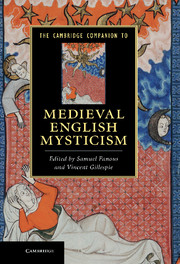
The widespread view that 'mystical' activity in the Middle Ages was a rarefied enterprise of a privileged spiritual elite has led to isolation of the medieval 'mystics' into a separate, narrowly defined category. Taking the opposite view, this book shows how individual mystical experience, such as those recorded by Julian of Norwich and Margery Kempe, is rooted in, nourished and framed by the richly distinctive spiritual contexts of the period. Arranged by sections corresponding to historical developments, it explores the primary vernacular texts, their authors, and the contexts that formed the expression and exploration of mystical experiences in medieval England. This is an excellent, insightful introduction to medieval English mystical texts, their authors, readers and communities. Featuring a guide to further reading and a chronology, the Companion offers an accessible overview for students of literature, history and theology.
This major work of academic reference provides the first comprehensive survey of political thought in Europe, North America and Asia in the century following the French Revolution. Written by a distinguished team of international scholars, this Cambridge History is the latest in a sequence of volumes firmly established as the principal reference source for the history of political thought. In a series of scholarly but accessible essays, every major theme in nineteenth-century political thought is covered, including political economy, religion, democratic radicalism, nationalism, socialism and feminism. The volume also includes studies of major figures, including Hegel, Mill, Bentham and Marx, and biographical notes on every significant thinker in the period. Of interest to students and scholars of politics and history at all levels, this volume explores seismic changes in the languages and expectations of politics accompanying political revolution, industrialisation and imperial expansion and less-noted continuities in political and social thinking.
The French Revolution ignited the biggest debate on politics and society in Britain since the Civil War 150 years earlier. The public controversy lasted from the initial, positive reaction to French events in 1789 to the outlawing of the radical societies in 1799. This Cambridge Companion highlights the energy, variety and inventiveness of the literature written in response to events in France and the political reaction at home. It contains thirteen specially commissioned essays by an international team of historians and literary scholars, a chronology of events and publications, and an extensive guide to further reading. Six essays concentrate on the principal writers of the Revolution controversy: Burke, Paine, Godwin and Wollstonecraft. Others deal with popular radical culture, counter-revolutionary culture, the distinctive contribution of women writers, novels of opinion, drama, and poetry. This volume will serve as a comprehensive yet accessible reference work for students, advanced researchers and scholars.
Baseball is much more than a game. As the American national pastime, it has reflected the political and cultural concerns of US society for over 200 years, and generates passions and loyalties unique in American society. This Companion examines baseball in culture, baseball as culture, and the game's global identity. Contributors contrast baseball's massive, big-business present with its romanticized origins and its evolution against the backdrop of American and world history. The chapters cover topics such as baseball in the movies, baseball and mass media, and baseball in Japan and Latin America. Between the chapters are vivid profiles of iconic characters including Babe Ruth, Ichiro and Walter O'Malley. Crucial moments in baseball history are revisited, ranging from the 1919 Black Sox gambling scandal to recent controversies over steroid use. A unique book for fans and scholars alike, this Companion explains the enduring importance of baseball in America and beyond.
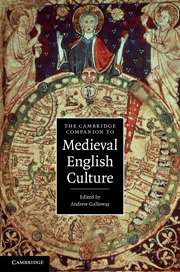
The cultural life of England over the long period from the Norman Conquest to the Reformation was rich and varied, in ways that scholars are only now beginning to understand in detail. This Companion introduces a wide range of materials that constitute the culture, or cultures, of medieval England, across fields including political and legal history, archaeology, social history, art history, religion and the history of education. Above all it looks at the literature of medieval England in Latin, French and English, plus post-medieval perspectives on the 'Middle Ages'. In a linked series of essays experts in these areas show the complex relationships between them, building up a broad account of rich patterns of life and literature in this period. The essays are supplemented by a chronology and guide to further reading, helping students build on the unique access this volume provides to what can seem a very foreign culture.
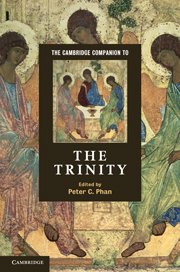
How do Christians reconcile their belief in one God with the concept of three divine 'persons'? This Companion provides an overview of how the Christian doctrine of the Trinity has been understood and articulated in the last two thousand years. The Trinitarian theologies of key theologians, from the New Testament to the twentieth century, are carefully examined and the doctrine of the Trinity is brought into dialogue with non-Christian religions as well as with other Christian beliefs. Authors from a range of denominational backgrounds explore the importance of Trinitarian thought, locating the Trinity within the wider context of systematic theology. Contemporary theology has seen a widespread revival of the doctrine of the Trinity and this book incorporates the most recent developments in the scholarship.
Poetry written in English is uniquely powerful and suggestive in its capacity to surprise, unsettle, shock, console, and move. The Cambridge History of English Poetry offers sparklingly fresh and dynamic readings of an extraordinary range of poets and poems from Beowulf to Alice Oswald. An international team of experts explores how poets in England, Scotland, Wales and Ireland use language and to what effect, examining questions of form, tone, and voice; they comment, too, on how formal choices are inflected by the poet's time and place. The Cambridge History of English Poetry is the most comprehensive and authoritative history of the field from early medieval times to the present. It traces patterns of continuity, transformation, transition, and development. Covering a remarkable array of poets and poems, and featuring an extensive bibliography, the scope and depth of this major work of reference make it required reading for anyone interested in poetry.
This book surveys South African history from the discovery of gold in the Witwatersrand in the late nineteenth century to the first democratic elections in 1994. Written by many of the leading historians of the country, it pulls together four decades of scholarship to present a detailed overview of South Africa during the twentieth century. It covers political, economic, social and intellectual developments and their interconnections in a clear and objective manner. This book, the second of two volumes, represents an important reassessment of all the major historical events, developments and records of South Africa and will be an important new tool for students and professors of African history worldwide, as well as the basis for further development and research.
This ambitious literary history traces the American novel from its emergence in the late eighteenth century to its diverse incarnations in the multi-ethnic, multi-media culture of the present day. In a set of original essays by renowned scholars from all over the world, the volume extends important critical debates and frames new ones. Offering new views of American classics, it also breaks new ground to show the role of popular genres - such as science fiction and mystery novels - in the creation of the literary tradition. One of the original features of this book is the dialogue between the essays, highlighting cross-currents between authors and their works as well as across historical periods. While offering a narrative of the development of the genre, the History reflects the multiple methodologies that have informed readings of the American novel and will change the way scholars and readers think about American literary history.
In the Americas, as in precolonial Africa, slavery's reproduction was structurally linked to the reproduction of power. Things could not be any other way. Slavery was not a self-reproducing system; it presupposed unequal power relations. Long before their connection in production, slaves and masters were united through a private, culturally legitimated power relationship. In other words, before he or she became property, the slave was the captive of another man. For this reason, escapes and quilombos, though typical strategies of resistance to slavery, were not only direct attacks on property: They were extreme political acts whose very existence as possibilities restricted the master's reach, guaranteeing slaves a small yet crucial space from which they could make demands. We must not forget that slavery prevailed for four centuries in the Americas – fully four times as long as universal emancipation. In many ways, the slave past is still greater than the free present. For this reason, though escapes and the establishment of communities of runaways constituted classical forms of resistance to slavery, their study may, in fact, teach us much about slavery's great relative stability.
We begin our analysis with the captaincy of Rio de Janeiro (Brazil), a region highly integrated into the international market for tropical products. In 1789 there were 65,000 slaves in the region and 15,000 in the city of Rio de Janeiro alone. Thirty years later, these numbers had increased to 150,000 and 40,000 respectively. The trade in African slaves explains this growth.
Before contact with Europeans, most North American indigenous communities were familiar with captives taken in intergroup fighting as a potential source of additional community members. Such captives were the proximate or ultimate source of most of those in statuses of servitude, including slavery, in the majority of Native American communities in early historic times.
Statuses of servitude, especially slavery, within Native American communities have not attracted a great deal of scholarly scrutiny, partly because the positive pole of the idea of the “noble savage” continues to color both the popular and scholarly image of Native Americans sufficiently to often cause surprise and even resistance to the suggestion that not all precontact and early contact indigenous communities were egalitarian. That various forms of bondage, including slavery, did occur in some indigenous communities is also frequently dismissed, or their importance in some aboriginal communities minimized.
Careful scrutiny of the earliest available sources on indigenous North American societies, however, reveals that statuses of servitude were of considerable significance in some, although certainly not all, such societies. Two major questions are pursued here. First, as best we can tell, what happened to captives prior to European impact on indigenous societies? How were the fates of captives likely altered as a result of significant European influence?
I emphasize similarities and broad, widespread patterns, but considerable variation existed within this framework of similarities that cannot be considered here. Because of major variations across the continent, a regional approach is adopted.
Between the beginning of the fifteenth century and the end of the eighteenth, millions lived and died as slaves in African Muslim societies. From the Mediterranean coast to the grasslands of West Africa, in the Nile Valley and the Horn, and all along the Indian Ocean littoral, Muslims predominated or exercised great influence. In all these regions slavery was economically, socially, and politically important, and its scale increased throughout our period before reaching wholly unprecedented levels in the nineteenth century. Islamic principles and practices shaped the nature of slavery in Muslim societies, but they did so in uneven and contingent ways. In this chapter, we will examine the ways in which Islamic ideas about slavery were negotiated in the historical experience of Muslim Africans. There are three major components of any system of slavery: reduction of human beings to servitude, distribution of the enslaved within and between societies, and the nature of servitude within a society. These categories are utilitarian, not absolute. Biological reproduction of slaves belongs in categories one and three. Category three implies the continuous reproduction of the meanings of category one without the initial act of capture or birth. Examples could be multiplied. The categories are heuristic aids, not precise hermeneutical tools. In these sections we will survey Islamic legal, intellectual, and moral discourses on slavery in relation to the historical record. This initial discussion will treat themes common to all of Islamic Africa, providing a necessary context.
China's social history offers vivid confirmation of the insights of David Brion Davis, Orlando Patterson, Eric Foner, and others that the existence of an ancient, stable, conceptually absolute institution of “slavery” is a powerful impetus to the production of an equally absolute conception of “freedom.” Although a wide spectrum of unfree labor, dependency, and coercion is discernible in Asian history generally and in China particularly, there is no precise parallel to the Roman legal construction of slavery. In China the absolute legal definition of slave status, or the associations with race and culture that might have inspired an equally absolute ideal of personal or national freedom, never emerged. On the other hand, influence of Roman legal dichotomies of slave and free in the shaping of European and American scholarship on coercion need not so obscure our view of other traditions that slavery is not plainly visible to the modern eye. The cognates of many forms of European slavery persisted in China for millennia. They left a wide trail in law and in the popular lexicon. They also supplied a dimension to modern notions of ethnic identity.
During the seventeenth and eighteenth centuries, China was conquered and then governed by the Qing Empire, which survived until 1912. The empire was initiated in 1636, at what is now the city of Shenyang in the province of Liaoning, but at the time was territory wrested from Ming China by the founders of the early Qing Empire.
From the middle of the fifteenth century until its demise after World War I, the Ottoman Empire was arguably the most important Islamic power on the face of the earth. At the height of its expansion, it ruled a vast territory from the western Mediterranean to the Persian Gulf, from southern Poland to southern Sudan. Many of the sultan's subjects were not Muslim, did not speak Ottoman Turkish, and were illiterate, poor, and lived in villages, not in cities. Yet they were all governed by a Muslim, Turkish-speaking, urban, affluent, and predominantly male elite of officeholders. Perhaps the only phenomenon that cut across all these social barriers was enslavement, for despite the at times enormous differences in lifestyle, enslaved persons came from all walks of life: They were male and female, rich and poor, powerful and powerless, rural and urban, Muslim and non-Muslim, and speakers of all the dialects in the empire, with origins as far-flung as central Africa and the eastern Caucasus. What united them was a shared legal status of bondage, with the variety of social impediments it entailed in each predicament.
Perhaps more than anything else, it was this mélange of types that made Ottoman enslavement unique, complex to study and explain, and highly intriguing as a social phenomenon. For its significance lay mostly in its social and cultural aspects rather than its role in the Ottoman economy.
To trace the development of slavery and its legal manifestations over the early modern period is to tap some of the larger transformations of the Atlantic world as a whole. In the fifteenth century, slaves constituted a small but recognizable segment of most African, European, and American societies. Some societies with strong imperial traditions (Roman, Islamic, Itza, and Aztec) contained many references to slaves in their commercial, marital, inheritance, civil, and criminal law. Others, with no written traditions or living in relative isolation, developed customs surrounding the intersection of military captivity, labor obligations, and kinship ties that define slavery and free status, which they enforced communally. As European maritime activity transformed the Atlantic Ocean from barrier to facilitator of conquest, migration, and commerce over subsequent centuries, slavery became central, or at least implicitly related, to nearly every society on all three continents. The new plantation complex, with its insatiable demand for laborers, generated new legal systems to enforce compliance. As American colonists became increasingly impatient with metropolitan (European) political control toward the end of the eighteenth century, antislavery discourse fueled much of the political rhetoric of the Revolutionary era, ushering in the republicanism, nationalism, and the constitutional framework of the modern period.
In this chapter, I have sought to put the slave's experience at the center of the story. It is important to see law as a product of social relations, reproduced by successive generations of historical actors.
French colonization in the Americas took place in Canada, the Mississippi region, and the Greater Caribbean, including French Guiana. Slavery was a part of all the societies in the French Americas, but while it was of relatively marginal importance in Canada it was the central economic structure in the Caribbean colonies. The French colonies there – and particularly the last to be formed, that of Saint-Domingue – expanded with startling speed during the eighteenth century, prospering and generating enormous wealth for France. After the loss of Canada to the British and the transfer of Louisiana to the Spanish in 1763, when the colonies of the Caribbean became the sole French territories in the America, they reached the peak of their development. During the revolutionary years starting in 1789, however, a series of dramatic transformations took place in the French Caribbean colonies, leading to the abolition of slavery by the French National Convention in 1794, and ultimately the defeat of French armies in Saint-Domingue and the creation of Haiti. As a direct result of this, the recently re-acquired territory of Louisiana was sold to the expanding United States. By the early nineteenth century, the French colonial presence in the Americas had been reduced to the islands of Guadeloupe and Martinique, the territory of French Guiana, and two small islands in the Gulf of St. Lawrence.
This chapter will examine the general theme of forced labor performed by Europeans overseas during early modern times, that is, from 1500 to roughly 1800. First, a general overview will discuss who formed this labor pool and why. Second, a look at the possible totals of forced laborers will suggest the level of impact or social control forced labor represented in a given society. Third, an outline of how various European powers used forced labor during early modern times will reflect how multifaceted this subject was and where it overlapped with related themes, such as the military. Finally, I will turn to the specific case of the Portuguese as an in-depth example of this process. In doing so, I will underline similarities and contrast the differences between the Portuguese use of forced labor and how other early modern European powers used these same marginal figures in their societies. Because of large geographic and thematic gaps in the literature, this chapter is far from complete – even when we limit its scope to Europeans. In spite of this, I hope to provide a broad view of aspects of forced labor performed by them.
Marginal figures such as convicts, sinners, Gypsies, orphans, and prostitutes during early modern times became prime sources for various states to extract labor. At a minimum, these same figures could and did become forced colonizers. In Western societies, the legal basis and underlying model for forced labor is Roman.