To save content items to your account,
please confirm that you agree to abide by our usage policies.
If this is the first time you use this feature, you will be asked to authorise Cambridge Core to connect with your account.
Find out more about saving content to .
To save content items to your Kindle, first ensure no-reply@cambridge.org
is added to your Approved Personal Document E-mail List under your Personal Document Settings
on the Manage Your Content and Devices page of your Amazon account. Then enter the ‘name’ part
of your Kindle email address below.
Find out more about saving to your Kindle.
Note you can select to save to either the @free.kindle.com or @kindle.com variations.
‘@free.kindle.com’ emails are free but can only be saved to your device when it is connected to wi-fi.
‘@kindle.com’ emails can be delivered even when you are not connected to wi-fi, but note that service fees apply.
Chinese shares with Sanskrit and Hebrew the privilege of being one of the longest continuous literary traditions. The antiquity of each of these traditions has murky origins that are to some degree shaped by later construction, additions, and editing. Each culture, however, never lost sight of its early texts, which served as reference points as the traditions transformed over millennia. In the course of millennia and spreading over large geographical regions, Chinese and Sanskrit in particular amassed a vast corpus of literary texts, which are still read and studied.
Apart from inscriptions, which survive because of their durable media, the received tradition of Chinese literature begins in the first quarter of the first millennium bc and has continued with a steadily increasing volume of production. Students in primary schools all over China still read selections of texts from antiquity and the medieval period, though heavily annotated. Paper, which proved to be the most successful medium for the written word, gradually came into general use probably in the first and second centuries ad. Paper could not compare to parchment or vellum for durability, but neither did the production of a book require whole herds or flocks; like its equally inexpensive competitors, papyrus and palm leaves, paper enabled levels of circulation that made literary texts more than isolated treasures. China, moreover, had state-sponsored printing by the tenth century and a flourishing commercial printing industry by the late eleventh century.
Literature in the age of “China turning inward” Shuen-fu Lin
The Northern Song’s fall to the Jurchens
In 1114 the Jurchens, a semi-agricultural, fishing, and hunting people based in eastern Manchuria, rose up in rebellion against the Khitan Liao empire, the most powerful northern neighbor of the Song, occupying a vast territory that extended from Manchuria to Inner Asia. Led by Aguda (1068-1123), the Jurchens proclaimed their own Jin dynasty in 1115 and began their destruction of the Liao with lightning speed. They took the Liao Northern Capital at the juncture of Shira Muren river and the Liao river of central Manchuria in 1120. In that year the Jin and the Song formed an alliance against the Liao, agreeing that the Jin would return to the Song the Sixteen Prefectures on the northern border occupied by the Liao, and that the Song would transfer to the Jin the annual indemnities and other obligations they owed to the Liao. The two sides also agreed to launch their coordinated attacks in 1122, with the Jin working to drive the Liao from their Central Capital about a hundred miles south of the Northern Capital, and the Song to take the Liao Southern Capital at the site of present-day Beijing. Because of the Song’s failure to meet their side of the agreement, the alliance broke down. Early in 1122 the Jin took the Liao Central Capital and then continued on to take the Western Capital in Datong in modern northern Shanxi as well. Impatient with their Song allies, the Jurchens went on to take the Southern Capital at the end of 1122, and after sacking it, turned it over to the Song.
In certain ways the Song dynasty (960–1279) continued literary traditions already characteristic of the Tang. The literature that survives was produced by the educated elite, and it continued to be written in a book language, usually called literary Chinese, rather than in the vernacular. Writers were male, with only a few prominent exceptions. The forms of shi poetry and the many well-established genres of literary prose continued to dominate. It is only toward the dynasty’s end that we begin to see the emergence of drama and fiction written in the vernacular, and that only in very limited quantity.
Despite these continuities, distinctly new styles and modes of expression gradually emerged. A new style of poetry evolved and was established by the mid-eleventh century. It came to be so distinct from dominant Tang styles that already by the century’s end, and ever after, the two styles were often simplistically viewed as competing options. Critics were expected to express a preference for “Tang poetry” or “Song poetry” and would-be poets to model their work on one or the other. Another development was that the song lyric (ci) attracted increased attention and its scope became broader than the narrow compass it had had during the Five Dynasties. Eventually the song lyric became an important poetic alternative to shi poetry, with its own vocabulary, subjects, and expressive function. A whole range of prose writings appeared, including miscellanies, accounts of anomalies, a form of poetry criticism called “remarks on poetry,” connoisseur manuals on all manner of aesthetic objects, and travel diaries. Some of these were entirely new. Even those that were not were produced in such increased quantity that collectively they took on an identity quite unlike that of their precursors.
China under the Mongols was a time of paradox: the Yuan had the shortest span of any major dynasty, yet the reach of its territory was the most extensive. It was diverse and multiethnic yet was a time in which many peoples were united in a single linguistic–cultural realm. It is also an era the scholarship of which owes much to an interest spawned outside of China by the Mongols– globalized reach. It witnessed the spread of literature in Chinese as far as Samarkand and Uzbekistan; its producers were Buddhists, Christians, Muslims, Chinese, Uighurs, Koreans, and Kazakhs. Whether one calculates the time span of Yuan literature 134 years backwards from its demise in 1368 to the time the Mongols snuffed out the Jin (1234), 107 years to the establishment of the Great Yuan dynasty by Khubilai Khan (1261), or 92 years to its destruction of the Southern Song (1276), it was short-lived. But such neat political divisions, datable to exact symbolic or real moments in the flow of time, obscure the tenacious knit of culture–s web, which loosens only through duration of change, reforming and reshaping culture–s pattern in small but important ways. While the Yuan–s political policies actually did create a significant break in literary continuity and an immediate and recognizable change in the whole cloth of Chinese literature, the dynasty was so short that many of these changes are visible only retrospectively as they unfold more elaborately in later times.
The second volume of the Cambridge History of Chinese Literature is comparable in chronological scope to the single-volume Cambridge series in European literatures. Using the year 1375 – rather than the standard date of 1368 (i.e. the first year of the Ming dynasty) – as the temporal division between the first and second volumes brings to light our unique approach to the question of periodization. Thus far, almost all available histories of Chinese literature periodize by dynasty, so we cannot dispense with this habit completely. We have chosen, however, to divide periods differently whenever dynastic periodization becomes problematic. For example, although the Ming dynasty was founded in 1368, in terms of literary history the year 1375 is by far the more important date to remember. By the year 1375, the important surviving intellectuals from the Yuan, such as Yang Weizhen (1296–1370), Ni Can (1301–1374), and Liu Ji (1311–1375), had already died. More importantly, in 1374, Zhu Yuanzhang, the Hongwu Emperor and founding father of the Ming (r. 1368–1398), executed the great poet Gao Qi (1336–1374) and hence inaugurated a reign of terror for intellectuals. To a certain extent, the distinctive early Ming culture began with the advent of Zhu Yuanzhang’s brutal political persecution, which would obliterate nearly an entire generation of poets brought up in the last years of Mongol rule.
It was not until around 1400 that literature had the chance to flourish again after a long hiatus, when the Yongle Emperor (r. 1403–1424) began to initiate his many ambitious literary and cultural projects. Given this clear division in the literary history of the period, it seems most useful to commence the second volume of the Cambridge History of Chinese Literature with the year 1375, while allowing for some overlap in material. Similarly, we have placed the May Fourth Movement of 1919 not at the beginning of “modernity,” as is traditionally done, but rather in the middle of a longer process starting in the latter part of the Qing. (See Chapter 6, “Chinese literature from 1841 to 1937,” by David Der-wei Wang.)
In the available histories of Chinese literature today, early and mid-Ming literature has been largely ignored. This problem is partly due to our obsession with the late Ming (i.e. 1550–1644), which has led us to ignore some equally important, if not more important, literary phenomena occurring before 1550. In fact, many of the important trends that have been associated with the late Ming actually find their origins much earlier. For example, it was during the early Ming – especially the Yongle reign (1403–1424) – that literature began to flourish in the court, when scholar–officials considered themselves to be somewhat like European courtiers.
For the sake of convenience, the literature of the early and middle Ming can be divided roughly into three periods: 1375 to 1450, 1450 to 1520, and 1520 to 1572. The beginning of the first period was far from being a cultural revival. Zhu Yuanzhang, the Hongwu Emperor, was suspicious to the point of paranoia, and was completely unpredictable in his responses to poetry. His persecution of authors whom he believed to have secretly criticized him was often brutal. Once a poor peasant and a local leader during the Red Turban revolt, the emperor assumed that the cultural elite would despise him; thus, reading between the lines for evidence of disloyalty, he brought death or banishment upon countless literary men. Given his persecution of writers and artists, it is ironic that among the past emperors of imperial China, Zhu Yuanzhang is the one whose portraits have been best preserved. At present, twelve portraits of Zhu are kept in the Palace Museum in Taipei, Taiwan, and one is in the Palace Museum in Beijing.
The Second Sino-Japanese War (1937–1945) and its aftermath
On July 7, 1937, Japanese troops stationed near the Marco Polo Bridge (Lugou Bridge to the Chinese), ten miles southwest of Beijing (Beiping at the time), used the pretext of searching for a soldier who had gone missing during a drill to demand entry into the city. When refused, they fired shots. The Chinese regiment commander Ji Xingwen (1908–1958) ordered his soldiers to return fire, triggering the outbreak of the Second Sino-Japanese War, which was to change China forever.
The military confrontation was not wholly unexpected. Since Japan invaded and occupied Manchuria in September 1931, tension had been mounting. Chiang Kai-shek’s (1887–1975) policy of nonresistance had been met with opposition from various quarters, as evidenced in the Xi’an Incident of December 12, 1936, in which Marshal Zhang Xueliang (1901–2001) took Chiang hostage in order to extort a promise from him to form a united front with the Chinese Communist Party (hereafter CCP) against Japanese aggression. Ten days after the Marco Polo Bridge Incident, Chiang issued a statement condemning the violence as “the last straw,” and in August declared an all-out war of resistance.
Japan had aimed to take China in three months. Advances in the north went largely unopposed; within a month, Beijing and Tianjin fell. On August 13, Japan attacked Shanghai. Faced with the enemy’s superior firepower, Chinese soldiers stood their ground for three months. At Four Banks Storehouse (Sihang cangku) in Shanghai, October 27 to 31, eight hundred soldiers under Commander Xie Jinyuan (1904–1941) held off Japanese offensives, allowing Chinese troops to retreat and Chinese civilians to be evacuated. The campaign ended on November 27.
The development of modern Chinese literature into a national tradition followed a tumultuous and innovative trajectory. In pursuit of a new relationship with the past and with the world, modern literature reinvented itself at several crucial junctures. Though at times precariously maintained, a unity has often been asserted out of a sense of nostalgia. This map of reading continues to change, however, as new visions of the geopolitical imagination abound in current Sinophone literature. With the potential to reshape the field in important ways, these visions have propelled new literary production in places that are neither monolingual nor nationally Chinese. Without converging on one cultural vision or a single aesthetics, current efforts to create alternative literary histories of the Chinese diaspora are introducing new questions while reinvigorating past debates. These efforts seek to extend the horizon of modern Chinese literature beyond the historical scope of this volume.
Though “Chinese-language literature” (huawen wenxue) is not unfamiliar to the Chinese-speaking world, it is only in recent years that scholars have begun to reevaluate its relationships with the different histories of literary production in Chinese communities throughout the world, mainly in Hong Kong, Malaysia, Singapore, Taiwan, Western Europe, and North America. The term “Chinese” encompasses conflicting notions of ethnicity, cultural affiliation, and linguistic center. Chinese, furthermore, is not the only language of the Chinese literary diaspora. If one were to consider this diaspora from within, the complex relation between indigenous and Han scripts in the making of minority literary traditions in the latter half of the twentieth century reveals a carefully planned process of assimilation rather than a history of a shared, natural language.
The cultural Tang does not correspond exactly with the political dynasty, founded in 618 and lasting until 907, by which time it had ceased to be a viable polity for a quarter of a century. We begin our cultural Tang with Empress Wu’s rise to power in the 650s and carry on into the first decades of the eleventh century, over half a century after the Song dynasty was established. This period is bounded on one side by the reign of Emperor Taizong (r. 627–649), the final phase of northern court culture and the full assimilation of the sophisticated legacy of the south. On the other side our period ends with the rise of the great political and cultural figures of the eleventh century, such as Fan Zhongyan (989–1052) and, most of all, Ouyang Xiu (1007–1072), writers who were to give Song literati culture its characteristic stamp.
Three hundred and seventy years is too long a span to constitute a meaningful literary-historical period, but comparison of literary culture at the beginning and end of this long era can bring out some of the fundamental changes that occurred. In the 650s, literature was centered almost entirely in the imperial court; by the end of the era literature had become the possession of an educated elite, who might serve in government, but whose cultural life was primarily outside the court.
Both before and during the Tang there were writers who used literature in a very personal way; it is not surprising that these were often the writers who continued to be read in later ages. At the same time, however, it is important to remember that literature was primarily a social practice, shared by an increasingly widening community. The Tang inherited a system of classical prose genres and poetic subgenres and extended it. Most of those prose genres and poetic subgenres were tied to specific occasions in life.
The earliest evidence for the Chinese language, and for the Chinese script as its writing system, is found in oracle bone and bronze inscriptions from the site of the Late Shang (ca 1250–ca 1046 bc) royal capital near modern Anyang, located in the northernmost part of modern Henan Province. From there to the present day, a continuous line of development can be drawn for both language and script that has served the expression of Chinese literature over the last three millennia. The Chinese script is one of only a handful of instances in human history where writing was invented independently, and it is the only originally invented writing system still in use today. Over time, it was adopted to write not just Chinese but also other East and Southeast Asian languages such as Korean, Japanese, and Vietnamese, thereby extending the reach of the Chinese literary tradition significantly beyond the boundaries of its spoken language.
The Late Shang oracle inscriptions (jiaguwen) scratched into bovine shoulder bones and turtle plastrons were records of communications with the royal ancestral spirits. Since their initial discovery in 1899, more than 150,000 fragments of such inscriptions have been found. They range in length from just a few to several dozen characters and preserve accounts of royal divinations on a wide range of topics – the well-being of the king, military success, the timeliness of sacrifices, the weather, and so on – that affected both the person of the ruler and the prosperity of his state.
This chapter deals with the rise and development of Chinese literature from the end of the First Opium War (1840–1842) to the eve of the Second Sino-Japanese War (1937–1945). During this period, China was in constant turmoil, wracked by military upheaval on the one hand – the Opium Wars, the First and Second Sino-Japanese Wars, the Taiping Rebellion, and the Boxer Rebellion – and on the other hand by cataclysmic social changes running the gamut from technological and commercial advancement to epistemological renovation. Indigenous innovations and foreign stimuli, radical provocations and conciliatory responses were in drastic contestation. The impact of these multifaceted challenges was such that, by the end of the nineteenth century, officials and intellectuals alike were in agreement that changes were taking place that had been “unthinkable for the past three thousand years.”
This was also a period that saw literature conceived, practiced, circulated, and assessed in ways without precedent in Chinese history. Imported printing technology, innovative marketing tactics, increased literacy, widening readership, the boom in diverse forms of media and translation, and the advent of professional writers all created fields of literary production and consumption that in the preceding decades would hardly have been imaginable. Along with these changes, literature – as aesthetic vocation, scholarly discipline, and cultural institution – underwent drastic, often vehemently contested, experimentation to become “literature” as we understand the meaning of the word today. The transformation of literature was indeed one of the most acute symptoms of a burgeoning Chinese modernity.
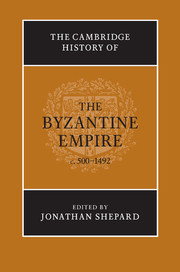
Byzantium lasted a thousand years, ruled to the end by self-styled 'emperors of the Romans'. It underwent kaleidoscopic territorial and structural changes, yet recovered repeatedly from disaster: even after the near-impregnable Constantinople fell in 1204, variant forms of the empire reconstituted themselves. The Cambridge History of the Byzantine Empire tells the story, tracing political and military events, religious controversies and economic change. It offers clear, authoritative chapters on the main events and periods, with more detailed chapters on particular outlying regions, neighbouring powers or aspects of Byzantium. With aids such as a glossary, an alternative place-name table and references to English translations of sources, it will be valuable as an introduction. However, it also offers stimulating new approaches and important new findings, making it essential reading for postgraduates and for specialists.
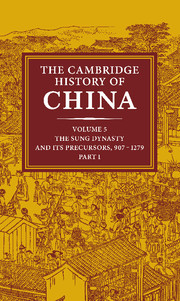
This first of two volumes on the Sung Dynasty (960–1279) and its Five Dynasties and Southern Kingdoms precursors presents the political history of China from the fall of the T'ang Dynasty in 907 to the Mongol conquest of the Southern Sung in 1279. Its twelve chapters survey the personalities and events that marked the rise, consolidation, and demise of the Sung polity during an era of profound social, economic, and intellectual ferment. The authors place particular emphasis on the emergence of a politically conscious literati class during the Sung, characterized by the increasing importance of the examination system early in the dynasty and on the rise of the tao-hsueh (Neo-Confucian) movement toward the end. In addition, they highlight the destabilizing influence of factionalism and ministerial despotism on Sung political culture and the impact of the powerful steppe empires of the Khitan Liao, Tangut Hsi Hsia, Jurchen Chin, and Mongol Yüan on the shape and tempo of Sung dynastic events.
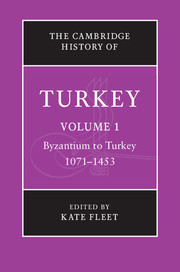
This volume examines the rise of Turkish power in Anatolia from the arrival of the first Turks at the end of the eleventh century to the fall of Constantinople in 1453. Taking the period as a whole, the volume covers the political, economic, social, intellectual and cultural history of the region as the Byzantine empire crumbled and Anatolia passed into Turkish control to become the heartland of the Ottoman empire. In this way, the authors emphasise the continuities of the era rather than its dislocations, situating Anatolia within its geographic context at the crossroads of Central Asia, the Middle East and the Mediterranean. The world which emerges is one of military encounter, but also of cultural cohabitation, intellectual and diplomatic exchange, and political finesse. This is a state-of-the-art work of reference on an understudied period in Turkish history by some of the leading scholars in the field.
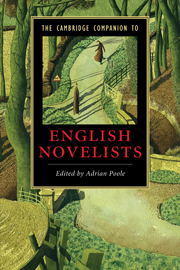
In this Companion, leading scholars and critics address the work of the most celebrated and enduring novelists from the British Isles (excluding living writers): among them Defoe, Richardson, Sterne, Austen, Dickens, the Brontës, George Eliot, Hardy, James, Lawrence, Joyce, and Woolf. The significance of each writer in their own time is explained, the relation of their work to that of predecessors and successors explored, and their most important novels analysed. These essays do not aim to create a canon in a prescriptive way, but taken together they describe a strong developing tradition of the writing of fictional prose over the past 300 years. This volume is a helpful guide for those studying and teaching the novel, and will allow readers to consider the significance of less familiar authors such as Henry Green and Elizabeth Bowen alongside those with a more established place in literary history.
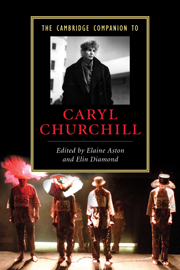
Caryl Churchill's plays are internationally performed, studied and acclaimed by practitioners, theatre scholars, critics and audiences alike. With fierce imagination the plays dramatise the anxieties and terrors of contemporary life. This Companion presents new scholarship on Churchill's extraordinary and ground-breaking work. Chapters explore a cluster of major plays in relation to pressing social topics – ecological crisis, sexual politics, revolution, terror and selfhood – providing close readings of texts in their theatrical, theoretical and historical contexts. These topic-based essays are intercalated with other essays that delve into Churchill's major collaborations, her performance innovations and her influences on a new generation of playwrights. Contributors explore Churchill's career-long experimentation – her risk-taking that has reinvigorated the stage, both formally and politically. Providing a new critical platform for the study of a theatrical career that spans almost fifty years, the Companion pays fresh attention to Churchill's poetic precision, dark wit and inexhaustible creativity.