To save content items to your account,
please confirm that you agree to abide by our usage policies.
If this is the first time you use this feature, you will be asked to authorise Cambridge Core to connect with your account.
Find out more about saving content to .
To save content items to your Kindle, first ensure no-reply@cambridge.org
is added to your Approved Personal Document E-mail List under your Personal Document Settings
on the Manage Your Content and Devices page of your Amazon account. Then enter the ‘name’ part
of your Kindle email address below.
Find out more about saving to your Kindle.
Note you can select to save to either the @free.kindle.com or @kindle.com variations.
‘@free.kindle.com’ emails are free but can only be saved to your device when it is connected to wi-fi.
‘@kindle.com’ emails can be delivered even when you are not connected to wi-fi, but note that service fees apply.
Ancient scepticism, in its most radical forms, calls into question the place of beliefs, or at least beliefs of a certain kind, in the best life. For the Academic scepticism of Arcesilaus consists in part in the claim that one ought not to have any beliefs at all. And Pyrrhonian scepticism, as Sextus Empiricus describes it in his Outlines of Pyrrhonism, is a way of life characterized above all by the absence of beliefs of a certain kind. Some of the most difficult problems in the interpretation of ancient scepticism are the result of the ancient sceptic’s claim that one ought not to have any beliefs at all or that he himself does not have any beliefs of a certain kind. Here I consider two of these problems. Ordinarily a person claims that p - that it is raining, that the wine is corked, that his wife will be at the party - because he believes that p, and in claiming that p he expresses his belief that p. In the first part of the chapter I examine whether, and how, Arcesilaus can claim that one ought not to believe anything without thereby doing just what he is claiming one ought not to do, namely, believing something. According to Sextus Empiricus the Pyrrhonian sceptic is someone who lacks not all beliefs but all beliefs of a certain kind. In the Outlines of Pyrrhonism Sextus relies on a distinction he does not explicate between beliefs of the kind the Pyrrhonian sceptic, in virtue of his scepticism, lacks and beliefs of the kind his scepticism permits him to have. In the second and longer part of this chapter I try to make sense of this distinction and to identify those beliefs that are, and those beliefs that are not, compatible with Pyrrhonian scepticism.
Sextus Empiricus, who surely lived in the second and third centuries CE, is one of those rare Greek philosophers whose works we have more or less complete in the form in which he wrote them. Before the great commentaries and treatises of the Neo-Platonists at the end of antiquity, this is hardly the case except for Plato, Epictetus, Marcus Aurelius, and Plotinus. But should we place Sextus in such illustrious company? If his work had not been preserved, our knowledge of ancient scepticism would be much more limited; but, leaving aside the fact that he is an irreplaceable source, is Sextus “an obscure and unoriginal Hellenistic writer,” as Richard Popkin says? Or, on the contrary, did he introduce original elements into the philosophical debate of his time?
Of the life of Sextus Empiricus we know virtually nothing. We know that he was a doctor (he tells us himself, M 1.260, PH 2.238) and Diogenes Laertius lists him as the penultimate head of the sceptical school. It seems that Sextus wrote some works that are now lost. He refers to his own Medical Treatises (M 7.202); one wonders whether or not this is the same work as the Empiric Treatises cited in M 1.62. The other books of his that Sextus himself appears to cite are probably ways of referring to passages from the works that have survived. But that leaves us three works of his that seem (more or less) complete.
This bibliography has two aims: to provide details of all scholarly works referred to in the essays in this volume, and to offer a comprehensive (though not exhaustive) survey of scholarship in the area. With respect to the latter goal, given the likely readership of this volume, there is a bias towards scholarship in English. For a number of reasons, there is also a bias towards works published in roughly the last thirty years. The bibliography is organized into sections, as shown in the Table of Contents below. Some works might naturally belong in more than one section. In some cases this is explicitly indicated: at the end of some sections, a short list of relevant works listed in other sections is appended. But it would be impossible to do this in every case, and so it should be borne in mind that the divisions are not foolproof. Nonetheless, this layout is intended, and may be expected, to be more useful than a single long list with no thematic divisions.
Journalism will, no doubt, occupy the first or one of the first places in any future literary history of the present times, for it is the most characteristic of all [our] productions.
'Journalism', Cornhill Magazine, 1862
Since the 1970s, the recuperation of women’s voices has made the work of novelists and poets of tremendous power and accomplishment available for scholarly and teaching purposes. New editions and collections of women’s writing, scholarly monographs and essays, academic journals and professional associations devoted to women’s writing, biographies of key figures - the extraordinary outpouring of such resources since the 1970s has ensured that nineteenth-century women’s writing is securely part of this period’s writing canon. Women’s writing in the periodical and newspaper press, however, has not yet undergone so comprehensive a reclamation as the preferred genres of novels, poetry and life writing, despite scholarship that argues persuasively that the periodical was 'the most significant organ for disseminating knowledge, information, and social attitudes'; despite the long-standing centrality of such figures as Matthew Arnold, Thomas Carlyle and John Ruskin, whose writings first appeared primarily in the periodical press, to our sense of this period; and despite long-standing interest in what the Victorians called 'the Woman Question', a periodical debate of great vigour and range. In this context, the Cornhill Magazine’s certainty about the place of journalism in English literary history is arresting, striking the twenty-first-century reader as somehow misplaced, a quaint reminder about the vast differences in critical sensibilities between then and now.
In the summer of 1867 the Reverend Charles Lutwidge Dodgson, now better known to the world as 'Lewis Carroll', set off on his only trip beyond the shores of England. He travelled with his friend and fellow Oxford don Canon Henry Liddon, to Russia. This was an unusual destination for cultured and curious Englishmen at the time. Italy, France or even Germany would have seemed more obvious choices, but Liddon, with Dodgson’s evident acquiescence, had a pilgrimage in mind. Their spiritual goal lay beyond what Western Europe had to offer. Liddon was seeking both to extend his knowledge of the Orthodox Church and to foster the spiritual links between the state churches of England and Russia in the hope of some ultimate alliance between those European Christians who rejected not simply the authority of the pope but also current movements within Roman Catholicism to declare the Holy Father infallible. Dodgson was less assiduous in his sense of mission than Liddon, but, as the journal he kept during the trip across Europe reveals, he was full of intellectual curiosity.
Both men were determined to encounter religious customs which appeared, at a distance, to be both rich and strange. They travelled by train via Brussels and Cologne (where Dodgson experienced elaborate Catholic ceremonial for the first time) and then on to Berlin, where they visited the new Synagogue in the Oranienburgstrasse (Jewish worship striking Dodgson as 'perfectly novel to me & most interesting'). After extended sight-seeing stop-overs in Lutheran Danzig and Ko¨ nigsberg they finally arrived at St Petersburg on 27 July. On their first Sunday in Russia they went to the morning liturgy celebrated at St Isaac’s Cathedral. Notwithstanding the splendour of Orthodox worship, Dodgson’s assured sense of Anglican decorum remained unassailed (‘the more one sees of these gorgeous services, with their many appeals to the senses, the more, I think, one learns to love the plain, simple … service of the English church’).
Writing to his friend John Hobhouse from Italy in 1820, Byron commented on the term 'radical' that it was entirely new to him: 'Upon reform you have long known my opinion - but radical is a new word since my time - it was not in the political vocabulary of 1816 - when I left England - and I don't know what it means - is it uprooting?' Byron’s etymological understanding of the term is spot on, and in an abstract way tells us a great deal about the political force of nineteenth-century radicalism. The political temperature was running high in England in 1820: the 'Peterloo Massacre' of the previous year in which eleven peaceful demonstrators were killed was still fresh in the memory, and William Cobbett led a vanguard of popular protests in support of the exiled Queen Caroline. In this fevered political climate the journalist Thomas Wooler gave a characteristically witty account of the meaning of the term 'radical' in his trial parody, 'TRIAL EXTRAORDINARY: MR CANNING VERSUS THE RADICAL REFORMERS':
judge: What complaint have you to make, Mr Canning, against the men, whom I see there, behind you, looking so thin and pale, clothed in rags, and having pad-locks on their mouths and thumb-screws on their hands.
mr canning: Oh! Don't you know them? I thought all the world knew them! They are the Radicals.
judge: The Radicals, Sir! What does that name mean?
mr canning: Mean! (What a fool the man must be - aside) Mean! Why, it means everything that is bad.
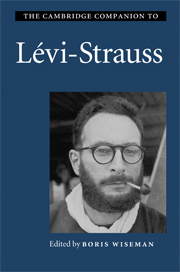
Claude Lévi-Strauss is one of the major thinkers of the modern age. Regarded as a crucial figure in the development of structuralism, his writings are studied across a wide range of disciplines, including anthropology, philosophy and literary studies. The Cambridge Companion to Lévi-Strauss presents a major reassessment of his work and influence. The fifteen specially-commissioned essays in this volume engage with the controversies that have surrounded his ideas, and they probe the concealed influences and clichés that have obscured a true understanding of his work. The contributors are experts drawn from a number of fields, demonstrating the durability and importance of Lévi-Strauss's work in the academy. Written for students and researchers alike, these incisive, jargon-free essays will be essential reading for anybody who wishes to gain a deeper understanding of this important thinker.
Some time early in the first century, Philo and Antiochus, the two leading philosophers of the Athenian Academy, had a serious philosophical falling out. Philo advocated an externalist epistemology, holding that it was reasonable to suppose that things could be known, even though they could not, individually, be known to be known; Antiochus responded that the only way one could know that one knew anything was by knowing of some particular thing that one knew it; and thus (according to Cicero: Acad. 2.44, 111) strayed perilously close to Stoic dogmatism. Neither option appealed to their colleague Aenesidemus:
The Academics, particularly those of today, sometimes adopt Stoic doctrines, and are, in truth, really Stoics quarrelling with Stoics. And they are dogmatic about many things; for they introduce virtue and vice, and posit good and bad, truth and falsity, persuasive and unpersuasive, existent and non-existent; and they firmly distinguish many other things as well; and, he [sc. Aenesidemus[ says, it is only in regard to the cataleptic impression that they differ from them [sc. the Stoics[.
(1: Photius, Bibl. 170a14-22 = 71C(9) LS)
Our knowledge of Aenesidemus is sadly restricted. For his views, we are indebted principally to a précis of his Pyrrhonian Discourses from Photius of Byzantium’s library catalogue (from which 1 above is excerpted). As for direct references, Sextus refers to him by name some fifteen times (but some of these are problematic: see below, section IV), Diogenes a few times more; and that’s about it.
The Pyrrhonian Modes are argument schemata for general use against dogmatism. We have records of two main lists of Modes, the Ten and the Five, which were used at various times in the history of ancient scepticism, either independently or in some sort of systematic connection. These Modes use strategies with ancient roots in such thinkers as Protagoras, Democritus, Plato, and Aristotle, but users of the Modes were not committed to positions held by those thinkers. They were compiled long after Pyrrho (the Ten probably by Aenesidemus and the Five by a shadowy figure named Agrippa) during the first phase of the Pyrrhonian revival. In addition, we have a list of eight causal Modes attributed to Aenesidemus.
The second and final phase of Pyrrhonism occupies most of the works of Sextus Empiricus (apart from Against the Ethicists, M 11). Although he has different strategies from Aenesidemus, he lays out the Ten Modes in some detail and makes extensive use of the Five. His account of the Ten is sometimes at odds with his general practice, and this is most likely due to his use of sources from the first phase of the revival.
Besides Sextus (PH 1.36–163), we have two main sources for the Ten Modes: Diogenes Laertius (9.78–88) and Philo of Alexandria (On Drunkenness 169–202), both of whom seem to have a source independent of Sextus. Diogenes is just reporting what he knows, whereas Philo appropriates eight of the Modes for his own purpose and leaves out the other two (the Third and Ninth in the list according to Sextus). Brief mentions by Aristocles and Herrenius do not add to our understanding.
Africa's strong tradition of storytelling has long been an expression of an oral narrative culture. African writers such as Amos Tutuola, Naguib Mahfouz, Wole Soyinka and J. M. Coetzee have adapted these older forms to develop and enhance the genre of the novel, in a shift from the oral mode to print. Comprehensive in scope, these new essays cover the fiction in the European languages from North Africa and Africa south of the Sahara, as well as in Arabic. They highlight the themes and styles of the African novel through an examination of the works that have either attained canonical status - an entire chapter is devoted to the work of Chinua Achebe - or can be expected to do so. Including a guide to further reading and a chronology, this is the ideal starting-point for students of African and world literatures.
Best known today for the innovative satire and experimental narrative of Tristram Shandy (1759–67), Laurence Sterne was no less famous in his time for A Sentimental Journey (1768) and for his controversial sermons. Sterne spent much of his life as an obscure clergyman in rural Yorkshire. But he brilliantly exploited the sensation achieved with the first instalment of Tristram Shandy to become, by his death in 1768, a fashionable celebrity across Europe. In this Companion, specially commissioned essays by leading scholars provide an authoritative and accessible guide to Sterne's writings in their historical and cultural context. Exploring key issues in his work, including sentimentalism, national identity, gender, print culture and visual culture, as well as his subsequent influence on a range of important literary movements and modes, the book offers a comprehensive new account of Sterne's life and work.
Prologue written by Samuel Johnson for Mr Garrick on the opening of the Drury Lane theatre
The demands of living to please and pleasing to live - that uneasy compact between art and commerce - was one of the central anxieties of Victorian cultural life. The words spoken by David Garrick, standing on the Drury Lane stage in 1747, were much quoted by novelists, critics, visual artists, playwrights and essayists throughout the nineteenth century. Dr Johnson’s 'Prologue' speaks of a capricious eighteenth-century audience, but in 1747 Garrick could stand on the stage of Drury Lane and rely on the certainty of his theatre’s monopoly on the 'legitimate' theatre. In the theatre, painting and literature, artists, critics, and audiences had a shared sense of British national culture, its aesthetic qualities and class allegiances. By Victoria’s accession to the throne in 1837, under the complex pressures of industrialization and urbanization, and a vigorous democratic impulse, British national culture appeared fractured and contentious. Artists, critics and audiences were often at odds over what was pleasing, and how that which pleased could - or should - provide a living. While eighteenth-century cultural certainties and coherence may have been a façade reliant on the acceptance of an exclusive Whig ascendancy, this sense of a coherent national culture had, by the start of the Victorian period, disappeared. The contending discourses of national culture, perhaps artfully glossed over before the French Revolution, became overt, and the ideological conflicts of class and gender became part of the very content of much of British culture, particularly that which we have come to see as ‘popular culture’.
Although Edmund Gosse (1849-1928) was raised to follow a divine calling in the Plymouth Brethren and strove to be a great poet, he is most remembered today for the vivid memoir Father and Son (1907). His father Philip Gosse (1810-88) was a popular zoologist and fundamentalist pastor whose ill-received book, Omphalos (1857), sought to forestall the theory of evolution by reconciling fossil evidence with the account of creation in Genesis (it was published two years before Darwin’s Origin of Species). Father and Son vividly evokes Edmund’s childhood with his dying mother and grieving father. It is a narrative of self-development, capturing a characteristically Victorian loss of faith in established authorities. Edmund Gosse’s own authority as a critic and biographer was challenged by the standards of the new era, but in the early twentieth century few people appeared more representative of the literary establishment. And for our purposes, Gosse effectively introduces the changing aims of life writing as it developed from 1830 to 1914.
In the year of Queen Victoria’s death (1901) Gosse wrote a pivotal article, 'The Custom of Biography'. It begins with a satire on Victorian funereal biographies: 'there must be a pall, two volumes of biography, and a few wreaths of elegant white flowers'; the life writing section of the library resembles a bourgeois cemetery (195). Gosse urges some ambitious young man to write the neglected 'History of Biography in England'. Only around 1750 did the English overcome their distrust of ‘memoirs’ as fiction or falsehood and gain an ‘interest in the life of an individual … In the vast flight of locusts … how can one care to take up a solitary insect and study its legs and wings?’ Few biographies of ‘private people’ could be written before ‘the ages settled down to some personal comfort, and the movements of kings began to be regulated’ in modern times (196).
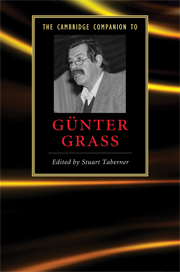
Günter Grass is Germany's best-known and internationally most successful living author, from his first novel The Tin Drum to his recent controversial autobiography. He is known for his tireless social and political engagement with the issues that have shaped post-War Germany: the difficult legacy of the Nazi past, the Cold War and the arms race, environmentalism, unification and racism. He was awarded the Nobel Prize for literature in 1999. This Companion offers the widest coverage of Grass's oeuvre across the range of media in which he works, including literature, television and visual arts. Throughout, there is particular emphasis on Grass's literary style, the creative personality which inhabits all his work, and the impact on his reputation of revelations about his early involvement with Nazism. The volume sets out, in a fresh and lively fashion, the fundamentals that students and readers need in order to understand Grass and his individual works.