To save content items to your account,
please confirm that you agree to abide by our usage policies.
If this is the first time you use this feature, you will be asked to authorise Cambridge Core to connect with your account.
Find out more about saving content to .
To save content items to your Kindle, first ensure no-reply@cambridge.org
is added to your Approved Personal Document E-mail List under your Personal Document Settings
on the Manage Your Content and Devices page of your Amazon account. Then enter the ‘name’ part
of your Kindle email address below.
Find out more about saving to your Kindle.
Note you can select to save to either the @free.kindle.com or @kindle.com variations.
‘@free.kindle.com’ emails are free but can only be saved to your device when it is connected to wi-fi.
‘@kindle.com’ emails can be delivered even when you are not connected to wi-fi, but note that service fees apply.
An aspect of John Herschel’s science not widely appreciated was his complex view of Earth as a planet and as our entry point for understanding physical and chemical processes everywhere in the universe. Herschel was a crucial and consistent voice in bringing both the astronomy and physics of Newton and the most recent chemistry to bear on the Earth. In this chapter, I provide a view of Herschel’s evolving interest in the Earth and in geology. I present his interaction with the Earth sciences as a unifying thread running through his life, pulling together aspects of his work that otherwise may seem disparate activities. I examine Herschel’s formation as a geologist and a scientific traveler. Lastly, I discuss some of the ways that Herschel’s background in physics, chemistry, and astronomy affected his understanding of geology. Herschel sought to understand the cosmos both by looking up at the stars and down at the Earth.
If anyone symbolized what it meant to “be scientific” and “do science” during the Victorian period, it was John Frederick William Herschel. Born on March 7, 1792, into astronomical royalty as the only son of William Herschel (1738–1822) and Mary Baldwin-Pitt (1750–1832), John was heir apparent to a scientific legacy that included the construction of immense telescopes and the discovery of hundreds of new celestial objects – including the solar system’s first new planet, Uranus. Yet John would prove to have an even longer, broader, and more influential career than his famous father. During a lifetime that spanned Britain’s entire age of reform, he achieved fame as a mathematician, chemist, optical experimentalist, astronomer, and public spokesperson of science. From his early contributions importing and developing advanced Continental mathematics into England, to laying the chemical foundations of photographic development with his discovery of hyposulfite “fixer,” to extending and establishing the pioneering work of his father and his aunt, Caroline Herschel (1750–1848), in sidereal astronomy, John Herschel came to embody the pursuit of natural knowledge in the nineteenth century.
By January 1839, when the daguerreotype was first made public, John Herschel had long been familiar with the basic chemical and optical components necessary to begin his own photographic experiments. His use of visual expression in his observations, combined with his experiments on chemistry, light, and optics, had begun two decades or more before Louis Jacques Mandé Daguerre (1787–1851) and William Henry Fox Talbot (1800–77) made their respective claims to photographic invention. Because Herschel’s photography has been studied largely through the lens of the history of photography, discussions are often inflected by various origin stories that privilege, for better or worse, the creation of recognizable, fixed images. This frame truncates the full and lifelong series of experiments that were eventually to become Herschel’s “photography,” which became a collective heading under which he consolidated his chemico-optical experiments, gathering them into a single strand of research that began as early as the 1810s and persisted through the end of the 1850s. In this extensive group of experiments, Herschel made systematic use of photography for spectral analysis and chemical sensitometric testing long before the photo-chemical work of Henry Roscoe (1833–1915) and Robert Bunsen (1811–99) in Manchester and even longer before Ferdinand Hurter (1844–98) and Vero Charles Driffield (1848–1915), who between them established important benchmarks in the nascent field of photochemistry and sensitometry.1 Signaling that he recognized the direction his experiments on light were taking away from trends in photography by the 1850s, Herschel renamed his use of photography for light experiments “actino-chemistry,” differentiating it from making optical images.2
Precise measurement and the production of accurate standards was at the very heart of John Herschel’s conception of science. This was not only true of his own endeavours, including those astronomical, but was fundamental to his philosophical vision of scientific practice, as well as his theological understanding of nature and God’s role in Creation. Throughout his career, Herschel contributed to several standardizing projects, including the production of units of weight, distance, time, musical pitch, volume, and even the harmonic division of musical notes. In the one full-time position of paid employment that he occupied, as Master of the Mint, he was responsible for regulating the nation’s standards of bullion and coinage and, in his role as a trusted scientific advisor to the British government, he promoted standardized practices for global investigations of natural phenomena, including those astronomical, metrological, and magnetical. To establish accepted units of measurement and standardizing regimes brought order to philosophical inquiry, regulation to the nation and empire’s economic activity, and organization to diverse societies around the world. In his promotion of worldwide investigations into natural phenomena through standardized observation techniques and disciplined observatories, Herschel ensured that the cultivation of nineteenth-century natural philosophy was inseparable from the wider proliferation of empire: science was a tool of British imperialism, providing knowledge on a global scale and bringing together colonial territories in the pursuit of new understandings of nature. By the time of his death in 1871, few had done more than Herschel to facilitate accurate measurements of nature; and given that precise measurement was increasingly to define scientific practice throughout the nineteenth century, his standardizing efforts were remarkable in their influence. Crucially, however, Herschel was implicit that knowing nature through accurate measures and with standardized units was, in itself, of intrinsic moral value: to count molecules, weigh matter, and record the order of celestial motions was to know God and understand the universe that He had created.
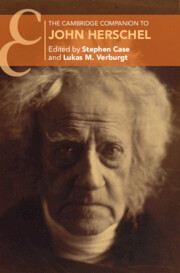
It has been said that being scientific in Victorian England meant to be as much like John Herschel as possible. This volume shows readers what it meant to be John Herschel (1792-1871), one of England's most prominent polymaths. Drawing on his published oeuvre and recent scholarship, as well as an immense amount of surviving archival material and correspondence, these essays present the first ever comprehensive account of Herschel's life, work, and legacy. From mathematics and astronomy, to philosophy and politics, the volume sheds new light on his crucial role in the history of Victorian science and explores a wide array of issues in the history of nineteenth-century culture, philosophy, mathematics, and beyond.
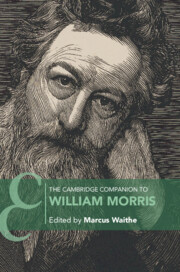
In his short life, William Morris (1834-96) combined the roles of poet, author, painter, designer, translator, lecturer, political activist, journalist, weaver, bookmaker, and businessman. This volume draws together influential voices from different disciplines who have participated in the recent critical, political, and curatorial revival of his work, with essays exploring the contemporary resonance of his exceptional legacy. As a critic of capitalism, his thinking has thrived in these years of financial crisis; as a theorist of work and craftsmanship, his legacy interacts with a more recent ethics of making that questions the values of 'off-shored' production; and as a protector of landscape and buildings Morris's concern with what is precious strikes a chord in our age of environmental crisis. At the same time, a careful and scholarly approach observes the particularity of Morris's context, in a way that confounds the 'false friends' of hasty historical reception and reveals unexpected connections.
Volume I offers historiographical surveys and general overviews of central topics in the history of world sexualities. Split across twenty-two chapters, this volume places the history of sexuality in dialogue with anthropology, women's history, LGBTQ+ history, queer theory, and public history, as well as examining the impact Freud and Foucault have had on the history of sexuality. The volume continues by providing overviews on the sexual body, family and marriage, the intersections of sexuality with race and class, male and female homoerotic relations, trans and gender variant sexuality, the sale of sex, sexual violence, sexual science, sexuality and emotion, erotic art and literature, and the material culture of sexuality.
Volume III provides in-depth analyses of specific times and places in the history of world sexualities, to investigate more closely the lived experience of individuals and groups to reveal the diversity of human sexualities. Comprising twenty-five chapters, this volume covers ancient Athens, Rome, and Constantinople; eighth- and ninth-century Chang'an, ninth- and tenth-century Baghdad, and tenth- through twelfth-century Kyoto; fourteenth- and fifteenth-century Iceland and Florence; sixteenth-century Tenochtitlan, Istanbul, and Geneva; eighteenth-century Edo, Paris, and Philadelphia; nineteenth-century Cairo, London, and Manila; late nineteenth- and early twentieth-century Lagos, Bombay, Buenos Aires, and Berlin, and twentieth-century Sydney, Toronto, Shanghai, and Rio de Janeiro. Broad in range, this volume sheds light on continuities and changes in world sexualities across time and space.
Volume II focuses on systems of thought and belief in the history of world sexualities, ranging from early humans to contemporary approaches. Comprising eighteen chapters, this volume opens with a chapter on the evolutionary legacy and then delves into the sexualities of ancient Egypt, the Near East, Greece, and Rome, continuing with pre-modern South Asia, China, and Japan, Africa, the Americas, and Oceania. Chapters include an examination of sexuality in the religious traditions of Buddhism, Judaism, Christianity, and Islam, and also look at more recent approaches, including scientific sex, sexuality in socialism and Marxism, and the intersections between sexuality, feminism, and post-colonialism.
Volume IV examines the intersections of modernity and human sexuality through the forces, ideas, and events that have shaped the modern world. Through eighteen chapters, this volume examines connections between sexuality and the defining forces of modern global history including capitalism, colonialism, migration, consumerism, and war; sexuality in modern literature and print media; sexuality in dictatorships and democracies; and cultural changes such as sex education and the sexual revolution. The volume ends with discussions of the difficult issues we in the modern world continue to face, such as restrictions on reproductive rights, sex tourism, STDs and AIDS, sex trafficking, domestic violence, and illiberal attacks on sexuality.
This chapter examines the biblical prophetic texts that refer to legal matters and thus raise important questions about what the authors of these speeches and texts had in mind with these references and how they relate, chronologically and theologically, to the laws of the Pentateuch.
This chapter covers rabbinic interpretations of biblical law and the different hermeneutical strategies used by the rabbis in these efforts. Rabbinic law in some cases can circumvent biblical law and in others demand greater attention and consequence than its scriptural counterpart.
This chapter examines the narrative scheme surrounding each collection and how the god Yhwh is drawn as a character in each source, speaking in an array of cadences and registers that conjure their associated types of speakers. Rather than biblical law making Israelite law into divine speech, biblical literature presents all forms of divine speech as fully compelling law.
This chapter looks at the legal texts from ancient Greece and Crete and connections they may share with biblical law. The Greek laws offer rich comparative material for legal problems in a geographically and culturally adjacent area and contribute to a better understanding of the social interactions and administrative structures in and around the Mediterranean.
This chapter considers the debate over biblical law and the so-called wisdom literature (mainly Proverbs, Job, and Ecclesiastes), as well as questions about whether biblical law derives from early wisdom sayings or vice versa. It also shows how we lack information necessary to answer other related questions.
The introduction presents key ideas and terminology and answers several questions that will help readers understand the other chapters in the volume. It also explains important distinctions around the concept of biblical law and the pitfalls of reading it from a modern perspective.