To save content items to your account,
please confirm that you agree to abide by our usage policies.
If this is the first time you use this feature, you will be asked to authorise Cambridge Core to connect with your account.
Find out more about saving content to .
To save content items to your Kindle, first ensure no-reply@cambridge.org
is added to your Approved Personal Document E-mail List under your Personal Document Settings
on the Manage Your Content and Devices page of your Amazon account. Then enter the ‘name’ part
of your Kindle email address below.
Find out more about saving to your Kindle.
Note you can select to save to either the @free.kindle.com or @kindle.com variations.
‘@free.kindle.com’ emails are free but can only be saved to your device when it is connected to wi-fi.
‘@kindle.com’ emails can be delivered even when you are not connected to wi-fi, but note that service fees apply.
This chapter explores the histories of transgender expression, identities, communities, and activism globally in both premodern and modern eras. Histories of settler colonialism, slavery, war, and imperialism have transformed the terms and conditions by which people of transgender expression and experience understood themselves and were perceived by others. While an abundance of archival records chart widespread practices of “transing” gender globally, a complex web of factors influenced how a given community or individual defined, understood, and judged such efforts. Race, religion, region, culture and class are some of the key contextual forces that gave meaning to trans and gender variant sexualities throughout history. A wide range of concepts have been used to describe and make meaning of gender variant people throughout history, from two-spirit, hijra, and third gender to the more recent transgender, nonbinary, gender expansive. Many other terms that have been used throughout history were deemed derogatory by those individuals and/or communities to which they refer at the time or have since been determined to be derogatory by later generations looking back. This creates a fundamental tension for everyone writing these histories between the importance of recognizing the past on its own terms and the importance of not further perpetuating harm against a long-stigmatized group.
A long tradition of pandemic – or plague – literature, dating back at least as far as classical Greece, has used catastrophic communicable disease as a backdrop to explore the human condition: what it means to live in a community of other humans, and, as awareness of the crises of environmental devastation and climate change grows, on a planet with other living organisms. In different ways, and with differing resolutions, twentieth- and twenty-first-century works of pandemic fiction show how pandemics stem not only from human practices, but also from the values, beliefs, and stories about the past – the histories – in which they are rooted. Whether dystopic or utopic, apocalyptic or contained, literary pandemics warn that in order to change the way humans collectively inhabit the world, we need to change the dominant stories we tell about it.
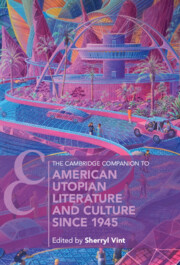
Providing a comprehensive overview of American thought in the period following World War II, after which the US became a global military and economic leader, this book explores the origins of American utopianism and provides a trenchant critique from the point of view of those left out of the hegemonic ideal. Centring the voices of those oppressed by or omitted from the consumerist American Dream, this book celebrates alternative ways of thinking about how to create a better world through daily practices of generosity, justice, and care. The chapters collected here emphasize utopianism as a practice of social transformation, not as a literary genre depicting a putatively perfect society, and urgently make the case for why we need utopian thought today. With chapters on climate change, economic justice, technology, and more, alongside chapters exploring utopian traditions outside Western frameworks, this book opens a new discussion in utopian thought and theory.
The Cambridge Comparative History of Ancient Law is the first of its kind in the field of comparative ancient legal history. Written collaboratively by a dedicated team of international experts, each chapter offers a new framing and understanding of key legal concepts, practices and historical contexts across five major legal traditions of the ancient world. Stretching chronologically across more than three and a half millennia, from the earliest, very fragmentary, proto-cuneiform tablets (3200–3000 BCE) to the Tang Code of 652 CE, the volume challenges earlier comparative histories of ancient law / societies, at the same time as opening up new areas for future scholarship across a wealth of surviving ancient Near Eastern, Indian, Chinese, Greek and Roman primary source evidence. Topics covered include 'law as text', legal science, inter-polity relations, law and the state, law and religion, legal procedure, personal status and the family, crime, property and contract.
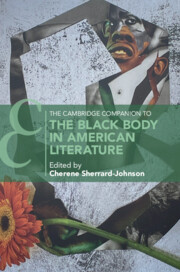
Whether invisible or hyper-visible, adored or reviled, from the inception of American literature the Black body has been rendered in myriad forms. This volume tracks and uncovers the Black body as a persistent presence and absence in American literature. It provides an invaluable guide for teachers and students interested in literary and artistic representations of Blackness and embodiment. The book is divided into three sections that highlight Black embodiment through conceptual flashpoints that emphasize various aspects of human body in its visual and textual manifestations. This Companion engages past and continuing debates about the nature of embodiment by showcasing how writers from multiple eras and communities defined and challenged the limits of what constitutes a body in relation to human and nonhuman environment.
John Herschel grew up in a world of intense scientific activity. From an early age, he was surrounded by examples of science in action. His education was supplemented at every stage to ensure exposure to and training in the highest, most up-to-date mathematics. At the same time, John also experienced an indirectly political upbringing, one that showed him not only a changing world but also the power of education to challenge and change tradition. The politics he witnessed growing up illustrated dramatic transformations taking place in England and abroad. Family friends were caught up in the aftermath of the French Revolution. In England, family holidays and changing consumer tastes evidenced the effects of England’s industrial revolution. In adulthood, these two strands – the scientific and the political – influenced his outlook and choices. He chose friends at university, such as Charles Babbage (1791–1871) and George Peacock (1791–1858), who wanted to change the world through mathematics. He attempted to earn a living from natural philosophy rather than train for the church or fall back on family wealth after graduation as his father wished. He chose to marry an evangelical free thinker, keen to use knowledge and religion to improve the lives of others. He chose to never completely pursue science in isolation but instead advise governments both in South Africa and in England on using science to improve education and society. He chose to train his children to be both scientifically curious and socially minded. These choices shaped Herschel’s life.
Ever since its publication in 1830–31, John Herschel’s Preliminary Discourse on the Study of Natural Philosophy has been recognized as epoch-making and canonical. It is rather surprising, therefore, that to date there exists little to no consensus on any aspect of the book, not even on what it is really about. This chapter provides a brief overview of the available literature on Herschel’s Preliminary Discourse. In doing so, it attempts to both improve upon and go beyond current Herschel scholarship.
Despite John Herschel’s extensive work in the fields of chemistry, optics, geology, mineralogy, and the philosophy of science, it was primarily as an astronomer that he was recognized during his lifetime and remembered after his death. Herschel’s astronomical endeavors can be summarized as establishing and extending the astronomical projects of his father William Herschel (1738–1822) and his aunt Caroline Herschel (1750–1848). By establishing, Herschel brought an observational and mathematical rigor to his father’s observations that transformed them from the results of an individual with unique instrumentation to data useful and accessible to the wider astronomical community. By extending, Herschel continued the observational program of his father and aunt, revisiting his father’s observations, updating his catalogs of double stars, nebulae, and star clusters, and extending the Herschelian project to the skies of the southern hemisphere. Yet the observational aims and methods of William and Caroline Herschel were markedly different from the astronomy being pursued by most other astronomers during their lifetimes. To understand John Herschel’s long astronomical career and influence, an overview of the scope and aims of the dominant form of astronomy during this period is needed that can provide the background to the work of his father and aunt and the context of his own.
John Herschel’s destiny lay in science. Ahead was a career of creation in astronomy, botany, chemistry, geography, meteorology, photography, and much else. Not least would be the attention he paid to mathematics. His royal road to becoming a leader in Victorian science was paved by William and Caroline Herschel, his celebrated father and aunt, both of whom were acknowledged authorities in astronomy. William, a German émigré to England, held the position of ‘King’s Astronomer’ and in this role established a rapport with George III, an amateur astronomer himself. William gained wider recognition as the discoverer of ‘The Georgian’ (known later as the planet Uranus) and Caroline as the discoverer of comets.
As early as 1826, John Herschel wrote, “astronomers are seldom draftsmen, and have hitherto … contented themselves with very general and hasty sketches.”1 This was more than a passing complaint with past depictions of astronomical objects. It was an exhortation to a generation of astronomers to begin taking draftsmanship seriously. With its increasing focus on the physical features of astronomical bodies like the Sun, the planets, comets, and the Moon, as well as the intricate physical complexities of the Milky Way, celestial nebulae, and clusters of stars, the astronomy of the nineteenth century demanded a new and systematic focus on draftsmanship as a means of observation. In this way, astronomy was very much in line with other observational sciences of the period like geology and minerology, botany and zoology, archaeology and ethnography, all of which required, alongside detailed descriptions, more exact pictures of their respective subject matter.2 As the act of drawing became embedded into routine scientific recordkeeping practices, it also became closely tied to what counted as proper scientific observation. Herschel was not just in tune with these important developments, he exemplified them in his own observational performances. This is evinced by his exquisite skills and techniques in drawing in the service of science and, above all, astronomy. Herschel’s observational practices were embodied in a set of visualizing instruments, techniques, and materials. What follows is a survey of some of these practices as they range over a lifetime of carefully observing and drawing many sorts of phenomena.
The Preliminary Discourse on the Study of Natural Philosophy, which Herschel published in Dionysius Lardner’s Cabinet Cyclopaedia series in 1830, can be a difficult book to interpret.1 As commentators have emphasized, its content and the circumstances of its publication indicate it is perhaps better understood not (or at least, not merely) as a technical treatise on scientific inference and methodology but rather in the tradition of “conduct manuals,” a popular genre that offered readers insight into how they might elevate and refine their character.2 The Preliminary Discourse invokes not just prescriptions for scientific practice but also the epistemic and personal virtues of a good scientist and even (perhaps especially) the merits of careful observation and the study of science for the layman.3 Science, Herschel writes, is exceptional in “filling us, as from an inward spring, with a sense of nobleness and power which enables us to rise superior to” the circumstances of our lives.4 The Preliminary Discourse was printed and bound inexpensively, widely sold, and frequently reprinted.5 Given its history, it seems likely that philosophers of science have been too quick in reading this work primarily through the lens of its contributions to the epistemology of science.
John Herschel was a political radical in the utilitarian mould but no social leveller. Indeed, he was highly ambivalent over the notion of ‘democracy’ and feared it could unleash the tyranny of the masses. Rather, like his one-time close friend Charles Babbage, he was a rational materialist reformer with little sympathy for old state props such as the Church of England and the prevailing curriculum of the elite Anglican universities. This periodically put him at logger heads with contemporary Cambridge and Oxford taught men. (Herschel had graduated from Cambridge as senior wrangler in 1813 and Babbage was awarded a Cambridge degree with no examination in 1814.)
From 1833 to 1838, John Herschel relocated himself, his growing family, and one of his father’s largest telescopes to the British colony of Cape Town, in South Africa, with the intent of undertaking the most thorough observational study of the southern heavens ever made. This endeavor was driven in part by his desire to complete the astronomical work begun by his father William, whose own astronomical surveys had been confined to the northern hemisphere. The southern heavens had been previously mapped by Edmond Halley (1656–1742) and the Abbé Nicolas-Louis de Lacaille (1713–62), but their surveys were primarily undertaken for navigational purposes and with comparatively small telescopes.