To save content items to your account,
please confirm that you agree to abide by our usage policies.
If this is the first time you use this feature, you will be asked to authorise Cambridge Core to connect with your account.
Find out more about saving content to .
To save content items to your Kindle, first ensure no-reply@cambridge.org
is added to your Approved Personal Document E-mail List under your Personal Document Settings
on the Manage Your Content and Devices page of your Amazon account. Then enter the ‘name’ part
of your Kindle email address below.
Find out more about saving to your Kindle.
Note you can select to save to either the @free.kindle.com or @kindle.com variations.
‘@free.kindle.com’ emails are free but can only be saved to your device when it is connected to wi-fi.
‘@kindle.com’ emails can be delivered even when you are not connected to wi-fi, but note that service fees apply.
Chapter Three pursues the discussion of aesthetics broached in the previous chapter, focussing on the aesthetic experience most often associated with Romanticism: the Sublime. Contrasting the influential histories of Samuel Holt Monk and Marjorie Nicholson, it argues that no single theory of the sublime dominated the eighteenth century, and that Kant’s influential ‘Analytic of the Sublime’ does not exhaust the term’s many historical meanings, which included the rhetorical sublime, the natural sublime, and the philosophical sublime. The chapter addresses the sublime in a variety of discourses and practices, including landscape gardening, astronomy, gothic fiction, revolutionary politics, language theory and antiquarian texts such as Ossian and the Scandinavian Veddas. It then distinguishes between Burke’s physiological, Kant’s cognitive, Schiller’s moral, and Herder’s more ‘naturalised’ versions of the philosophical sublime, before looking at the rhetorical sublime in Longinus and eighteenth-century language theories, and finally at the natural sublime in landscape aesthetics and in the poetry of Wordsworth, Leopardi, and Mickiewicz. It concludes that academic reconstructions of the Romantic sublime based on Kant have skewed the history of the concept, in particular by legitimating models of Romantic individuality that have excluded women.
This chapter analyses the wars of independence in Spanish America from the perspective of the Caribbean coast of South America, arguing that this stretch of coast (the pardo coast) constituted a cohesive and coherent geographical space with dynamics that resulted from its demographic structure and geographical location. Because people of African descent constituted the majority of the population of Caribbean South America, a focus on the pardo coast reveals the central role they played during the conflicts that led to the creation of Colombia and Venezuela. Because the pardo coast was in such close proximity to the Caribbean islands, the independence process in the area was greatly determined by what its leaders could achieve in Jamaica and Haiti. Because it was the gateway to South America, the pardo coast was at the vanguard of some of the most modern political experiments of the era and was the center of some of the most violent confrontations of the wars. In short, a focus on the pardo coast offers a useful recalibration of scale that makes visible processes that often get lost in analyses that use national frameworks as units of analysis or that are perceived as uniquely local.
A quick glance across a set of world maps spanning the period from the 1500s to the present creates the impression that an early modern era dominated by empires gave way, by fits and starts over the course of the eighteenth to twentieth centuries, to a modern global system composed of nation-states. Indeed, the prevalent view of nationhood and nationalism as quintessentially modern phenomena is, in part, premised on the typological and chronological contrast between empire (understood as a realm composed of various lands and peoples governed under a diversity of legal and institutional arrangements) and nation-state (understood as a more homogeneously governed polity whose legitimacy is derived from its claim to embody the will and interests of a particular people) and on the notion that the transition from the former to the latter was unidirectional and irreversible.
The French Revolution was a sexual revolution. It repeatedly challenged ideas of what it meant to be masculine or feminine and the rights or duties associated with those identities. It also fundamentally transformed the family and changed laws around sexual behavior. Popular understandings of gender and sexuality shaped how revolutionaries approached everything from political rights to policing, education to nationality, military recruitment to festivals. This essay concentrates on two major aspects of these changes. First, it reassesses questions of citizenship, especially women’s citizenship. By revisiting key turning points in empowering or disenfranchising women and bringing together the stories of both metropolitan France and the French Caribbean, we can see myriad ways in which women acted as citizens or were understood to be citizens, even when they were excluded from the direct exercise of political rights. Secondly, it investigates both sexualized ways of understanding political power and changes in the forms of behavior revolutionaries treated as legally or socially acceptable, from transformations in marriage and the recognition of children born out of wedlock to the decriminalization of prostitution and male homosexuality. Doing so reveals how much the French revolutionary personal was political.
The essay explores how loyalty to Spain evolved from the beginning of the Spanish monarchical crisis until the end of the independence wars in Spanish America by looking at dynamics in two inter-related scales: the trans-regional and Atlantic. It analyzes royalism in connection to legal and military processes and shows how royalism both shaped and was shaped by changes during the revolutionary era.
According to the economist Amartya Sen, there are at least two ‘moral’ defences of the market. The first, and most common, is instrumental: we should protect the market because of the ‘goodness of the results achieved’. The market produces goods, contributes to collective utility and increases our freedom of choice. The second, less common, defence is based on fundamental rights: the right to property and the freedom to transact prevail and are valid notwithstanding the outcome they produce. Accordingly, the market derives its procedural value from rights, which exposes this second defence to significant criticism if, in reality, these rights are exercised only by the few.
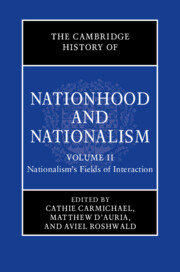
This major new reference work with contributions from an international team of scholars provides a comprehensive account of ideas and practices of nationhood and nationalism from antiquity to the present. It considers both continuities and discontinuities, engaging critically and analytically with the scholarly literature in the field. In volume II, leading scholars in their fields explore the dynamics of nationhood and nationalism's interactions with a wide variety of cultural practices and social institutions – in addition to the phenomenon's crucial political dimensions. The relationships between imperialism and nationhood/nationalism and between major world religions and ethno-national identities are among the key themes explained and explored. The wide range of case studies from around the world brings a truly global, comparative perspective to a field whose study was long constrained by Eurocentric assumptions.
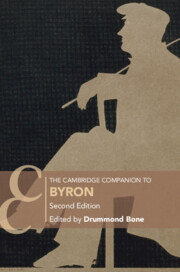
Deeply informed and appealingly written, this revised and updated second edition gives fresh life to the enthralling sexual, poetic and political contradictions that make Byron the first literary celebrity. Encompassing his entire oeuvre, the volume both provides an authoritative guide for students, and points to emerging new areas of research, highlighting Byron's ongoing relevance in an increasingly complex world both within academia and beyond. Published to coincide with the 200th anniversary of his death, new chapters cover investigations of Byron's manuscripts, his relationships with nonhuman animals, his levity and addiction, and his Dramas and their reception.
If relatively modest in quantity, the chamber music of Amy Beach comprises a significant body of work that confronts meaningfully the churning countercurrents of her musical style. Chronologically, this repertoire falls into three groups, of which the first concentrates on works for violin and piano, culminating in the Violin Sonata, while in the second Beach explores a variety of other genres, including the piano quintet. The third and final group adds two late works, for piano trio and wind quintet. If this repertoire betrays clear enough references to Austro-Germanic traditions of chamber music, in particular to the music of Brahms (for example, Beach’s piano quintet exhibits examples of modeling from Brahms’s op. 34), it also reflects Beach’s ongoing efforts to expand the idea of American music, in part in answer to Dvorák’s “challenge” laid down in the “New World” Symphony. For Beach, the diversity of American music encouraged her to incorporate various popular sources, including Irish folk music and native Inuit music, into her own eclectic stylistic mixtures.
The transformation of Beach’s reputation from an almost-forgotten relic of a bygone era to one of the most highly regarded American Romantic composers provides a case study in reception history. Her “renaissance” resulted from determined advocacy on two fronts: scholarly research and musical performance. In scholarship, the University of New Hampshire and the Library of Congress have assembled formidable archival collections, while Adrienne Fried Block and a bevy of dissertation writers have worked to shed light on Beach’s life and works through publications and conferences. In the performance realm, pianists Virginia Eskin, Mary Louise Boehm, and Joanne Polk have worked tirelessly to introduce her music to the public in concerts and recordings. Several recent documentary films confirm her appeal as a subject and her status in American cultural history.
Amy Marcy Cheney Beach (1867–1944) was a musical prodigy whose professional career vacillated between piano performance and composition. Her professional debut was delayed until age sixteen because of parental misgivings, and then her performance career was curtailed at age eighteen when she married a prominent physician, Dr. H. H. A. Beach. His insistence that she devote her energies to composition rather than performance, along with his desire that she remain self-taught, inspired her to develop a unique late-Romantic compositional style. With the support of the Boston Symphony Orchestra and its musicians, she produced a Mass with orchestra, a symphony, a concerto, and numerous chamber works. Her trailblazing accomplishments included many firsts for American women composers. After the death of her husband and mother in 1910 and 1911, she reinvented herself as a virtuoso performer while still composing. Her compositional output is widely varied in genre, instrumentation, and musical style.
In this chapter, I consider how we might address the legacies of race and racism in The Magic Flute and its performance history, and what opportunities there might be to re-envision the Singspiel, by looking at parallels with Shakespeare repertory and #ShakeRace studies. Scholars working at the intersections of premodern critical race theory, postcolonial studies, Shakespeare studies, and performance studies have for decades considered how what Kim Hall calls “race thinking” permeates Shakespeare’s texts, contexts, and audiences, as well as productions and interpretations in our own time. What kind of freedom or flexibility might we have to adapt, translate, appropriate, and “unsettle” The Magic Flute in scholarship, performance, and pedagogy, by taking our cue from experimental approaches to Shakespeare?