To save content items to your account,
please confirm that you agree to abide by our usage policies.
If this is the first time you use this feature, you will be asked to authorise Cambridge Core to connect with your account.
Find out more about saving content to .
To save content items to your Kindle, first ensure no-reply@cambridge.org
is added to your Approved Personal Document E-mail List under your Personal Document Settings
on the Manage Your Content and Devices page of your Amazon account. Then enter the ‘name’ part
of your Kindle email address below.
Find out more about saving to your Kindle.
Note you can select to save to either the @free.kindle.com or @kindle.com variations.
‘@free.kindle.com’ emails are free but can only be saved to your device when it is connected to wi-fi.
‘@kindle.com’ emails can be delivered even when you are not connected to wi-fi, but note that service fees apply.
The bafflingly eclectic exoticisms of The Magic Flute arise from at least three literary traditions at work in the libretto: seraglio or abduction opera (Tamino sets out heroically to rescue Pamina); The Arabian Nights (Papageno’s comic journey turns on wishes and their magical fulfilment), and a didactic, princely encounter with (some notion of) Egyptian antiquity (Act 2). A labile discourse of nature adds further complexity, encompassing the regulative and the remote, civilization and savagery. This chapter, treating exoticism not as a theme within the opera, but as what the opera is about, posits an over-arching notion of “Enlightened orientalism” (Srinivas Aravamudan). The opera offers both its fictional characters, and the audience, a series of potentially transformative encounters with (what is posited as) the ancient and original sources of culture. These encounters cut across, and sometimes problematize, distinctions of self and Other.
“Staging The Magic Flute” examines the production history of Mozart’s opera over more than two centuries, from its 1791 premiere to 2019. It focuses especially on productions of The Magic Flute since 1970 and the critical reactions they have provoked, and asks if there can ever be a definitive staging of this iconic work. Productions discussed in detail range from Barrie Kosky’s radical “silent movie” version for the Komische Oper Berlin to August Everding and David McVicar’s long-running fairytale-Enlightenment stagings for (respectively) the Bavarian State Opera and The Royal Opera. Among the many other directors and designers discussed are Marc Chagall, Ingmar Bergman, David Hockney, Peter Sellars, Pierre Audi, Julie Taymor, Peter Stein, and Simon McBurney.
This chapter recounts the history, context, and significance of Ingmar Bergman’s 1975 film adaptation of Mozart’s The Magic Flute. Whereas films from theatrical or operatic sources tend to distance themselves from stage artifice, Bergman’s production emphasizes and revels in it. In doing so, it also comments on and, in some ways, turns from the work for which he is best known, celebrated and, sometimes, excoriated. The Enlightenment optimism of Mozart’s text provides a sharp contrast to Bergman’s brand of anxious, often agonized high modernism. It also provides a foil, both heartening and convincing, to the direness so often evident in 1970s cinema, and in the life and discourse surrounding it.
Song served as a primary generative force throughout Amy Beach’s prolific compositional career. Her three major pieces for orchestra alone-Bal Masqué (1893), the “Gaelic” Symphony (1896), and the Piano Concerto (1900)-are no exception. This chapter argues that Beach’s affinity for song not only shaped her approach to large-scale orchestral composition, but also facilitated positive responses to her works well beyond their premieres. Beach’s ultimate success with song-inspired orchestral composition reflected broader trends of the era overshadowed by experimental modernisms.
The Magic Flute was written specifically for the Freihaus Theater auf der Wieden. As such, it is useful to consider the physical aspects and the history of the building as well as some of the other repertory that was performed there around the same time. When we include works that were performed in the Theater in der Leopoldstadt under the direction of Karl Marinelli – Schikaneder’s main rival – we can see that they share some musical and theatrical aspects of The Magic Flute. Plot lines or character types that found favor with audiences were reproduced in various works at both suburban theaters, allowing a faster creative process and resulting in a somewhat formulaic product. This adds to the notion that while The Magic Flute is certainly an exceptional work, it was, nevertheless, significantly influenced by the popular entertainment common in Viennese theaters of the eighteenth century.
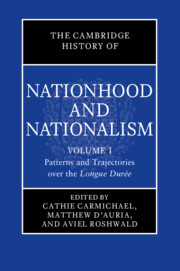
This major new reference work with contributions from an international team of scholars provides a comprehensive account of ideas and practices of nationhood and nationalism from antiquity to the present. It considers both continuities and discontinuities, engaging critically and analytically with the scholarly literature in the field. Volume I starts with a series of case studies of classical civilizations. It then explores a wide range of pivotal moments and turning points in the history of identity politics during the age of globalization, from 1500 through to the twentieth century. This overview is truly global, covering countries in East and South Asia as well as Europe and the Americas.
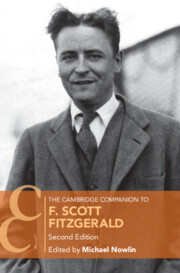
This second edition of The Cambridge Companion to F. Scott Fitzgerald offers both new and familiar readers an authoritative guide to the full scope of Fitzgerald's literary legacy. Gathering the critical insights of leading Fitzgerald specialists, it includes newly commissioned essays on The Beautiful and Damned, The Great Gatsby, Tender is the Night, Zelda Fitzgerald, Fitzgerald's judgment of his peers, and Fitzgerald's screenwriting and Hollywood years, alongside updated and revised versions of four of the best essays from the first edition on such topics as youth, maturity, and sexuality; the short stories and autobiographical essays; and Americans in Europe. It also includes an essay on Fitzgerald's critical and cultural reputation in the first decades of the 21st century, and an up-to-date bibliography of the best Fitzgerald scholarship and criticism for further reading.
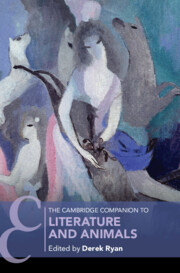
The Cambridge Companion to Literature and Animals surveys the role of animals across literary history and opens conversations on what literature can teach us about more-than-human life. Leading international scholars comprehensively explore how engaging with creatures of various kinds alters our understanding of what it means to write and read, and why this is important for thinking about a series of cultural, ethical, political, and scientific developments and controversies. The first part of the book offers historically rooted arguments about medieval metamorphosis, early modern fleshiness, eighteenth-century imperialism, Romantic sympathy, Victorian racial politics, modernist otherness and contemporary forms. The second part poses questions that cut across periods, concerning habitat and extinction, captivity and spectatorship, race and (post-)coloniality, sexuality and gender, religion and law, health and wealth. In doing so, this companion places animals at the centre of literary studies and literature at the heart of urgent debates in the growing field of animal studies.
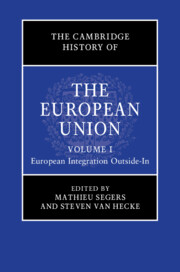
Volume I examines the history of the European Union from an outside-in perspective, asking the following questions: how does the European Union look from the outside, and which outside forces shaped and guided the process of European integration? Split into three parts, the first addresses the main external events that have steered the European integration process, with emphasis placed on critical junctures following the Second World War, such as the division and reunification of Germany and the Eastern enlargement. Part II considers the various international trends that have shaped European integration, with particular focus on globalisation and geopolitics. While the first two parts pay special attention to institutions, countries, international organisations and the main actors, Part III focuses on the role of ideas, networks, public opinion and memory that influenced the development of the European Union.
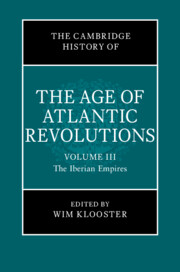
Volume III covers the Iberian Empires and the important ethnic dimension of the Ibero-American independence movements, revealing the contrasting dynamics created by the Spanish imperial crisis at home and in the colonies. It bears out the experimental nature of political changes, the shared experiences and contrasts across different areas, and the connections to the revolutionary French Caribbean. The special nature of the emancipatory processes launched in the European metropoles of Spain and Portugal is explored, as are the connections between Spanish America and Brazil, as well as between Brazil and Portuguese Africa. It ends with an assessment of Brazil and how the survival of slavery is shown to have been essential to the new monarchy, although simultaneously, enslaved people began pressing their own demands, just like the indigenous population.
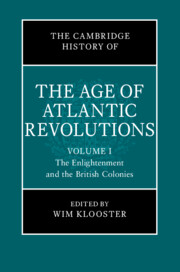
Volume I offers an introduction to the Enlightenment, which served as the shared background for virtually all revolutionary turmoil, and the American Revolution, which inaugurated the Age of Revolutions. Beginning with a thorough introduction, the volume covers international rivalry, the importance of slavery, and the reformist mind-set that prevailed on the eve of the revolutionary era. It addresses the traditional argument on whether the Enlightenment truly caused revolutions, concluding that the reverse is more apt: revolutions helped create the Enlightenment as a body of thought. The volume continues with a regional and thematic assessment of the American Revolution, revealing how numerous groups in British America – including Black and indigenous people – pursued their own agendas and faced interests at odds with the principles of the revolution.
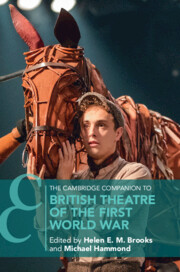
This is the first comprehensive guide to British theatre's engagement with the First World War over the last century, from 1900 to the Armistice Day centenary in 2018. Considering theatre as both an industry and literary-cultural artform, it provides a contextual grounding in the prelude to the conflict and coverage of post-war plays as well as wartime performances. Lively chapters from leading scholars explore diverse genres and practices, from Shakespeare to melodrama, while focusing on topics including regionality, national identity, propaganda, commemoration, gender, censorship and international influences. Presenting original scholarship in an accessible and engaging manner, this Companion establishes theatre as a vital means of understanding wartime experiences, and a central feature in commemoration and remembrance.