To save content items to your account,
please confirm that you agree to abide by our usage policies.
If this is the first time you use this feature, you will be asked to authorise Cambridge Core to connect with your account.
Find out more about saving content to .
To save content items to your Kindle, first ensure no-reply@cambridge.org
is added to your Approved Personal Document E-mail List under your Personal Document Settings
on the Manage Your Content and Devices page of your Amazon account. Then enter the ‘name’ part
of your Kindle email address below.
Find out more about saving to your Kindle.
Note you can select to save to either the @free.kindle.com or @kindle.com variations.
‘@free.kindle.com’ emails are free but can only be saved to your device when it is connected to wi-fi.
‘@kindle.com’ emails can be delivered even when you are not connected to wi-fi, but note that service fees apply.
Plutarch is well known as a generally even-tempered expositor of the great tapestry of Greek history, literature, and philosophy, and a benign counselor on questions of ethical conduct and social mores, but there is another side to him, that of the accomplished polemicist, primarily in the area of philosophy, but also concerning his predecessors in the craft of history, and on occasion the poets as well. In all of Plutarch’s polemics, we can discern common threads. While historians (especially Herodotus) and poets are criticized primarily for their flawed socioethical views, the Stoics, Epicureans, and even Plutarch’s predecessors in the Platonic tradition have the inconsistencies in their positions relentlessly skewered, and the most absurd consequences of their misguided arguments teased out. This essay surveys a selection of Plutarch’s critiques of previous historians, then casts a brief glance at his censure of the poets, before turning to an examination of his polemics against rival philosophical schools, and lastly rival views within the Platonist tradition.
This chapter assesses the cultural and broader symbolic significance of the symposium in Plutarch’s biographical and philosophical works. It begins by situating Plutarch’s references to the symposium in their cultural context, by examining the symposium/convivium as a key social institution in the Roman imperial period. Next, the chapter discusses the symbolic dimension of conviviality in Plutarch’s oeuvre, through characteristic examples from the Lives and Moralia. It underlines that, for Plutarch, the symposium serves as a tool for evaluating moral character, as well as for conducting cross-cultural comparison. In addition, Plutarch’s interest in philosophical dietetics turns consumption patterns and behaviour at symposia into an important point of focus and concern. The last two sections look closely at Plutarch’s two surviving sympotic works, the Banquet of the Seven Sages and Table Talk. It discusses their genre and literary techniques, their relationship to the philosophical tradition of sympotic writing initiated by Plato and Xenophon, and the central role they both assign to philosophical enquiry.
A central concern of Plutarch’s works is what constitutes a good and honorable life, and they commonly claim to “improve” the character and behaviour of their elite readers, especially in politics and leadership. This chapter assesses this educational approach across the whole corpus, paying particular attention to works of literary criticism, works of practical morality, political texts, and the Parallel Lives. It highlights, among other themes, the importance both of comparison (syncrisis) and of examples (paradeigmata) drawn from history, literature, or everyday life to stimulate reflection. Though profoundly influenced by Plato, Plutarch is particularly concerned with the practical application of philosophical principles to real-life situations, whether faced by the statesmen of the past or by his own readers. Indeed, rather than preaching simplistic lessons, many of Plutarch’s texts bring out how complex moral judgments can be in practice and invite readers to think deeply about morality, literature, and politics.
This chapter explores Plutarch’s presentation of greatness as it equates with leadership ability and outcomes. He expressly values civic participation and leadership that aims to secure and promote the welfare of the community. Subsequent to the presentation of some basic information concerning his theories of education, especially ethical education, attention is then focused on the innate components of greatness and the appropriate means to develop this inborn talent in training individuals to wield power in an effective and responsible fashion. A comparative analysis is then undertaken to set forth the similarities and differences between the psychological/behavioral makeup of Plutarch’s ideal leader and recent influential work in leadership theory by Daniel Goleman, James MacGregor Burns, and Bernard M. Bass. The significant degree of correspondence elucidated leads to a discussion of the literary techniques Plutarch employs to place in sharper relief the salient aspects of great leadership (and its opposite), including his developed use of synkrisis and the Socratic paradigm, as well as the representation of performative acts of leadership.
Plutarch’s various comments about wealth are usually recognizable as springing from the same personality, but the emphasis is different in different contexts. This chapter explores this variety within the Lives, and in particular the characteristic connection with moral decadence and decay. Two pairs are explored as test-cases, Agis–Cleomenes–Gracchi and Agesilaus–Pompey. Rome, with signs of luxury and decadence everywhere, might be expected to be particularly in focus, but talk of decadence is most frequent in the Spartan Lives. Is this an indirect way of passing comment on Rome without causing offense That may also explain his frequent reluctance to talk as openly about Roman corruption and bribery as one might expect, especially in connection with a Life’s central figure. He may also be sidestepping too great an emphasis on Roman luxury as this had traditionally been associated with the Greek East.
The classical past, for Plutarch, offered a huge reservoir of history, art, and traditions, from which he drew examples of virtue for inspiration and encouragement. He expected that his readers should do the same. But he also insisted that the examples that we draw from that reservoir must be carefully strained and tested, using investigative acumen and skeptical discussion and evaluation, to remove the inevitable debris, the inescapable outcome of human ambition, competition, greed, and desire. Internecine war and personal rivalries polluted those great times even as they did his own day, and still do the present world. The best qualities of the classical past could be reacquired only by the constant exercise of prudent reason and controlled passion. Plutarch dared his readers to accept this challenge.
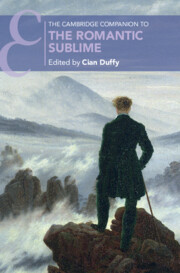
This is the only collection of its kind to focus on one of the most important aspects of the cultural history of the Romantic period, its sources, and its afterlives. Multidisciplinary in approach, the volume examines the variety of areas of enquiry and genres of cultural productivity in which the sublime played a substantial role during the late eighteenth and early nineteenth centuries. With impressive international scope, this Companion considers the Romantic sublime in both European and American contexts and features essays by leading scholars from a range of national backgrounds and subject specialisms, including state-of-the-art perspectives in digital and environmental humanities. An accessible, wide-ranging, and thorough introduction, aimed at researchers, students, and general readers alike, and including extensive suggestions for further reading, The Cambridge Companion to the Romantic Sublime is the go-to book on the subject.
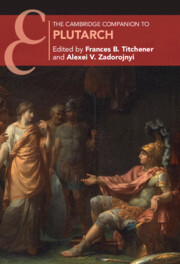
Plutarch is one of the most prolific and important writers from antiquity. His Parallel Lives continue to be an invaluable historical source, and the numerous essays in his Moralia, covering everything from marriage to the Delphic Oracle, are crucial evidence for ancient philosophy and cultural history. This volume provides an engaging introduction to all aspects of his work, including his method and purpose in writing the Lives, his attitudes toward daily life and intimate relations, his thoughts on citizenship and government, his relationship to Plato and the second Sophistic, and his conception of foreign or 'other'. Attention is also paid to his style and rhetoric. Plutarch's works have also been important in subsequent periods, and an introduction to their reception history in Byzantium, Italy, England, Spain, and France is provided. A distinguished team of contributors together helps the reader begin to navigate this most varied and fascinating of writers.
The Cambridge History of the Australian Novel is an authoritative volume on the Australian novel by more than forty experts in the field of Australian literary studies, drawn from within Australia and abroad. Essays cover a wide range of types of novel writing and publishing from the earliest colonial period through to the present day. The international dimensions of publishing Australian fiction are also considered as are the changing contours of criticism of the novel in Australia. Chapters examine colonial fiction, women's writing, Indigenous novels, popular genre fiction, historical fiction, political novels, and challenging novels on identity and belonging from recent decades, not least the major rise of Indigenous novel writing. Essays focus on specific periods of major change in Australian history or range broadly across themes and issues that have influenced fiction across many years and in many parts of the country.
Volume III examines the most well-known century of genocide, the twentieth century. Opening with a discussion on the definitions of genocide and 'ethnic cleansing' and their relationships to modernity, it continues with a survey of the genocide studies field, racism and antisemitism. The four parts cover the impacts of Racism, Total War, Imperial Collapse, and Revolution; the crises of World War Two; the Cold War; and Globalization. Twenty-eight scholars with expertise in specific regions document thirty genocides from 1918 to 2021, in Europe, the Middle East, Africa, Asia, and Latin America. The cases range from the Armenian Genocide to Maoist China, from the Holocaust to Stalin's Ukraine, from Indonesia to Guatemala, Biafra, Bangladesh, Cambodia, Bosnia and Rwanda, and finally the contemporary fate of the Rohingyas in Myanmar and the ISIS slaughter of Yazidis in Iraq. The volume ends with a chapter on the strategies for genocide prevention moving forward.
Volume I offers an introductory survey of the phenomenon of genocide. The first five chapters examine its major recurring themes, while the further nineteen are specific case studies. The combination of thematic and empirical approaches illuminates the origins and long history of genocide, its causes, consistent characteristics, and the connections linking various cases from earliest times to the early modern era. The themes examined include the roles of racism, the state, religion, gender prejudice, famine, and climate crises, as well as the role of human decision-making in the causation of genocide. The case studies cover events on four continents, ranging from prehistoric Europe and the Andes to ancient Israel, Mesopotamia, the early Greek world, Rome, Carthage, and the Mediterranean. It continues with the Norman Conquest of England's North, the Crusades, the Mongol Conquests, medieval India and Viet Nam, and a panoramic study of pre-modern China, as well as the Spanish conquests of the Canary Islands, the Caribbean, and Mexico.
Volume II documents and analyses genocide and extermination throughout the early modern and modern eras. It tracks their global expansion as European and Asian imperialisms, and Euroamerican settler colonialism, spread across the globe before the Great War, forging new frontiers and impacting Indigenous communities in Europe, Asia, North America, Africa, and Australia. Twenty-five historians with expertise on specific regions explore examples on five continents, providing comparisons of nine cases of conventional imperialism with nineteen of settler colonialism, and offering a substantial basis for assessing the various factors leading to genocide. This volume also considers cases where genocide did not occur, permitting a global consideration of the role of imperialism and settler-Indigenous relations from the sixteenth to the early twentieth centuries. It ends with six pre-1918 cases from Australia, China, the Middle East, Africa, and Europe that can be seen as 'premonitions' of the major twentieth-century genocides in Europe and Asia.