To save content items to your account,
please confirm that you agree to abide by our usage policies.
If this is the first time you use this feature, you will be asked to authorise Cambridge Core to connect with your account.
Find out more about saving content to .
To save content items to your Kindle, first ensure no-reply@cambridge.org
is added to your Approved Personal Document E-mail List under your Personal Document Settings
on the Manage Your Content and Devices page of your Amazon account. Then enter the ‘name’ part
of your Kindle email address below.
Find out more about saving to your Kindle.
Note you can select to save to either the @free.kindle.com or @kindle.com variations.
‘@free.kindle.com’ emails are free but can only be saved to your device when it is connected to wi-fi.
‘@kindle.com’ emails can be delivered even when you are not connected to wi-fi, but note that service fees apply.
Gaming Disorder (GD) has not been officially recognized as a diagnostic entity in the DSM-5, being listed in the “conditions for further study” section. However, it is described in the ICD-11, and clinically, it is observed that an increasing number of individuals, particularly the younger population with easier access to technology, are affected by this issue. Nefarious consequences include loss of performance at school/work and a potential for failing other responsibilities such as in the familiar and social spheres.
Objectives
Despite its harm, psychiatrists are generally less familiar with this entity when compared to other psychiatric disorders. Thus, our main goal was to establish a comprehensive and hollistic review of its approach.
Methods
A bibliographical research on the topic was conducted from the available scientific literature on the topic, with the utmost priorization of evidence-based sources.
Results
The overall prevalence of Gaming Disorder is challenging to assess precisely, but it is estimated to be around 3%, making it comparable to obsessive-compulsive disorder and some substance use disorders. It is more common than pathological gambling. Clinically, GD is characterized by an excessive preoccupation with gaming that supersedes all aspects of life. It may also involve a compulsion to play and the presence of withdrawal symptoms from periods when there are no gaming activities. The behavior is driven by the ACE triad (anonymity, convenience, and escape). Often, individuals with GD do not seek treatment. Although there are no specific pharmacological agents, antidepressants, mood stabilizers, and naltrexone have shown some success. In psychotherapies, cognitive-behavioral therapy has the strongest evidence.
Conclusions
There is a limited amount of information on GD, and when researching the topic, one primarily encounters information on other substance-related addictive disorders and, in the case of behavioral disorders, gambling. However, as young people are increasingly exposed to screens and video games with potential harmful effects on their development, and in adults, inhibiting them from taking on work and family responsibilities, it is essential to conduct more studies on the subject to prevent these deleterious consequences.
Observations of glacier melt and runoff are of fundamental interest in the study of glaciers and their interactions with their environment. Considerable recent interest has developed around distributed acoustic sensing (DAS), a sensing technique which utilizes Rayleigh backscatter in fiber optic cables to measure the seismo-acoustic wavefield in high spatial and temporal resolution. Here, we present data from a month-long, 9 km DAS deployment extending through the ablation and accumulation zones on Rhonegletscher, Switzerland, during the 2020 melt season. While testing several types of machine learning (ML) models, we establish a regression problem, using the DAS data as the dependent variable, to infer the glacier discharge observed at a proglacial stream gauge. We also compare two predictive models that only depend on meteorological station data. We find that the seismo-acoustic wavefield recorded by DAS can be utilized to infer proglacial discharge. Models using DAS data outperform the two models trained on meteorological data with mean absolute errors of 0.64, 2.25 and 2.72 m3 s−1, respectively. This study demonstrates the ability of in situ glacier DAS to be used for quantifying proglacial discharge and points the way to a new approach to measuring glacier runoff.
Virtual Reality (VR) represents an emerging and promising tool to enhance standard care for patients with eating disorders (EDs). Indeed, VR provides an immersive and interactive experience in a safe and controlled environment that can simulate real-life situations, showing encouraging findings on various components of psychological treatments such as exposure therapy, psychoeducation, and emotional regulation.
Objectives
This study aims to evaluate the Zen Garden VR App in patients with anorexia nervosa (AN) in order to obtain pilot data regarding changes in mood, relaxation, anger, anxiety, and weight and shape concerns. A secondary aim was to receive feedback from participants about the VR experience, its components, and its possible application for people with AN.
Methods
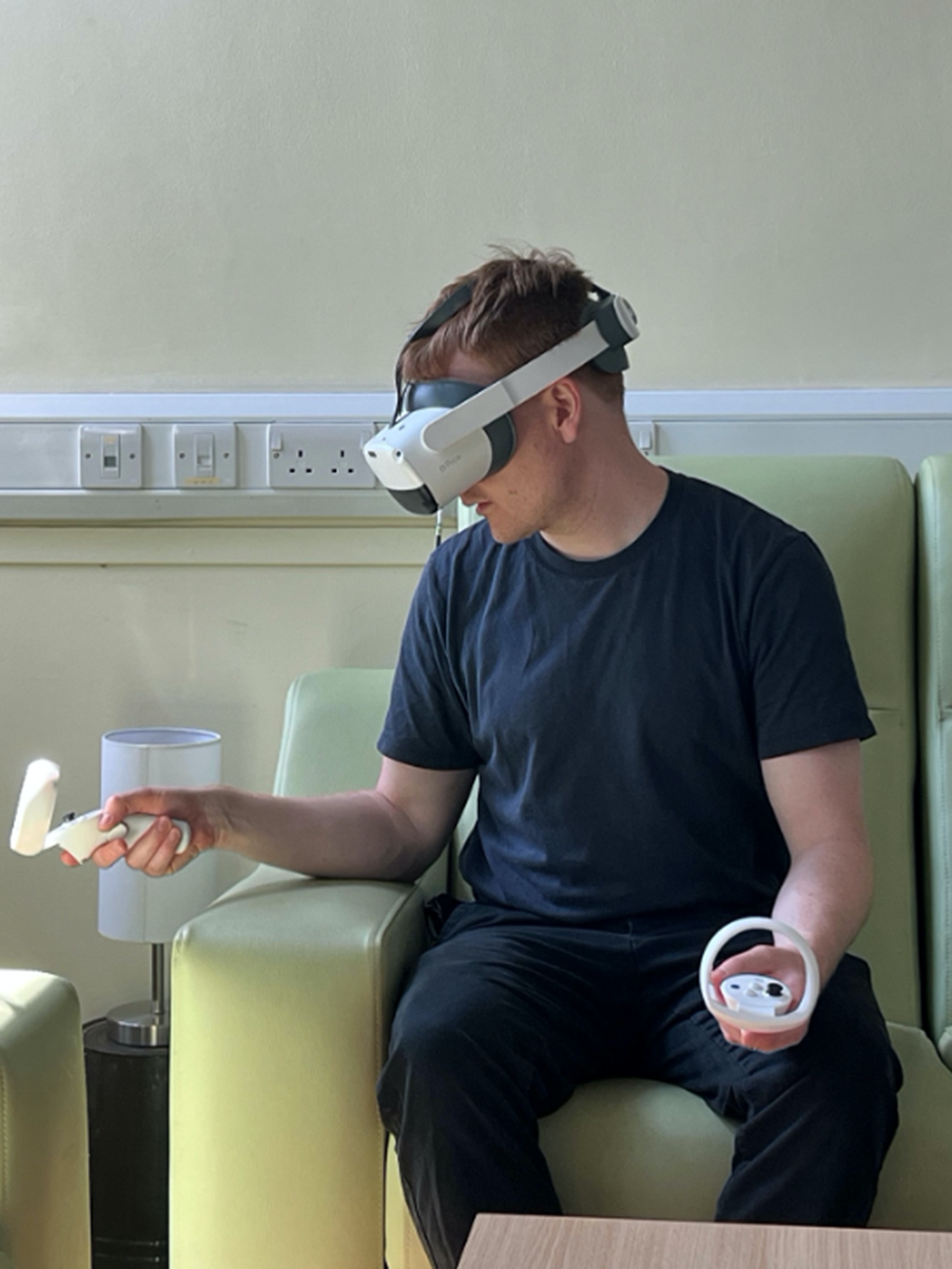
Self-reported baseline and post-intervention data were collected from a sample of six female inpatients with AN recruited at the Eating Disorders Service at the Bethlem Royal Hospital of the South London and Maudsley NHS Foundation trust (SLaM). The technology used during the VR session consisted of an Oculus head-mounted display headset and two controllers which provided continuous rotational and positional tracking (Figures 1, 2 and 3).
Results
Findings showed a global improvement after the VR Zen Garden App session, mainly in reducing levels of anxiety (Cohen’s d= 1.07) and promoting relaxation (Cohen’s d= 0.95), with possible applications especially before and after meals when food fears are at their highest. In addition, the music that was played during the intervention had a particularly positive effect.
Image:
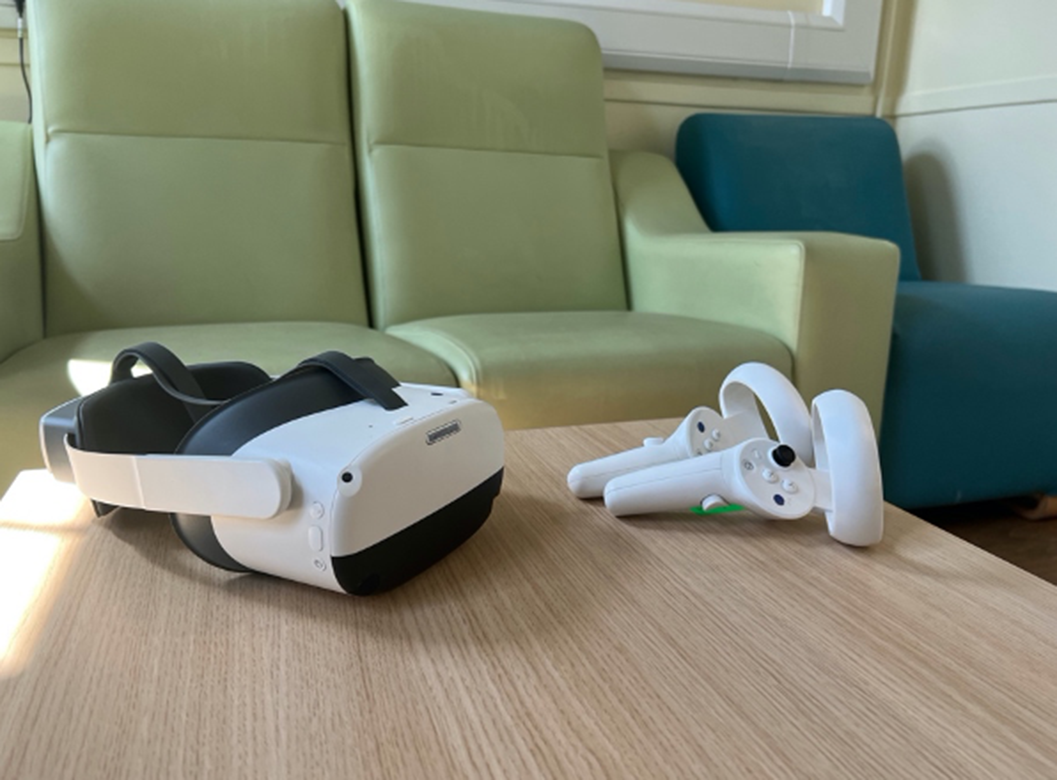
Image 2:
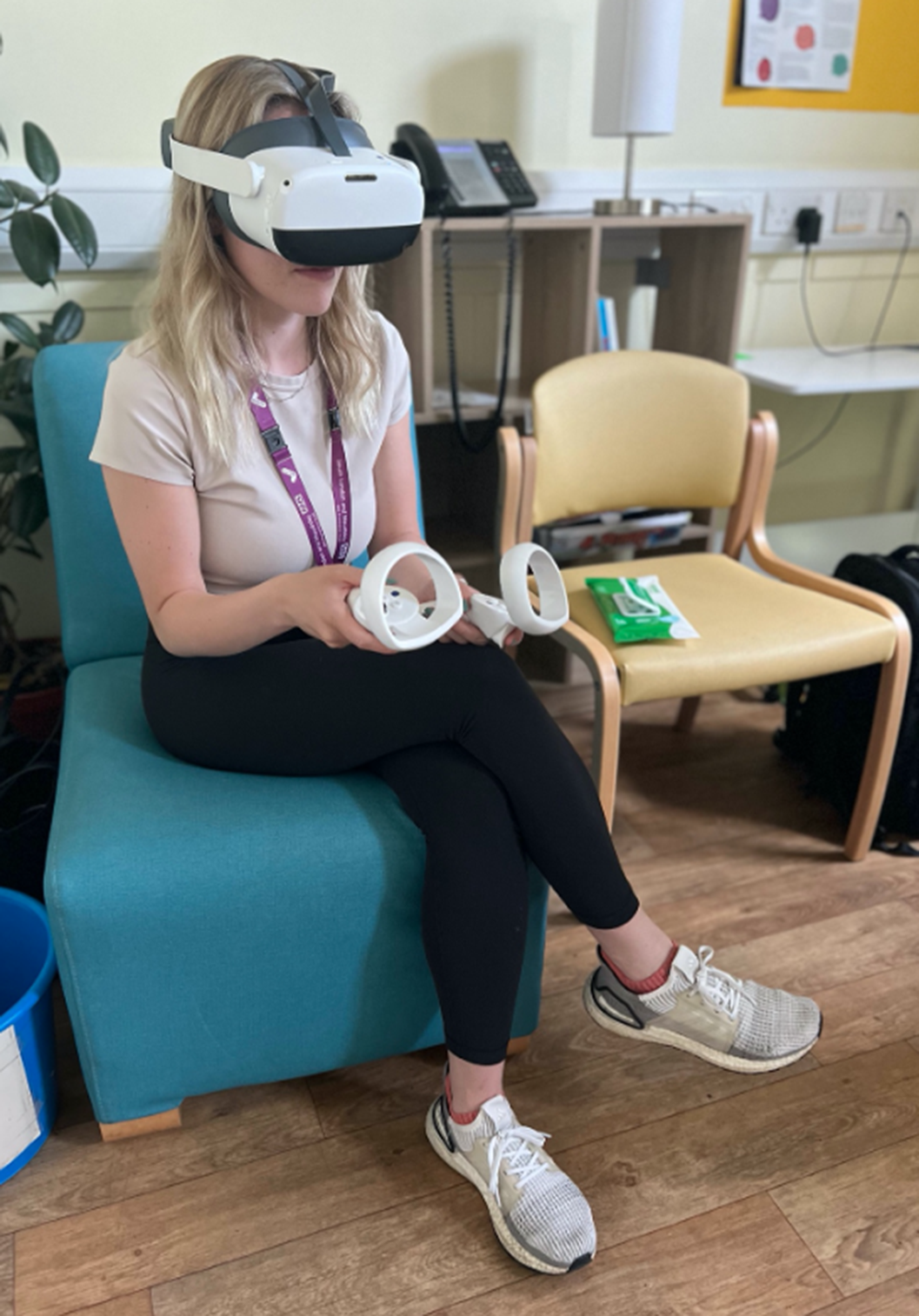
Image 3:
Conclusions
Despite limitations, such us the small sample size and the one time point measurement, positive clinical implications have been highlighted for the Zen Garden VR App in patients with AN, although further studies are needed to confirm these preliminary findings. It is possible that VR could usefully augment and personalize care for people with an EDs. A range of interventions might be used to target the most compromised symptoms such as designing interventions that can help with triggers to eating disorder psychopathology.
Individuals have difficulty controlling their use of technology, it constantly on their minds when they don’t have access to it, it takes up too much time in their daily lives, and these situations negatively impact daily life are referred to as “problematic technology use”. The widespread use of technology from a young age is leading to an increase in the number of children with problematic technology use. Problematic technology use negatively impacts children’s development, especially their mental development. Important risk factors for problematic technology use include a long stay at home, a previous traumatic event, and low life satisfaction. In addition, it is possible that problematic technology use is more common in children with low social competence and low behavioral levels.
Objectives
The aim is to determine the level of problematic technology use in 48-72-month-old children receiving preschool education, to examine some variables thought to be related to it, and to assess their level of social competence and behavior.
Methods
The study was a cross-sectional research conducted between January and September 2023 among the parents of children studying in Eskişehir and Bolu. The study group consisted of the parents of 883 children. In our study, the Problematic Technology Use Scale for Young Children (PTUS-YC) and the Social Competence And Behavior Evaluation-30 Scale (SCBE-30) were used.
Results
The age of the parents ranged from 20 to 54 years (mean: 35.5±4.8), 740 of them were women. The average age of the children was 63.2±7.3 months and 442 of them were boys. The scores obtained from PTUS-YC ranged from 26-104 and the mean was 55.1±14.9 points. Among the variables associated with problematic use of technology, those related to parents were place of residence, age and marital status, while those related to children were time spent at home with technological devices, parental control over content used, adaptation to school and ownership of a technological device. There is a weak positive correlation between children’s scores on the PTUS-YC and the SCBE-30 (r:0.336; p < 0.05).
Conclusions
It can be said that problematic technology use in our study was at a moderate level. As the level of social competence and behavior increase, problematic technology use decreases. It is recommended to limit the time children spend with technological devices, ensure that parents control the content they use on technological devices, support their adaptation to school, and work on gaining social competence and positive behavior.
Diagnostic stability is a controversial issue in first episode psychosis (FEP) due to heterogenous symptoms and unclear affective symptoms. Differencing affective and non-affective psychoses is important as treatment strategies are different. Initial affective symptomatology has low specificity for predicting the subsequent diagnosis of affective psychosis. Sex has proven to be relevant for clinical and functional outcomes but it remains unclear how sex may contribute to diagnosis switch of FEP.
Objectives
To determine the role of sex in diagnostic stability in a sample of FEP after 1-year follow-up.
Methods
Diagnoses of FEP patients from Hospital del Mar of Barcelona were assessed at baseline and 1 year after. Univariate analyses was perfomed for all diagnoses and dichotomic variable (affective/non-affective). Logistic regression model was perfomed to know which variables predict diagnosis switch.
Results
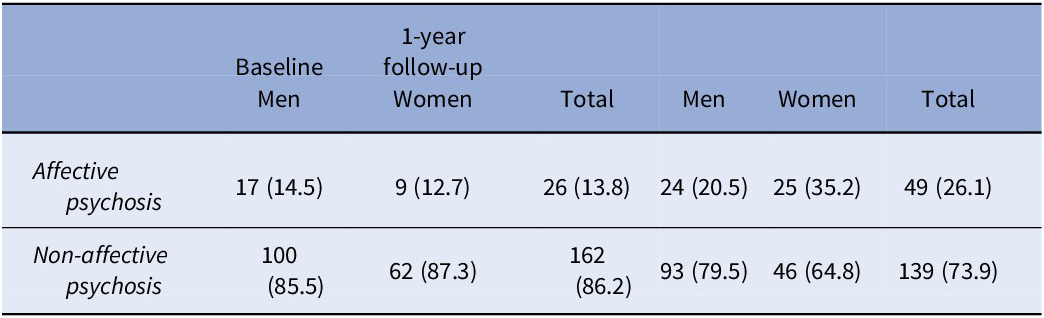
256 patients were enrolled. No differences were found at baseline between completers and non-completers (Table 1). No significant differences between men and women at baseline diagnosis were found, neither all diagnoses (p=0.274) nor the dichotomic variable affective/non-affective (p=0.829) (Table 2AB). Significant differences were found at 1-year follow-up between men and women, for all diagnoses (p=0.043) and the dichotomic variable (p=0.039). Sex was the only variable that predicted diagnosis switch (Figure 1), PANSS, CDSS, YMRS, GAF and cannabis did not.Table 1.
Baseline characteristics of participants
Completers (n=188)
Non-completers (n=68)
p
Women (n, %)
71 (37.8)
30 (44.1)
0.111
Age (M, IQR)
24 (20-28)
22 (20-28)
0.899
Cannabis use (M, IQR)
5.5 (0-18)
7 (0-21)
0.231
DUP (M, IQR)
45 (12.5-130)
36 (11.25-115.75)
0.213
PANSS (m, sd)
44.55 (10.17)
40.93 (10.42)
0.761
CDSS (M, IQR)
2 (0-7)
3 (0-5.5)
0.199
YMRS (m, sd)
19 (9.64)
17.6 (9.15)
0.845
GAF (M, IQR)
30 (25-50)
30 (25-35)
0.114
TABLE 2A and 2B.
Diagnosis comparison (n, %)
Baseline
1-year follow-up
Men
Women
Total
Men
Women
Total
Psychosis NOS
69 (59)
39 (54.9)
108 (57.4)
28 (23.9)
10 (14.1)
38 (20.2)
Schizophreniform disorder
22 (18.8)
16 (22.5)
38 (20.2)
14 (12
9 (12.7)
23 (12.2)
Induced psychosis
4 (3.4)
0 (0)
4 (2.1)
15 (12.8)
4 (5.6)
19 (10.1)
Affective psychosis
17 (14.5)
9 (12.7)
26 (13.8)
24 (20.5)
25 (35.2)
49 (26.1)
Schizophrenia
0 (0)
0 (0)
1 (0.4)
30 (25.6)
14 (19.7)
44 (23.4)
Brief psychotic disorder
5 (4.3)
7 (9.9)
12 (6.4)
6 (5.1)
8 (11.3)
14 (7.4)
Baseline
1-year follow-up
Men
Women
Total
Men
Women
Total
Affective psychosis
17 (14.5)
9 (12.7)
26 (13.8)
24 (20.5)
25 (35.2)
49 (26.1)
Non-affective psychosis
100 (85.5)
62 (87.3)
162 (86.2)
93 (79.5)
46 (64.8)
139 (73.9)
Image:
Conclusions
Sex has proven to be the main predictor of switching initial diagnosis of FEP.
The structure of psychiatric care has undergone many changes in recent decades. In addition, the SARS-CoV-2 pandemic has posed specific challenges for inpatient psychiatric care. In Vienna, the admission of SARS-CoV-2 positive psychiatric patients has been centralised in one department, the 1st Department of Psychiatry and Psychotherapeutic Medicine, Klinik Hietzing.
Objectives
It will be investigated to what extent the admissions of SARS-CoV-2 positive and negative patients differ with regard to age, gender, diagnosis, need for involuntary admission, medication, duration of treatment, country of birth and the question of where the patients come from and where they are discharged to.
Methods
Between 15 March 2020 and 21 May 2022 (start and end of cohorting of all Vienna SARS-CoV-2 positive inpatient psychiatric patients in one department), 338 SARS-CoV-2 positive and 1312 SARS-CoV-2 negative patients were treated as inpatients at the 1st Department of Psychiatry and Psychotherapeutic Medicine of the Klinik Hietzing.
Results
The results of the study will be shown.
Conclusions
The SARS-CoV-2 pandemic has presented an outstanding challenge to inpatient psychiatry. An accurate portrayal of differences in the treatment of positive and negative patients is of importance for assessing the impact of the pandemic.
Impulsivity is the tendency to take quick and rash actions without the ability to assess their consequences, resulting in an increased frequency of risky behaviors. In recent years, it has been indicated that impulsivity is a multidimensional construct with different ways of expression in various mental illnesses. Moreover, personality traits might predispose do different psychiatric diagnoses and impact its course.
Objectives
Because differences in the manifestation of impulsivity can be observed at several levels (e.g., behavioral/motor, cognitive, attention, or emotionally related), we applied several tools to check whether they would allow for the differentiation of unipolar (UD) and bipolar (BD) affective disorders.
Methods
The study used data from 282 patients with affective disorders and 95 healthy controls of both sexes. Among the patients, we distinguished a subgroup diagnosed with UD and BD. We included a homogeneous group of patients in euthymia state at the end of hospitalization due to the last depressive episode. The following tools were used: subdimension novelty seeking (NS) of The Temperament and Character Inventory (TCI) and The Barratt Impulsiveness Scale version 11 (BIS-11) to assess various dimensions of impulsivity. The Coping Orientation to Problems Experienced (COPE) was used to assess the strategy of coping with stress. Statistical analyses were performed in Statistica 13.3 StatSoft, Krakow, Poland.
Results
We observed significant differences in BIS-11 dimensions such as motor (MI) (p=0.0006), nonplanning (NP) (p=0.0249), and the sum of impulsivity (p= 0.0095) between UD and BD patients. We found no significant differences in the intensity of impulsivity measured by the NS subdimension, regardless of the type of affective disorder. In the Spearman rank correlation analysis, the following correlations of novelty seeking were revealed (p>0.05):
NS with BIS-11 MI (rs=0.3877, p=0001), BIS-11 NP (rs=-0.2926, p=0042) and COPE-planning (rs=-0.2552, p=0191) dimensions. Moreover, a unique and strong correlation of NS with COPE - focus on and venting of emotions was revealed in BD patients (rs=0.5402, p=0.0461).
Conclusions
The obtained correlation results confirm the multidimensional nature of impulsivity. The relationship between NS and the motor and nonplanning dimensions comes to the fore. Among the tests used, BIS-11 best differentiated unipolar and bipolar patients.
Hospital nurses have played a crucial role during the covid-19 pandemic. Research demonstrates the extent to which nurses were experiencing acute stress and psychological distress during the waves of the pandemic.
Objectives
The purpose of this study was to assess the psychological distress (stress, depression, and anxiety) of nurses working in public hospitals in Greece during the covid-19 pandemic, to identify their coping strategies, and to explore the eventual sociodemographic and work environmental influence on distress and the coping strategies.
Methods
Sample consisted of 317 nurses working in public hospitals. A self-report online questionnaire was used for data collection. The first part of the questionnaire comprised the Depression, Anxiety, and Stress Scale (DASS-21), the second part included the Greek version of the Ways of Coping questionnaire (WAYS), the third part the Oslo Social Support Scale (OSSS-3), and the fourth part included participants’ sociodemographic data. Analyses were conducted using SPSS statistical software (version 26.0).
Results
18.4% of participants presented severe depression, 39.9% very severe anxiety, and 22.5% very severe stress. Significantly lower levels of depression, anxiety, and stress were experienced by those who slept more than 5 hours a day, compared to those who slept up to 5 hours. Participants who were infected with the coronavirus had significantly higher levels of depression, anxiety, and stress. Additionally, participants who received moderate/high social support experienced overall less anxiety, stress, and depression than those who received low social support. Finally, the more they sought social support to deal with their problems and the more they avoided stressful situations, the higher the levels of depression, anxiety, and stress.
Conclusions
A staff care protocol must be applied by every hospital, including rest breaks and night-shift naps, psychosocial support for those who get infected by SARS-CoV-2 and their families, peer support (groups and mentoring), and coping skills trainings.
COVID-19 is a multisystem disease affecting not only the respiratory, gastroenterstitial and vascular systems, but also the central nervous system, which leads to a wide range of neurological and mental complications. 3 years of experience in combating the pandemic has shown that elderly people burdened with chronic somatic diseases are the most vulnerable risk group for the development of severe course and complications of COVID-19.
Objectives
To study the impact of COVID-19 on the onset and course of mental illness in elderly inpatients
Methods
We examined 67 inpatients aged 50 to 95 years with various mental pathologies, who underwent COVID-19 from February 2020 to December 2021. 46 people had previous history of mentall disease (PHMD), in 21 cases the disease developed for the first time. Statistical analysis was performed.
Results
In the manifest group of patients, depressive episodes predominated (42.9%), including psychotic episodes (9.5%). In 28.6% of cases, organic disorders were diagnosed in the form of emotional lability, organic depression, mild cognitive impairment and delirium. In 23.8% of patients, neurotic disorders were observed in the form of depressive reactions, panic and generalized anxiety disorder. In one case (4.8%), acute polymorphic psychosis with symptoms of schizophrenia was diagnosed. The PHMD group includes affective disorders - 45.7%; organic disorders, including dementia 26.1%; schizophrenic spectrum disorders -19.6% and neurotic somatoform disorders - 8.7%. In the acute and subacute periods of COVID-19, acute psychotic states (APS) developed in both groups of patients (in 23.3% and 30.4%, respectively) in the form of delirium, psychotic depression, or polymorphic psychosis. APS were more common in PHMD patients with organic (50%) and schizophrenic spectrum disorders (33.3%) with a predominance of delirium. In the long-term period of COVID-19, PHMD patients more often than non-PHMD (60.9% and 38.1%) developed cognitive impairment (CI), especially in schizophrenia-like (77.8%) and organic (83.3%) disorders. CI developed twice as often after APS (89.5% and 39.6%, p<0.001), reaching the degree of dementia in 15.8% of cases. APS were significantly associated (p<0.05) with the development of CI (0.567733), the age of patients (0.410696) and the presence of previous cerebrovascular insufficiency (0.404916).
Conclusions
The age-related features of the mental consequences of COVID-19 are the occurrence of APS in the acute period of infection and the deterioration of cognitive activity at a remote stage. The PHMD patients, especially with disorders of organic and schizophrenic spectrum, were found to be more vulnerable to the effects of COVID-19. In them, the occurrence of APS was a risk factor for the development of dementia, while in primary diseased, and patients with affective and neurotic disorders, CI was reversible or had the character of a mild cognitive disorder.
The Choice giving birth by cesarean section when it is not biologically necessary implies a greater risk to the health of the mother and child Toral et al. Eletrônica Estácio Saúde 2018; 95(1) 27-30,refers the psychological relevance to identify perinatal effects of a good medical practice at birth. In this respect Poojari et al. Early Hum Dev 2019;115 93-98, state that a cesarean section as a surgical risk, causes decrease fetal oxygenation and an impairment release of stress-related hormones in the maternal-fetal binomial that does not favor neural connections at birth
Objectives
Identify the neurodevelopmental lags in infant on children under 24 months of age born by cesarean section and vaginal delivery,
Methods
A cross-sectional descriptive correlational; Sample consisted of 100 children of a term gestation, 70 with spontaneous vaginal birth and 30 whose birth was by cesarean section, aged between one and twenty-four months; using the Abbreviated Development Scale, an instrument created and validated for the Colombian population (Cronbach’s alpha, 0.94). All parents signed the informed consent.
Results
All test scales were applied (gross and fine motor, language and social personal), the results showed that children born by cesarean section had better development in areas of fine motor and language, while children born by vaginal delivery had better development of gross motor. See (graphic 1).
Graphic 1: Areas of development according to the type of delivery.
References
Conclusions
The influence of contextual variables such as age and educational level of the mother on language and social areas was also found
In mental health prevention, person-centered, and rights-based approaches, the role of recovery is highlighted (WHO, 2021). Various evaluation tools are used in rehabilitation objectives and programs, including the Specific Levels of Functioning Scale (SLOF) (Mucci et al. Schizophr Res 2014;159 144-50) and the Recovery Assessment Scale – Domains and Stages (RAS-DS), a self-measure of mental health recovery. It includes 38 items clustered into four recovery domains and meets two functions. In addition to measuring self-reported outcomes, it increases service-user control towards objectives and recovery action plans (Honey et al. BMC Psychiatry 2023;23 500).
Objectives
To evalue the efficacy of RAD-DS in a psychiatric rehabilitation facility to be used as a routine tool in daily rehabilitation activity.
Methods
In our observational study, we recruited 103 inpatients (total: 103 patients, females: 38 patients, males: 65 patients) in a psychiatric rehabilitation facility. The patient presented with psychiatric disorders that met the diagnostic criteria of DMS-5 (schizophrenia, bipolar disorder, MDD, personality borderline disorder). Epidemiological data are shown in Table 1.
All patients were undergoing a psychiatric rehabilitation program and were observed during a one-year evaluation.
In all patients, the following rating scales were administered at baseline (T0) and after a year (T1):
For the evaluation of social measures, life outcomes, and functioning and recovery:
- Recovery Assessment Scale – Domains and Stages RAS-DS
- Specific Levels of Functioning Scale (SLOF)
- Global Assessment of Functioning (GAF)
For psychopathological evaluation:
- Brief Psychiatric Rating Scale (BPRS)
The data were statistically analyzed with the EZAnalyze 3.0 software for the Excel platform.
Results
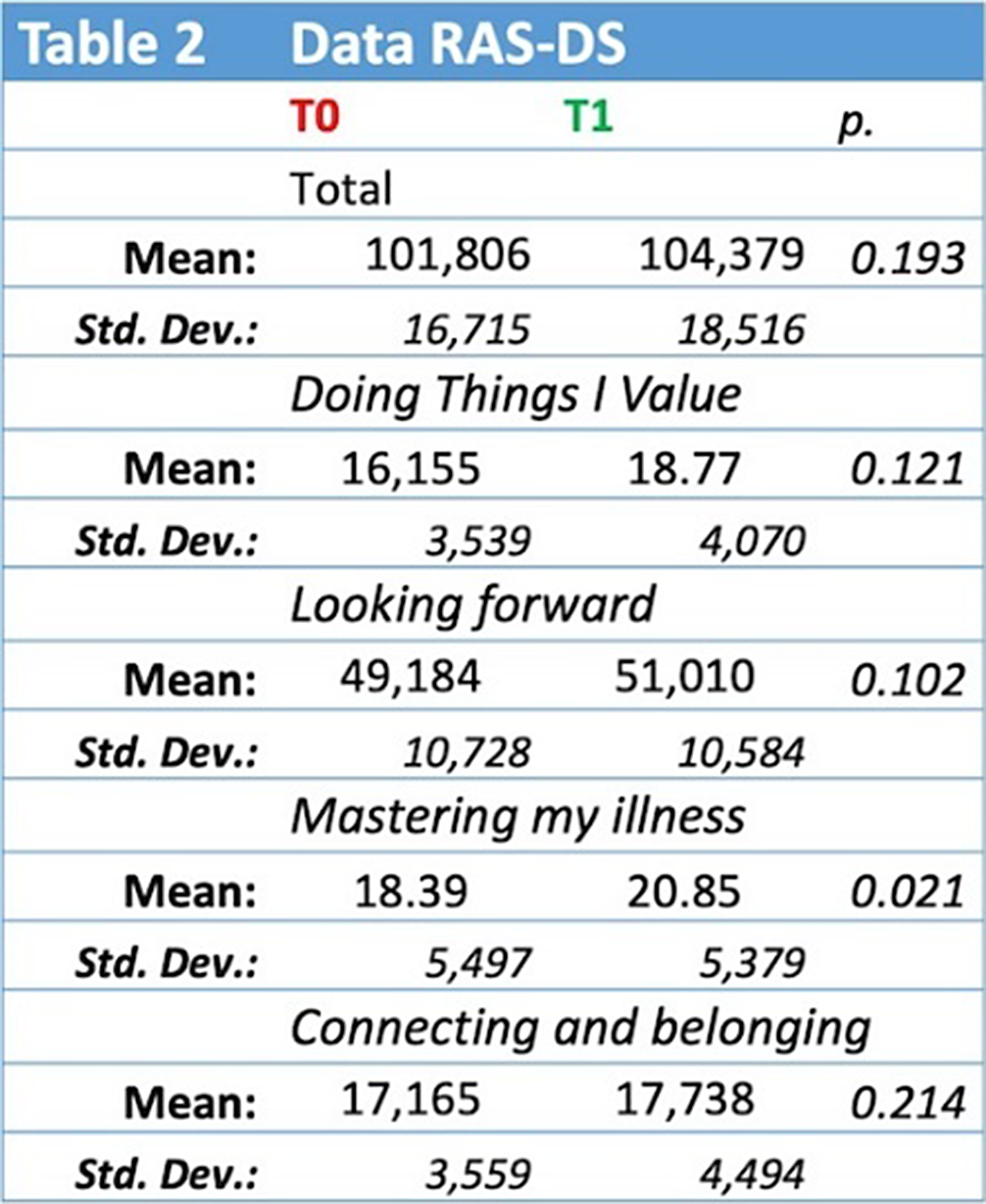
The RAS-DS total score results (Table 2) show a not significant difference between T0 vs. T1 (mean: 101.80 vs. 104.37, p. 0.193). An improvement in the score was observed after one year of rehabilitation treatment in the subgroup “Doing things I value” (T0 vs. T1: mean 16.15 vs. 18.77, p 0.001). Statistically significant differences were observed in the subgroups “Mastering my illness” (T0 vs. T1: mean 18.3 vs. 20.85, p. 0.021). In the other subgroups, the differences were not statistically significant. Interestingly, these results are comparable to those found with SLOF and GAF (respectively, p. 0.972 and p. 0.873).
Image:
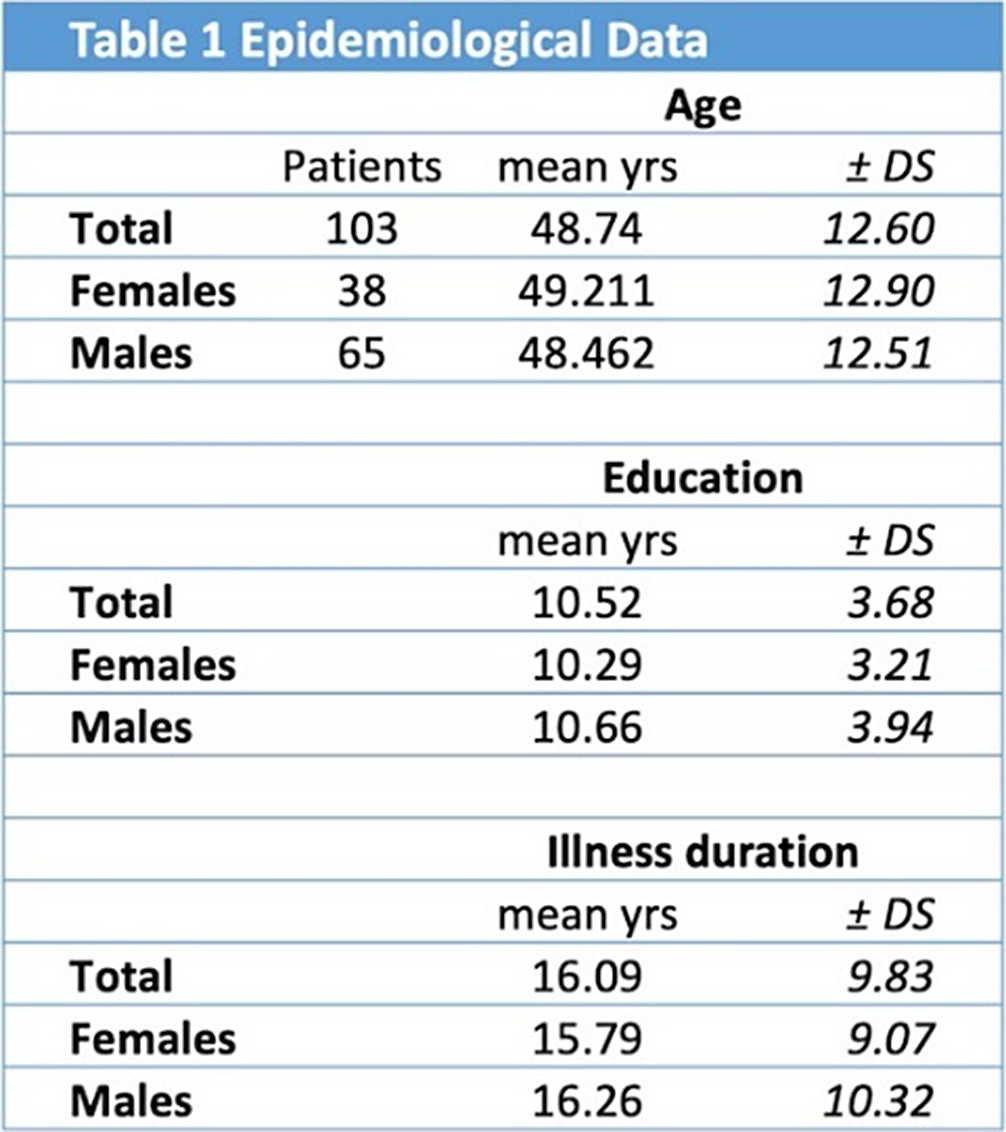
Image 2:
Conclusions
The current trend of research and clinical practice is to give more importance to psychiatric rehabilitation treatment (Franza Psychiatr Danub 2022;34(Suppl 8) 9-13). The results obtained with our observational study indicate the possible usefulness of indicators of patient well-being, as well as the RAS-DS in the management of psychiatric rehabilitation programs. The expectations, indications, and perceptions of psychiatric patients can be decisive in improving recovery.
Borderline personality disorder (BPD) is associated with excess suicide risk, natural-cause mortality, comorbid medical conditions, poor health habits and stress related epigenomic alterations. This presentation will report findings of BDNF and stress system associated epigenetic alterations in a group of severely impaired BPD and suicidal patients. Further, findings of GrimAge – a state-of-the-art epigenetic age (EA) estimator- in patients with BPD and attempted suicide patients will be presented. Genome-wide methylation patterns were measured using the Illumina Infinum Methylation Epic BeadChip in whole blood from well characterized 97 BPD patients, 88 suicide attempters and 32 healthy controls.
The presence of psychiatric comorbidity significantly impacts the quality of life for patients and often goes unnoticed within the realm of neurology.
Objectives
This study’s objective was to elucidate and characterize psychiatric comorbidity among patients hospitalized for neurological disorders in mainland Portugal.
Methods
This retrospective observational study analyzed hospitalizations categorized with a primary diagnosis of neurological disorders, defined by Clinical Classification Software (CSS) for ICD-9-CM codes 76, 77, 79-85, 95, and 109, occurring in adult patients (≥18 years) between 2008 and 2015. Psychiatric comorbidity was determined by the presence of secondary diagnoses falling under CCS categories 650-670.
Results
A total of 294,806 hospitalization episodes were documented with a primary diagnosis of neurological disorders in adult patients between 2008 and 2015 in Portuguese public hospitals. Approximately 26.9% (n=79,442) of these episodes were associated with documented psychiatric comorbidity (22.1% for female hospitalizations and 32.2% for male hospitalizations). Patients with recorded psychiatric comorbidity were younger (66.2±16.2 vs. 68.6±17.2 for those without psychiatric comorbidity, p<0.001), exhibited a lower overall in-hospital mortality rate, and experienced significantly longer mean hospital stays. Among these comorbidities, ‘Delirium, dementia, amnestic, and other cognitive disorders’ were documented in 7.4% (n=21,965) of hospitalizations, followed by alcohol-related disorders in 6.5% (n=19,302) and mood disorders in 6.1% (n=18,079). Epilepsy/seizures had the highest recorded psychiatric comorbidity rate among neurological disorders (39.9%).
Conclusions
Psychiatric comorbidity is present in more than a quarter of hospitalizations with a primary diagnosis of neurological disorders. The prevalence of psychiatric comorbidity varies across different neurological disorders and is associated with distinct demographic and clinical characteristics.
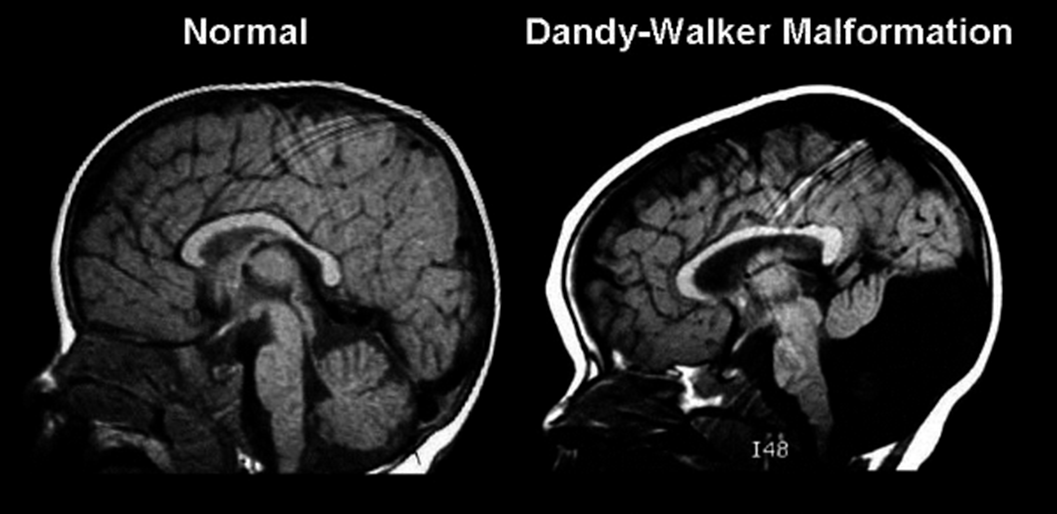
A clinical case is presented of an 18-year-old woman diagnosed with Dandy-Walker malformation, who is admitted to an Acute Inpatient Psychiatry Unit due to atypical psychotic symptoms, pseudology and aggressive behaviour. After several medication trials, there is a partial response observed with low doses of clozapine, consolidating the improvement afterwards, being referred to an open-door community mental health center because of poor family and social network.
Objectives
Review clinical information about Dandy-Walker malformation and the development of psychiatric disorders, specifically psychotic symptoms, pointing out the peculiarities regarding clinical presentation and treatment management.
Methods
Search in the medical database PUBMED, MEDSCAPE and UPTODATE. Keywords: “Dandy-Walker Syndrome”,” Psychotic Disorders”.
Results
The Dandy-Walker syndrome consists on a cystic dilatation of the fourth ventricle, an abnormally high tentorium and the agenesis of the cerebellar vermis. Cerebellar structures are involved in cognitive, emotional and behavioural processes. This syndrome is related to the development of psychotic and affective disorders, as well as obsessive-compulsive disorder. The clinical presentation is usually atypical, being characterised by an early onset, a family history of psychosis and a high prevalence of cognitive deficit and borderline intelligence. There are no specific drugs recommended for the treatment of these patients, which present a high rate of refractoriness to antipsychotic treatments, together with a greater sensitivity to its side effects. Depending on the clinical presentation it is advisable to focus on the most relevant symptoms to be treated and potential side effects in order to reduce polypharmacy.
Image:
Conclusions
- The Dandy-Walker syndrome is related to a higher risk of psychiatric disorders
- Clinical presentation is usually atypical and in early stages
- There is a high rate of refractoriness and greater sensitivity to treatments
- A specific pharmacological treatment is not recommended and it is recommended to avoid polypharmacy
Pregnancy,postpartum and breastfeeding is a very challenging period in the women’s life. Many shared false beliefs and perceptions about this period can influence a pregnant woman’s sexual life and couple.
Objectives
to explore sexual satisfaction, misconceptions and beliefs about sexuality during pregnancy and postpartum in women.
Methods
It was a cross-sectional study established over a period of 3 months from the June 1st, 2023 to August 31, 2023. This study focused on a population of pregnant postpartum and breastfeeding women recruited from outpatient consultations and inpatient of the obstetric gynecology department at the university hospital of Gabes, Tunisia. We used a pre-established sheet exploring socio-demographic data, medical and gyneco-obstetric history, informations concerning the marital relationship and the woman’s sexual activity and eight questions (yes or no / choosing an option) to explore the beliefs and perceptions about sexuality during pregnancy and postpartum. We administered the validated Arabic version of the Arizona Sexual Experiences Scale (ASEX) to assess sexual functioning.
Results
Fifty-eight women were included. The average age was 35.6±5.5 years, they had a university level in 40% and they were unemployed in 74.2%. They were from an urban origin in 75%. They were pregnant in the first, second and third trimester in (15.6%, 15.6% and 25% respectively). They were in postpartum in 43.8% of cases with a cesarean delivery in 73.3% and breastfeeding in 56%. All women reported being on good terms with their spouses and satisfied with their sexuality. The usual frequency of sexual relations (SR) was (1/day: 22.6%, 1/week: 74.2%, 1/month: 3.2%). Only 3.4% masturbated and 5.17% had sexual fantasies. Among women, 55.1% believed that RS is not allowed in the first trimester, and 67.8% believed that it can harm the baby. Only 25% of women believed that RS is permitted throughout pregnancy. 58.1% believed that RS in the third trimester could induce early delivery, and 30% believed that it could harm the baby. They all believed that post-partum SR is only authorized after 40 days. Among the sample 22.6% believed that SR is not allowed during breastfeeding, and that it can harm the baby in 13% of cases. The mean ASEX score was 13 ± 4.3 and 47% had sexual dysfunction. Regarding the frenquency of SR, 25% reported wanting to reduce the frequency, 3.4% wanting to increase the frequency and 71.6% were neutral.
Conclusions
A better understanding of the misconceptions and beliefs about sexuality during pregnancy and the post-partum period is needed to reduce restriction imposed on sexual activity during a normal pregnancy and to enhance marital harmony and the sexual life of the couple.
Several studies have found that ASD (Autism Spectrum Disorder) and GD (Gender Dysphoria by DSM-V)/GI (Gender Incongruence by ICD-11) tend to co-occur, and in recent years the interest and publications on this comorbidity has increased rapidly.
Objectives
To review the prevalence of ASD in individual with a diagnosis of GD/GI.
To better tailor and improve care offered in the National Health Service (NHS) Gender Identity Clinics (GICs) throughout the UK.
Methods
Systematic literature review was conducted via Pub Med, MEDLINE and PsycINFO by the author, for all English-language articles published between 2018 and 2023, containing keywords as ASD, GD (Gender Dysphoria), GI (Gender Incongruence), transgender, autistic traits, autism, gender diversity, gender variance.
Results
Rate of people with ASD appear to be higher in people accessing Gender Identity Clinics (GICs) than in the general population. Results from this literature review show increased prevalence of GD and GI in ASD population.
Conclusions
This comorbidity has highlighted the importance of better tailor transgender healthcare services for people with neurodevelopmental conditions and neurodiversity, to avoid delay in ASD individuals accessing care and gender affirming medical treatments. Services should strive to provide an effective and equitable service. It is also important to better identify potential barriers for ASD people in accessing gender care. Literature also shows the people with ASD have more difficulties in communicating and describing their gender narrative and to express their wishes for gender treatments. Symptoms including problems in communications and social skills, obsession and rigidity can also impact their assessment of GD/GI in gender identity services. Some studies showed that for individuals who have concurrent ASD and GD/GI, assessment in GICs may be extended to better review their wishes for gender identity and for gender affirming treatment. Further research is needed to better investigate and understand factors explaining the relationship between ASD and gender diversity. There is still limited research in the real life experiences of gender diverse and autistic people. There is also a need to improve Gender reassignment protocol nationally to better care for individual with ASD and GD/GI throughout GICs in the UK.
The prevalence of psychiatric re-admission ranges from 15% to 60%, escalating even more in the first year after admission, affecting the patients’ quality of life. Furthermore, the diagnosis of psychotic or affective disorders represents a risk factor of psychiatric re-admission, highlighting the diagnosis impact to the “profile” of psychiatric hospitalization.
Objectives
To compare the different “Hospitalization Profiles” in association to the patients’ diagnostic categories.
Methods
Overall, 1,633 records of psychiatry inpatients were examined retrospectively throughout the 10-year records of the Psychiatry Department of Papanikolaou General Hospital in northern Greece. The research was conducted between 2013 and August 2023. The sample was divided into subgroups according to gender, diagnoses - according to the International Classification of Diseases (ICD-10)-, and year of hospitalization. A bivariate analysis was performed to examine relationships between the variables: (a.) place of residence; (b.) age; (c.) type of admission; (c.) hospitalization duration; (d.) number of lifetime hospitalizations; (e.) lifetime prosecutor’s orders for coercive examination; (f.) lifetime suicide attempts.
Results
Developmental disorders (F80-89) stood for the youngest average age of hospitalization (26 years) and lowest average hospitalization duration (7 days). Neurodegenerative disorders (F00-09) represented the diagnostic category with the oldest mean age of hospitalization (66 years). Intellectual disorders (F70-79) yielded the longest average hospitalization duration (21 days). Patients with intellectual disorders were found to be facing homelessness at a higher rate (4.76%) than patients of any other diagnostic entity (p=0.096). Psychotic and substance use disorder patients obtained equivalently (p=0.18) the highest rates of coercive hospitalizations (63% and 71%, respectively); compared to other diagnostic categories (p=0.0008). Dual diagnosis and anxiety disorders projected equivalently (p=0.9) the highest rate of premature voluntary discharge (6.9% and 6.4%, respectively). Dual diagnosis, personality disorders, and affective disorders also recorded the highest rates of suicidality (11-15%; with no significant statistical difference among the three diagnostic entities p>0.1) among hospitalized patients of all diagnostic categories (p<0.05).
Conclusions
Interestingly, the study’s results reveal the pathologies of the Greek society, with the most representative example being this of patients suffering from intellectual disorders simultaneously presenting the highest risk of homelessness. Further studies are needed, focusing on the sub-populations of psychiatric patients as well as their status in terms of social security, health care providing, quality of life and life expectancy.
Pregnancy and the postpartum period involve several physiological adaptations crucial for offspring care. Recent research has highlighted reproduction-related brain plasticity in human mothers. Associations with aspects of maternal caregiving suggest adaptive changes that facilitate a woman’s transition to motherhood. However, the dynamic changes that affect a woman’s brain are not merely adaptive, and they likely confer a vulnerability for the mental disorders. To elucidate the pathophysiology of psychiatric problems that occur during the perinatal period, gaining insights into the physiological changes in brain function due to pregnancy is crucial.
Objectives
Although it has been hypothesized that pregnancy enhances social cognitive functions in mothers to adapt to the offspring care, there are few reports to support this hypothesis. This study aims to investigate whether social cognitive functions change during the first pregnancy, with a focus on maternal adaptation to offspring care.
Methods
The study included a first pregnancy group and a never-pregnant control group. We conducted a prospective study comparing pregnant women between two-time points (T1, T2); at less than 21 weeks of gestation [T1] and those after 30 weeks of gestation [T2]. To assess the effects of pregnancy and gestational age (< 21 weeks or 30 weeks or more), both the control (never-pregnant) group and pregnant group were evaluated at two time points with similar intervals. The Emotion Recognition Task [ERT] of the Cambridge Neuropsychological Test Automated Battery (CANTAB) was performed to examine the emotion recognition of six basic emotions in facial expressions. We analyzed a cohort of 26 participants in the pregnant group and 25 in the control group. We performed a two-way repeated measures analysis of variance with pregnancy status and gestational period (T1, T2) as independent variables.
Results
Significant interactions between group and time points (T1, T2) were observed only for Unbiased Hit Rate Anger (p<0.01); facial recognition accuracy for anger increased with the progression of pregnancy. There were no significant interactions for Unbiased Hit Rate Sadness, Happiness, Fear, Disgust, or Surprise.
Conclusions
This is the first study to demonstrate that facial recognition of anger enhances with the progression of pregnancy, utilizing never-pregnant women as a never-pregnant control group. The results of this study contribute to the physiological effects of pregnancy on the brain and cognitive function and have potential for further study of perinatal mental health problems.
According to the American Psychiatric Association’s Diagnostic and Statistical Manual of Mental Disorders, Fifth Edition (DSM-5), post concussive syndrome (PCS) is given a diagnosis of either major or mild neurocognitive disorder (NCD) due to traumatic brain injury TBI. However Persistent post-concussion symptoms (PPCS) are more complex, and typically involve multidisciplinary assessment and management. The symptoms are varied, non-specific and the therapeutic process is defiant for psychiatrist.
Objectives
To investigate the semiology of persistent post-concussion syndrome (PPCS) and the therapeutic challenges it poses.
Methods
A literature review was made on Pubmed, Google Scholar and Cochrane library using keywords: “post-concussive syndrome”,”psychiatric disorder”, “depression”,”post-traumatic stress disorder”,”treatment”, “physiopathology”.
Results
The physiopathology of persistent PCS is controversy.The Symptoms are due to the Concept of “Symptom Generators” which results from the alterations in neurophysiology and neuropathology secondary to the injury, and pre- or post-injury psychological factors physiological concussion. The Global cerebral metabolic disturbance, the autonomic nervous system dysfunction and the cerebral blood flow dysregulation induce biochemical cascade,excitotoxic reaction and immunotoxicity.
Clinical diagnoses associated with PPCS are:Major depressive disorder,Post traumatic stress disorder,Anxiety disorder,Substance abuse disorder,Psychotic disorder and Antisocial personality disorder. For the non pharmacological management: A systematically early information and a graded physical exercise in addition to other treatment are essential.
Antidepressant, benzodiazepine and mood-stabilizer are the most recommended treatments for psychiatric symptoms. Atypical neuroleptics are indicated in delirant disorder, behavior disorder and antisocial personality disorder.Some studies suggest the methylphenidate and biperiden to treat several cognitive impairment and severe behavior disorder.
Conclusions
(PPCS) is far from being a subjective complaint by patients. It is a complex clinical entity that groups symptoms that overlap with other psychiatric diagnoses, such as depression, post-traumatic stress disorder, and mood disorders. Early neuropsychiatric assessment and personalized pharmacological and psychotherapeutic treatment are essential factors in the prognosis of the disease.
Fatty acids omega-3 are irreplaceable. They stabilize cell membranes, nerve impulses, homeostasis, immune reactions, the birth process, the psycho-emotional state of the fetus-mother dyad. Correlations between adequate dietary intake of omega-3 and cognitive health have been described in detail. According to the literature, docosahexaenoic acid is associated with the synthesis of serotonin, dopamine, acetylcholine, glutamate, neuroprotective and anti-apoptotic action, has antidepressant effect. Omega-3 makes up 60% of neuronal membrane phospholipids. Under clinical aspect,according to publications, fish oil reduces the risk of preterm birth by 44%.
Objectives
The aim is to study the risks and benefits of using omega-3 during pregnancy and lactation in patients with mental disorders.
Methods
Comparative analysis of evidence-based scientific publications for the use of omega-3 fatty acids in pregnancy and lactation.
Results
The body level of omega-3 depends on the quantitative intake from food, as well as gene polymorphism and age. For pregnant and lactating women are recommended 200-300 mg per day or about 300 g per week from food. Deficiency of omega-3 (protectins) affects the processes of myelination, neurogenesis, synaptogenesis, the metabolism of neurotransmitters, cell differentiation, neuronal migration and inflammatory responses.
Conclusions
There are many probably mechanisms of action of omega-3, namely: Enhances peroxisomal oxidation, reduces the synthesis of triglycerides in the liver; inhibits plasma acyltransfrerase. Omega-3 acts on phospholipids of the cell membranes of the nervous system and retina, their adequate functioning, improve psychomotor development of newborns. It was found the effect of decreasing the levels of cytokines and depressive symptoms, as well the risk of food allergies and depression. In conclusion, in adequate doses, omega-3 fatty acids seems to be useful in deficiencies and for prophylactic purposes in pregnancy and lactation.
