Refine listing
Actions for selected content:
142464 results in Open Access
Anorexia nervosa and hyperphagic episodes : About five clinical cases
-
- Journal:
- European Psychiatry / Volume 67 / Issue S1 / April 2024
- Published online by Cambridge University Press:
- 27 August 2024, p. S556
-
- Article
-
- You have access
- Open access
- Export citation
The Effects of a Chatbot-Based Interpretation Bias Modification on Early Adulthood Depression
-
- Journal:
- European Psychiatry / Volume 67 / Issue S1 / April 2024
- Published online by Cambridge University Press:
- 27 August 2024, p. S532
-
- Article
-
- You have access
- Open access
- Export citation
Acute obsessive symptoms: case report of a PANDAS-like syndrome in an adult patient.
-
- Journal:
- European Psychiatry / Volume 67 / Issue S1 / April 2024
- Published online by Cambridge University Press:
- 27 August 2024, pp. S356-S357
-
- Article
-
- You have access
- Open access
- Export citation
Physical healthcare gap among patients with severe mental illness through the COVID-19 pandemic. Preliminary results from a real-world investigation in Lombardy, Italy
-
- Journal:
- European Psychiatry / Volume 67 / Issue S1 / April 2024
- Published online by Cambridge University Press:
- 27 August 2024, pp. S83-S84
-
- Article
-
- You have access
- Open access
- Export citation
Personalized assessment of the effectiveness of psychosocial rehabilitation: an innovative approach based on the process of analytical hierarchy
-
- Journal:
- European Psychiatry / Volume 67 / Issue S1 / April 2024
- Published online by Cambridge University Press:
- 27 August 2024, p. S189
-
- Article
-
- You have access
- Open access
- Export citation
The bifactor model of the Hungarian self-report version of the Strengths and Weaknesses of ADHD and Normal Behaviors scale
-
- Journal:
- European Psychiatry / Volume 67 / Issue S1 / April 2024
- Published online by Cambridge University Press:
- 27 August 2024, pp. S75-S76
-
- Article
-
- You have access
- Open access
- Export citation
Lymphocyte level and selected cognitive functions in patients with schizophrenia – preliminary results
-
- Journal:
- European Psychiatry / Volume 67 / Issue S1 / April 2024
- Published online by Cambridge University Press:
- 27 August 2024, p. S764
-
- Article
-
- You have access
- Open access
- Export citation
-
Introduction
Schizophrenia is a mental disorder characterized by negative symptoms, such as cognitive impairment. Recent reports indicate the importance of the immune system in the pathophysiology of schizophrenia. The development of inflammation affects cognitive functioning.
ObjectivesThe aim of the study was to analyze the association between the level of lymphocytes in venous blood and selected cognitive functions in patients with schizophrenia.
MethodsLymphocyte levels were determined in the venous blood of patients suffering from schizophrenia and the control group. Additionally, a verbal fluency test (VFT) and a Stroop test were conducted on the same day. The VFT evaluates the ability to express words, and the Stroop test assesses verbal working memory. The inclusion criteria were age up to fifty years, and for the study group – diagnosis of schizophrenia and treatment with neuroleptics. Exclusion criteria included organic brain diseases, electroconvulsive therapy, and use of benzodiazepines within 48 hours before the study. Currently, six patients and six healthy people have been studied.
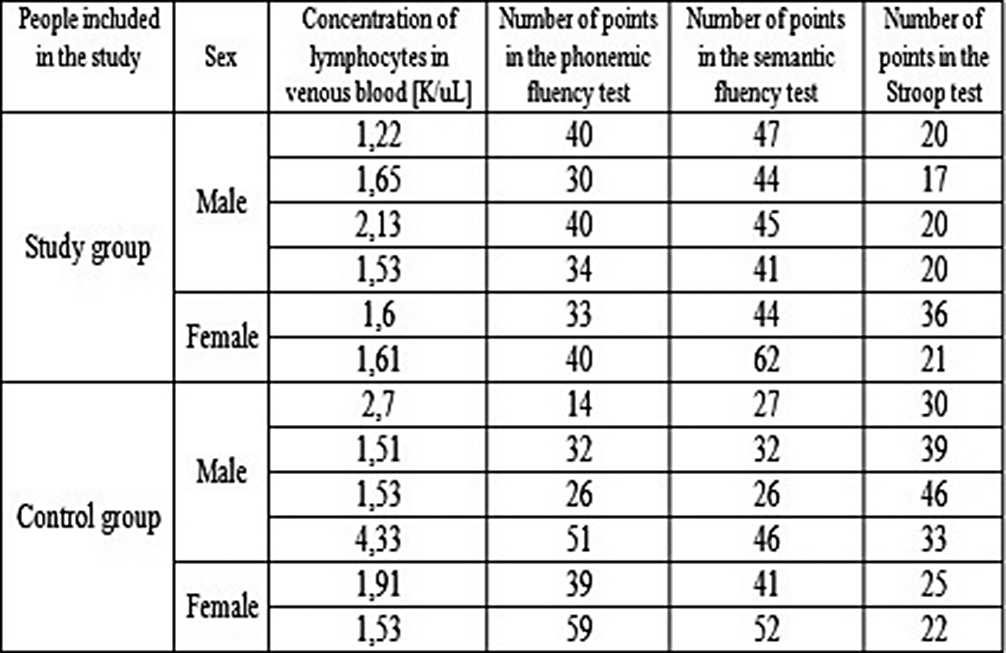
ResultsPatients diagnosed with schizophrenia have an increased lymphocyte concentration in the blood compared to healthy individuals constituting the control group. There are discrepancies in the results of the phonemic fluency test, no significant differences were found between schizophrenics and the control group. Healthy men and women achieved higher results in the semantic fluency test compared to men and women with schizophrenia. Women constituting the control group achieved higher results in the Stroop test compared to women suffering from schizophrenia. Table 1 illustrates the concentration of lymphocytes in venous blood and the number of points in the phonemic fluency test, semantic fluency test, and in the Stroop test of the study and the control groups.
Image:
 Conclusions
Patients with schizophrenia are characterized by higher levels of immune system parameters and worse results in terms of semantic fluency. Men with schizophrenia showed no verbal working memory deficits. In turn, women with schizophrenia obtained worse results in the verbal working memory test. In conclusion, there is evidence of immune system activation in schizophrenia, which affects the cognitive functioning of patients.
Disclosure of InterestNone Declared
Features of cognitive functions in generalized anxiety disorder: narrative review
-
- Journal:
- European Psychiatry / Volume 67 / Issue S1 / April 2024
- Published online by Cambridge University Press:
- 27 August 2024, pp. S424-S425
-
- Article
-
- You have access
- Open access
- Export citation
Korean Medication Algorithm Project for Bipolar Disorder 2022: Treatment Strategy According to Safety and Tolerability
-
- Journal:
- European Psychiatry / Volume 67 / Issue S1 / April 2024
- Published online by Cambridge University Press:
- 27 August 2024, pp. S588-S589
-
- Article
-
- You have access
- Open access
- Export citation
Role of mental health and quality of life in adherence and effectiveness of a motivational exercise program to improve weight and functionality: “The way to change diabetes”.
-
- Journal:
- European Psychiatry / Volume 67 / Issue S1 / April 2024
- Published online by Cambridge University Press:
- 27 August 2024, pp. S492-S493
-
- Article
-
- You have access
- Open access
- Export citation
-
Introduction
Exercise and other lifestyles are key treatment strategies to improve diabetes outcome, prevent cardiovascular risk and may also result in further results in quality if life and emotional symptoms.
ObjectivesTo evaluate the effectiveness of an exercise intervention program for people with diabetes or cardiovascular risk.
To evaluate the influence of previous metal health and quality of life status in the results.
Methods61 people with a type 2 diabetes or cardiovascular risk factors were recruited from health primary health centers in Ponferrada (EL Bierzo), including patients from the mental health association. After informed consent they were included in a 20 week, twice a week supervised walking training program to improve exercise and other lifestyles. A poster used for advertisement of the adtivity (“the way/walk to change diabetes”) is displayed in image 1). Baseline and after 20 weeks BMI and Waist perimeter were assessed, quality of life was evaluated with EQ-5D-5L and WHO-5 scales and the weekly steps walked were recorded previously and after the intervention with the subject usual mobile device.
Differences in the variables were compared with Paired Ts and repeated ANCOVAs measures adjusted by gender, age and initial steps.
Results46 subjects (75.4%) completed more than 90% of the sessions and 3 more 70-90%. The 19.7% that did not complete had worse scores in SF-12 Role Physical (t 2.261, p=0.041) and Role Emotional (t:2.048, p=0.045) and Mental Component Summary (t:2,313; p=0,036) and WHO5 Total Score (t:2.101; p=0,040) at Baseline. Main reasons for dropout (Image 2) were health related problems (50%) and adherence to exercise and motivation problems (31.25%).
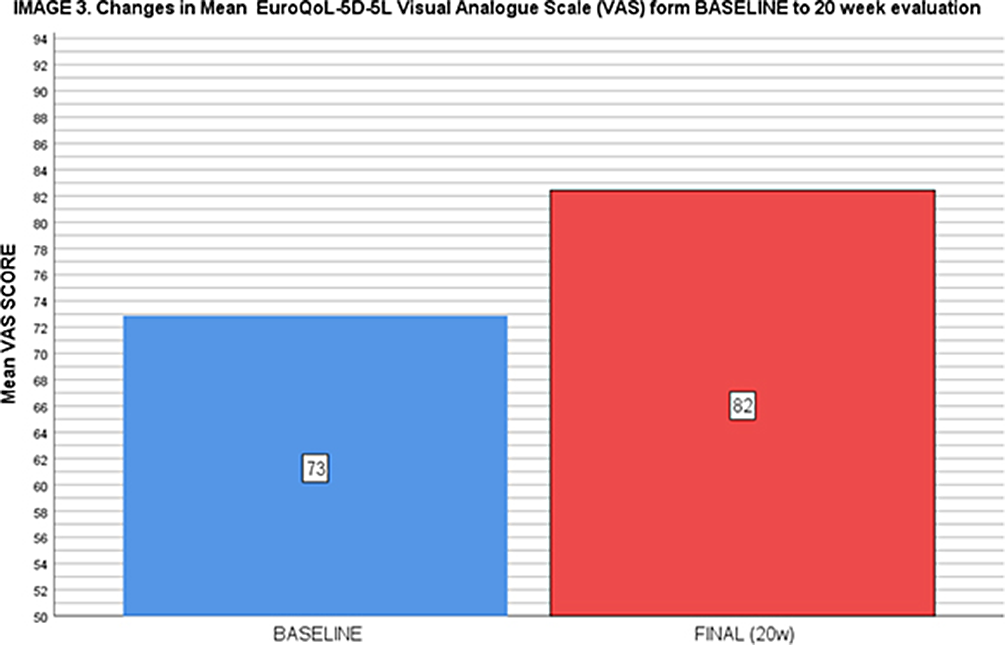
Those who completed the training improve number of weekly steps (baseline: 42022,92 +- 18836,35, final: 66448.06 +-28914,58; t:5.038; p<0.001), BMI (29.45 +-4.66 to 28.25 +-4.09 kg/m2; t:5.629; p<0.001), waist (from 107,34 + 9.98 to 102,88 +9,79 cm; t:6,840; p<0.001) and the EoQ-5D-EL VAS (form 72.88 to 82.42; t:6.122; p<0.001, image 3). The increase in the steps correlated directly with the improvement in the EoQ VAS (r:0.308; p=0.033).
Image:
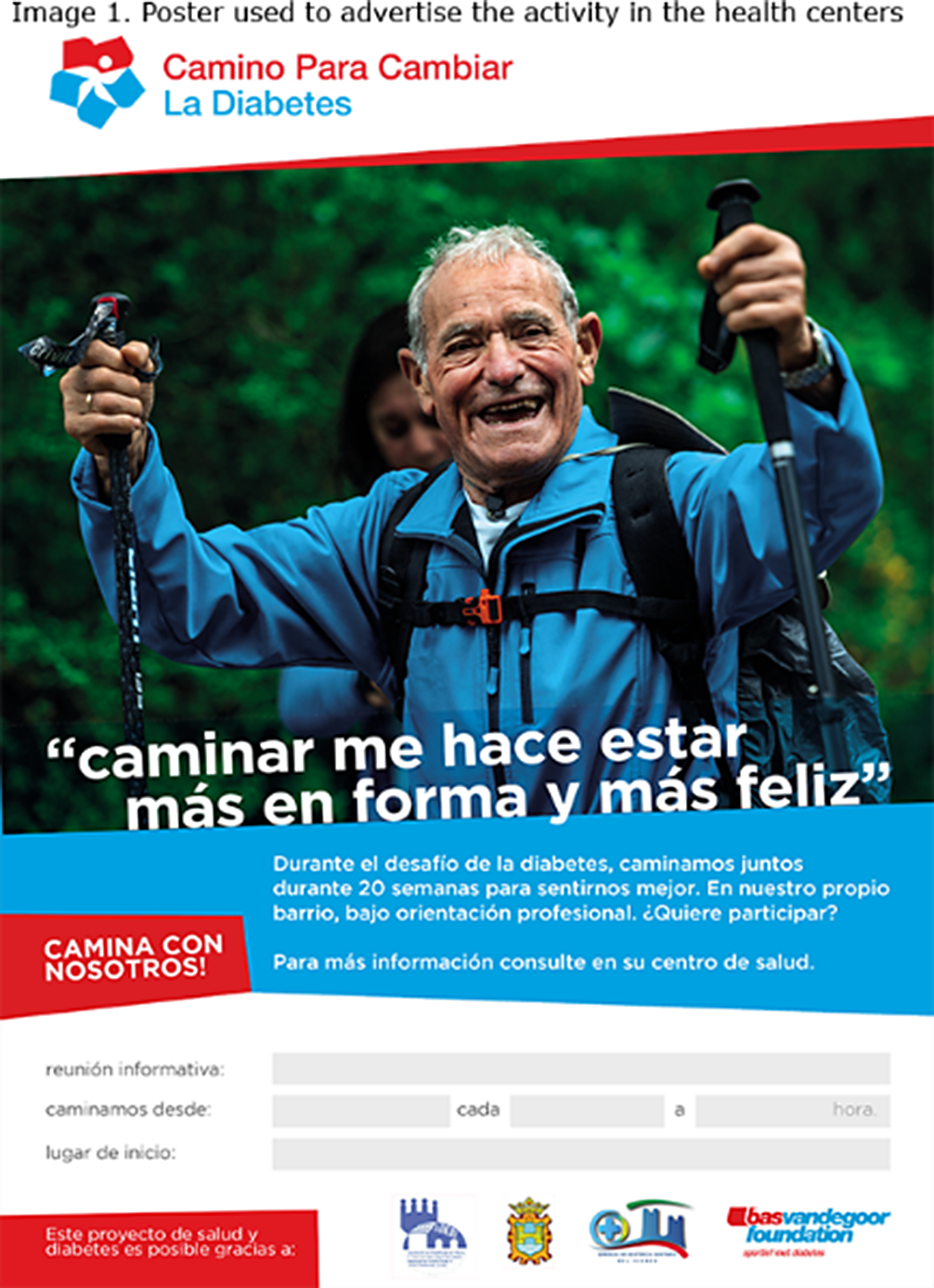
Image 2:
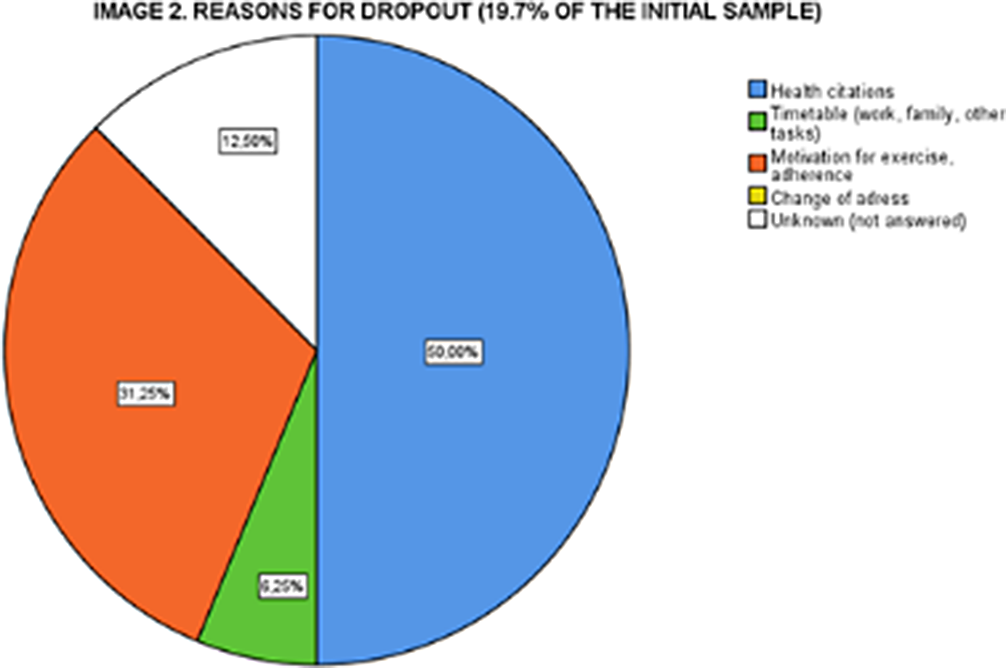
Image 3:
 Conclusions
Exercise and lifestyle supervised intervention programs appear to be useful to improve physical health, wellbeing, emotional symptoms and quality of life in people with diabetes and cardiovascular risk.
Factors associated to higher dropout rates were previous limited quality of life scores and mental health worse status. These could be related with limited motivation and adherence to the program and may be of interest to develop specific strategies for these high-risk groups.
Studies focused on the long-term effect of the program are warranted.
Disclosure of InterestNone Declared
EPA volume 67 issue S1 Front cover and matter
-
- Journal:
- European Psychiatry / Volume 67 / Issue S1 / April 2024
- Published online by Cambridge University Press:
- 27 August 2024, pp. f1-f6
-
- Article
-
- You have access
- Open access
- Export citation
Characteristics of Single vs. Multiple Suicide Attempters Among Adult Population: A Systematic Review and Meta‑Analysis
-
- Journal:
- European Psychiatry / Volume 67 / Issue S1 / April 2024
- Published online by Cambridge University Press:
- 27 August 2024, pp. S787-S788
-
- Article
-
- You have access
- Open access
- Export citation
Psychiatryai.com: Real-Time AI Scoping Review (RAISR 4D) in Psychiatry and Mental Health with Live Real-World Evidence and CPD/CME for Psychiatrists
-
- Journal:
- European Psychiatry / Volume 67 / Issue S1 / April 2024
- Published online by Cambridge University Press:
- 27 August 2024, pp. S178-S179
-
- Article
-
- You have access
- Open access
- Export citation
-
Introduction
Psychiatryai.com was launched in 2021 and initial findings were published at EPA 2023. The portal is an advanced computing science project in Applied Data Science and Evidence-Based Healthcare for my MSc studies at the University of Oxford (Kellogg College). Artificial Intelligence (AI) and Data Science (DS) technology are utilised to analyse live Real-World Evidence (RWE) in Psychiatry and Mental Health from PubMed to provide CPD/CME online. A two-year review of the site and its performance will be presented to EPA 2024.
ObjectivesTo develop and study an experimental real-time AI and DS platform in Global Mental Health and Psychiatry, to provide the latest RWE from PubMed for online education and training, and to report findings to EPA 2024 for peer review in Budapest. AI and misinformation are newly identified risks in healthcare (AI Safety Summit 2023). The site also aims to raise awareness about “Aiatrogenesis” to address this problem, with RWE and CPD/CME utilising AI and DS technology for the categorisation and meta-analysis of evidence, rather than the production of possibly misleading or false Generative AI evidence (Monteith et al. BJP 2023; 1-3).
MethodsAs reported to EPA 2023 in Paris, a free open-code WordPress site was launched on the 22nd of November 2021 (Psychiatryai.com). The portal has been further developed and now features over 90k pages comprising 7GB of data with Cloudflare security and speed. Live evidence is collected into an open database and research articles are categorised into evidence nodes with AI. The results are presented in a real-time Evidence Matrix and Blueprint, creating 15-minute CPD/CME reflection modules. Data analytics from Psychiatryai.com with Google Analytics (G4A) along with platform insights from two years of development and research will be presented to EPA 2024. The site is conceptualised and designed to be viewed in an interactive VR headset.
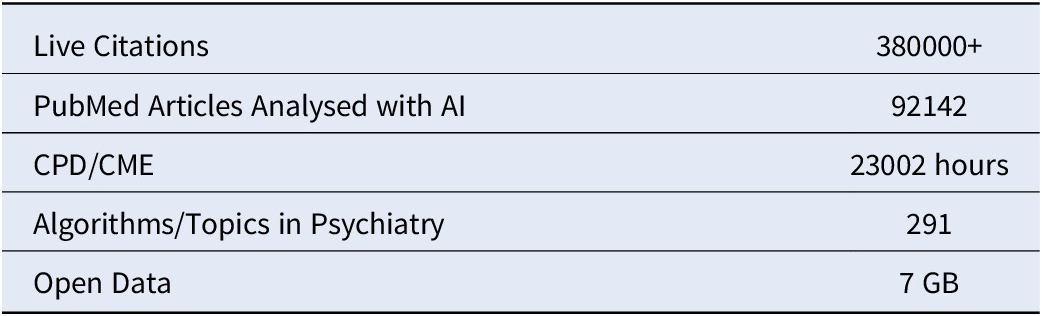
ResultsLive Citations 380000+ PubMed Articles Analysed with AI 92142 CPD/CME 23002 hours Algorithms/Topics in Psychiatry 291 Open Data 7 GB Image:

Image 2:
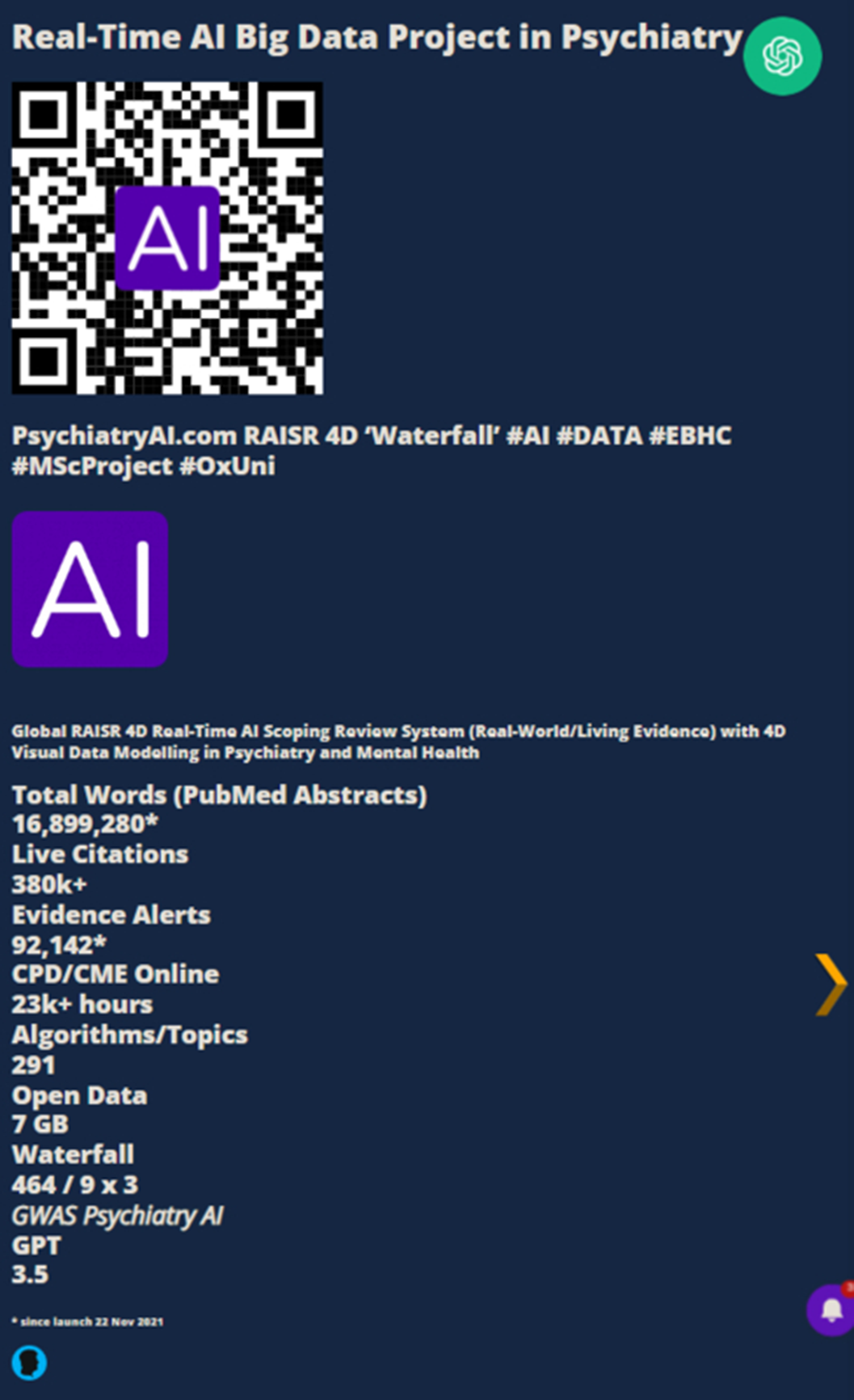
Image 3:
 Conclusions
Psychiatryai.com has successfully developed a novel AI and DS platform that incorporates the latest research in mental health and psychiatry, providing real-world evidence (RWE) for psychiatrists and healthcare professionals worldwide, along with CPD/CME online. This enhances hypothesis testing in research by presenting a related Evidence Matrix and Blueprint (from the last 365 days) for each evidence node on the site (RAISR 4D). These matrices provide a real-time visual table (8 x 8 / 64) of global research related to the evidence node in the preceding year. The site is VR-ready and has a special focus on AI and Psychiatry, Disaster and Traumatology Sciences, and Youth Mental Health. This project is dedicated to the memory of Dr Denis O’Leary and Dr Navin Venkatraman.
Disclosure of InterestNone Declared
Introduction and overview of offenders with intellectual disabilities
-
- Journal:
- European Psychiatry / Volume 67 / Issue S1 / April 2024
- Published online by Cambridge University Press:
- 27 August 2024, p. S29
-
- Article
-
- You have access
- Open access
- Export citation
Unlocking insights from actigraphy: examining feature selection and activation detection approaches for enhanced data interpretation
-
- Journal:
- European Psychiatry / Volume 67 / Issue S1 / April 2024
- Published online by Cambridge University Press:
- 27 August 2024, p. S766
-
- Article
-
- You have access
- Open access
- Export citation
Reaching the limits of antipsychotic treatment: the upper end of severe schizophrenia in forensic institutions - a case report
-
- Journal:
- European Psychiatry / Volume 67 / Issue S1 / April 2024
- Published online by Cambridge University Press:
- 27 August 2024, p. S583
-
- Article
-
- You have access
- Open access
- Export citation
Analysis of drug-drug interactions in spontaneous adverse drug reaction reports from EudraVigilance focusing on psychiatric drugs and somatic medication
-
- Journal:
- European Psychiatry / Volume 67 / Issue S1 / April 2024
- Published online by Cambridge University Press:
- 27 August 2024, p. S346
-
- Article
-
- You have access
- Open access
- Export citation
Neuropsychiatric symptoms in frontotemporal dementia: a case report
-
- Journal:
- European Psychiatry / Volume 67 / Issue S1 / April 2024
- Published online by Cambridge University Press:
- 27 August 2024, p. S641
-
- Article
-
- You have access
- Open access
- Export citation
The link between early life stress and psycho-cardio-metabolic multi-morbidity: Findings from The EarlyCause Consortium
-
- Journal:
- European Psychiatry / Volume 67 / Issue S1 / April 2024
- Published online by Cambridge University Press:
- 27 August 2024, p. S10
-
- Article
-
- You have access
- Open access
- Export citation
Certain immune parameters may have a significant impact on suicidal behaviour - a naturalistic study among psychiatric in-patients
-
- Journal:
- European Psychiatry / Volume 67 / Issue S1 / April 2024
- Published online by Cambridge University Press:
- 27 August 2024, pp. S349-S350
-
- Article
-
- You have access
- Open access
- Export citation
