To save content items to your account,
please confirm that you agree to abide by our usage policies.
If this is the first time you use this feature, you will be asked to authorise Cambridge Core to connect with your account.
Find out more about saving content to .
To save content items to your Kindle, first ensure no-reply@cambridge.org
is added to your Approved Personal Document E-mail List under your Personal Document Settings
on the Manage Your Content and Devices page of your Amazon account. Then enter the ‘name’ part
of your Kindle email address below.
Find out more about saving to your Kindle.
Note you can select to save to either the @free.kindle.com or @kindle.com variations.
‘@free.kindle.com’ emails are free but can only be saved to your device when it is connected to wi-fi.
‘@kindle.com’ emails can be delivered even when you are not connected to wi-fi, but note that service fees apply.
Bipolar Disorder (BD) is a severely debilitating psychiatric disorder with high rates of morbidity and mortality, and patients with BD have a 10-year reduction in their life expectancy. Bipolar disorder (BD) is frequently associated with type 2 diabetes mellitus (T2DM). BD patients with comorbid T2DM have been shown to have three times higher odds of a chronic course and rapid cycling and are more likely to present worse outcomes to treatment with lithium and/or other mood stabilisers when compared to BD patients without IGM (impaired glucose metabolism).
Objectives
The functioning of the hypothalamic-pituitary-adrenal (HPA) axis has been never investigated in BD with respect to the glucose metabolic status. Therefore, we assessed the cortisol awakening response (CAR) in bipolar patients with or without comorbid T2DM.
Methods
Twenty euglycemic bipolar patients [12 males and eight females; mean age (±SD): 47.4 ± 14.4 years; mean (±SD) duration of illness: 18.3 ± 12.1 years], 16 BD patients with T2DM [11 males and five females; mean age (±SD): 63.6 ± 12.8 years; mean (±SD) duration of bipolar illness: 17.1 ± 10.8 years; mean (±SD) duration of T2DM: 5.2 ± 5.3 years], 18 healthy subjects [seven males and 11 females; mean age (±SD): 45.0 ± 12.1 years] and 12 non-psychiatric subjects with T2DM [eight males and four females; mean age (±SD): 56.7 ± 11.2 years; mean (±SD) duration of T2DM: 5.2 ± 3.5 years] were recruited. Saliva cortisol was measured at awakening and after 15, 30, and 60 min.
Results
With respect to both healthy controls and controls with T2DM, euglycemic and diabetic BD patients exhibited a CAR occurring at significantly lower levels. No significant difference emerged in the CAR between the two groups of bipolar patients. Controls with T2DM had an overall post-awakening cortisol production significantly higher than healthy controls.
Conclusions
Our results show that the CAR of patients with BD is reduced in terms of overall cortisol production but normal in terms of cortisolo reactivity independently from the occurrence of comorbid T2DM. The dampened CAR points to a tuning down of the functioning of the HPA axis in both euglycemic and diabetic BD patients, which may be a factor of vulnerability, since a preserved HPA axis functioning is essential to deal with stressors, which may precipitate affective episodes
Smoking among university professionals could influence student smoking behavior, making it important to understand the associated factors to prevent this phenomenon.
Objectives
To determine the prevalence of smoking among University staff in Sfax, Tunisia, and identify its associated factors.
Methods
We conducted a cross-sectional survey using a self-administered questionnaire distributed to 100 university staff. The questionnaire included socio-professional characteristics, assessment of physical workload using the Borg CR-10 scale, and evaluation of nicotine dependence using the Fagerström test.
Results
Our study included 62 participants, with 67.7% of them being women. Active smoking was reported by 50% of male participants. We observed symptoms of severe to very severe depression, anxiety, and stress in 6.4%, 22.5%, and 9.7% of our participants, respectively. Nicotine dependence, as assessed by the Fagerström test, was high to very high in half of the smokers. Bivariate analysis indicated a significant association between smoking and male gender, perceived workload (33.9%), and body mass index.
Conclusions
Smoking among university staff is a prevalent phenomenon, especially among male participants. The association of smoking with perceived workload suggests the need for preventive measures to reduce these physical constraints. It is paramount to take actions to encourage smoking cessation among university staff.
Transcendental cinema, distinguished from slow cinema by Paul Schreader, draws on the philosophy of existentialism and depicts the complexity of the human psyche using psychoanalytic tools. We claim that through the use of special procedures, the projection of transcendental cinema essentially becomes a meditation session in the spirit of mindfulness, which has been proven to alleviate and cure more than just neuropsychiatric ailments.
Objectives
The purpose of this work is to demonstrate the similarity between mindfulness philosophy and transcendental cinema. We believe that the assumptions of both currents are so similar that we can treat the film screening in the category of a meditation session. Thus, we arrive at a situation in which we not only watch the protagonist developing his own consciousness in accordance with the mindfulness philosophy (also following the path of psychoanalysis), but also we, as viewers, develop self-awareness.
Methods
We analyze D. Lynch’s Twin Peaks series in accordance with Paul Schrader’s understanding of ‘transcendental cinema’. In addition, we use the scientific achievements of classical psychoanalysts, analyzing the metaphysical world of the characters in accordance with this trend. Using J. Kabat Zinn’s scientific publications, we analyze cinema in terms of a meditation session.
Results
Participation is crucial; in meditation and in the transcendental cinema. Mindfulness means focusing on the emotions and feelings experienced at a given moment, on what comes to us, what we experience. Transcendental cinema using specific formal and narrative tools (e.g. extended scenes, no cuts, etc.) forces us to actively participate. Transcendental cinema fulfills the tenets of mindfulness, and during the screening we undergo a meditation session. What’s more, this style in cinema allows an in-depth exploration of the psyche, it brings us closer to the metaphysical, emotional dimension of humanity what develops in us the ability to understand the psyche of others, as well as our own.
Conclusions
We claim that the similarity between the philosophy of mindfulness and transcendental cinema allows us to treat a film screening as a meditation session. Cinema enriches us not only with knowledge about disorders and the therapeutic process, but is in itself a supportive tool - screening can allow viewers to deepen their awareness and improve their health. What is more, David Lynch’s work brings us closer to exploring the human psyche and the individualization of inner experiences, while also showing us what influence transcendental meditation has on characters and what happens when they undergo a kind of therapy; in the spirit of psychoanalysis or mindfulness philosophy.
Migration has been present in the evolution of human beings throughout history. Economic inequalities give rise to a permanent flow of people trying to improve their lives. In addition, there are people who are forced to seek asylum or refuge due to wars or political violence. Therefore, the migratory flow, gives rise to a clinical scenario in which, the arrival of immigrant people demands an adaptation of the psychiatric paradigm.
Objectives
The objective of this paper is to review the international scientific literature published on the impact of the migration process on mental health.
Methods
We propose a review of the international scientific literature published in recent years on psychiatry and migration.
We present the case of a 27-year-old male, diagnosed with paranoid schizophrenia, who arrived in the Canary Islands after a 2-year migration process from his country of origin (Senegal).
Results
The limits between normality and pathology of certain types of behavior vary from one culture to another.
In the case of a patient with a mental disorder who has undergone a migration process, an approach based on the cultural formulation of the case should be made, taking into account the process of adaptation to the culture of the host country, as well as the impact of the culture of origin on the patient’s interpretation of his or her psychopathology.
Conclusions
Culture can influence the acceptance or rejection of a diagnosis and treatment, affecting the course of the disease and recovery.
Therefore, understanding the cultural context in which the disease is experienced is essential for a good diagnostic evaluation and effective clinical management.
Disclosure of Interest
N. Molina Pérez: None Declared, J. Pereira López: None Declared, M. I. Santana Ortiz: None Declared, P. Rivero Rodríguez: None Declared, A. R. Del Rosario Grant / Research support from: Jansen Pharmaceuticals, Inc., Consultant of: Jansen Pharmaceuticals, Inc.; Lundbeck, Inc., Employee of: Universidad de Las Palmas de Gran Canaria, Speakers bureau of: Jansen Pharmaceuticals, Inc.; Lundbeck, Inc.; Otsuka Pharmaceutical Co.; Pfizer Inc.; Esteve Pharmaceuticals, S.A.; AstraZeneca Pharmaceuticals LP.; Angelini Pharma S.L.U.; Laboratorios Farmacéuticos ROVI SA., M. Grimal: None Declared, V. Acosta Pérez: None Declared
Nurse-patient relationships and interactions during inpatient care evoke feelings of empathy and compassion. Compassion can lead to satisfaction, but also to exhaustion. Compassion fatigue is a commonly used concept that signifies the exhaustion of healthcare personnel due to the specific activities and repeated exposure to the suffering of others. This manifests through physical and emotional over-tiredness, anxiety, anger and irritability, low vitality, social isolation, diminished sense of enjoyment of one’s career, cognitive disorders, and sleep disturbances.
Objectives
To assess the level of compassion of the healthcare staff employed in a Romanian general hospital.
Methods
The study sample included 256 nurses working in a general hospital. To identify socio-demographic data we applied a specific questionnaire, and subsequently we also used the PROQOL scale (Professional Quality of Life Scale). All data were statistically analysed.
Results
The majority of healthcare professionals in our sample belong to the 40-49 age group (39.45%). Regarding work experience in the healthcare system, the majority(43%) have been working for over 10 years. 78.52% of nurses reported a high level of compassion satisfaction. Burnout was not identified in the majority of our sample (54.3%). We noted that the number of the staff affected by compassion fatigue increases proportionally with the years of work experience (P=0.033).
Conclusions
A high level of compassion satisfaction in medical professionals leads to a remarkable improvement in the quality of the healthcare they are providing. However, our study results suggest that compassion fatigue tends to increase in line with the years of work in healthcare
Substance use disorder is a common comorbidity with bipolar disorder, having implications on its diagnosis, treatment adherence, and number of hospitalizations. Understanding the particular characteristics of this population is of the utmost importance to improve clinical outcomes.
Objectives
Our aim is to analyze the sociodemographic characteristics of the patients in the inpatient unit of a tertiary hospital and to reflect on its impact on treatment. Our study looks over a 3-year period, and all patients analyzed have a dual diagnosis of both bipolar disorder and substance use disorder.
Methods
We collected, retrospectively, data from the hospital platform and analyzed it on SPSS Statistics 26, along with a literature review.
Results
In the analyzed period of 3 years, there were 2384 hospitalizations in the Coimbra’s University Hospital psychiatric ward, and 88 hospitalizations were coded with a dual diagnosis of bipolar disorder and substance use disorder.
Regarding gender distribution, 41% of the patients were female and 49% of the patients were male, with a mean age of 47 years.
There were 12 patients who were re-hospitalized once (7 of them were men) and 6 who were re-hospitalized twice (4 of them were men) during the analyzed period.
At the time of hospitalization, 60.5% of male patients were single, 21.1% were divorced, and only 15.8% were married, while female patients were mainly married (35.7%) and only 28.6% were single.
Female patients had more frequent support from social and community institutions (17.9% vs 5.3% in men) while 2.6% of men had no support from family or institutions.
Regarding education, more men accomplished high school education (21.1% vs 17.9% in women) and university education (18.4% vs 14.3%). In our sample, there were 3.6% of women who were illiterate.
During their lifetime, female patients were hospitalized around 5 times and men around 3.7 times, despite the fact that the mean age of female patients on their first hospitalization was 36 years, and in male patients, it was 34 years.
Treatment adherence is more significant in female patients (70.3% vs 69.2% in men), even though women maintain active substance abuse more frequently (42.9 vs 39.5%).
Conclusions
Male and female patients have different backgrounds and different support either in spouses, family, or social institutions. These nuances may play an important role in the number of re-hospitalizations, treatment adherence, and maintenance of abstinence.
Taking these aspects into consideration may help improve clinical outcomes.
Medical students face an enormous amount of stress (Dyrbye LN et al. Ann Intern Med 2008; 149: 334-41). They suffer from higher rates of depression, anxiety, and suicide compared to the general population. Despite experiencing more mental health problems, there is a lack of research exploring ways to improve their mental health. Although there are a few small sample studies investigating the effectiveness of Mindfulness-Based Stress Reduction (MBSR) on medical students, there is no study comparing its effectiveness against an active intervention group in the literature (van Dijk I et al. Acad Med 2017; 92: 1012-1021)
Objectives
We aimed to compare the effects of the Mindfulness-Based Stress Reduction (MBSR) and the Cognitive Behavioural Based Stress Reduction (CBSR) group interventions on depressive and anxious symptoms and perceived stress of medical students.
Methods
323 medical students applied to participate in one of the group interventions and were assessed with the Mini International Neuropsychiatric Interview. Of these, 253 (77% female, mean age=21.9 ± 2.9 years) were allocated into online MBSR (n=127) and online CBSR (n=126) groups after randomization. Their anxiety and depressive symptoms and perceived stress levels were assessed at baseline and after 8 weeks of interventions. 33,2% of participants (MBSR: n=39; CBSR: n=45) completed the protocol by attending five or more sessions. Both intention-to-treat (ITT) analysis and per-protocol (PP) analysis were used to assess outcomes. In the ITT analysis, we used multiple imputation to address missing values. All assessments and group interventions were done online.
Results
In the ITT analysis, both MBSR and CBSR were found to be slight to moderately effective in reducing symptoms of depression (MBSR: d=.50; CBSR: d=.40), anxiety (MBSR:d=.73; CBSR: d=.52), and perceived stress (MBSR: d=.48; CBSR: d=.42), but they were no superior to each other. In the PP analysis, both interventions moderately to strongly improved the symptoms of depression (MBSR: d=1.03; CBSR: d=.74), anxiety (MBSR: r=-.74; CBSR: r=-.72), and perceived stress (MBSR: r=-.80; CBSR: r=-.68). While there was no statistically significant difference between them in reducing depressive symptoms and perceived stress, MBSR was found to be significantly more effective than CBSR in reducing anxiety symptoms (u=469, z=-2.756, p=0.006).
Conclusions
Both MBSR and CBSR improve symptoms of depression and anxiety in medical students after 8 weeks of interventions. Completing the protocol or attending more sessions may increase the effectiveness of the interventions. While the interventions did not show superiority to each other in terms of effectiveness in reducing depressive symptoms and perceived stress, MBSR appears to be more effective in reducing anxiety symptoms compared to CBSR in the group that completed the protocol.
Attention-deficit/hyperactivity disorder (ADHD) is one of the most prevalent chronic neuropsychiatric disorders in children and adolescents; however, it continues into adulthood in 4-77% of the cases. Due to executive dysfunction, adults with ADHD may have deficits in personal strengths, as well as difficulties utilizing existing strengths in challenging situations, which may add to the functional impairments associated with ADHD in adults.
Objectives
Therefore, we aimed to explore the association between personal strengths and ADHD symptoms in a community sample of adults.
Methods
Five hundred and twenty-eight adults (mean age = 21.41 years, SD = 2.29, range: 18 ̶ 28, female: N = 488, 92.4%) filled out an online questionnaire after giving their informed consent. Personal strengths were assessed using Bernstein’s Strengths Scale (BSS) which measures sixteen positive attributes grouped into four higher-order factors: self-directedness (Identity, Self-reflection, Self-confidence, Self-assertion, Imagination/Creativity), self-regulation (Emotional balance, Resilience, Self-control, Self-care, Reality testing), connection (Empathy, Compassion, Humour, Responsibility), and transcendence (Gratitude and Wisdom). ADHD symptoms were measured by the screening version (Part A) of the Adult ADHD Self-Report Scale (ASRS).
Results
Participants who were screened positive in ASRS (N = 247, 46.7%) scored lower in all but four BSS subscales than participants who were screened negative (N = 280, 53.3%). Effect sizes reached the medium level (Cohen’s d > .5) for Self-confidence, Self-care, Responsibility and Wisdom, and were small (Cohen’s d > .2) for Identity, Self-assertion, Imagination, Resilience, Reality-testing, Emotional balance, and Gratitude. However, no group differences were found in the Self-reflection, Empathy, Compassion, and Humour subscales of the BSS.
Conclusions
Our results suggest that ADHD symptoms in adults may be associated with deficits in personal strengths; that is, adults with ADHD may have difficulties, especially in trusting in their abilities, qualities, and judgements, in taking care of their own emotional and physical well-being, in taking responsibilities and in being open to learning from their experiences. Addressing personal strengths in psychosocial interventions for adult ADHD may improve patients’ functioning.
This research has been supported by the National Research, Development, and Innovation Office, OTKA-PD-134849 and ÚNKP-22-2-I-ELTE-854 grants.
“What can and what cannot I do in a sexual relationship?” |In this way, a middle-aged man with HNC - Head and Neck Cancer, under chemotherapy or radiotherapy, asks. This doubt is raised to the oncologist, radiotherapist, nurse or psychotherapist. Apparently, his concern is objective, considering he has a severe diagnosis and important treatments. However, underlying the manifest doubt, there are symbolic constructions in his mind that generate anguish. The health professionals’ response must go beyond information. They also must understand the symbolic emotional meanings associated with the patient’s speech. This attitude will bring a psychotherapeutic effect to the ill man.
Objectives
To interpret symbolically sexual and emotional experiences reported by male patients diagnosed with HNC under outpatient treatment in a public specialized clinical unit.
Methods
We used the CQM - Clinical-Qualitative Method (Turato. Portuguese Psychos. J, 2000 2(1): 93-108). For data collection, the main researcher used the Semi-Directed Interview with Open-ended Questions In-Depth and Field Notes. The employ of the Seven Steps of the CQCA - Clinical-Qualitative Content Analysis (Faria-Schützer et al. Cien Saude Colet. 2021; 26(1): 265-274) brings us to discussion categories. The sample was closed with 12 patients according to the information saturation strategy (Fontanella et al. Cad Saude Publica. 2008; 24(1): 17-27). The interviews were conducted by the first author of this abstract, a male nurse, as part of his master’s research at a postgraduate course in Oncology. The findings were validated by peer reviewers from the Lab of Clinical-Qualitative Research at the State University of Campinas.
Results
Two categories were chosen for this presentation: ‘The dyad perceived in the felt body and the experienced body’, and ‘The body re-signified between the sexual and affective dimensions’. The body symbolized before and after the illness experiences a movement in phenomenological consciousness that leads to external changes in its attitudes. The patient needs now to ask himself and others what this body can - or cannot - do. The severely ill body imposes new meanings for life and sexuality. It does not cancel the wish but asks for a new channelling of your psychic/sexual energies.
Conclusions
These findings indicate that patients with HNC want to talk about sexuality and ask about the risks of sexual activity, contrary to what the common view supposes. Traditional Balint groups met with the multidisciplinary team can be beneficial for doctors and nurses to deal with their own emotional limitations. Furthermore, the Consultation-Liaison Psychiatry, under the approach of psychosomatic medicine, focuses on the care of patients with behavioural and emotional manifestations, together with the work of the oncologists.
Mountain-therapy is a therapeutic-rehabilitative approach aimed at secondary prevention, treatment, and rehabilitation of individuals with different pathologies or disabilities. Interventions in this field are based on potentially transformative dimensions of the mountain environment. Activities can include trekking, climbing, hiking, speleology, and winter sports. Benefits associated with these interventions are related to physical health as well as to rehabilitation in the domain of mental health and to the promotion of healthier lifestyles.
Objectives
The pilot project named “Scan Me!” has been developed by mental health services (Centro Diurno) of Cuneo (Italy), drawing on their long-standing experience with Mountain-therapy. The aim was to improve the efficacy of mountain-based activities, introducing elements of digitalisation able to actively engage service users and the broader community.
Methods
“Scan Me!” introduces an innovative activity of mapping, communicating, and digitising the mountain environment. The intervention includes: i) participatory identification of thematic areas (e.g. history of a place; local biodiversity; ancient practices); ii) exploration of the identified areas through readings, interviews and research; iii) preparing of messages (texts, pictures, videos) that the group wishes to convey; iv) creation of QR-codes containing the messages; v) positioning of QR-codes along mountain trails during dedicated excursions; vi) setting up of online surveys to get feedback from QR-codes’ users; vii) group discussion of feedbacks and the overall experience. The project includes monitoring and evaluation tools, such as activity forms (filled in with observational data by mental health professionals), self-administered questionnaires for participants, and engagement indicators.
Results
Findings show that the project enhances the therapeutic-rehabilitative value of mountain-based activities, such as increased self-esteem and self-efficacy that follow the completion of a route and relational skills developed within a group. The project shows encouraging results in the planning ability area (identification of themes, setting up of messages, creation and positioning of QR-codes). Being rooted in participants’ interests, the project promotes service users’ knowledge, its sharing with the group and with the general public (mountain visitors). Furthermore, the project implies group reflection, commitment to a concrete objective, and attunement with the recipients of messages (which needed to be tailored for heterogeneous audiences – e.g.: hikers, students, tourists). Lastly, the project is youth-friendly, allowing services to engage a group they aim, but often struggle, to reach.
Conclusions
The pilot encourages further research to understand the potential of rehabilitation tools at the intersection between nature-based and digital mental health interventions.
Hiccups are involuntary, spasmodic contractions of the diaphragm and intercostal muscles that cause inspiration and are interrupted by closure of the glottis. Most sources define the term “persistent hiccups” as lasting more than 2 days and “intractable” as lasting more than 1 month. Both are most likely associated with a pathologic process. “Intractable hiccups” should lead to investigation of organic pathology. If it does not improve, it can interfere with the patient’s ability to eat, socialize and sleep, leading to a significant worsening of quality of life. “Intractable hiccups” are more frequent in men (91%), over 50 years of age. Women suffer from psychogenic hiccups more frequently than men. Anxiety or stress can trigger hiccups. Multiple neurotransmitters are involved.
Objectives
We present a theoretical review on the topic.
Methods
A bibliographic review on the topic.
Results
In recent years, new trials and case series have been published, and regulatory agencies have issued new recommendations on the use of pharmacologic agents for this indication. The literature has described the efficacy of several pharmacologic agents in the empiric treatment of persistent and intractable hiccups. Most of these target dopaminergic and GABAergic receptors.
Based on limited efficacy and safety data, Baclofen and Gabapentin can be considered as first-line treatment for intractable and persistent hiccups, as they suggest efficacy and are less likely to cause long-term side effects than standard neuroleptic agents. Dopamine blocking agents such as Metoclopramide, Chlorpromazine, and Haloperidol, could be used as second line. In one study, withdrawal of Benzodiazepines or addition of Pregabalin was found to help reduce hiccups.
The patient we consulted came for persistent hiccups or singultus of 2 years of evolution. Organic pathology was ruled out. She related the onset of the symptoms to different stressors that had caused her anxiety. We administered Escitalopram and Gabapentin and indicated withdrawal of Bromazepam, which she started taking months ago. In follow-up appointments she reported a decrease in the intensity and frequency of the symptoms, with a notable improvement in her quality of life.
Conclusions
Considering all available evidence, a treatment algorithm with Baclofen is recommended as first-line therapy for persistent and intractable hiccups. Gabapentin may also be safe and effective in the long-term treatment of this condition, especially for patients with CNS disease. Metoclopramide is no longer recommended for long-term treatment of hiccups. Clinical experience also supports the use of Chlorpromazine and other neuroleptics for acute, but not long-term, treatment. Going forward, large multicenter studies will be needed to create an adequate evidence base for the treatment of persistent and intractable hiccups. Until then, guidelines will continue to be based on unreliable data and clinical experience.
Unipolar depression is a growing global Public Health challenge. During last years, life factors such as diet, have been identified as a target for the development of adjunctive treatment that could reduce the rates of depression. The Mediterranean Diet (MD) is one of the most studied dietary factors that has been inversely associated with depression (Rahe et al. Eur J Nutr. 2014;53:997–1013). The PREDIDEP study is an ongoing secondary prevention trial aimed at assessing the effect of a MD enriched with extra virgin olive oil (EVOO) on depression recurrence (Sánchez-Villegas et al. BMC Psychiatry. 2019 Feb 11;19(1):63).
Objectives
This study aims to assess the effectiveness of a remote Mediterranean diet–based nutritional intervention in the context of a trial of depression.
Methods
The PREDIDEP study is a 2-year multicenter, randomized, single-blinded trial designed to analyse the effect of the MD enriched with extra virgin olive oil (EVOO) on the prevention of depression recurrence. The inervention group received phone contacts with dietist and had access to web-based information, and the control group had usual care for depressed patients. The 14-item MD Adherence Screener (MEDAS) questionnaire and a semiquantitative food frequency questionnaire (FFQ) were collected by dietitians at baseline and at 1-year and 2-year of follow-up. We used mixed effects linear models to assess changes in nutritional variables according to the group of intervention. The trial was registered at ClinicalTrials.gov NCT03081065.
Results
We observed that participants in the MD group increased their adherence to MD (between-group difference: 2.50; 95% CI 1.88-3.12; p<0.001) after one and two years (between-group difference: 2.57; 95% CI 1.93-3.22; p<0.001) of intervention compared with control group.
MEDAS questionnaire
Control, mean (95% CI)
Intervention, mean (95% CI)
Between group difference, mean (95% CI)
P value
Baseline
6.96 (6.54-7.39)
7 (6.63-7.39)
N/A
N/A
1 year
7.2 (6.82-7.58)
9.74 (9.3-10.18)
N/A
N/A
1-year change
0.23 (-0.19-0.65)
2.74 (2.28-3.19)
2.50 (1.88-3.12)
<0.001
2 years
7.06 (6.66-7.46)
9.68 (9.28-10.07)
N/A
N/A
2-years change
0.10 (-0.38-0.58)
2.67 (2.24-3.1)
2.57 (1.93-3.22)
<0.001
Calculated using mixed-effect models with center as random factor.
P value between group intervention difference.
N/A: not applicable.
MEDAS: Mediterranean Diet Adherence Screener
Conclusions
We found that this multifaceted remote nutritional intervention is a useful tool kit to maintain the quality of the diet according to the goals of the MD among patients at risk of depression.
In the Romanian forensic psychiatric and legal system, the legislation allows people diagnosed with mental disorders and who have committed a crime, without discrimination, to come under the Criminal Code, thus applying the safety measure of medical hospitalization. Although it is a complex measure, which requires increased attention in its application, any omission on the part of the authorities could lead to the violation of various human rights. The role of this measure is to improve the mental state of perpetrators, who represent, both for them and for society, an important danger. Approaching from this perspective we can say that this legal framework defines and limits the circumstances in which this measure can be produced to prevent the violation of human rights..
Objectives
The objective of this presentation was to carry out an analysis of the applying criteria for the safety measure of medical hospitalization, as well as the procedural aspects, in the national institutions where the perpetrators serve their sentences, called “psychiatric and security hospitals”
Methods
In this way, in our research we wanted to discover the most frequent pathologies blamed to be the cause of crimes and determined the application of these measures.
Results
All the results were evaluated and integrated according to the objective of this study.
Conclusions
In parallel with this analysis, we wanted to identify the main aspects that make the activity difficult and also to be able to offer the possibility of creating some solutions to improve the forensic psychiatric and legal system.
The modern understanding of AD allows us to consider it through the constructs of “vulnerability” and “stability” of the brain as a dynamic system of dialectical interaction between the pathogenic process and the protective process that prevents neurodegeneration. The concept of cognitive reserve (CR) is based on observations of discrepancy between the degree of brain pathology and the severity of clinical manifestations. The concept of “reserve” was proposed to describe the resistance of the brain to a developing damage caused by a pathological process. Stern (2002) considered CR as a protective factor that modifies the impact of brain pathology on cognitive function. The researchers have defined CR as an ability to optimize cognitive function through differential involvement of structures or neural networks of the brain into brain activity.
Objectives
A systematic review of scientific studies has been conducted
Methods
The review includes an analysis of full-text literature sources.
Results
Several possible directions of CR influence on cognitive functions have been described:
1) CR may reduce the risk of MCI or dementia through mechanisms, which do not depend on the level of neurodegenerative pathological changes in the brain.
2) CR can interact with the markers of brain pathology or healthaffectingthe future cognitive decline or risk of progression. It has been found that smaller volumes or thickness in some AD vulnerable areas of the brain represent a stronger risk factor for cognitive impairment in people with low CR than in people with higher CR. CR protective effects on clinical outcomes reduce as the number of damaged neurons increases.
3) The protective effect of CR increasesduring late AD onset and at a low rate of the damaged substrate accumulation.
4) CR changes the relationship between genetic factors and aging withclinical and cognitive outcomes. The relationship between age and AD pathology level or age-related structural changes in the brain may weaken in people with higher CR
Conclusions
The concept of cerebral-cognitive reserve actualizes the problem of the search for compensatory mechanisms of cognitive deficit in AD, the assessmentof the structure of the reserve, the development and implementationof programs to maintain the reserve, the preventionof its depletion, starting from the preclinical stage of the disease, which can prevent the transformation of preclinical manifestations of AD into cognitive disorders
Depression in Alzheimer’s disease (AD) differs from major depression in terms of clinical features and treatment. Antidepressants do not provide the expected benefits in depressive symptoms accompanying cognitive decline in AD, suggesting distinct mechanisms. Emerging research suggest that compromised mitophagy, the selective removal of damaged mitochondria, may contribute to the pathogenesis of AD. However boosting nicotinamide adenine dinucleotide (NAD+) to induce mitophagy reduces amyloid β (Aβ) aggregation and enhances cognitive function in AD models (Kerr et al.,Trends Neurosci 2017;40:151-66). Nevertheless, data on NAD’s impact on depression in AD remains limited.
Objectives
This study aimed to examine the impact of the NAD+ precursor nicotinamide riboside (NR) on cognitive and neuropsychiatric symptoms in a AD rat model.
Methods
To induce the AD, a single dose of 5 μl Aβ1-42 was injected into each lateral ventricle of rats (day 0), while the control group received an intracerebroventricular (icv) saline (0.9%NaCl).Four experimental groups were designed: control (icv saline+po saline), NR (icv saline+po NR), Aβ (icv Aβ+po saline), and Aβ+NR (icv Aβ+po NR).After the injection, to reduce Aβ clearance (Kang et al. Science. 2009;32 1005-7.) rats were subjected to 96 hours of sleep deprivation.Starting from day 6, rats were given either 700 mg/kg oral NR or saline, and handling test scores were recorded daily.The procedures were repeated daily until the rats were sacrificed on day 28.Behavioral experiments were randomly conducted at the end, and statistical analysis was performed using repeated measures ANOVA, followed by the Tukey post hoc test.
Results
Passive avoidance test results showed that the Aβ group had the shortest latency to enter the dark area. However, the Aβ+NR group exhibited a prolonged latency compared to the Aβ group (F(3,2)=5.5;p<0.05). Aβ injection induced depressive-like behavior in rats, as indicated by the forced swim test (FST) for behavioral despair and the sucrose preference test (SPT) for anhedonia. In AD rats treated with NR (Aβ+NR), Aβ-induced depressive-like behavior was reduced, with lower FST immobility scores (F(3,2)=6.2;p<0.05) and increased sucrose preference in the SPT (F(3,2)=7.5;p<0.05). There were no significant differences in anxiety-like behaviors among the groups, assessed by the time spent in the open arm in the elevated plus maze test (F(3,2)=1.9;p>0.05). During the 28-day monitoring period, the Aβ+NR group of rats exhibited a more rapid decrease in aggression levels compared to the other groups in the handling test. This decrease was significant between days 7 and 10 compared to the Aβ group (F(48,5)=1.5;p<0.05).
Conclusions
NR improved memory, reduced depressive behavior, and lowered aggression in AD rats. This suggests that NAD+ precursor NR effectively treats cognitive decline and neuropsychiatric symptoms in an AD model.
Bipolar Disorders have been consistently associated with cognitive dysfunction across a broad range of cognitive domains (patients, who usually took psychiatric drugs, sometimes presented changes of cognitive disorders). Many studies have focused on improving the illness severity of patients with MDD or BD by combining mood-stabilizing drugs with atypical antipsychotics (AA). However, the results are contradictory and have not confirmed the certain superiority of AA to other therapeutic strategies. Among these, the cognitive remedy has demonstrated important effectiveness on cognitive variations in this group of patients.
Objectives
In our study, we tried to evaluate some changes in cognitive function in patients with BD treated with antipsychotics related to critical problems with typical cognitive tests.
Methods
In our observational study, we recruited forty-three inpatients (20 females, 23 males) affected by Bipolar Disorder (DSM-5 criteria; particularly 78.5% affected by BD-I), in a psychiatric rehabilitation center. All patients were included in the ordinary rehabilitation treatment. All patients were treated with mood stabilizers (lithium n. 14; valproate n. 29), and at least one AA. The AAs have been the following: quetiapine, aripiprazole, and olanzapine (authorized in Italy)(Table 1). The observation period lasted three years, during three significant waves of the COVID-19 pandemic.
All patients at baseline (T0) (March-April 2020), T1 (Maj-June 2021), T2 (April-Maj 2022), and T3 (April – June 2023) were administered the following rating scales: BPRS, YMRS, GAF, and HAM-D
The data were statistically analyzed with the EZAnalyze 3.0 software for the Excel platform.
Results
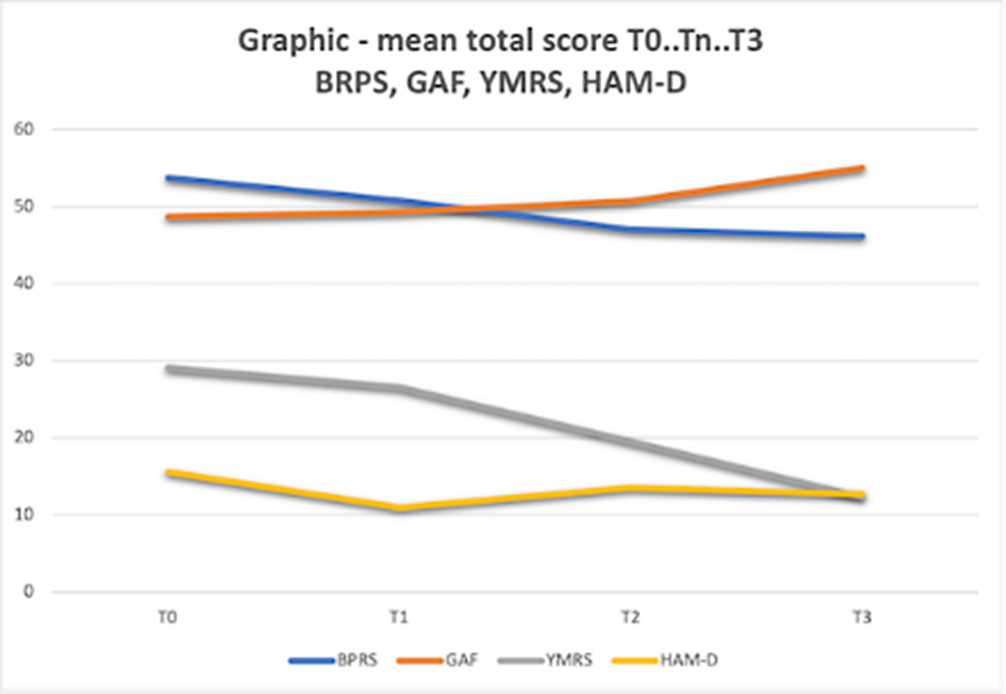
In Table 2 and Graphic the results obtained with the rating scales and statistical analysis are shown. In BRPS the data shows a statistically significant reduction in the total score in all periods analyzed. Similar results were found in the GAF and YRMS scales. However, with the HAM-D Scale, there was evidence of an increase in T2, although the differences were not statistically demonstrated. The differences in mean scores are more evident for quetiapine and olanzapine.
Image:
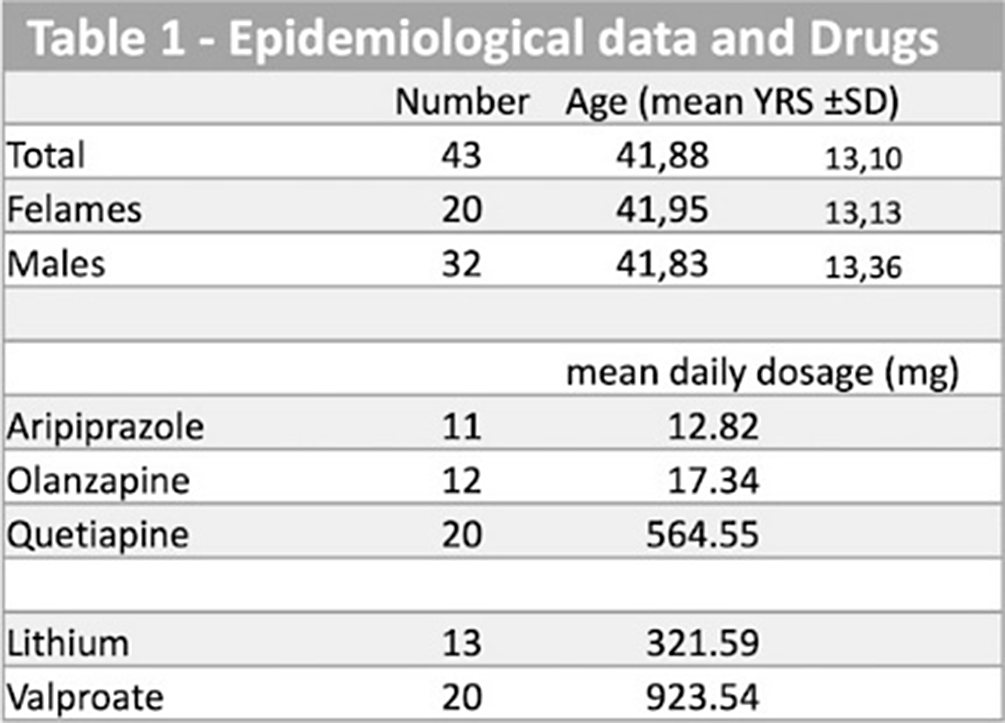
Image 2:
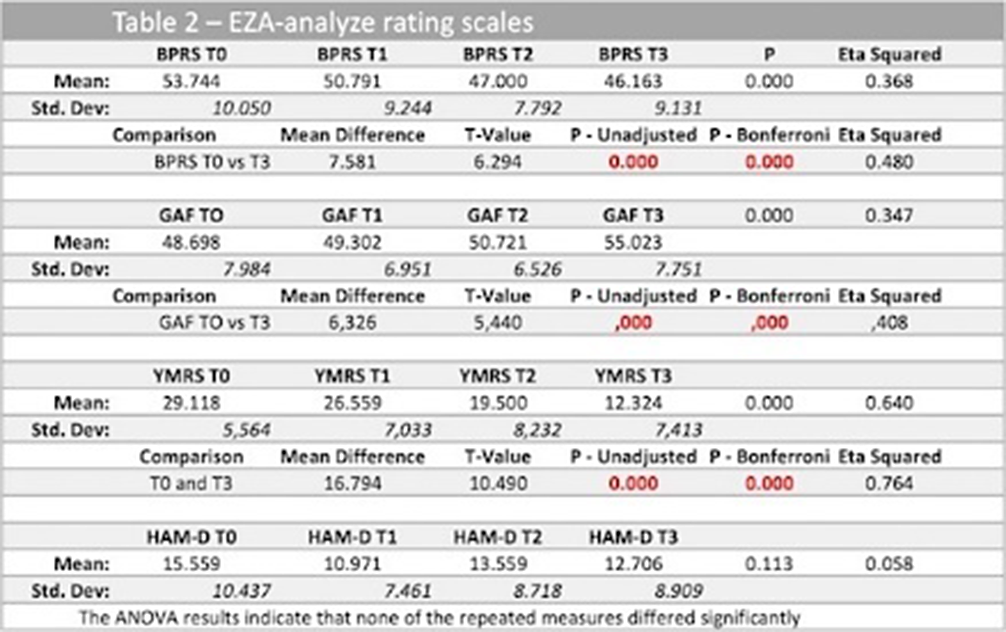
Image 3:
Conclusions
Our observational study showed that the atypical antipsychotics used in our work allowed a significant improvement of the symptoms in BD. However, the pandemic waves have no correlation with the treatment performed. New studies are necessary to highlight the relationship of the pharmacological treatment of BD with the progress of the COVID-19 pandemic.
The problem of suicides is one of the most critical problems of the public health care system. In Ukraine, official data on the number of deaths and their causes were released by the State Statistics Service only in 2021, on the eve of a full-scale military invasion. This made it possible to conduct statistical analysis and build a mathematical model of the seasonal dynamics of suicidal activity in Ukraine.
Objectives
Develop a statistical model of the dynamics of the number of completed suicides, considering regions of Ukraine and months. For this, a time series of the number of suicides from 2005 to 2021 was created, a mathematical and statistical analysis of the dynamic characteristics of the time series was carried out, and a forecast of the dynamics of the number of completed suicides was built.
Methods
Time series analysis using autocorrelation analysis with the calculation of Leung-Box statistics and the method of seasonal exponential smoothing were applied.
Results
Autocorrelation of the absolute indicators of the number of completed suicides made it possible to construct correlograms for each separate region of Ukraine. In order to ensure the statistical reliability of the autocorrelation coefficients, the number of lags was equal to 50, based on the fact that k ≤ n/4, where k is the maximum number of lags, and n is the number of observations. The correlograms of the regions that characterized the built statistical model of the dynamics of changes in the number of completed suicides were clustered in the form of four groups. The calculation of the coefficient of determination indicated that a high proportion of the total variation for Ukraine as a whole (R2=0.656) and for its individual regions (R2=0.731±0.051) can be explained using the model we built, and the model itself should be evaluated as consistent. Based on the developed model, it was established that the period from March to May, July and, to a lesser extent, January is characterized by the highest number of suicides.
Conclusions
The constructed statistical model of the dynamics of suicides in Ukraine is coherent and statistically reliable. It can be used for forecasting, provided corrections are made, taking into account the social changes of wartime. The study of chronobiological aspects that drew attention during the analysis is promising for further targeted scientific research and may be of practical interest for the creation of national suicide prevention programs in Ukraine.
Individuals with schizotypal personality disorder are characterized by tendencies to magical thinking, unusual perceptions, discomfort in social situations, and restricted affect. It is frecuent that they have social anxiety and have difficulty in understanding the motivations and thoughts of others.
Objectives
Presentation of a case of a patient who was first diagnosed with adjustment disorder, but on a closer study, was discovered to have a schizotypal personality disorder.
Methods
We conducted a bibliographic review by searching for articles about schizotypal personality disorder and theory of mind in Pubmed.
Results
We present the case of a 39-year-old woman, diagnosed with adjustment disorder after a conflict at work with a colleague that caused her anxiety-depressive symptoms. In consultations, the patient shows verbiage without expansiveness or euphoria, with rambling speech. She expresses feelings of indignation and injustice, she is irritable, with contained anger. She refers that she prefers to be distrustful of others because she does not understand their intentions. Her thoughts are very rigid, which leads her to have avoidant and phobic attitudes, having no relationships of friendship throughout her life.
A neuropsychological evaluation is carried out, resulting in a surprising WAIS with a TIC of 128. However, the Mayer‐Salovey‐Caruso Emotional Intelligence Test (MSCEIT) shows difficulties in Perception, Comprehension and Emotional Management
Considering the patient’s symptomatology as a whole, it is noteworthy:
– Sustained social isolation throughout their life history
– Superficiality of interpersonal relationships
– Distrust and slight self-referentiality. Deficit in inferring the feelings and thoughts of others
– Peculiar speech with ideas of magical content, superstitions and rituals…
Which together supported a diagnosis of schizotypal personality disorder and generalized anxiety disorder. From this point we started to work on her self-esteem, modification of irrational beliefs and cognitive distortions, interpersonal communication and metacognitive therapy, with good results.
Conclusions
The type of schizotypal patients who come to consultations most frequently are the actively isolated/timorous profile due to their intense social anxiety and difficulties in understanding and adapting to the social world around them. Initial therapy should be empathic support. The theory of mind is the ability to infer the other’s mental states and therefore predict their behavior, this ability being diminished in the schizotypal patient. Mentalization tasks, metacognitive therapy, cognitive flexibility training, social skills training, and promoting self-worth are useful. On some occasions it may be necessary to start psychopharmacological treatment to control anxiety and unusual perceptions when they cause discomfort.
The mental health of flight crews is of paramount importance. Due to the demanding nature of their work, crew members are subject to various stress factors such as irregular working hours, time differences, operational demands and high passenger safety responsibilities.
Objectives
We aimed to evaluate the mental health of Tunisian flight crews working for a private airline.
Methods
This is an exhaustive cross-sectional study which included all flight crews working for a private airline in Tunisia who consulted the occupational medicine and pathology department at the Farhad Hached University Hospital in Sousse as part of their periodic check-up. Data collection was based on a pre-established questionnaire which included socio-demographic data, lifestyle habits and professional data. The DASS21 questionnaire was used to assess depression, anxiety and stress.
Results
Our study included 160 participants. The median age was 42 years with a female predominance. More than half were smokers (58.8%). Alcohol was consumed by 41.3% of flight crews. The vast majority drank coffee (84.4%). With regard to professional data, 71.3% were flight attendants. The median length of service was 15 years. The majority of participants had operated a medium-haul flight (< 5 hours) during the last month (65%). The majority of participants (85.6%) had a normal depression score. Almost a third of the participants (28.5%) had anxiety scores ranging from mild in 24 to extremely severe in one patient. The majority of flight crews had a normal stress score (90%). After multivariate analysis, unmarried marital status, working more than 2 days a week and stress were factors independently associated with anxiety.
Conclusions
Work-related psychosocial risks can have a major impact on workers’ mental health. It is therefore essential to take these risks into account and put in place preventive measures to protect workers’ mental health and promote their well-being at work.
Schizophrenia is a chronic, debilitating mental illness that contributes significantly to the global burden of disease. Assertive outreach treatment for patients with schizophrenia and psychotic disorders has been implemented to improve treatment adherence and outcomes.The suitability of this model of care outside the western context has not been fully established. The Psychosis Recovery Outreach Program (PROP),staffed by a multidisciplinary team that applies principles of early intervention and assertive outreach, was initiated in February 2016 at a leading psychiatric facility in Lebanon.
Objectives
The aim of this study is to identify and analyze clinical and demographic variables associated with patient enrollment in PROP, out of a typical clinical population attending a psychiatric outpatient department.
Methods
This retrospective study included patients above 18 y.o. at time of first point of care with a primary diagnosis of psychosis according to the International Classi-fication of Diseases 10 (ICD-10), and who presented to the outpatient psychiatry department at the American University of Beirut Medical Center (AUBMC) and were following up in PROP. We collected twelve-month data and used logistic regression models to identify predictor variables for enrollment in the service compared to those receiving standard treatment.
Results
In total, 45 patients participated in the study. Patients were mostly males (77.8%), younger than 39 years (80%), of college or higher education (68.2%), and diagnosed with schizophrenia (46.7%) or schizoaffective disorder (48.9%). About one-quarter (22.7%) had a comorbid cannabis use disorder. A majority received more than one oral antipsychotic (75.6%) while half (51.1%) were maintained on a long-acting injectable (LAI) antipsychotic.The following variables were significant predictors of enrollment in PROP: having a comorbid cannabis use disorder (OR 2.83 [1.25 – 6.37]), being prescribed a LAI antipsychotic (OR 9.99 [4.93-20.24]) or more than one oral antipsychotic (OR 4.57 [2.22-9.39]), visiting the emergency department more than once (OR 8.7 [2.64-28.68]), and admission to the psychiatry unit (OR 13.91[3.17-60.94]). In addition, those following up in PROP were younger and less likely to be in the oldest age group (over 54 years) [OR 0.11 (0.01-0.93)], less likely to be females (OR0.39 [0.18-0.81]), and less likely to be diagnosed with “other psychotic disorder” as com-pared to schizophrenia (OR 0.14 [0.03 – 0.62]).
Conclusions
PROP was the first community treatment program to use the principles of assertive outreachin Lebanon. Our findings highlight that the assertive out-reach model of care is applicable to its target population in the context of psychiatric care in Lebanon, namely young individuals with psychosis, higher comorbidities and a severe course of illness.
