To save content items to your account,
please confirm that you agree to abide by our usage policies.
If this is the first time you use this feature, you will be asked to authorise Cambridge Core to connect with your account.
Find out more about saving content to .
To save content items to your Kindle, first ensure no-reply@cambridge.org
is added to your Approved Personal Document E-mail List under your Personal Document Settings
on the Manage Your Content and Devices page of your Amazon account. Then enter the ‘name’ part
of your Kindle email address below.
Find out more about saving to your Kindle.
Note you can select to save to either the @free.kindle.com or @kindle.com variations.
‘@free.kindle.com’ emails are free but can only be saved to your device when it is connected to wi-fi.
‘@kindle.com’ emails can be delivered even when you are not connected to wi-fi, but note that service fees apply.
BPD is a common and severe mental health condition. Longitudinal studies related to BPD show a reduction of symptoms related to the disorder but very little improvement in functionality. The betterment of executive functions of people with BPD after psychotherapy is very limited. The efficacy of those treatments on functionality appears to be mild with a small effect size. Based on previous studies, transcranial direct current stimulation (tDCS) can be used to improve impulsivity and emotional instability in patients with BPD. Moreover, cognitive remediation focuses on reducing neuropsychological alterations by re-educating patients and apply specific strategies to aid them long term on certain daily functions like developing healthy habits, executive functions, problem solving, attention, working memory and cognition.
Objectives
Our objective is to assess the feasibility and efficacy of the tDCS and cognitive remediation on BPD symptoms and functioning.
Methods
The open study includes 10 daily sessions of tDCS for 2 weeks and 8 weekly group meetings for the cognitive remediation. Based on studies conducted on people with BPD, the settings for the tDCS are as follows; 20 minutes of continuous current at the intensity of 2mA and the electrodes are placed on specific stimulation sites related to impulsivity. To verify the effectiveness of the combination on the symptoms and evaluate the cognition and functionality of the patients, questionnaires at neuropsychological texts are conducted at the beginning of the study, after the tDCS, after the cognitive remediation and 3 months after the end of the study. The expected results of this study are that the combination of the two treatments will reduce the symptoms of BPD and improve executive functions compared to the treatment as usual or tDCS alone. This study would allow the implementation of an efficient and low-cost first-line treatment and a better functional progression of BPD patients.
Results
The expected results of this study are that the combination of the two treatments will reduce the symptoms of BPD and improve executive functions compared to the treatment as usual or tDCS alone. This study would allow the implementation of an efficient and low-cost first-line treatment and a better functional progression of BPD patients.
Conclusions
This study would allow the implementation of an efficient and low-cost first-line treatment and a better functional progression of BPD patients.
Far less is known about the preceding factors of antipsychotic use among persons with substance-induced psychosis (SIP) and first-episode psychosis (FEP). There is no prevention research on how persons with SIP differ from persons with other psychosis episodes like FEP. Antipsychotic medication is the general essential and necessary element in the treatment of SIP and FEP1. Antipsychotics are used as first-line therapy, commencing with a low dose and titrating upwards2. There are no exciting treatment guidelines for treating Substance-induced psychosis in the long term. (A review of some studies published by the Oxford Journals Schizophrenic Bulletin indicated that drug-induced psychosis lasted longer than a month in individuals between 1 and 15% of the time.3)
The aim of the study was to investigate antipsychotic use and associated factors in persons with SIP and compare it with persons with other FEP
Objectives
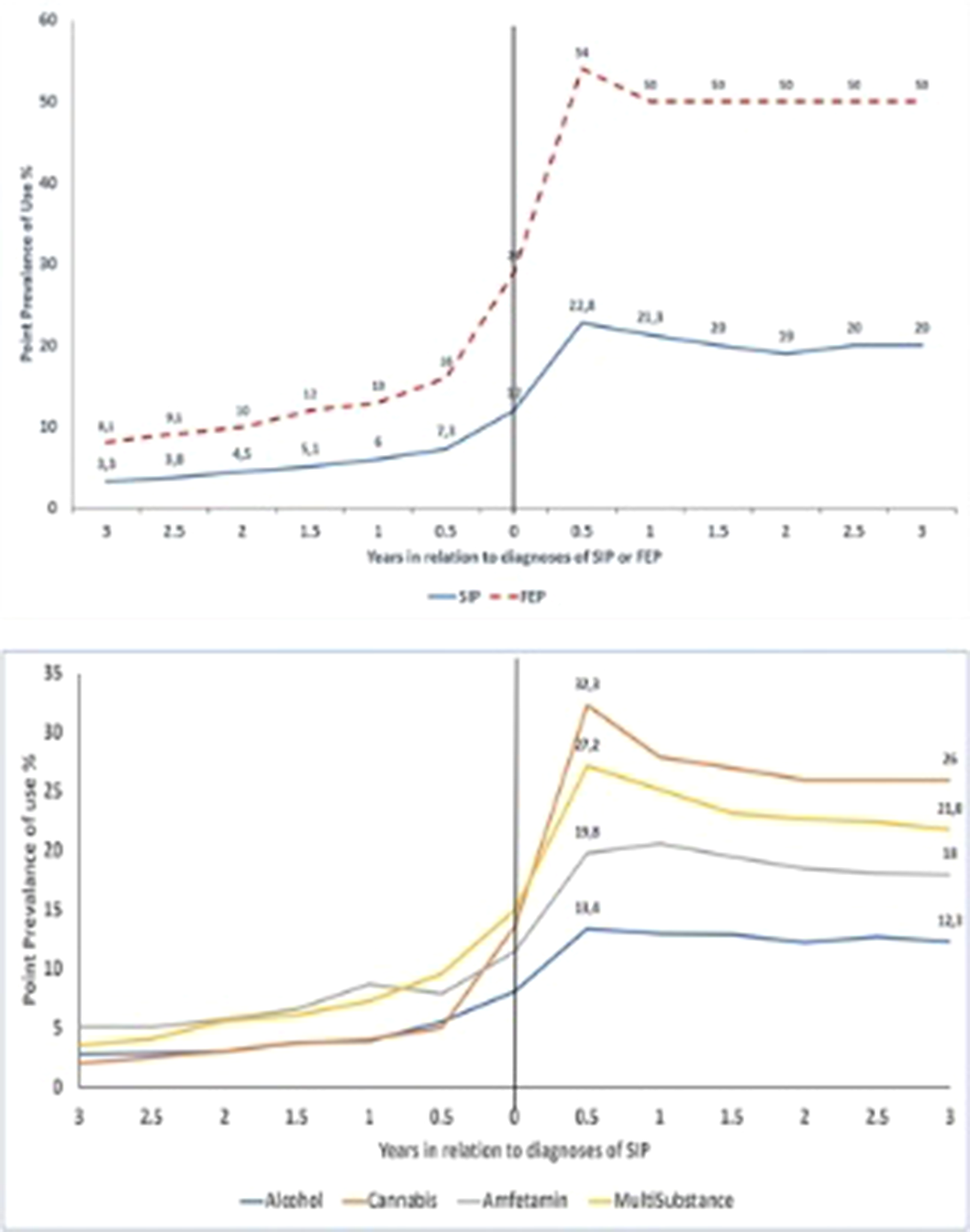
1 To study the antipsychotic use among persons with SIP compared with FEP from 3 years before until three years after their first diagnosis first incident of psychosis)
2.To study associating background factors with antipsychotic use among patients with SIP
Methods
Incident Swedish SIP cases (n=7320)during 2006-2016 were identified from health care registers and matched 1: with persons with FEP (n=7320) by age, gender, and calendar year of diagnosis. Prevalence of antipsychotic use was assessed as point prevalence every six months, from 3years before until 3years after the first diagnosis. Factors associating with antipsychotic use among SIP were analyzed with multivariable logistic regression, including information on sociodemographic and work-related background, including disability pension and sickness absence, SIP types, and psychiatric diagnoses.
Results
Among SIP and FEP, the prevalence of antipsychotic use was low before the first diagnosis (3-7% in SIP, 8-16% in FEP), peaked 6 months after the first diagnosis (23% in SIP, 54% in FEP) and stabilized after that. After 3 years of first diagnosis, 19% of persons with SIP and 45% of persons with FEP used antipsychotics. Antipsychotic use one year after diagnosis among SIP was associated with previous substance use disorder, depression, anxiety, and personality disorder diagnoses, being on disability pension or on long-term sickness absence (>90 days), and cannabis- or multi-substance-induced psychosis.
Image:
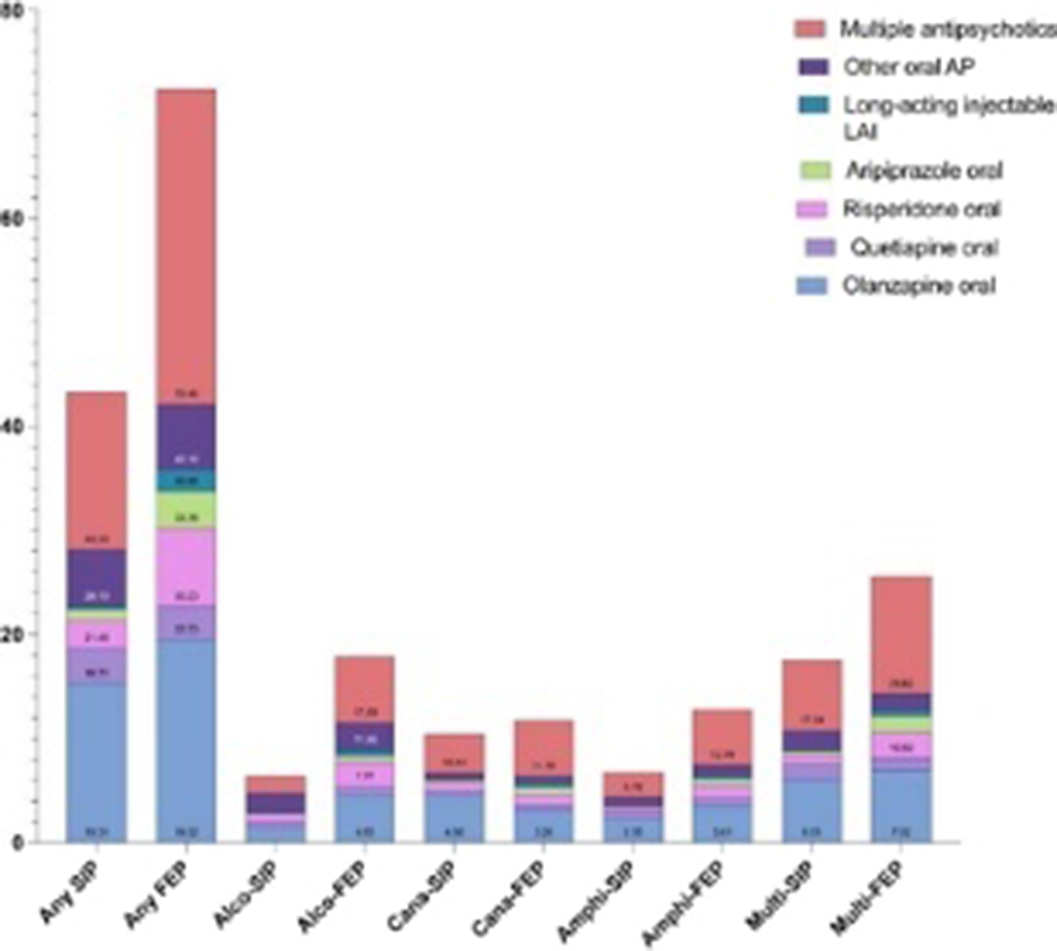
Image 2:
Conclusions
As expected, patients with FEP were using more frequently antipsychotics compared to SIP except for long-acting antipsychotics.
Although SIP is considered short-lived, antipsychotic use after an incident SIP episode is relatively common, especially among those with cannabis SIP with the highest prevalence of antipsychotic use.
Previous substance use disorder and cannabis SIP were highly associated with patients who use antipsychotics frequently.
Parental Reflective Functioning (PRF) refers to parents’ ability to view their children’s and their own behavior by considering internal mental states, such as thoughts, desires, and intentions. Depression has been described as compromising reflective functioning in female samples, whereas other studies have not detected differences in RF between depressed and non-depressed mothers.
Objectives
We aim to study whether a group intervention focused on postpartum depression, which we have already observed to cause significant changes in the mother-child bond and the severity of depressive, also improves parental reflective functioning.
Significant changes were observed in the Pre-Mentalization Modes (pre=2.37±.457, post=2.03±.520, t=2.0206, p=0.027) and Certainty About Mental States (pre=2.87±1.141, post=3.68±.908, t=-2.814, p=0.010) subscales of the PRFQ, with no significant changes in the Interest and Curiosity subscale (t=-.516, p=0.309). A significant correlation was also observed between pre-post change in EPDS scores and pre-post change in the Certainty About Mental States subscale of the PRFQ (r=-.640, p<.05), while no significant correlations were observed with the rest of the PRFQ subscales, nor with the PBQ.
Conclusions
A brief cognitive-behavioral group therapy developed specifically to treat postpartum depression improves pre-post scores on the Pre-Mentalization (lower post- than pre- score) and Certainty About Mental States (higher post- than pre- score) subscales of the PRFQ. Although a control group is needed to determine the actual effect of the intervention, as time could also play a role in the observed changes, this is an encouraging result. Moreover, the improvement obtained in Certainty About Mental States is inversely correlated with the pre-post changes observed in the EPDS, meaning that the greater the improvement in depression, the greater the improvement in the aforementioned subscale of the PRFQ. A larger sample is needed to assess a hypothetical mediating effect of depression in the observed change.
The data of current research indicate the participation of systemic inflammation in the pathogenesis of endogenous psychoses. Changes in the level of peripheral immune markers are associated with the development of neuroinflammation and correlate with the severity of psychopathological symptoms detected in patients. However, the association between individual components of the immune system involved in the development of endogenous psychosis remains poorly understood.
Objectives
To study the connection between molecular and cellular components of the immune system in women with endogenous psychoses with depressive-delusional symptoms.
Methods
32 female patients aged 23 [17; 36] years with endogenous psychoses within different nosologies (F20, F21, F31, depressive-delusional conditions) and 17 women without clinical signs of psychiatric pathology were examined. The activity of leukocyte elastase (LE), α1-proteinase inhibitor (α1-PI), the proportion of four subpopulations of monocytes (classical CD14++CD16-, intermediate CD14++CD16+, nonclassical CD14+CD16+ and transitional CD14+CD16-) in plasma, activity of cytochrome-c oxidase (COX), glutamate dehydrogenase (GDH), glutathione s-transferase (GST) and glutathione reductase (GR) in platelets and functional activity of complement system (faCS) in serum were determined. The PANSS scale was used to assess the severity of psychopathological symptoms.
Results
Increased activity of the inflammatory markers LE (p=0.033) and α1-PI (p=0.02) was found in the plasma of the patients. Increased percentage of pro-inflammatory monocytes (intermediate and transient) in plasma (p=0.003) was confirmed by negative correlations between CD14++CD16- and CD14++CD16+ (R=-0.685, p=0.00002), CD14++CD16- and CD14+CD16- (R=-0.608, p=0.0002), CD14++CD16- and CD14+CD16+ (R=-0.424, p=0.002). A decrease in GDH activity (p=0.0079), GST activity (p=0.002) and GR activity (p=0.0006) was observed in patient platelets, which can reflect changes in the activity of intracellular metabolic pathways. A positive correlation was found between COX activity and α1-PI (R=0.51, p=0.025). A significant decrease in faCS compared to control (p=0.0003) and a negative correlation between faCS and GST activity (R=-0.496, p=0.011) were observed. faCS was positively correlated with the degree of reduction in the PANSS score (R=0.416, p=0.038).
Conclusions
The revealed connection between molecular and cellular components of the immune system in patients with endogenous psychoses reflect activation of the systemic inflammatory response accompanied by changes in the ratio of monocyte subpopulations and impaired regulation of the complement system. The data obtained can be used to develop methods of monitoring patients taking into account their immunological features.
In the medical field, work addiction is a double-edged phenomenon. It can be regarded as a positive addiction leading to high motivation to work, but it can also have adverse mental, physical, and social consequences.
Objectives
To assess the relationship between work addiction and perfectionism in trainee doctors.
Methods
We conducted a cross-sectional descriptive and analytical study among trainee doctors. We used the “Work Addiction Risk Test” (WART), and “The Big Three perfectionism scale short form”.
Results
A total of 99 doctors were included. The mean age of participants was 27.6 years, with a sex ratio (M/F) of 0.33. The doctors in our study worked 5.39±1.6 hours a day and were on call 3.84±2.87 times a month. Their average number of hours of sleep was less than 7 hours in 43.4 % of participants. The mean score of the WART was 61.2±14.83. Among the trainee doctors surveyed 39% were considered at high risk of workaholism. The mean WART score was significantly higher among female physicians and those who slept less than 7 hours per day on average. In addition, the average score on the WART scale was significantly associated with the number of calls per month. We found a statistically significant association between perfectionism scores and work addiction scores.
Conclusions
Our study showed that work addiction is common among doctors in training and is favored by high levels of perfectionism. It is therefore essential to explore and define preventive measures to help them find a balance allowing them to aim for high standards and be able to progress, without setting unrealistic expectations, which can lead to work addiction.
Malondialdehyde (MDA) is a product of polyunsaturated fatty acid peroxidation (Del Rio D, et al. A review of recent studies on MDA as toxic molecule and biological marker of oxidative stress. Nutr Metab Cardiovasc Dis. 2005;15:316-28). It is a biomarker of oxidative stress and is involved in the pathophysiology of schizophrenia (Goh et al. Asian J Psychiatr. 2022;67:102932). Schizofrenia is linked to disrupted oxidative balance and inflammation (Więdłocha et al. Brain Sci. 2023;13:490). Prior research has shown connections between biomarkers and circadian rhythms in schizophrenia (Morera & Abreu. Acta Physiol Scand. 2007;43:313-14) and diabetes type 2 (Kanabrocki EL, et al. Circadian variation in oxidative stress biomarkers in healthy and type II diabetic men. Chronobiol Int. 2002;19:423-39). To determinate if MDA levels have a role in schizophrenia and follow a circadian rhythm may be useful.
Objectives
The aim of our study is to compare diurnal and nocturnal MDA serum levels in patients in acute and stabilized phases of schizophrenia according to CIE-10 to find out if there are variations related with circadian rhythms
Methods
47 patients were included in our study in two clinical phases: acute episode and stabilization. Blood samples were collected at 12:00h and at 00:00h. MDA serum levels were measured twice: when patients were decompensated (admission) and at clinical stabilization (discharge). The relationship between quantitative variables at both times was analysed by T-Student test
Results
There is no significative difference between night and day MDA levels in the acute phase of the schizophrenia (2.22±1.352 vs. 1.93±1.530, p<0.09). There is statistical significance between 12:00 and 00:00 (1.90±1.136 vs. 1.34±0.868, p<0.001) at discharge: it was observed that levels decreased. This result can be interpreted as there is circadian rhythm in stabilized phases.
Conclusions
MDA levels in patients with schizophrenia do not follow a circadian rhythm in the acute episode. When they are clinically stabilized present a circadian change. These patients lose the circadian rhythm in acute episodes. MDA circadian rhythm may help diagnose the clinical phase and its severity. It is necessary to perform more studies to know its utility as an oxidative biomarker
Questions regarding death have generated debates and art since the dawn of civilization. These themes permeate through various areas of study, including religion, philosophy, ethics, medicine and humanities. Various countries have been revising their laws regarding the end of life, especially on the right to aid and choice in the end in the context of medical and phychological suffering. Physician-Assisted Suicide (PAS) and euthanasia are methods by which people, mostly terminal patients, seek to end their lives with the help of medical professionals. PAS and euthanasia have been the target of heated debates in politics and in medicine, with the question of ethics centering most of these.
Objectives
The authors aim to explore PAS and euthanasia in the context of the ethical debate. Based on the pillars of ethics, based on the principal of do no harm and beneficence, the authors explore the role of the Psychiatrist, if any, in these end of life issues.
Methods
The authors performed a brief narrative review of the available literature, with recourse to various databases such as PubMed and Scopus. The search terms utilized in isolation or combination included: physician assisted suicide, euthanasia, psychiatry, mental illness and ethical issues. Taking into consideration the widespread discussion of these themes in the public forum, news articles were included based on their merit and relevance to the explored topic.
Results
The ethical debate appears to rest between the pillars of first, do no harm, the principles of beneficence and nonmaleficence and aut. Here, the conflict between the first and last appear, where the killing of any patient, whether directly or indirectly is clearly contrary to the principle of primum non nocere. However, the prolonging of suffering in a terminal patient, appears to contradict the principles of nonmaleficence. The Psychiatrist is called to evaluate competence to choose, which is allied to autonomy. Other sources explore the role of the Psychiatrist in permitting a suicide to occur, when the profession is dedicated to the prevention of suicide. From the literature, the psychiatric evaluation is rarely regularly carried out, usually being solicited in cases where mental illness which might compromise the capacity to choose is suspected.
Conclusions
In ethical debates, clear cut answers are rarely every developed, with the nuance and greyscale of difficult topics usually dividing those that ferverantly champion each cause. Psychiatric evaluation is usually invoked when patient autonomy, especially in terms of capacity, is called into question. Questions remain as to whether the presence of the psychiatrist should be a regular one in these procedures or if it should be carried out in a selective manner. There is little consensus in regards to this role, which merits further conversation in the various forums of medical and ethical communication.
Training in psychiatry varies greatly from country to country in Europe - there are differences in the duration of training, the content of training, etc. Different perspectives on training will be presented, especially as far as common features are concerned. We will also present proposals and directions leading to a common European curriculum in psychiatry.Further work is needed in the direction of developing a European curriculum and organizing a European exam in psychiatry.
The advent of digital innovations in psychiatry has ushered in a new era in mental healthcare. These innovations offer the potential for enhanced diagnosis, treatment, and patient care. Establishing scientifically backed, dynamic, and adaptive business models is necessary to launch sustainable innovations onto the healthcare market.
Objectives
This poster aims to provide a comprehensive understanding of the complex business-related challenges posed by digital innovations in psychiatry and to offer insights into potential strategies to address these challenges. The objectives include illuminating the dynamic landscape of digital psychiatric care from a business perspective.
Methods
A systematic review of the current literature was conducted, encompassing scholarly articles, industry reports, and expert perspectives. This method enabled the synthesis of insights regarding how digital innovations are reshaping the business models of psychiatric medical markets and the unique challenges.
Results
Digital innovations in psychiatry are catalyzing a transformation of business models in the field. Telepsychiatry, Digital platforms, VR technologies, and AI-driven diagnostic tools have expanded the reach of psychiatric services, potentially attracting new patient populations and offering innovative payment models. The opportunities presented by these technologies are promising. However, substantial challenges exist in parallel. Safeguarding data privacy and security is paramount, given the sensitive nature of patient information. Navigating the evolving regulatory, managing the costs associated with the adoption and maintenance of these technologies pose significant hurdles. Complex pricing structures and reimbursement models further add to the complexity of the challenges, necessitating adaptability and innovative strategies.
Conclusions
This poster underscores the dynamic and multifaceted nature of business models in the market of psychiatric innovations. While these innovations offer expanded service reach, improved patient engagement, potential for innovative payment models, addressing the business-related challenges is of utmost importance. Compliance with data privacy regulations, cost management, adaptability in pricing and reimbursement strategies are fundamental for psychiatric innovators. Proactive measures are pivotal as the mental healthcare field continues to embrace digital innovations. By addressing these challenges, the mental health industry can fully harness the transformative potential of these innovations to enhance patient care, improve access to services, and ensure the sustainability of high-quality psychiatric care. The evolving business models in psychiatry require astute management and innovation to thrive in this digital era.
To contribute to this debate I offer perspectives from my PhD research which critically examines the contemporary U.K politics of mental health and illness amongst young adults via social media. My work examines the way in which social media, like Instagram and Tiktok allows young adults to explore, express and share their selfhood and identity around ideas of mental health and illness through videos, posts and online interactions. Through this work I have engaged with digital services, psychologists and medical professionals on the subject of using technology for the treatment, engagement of and knowledge of mental health and illness. I have additionally engaged with some work on the role of the Metaverse for treating mental illness, and how this could work, but also the limitations of virtual spaces. Exploring debates in digital sociology adds evidence to these arguments and can support the understanding of the political ramifications of using technologies in the clinical space. Arguing that these new developments in language and social practices around mental health and illness via social media need to be further explored, acknowledged and addressed in social science and this can be supported by work in the field of psychiatry. Overall, my contribution to the debate will be to offer political and digital social perspectives on the use of technology and highlight some of the biases and drawbacks of utilising AI to treat mental health and illness.
Childhood trauma encompasses instances of sexual, physical, and emotional abuse, along with neglect experienced during childhood and adolescence. Individuals with psychosis, particularly those with schizophrenia, exhibit a heightened prevalence of childhood trauma. One potential mediator in understanding this connection is insecure attachment.
Objectives
This study aimed to better understand how childhood trauma relates to schizophrenia by examining two aspects of attachment: attachment anxiety and attachment avoidance.
Methods
We conducted a descriptive and analytical cross-sectional study among stabilized female patients with schizophrenia or schizoaffective disorder, in the ‘B’ psychiatry department at Hedi Chaker University Hospital in Sfax, Tunisia, from May to June 2023. We administered the 26-item Revised Psychosis Attachment Measure (PAM_R) questionnaire, translated into Arabic, to assess attachment. Additionally, participants completed the 28-item Childhood Trauma Questionnaire (CTQ). We used both the Wilcoxon test for paired samples and the Spearman correlation test to assess the statistic differences and correlations.
Results
We included 41 female patients, of which 65.9% had schizophrenia and 34.2% had schizoaffective disorder. The average age of the participants was 49.19 years. Among the attachment styles, avoidant attachment was the most prevalent (60.97%), followed by anxious attachment (24.39%), and disorganized attachment (14.63%). Regarding childhood trauma, the average total score on the Childhood Trauma Questionnaire (CTQ) was 56.34. Specifically, 39% of patients reported experiencing physical abuse, 24.4% reported sexual abuse, 14.6% reported emotional abuse, and 4.9% reported physical neglect. The Spearman correlation analysis between avoidant attachment and scores on the Childhood Trauma Questionnaire (CTQ) yielded a diverse set of findings. It indicated a significant positive correlation with physical abuse (ρ = 0.004, p < 0.001), a significant negative correlation with emotional abuse (ρ = -0.045, p < 0.001), a significant positive correlation with sexual abuse (ρ = 0.036, p < 0.001), a significant negative correlation with physical neglect (ρ = -0.083, p < 0.001), a significant negative correlation with emotional neglect (ρ = -0.047, p < 0.001), and a significant positive correlation with denial (ρ = 0.080, p < 0.001). On the other hand, the Spearman correlation analysis between anxious attachment and scores on the CTQ showed varying correlations: a significant positive correlation with physical abuse (ρ = 0.094, p < 0.001) and sexual abuse (ρ < 0.0001, p = 0.05).
Conclusions
Our findings indicate that individuals with an insecure attachment style and a history of childhood trauma should be considered a high-risk group, necessitating early clinical intervention, continuous monitoring, and personalized therapeutic approaches designed to alleviate the psychological effects of trauma.
People with severe mental health disorders and concurrent addiction problems are one of the most challenges patients to treat within mental health and addiction. They often find themselves fallen between different chairs within mental health and addiction services and between spescialist and primary care. There is a need for new ways of delivering services for this group.
Objectives
The objective of this presentation is to present how Flexible assertive outreach teams (FACT) are delivered in a densly populated country and the results on changes in use of spescialist services and detension. We will also present the results of changes in quality of life before and after entering FACT and which factors that might be associated with life quality.
Methods
The establising of FACT in Norway has been extecively evaluated both in the form of official reports to the health authorities and academic research papers. We will do a scoping review of the Norwegian research on the effect of FACT teams with a spesific attention to the results obtained in densly populated areas. The review will cover the years fra 2018 up til to day.
Results
The results so far indicate that it is possible to deliver FACT services in densly populated areas and that there is an increase in qualty of life before and after entering a FACT team. The use of hospitalization days are reduced with about 50 % and the same applies for days in detention.
Conclusions
FACT teams seems to be a viable way of delivering mental health care services to one of the most vulnerable groups in our society.
Hedonic deficits have been extensively studied in schizophrenia, but little is known about their association with suicidal ideation in early psychosis. Along the clinical staging of psychosis, also Ultra-High Risk (UHR) individuals are characterized by hedonic deficits, which are currently considered as putative predictors of both psychosis conversion and poor social/role functioning.
Objectives
The aim of this research was to examine the relationship between anhedonia and suicidal thoughts across a 2-year follow-up period in people with First Episode Psychosis (FEP) and at Ultra High Risk (UHR) of psychosis.
Methods
Ninty-six UHR and 146 FEP, aged 13–35 years, completed the Comprehensive Assessment of At-Risk Mental States (CAARMS) and the Beck Depression Inventory-II (BDI-II). The BDI-II “Anhedonia” subscale score to assess anhedonia and the CAARMS “Depression” item 7.2 subscore to measure depression were used across the 2 years of follow-up. Hierarchical regression analyses were performed.
Results
No difference in anhedonia scores between FEP and UHR individuals was found. In the FEP group, a significant enduring association between anhedonia and suicidal ideation was found at baseline and across the follow-up, independent of clinical depression. In the UHR subgroup, the enduring relationship between anhedonia and suicidal thoughts were not completely independent from depression severity.
Conclusions
Anhedonia is relevant in predicting suicidal ideation in early psychosis. Specific pharmacological and/or psychosocial interventions on anhedonia within specialized EIP program could reduce suicide risk overtime.
Diagnosis of behaviors in advanced neurocognitive disorders (aNCD) is one of exclusion, and the framework has been laid out in DSM-V. However, clinical assessments in aNCD become increasingly unreliable, and commonly used psychometric tools for clinical assessments lack reliability and validity, thereby making outcomes unreliable. Consequently, the syndromic and symptom management approaches for behaviors in aNCD behaviors have yielded poor results. To address this, the focus has shifted towards understanding the ‘meaning’ of behaviors in aNCD, recognizing them as a ‘mode of communication’. To date, there are no existing frameworks to ascribe ‘meaning’ to behaviors in aNCD.
Objectives
LuBAIR™ paradigm is the first step in offering such a framework for understanding the ‘purpose’ and ‘meaning’ of behaviors in NCD. The ‘meaning’ ascribed to each behavioral category was used to guide the use of atypical antipsychotics in their management. De-prescribing was attempted on patients who qualified to enter this retrospective study. De-prescribing was defined as successful if individuals were completely withdrawn from AAP and remained off them for 60 days without the re-emergence of behaviors.
Methods
The data collected on the second occasion, in the successful and failed de-prescribed groups, were compared in this retrospective study. MANOVA, Chi-Square paired t-test statistical analyses were used to detect the differences in the behavioral categories between the two cohorts. Cohen d was used to measure effect size.
Results
Patients who did not have Mis-Identification and Goal-Directed Expressions were more likely to successfully de-prescribe: X2 (1, N = 40) = 29.119 p < 0.0001 and X2 (1, N = 40) = 32.374, p < 0.0001, respectively. Alternatively, the same behavioral categories were more likely present in patients who failed de-prescribing: MANOVA and paired t-test (p < 0.0001). Atypical antipsychotics, in their role as an antipsychotic and mood stabilizer, may be used to manage Mis-Identification and Goal-Directed Expressions, respectively.
Conclusions
LuBAIR paradigm has the potential to guide the development of specific behavioral care plans and the use of AAP in managing individual behavioral categories. AAP use can be justified for managing Misidentification and Goal-Directed Expressions. Vocal expressions may warrant the use of AAP, pending further study. The LuBAIR paradigm offers guidance for de-prescribing AAP for all other behavioral categories in the LuBAIR Inventory. This study is also a preliminary step in validating the psychological theories used to support the individual categories. This workshop will educate the participants on the LuBAIR paradigm and its application in developing person-centered interventions for behaviors in a NCD.
Hyperprolactinemia (HPL) is a condition associated with disturbing consequences. Antipsychotic medications are one of the main causes of nontumoral hyperprolactinemia. Prolactin release in the hypothalamic tuberoinfundibular tract is increased through dopaminergic inhibition, which occurs more frequently with high- potency typical antipsychotics (40%–90%). Less commonly than typical antipsychotics, atypical antipsychotics can also result in hyperprolactinemia. In the presence of symptoms, clinicians frequently struggle with the decision of whether to stop using the suspected offending agent, lower the dosage, switch to another medication, or even add a full or partial dopamine agonist to the patient's current treatment. The issue is exacerbated by the fact that finding a suitable agent for each patient is sometimes a challenging task.
Objectives
Due to the partial D2 receptor agonistic activity of aripiprazole, there is enough dopaminergic tone to continue the inhibition of prolactin release. Aripiprazole has been recommended in literature either as an adjunctive treatment in low doses or as a switch in therapy.
Methods
In the Psychiatric clinic of the General Hospital of Corfu, a low-dose (5mg/day) of aripiprazole is being used as adjunctive therapy in patients with antipsychotic-induced hyperprolactinemia. More specifically in total 42 subjects, 19 male and 22 female, with a mean prolactin level of 862ng/ml, were introduced to the prior therapy. We whereupon conducted prolactin measurements to evaluate the response at the first, the third, and the sixth month of treatment.
Results
Of the 42 subjects, 38 responded with an average reduction of prolactin to the level of 530ng/ml (mean reduction 38,5%).
Conclusions
Having noticed the beneficial effect of low-dose Aripiprazole in patients with antipsychotic-induced hyperprolactinemia, we consider it appropriate that the literature recommendations concerning this additional use of aripiprazole should not be overlooked in clinical practice.
The “Bird’s Nest Drawing” technique is one of expressive drawing projective techniques. In Russia it has been used since the 2020s. We suggest the pilot version of using this projective technique in child clinical psychology. There were investigated the cognitive and emotional components of performance by children with different types of ontogenesis.
Purpose: pilot application of the technique of “Bird’s Nest Drawing” (BND) in the psychological diagnosis of children with different types of ontogenesis.
Objectives
69 children and adolescents 6-17 years old (28 male), examined at the Mental Health Research Center. 1. hospital patients (11-16 years old, 18 persons) diagnoses F20.8, F21.4, 2) outpatient clients with psychological diagnostics (7-16 years old, 45 persons), most of them have psychiatric diagnoses and some of them came for a consultation independently of doctors (there were family and behavior problems). 3) children conceived with the help of assisted reproductive technologies (IVF) - participants in a program for studying cognitive and emotional-personal development (5-13 years old, 8 people). Control group of normal children (14 persons).
Methods
Bird’s Nest Drawing (D.Kaiser, 2003, Kuftyak, 2021) - clinical expert assessment of the drawing parameters (size, location, quality, compliance with instructions) and the emotional component (color, self-assessment of the drawing).
Results
Table 1.
Frequency of different indicators of BND in compared groups of children.
Groups
N
Central place
High Quality of drawing
Nest out of tree
birds /eggs
Different colors
Safety of nest
High Assessment by participants
High positive emotional expression Assessment by experts
Hospital patients
18 (4 m)
12
4
10
4
10**
4
13**
5**
Outpatient clients
45 (22 m)
38
13
19
17
32
10
25**
17
Children IVF
8 (2 m_
7
2
4
3
6**
1
6
3
Normal children
14(6 m)
14
3
7
4
12**
4
13**
11**
** - significance of the differences (p≤0,05 by φ criterion).
Based on the data obtained, it can be noted that the most different between groups turned out to be an indicator for using different colors, subject’s assessment his picture and emotional expression assessment of picture by experts. Other parameters are similar: please of drawing,
Discussion
We have obtained our own resalts about BND method in children with different type of ontogenesis. These data are similar to D.Kaiser and E.Kuftyak in opportunity of good diagnostic practice of BND method in children and adolescents with different type of ontogenesis in scientific
Conclusions
BND method is a good test for child clinical psychology as a projective one. Restrictions of this investigation - small groups, simple parameters for assessment. We plan to continue this work with more clinical (diagnosis, syndrome et cetera) and sex and age characteristics.
(Abstract for the accepted case-based workshop by the NDAL section at EPA)
Women with ADHD are underdiagnosed in mental health care, and although ADHD starts in early childhood, the symptoms and impairment of women with ADHD may only be recognised for the first time during (peri)menopause.
Objectives
The relationship between decreasing levels of estrogen and the interaction with dopamine function in the brain in women with ADHD will be discussed and illustrated by a clinical case vignet of Mary, age 54.
Methods
Mary presents with a history of repeated burnout episodes, mood swings, lifetime difficulty concentrating, planning and organising daily life, restlessness, sleep problems, and cardiac complaints.Mary has been working hard her whole life to overcome all difficulties, but her problem is she can never stop, leading to getting burnout several times. This time she is exhausted and can no longer cope; she is visiting the cardiologist for palpitations, hypertension and a recent myocardial infarction.
Results
After a positive screening for ADHD, based on her lifetime symptoms of inattention, restlessness and impulsivity, as well as mood swings, she is referred to a psychiatrist for assessment of ADHD, mood and sleep problems. The pathophysiology behind this cluster of disorders during (peri)menopause, as well as the treatment options will be discussed based on Mary’s case.
Conclusions
Both ADHD in women, (peri)menopausal mood disorders as well as the heart complaints in women during menopause are underrecognised and undertreated, leading to unneccesary suffering and cardiac death in women. It is time for psychiatry to join forces with cardiology and gynaecology for better recognition, sharing knowledge and multidisciplinary treatment of women with mental disorders such as ADHD during menopausal transition (see www.h3-netwerk.nl).
More than 75% of the psychiatric disorders arise before the age of 30. Adolescence and young adulthood pose numerous developmental challenges like identity development, educational and occupational concerns, gaining autonomy and boundary-setting skills. The adolescent crises, which can involve a broad spectrum of psychiatric symptoms, demands a multidisciplinary approach to diagnosis and treatment.
Objectives
Our goal is to present a best practice example of an interdisciplinary day clinic through two case presentations, aiming improving innovative strategies for assessment/treatment of psychiatric disorders in young adulthood.
Methods
Via two comprehensive case presentations, we will introduce a psychotherapeutic day-clinic concept from a psychiatric training hospital in Germany.
Results
The day clinic’s interdisciplinary team uses therapeutic approaches like dynamic, cognitive-behavioral, and systemic therapy to understand young adults beyond just their symptoms. Milieu-therapeutic methods, family constellations, socio-therapeutic approaches and non-verbal therapies are incorporated into our concept.
Case 1: A 20-year-old male patient, previously diagnosed with schizophrenia, was referred due to symptoms of living in an unreal world with perceived magical abilities and family conflicts. In the evaluation the features of high-functioning autism spectrum disorder (ASD) were more prominent than the psychotic symptoms. Developmental history and diagnostic tools yielded the diagnosis of ASD. Magical abilities in an unreal world appears to align more closely with repetitive/restrictive patterns of behavior, hereby we excluded in the follow-up the diagnosis of schizophrenia. Psychoeducation, social-skills-training and family interventions helped him to comprehend his strengths and discover a clearer direction in his life.
Case 2: Another 20-year-old male patient was referred with depressive symptoms, a sense of emptiness and self-mutilation. Following routine evaluation, we employed systemic methods (genogram constellations) to gain deeper insight into the patient’s psychopathology. His mother’s migration history from Thailand, coupled with unfulfilled aspirations, echoed in his recurring thought: “Where are my roots?” During follow-up, we recognized his passive stance toward therapeutic change, addressed through a systemic intervention known as ‘taking the side of non-change.’ This shifted his position from resistance to openness. Non-verbal approaches, family interventions, and corrective in-vivo experiences significantly contributed to his stabilization.
Conclusions
Specialized psychiatric centers tailored to the unique needs of young adults play a critical role in evaluating, diagnosing, and treating psychiatric crises during this developmental stage. Achieving this requires the implementation of interdisciplinary holistic therapeutic approaches.
It’s a well-known fact that violence, particularly repetitive violence or violence lasting several years, as is often the case with intimate partner violence (IPV), has a severe psycho-traumatic impact. Although not all women are affected to the same degree or in the same way, post-traumatic stress disorder (PTSD) is the most common mental health consequence of IPV.
Objectives
To assess the psycho-traumatic impact of IPV on female victims. To study the factors associated with PTSD among these women.
Methods
We conducted a descriptive and analytical cross-sectional observational study, carried out over a 10-month period from March 2021 to December 2021, among female victims of IPV consulting psychiatric emergencies at UHC Hédi Chaker, Sfax, Tunisia for medical expertise at the request of the court. We studied the PTSD in these women using the Post Traumatic Stress Disorder Checklist Scale (PCLS).
Results
The total number of participants was 120 with an average age of 37.27 years. The majority had secondary education or less (62.5%), were professionally active (53.3%), and were financially dependent on their partners (26.7%). As for the women’s clinical characteristics, 19.2% were under psychiatric care, 15% had attempted suicide and 10% had a history of childhood abuse. Regarding the couple’s profile, marriage was arranged in 58.3% of cases, and the average duration of marriage was 12.34 years, exceeding 10 years in 44.2% of cases.
The impact reported by our women was 100% psychological and 96.7% familial. As a result, 75.8% had sought help from family and friends, and 55.8% had decided to separate from their partners.
According to the PCLS scale, 78.3% of female victims showed PTSD with a positive score > 44. It was associated with a higher number of suicide attempts (p=0.04), a marriage duration exceeding 10 years (p=0.02), help-seeking (p=0.001), and divorce (p=0.014).
Conclusions
PTSD is a particularly serious psychiatric condition. However, its impact remains insufficiently understood and taken into account in medical, psychological, social, and legal care. Knowing the psycho-traumatic consequences of violence is absolutely essential to better protect, support, and care for victims.
Evidence from observational and genetic studies suggests a bidirectional relationship between loneliness and psychosis. To our knowledge, no previous study has assessed the association between loneliness in childhood and first-episode psychosis (FEP).
Objectives
We aimed to assess the association between loneliness in childhood and the odds of FEP and clinical variables of interest (i.e., diagnosis and clinical and functional severity) in FEP and to explore gender differences in this association.
Methods
This was an observational, case-control study, based on the AGES-CM cohort, a longitudinal prospective study including patients with FEP ages 7-40, their first-degree relatives, and an age- and sex-matched sample of controls in seven university hospitals in the region of Madrid. We assessed loneliness in childhood with the question “Have you ever felt lonely for more than 6 months before the age of 12” and objetive social isolation with the peer relationships item from the childhood subscale of the Premorbid Adjustment Scale. We conducted logistic and linear regression analyses to assess the association between childhood loneliness and i) the odds of presenting a FEP and ii) clinical variables of interest (diagnosis and scores on positive, negative, general, depressive, and manic symptoms and functioning), while adjusting for demographic variables.
Results
The study sample comprised 285 patients with FEP (32.6% female, age 24.50 ± 6.2 years) and 546 controls (48.7% female, age 25.93 ± 5.5 years). Loneliness in childhood was associated with increased odds of FEP (adjusted odds ratio; aOR: 2.17, 95% CI [1.40-3.51], p=.002). This association remained significant after controlling for objective social isolation in childhood (aOR:2.70, IC 95% [1.58-4.62], p<.001).
The effect of the association was stronger in females (aOR:4.74, 95% CI [2.23-10.05], p<.001) than in males (aOR:1.17, IC 95% [0.63-2.19], p=.623). In females with FEP, loneliness in childhood was significantly associated with increased odds of receiving a diagnosis of other psychosis (aOR:0.155, 95% CI [0.048-0.506], p=.002) relative to an SSD diagnosis. In the FEP sample, loneliness in childhood was associated with greater severity of positive and affective symptoms and worse functioning.
Conclusions
Loneliness in childhood is associated with increased odds of FEP and clinical variables of interest. This suggests the potential role of this phenotype as an early risk marker for psychosis that could help guide targeted interventions.
Disclosure of Interest
C. Díaz-Caneja Grant / Research support from: Instituto de Salud Carlos III (PI17/00481, PI20/00721, JR19/00024), European Union, Consultant of: Angelini, L. Donaire: None Declared, V. Cavone: None Declared, Á. Andreu-Bernabeu: None Declared, J. González-Peñas: None Declared, M. Díaz-Marsá: None Declared, R. Rodríguez-Jiménez: None Declared, Á. Ibáñez: None Declared, E. Baca-García: None Declared, J. C. Leza: None Declared, M. F. Bravo-Ortiz: None Declared, J. L. Ayuso-Mateos: None Declared, C. Arango Grant / Research support from: Madrid Regional Government (R&D activities in Biomedicine S2022/BMD-7216 AGES 3-CM), Instituto de Salud Carlos III, European Union, Consultant of: Acadia, Angelini, Biogen, Boehringer, Gedeon Richter, Janssen Cilag, Lundbeck, Medscape, Menarini, Minerva, Otsuka, Pfizer, Roche, Sage, Servier, Shire, Schering Plough, Sumitomo Dainippon Pharma, Sunovion and Takeda
