To save content items to your account,
please confirm that you agree to abide by our usage policies.
If this is the first time you use this feature, you will be asked to authorise Cambridge Core to connect with your account.
Find out more about saving content to .
To save content items to your Kindle, first ensure no-reply@cambridge.org
is added to your Approved Personal Document E-mail List under your Personal Document Settings
on the Manage Your Content and Devices page of your Amazon account. Then enter the ‘name’ part
of your Kindle email address below.
Find out more about saving to your Kindle.
Note you can select to save to either the @free.kindle.com or @kindle.com variations.
‘@free.kindle.com’ emails are free but can only be saved to your device when it is connected to wi-fi.
‘@kindle.com’ emails can be delivered even when you are not connected to wi-fi, but note that service fees apply.
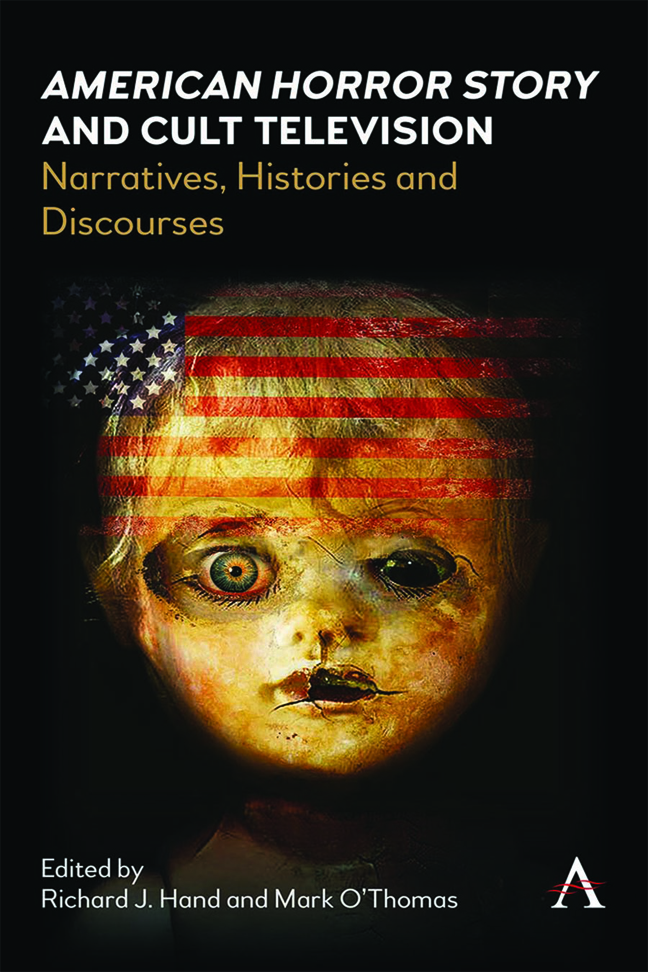
Over the course of ten seasons since 2011, the television series American Horror Story (AHS), created by Ryan Murphy and Brad Falchuk, has continued to push the boundaries of the televisual form in new and exciting ways. Emerging in a context which has seen a boom in popularity for horror series on television, AHS has distinguished itself from its 'rivals' such as The Walking Dead, Bates Motel or Penny Dreadful through its diverse strategies and storylines, which have seen it explore archetypal narratives of horror culture as well as engage with real historical events. Utilising a repertory company model for its casting, the show has challenged issues around contemporary politics, heteronormativity, violence on the screen and disability, to name but a few. This new collection of essays approaches the AHS anthology series from a variety of critical perspectives within the broader field of television studies and its transections with other disciplines.
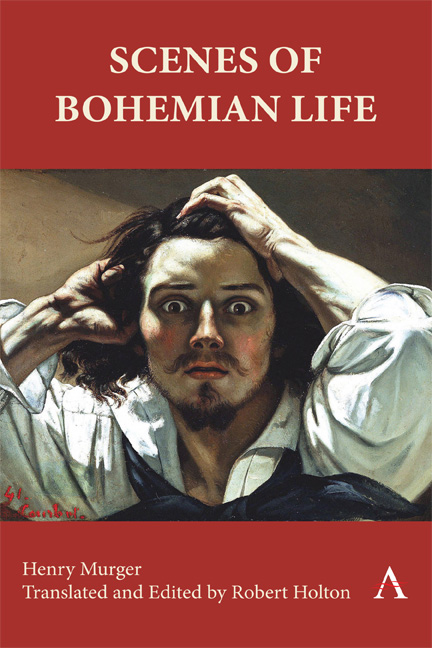
This book is a new translation of Henry Murger's influential Scènes de la vie de bohème, first published in French in 1851. The book recounts the lives of a bohemian group of creative young people as they fall in and out of love, endure cold and hunger, enjoy drunken parties, see their friends suffer and die of poverty, and finally emerge as mature artists. The book's publication soon inspired many (mostly young) people to seek out a bohemian life in Paris and other cities around the world. Not only did it inspire people at the time to change their lives, it also inspired Puccini's beloved opera 'La Bohème' (1896) and, a hundred years later, Jonathan Larson's phenomenally successful 'Rent' (1996). Few works of literature have had such a social impact. Bohemian cultures and subcultures have been with us ever since and Murger's book remains an engaging and satisfying work of literature.
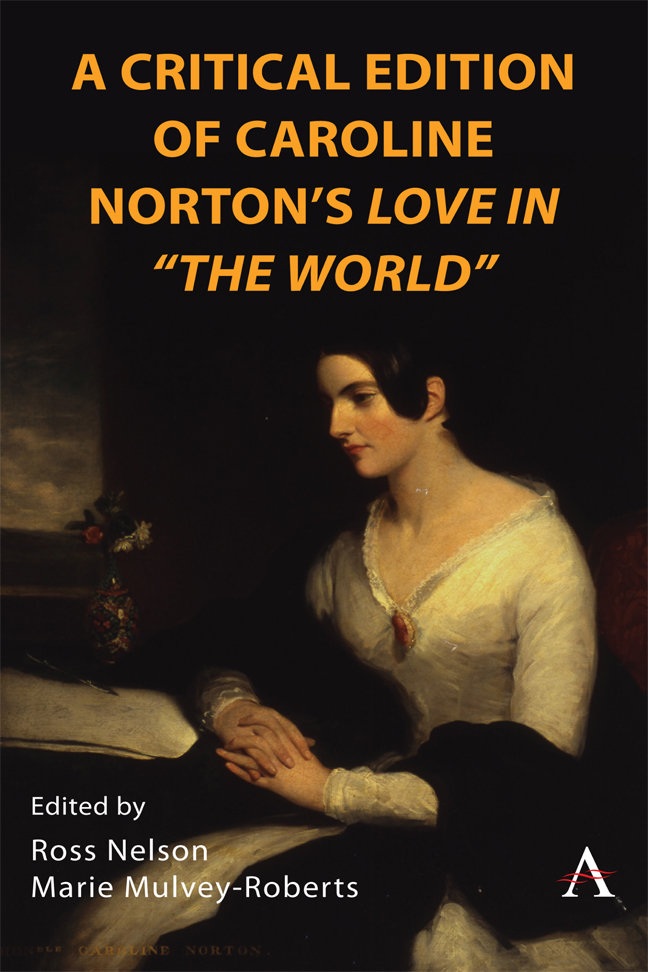
Caroline Norton's forgotten novel, which has remained unpublished until now, tells of the perils of courtship facing a naïve young girl Alixe, who has been launched onto the London social season. Her encounters with both a worthy and an undesirable suitor open an intriguing window onto the fashionable society of the 1820s in which Love in 'the World' takes place. In placing her heroine in these predicaments Norton was able to draw upon her own experiences of the bon ton, as the time in which the novel is set coincides with her first ball in March 1826, when she burst upon the scene with all her beauty and brilliance, later recalling, 'I came out […] to find all London at my feet.' She believed that London could be as callous as the metropolitan social scene might prove treacherous, and in alerting the reader to the dangers of fashionable society she makes ample use of her own observations as a debutante at her first London season. In a highly readable and coherent narrative with an indeterminate ending, which throws a spotlight onto her life and times, the plot of Love in 'the World' initially follows a pattern broadly representative of her own experience before developing in unexpected and surprising ways.
In 21 short case studies, this short book examines the distinctive coincidental history of America, Britain, and various Asian countries during the twentieth century. It covers a wide range of historical events, from American expansion into the Pacific to the creation of the Soviet gulags in Siberia to the end of the Vietnam War. Its main goal is to show how watershed historical events can often become layered or overlap each other, sometimes by intent but often merely by happenstance. As Ian Fleming once famously opined about actions in war: 'Once is happenstance. Twice is a coincidence. Three times is enemy action'.
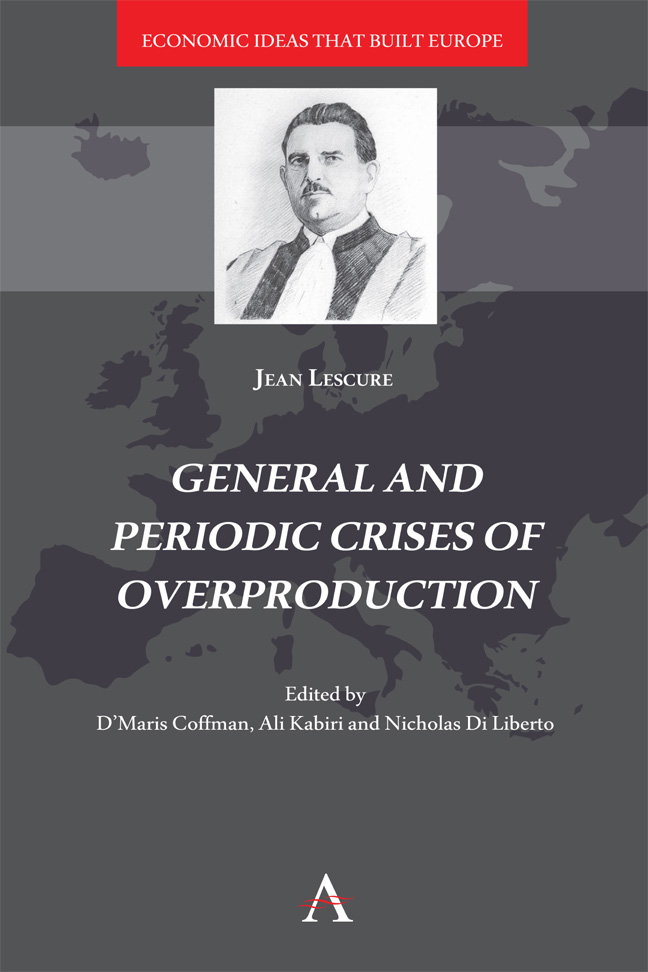
Jean Lescure's two-volume General and Periodic Crises of Overproduction is a pioneering study of the causes and consequences of industrial crises in capitalist economies in the nineteenth and early twentieth centuries. The author, who held doctorates in political economy and law, is most remembered as a founder of the French historical school and a staunch advocate of empiricism in the economic sciences. Lescure called his approach the 'complex historical method', by which he sought to revise classical and quantitative economic theory through the historical analysis and statistical observation of cyclical phenomena. Lescure wrote in an engaging style, accessible to non-specialists and economists alike, and critiqued the leading monetary theorists of the period, insisting that observation of the movements in production costs, industrial orders and profits be given priority over circulation and credit in understanding the periodic crises of capitalist economies. In Lescure's view, crises were inevitable in both market and command economies and their onset and consequences were predictable with the help of the more detailed production statistics newly available to economists and entrepreneurs at the time. Lescure, unlike many of the liberal economists of the time, was always careful to include in his historical account statistical analysis of unemployment figures, as well as those on crime, marriage and birth rates, homelessness and suicide. Although he remained skeptical of government intervention, Lescure admitted the state's role in the recovery of the 1930s, when social insurance schemes and investment in public works mitigated the worst effects of unemployment for industrial labour.
Roman Jakobson gave a literary translation of the double words and concepts of poetical hyper translation. Language can transmit verbal translation to explore new ways of thinking about music and other arts. Thomas A. Sebeok deconstructed the energy of translation into the duplicated genres of artistic transduction. In semiotics, transduction is a technical expression involving music, theater, and other arts. Jakobson used Saussure's theory to give a single meaning in a different art but with other words and sounds, later followed by Peirce's dynamic energy with a floating sensation of the double meaning of words and concepts. For semiotician Peirce, literary translation becomes the graphical vision of ellipsis, parabole, and hyperbole. Ellipsis is illustrated by Virginia Woolf's novel The Waves to give a political transformation of Wagner's opera 'Das Rheingold'. Parabole is illustrated by the two lines of thought of Hector Berlioz. He neglected his own translation of Virgil's Aeneid, when he retranslated the vocal text to accompany the musical lyrics of his opera 'The Trojans'. Hyperbole is demonstrated by Bertold Brecht's auto-translation of Gay's The Beggar's Opera. In the cabaret theater of The Three penny Opera, Brecht recreated his epic hyper-translation by retranslating the language of the folk speech of the German working classes with the jargon of criminal slang.
This book introduces a new thrilling field - Neurocomputational Poetics, the scientific 'marriage' between cognitive poetics, data science and neuroscience. Its goal is to uncover the secrets of verbal art reception and to explain how readers come to understand and like literary texts. For centuries, verbal art reception has been considered too subjective for quantitative scientific studies and till date many scholars in the humanities and neurosciences alike view literary reading as too complex for accurate computational prediction of the neuronal, experiential and behavioural aspects of reader responses to texts. This book sets out to change this view.
The Exhibition of Modern Brazilian Paintings, held at the Royal Academy of Arts of London and seven other major venues throughout the United Kingdom in 1944 and 1945, was the first collective display of Brazil's art shown in the United Kingdom and the largest ever sent abroad until then. It resulted from an initiative championed by the Brazilian Foreign Ministry and envisioned by seventy Modernist painters who donated 168 artworks as a contribution to the Allied War effort. Notwithstanding its historical relevance and unmatched scale, this event had never been academically investigated. Through exploring why and how successfully the Brazilian government devoted superlative efforts to this enterprise in the midst of World War II, this book is intended to fill this gap and gain an understanding of a largely neglected public aspect of a deeply studied period of Brazilian foreign policy.
The research unearthed abundant firsthand documents to reconstruct the episode, adopting the hermeneutic method and a theoretical framework from the Public Diplomacy and Cultural Diplomacy fields in order to interpret the circumstances that made possible this improbable and challenging endeavor. It contends that the Exhibition was a remarkably innovative action of Public Diplomacy avant la lettre, which aimed at engaging with British society and enhancing the image of Brazil and its culture. Its motivations must be understood within the broader foreign policy, focused on obtaining prestige and repositioning Brazil in the postwar international order, which encompassed the deployment of 25,000 troops to fight in Europe.
This book investigates the practice of writing and self - translating phenomenon of self-translation within the context of mobility, through the analysis of a corpus of narratives written by authors who were born in Italy and then moved to English-speaking countries. Emphasizing writing and self-translating As practices, which exists in conjunction with a process of redefinition of identity, the book illustrates how these authors use language to negotiate and voice their identity in (trans)migratory contexts.
The first four chapters of the book provide a close reading of the satiric, comic, and tragic action of Laurence Sterne's novel in the context of criticism from the twentieth and twenty-first centuries. Chapter 5 provides a summary of Chapters 1-4, focusing on Sterne's purpose in revising satiric plot structures and in blurring the lines between fiction and autobiography. Chapters 6-8 then examine Sterne's themes from Tristram Shandy that inform his letters, sermons, and other fiction; Chapter 9 discusses the international reception of Tristram Shandy and argues for using writing-to-learn strategies to teach Sterne's greatest novel to undergraduate and graduate students.
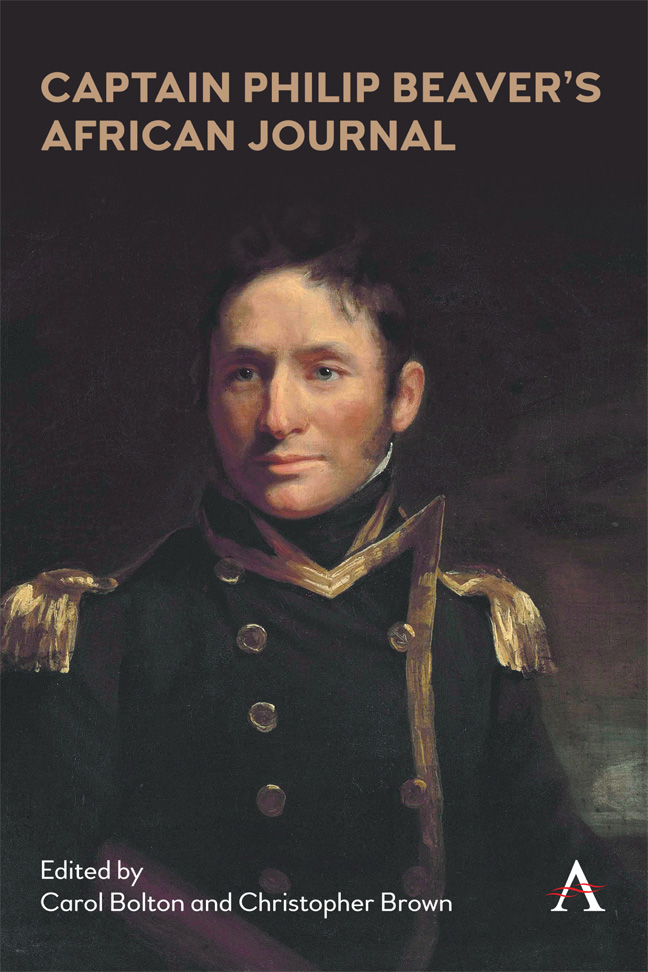
In 1805, naval officer Captain Philip Beaver (1766-1813) published his African Memoranda: Relative to an Attempt to Establish a British Settlement on the Island of Bulama, on the Western Coast of Africa, in the Year 1792. Beaver's text in this modern scholarly edition provides an absorbing testimony of his efforts to assist British colonisers in establishing their African settlement. Despite the colonial ambitions of this project, the 'Bulama Committee' members were reformists at heart. Their high-minded intentions in purchasing the island and settling it were to demonstrate the anti-slavery principle that propagation by 'free natives' would bring 'cultivation and commerce' to the region and ultimately introduce 'civilization' among them. Beaver's journal tells the extraordinary account of how the colonists' ambitions to benefit the African economy and set a precedent of humanitarian labour for the slave-owning lobby in Britain led to the extraordinary emigration of 275 men, women and children in order to put their humanitarian ideals into practice.
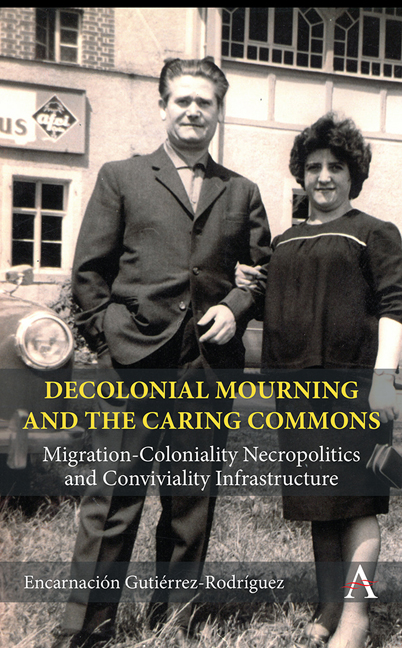
This book is the product of an endless individual and collective process of mourning. It departs from the author's mourning for her parents, their histories and struggles in Germany as Gastarbeiter, while it also engages with the political mourning of intersectional feminist movements against feminicide in Central and South America; the struggles against state and police misogynoir violence of #SayHerName in the United States; the resistance of refugees and migrantized people against the coloniality of migration in Germany; and the intense political grief work of families, relatives, and friends who lost their loved ones in racist attacks from the 1980s until today in Germany. Bearing witness to their stories and accounts, this book explores how mourning is shaped both by its historical context and the political labor of caring commons, while it also follows the building of a conviviality infrastructure of support against migration-coloniality necropolitics, dwelling toward transformative and reparative practices of common justice.
Understanding contemporary global politics by connecting them to the meditations of a classical Greek philosopher may seem farfetched and counterintuitive. But for political theorists, policymakers, the new influencers, journalists and engaged students, Thucydides' ancient wisdom provides insights into diagnosing and even undermining an endemic of political fear spreading across the world's borders. With his help, this book probes six case studies of aspiring great powers and the brittle identities that they may have unwittingly constructed. Raymond Taras questions the motives of the manipulators of fear whether found in in authoritarian states or increasingly in backsliding liberal democratic ones. The urgency of returning to and respecting tolerance in states establishing relations with arriving refugees and migrants takes on critical importance.
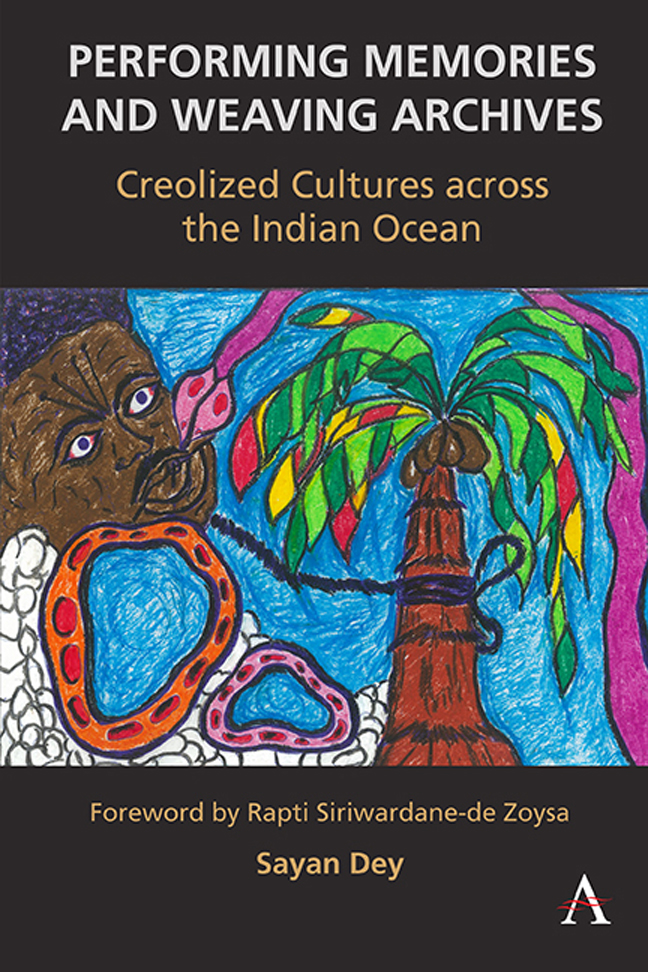
This book engages with how the Siddis in Gujarat and the South African Indians in South Africa perform different forms of creolized socio-cultural practices in the contemporary era. Since the precolonial times, India and South Africa have developed commercial relations through sharing clothing materials, minerals, precious stones, and spices. Besides exchanging physical objects, varieties of cultures, traditions, and rituals were also exchanged between these countries. With the emergence of colonization in both these countries as Africans were brought to India as slaves and Indians were taken to South Africa as indentured laborers, a lot of objects like musical instruments, plant seeds, cooking utensils, and hand-woven clothes were carried across the Indian Ocean as cultural memories. With the passage of time, the cultural practices of the Indian Diaspora and African Diaspora got intermixed with the native local cultures of South Africa and India, respectively, and gave birth to porous, fluid, multi-rooted, and creolized cultural practices. This book brings forth some of the creolized culinary, spiritual, and musical practices of these communities, and how these performances can expand the archives of creolized cultural practices of Diaspora communities in the Indian Ocean World.
This book analyzes particular patterns of nationalist self-configuration and nationalist uses of memory, counter-memory, and historical amnesia in Ireland from roughly around the time of the emergence of a broad-based non-sectarian Irish nationalist platform in the late eighteenth century (the Society of United Irishmen) until Ireland's partition and the founding of the Irish Free State in 1922. In approaching Irish nationalism through the particular historical lens of 'Iran,' this book underscores the fact that Irish nationalism during this period (and even earlier) always utilized a historical paradigm that grounded Anglo-Irish encounters and Irish nationalism in the broader world history, a process that I term 'worlding of Ireland.' In effect, Irish nationalism was always politically and culturally cosmopolitan in outlook in some formulations, even in the case of many nationalists who resorted to insular and narrowly defined exclusionary ethnic and/or religious formulations of the Irish 'nation.' Irish nationalists, as nationalists in many other parts of the world, recurrently imagined their own history either in contrast to or as reflected in, the histories of peoples and lands elsewhere, even while claiming the historical uniqueness of the Irish experience. Present in a wide range of Irish nationalist political, cultural, and historical utterances were assertions of past and/or present affinities with other peoples and lands.
Sustainable Peace in Northeast Asia examines the causes of lasting and complex tensions in the region from underlying political, historical, military and economic perspectives; discusses their historical development and political-economic implications for the world; and explores possible solutions to build lasting peace. The book is unique in that it approaches the topic from the historical perspective of each constituent country in the region. Major global powers such as the United States and Russia have also closely engaged in the political and economic affairs of this region through a network of alliances, diplomacy, trade and investment. The book also discusses the influence of these external powers over the crisis, their political and economic objectives in the region, their strategies and the dynamics that their engagement has created. Both South Korea and North Korea have sought reunification of the Korean peninsula, which will have a substantial impact on the region. The book examines its justification, feasibility and effects for the region. The book discusses the role of Mongolia in the context of the power dynamics in Northeast Asia. A relatively small country, in terms of its population, Mongolia has rarely been examined in this context; Sustainable Peace in Northeast Asia makes a fresh assessment of its potential role.
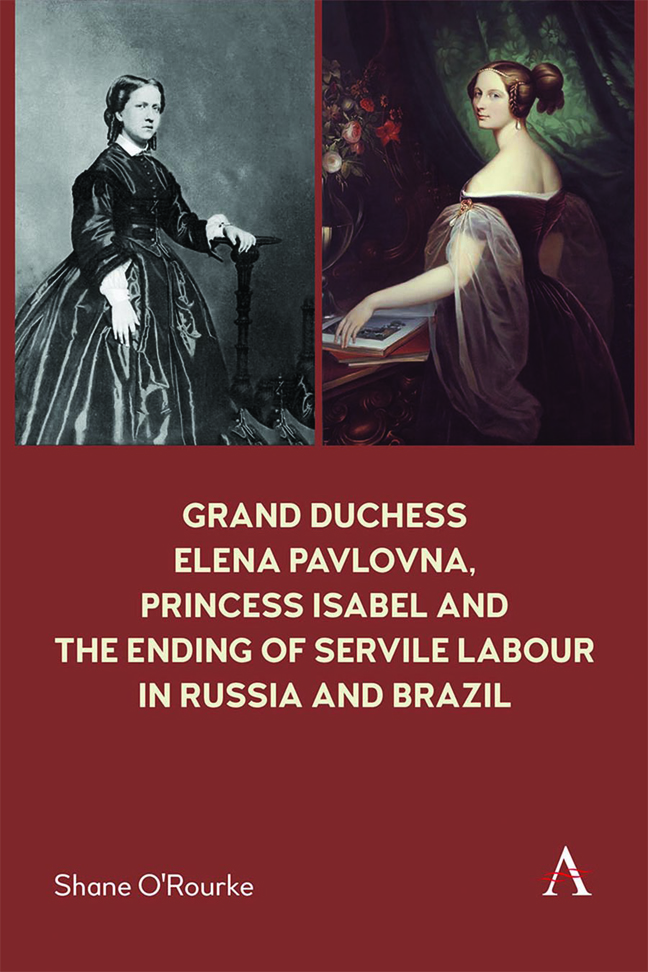
Grand Duchess Elena Pavlovna of Russia and Princess Isabel of Brazil were active participants in the struggle to end servile labor in their respective countries. They acted in defiance of political conventions which excluded women from any political activity. Both women were determined to do all in their power to further the cause of emancipation and to determine the terms under which serfs and slaves were emancipated. This book examines the political activities of the two royal women within the context of their respective societies and adopts a comparative approach.
According to Vālmīki's Sanskrit Rāmāyaṇa (early centuries CE), Śambūka was practicing severe acts of austerity to enter heaven. In engaging in these acts as a Śūdra, Śambūka was in violation of class- and caste-based societal norms prescribed exclusively by the ruling and religious elite. Rāma, the hero of the Rāmāyaṇa epic, is dispatched to kill Śambūka, whose transgression is said to be the cause of a young Brahmin's death. The gods rejoice upon the Śūdra's death and restore the life of the Brahmin. Subsequent Rāmāyaṇa poets almost instantly recognized this incident as a blemish on Rāma's character and they began problematizing this earliest version of the story. They adjusted and updated the story to suit the expectations of their audiences. The works surveyed in this study include numerous works originating in Hindu, Jain, Dalit and non-Brahmin communities while spanning the period from Śambūka's first appearance in the Vālmīki Rāmāyaṇa through to the present day. The book follows the Śambūka episode chronologically across its entire history - approximately two millennia - to illuminate the social, religious, legal, and artistic connections that span the entire range of the Rāmāyaṇa's influence and its place throughout various phases of Indian history and social revolution.
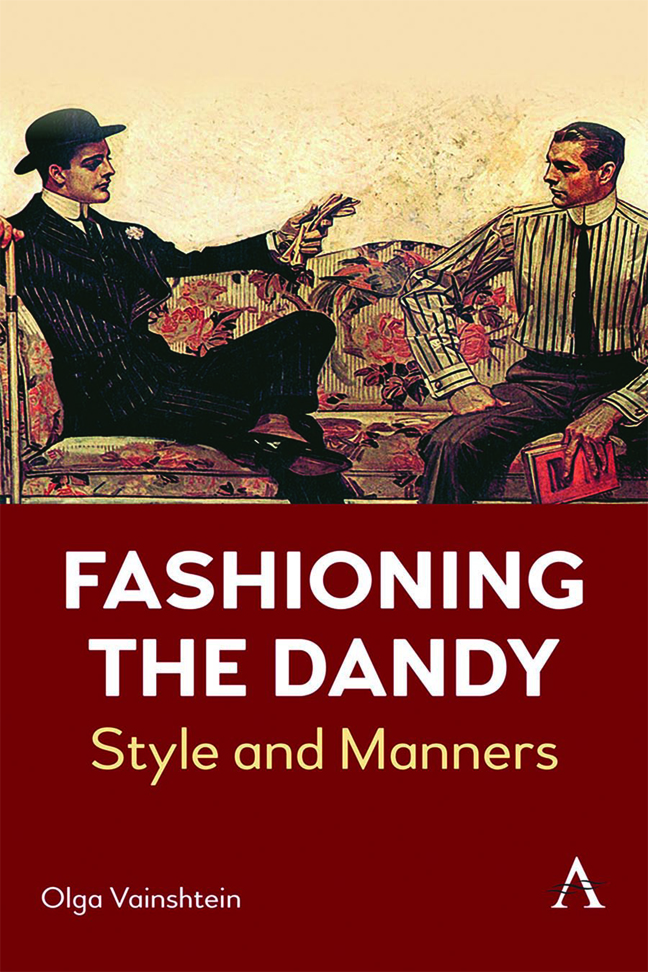
The book explores the dandy as a cultural type across Europe and Russia from the eighteenth century through the present day. Olga Vainshtein offers a unique view on dandyism as a cultural tradition, based not merely on fashionable attire, but also as a particular lifestyle with specific standards of behaviour, bodily practices and conceptual approaches to dress. The dandy is described as the prototypical hero of the modern cult of celebrities. From clubbing manners, the techniques of virtual aristocratism, urban flâneurs and the correct way to examine people, Vainshtein walks us through optical duels and the techniques of visual assessment at social gatherings. Readers will learn about strategies of subversive behaviour found in practical jokes, the fine art of noble scandal, dry wit, bare-faced impudence and mocking politeness. Looking at dandyism as a nineteenth-century literary movement, Vainshtein examines representation of dandies in fiction. Finally, a large section is devoted to Russian and Soviet dandyism and the dandies of today.
Categorization is an essential and unavoidable instrumentality for conceptually navigating a world-indeed for being able to conceptualize a world to be navigated. Classification is a pivotal instrument for scientific systemization, featured as a basis for the philosophical understanding of reality since Aristotle, but classificatory concepts of sorts, types and natural kinds inevitably pervade our understanding of ourselves and our position in the social as well as the natural world at all levels. The authors argue that the character, purpose-, context-, and culture-relativity of categories and categorization have been widely misunderstood - that standard philosophical views are substantially correct in some respects but markedly mistaken in others. The book offers a comprehensive survey of basic principles of classification and categorization, a survey of relevant empirical work, and a multitude of illustrative examples accompanied by instructive analysis of ways and means. The work traces wide-ranging implications of the current approach for philosophical problematic and paradox in philosophy of mind, epistemology and metaphysics, philosophy of science, social philosophy and ethics.