To save content items to your account,
please confirm that you agree to abide by our usage policies.
If this is the first time you use this feature, you will be asked to authorise Cambridge Core to connect with your account.
Find out more about saving content to .
To save content items to your Kindle, first ensure no-reply@cambridge.org
is added to your Approved Personal Document E-mail List under your Personal Document Settings
on the Manage Your Content and Devices page of your Amazon account. Then enter the ‘name’ part
of your Kindle email address below.
Find out more about saving to your Kindle.
Note you can select to save to either the @free.kindle.com or @kindle.com variations.
‘@free.kindle.com’ emails are free but can only be saved to your device when it is connected to wi-fi.
‘@kindle.com’ emails can be delivered even when you are not connected to wi-fi, but note that service fees apply.
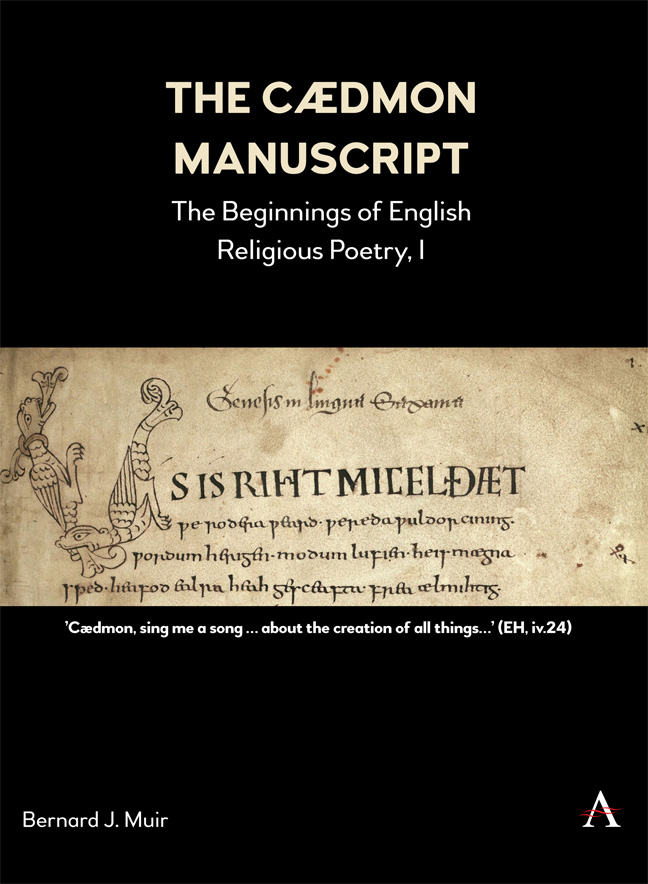
The Cædmon Manuscript is one of three extant anthologies of English Christian poetry produced in England before 1000 CE. It is a collection of four religious poems in Old English based on Biblical materials. They have the editorial names Genesis, Exodus, Daniel and Christ and Satan. This edition consists of an Introduction, Bibliography, Codicological and Paleographical Analysis, an Art-Historical Commentary and an edition of the four poems.
Immanuel Wallerstein, one of the most influential yet controversial sociologists of the past half-century, is a touchstone in innumerable debates about globalization and the power of capitalism, the nature of development in the modern era, and how to come to grips with widespread inequalities while recovering the potential for social change. The Anthem Companion to Immanuel Wallerstein offers a compelling guide to his writings and ideas, his influences and reception, and the reasons for his enduring significance, with 10 original interpretive essays written by a distinguished group of international scholars. Importantly, the contributors also advance Wallerstein's work into neglected areas such as climate change, global pandemics, racism, and gender and demonstrate his importance, not just to debates in his intellectual context, but to those of our times as well. This companion provides a multifaceted tool for thinking with Wallerstein, while showing where those engaging with Wallerstein's thought can take his work in the contemporary world.
Virtuous institutions, such as human rights ones, have been neglected by securitization theory's focus on the national state apparatus as the key driver of security politics. This book challenges this assumption, showing the ways institutional human rights, deemed the most progressive of rights, have been complicit in rendering the body vulnerable. While the book principally focuses on the treatment of the veiled woman, it also considers wider cases involving torture: the ultimate removal of control over one's body and biggest transgression of human rights' supposed foundational commitment to bodily integrity.
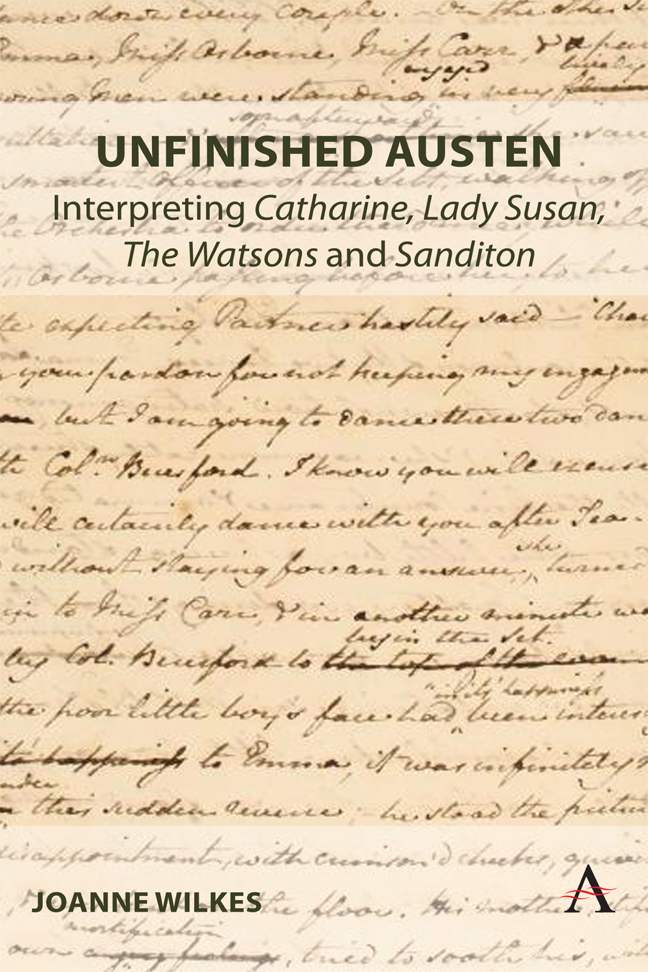
Unfinished Austen examines four texts that Jane Austen left incomplete: Catharine, or The Bower (1792-3), Lady Susan (1795?), The Watsons (1803-4?) and Sanditon (1817), none of them published till well after her death. Since very little in manuscript form survives from the six famous novels, these four manuscript texts offer insight into the novelist in the process of creation. They also problematize the romance plot prominent in the published novels by presenting this in a nebulous or incipient state that underlines its artificiality.
These texts sometimes show how the romance plot is inflected by the financial condition in which young marriageable women can find themselves. Moreover, the stories (other than Catharine) have aroused the interest of many later writers-including writers for theatre and screen-who are eager to complete or to amplify them. They may do this through developing the stories to some kind of dénouement. Perhaps more intriguingly, however, these texts induce some writers to question the very enterprise of concluding an unfinished text.
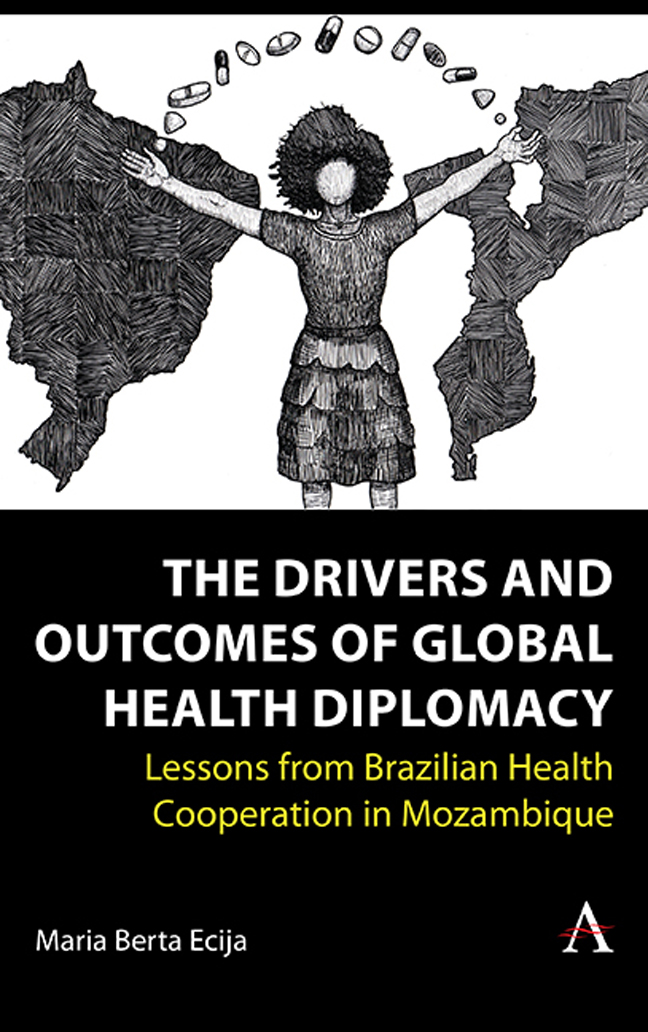
This book investigates the Brazilian health cooperation in Mozambique looking at the interests of both actors and different power relations within this initiative. It counts with a case study looking at the implementation of SociedadeMocambicana de Medicamentos - a pharmaceutical factory that was implemented in Maputo as a result of the cooperation between the countries.
The Theory and Practice of Creative Coaching has been long in development and is not meant as an end-view of creativity in this field. It is, however, a stimulating collection of ideas (with detailed views from both practice and education) that seeks to provide stimulus to trainee coaches as well as those whose practice is well-established. With topics as wide-ranging as walking to line-drawing this book seeks to change the practice of practitioners, new and old, and helps to articulate the ways in which David Clutterbuck has called for a move from the use of models towards mastery by embracing new ways of working with the clients of coaching. With a wide-ranging scope, examples, ideas and a strong link to academic understanding, this book will provide a stimulus to the coaches, supervisors and educationalists to open their eyes to alternative ways of practicing their craft.
American novelist Edith Wharton (1862-1937) is best known today for her tales of the city and the experiences of patrician New Yorkers in the 'Gilded Age'. This book pushes against the grain of critical orthodoxy by prioritizing other 'species of spaces' in Wharton's work. For example, how do Wharton's narratives represent the organic profusion of external nature? Does the current scholarly fascination with the environmental humanities reveal previously unexamined or overlooked facets of Wharton's craft? I propose that what is most striking about her narrative practice is how she utilizes, adapts, and translates pastoral tropes, conventions, and concerns to twentieth-century American actualities. It is no accident that Wharton portrays characters returning to, or exploring, various natural localities, such as private gardens, public parks, chic mountain resorts, monumental ruins, or country-estate 'follies'. Such encounters and adventures prompt us to imagine new relationships with various geographies and the lifeforms that can be found there. The book addresses a knowledge gap in Wharton and the environmental humanities, especially recent debates in ecocriticism. The excavation of Wharton's words and the background of her narratives with an eye to offering an ecocritical reading of her work is what the book focuses on.
Aphra Behn (1640-1689), a prolific and popular playwright, poet, novelist, and translator, has an extensive corpus of literature that plays a key role in literary history as the work of a female author. Based upon word counts, Quantitative Literary Analysis of the Works of Aphra Behn chronicles Behn's obsession with the mystery and power of love and early modern passions through her entire oeuvre. Love, for Behn, is an external power, sometimes figured as the boy god Cupid or an abstraction, that enters the body with pain and pleasure and leaves the victim searching for understanding. The book follows two threads of argument: one using quantitative measures to indicate passages for significant close reading of preferred language and the other focused upon her use of small words like thou, sir, or said. Situating her writings in the conflicts of Early Modern discourses on the passions, the book demonstrates that Behn's language reveals generic patterns for representing love that include a warning about its potential to destroy the body and condemn the soul. Taken as a whole, Behn's literary production is an extraordinary examination of the early modern concept of love at a moment of change in the language and meaning of the passions.
Films fill our imagination with figures, figurines, and talismans. They ceaselessly rework the same archetypes and invent troubling prototypes - especially when they establish a deeper relationship to reality. How do we understand these presences that are both so characteristic and so diverse in cinema? How does film deal with bodies, movements, and gestures? Why are we so drawn to these shadows, silhouettes, and hypothetical beings? What organizes the figurative values at work in a film? How do cinematic creatures circulate from film to film and image to image? How does film articulate the links between the abstract and figurative? Is it possible to write a history of figurative forms? Starting from films themselves and works that are both classical (Sergei Eisenstein, Roberto Rossellini, Orson Welles) and contemporary (Abel Ferrara, Brian DePalma, Patricia Mazuy), celebrated (Robert Bresson, John Cassavetes, Ken Jacobs, Paul Sharits) and overlooked (Al Razutis, Jean Genet, Monte Hellman, and John Travolta), from auteurs as well as aesthetic questions (representations of dance, the naked body, character development), the essays in this volume, most available for the first in English, aim to open a field that has been neglected by analysis, while also suggesting the tools necessary to understanding figurative phenomena specific to cinema.
World leaders have made a forceful statement that climate change is the greatest challenge facing humanity in the twenty-first century. However, little progress has been made in implementing policies to address climate change. In Climate Uncertainty and Risk, eminent climate scientist Judith Curry shows how we can break this gridlock. This book helps us rethink the climate change problem, the risks we are facing and how we can respond to these challenges. Understanding the deep uncertainty surrounding the climate change problem helps us to better assess the risks. This book shows how uncertainty and disagreement can be part of the decision-making process. It provides a road map for formulating pragmatic solutions. Climate Uncertainty and Risk is essential reading for those concerned about the environment, professionals dealing with climate change and our national leaders.
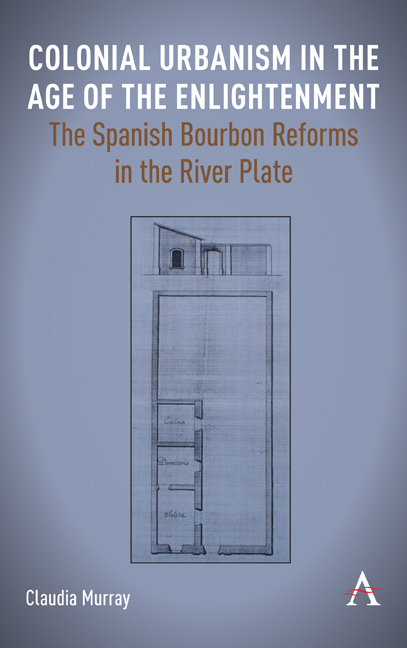
This book tells the story of how the monarchy aimed at creating a new capital city in a remote and forgotten area of the empire. It also shows how the local Creole bourgeoisie rapidly assumed the role of urban developers, and enhanced their economic status by investing in and controlling the Buenos Aires' property market. In a short period, from 1776 to 1810, the urban transformation of Buenos Aires helped increase the Crown's revenues and considerably reduced contraband trade. Nevertheless, urban changes generated an internal struggle for power for the control of the city between the Spanish loyalist and the local wealthier Creoles. As this book concludes, for an empire such as the Spanish, which was built upon a network of cities, the Crown's loss of the control of Buenos Aires' urban space was a serious threat to its power that foreshadowed Argentina's wars of independence.
Transforming the Politics of Mobility and Migration in Aotearoa New Zealand is a future-focused edited collection that formulates alternative paradigms that can lead to a more just and ethical politics of mobility and migration in Aotearoa New Zealand. Examining a variety of topics, the book addresses the challenges of structural discrimination, integration and migrant rights framed within larger regional and global concerns. Collectively, the contributors advance perspectives on social justice and migrant rights, specifically addressing issues of ethics, collective well-being and solidarities.
The collection brings together leading and early career scholars paired with practitioners in the migrations sector. Developing conceptual knowledge in migration studies, it fills a gap in the sparse literature on the politics of migration in Aotearoa New Zealand. While theoretically engaged and of value to the research community, the book also follows recent calls to better communicate the complexities of migration to policy makers, with accessible chapters that address a range of issues faced by migrants and speak to a wide audience.
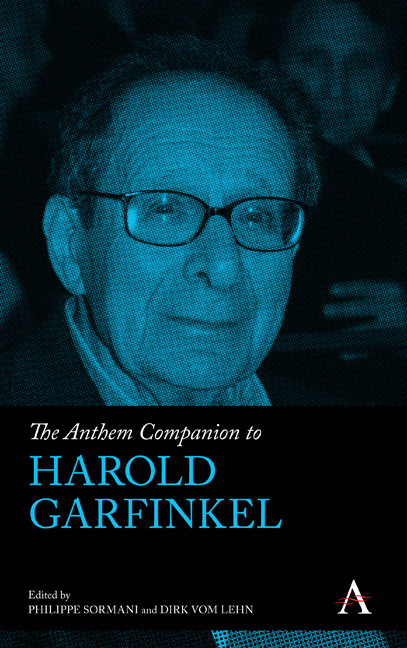
The Anthem Companion to Harold Garfinkel brings together leading scholars and upcoming researchers in contemporary ethnomethodology to bring out the experimental character of Garfinkel's legacy in the social sciences and beyond. Therefore, the Companion takes its cue from Garfinkel's noted 'breaching experiments,' enabling the reflexive investigation of 'trust conditions' in situ, and asks how this research interest has been productively pursued and distinctively rearticulated, both within and beyond Garfinkel's oeuvre. Whilst Garfinkel's experimental legacy is often acknowledged, no systematic introduction to its distinctive outlook, tension-riddled diversification, and heuristic interest(s) is available to date. The Anthem Companion to Harold Garfinkel both fills and reflects upon that 'gap in the literature', thereby articulating ethnomethodology's experimental outlook, if not recasting its current research directions.
This book describes the ways in which judges, using JDR, have been facilitating problem-solving among litigants, and in the process, ensuring more just outcomes. JDR or judicial dispute resolution is similar to mediation (or alternative dispute resolution - ADR, as it is sometimes called), but it is provided by a judge, not a private mediator. Very little has been written about JDR, especially in Canada where it has been pioneered for several decades, because all the records have remained confidential. The story can now be told because the authors were given exclusive access to the records and the parties (including the JDR judges) in nine illustrative cases.
The authors provide a complete Teaching Appendix summarizing the JDR cases from the standpoint of a variety of legal specialties, while highlighting the differences between JDR and ADR.
Using case studies from Florida and the Caribbean region, this book summarizes the state of coral reef conservation today. The question this book answers is, what is the best way to protect the vulnerable coral reefs, with an ever-worsening climate crisis? The book's contribution is looking closely at people's avenues to participate in coral reef management, and how the public is increasingly making their voices heard in the management process.
Theology in the Early British and Irish Gothic, 1764-1832 reassesses the relationship between contemporary theology and the Gothic. Investigating Gothic aesthetics, depictions of the supernatural and portrayals of religious organisations, it explores how the Gothic engages with contemporary theologies, both Dissenting and Anglican. Moving away from the emphasis on either a monolithic Protestantism or on the Gothic as a secular mode, it shows the ways in which the Gothic exploration of the transcendent and the obscure cannot be separated from the diverse theologies of its day. The project maps how the Gothic not only reflects but actively engages in the theological debates and controversies contemporary to its efflorescence.
Sicilian puppet theater was the predominant form of cultural expression for working-class southern Italians and Sicilians from the early 1800s until the proliferation of television in the 1950s. This form of dramatic prose theater also flourished in diasporic Italian urban communities, bringing immigrants together for nightly performances of the same deeply cherished chivalric stories. Agrippino Manteo's scripts, examined for the first time in this study, are testimony to the rich substance of the Paladins of France narratives dramatized on the traditional opera dei pupi stage. Even beyond their historical and aesthetic value, the alternating episodes of love, enchantment, adventure, and warfare invite us to relive the passion, heartbreak, excitement, and magic of knights and damsels from around the globe - from Europe to North Africa to East Asia - who share the stage with a host of wizards, fairies, giants, and monsters. This study reconstructs the history of the Manteo family marionette theater in New York City across seven decades and three generations, provides translations of eight selected plays and 270 extant summaries, and offers comparative analyses uncovering the creative process of adaptation from Italian Renaissance masterpieces of chivalric poetry to nineteenth-century prose compilations to Agrippino Manteo's opera dei pupi dramatizations.
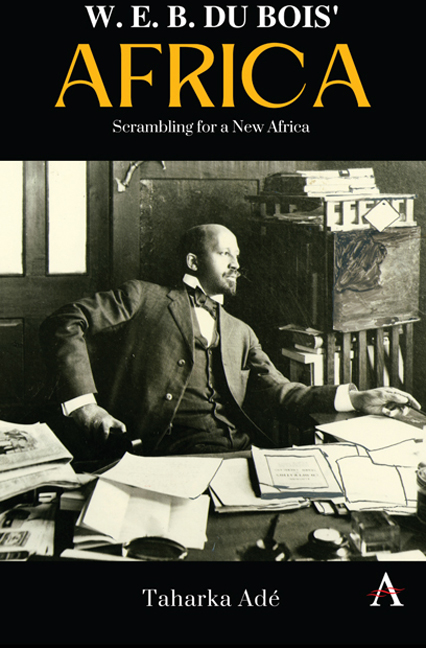
W. E. B. Du Bois was one of the leading figures of Pan-African thought and activism in the twentieth century. As a sociologist, Du Bois wrote much about the historical and social circumstances of African Americans while often acknowledging the African historical background of much of African American, or Negro, culture. In 1946 Du Bois published The World and Africa, which was a culmination of previous attempts at penning a narrative of African history beginning with his 1915 publication The Negro, in which he included the social-historical experience of African Americans within the continuity of African history. This book delivers for the first time a comprehensive Afrocentric investigation and critique of Du Bois's writings on African history. It argues that while Du Bois presented at the time a strong critique of the Eurocentric construction of African history, many of Du Bois's descriptions and arguments about African people and history were likewise flawed with interpretations that projected the cultural subjectivities of Europe. Further, while Du Bois rightfully presents the historical relationship between African Americans and Africa as a justification for Pan-African activism, this book contends that Du Bois's failure to center African culture instead of race leads to superficial justifications for Pan-African unity.
The Lure of Economic Nationalism addresses the continued appeal of economic nationalism. It places economic nationalism in both historical and contemporary contexts, from mercantilism and the writings of Friedrich List to Brexit in the United Kingdom and the Trump Administration in the United States. It also considers the alternative to economic nationalism in the form of a rules-based, multilateral trading system and the World Trade Organization. The book argues that going beyond zero-sum outcomes is better suited to address current problems, including rising tides of ethnonationalism in many countries and pandemics. The book is written in an accessible manner and draws deeply from research in economics and political science. It will be of interest to policymakers, economists, political scientists and the informed public.
The book shows how humor has changed since the advent of the internet: new genres, new contexts, and new audiences. The book provides a guide to such phenomena as memes, video parodies, photobombing, and cringe humor. Included are also in-depth discussions of the humor in phenomena such as Dogecoin, the joke currency, and the use of humor by the alt-right. It also shows how the cognitive mechanisms of humor remain unchanged. Written by a well-known specialist in humor studies, the book is engaging and readable, but also based on extensive scholarship.