To save content items to your account,
please confirm that you agree to abide by our usage policies.
If this is the first time you use this feature, you will be asked to authorise Cambridge Core to connect with your account.
Find out more about saving content to .
To save content items to your Kindle, first ensure no-reply@cambridge.org
is added to your Approved Personal Document E-mail List under your Personal Document Settings
on the Manage Your Content and Devices page of your Amazon account. Then enter the ‘name’ part
of your Kindle email address below.
Find out more about saving to your Kindle.
Note you can select to save to either the @free.kindle.com or @kindle.com variations.
‘@free.kindle.com’ emails are free but can only be saved to your device when it is connected to wi-fi.
‘@kindle.com’ emails can be delivered even when you are not connected to wi-fi, but note that service fees apply.
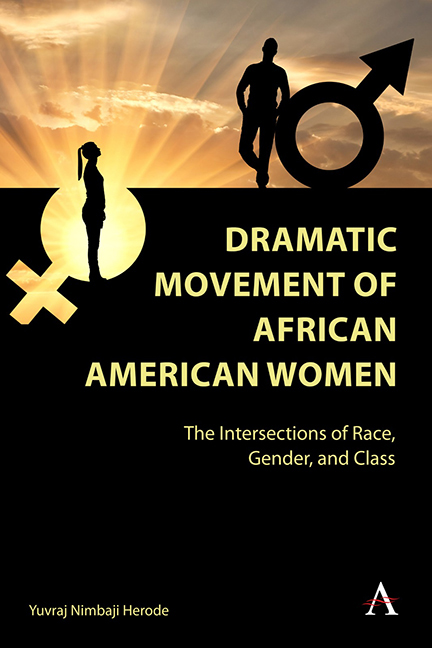
The book demonstrates the experiences of Alice Childress, Lorraine Hansberry, and Suzan-Lori Parks in comparison with the dramas of each other and those of other African American women. These women playwrights created a militant theatre and a theatre of experience that applied to both the African American community in general and African and African American women in particular. They have been encompassed within African American woman's aesthetics that shares the militancy and experience characterized by a triple factor: race, gender, and class.
This book is neither biography nor a conventional film critique. Rather, the text explores aspects of Hitchcock's work in relation to theories drawn from the social sciences and philosophy. The various chapters focus not on specific films, but on broader ideas central to Hitchcock's work. There is, for instance, a chapter on his idea of the MacGuffin in which I use Ernesto Laclau's theories of equivalent substitution to explain how the MacGuffin functions in Hitchcock's works. There is also a chapter on his notion of 'pure cinema' which moves from the idea of purity as an anthropological concept to consider purity in relation to current debates regarding so-called hybrid media, and Hitchcock's relevance to these issues in respect of his dissatisfaction with the advent of sound to the cinema world. Broadly speaking, the book uses Hitchcock's films to illustrate ideas in the social sciences and philosophy and uses those same ideas to illustrate aspects of Hitchcock's films.
Population is a dangerous political category. It is not separable from the racist and class-based valorisation and devaluation of different lives. From global contraceptive implant programmes to right wing anti-immigration discourses, demographic interpretations of multiple current crises legitimise the states' grip on childbearing and mobility. The results are complex dimensions of reproductive racism and restrictive border regimes. Meanwhile, global social inequalities and racial capitalist extractivism stay out of the game.
The book analyses how demographic knowledge production and states' grip to the variable of population intertwine. It introduces the concept of the Malthusian matrix in order to understand how class-selective and racist hierarchies within population narratives are combined with gendered policies of reproductive bodies and behaviours.
Several chapters explore current reproductive racism, establishing a hierarchy between the birth of desirable and undesirable people. An upward redistributive family policy in Germany is promoting births within the privileged middle classes. And international population programs revive targets in order to increase the use of long-acting contraceptives in the Global South, within a market-oriented setting of Big Pharma promotion. Reproductive racism is also effective in migration policy strategies: narratives about 'migrant birth rates' circulate among ultra-right forces as well as seemingly apolitical demographic policy consultancy. The last sections discuss state-theoretical approaches and the intersectional feminist concept of reproductive justice in order to provide tools for critique and resistance.
The book collects thirty-two opinion pieces, essays, and two poems published by the author in leading media on a wide variety of public policy topics as recently as 2022. The articles and poems range over six broad areas: the moderation ideal, as illustrated by the abortion issue; American exceptionalism; civic discourse; the Trump presidency; campus life; and immigration, citizenship, and refugee policy. The author, a self-described 'militant moderate,' draws on his participation as a commentator in these and many other public debates.
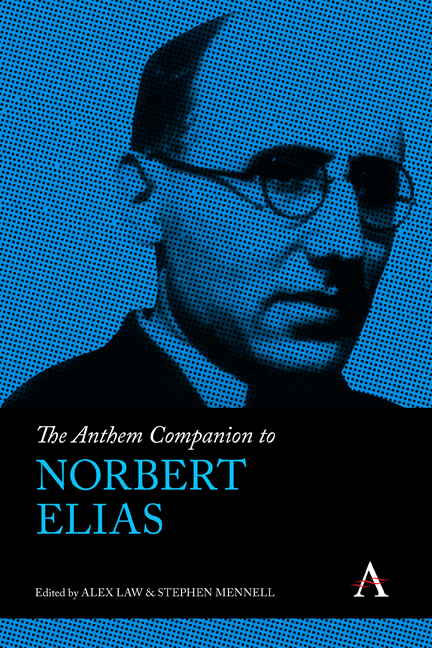
The book presents an authoritative assessment of Norbert Elias (1897-1990). It recognizes Elias as one of the major contributors to the development of sociological tradition in the past century and charts the continuing relevance of his conception of sociology for contemporary society. Only toward the end of his career as an academic did Elias's work begin to attract the attention of English-speaking sociologists, historians, and scholars of cultural studies. The book provides an authoritative and broad representation of Elias's oeuvre and work inspired by it. While Elias is best known for his major study of The Civilizing Process, the reach and subtle depths of Elias's conception of process sociology has been cemented more recently by the English-language publication of Elias's collected work of 18 volumes. The baton of process sociology is being passed on to further generations of sociologists.
Chapters from leading contributors outline the nature of the sociological practice of Elias and address fundamental questions of historical sociology, democratization, gender, racialization processes, and embodiment. Later chapters highlight the contribution of process sociology for understanding developments in nation, state and global sociology, criminology, art, and education.
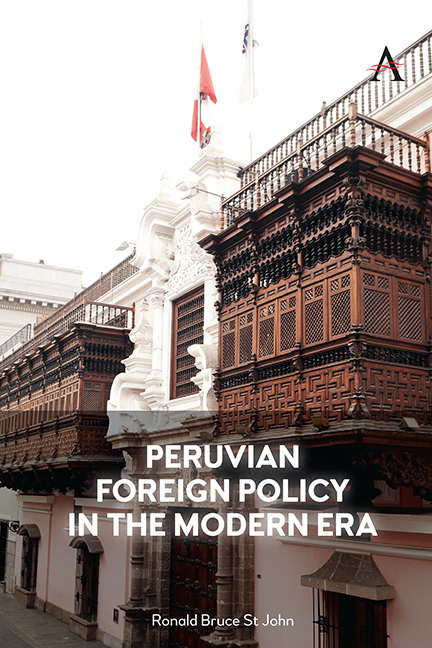
Peruvian Foreign Policy in the Modern Era is a chronological treatment of Peruvian foreign policy from 1990 to the present. It focuses on the impact of domestic politics, economic interests, security concerns, and alliance diplomacy on contemporary Peruvian foreign policy.
In common with other Latin American states, sovereignty, territorial integrity, regionalism, continental solidarity, and economic independence were core goals of Peruvian foreign policy after independence. In modern times, successive Peruvian governments have continued to address these and related issues in a foreign policy grounded in pragmatism and notable for its emphasis on a rational combination of continuity and change. The Fujimori administration (1990-2000) set the stage for this shift in the direction, tone, and content of the nation's foreign policy with successor administrations refining and building upon the initiatives launched by Fujimori.
Drawing on his experiences directing films in Ireland, Haiti, Brazil and South Africa, McLaughlin reflects on the potential of documentary film to provide a platform for those who have experienced political violence to challenge dominant narratives that marginalises them, and that offers potential for personal and public healing. Using participatory methodologies, each case study analyses conditions of production, political context, participatory potential, and impact of the films on both survivors and the general public. Challenges are addressed and lessons suggested for similar projects in the areas of documentary film, transitional justice, participatory ethnography and political activism.
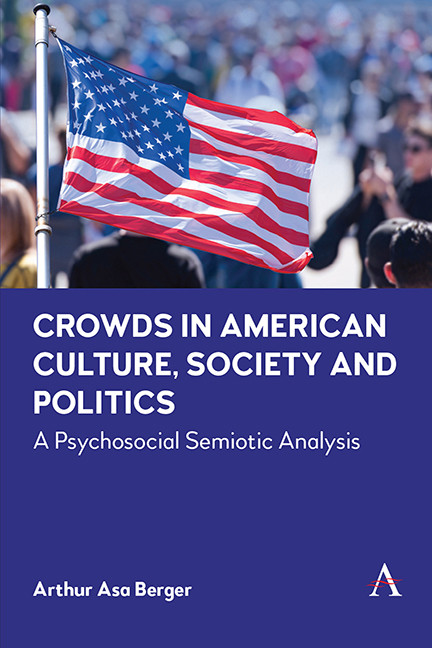
This book builds on Le Bon's classic, The Crowd, to evaluate the role of crowds in American culture, society, and politics. It offers a detailed description of Le Bon's book along with material on Freud's book on group psychology, crowds and cults, the semiotics of crowds, American national character and crowds, the 1/6 attack on the Capitol, and crowds and COVID-19.
In the past four or so decades, a significant amount of research efforts has been made to examine the rapid and constant social changes in China. However, most of the literature has focused on either macro- or micro-level issues, and what has not been adequately analysed is how the majority of ordinary people has reacted to and influenced the changes. This inadequacy has affected our understanding of Chinese society, its dynamics and the changing trends. Drawing upon a new perspective of competitive social repositioning, and the evidence recorded in numerous recent publications and interview data, this book seeks to re-examine the ever-changing, but under-researched, societal dynamics driving social transformations in China from 1964, when the communist heir narrative was rebranded and utilised, to 2000, when Jiang Zemin formulated the Three-Represents theory to modify the ideological political thinking of China's ruling elites. This analysis focuses on how a high proportion of aspirational citizens have kept repositioning themselves in China's changing distributions of social resources and social structure, how their attitudes and behaviours have been shaped over time, what characteristics of their choices are at different stages, and how their preferences have resulted in the zig-zag patterns of China's recent social change.
This volume introduces two unique and hitherto largely unknown contributions to the making of modern economic knowledge, and makes them available internationally for the first time in full English translation. Written in 1597 Barthelemy de Laffemas' General regulation for the establishment of manufacturers (originally in French: Reiglement général pour dresser les manufactures) is one of the earliest voices in the history of political economy emphasising the necessity of manufacturing and large-scale industry as the source of the wealth of nations. Located somewhat at the cross-roads between medieval Scholasticism and early mercantilism presents a basic version of the infant industry argument and European standard model of economic development which made it into later doctrines of thought including Enlightenment thinkers such as Colbert, Sir James Steuart or Friedrich List and nineteenth and twentieth century neomercantilism.
Leonhard Fronsperger's On the praise of self-interest (German original: Von dem Lob deß Eigen Nutzen, 1564) is the first documented instance of the 'Mandeville paradox', a theorem in modern economics usually associated with much later writings including Bernard de Mandeville's Fable of the Bees (1705/14), or Adam Smith's Theory of Moral Sentiments (1759) and Wealth of Nations (1776). Vested in Renaissance Humanism southern German military surgeon and polymath Fronsperger argues - without moving into the abstractions of neoliberalism - that possessive individualism and self-interest are key forces moving the human economy forward, contributing to virtuous cycles of enrichment and economic development.
One element explaining the financial crisis is what Hyman Minsky called ‘destabilizing stability’: long periods of stability lead to increasing vulnerability. This chapter argues that similar mechanisms are at work inside economics: long periods of economic progress in the core countries lead to increasingly abstract and irrelevant economic theories (‘terrible simplifications’). This leads to turning points towards more relevant economic theories, referred to as ‘1848 moments’. The chapter further outlines the key variables that need to be re-introduced into economic theory in order to furnish poor countries with the type of productive structures that makes it possible to eliminate poverty.
‘.. .soon or late, it is ideas, not vested interests,
which are dangerous for good or evil.’
John Maynard Keynes, closing words of The General Theory (1936).
The United Nations has announced that the number of chronically hungry people on the planet has exceeded the billion mark for the first time. It is extremely unlikely that any of them will ever hold a Swiss 1,000 franc banknote (worth more than 900 dollars), but if they did, they would see the portrait of a man who perceived the essence of the explanation as to why extreme poverty and extreme plenty coexist so naturally on this planet, and of the grim fate of the permanently starving – Swiss historian Jacob Burckhardt (1818–1897). Burckhardt, best known as a historian of the Italian Renaissance, coined the term ‘the terrible simplifiers’ to describe the demagogues who – in his dark vision of what the twentieth century would bring – would play central roles in the future (Dru 2001: 230). Events amply fulfilled Burckhardt's predictions of a cataclysmic twentieth century, of the rule of terrible simplifiers, men whom Burckhardt's colleague at the University of Basel, Friedrich Nietzsche, called power-maniacs (Gewaltmenschen), and John Maynard Keynes referred to in 1936 as ‘madmen in authority’.
A key common element in persistent world poverty and in the financial and (real) economic crisis is the ‘terrible simplification’ – a theoretical overshooting into irrelevant abstractions – that has taken place in economic theory after World War II. As unlikely as it may initially sound, I shall endeavour to explain in this chapter how – in spite of its apparent sophistication – equilibrium economics became ‘mathematized demagoguery’ based on an extremely simplistic world view.
One day in 2001, John O’ Carroll, then a lecturer at the University of the South Pacific, sent me a book with a note, ‘Someone sent me this book to review but I can't read a word of it. Could you please have a look at it?’ The book was Subramani's Ḍaukā Purān. I had read all the great works of literature, was moved by them, couldn't put down Don Quixote, The Brothers Karamazov, or James Joyce's Ulysses or the seven-volume Princeton translation of the Vālmīki Rāmāyaṇa. But occasionally one came across a text that moved you in a different way, a text that made you feel that you were not just reading it but ‘speaking’ and ‘writing’ it as if it were reading you. One such text was V. S. Naipaul's extraordinary A House for Mr Biswas. John O’Carroll's request posed a different kind of challenge as the book was written in a language that triggered a kind of return of the repressed: after all, it was in my mother tongue, a language that was my own secret and which I had never used in an academic discourse. But what an experience its reading was! I read the book over two or three days. I was in a daze for this was a great book, the kind of book that I would quite unabashedly place alongside the very best in the world. I had read much and had been moved by books. But this book hit me in a way so different from anything else. I don't know when I felt that Subramani was writing this book or when I was acting as the amanuensis to his voice. The book was followed by the equally magnificent Fījī Māṁ (Fiji Maa) some 18 years later. These two books have placed Subramani in the pantheon of great writers of world literature. The achievement is extraordinary, magnificent, formidable, even inimitable. They are the absolute, the defining, the definitive texts of the subaltern. Writers and critics had commented on sundry subaltern writing: how these works signified the silent underside of a national literary project, the latter invariably written in a borrowed European language (principally English and French, occasionally in Spanish and Portuguese) or in a dominant vernacular such as Hindi, Urdu, Bengali, Tamil or Arabic.
When the subaltern finally speaks, she stumps theory or at least challenges theory to find ways of accommodating her voice. Her texts explore heterogeneous life practices, those forms of knowledge that refuse dissolution into a grand post-Enlightenment narrative of reason. The life worlds of gods and spirits require cultural investment of a very different kind. Subramani's novels in the Fiji Hindi demotic finally say to postcolonial theorists, ‘the subaltern has spoken, or this is how she will speak if only you would depart from your own source texts in metropolitan languages and read her in her own language’. What this book has claimed is that these extraordinary novels are defining texts of the subaltern, in fact great performative texts through which we can rethink the incomplete project of postcolonialism, enter into alternative, nontotalizing historicities and explore traces that have eluded received modes of historical expression. To understand the theoretical ramifications of the subaltern voice that comes across loud and clear in the comic-realist mode in which these novels are written, I want to return to the challenging essay from which I have borrowed the question, ‘Can the subaltern speak?’ that heads this Conclusion. The author of the question, Gayatri Chakravorty Spivak, published the original version of the essay in 1985. The essay, expanded, was re-issued in 1988. Eleven years later, again modified and extended, it formed the core of the ‘History’ section of Spivak's most important work on postcolonial reason.
I began this book with an autobiographical note about an encounter with Subramani's first novel that provided me with a different kind of literary experience. It was an experience that was linked to my body, to a language that had remained hidden within me, a language of which I was ‘deprived’ but which had not found a proper aesthetic outlet until the arrival of Ḍaukā Purān. Gayatri Chakravorty Spivak's essay had appeared some years before its publication, and the novel, together with Subramani's second, Fiji Maa, is in many ways a response to the challenge posed in Spivak's essay. As it appears in the ‘History’ component of A Critique of Postcolonial Reason, the essay is prefaced by two interconnected prefaces: the first on the location of the subaltern within the Law of Reason and the second on the elisions in colonial archives.
In most arts and sciences – from astronomy to zoology – the Renaissance represents a qualitative watershed in human history, and historians are generally united in considering it a period of unprecedented intellectual ferment. Echoes of da Vinci, Galileo and Machiavelli still resound in the way we approach art, science and human coexistence, and it is noticeable how these developments came ‘out of Italy’ (Braudel 1991). As a precondition for this, the Renaissance was also a period when the productive powers of small European city states allowed a large part of the population to live free from poverty. Where feudalism had provided wealth for the very few and misery for most, the city states of the Renaissance for the first time witnessed a situation where artisans, merchants and public employees filled the ranks of a new middle class.
The Debate on Mercantilism: A Brief Overview
In this picture, the economics profession stands out with a completely different view of the period. The fact that 300 years of economic theory and practice tend to be lumped together under the label of ‘mercantilism’, as if it were a homogeneous mass, alone points to a rather superficial treatment of a long period with much variety. The common view today is that mercantilism was ‘an irrational social order’ (Ekelund & Tollison 1981: 6), the basic feature of which was that economists collectively made the serious mistake of confusing gold with wealth. This practice is referred to as the ‘Midas Fallacy’ (chrysohedonism), after the mythological king whose touch converted everything to gold. Starting with Adam Smith, this Midas Fallacy has been the common interpretation of mercantilism, the one also found in today's histories of economic thought. The Midas Legend had, however, been known as a warning since Roman times, and the mercantilists themselves used it to explicitly refute this view of wealth (Barbon 1696). Two American authors have offered what appears to be an alternative interpretation of mercantilism, that of a society seeking rents, presumed to be non-productive (Ekelund & Tollison 1981).
Both these standard interpretations, of mercantilism, and of pre-Smithian economics in general, present us with serious problems.
‘About a year ago I more or less suddenly realised that I have spent my whole professional life as an international economist thinking and writing about economic geography, without being aware of it.’
Paul Krugman, Professor at MIT, leading US economist
Introduction
Development geography and mainstream economic theory have for many years lived separate lives. Especially so since the downfall of development economics, an academic subject which has repeatedly been pronounced dead by one of today's leading US economists. The geographical dimension - the location of production in space - has completely disappeared from neo-classical economic theory. This is, in one sense, curious, because the ‘founding father’ of neo-classical economic theory - the Englishman Alfred Marshall - is still an important figure in economic geography through his industrial districts. We shall return to ‘the two Marshalls’ later in this chapter. Another vintage economist used in modern economic geography, Alfred Weber, with his Location Theory (Standorttheorie) belongs to a school of economics which virtually died out: The Historical School, of German origin.
However, economic theory is itself changing rapidly at the moment - and interestingly one of the new developments is that the ideas of the German Historical School are coming back into economic theory. In contrast to modern economic theory, in the holistic Historical School of Economics, both time (history) and place (geography) play a natural part.4 In this chapter we shall analyze the recent main trends in economic theory, and attempt to assess the implications of these changes for development geography. Especially, we shall discuss the possibilities for a process of convergence between the discipline of development geography and parts of economic theory.
In economic theory there are three main developments which we find are of potential importance to development geography: First of all, the mainstream neo-classical paradigm is being challenged from a growing school under the heading ‘Evolutionary’ or ‘Schumpeterian’ economics, with roots in the German Historical School. This group is gaining prominence within the OECD and the EU. Secondly, from inside the neo-classical school, a ‘new growth theory’ is evolving. It is not clear whether this new theory will reform the neo-classical paradigm from within, or whether it indirectly attacks the very foundations of the neo-classical system in such a way that in the long run it may bring down the whole neo-classical framework.
TYPOLOGIES OF ECONOMIC THEORY AND THE FOUNDATION OF THE TWO CANONS
It has been said that economics as a science – or pseudoscience – is unique because parallel competing canons may exist together over long periods of time. In other sciences, periodic gestalt-switches terminate old theoretical trajectories and initiate new ones. In a paradigm shift, the scientific world moves from a situation in which everyone knows that the world is flat to a new understanding that the world is round (Kuhn 1970). This occurs in a relatively short time. In economics, the theory that the world is flat has been coexisting for centuries with the theory that the world is round. In this chapter we shall argue for the existence of an alternative to today's mainstream theory: the continuation of the canon that dominated the worldview of the Renaissance – The Other Canon. Using a metaphor from Kenneth Arrow, ‘this tradition acts like an underground river, springing to the surface every few decades’.
We argue that during the Cold War, the ‘underground river’ of Renaissance Other Canon economics all but disappeared from economic theory, and that it is time to reintroduce it. Traditionally, The Other Canon has been resurrected in times of crisis, such as national emergencies, which bring production – not barter – into focus. This occurs, for example, when an exclusive focus on barter has caused financial bubbles that subsequently burst, when nations are engaged in serious catching up with the prevailing world leader (as the United States, Germany and Japan were in the nineteenth century, or as Korea was until later), or when a war economy forces a national political system to focus on production (of materials of war). Today the urgency of a change of focus towards the Renaissance conception of economics is particularly acute in the Third World and in formerly communist Eastern Europe. Unfortunately, this is not where economic theory is produced.
The two different canons are based on fundamentally different worldviews, which can be traced back to ancient Greece, where the term ‘economics’ was first used. Today's standard economics is based on a mechanistic, barter- and consumption-centred tradition – static in the tradition of Zeno – that explains human economic activity in terms of physics.