To save content items to your account,
please confirm that you agree to abide by our usage policies.
If this is the first time you use this feature, you will be asked to authorise Cambridge Core to connect with your account.
Find out more about saving content to .
To save content items to your Kindle, first ensure no-reply@cambridge.org
is added to your Approved Personal Document E-mail List under your Personal Document Settings
on the Manage Your Content and Devices page of your Amazon account. Then enter the ‘name’ part
of your Kindle email address below.
Find out more about saving to your Kindle.
Note you can select to save to either the @free.kindle.com or @kindle.com variations.
‘@free.kindle.com’ emails are free but can only be saved to your device when it is connected to wi-fi.
‘@kindle.com’ emails can be delivered even when you are not connected to wi-fi, but note that service fees apply.
from
Part III
-
Ideas and the Role of Elites and Advocacy Networks: Translating and Legitimating the Frontiers of Institutional Reforms
By
Yves Dezalay, CNRS and Maison des Sciences de l'Homme, Paris,
Bryant Garth, American Bar Foundation, Chicago, and Southwestern Law School, Los Angeles
In the last ten years, the promotion of the rule of law has become one of the essential components of the politics of international developmental assistance. Paradoxically, the rather substantial investments that have taken place both financially and professionally, according to most commentators, have not had results proportional to the amounts invested. Recurring scholarly criticisms emphasize that the enduring forces of culture and legal tradition have led to the repeated failure of efforts to transplant features of one system to another.
The close relationship of the legal field to the institutions of the nationstate contrasts with the internationalization of the field of economics, where pretentions of a universal global science coexist with different national practices (Fourcade-Gourinchas and Babb 2002; Fourcade-Gourinchas 2006). The spread, content and modes of international transfer of these two types of governing expertise depend on logics tied to the specific history of these professional fields. This history determines how each field constructed its national autonomy, and more particularly, how it supports its claim to universalism played out through active transnational networks structured around the major institutions for the production and diffusion of expertise. The role and authority of degrees and expertise gained abroad contributes to a hierarchical division of labor that in turn leads to the reproduction both of the transnational expertise and of the national elites that promote it.
It is necessary, therefore, to work through national histories in order to understand the market for the import and export of state expertise.
The present essay focuses on the Estonian national epic, Kalevipoeg (Kalev's Son, often rendered into English as Kalevide), on its genesis and its pre-requisites, as well as on its further functioning as the identity text of Estonian nationhood. This original work of fiction, consisting of two introductions and twenty cantos (more than 19,000 verses), which has been translated into 16 languages and published in Estonia in nineteen different editions, has become a public symbol of modern Estonian culture and its evolution. In modern Estonian cultural historiography, those Estophiles of the first half of the nineteenth century who promoted the epic's appearance – and particularly its author, the Estonian doctor Friedrich Reinhold Kreutzwald (1803–1882) – are regarded as something approaching iconic figures, as individuals who answered the call of their age. Yet, in the nineteenth century, the emancipation of the Estonian peasantry, social changes and the emergence of an Estonian national literature were by no means to be taken for granted, and should rather be viewed as a result of several historical and cultural contingencies.
The Estonian ‘Age of Awakening’ as a whole was, like Kreutzwald's epic, highly varied and complex in its cultural, social and political choices. Hence, the monolithic text of the epic can, from another angle, be viewed as just one of the various selections available to be made at the time – both as regards its sources and in a broader sense.
At the turn of the nineteenth century, folkloric discourse and genres were not a part of serious literary practice in either Czech or Russian literature, though for different reasons. In Russia, where literature remained largely a pastime for the nobility, the sentimentalist movement had privileged light genres and salon discourse. Several collections of folk-songs were published in the later eighteenth century, but in literary practice folkloric discourse was limited to the lower genres and humorous verse, including the mock epic and humorous verse tales composed in the russkii sklad – a rough approximation of folkloric verse form (lines composed of three trochees with a dactylic ending, or sometimes a trochaic hexameter). The publication of Kirsha Danilov's collection of Russian byliny in 1804 – byliny are Russian folk epics, and this is the classic collection – met with far less fanfare than one might expect, given the lively Russian interest at the time in the poetry of Ossian. And the lone voice calling for a renewal of the Russian poetic tradition based on folk poetry before 1810 belonged to Aleksei Merzliakov, a non-noble who became the first professor of Russian eloquence and poetry at the university in Moscow in 1805. Merzliakov himself published a number of poems that imitated folkloric models and enjoyed a certain degree of popularity, but met with critical neglect. It was only in 1830, with the re-publication of these folksong imitations, that they were recognised as a significant contribution to the development of an original Russian national literature.
The European Folk Revival of the mid- to late eighteenth century – the rediscovery, revaluation and emulation of the ancient songs and stories of primitive people – is a literary-cultural phenomenon which had huge consequences. This was a fashionable enthusiasm of a late or post-Enlightenment intelligentsia and reading public which reverberated round the European continent and beyond in the 150 years that followed, not just transforming the forms and subject-matters of poetry, fiction, music and other arts, but also profoundly conditioning the political domain, as it supplied the cultural material – mythologies, originary stories, vernacular traditions – that sustained the great revolutionary ideologies of the nineteenth century. First, Romantics and pre-Romantics articulated their sense of the inadequacy of cosmopolitan rationalism by espousing the cultural productions of ordinary (uneducated, rural) people as repositories of pre-rational truth and authentic experience. Then the nostalgic imitation, collection and study of folksong, folktale, folk custom and folk belief which this engendered became a process of linguistic, historical and mythical identity-formation with practical consequences, as the new nationalism which increasingly destabilised the European political order over the course of the nineteenth century gained its legitimacy from such activity. And at the same time, radical plebeian movements from French Revolutionary times onwards found sustenance in evidence of the cultural autonomy and superiority of ordinary people, in customs and festivals, songs and story-telling. Even if nineteenth-century socialism did not generally seek to root itself in resuscitated systems of myth, its mythologisation of the proletariat had a related intellectual impetus.
In this chapter I will propose a few lines of reflection on the current partisan political struggle in Brazil and how this can be read in the light of international experience of contention between liberals and social democrats.
Many wonder why the PT and the PSDB/ DEM coalition have been the most successful options in recent presidential elections in Brazil. Indeed, no matter how complex the political life in modern societies may seem, there is basically a single and fundamental cleavage which pits electorally viable political forces against each other in nations structured according to the dictates of the capitalist order: the political actors who organize around the social democratic movement and the actors that organize around the liberal movement. The replication of this ideological divide is expressed in the famous ideological left-right continuum along which parties, leaders, voters, interest groups and opinion leaders seek to position themselves or somehow are inevitably drawn into. The point here is not exactly to determine, for example, whether or not the Partido Social Democratica Brasileiro (PSDB) is a liberal or genuinely social democratic association, but rather to point out that starting in the 1990s with the introduction of market-oriented reforms in Brazil, the PSDB in association with the former Partido da Frente Liberal (PFL) renamed the Democrats (DEM), has become the most competitive and reliable option for voters with rightist or center-right inclinations.
Despite the common association of the outbreak of World War I with the murder of Franz Ferdinand in Sarajevo, the city and the rest of Bosnia-Herzegovina had the good fortune to be spared the turmoil of war, and avoided being turned into a battlefield. And in spite of the hopes of many Bosnians that the days of the Austro-Hungarian government were numbered, the situation in June 1918, less than five months before the monarchy's collapse, was still calm enough to allow a Viennese film crew to travel undisturbed across the country, occupying, as it were, cities and countryside and transforming these into their film sets. In that summer, ten years after Bosnia had been annexed to the Habsburg Monarchy (1908) and forty since its first occupation by Franz Joseph's troops (1878), two feature films were shot: Die Vila der Narenta (The Vila of the Neretva) and Der Schatzgräber von Blagaj (The Treasure Seeker of Blagaj). The leader of that film crew, Robert Michel – simultaneously co-producer, script writer, artistic supervisor and occasional actor – was an Austrian army major and an established, if not famous, literary author. The film expedition itself had been planned under the aegis of the High Command and its propaganda centre, the Kriegspressequartier, but the films had nothing to do with contemporary war bulletins or front-line documentaries. In fact, they had been conceived as a means to capture the interest of a domestic film-going audience, for whom the war was an annoyance both on and off the screen.
The interest in innovation as a driving factor for a growth, competitiveness and well-being is a vision shared among countries in different levels of development. Most countries in the world have a national agenda for innovation, with fairly similar priorities and objectives. This, at least, is true at the rhetorical level. Or to use the words of Gerad De Graaf, head of unit in charge of the Lisbon Strategy at the European Commission, “Everybody agrees that there should be more innovation. I have never met anybody in my life who says that ‘I am against innovation.’ Is anybody against panda bears? Or against Santa Claus?” This does not mean that countries all share the same view regarding what is innovation, why public policy should support it and how to do it. But this means that we are in a “proinnovation” era, even in nonfrontier regions where in the recent past innovation and technological development were expected to appear naturally through trade and foreign investments (ECLAC 2008a, 2008b; Radosevic 2009; OECD 2009; UNIDO 2009).
This generalized interest in innovation derives in part from the current context shaped by recently established (information communication technology – ICT) and radically new (biotech and nanotech) technological paradigms which are transforming the way agents (individuals, firms and countries) produce, trade and invest – thus creating a situation in which the possibilities and spaces for innovation are multiple and different from the previous age (think for example about the wide variety of successful business models or the new ways of doing health-related research).
[…] what we in England designate as Popular Antiquities, or Popular Literature (though […] it […] would be most aptly described by a good Saxon compound, Folk-Lore, – the Lore of the People).
W. J. Thoms (writing under the pseudonym of Ambrose Merton) in The Athenaeum, 22 August 1846, 862–3
The Scottish poet Robert Burns was born in 1759 and died in 1796. He is best known for Poems, Chiefly in the Scottish Dialect (1786), for his long comic narrative poem Tam o' Shanter (1791), and for his activity as a collector of Scottish songs. Here, considering Burns in the context of a European folk revival, it is Tam that is the subject of investigation. In what follows, there are two contexts that support the principal argument. Those are an attention to Burns's extensive activity in the field of song collection around the time of Tam o' Shanter, and an attention to his use of folkloric material in poetry prior to 1791. The two are connected, and not least by his European reception in the nineteenth century: his poetry and song was widely translated and circulated in nineteenth-century Europe, and whilst this chapter does not touch particularly on translations of Burns, of which there are some 1,000 recorded by 1899, it is perhaps there that his broader European significance lies. In terms of the folkloric, however, in Britain, his position on the transitional edge of British literary Romanticism, as it emerges out of the eighteenth and slides into the nineteenth century, is hugely important.
These essays explain why financial crisis breaks out, its social, economic and cultural consequences, and the limitations of policy in the face of economic stagnation induced by financial inflation.
The Retreat of Democracy presents an expanded and reworked selection of Basu's best journalistic writings on political and economic themes since the late 1990s.
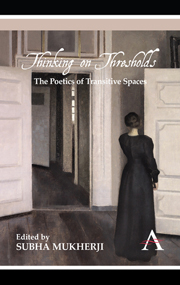
Through a combination of case studies and theoretical investigations, the essays in this book address the imaginative power of the threshold as a productive space in literature and art.