To save content items to your account,
please confirm that you agree to abide by our usage policies.
If this is the first time you use this feature, you will be asked to authorise Cambridge Core to connect with your account.
Find out more about saving content to .
To save content items to your Kindle, first ensure no-reply@cambridge.org
is added to your Approved Personal Document E-mail List under your Personal Document Settings
on the Manage Your Content and Devices page of your Amazon account. Then enter the ‘name’ part
of your Kindle email address below.
Find out more about saving to your Kindle.
Note you can select to save to either the @free.kindle.com or @kindle.com variations.
‘@free.kindle.com’ emails are free but can only be saved to your device when it is connected to wi-fi.
‘@kindle.com’ emails can be delivered even when you are not connected to wi-fi, but note that service fees apply.
Food for Policy Reforming Agriculture is the first book of its kind to highlight the reforms needed to achieve a second Green Revolution' which will then make way for an evergreen' revolution in India . This book is a compilation of articles by experts who provide comprehensive solutions for the Indian agriculture sector. A unique feature of this book is that it builds on the existing work on reforms and trade in agriculture while focussing on the gaps in the current literature. There are very few books today that try to address issues such as agri-business and non-farm employment. Food for Policy Reforming Agriculture fills this lacuna by covering a wide range of areas including agriculture trade policy, price policy, infrastructure development and supply chain efficiency.
Radionuclide-based microanalytical techniques such as RIA & IRMA are among the most widely used techniques for medical diagnosis and research. Radionuclides in Biomedical Science provides details of the key concepts of this area.
This accessible book introduces students to the basic concepts in political science. The first part of the book provides a historical overview of the manner in which various political structures emerged. The second part deals with successive constitutions in Sri Lanka, and their failure to uphold political principles in response to changing political situations. Short and insightful, this book will be an invaluable guide to students seeking understanding and analysis of ideas and issues in politics.
On Disasters in India is a comprehensive compilation of extensive research on disasters in India. It unfolds the pitfalls in research so far and insists on a fresh paradigm in the methodology for accessing research on disasters. The book reconstructs a researchscape and examines the three time periods of study of disasters, namely, the phase of awareness, indifference and recognition. The narrative is built across the colonial, independence and post-globalisation years. The 4004 references, located, classified and collated figuratively and categorically in the book, form the groundwork for any research pertaining to disasters in India. The collection is indispensable to postgraduate students, researchers, disaster managers and policy-makers who are keenly involved in research or in providing solutions to disasters.
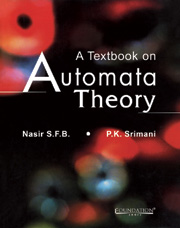
A Textbook on Automata Theory has been designed for students of computer science. Adopting a comprehensive approach to the subject, the book presents various concepts with adequate explanations. The logical and structured treatment of the subject promotes better understanding and assimilation. Lucid and well-structured presentation makes the book user-friendly. The book cover the curricula for M.C.A., B.E.(Computer Science) and M.Sc. (Computer Science) at various universities and gives students a strong foundation for advanced studies in the field.Key features:- A wide array of solved examples and applications Numerous illustrations supporting theoretical inputs Exercises at the end of each chapter for practice Notation for describing machine models A brief history of mathematicians and computer scientists
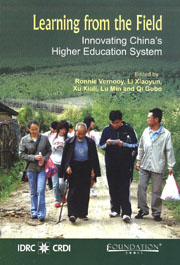
Across China, university staff, researchers, students, and farmers are joining forces to bring to the fore action and field-based learning as a way to promote rural development studies. Learning from the Field: Innovating Chinas Higher Education System presents first-hand experience and lessons from an innovative, participatory curriculum development initiative in China. It includes the content of two novel courses, Community Based Natural Resource Management and Participatory Rural Development. The first versions of these courses were delivered at the College of Humanities and Development of the China Agricultural University in Beijing in the spring of 2005 and at the Jilin Agricultural University in Changchun in the spring of 2006.
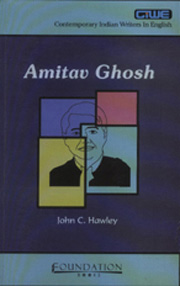
Contemporary Indian Writers in English (CIWE) is a series that presents critical commentaries on some of the best-known names in the genre. With the high visibility of Indian writing in English in academic, critical, pedagogic and reader circles, there is a perceivable demand for lucid yet rigorous introduction of several of its authors and genres. Amitav Ghosh, a novelist with an extraordinary sense of history and place, is indisputably one of the most important novelists and essayists of our time. In this volume, John Hawley provides a lucid, friendly and thorough introduction to the fiction and essays of Ghosh.
This concise book is intended to create public awareness about aspects of pesticide use in India. Ignorance about pesticides in India is widespread and administrative and legislative lacunae have aggravated the situation. This book is a small step in the long and ardous process of helping to make our society and environment pesticide free.
Contemporary Indian Writers in English (CIWE) is a series that presents critical commentaries on some of the best-known names in the genre. With the high visibilty of Indian writing in English in academic, critical, pedagogic and reader circles, there is a perceivable demand for lucid yet rigorous introduction of several of its authors and genres. Mahesh Dattani is perhaps one of India`s most daring, innovative and important paywrights in English today. He blends conventional themes with some startingly new ones in his work. His plays combine the intimate with the social, the personal and the public, often exploring the boundaries between these realms. In this volume, Asha Kuthari Chaudhuri, explores Dattani`s central themes - the family, alternate sexualities, other genders, morality and identity - while also examining the dramaturgical innovations in his work.
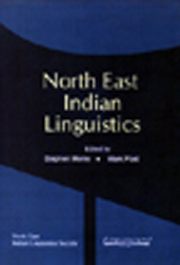
The North East of India is one of the most rich and diverse cultural-linguistic regions of Asia. However, awareness of this is not widespread and as a result, the linguistic abundance of the region has not been sufficiently appreciated. Students and scholars from different parts of India and the world are now making efforts to turn around this scenario. North East Indian Linguistics is a result of such concerted attempts. This book is the first published collection of selected articles on North East Indian linguistics. The articles represent the current state of research in the field. The authors have adopted a variety of approaches to the study of the multifarious North East Indian languages Ao (Naga), Assamese, Atong (Bodo-Garo), Bishnupriya, Garo, Khamti (Tai), Khasi, Kurtoep, Singpho, and the Tani languages, Apatani, Galo and Mising. The areas addressed in this book include descriptive phonology, lexicon, morphosyntax and semantics.
This book presents the fundamental principles and applications of electromagnetic theory, with emphasis on applications in communication. The underlying theory for technological advances like medium and short wave communication, cellular communication, radar and satellite communication, laser and optical communication, remote sensing and geological and earth observing applications have also been explained lucidly. Thus, given the breadth of its coverage, besides being used as a textbook for electrodynamics for beginner and advanced undergraduate students of physics and engineering, this book may also serve as an effective reference source for telecommunication engineers, physicists and researchers. Key features- rigorous mathematical details provided for involved physical concepts- In-text problem with complete solutions at relevant places in the chapters- unsolved problems with hints and answers- list of references at the end of each unit for interested readers- extensive figures annotating the text
Corporate governance is part of an economy's system which has today become the most important mechanism for resource allocation. It is affected by capital market, block holders, institutional investors, proxy wars, company law and capital market regulations, and many other macro-economic as well as political factors. Historical evolution of corporate governance naturally has a bearing on current developments. This book is an attempt to weave these factors together coherently. Much of the concerned literature revolves around the agency problem, while in developing countries expropriation of small shareholders is the governance problem. However, shareholder activism is not likely to resolve the issue. Many more measures, from audit committees of the board, rigorous disclosures, exercise of voting rights by institutional investors, strict monitoring by capital market regulator to takeover bids are required to ensure corporate accountability.
This book provides an alternative perspective of International Relations from Hiroshima to 9/11, both its diplomacy and mainstream scholarship are linked by realpolitik, in a vicious circle of retrogressive symbiosis. It simultaneously undermined the UN system of collective security from its origin and the scientific credential for its scholarship. The Cold War that it spawned restricted economic prosperity, political stability, and democratic freedom within its narrow core-area of the United States and Europe at the cost of its vast periphery in the Third World. Its unpredicted collapse extended insecurity across the entire globalised system, including its core-are as events since 9/11 forcefully underscores. While the new hegemonic system has become globally more insecure for all its citizens, its scholarship is still clueless about the collapse of the bipolar system it created in the midst of the massive confidence-building exercise to stabilize it.
In a world fraught with visions of an impending 'water crisis' it is not surprising that the main barrier to achieving the Millennium Goals of Development of water, sanitation and hygiene, for all, is not seen as a lack of willingness to learn from the past, to acknowledge failure and success and respect the diversity of approaches and social actors. this book brings together five in-depth case studies of civil society interventions from different parts of India which have struggled to resolve issues of women's participation, equity and sustainability in community based water management systems.
This book provides a comprehensive and accessible introduction to online journalism, as well as the internet. Apart from being a medium of communication, the internet is also a vast and continuously growing storehouse of information, which journalists can use to their advantage. Practical aspects of online journalism are explained with a number of case studies. The book attempts to equip the reader with the skills needed to use internet technology in journalism. It also provides an insight into the unique nature of the medium by placing e-journalism within a broad social context. Online Journalism would serve as a text for professional courses, a starting point for students interested in research and as a guide for beginners in the fields of media and advertising.
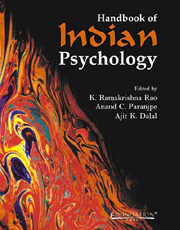
Indian psychology is a distinct psychological tradition rooted in the native Indian ethos. It manifests in the multitude of practices prevailing in the Indian subcontinent for centuries. Unlike the mainstream psychology, Indian psychology is not overwhelmingly materialist-reductionist in character. It goes beyond the conventional third-person forms of observation to include the study of first-person phenomena such as subjective experience in its various manifestations and associated cognitive phenomena. It does not exclude the investigation of extraordinary states of consciousness and exceptional human abilities. The quintessence of Indian nature is its synthetic stance that results in a magical bridging of dichotomies such as natural and supernatural, secular and sacred, and transactional and transcendental. The result is a psychology that is practical, positive, holistic and inclusive.
Green Revolution Technologies have made India self-sufficient in food production but unable to sustain soil productivity. A quantum leap in production of over 100 million tones was achieved in just two decades (1960-1970). But during the 1980s and 1990s it was a struggle to add on another 10 million tonnes despite good monsoons and the increasing supply of inputs of fertilizers, high yielding seeds, pesticides as well as water through irrigation. High costs of inputs have turned farming into a loss-making enterprise while leading to severe environmental degradation.
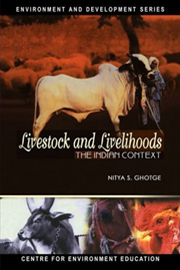
Livestock and Livelihoods: The Indian Context discusses livestock rearing in India, in relation to changes in the economy and policies of the government. The issues range from traditional practices in animal rearing, effect of colonial and post-colonial practices to the current policies. It also discusses methods to promote sustainable biodiversity and alternative systems of veterinary care.
Contemporary Indian Writers in English (CIWE) is a series that presents critical commentaries on some of the best-known names in the genre. With the high visibility of Indian Writing in English in academic, critical, pedagogic and reader circles, there is a perceivable demand for lucid yet rigorous introductions to several of its authors and genres. Vikram Seth is one of the most celebrated authors in Indian Writing in English today. With the complexity and depth of his work and his significant achievements in prose as well as verse, Seth has proved the master of the English language. Seths many themes and concerns, from land ceiling in post-Independence India to Western classical music to relationships, all cast in formally perfect prose or poetry, have gained him a formidable reputation as a stylist and a perfectionist.
Dew Harvest deals with dew harvesting as a feasible solution to the chronic water scarcity in arid areas near the coastline. It substantiates the methodology of dew harvesting based on a case study from the Kothara village in the Kutch region. The book provides insights into the simple and people friendly technology of dew harvesting. It explains the exemplary procedure that Prof. Sharan followed: study of the dew resource of the site, chemical analysis of dew water to verify potability, test of dew harvesting materials, construction of small and pilot-sized dew condensers, and ultimately the construction of a large dew production plant. The author describes the methodology involved in the measurement of dewfall throughout India, especially in the coastal regions. The author recommends that dew harvesting be part of the curriculum at colleges and urges hydrologists and engineers to seriously consider its utility as an innovative technology.