To save content items to your account,
please confirm that you agree to abide by our usage policies.
If this is the first time you use this feature, you will be asked to authorise Cambridge Core to connect with your account.
Find out more about saving content to .
To save content items to your Kindle, first ensure no-reply@cambridge.org
is added to your Approved Personal Document E-mail List under your Personal Document Settings
on the Manage Your Content and Devices page of your Amazon account. Then enter the ‘name’ part
of your Kindle email address below.
Find out more about saving to your Kindle.
Note you can select to save to either the @free.kindle.com or @kindle.com variations.
‘@free.kindle.com’ emails are free but can only be saved to your device when it is connected to wi-fi.
‘@kindle.com’ emails can be delivered even when you are not connected to wi-fi, but note that service fees apply.
India, in its long and attested intellectual tradition, has contributed to different domains of knowledge. In the process of doing so, the Indian thinkers have sounded caveats against insulation of knowledge systems and traditions. Sushruta, for instance, in Sushruta Samhita, a text pertaining to the science of life, not merely medicine, stated, Ek shastram adhiyano na vidhya shashtra nishchayam. (Do not arrive at any conclusion by studying just one discipline.) (Sushruta Samhita, Sutra Sthan, Prabhashniya Adhyaya, Chapter IV, Shloka 7) Bhartrihari, a grammarian and philosopher king of Ujjayini, in the Vakyapadiya 2.484, emphasized the importance of knowing one's own as well as the alien traditions: ‘The intellect acquires critical acumen by familiarity with different traditions. How much does one really understand by merely following one's own reasoning only?’ Statements such as the preceding ones supporting the diversity and multiplicity of systems and traditions and the necessity to accept and understand it abound in all major Indian texts and traditions. The statement may, thus, be read: What does s/he know who does not know his/her tradition, and what does s/he know who knows only his/her own tradition?
With its rich history of co-existence marked by inclusiveness and tolerance, India emerges as one of the most suitable sites for comparative study of literature in general and poetics in particular. The other side of this argument is that with a large number of lived belief systems and speculative thoughts, India has lived its diversities for so long and naturally, they have become part of its psychic and cultural systems, which has resulted in its not seriously considering the creation of a methodology for Comparative Studies.
India, with its innumerable plurisignificant spaces, multicultural practices and ever-shifting linguality, has the potential to be the most vibrant hub of Comparative Literature in our times. For the same reason, this volume devotes a special section highlighting some areas that could immensely contribute to the maturation of Comparative Literature in the country such as studies in poetics drawing from the rich Indian aesthetic traditions, Dalit Studies and Indian Writing in English. As M. Sridhar and Alladi Uma who write on Dalit Studies say, there is a pressing need to problematise the term ‘Comparative Literature’ in the Indian context. This demands urgent academic attention because, as Avadhesh Kumar Singh observes, the Indian literary culture has a unique convergence of many indigenous critical linguistic traditions such as Sanskrit, Tamil and modern Indian languages, apart from the Western critical traditions, i.e. Greek, Roman, English, French, German and Russian, that have joined it at various points in history. This section thus attempts to explore the possibilities of a comparative study of the different poetic traditions in India to see their mutual illumination and ‘to consider the existing state of Indian poetics and explore the possibilities of a comparative study of poetics without oversighting the issues pertaining to practice and pedagogy’. It also stresses the need for Comparative Literature in India to move beyond its primary emphasis on literature to explore areas such as Dalit Studies and Oral Literatures/Cultures.
All round the world the term ‘comparative’ is yielding place to ‘cultural’. This shift from the generic neutrality of Comparative Studies with its emphasis on commonalities and similarities to the politicality of Cultural Studies is a shift that can be linked to the rise in popularity of critical theories and to more radical notions regarding ‘text’, ‘textuality’ and ‘literature’. Also many young scholars work on the presumption that literature is ‘somehow elitist and politically suspect of being part of a complicity with power, representing conservative values of a repressive tradition…’ (Longxi in Saussy 231). Thus, it has become imperative that one addresses the newer perspectives and possibilities within Literary Studies in the process of strengthening the discipline of Comparative Literature.
The Vision and Function of Comparative Literature
On 28 August 1992, when the Centre for Comparative Literature in University of Kerala was inaugurated by the late Kamala (Surayya) Das, Dr Jancy James, the founding director of the centre delivered a lecture titled ‘Comparative Literature as Academic Discipline’. She said:
Comparative Literature addresses itself to a mode of responding to literature in all its totality of insights and concerns. It presupposes that no literature or author can be meaningfully studied in isolation. In the contemporary critical climate, in which literary responses not only approximate but also transcend the sources of creative process, and reconstruct a fresh artifact out of the deconstructed ruins of literary work, the tasks of reading and appreciation have come to mean a much more pervasively searching business than before. […]
With globalization, English has become an economic necessity and Indians have realized that they have the English advantage over many other countries like China and Japan. India has shed its colonial complexes towards English and has come to terms with the language; Indians have separated the English language from the English. The Story of English in India presents historical facts in a socio-cultural framework. The book is a must for all teachers and students of English; it will be useful for all those interested in the politics of language and education in India.
The Cheitharon Kumpapa is the court chronicle of the kings of the state of Manipur, a small, formerly independent state situated on the north-eastern border of India with Myanmar. The Cheitharon Kumpapa records events from the founding of the ruling dynasty in 33 CE until the abolition of the monarchy and subsequent merger of the state with India in 1949. The document is probably the oldest chronicle of the region, written on handmade Meetei (Manipuri) paper made from bark of trees, in locally made ink, with a quill or a bamboo pen. All in all it comprises more than a thousand leaves.
Declining Sri Lanka is a political history of Sri Lanka which focuses on the reasons for and results of the ethnic violence that has plagued the country over the last quarter century. After an incisive study of the background, it explores in depth the contribution of the J R Jayewardene government (1977-1989), and in particular the international dimension that led to tensions with India. Having dealt with the Indian intervention of 1987 which led to Indian troops battling their former protégés, the Liberation Tigers of Tamil Eelam, it looks at further developments and the failure of both the Kumaratunga and Wickremesinghe governments to quell violence or provide political solutions. The book ends with a brief analysis of the current government in the context of increasing international concern over both terrorism (as exemplified by the LTTE) and basic human rights (as exemplified by the continuing suffering of Tamil people).
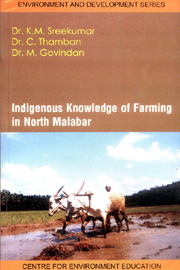
It is now widely recognised that agriculture can benefit when indigenous technical knowledge of farmers or ITK is reclaimed and integrated with modern farming practices. ITK is derived from local culture, traditions and long-term human interaction with the environment. It needs both documentation and conscious promotion for a more sustainability oriented perspective in agriculture. The book aims to document ITK in agriculture by detailing rituals and practices followed in the cultivation of the main crops in the North Malabar region of Kerala.
It is a well-known fact that throughtout our country there exists numerous folk traditions of local health care in all walks of life. There are two schematically distinguished of health in India. One refers to the written traditions of the great classical systems of Ayurveda, Siddha, Unani and the other one is orally transmitted folk practices, which lacks proper documentation. These traditional practices deal with a number of basic health techniques like treatment of common ailments and home remedies. In some communities there also exist special traditions like bone setting, visha chikitsa, treatment for certain chronic ailments, diagnostic methods such as naadi pareeksha. It is a fact that inspite of their great potential the paramparas are today in a weakened state. It is however, our conviction that a revitalization of these traditions can be brought about by encouraging an interaction of these traditions with the organized Indian system of medicine.
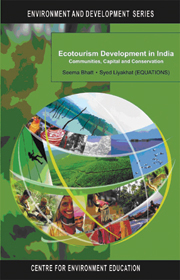
Ecotourism is a term debated upon by practitioners all over the world. The initiatives carried out in the name of ecotourism have adversely affected people and the environment. The indigenous and local communities have raised voices against such steps at local, national and international levels. However, sustainable ecotourism tourism carried out within certain defined norms, can lead to the development of the people. Ecotourism Development in India attempts to present a comprehensive and analytical perspective on the development of ecotourism in India. This book showcases the key policies and legal frameworks linked to ecotourism development at national and international levels. The consequences of large-scale models of ecotourism in terms of responses and impacts, both negative and positive, are presented through select case studies. It is intended to facilitate effective formulation and implementation of conservation and development policies and practices.
Language learning, teaching and testing are activities not confined only to the language classrooms. They extend across the curriculum and even into the wider academic and professional world. Language Learning, Teaching and Testing: A Companion treats a range of issues related to the three domains under various headwords. In doing so, it elucidates aspects of theory and practice related to language acquisition, instruction and evaluation and shows how linguistics, psychology, socio-linguistics and critical awareness have impacted them. Pedagogical comments, where needed, add to the usefulness of the entries. The contribution of scholars on the practice of teaching in the uniquely bilingual Indian/Asian situation is also represented in the book. A reference tool with a difference, this book will be a valuable companion for all language professionals including English language teachers (whether in the face-to-face or the distance mode), teacher educators, teachers in training, researchers and students.
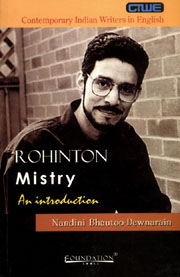
Contemporary Indian Writers in English (CIWE) is a series that presents critical commentaries on some of the best-known names in the genre. With the hgh visibility of Indian writing in Englihs in academic, critical, pedagogic and reader circles, there is a perceivable demand for lucid yet rigorous introductions to several of its authors and genres.Rohinton Mistry has provided some of the most sustained explorations of post-Independence Indian society through his chronicles of individual and community lives. Mistry's fiction covers many themes, from politics to Parsi community life and economic inequality to national 'events' such as wars, rigorously examining the impact of historical forces and social events on 'small' lives. Nandini Bhautoo-Dewnarain's study, a schematic introduction to Mistry's works, looks at the process of marginalization or 'Othering' in his fiction. Exploring Mistry's themes of tradition, ageing and families, Bhautoo-Dewnarain demonstrates how his fiction moves from the local to the universal.
Empowerment is an integral element of a democratic system. The maturity of a democracy is directly related to the level of empowerment its citizens and institutions experience. The term 'empowerment' is used in different contexts and this book addresses this problem through a comparative analysis of three major organisational systems - business, government and social development. The book presents a new conceptual framework for understanding the process of empowerment. It combines case studies specially for this volume, with secondary data and the author's first hand experience of working with development organisations. The differential understanding of empowerment in various organisational contexts helps to promote cross-sectoral learning, and contributes to a qualitative shift in empowering society as a whole.
The link between business, production, commerce and environmental imperatives is becoming more and more obvious. Industry, the world over, is under pressure, like never before, from an unprecedented set of environmental laws. But, the fact is that only a few crusaders have managed to influence policy makers and opinion makers to devise the "command and control regime".It became increasingly clear during the latter part of the twentieth century that current development models would not help create an appropriate milieu for progress that would maintain a desirable environment and ensure sustainable development. To bridge this gap, a proactive movement emerged in governing systems, including industry and community. This has entailed a paradigm shift in approach, popularly known as PEM, i.e. Preventive Environmental Management. Implicit in this paradigm is the twining of economic and environmental benefits.
A History of English Literature is a comprehensive survey, in chronological fashion, of the major periods, authors and movements from Chaucer to the present. Written for undergraduate and postgraduate students in South Asian universities, this History locates authors, genres and developments within their social, political and historical contexts. Informed by contemporary literary and cultural theory, this account also prepares the student for further explorations in particular genres and periods in English literature.
This book draws attention to certain significant changes in the way in which power has been defined and it also examines some of the critical responses which those changes have evoked. The objective is not to try and evolve a universally acceptable and comprehensive definition of power, and of realted terms like authority and influence. The argument of the book is that, that would be an impossible project since social and political theories themselves constitute an intervention into political discourse of a society and they may implicitly or explicitly embody a political perspective.
Liberal Perspectives for South Asia discusses the essentials of the liberal philosophy, while also indicating how appropriate it is in the South Asian context. In the past, the subcontinent was renowned for the skill with which it took up the dominant ideologies of the west and articulated them for the Asian context. In the post-colonial period, the only dominant ideology that was sidetracked by all political parties was liberalism, the ideology that promoted freedom of the individual. The idea of a book about the need for liberalism in the subcontinent was the brainchild of Chanaka Amaratunga, who set up the first avowedly Liberal Party in Sri Lanka.
Sri Putchalapalli Sundarayya (1 May 1913 19 May 1985) was a renowned national liberation fighter. He was one of the founders of the Communist Movement in India and an indefatigable fighter for the rights of toiling masses of India. He led the glorious Telangana peasant armed struggle in the 1940s against the despotic rule of Nizam of Hyderabad and liberated many from the shackles of servitude under Vetti. Sundarayya provides a detailed description of the intricacies - both decision-making and the execution of plans by the various guerilla squads. The book provides a ringside view of the movement of squads, the network of communications and the police terror. It highlights the movement, the years in the forests fighting the Nizam's forces and then the Indian army. It provides a wealth of detail and any account of the Telengana struggle is incomplete without reference to this authoritative work.
Woman as Spectator and Spectacle: Essays on Women and Media brings together several critical readings on the correlations between media and womens issues. Based on the papers presented at a National Seminar on Women in/and Media conducted at Osmania University, Hyderabad, this volume deals with issues ranging from the portrayal of women in media to the need for a definitive gender policy for the media. The volume explores the role of women both as objects of media representations as well as the producers and consumers of it. The articles interweave the regional and linguistic reading of media texts with global feminist media criticism. Through this, the ramifications of media globalization on womens issues are analyzed, thus giving voice to specific local developments and their impact on women and media.
Forest Policy and Ecological Change: Hyderabad State in Colonial India is an attempt to highlight the history of forestry in colonial India in the context of the Nizams Dominions, popularly called the Hyderabad State. The ownership of forests by the State through administrative authority and its monopoly over the commercial exploitation of forest resources were central to the history of state forestry in the Hyderabad State. Since the government categorized forests into reserved, protected and open forests, the main objective for the forest administration was to conserve the existing forests and exploit them systematically.