To save content items to your account,
please confirm that you agree to abide by our usage policies.
If this is the first time you use this feature, you will be asked to authorise Cambridge Core to connect with your account.
Find out more about saving content to .
To save content items to your Kindle, first ensure no-reply@cambridge.org
is added to your Approved Personal Document E-mail List under your Personal Document Settings
on the Manage Your Content and Devices page of your Amazon account. Then enter the ‘name’ part
of your Kindle email address below.
Find out more about saving to your Kindle.
Note you can select to save to either the @free.kindle.com or @kindle.com variations.
‘@free.kindle.com’ emails are free but can only be saved to your device when it is connected to wi-fi.
‘@kindle.com’ emails can be delivered even when you are not connected to wi-fi, but note that service fees apply.
India's Foreign Policy: the Democracy Dimension is a study of India 's responses to the challenge of democracy in other countries before and after its participation in the global democratic initiatives. India 's similar responses in the past have been dictated and defined by its perceived vital strategic and political interests, and this continues to be so. The newly acquired obligations for promoting democracy may have tempered its foreign policy rhetoric and style on the democracy question but it has not, and will not, override India's critical strategic concerns and interests.
Even as his 150th birth anniversary draws near, Rabindranath Tagore remains quite under-explored. Nirad C. Chaudhuri predicted that the difficulty in translating Tagores work would ascertain that in future his work will lie like a buried city in the past. The difficulty of translating him in any of the European or modern Indian languages and his position as a cult figure in India contributed to this gap between adulation and understanding. Recent revival of interest in the West in Tagores work only partly redresses this imbalance. For, much of Tagores central claim to greatness lies in his social thought.
This book introduces students to ideas, events and personalities that have created the present-day world. Many of these significant factors either do not find mention in school texts or are not handled with sufficient clarity. This book thus attempts to set them out in a way that challenges young-adult minds. it is hoped that this book will enthuse them to explore the raesons for and the results of important historical developments.
Nation-Building and Foreign Policy in India: An IdentityStrategy Conflict presents an evaluation of Indian foreign policy. It analyses the unusual concern of Indian strategic thinking about political values. The book argues that in Indian foreign policy, there has been a shift from a strict concern for national interest towards idealist considerations. Thus creating what the author calls an idealist inflection. This inflection does not have its roots in cultural aspects or grand strategy. Instead, it is best understood with reference to the political process of nation-building, characterised by the specific choices and decisions taken by the two leading protagonists of the Indian National Movement Mohandas Karamchand Gandhi and Jawaharlal Nehru. The values they chose to place at the heart of Indias national identity have spilt into the countrys foreign policy.
What is my role as a Pharmaceutical Field Manager? How do I keep my MRs motivated? How do I plan and provide on-the-job training? How do I keep the customers happy? How do I achieve my target?Are these some of the questions that worry you while working in an extremely competitive pharmaceutical market? Essentials of Pharmaceutical Sales Management attempts to answer these and many more related questions.Key topics discussed: Joint fieldwork and on-the-job training Management of key/difficult customers Performance appraisal and counselling Organising successful meetings and symposia Interfacing with marketing department
This book attempts to understand the commercial and social history of erstwhile Bengal in terms of its links with it neighbouring countries in the northern region of the Bay of Bengal. It touches upon the key issues in both maritime and territorial history such as the early medieval trade revolution and its impact on the borders of Bengal.The discussion focusses on Southeast Bengal - the most economically developed area of Bengal in terms of transport networks, agriculture, artisan products and trade. Most of this area underwent two major transformations in the twentieth century: once as a result of the formation of East Pakistan in 1947 and a second time after the formation of Bangladesh in 1971. The volume concludes with certain major issues of concern between India and Bangladesh at the turn of the twenty-first century.
India's natural wealth, knowledge, arts and crafts have attracted foreigners throughout its long history. It has had continuous cultural contact and trade with other countries and, in all this, India has been exposed to many foreign languages such as Arabic, Bactrian, Chinese, Dutch, English, French, Greek, Hebrew, Latin, Persian, Portuguese, Turkish and in a certain sense, Sanskrit. Each of these languages went through a cycle, rising to the position of power and prestige, and eventually declining and yielding place to yet another language. In this process, all these languages interacted with the native languages of India and exchanged sounds, words, sentences, idioms and expressions, sometimes even giving birth to new languages. Foreigners and Foreign Languages in India: A Sociolinguistic History tells the story of this long and continuous history of the advent, learning, use, demise and debris of some foreign languages in India.
Women in Prison takes a look at the multiple specificities that bring women into the prison system. Drawing on empirical sources and original research, and relying primarily on interviews of women inmates, this book explores the contexts of female crime and punishment in India and looks at gendered disciplinary mechanisms that are used to control women inmates. The work invokes not only a sense of history in understanding womens crimes and imprisonment, but also engages in a critical dialogue in terms of gender, caste, culture and sexuality. Unique in its analysis of the lives of women prisoners within social and legal contexts, the book is a major contribution to international literature on womens offences and their experience of imprisonment.
Forest Ecology in India: Colonial Maharashtra 18501950 takes a look at the human interactions that have shaped up the ecosystem specifically of Maharashtra, under the British colonial rule. This work is a culmination of extensive analysis of secondary sources and numerous archival primary sources including vernacular material hitherto unexamined from the perspective of Environmental History. It traces the evolution of political, socio-cultural and religious attitudes and administrative policies that had an impact on the forest ecology of Maharashtra.
North East Indian Linguistics Volume 2 is the second in a series of selected papers presented at the International Conferences of the North East Indian Linguistics Society (NEILS), a forum for the study of the languages of North East India. The North East Indian languages are the richest and most diverse, yet also one of the least-well-known regions of the linguistics world.The book essentially discusses tonology and phonology in the Assam floodplain. They bring together extensive information on tone in Bodo and Dimasa, studies of Tai Phake songs, the Ahom Bar Amra manuscripts, and the Barpetia dialect of Assamese. A special section on numerals also presents a comparative study of Tibeto-Burman numeral systems and more detailed accounts of Khasi, Karbi, Kom and Aimol.
Over the past half century, the idea of sustainable development has evolved and rooted itself in the lexicon on international development. But what is it, really? Are development agencies truly committed to long-term sustainable solutions to development issues? Are we learning from our past successes and failures? This book takes an historical perspective on these questions. The analysis begins with the Atlantic Charter, the creation of the United Nations, its family of agencies, and the international development banks. It reviews recommendations from international commissions and conferences, from World bank and UNDP development reports. It comments on governmental policies, human and industrial actions detrimental to the planet's environment and natural resources. It studies the patterns by which biotechnologies essential to human survival and health have progressed over the past 8,000 years, and the consequences of uncontrolled urban growth on food and health security.
Himalayan Degradation, Colonial Forestry and Environmental Change in India questions the recent trend of treating environmental and agrarian concerns as two separate domains. In this aspect, the book goes beyond the existing framework of environmental history that focuses only on the study of state policies and debates over redefining rights and examining protests. The author makes a careful study of the larger rural economy, emphasising the changing significance of pastoralism, trade and foraging in the life of the common people. He links forest degradation and environmental change to socioeconomic transformation.Underlining the centrality of forests and mountain resources to the livelihood and culture of the people of Uttarakhand, the book subjects the notion of sustainable management of forests to close scrutiny.
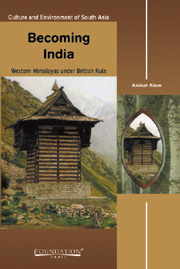
Becoming India demonstrates that the Western Himalayas were politically, economically and socially distant from the civilisations and empires of the North during pre-colonial times. It helps in better understanding of the present developmental success of Himachal Pradesh as well as the politics of the demand for separate statehood by Uttarakhand. It studies how the Western Himalayas became a part of the Indian nation during colonial times.It examines in detail the peasant rebellions, clan and caste, polyandry, establishment of hill stations, land and forest settlements, education, folklore and mythology, begar and monetisation. It also focuses on the British policy and nationalist politics, to make its central point that the colonial encounter in the Western Himalayas was qualitatively different from the neighbouring parts of North India and its history cannot be subsumed into the general history of India.
Human Capital is based on the concept that organisations should create an environment where people are valued and encouraged to maximise their abilities. An inside view of rewarding and retaining performing employees and assigning challenging tasks to them is revealed. The importance of nurturing a performance oriented culture to harness human capital for competitive advantages has been underlined. In the fast changing business world, organisations constantly evolve and this diversifies the managers role. Openness and perceptiveness are blended at various levels of organisation management. Human Capital uses several real life examples to explain theoretical concepts of human resource management. The book deftly redefines and reorients management tactics to create new understanding of the employer-employee relationship.
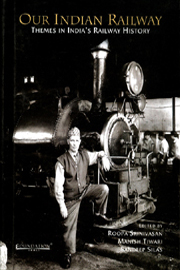
This book commemorates 150 years of railways in India. Introduced under colonial rule in the second half of the nineteenth century, the railways soon embraced the length and breadth of India bringing with it rapid political, economic, ecological and cultural changes. The articles in this book explore the impact of this technological phenomenon from a range of interdisciplinary perspectives. From early railway thinking in renaissance Bengal, to railway policing in Uttar Pradesh and issues of management to railway themes in literature, the writers in this volume reveal the world of the railways in all its exciting facets. The photo essay invokes the nostalgic world of steam with a series of evocative images. In the twenty-first century, the ever expanding horizon of the railways continues to draw in people and goods in the third largest railway network in the world.
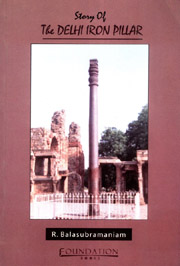
Story of the Delhi Iron Pillar traces the history of the pillar located in the Qutub Complex and describes its structure in detail. It unravels the mystery behind the resistance of the pillar to corrosion for more than sixteen centuries. It also discusses the amazing process by which the pillar was manufactured using the technical know-how available at the time. The book is primarily aimed at general readers and tourists, with a view to igniting their interest in this metallurgical wonder of ancient India. Written in simple language and a lucid style, it carries numerous photographs and elaborate figures to enhance the discussion.
Human Rights and Law: Bonded Labour in India deals with the problem of debt bondage and the way it has been treated during the British as well as in the post-independence period. Analysis has been made of the motivations for carrying out the reform; the processes involved in formulating the legislation, contributions by different agencies, discussion in the parliament, etc. The two legislations: the Indian Slavery Act, 1843 and bonded labour system (Abolition) Act, 1976 provide a comparative perspective in the making of social legislation in two different historical settings and different political systems.
Anyone Can Write offers a wealth of creative writing tasks which will be an indispensable source of ideas for teachers. The book includes a variety of exercises on writing features, stories and poems. In all, the book offers guidance on forty different story-writing tasks, five feature-writing tasks, and fourteen poetry-writing tasks. The simple step-by-step explanation of the procedure to be adopted for each task makes the book very user-friendly. The tasks included in this book have evolved from a series of workshops on creative writing the authors have conducted for students in the age group of twelve to seventeen years. The samples of writing included to illustrate each task are authentic writings of students who participated in the workshops. These will help readers gauge the feasibility of the tasks and the level of response that can be expected from learner groups.
With the dawn of the twenty-first century, South Asian region has undergone radical transformation. It has witnessed a strong democratic sweep. Most of the South Asian economies have registered impressive growth trajectories. Some of its countries have also emerged as the hub of global terrorism. The international community has become far more involved in South Asian affairs due to the nuclearisation of the region. SAARC cannot but keep pace with the changing regional dynamics. It has moved ahead on its economic agenda and expanded its reach not only by adding new members ( Afghanistan ) but also by opening itself to the participation of many other countries, including China , Iran and the US , as Observers.
This book presents novel approaches to collaborative learning by drawing on research and practical experiences from China, South Asia, and Southeast Asia. The case studies show how local communities address and learn from challenges in managing natural resources through joint efforts with researchers and other actors. They demonstrate the merits of learning strategies that use a variety of methods. These methods are grounded in the local context that involves facilitators monitored from the outset. It creates a strong environment of collaboration and dynamic process management. The book shows that learning strategies that are both innovative and collaborative can lead to sounder rural development.