To save content items to your account,
please confirm that you agree to abide by our usage policies.
If this is the first time you use this feature, you will be asked to authorise Cambridge Core to connect with your account.
Find out more about saving content to .
To save content items to your Kindle, first ensure no-reply@cambridge.org
is added to your Approved Personal Document E-mail List under your Personal Document Settings
on the Manage Your Content and Devices page of your Amazon account. Then enter the ‘name’ part
of your Kindle email address below.
Find out more about saving to your Kindle.
Note you can select to save to either the @free.kindle.com or @kindle.com variations.
‘@free.kindle.com’ emails are free but can only be saved to your device when it is connected to wi-fi.
‘@kindle.com’ emails can be delivered even when you are not connected to wi-fi, but note that service fees apply.
Through a qualitative analysis of case studies from Boston in the 1970s and 1980s, this article explores how police officers exploited sex workers in pursuit of department goals and personal desires, all while attracting opposition from sex workers and their allies, who likened cops to pimps. Examining police-sex worker interactions documented in the commercial press, alternative media, appellate court rulings, and police documents, this article incorporates the police-as-pimp metaphor to elucidate the nature of police discretion in the context of sex work. When dealing with sex workers, officers proved willing to choose lawlessness if it helped them accomplish other personal and professional goals. Yet this article goes beyond condemning individual police officers as pimp like. Rather, the metaphor applies to entire law enforcement institutions, whose structures and norms facilitated state exploitation of sex workers.
This chapter studies the coverage of the transatlantic slave trade in early modern Europe. Although many Europeans were aware that their merchants and companies transported enslaved African labourers to Caribbean and American plantations, the trade itself was not deemed a newsworthy topic in the seventeenth century. The role of newspapers as gatekeepers of the various media landscapes meant that the lack of reports on the slave trade helps to explain why it took so long before the traffic of enslaved Africans lead to moral outcry. The inhumane practice of selling and buying labourers in West Africa, the dreaded ‘middle passage’, and the hardship of plantation life in the Caribbean and the American South could be pieced together by newspaper readers only with great difficulty. Hence, before 1720, even embryonic forms of abolitionism were not part of the newspapers’ fabric. This chapter, then, charts the limitations of newspapers as carriers of news from afar, emphasising their predilection for events rather than processes, and their reluctance to follow undesirable stories.
On March 25, 1994, the Boston Police Department executed a “no-knock” raid that ended in the death of Reverend Accelyne Williams, a seventy-five-year-old retired Black Caribbean minister. Acting on a faulty tip, a thirteen-member SWAT team stormed into the wrong Dorchester apartment, wrestled Williams to the ground, and triggered a fatal stress-induced heart attack. His death became a defining tragedy in Boston’s history of police violence and raised urgent questions about accountability. This article situates the Williams case within the broader history of Black Boston’s freedom struggle against police civil rights violations from the early twentieth century to the 1990s. Through a controlled case comparison of four major incidents, we analyze how moments of police brutality became catalysts for Black political mobilization, ministerial activism, and community resistance. The study addresses three central questions: How does the Williams case fit within the trajectory of Boston’s racial justice struggles? How do such incidents illuminate the city’s persistent racial inequality and segregation? And what can these histories teach us about the broader U.S. movement to “police the police”? Drawing on original archival research, we demonstrate that police abuses have consistently spurred waves of organized resistance in Boston, shaping both local and national debates on civil rights. We identify key historical breaks, continuities, and paradoxes in the struggle for accountability, showing how the demand to “police the police” has long been central to Black political life.
This paper describes the theoretical foundations, empirical findings, and practical and philosophical implications of the Boston Area Diary Study (BADS), a study of the caring behavior of 44 participants over one calendar year. In particular, the paper presents an identification theory of care and discusses how it shaped the conceptualization, collection, and analysis of the data in a year-long diary study of daily voluntary assistance. The findings from the BADS (1) theoretically confirm the identification theory of care; (2) methodologically capture how individuals perceive and carry out caring behavior as a unity; and (3) empirically document the existence of a moral citizenship in America that is substantially more vigorous than is implied by the usual indicators of civic and political citizenship.
This chapter traces British American cities as distinctive political spaces that helped pioneer the concept of citizenship, a term that originally meant a city resident, and stood at the forefront of much of the political protest leading to the war for independence. However, from their inception, most American cities were subordinated to their provincial legislatures which were dominated by rural interests. Meanwhile the concept of citizenship came to be associated more with a set of actions rather than a place people lived. All the largest cities were occupied during the war, forcing residents to make difficult decisions and heightening the distrust leveled against them after the war. After the war, most urban residents remained minorities subordinated to the interests of mostly rural polities. Once the cradles of citizenship, most cities were not further empowered as polities by the American Revolution, but continued to be or were more sharply constrained by rural elites after the war concluded.
When the Abbey Theatre faced rioters in 1926 during the first performances of The Plough and the Stars, the theatre managers decided to continue with the scheduled seven-night run and then to revive the piece three months later. However, despite that boldness in the face of opposition, O’Casey subsequently found himself confronted with various kinds of official and unofficial censorship, both in Ireland and elsewhere. This chapter details that censorship and describes its effect on O’Casey’s work and reputation. The chapter examines O’Casey’s work in the theatre, and also examines censorship of O’Casey’s nontheatrical work, such as Windfalls, I Knock at the Door, and Pictures in the Hallway.
Abstract: Anne learned quickly when she came to Boston that running a department meant she spent most of her time taking care of the fallout from some troublemakers and less time on productive team players. Anne highlighted the issues surrounding conflicts of interest; they were inevitable and common but difficult to navigate. Hospitals competed for people and resources. For example, Anne told the story of a young woman who was caught in the midst of secret moves by two hospitals to obtain resources from a third hospital all the while setting the woman up for national embarrassment. After being announced publicly that the woman had been appointed to a prestigious position, the offer from the first two hospitals was suddenly rescinded and her boss and mentor at the third hospital was appointed instead. The woman was told by the chief medical officer at the Brigham that she no longer had the appointment because the hospital had decided to appoint her boss at the Beth Israel Hospital to the position. She was shocked.
Low and stagnant teacher pay has been a perennial issue in the United States public school system since the early decades of the nineteenth century. Women teachers, then as now, confronted the issue head-on by organizing together. For example, women primary school teachers in Boston, Massachusetts successfully petitioned for more pay in 1835, but an emerging policy to pay women less ensured that such victories would be few and far between. Nevertheless, we can draw two critical lessons from these women teachers and their petition. First, a broader understanding of historical context and gendered narratives about labor is necessary to confront the teacher pay crisis today. Second, sharing teachers’ stories from the past now can help shape policy debates on teacher pay, turning a crisis into a new vision for the teaching profession.
Anger and frustration over Indigenous ethnic identity fraud have reached fever pitch across social and official media, within cultural and political institutions, and in Indigenous communities. It seems a day doesn’t pass without new revelations of people who have lied about and capitalized on Indigenous identity. Joy Harjo decried such “identity crimes,” saying that “Some claim identity by tenuous family story and some are perpetrating outright fraud.” These arguments go beyond simply outing individuals; increasingly, they call for publishers, universities, and other institutions to do a better job of verifying Indian identity claims. In doing so, however, many are pulling toward a problematic benchmark: enrollment in a federally recognized tribe. I respond to this with a reading of two urban intertribal newspapers – Los Angeles’ Talking Leaf and Boston’s The Circle – published before many tribes achieved their federal recognition. For Native nations that have experienced ethnocide, state detribalization, and rejection of their federal recognition claims, such newspapers have helped tribal members find each other, remember their histories and collectively imagine their futures
The chapter explores Lowell’s awareness of Boston’s complex class-marked topography. The Beacon Hill has become only a shorthand term for an anachronistically elite neighborhood, and we have become oblivious to the significance of its specific addresses. The Hill, however, was always intricately zoned and stratified, riven with class and ethnic conflict. Lowell’s story of his family moving from house to house within the Beacon Hill and then further and further east down the Back Bay is a dramatic story of social decline. The chapter also looks, in Lowell’s poetry and prose, for traces of the analogous class conflict over the downtown Boston’s public green spaces. The Lowells found themselves first “on the wrong side” of the Beacon Hill, then in the less prestigious section of the Back Bay impinged upon by the lesser castes. They enjoyed their leisure in the manicured Public Garden whose serenity was threatened by the messy, plebeian, enclosure-resisting Common.
Chinese can be found in most parts of the world. The signs in this chapter are mainly from the United States. A few are from Kyrgyzstan. Signs in the diaspora contexts are distinguished by the need to negotiate between Chinese and the local language(s), as Chinese is used to represent local contents. Both meaning-based translation and sound-based transliteration are used, as well as a combination of the two. Also notable are the dialectal elements. The language of the Chinese diaspora in North American is heavily Cantonese, as the earliest immigrants were from Cantonese speaking areas of China. Cantonese has also been adopted as sort of a lingua franca. Traditional characters are used as a rule, reflecting the dominance of traditional culture. The traditional vertical and right to left text orientation coexists with that of the modern horizontal and left to right format.
The short version of the history of nationalism and America’s mid-nineteenth-century civil war (1861–1865) may best be explained as a tale of two cities. Not, as one might suppose, the capitals of the Union and the Confederacy, Washington and Richmond, but two cities each of which was situated some four hundred miles from their warring sides’ respective capitals: Boston and Charleston. Arguably, it was in these cities that the essence of the national sentiments that motivated each side was most concentrated: in the case of the Union, to seek to maintain the federal compact and, in the case of the Confederacy, to destroy it. But this is also a story of alternative nationalist approaches. The Union and the Confederacy, respectively, inhabit what Christopher Wellman juxtaposes as the two camps of political theorizing on the subject of states, nations, and secession: the “statist” and the “nationalist.”
This chapter traces British American cities as distinctive political spaces that helped pioneer the concept of citizenship, a term that originally meant a city resident, and stood at the forefront of much of the political protest leading to the war for independence. However, from their inception, most American cities were subordinated to their provincial legislatures which were dominated by rural interests. Meanwhile the concept of citizenship came to be associated more with a set of actions rather than a place people lived. All the largest cities were occupied during the war, forcing residents to make difficult decisions and heightening the distrust leveled against them after the war. After the war, most urban residents remained minorities subordinated to the interests of mostly rural polities. Once the cradles of citizenship, most cities were not further empowered as polities by the American Revolution, but continued to be or were more sharply constrained by rural elites after the war concluded.
Amy Marcy Cheney Beach (1867–1944) was a musical prodigy whose professional career vacillated between piano performance and composition. Her professional debut was delayed until age sixteen because of parental misgivings, and then her performance career was curtailed at age eighteen when she married a prominent physician, Dr. H. H. A. Beach. His insistence that she devote her energies to composition rather than performance, along with his desire that she remain self-taught, inspired her to develop a unique late-Romantic compositional style. With the support of the Boston Symphony Orchestra and its musicians, she produced a Mass with orchestra, a symphony, a concerto, and numerous chamber works. Her trailblazing accomplishments included many firsts for American women composers. After the death of her husband and mother in 1910 and 1911, she reinvented herself as a virtuoso performer while still composing. Her compositional output is widely varied in genre, instrumentation, and musical style.
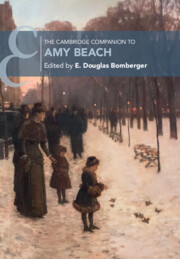
Amy Beach was a pathbreaking composer and pianist who transcended the restrictions of nineteenth-century Boston to become America's most famous turn-of-the-century female composer and, later in her career, a prominent performing artist and promoter of music education. The Cambridge Companion to Amy Beach makes her life and music accessible to a new generation of listeners. It outlines her remarkable talent as a child prodigy, her marriage to a prominent physician twice her age, and her subsequent international acclaim as a composer and piano virtuoso. Analytical chapters examine the range of her musical output, from popular songs and piano pieces to chamber and symphonic works of great complexity. As well as introducing Beach's compelling music to those not yet familiar with her work, it provides new resources for scholars and students with in-depth information drawn from recently uncovered archival sources.
Samuel Clemenss changing views about phrenology and its purveyors did not occur in a vacuum. Here we see how he was not the first person or even the first American to use humor to poke fun at the doctrine or to “expose” how its purveyors operated in public venues. He was preceded by Dr. Oliver Wendell Holmes, a Boston physician whose widely disseminated criticisms of phrenology helped open his eyes to the head readers and influenced how he would lampoon them. Born in Cambridge, Massachusetts, in 1809, Holmes received his Harvard undergraduate degree in 1829 and then attended a private medical school closely associated with Harvard. He proved to be an exceptionally bright student with a penchant for writing poetry and prose. He bore witness to how phrenology was the talk of the town when Spurzheim arrived in Boston in 1832. Many of his teachers were interested in phrenology and he joined them to hear Spurzheim. He also kept notes on Spurzheim’s autopsy and read about phrenology. But although he might have been skeptical about how much might be gleaned about the brain by studying skulls, he did not reveal what he was thinking while still a student in Boston.
Chapter 3 shifts the focus to the US East Coast. Roy Harris was one of several young Americans who studied composition in Paris with Nadia Boulanger in the 1920s; Symphony 1933 was his breakthrough work after returning home. Commissioned by Serge Koussevitzky, who anecdotally asked for a ‘big symphony from the West’, Symphony 1933 teases out the relationships between those expansionist discourses associated with the symphony indicated by Paul Bekker (1918), liberal ideology, and the imagined spaces of the American West. Examining the reception of Symphony 1933 and its music, the chapter raises questions about how the discourse around Harris’s symphony and liberalism’s spatial narratives colluded in establishing the political hegemony of white Americans and the supposed naturalness of their right to occupy the West, an acute anxiety given the disenfranchisement of white working-class Americans during the economic collapse of the early 1930s.
To examine associations of household food insecurity with health and obesogenic behaviours among pregnant women enrolled in an obesity prevention programme in the greater Boston area.
Design:
Cross-sectional evaluation. Data were collected from structured questionnaires that included a validated two-item screener to assess household food insecurity. We used separate multivariable linear and logistic regression models to quantify the association between household food insecurity and maternal health behaviours (daily consumption of fruits and vegetables, sugar-sweetened beverages and fast food, physical activity, screen time, and sleep), mental health outcomes (depression and stress), hyperglycaemia status and gestational weight gain.
Setting:
Three community health centres that primarily serve low-income and racial/ethnic minority patients in Revere, Chelsea and Dorchester, Massachusetts.
Participants:
Totally, 858 pregnant women participating in the First 1,000 Days program, a quasi-experimental trial.
Results:
Approximately 21 % of women reported household food insecurity. In adjusted analysis, household food insecurity was associated with low fruit and vegetable intake (β = −0·31 daily servings; 95 % CI −0·52, −0·10), more screen time (β = 0·32 daily hours; 95 % CI 0·04, 0·61), less sleep (β = −0·32 daily hours; 95 % CI −0·63, −0·01), and greater odds of current (adjusted odds ratio (AOR) 4·42; 95 % CI 2·33, 8·35) or past depression (AOR 3·01; 95 % CI 2·08, 4·35), and high stress (AOR 2·91; 95 % CI 1·98, 4·28).
Conclusions:
In our sample of mostly low-income, racial/ethnic minority pregnant women, household food insecurity was associated with mental health and behaviours known to increase the likelihood of obesity.
This chapter focuses on individual-level aspects of inclusion in entrepreneurial ecosystems, using examples from gender-focused ecosystems research in Boston, Massachusetts, as part of broader research carried out by the authors between 2014 and 2017. Using data from fieldwork carried out in Boston, we outline how individual-level gender biases operate in entrepreneurial ecosystems and how they impact women entrepreneurs differently than male entrepreneurs. Our focus is explicitly on the gendering of social capital and trust within entrepreneurial ecosystems, as we highlight their gendered dimensions which lead to exclusion for women, even if ‘unintentionally’.