To save content items to your account,
please confirm that you agree to abide by our usage policies.
If this is the first time you use this feature, you will be asked to authorise Cambridge Core to connect with your account.
Find out more about saving content to .
To save content items to your Kindle, first ensure no-reply@cambridge.org
is added to your Approved Personal Document E-mail List under your Personal Document Settings
on the Manage Your Content and Devices page of your Amazon account. Then enter the ‘name’ part
of your Kindle email address below.
Find out more about saving to your Kindle.
Note you can select to save to either the @free.kindle.com or @kindle.com variations.
‘@free.kindle.com’ emails are free but can only be saved to your device when it is connected to wi-fi.
‘@kindle.com’ emails can be delivered even when you are not connected to wi-fi, but note that service fees apply.
The end of the Bronze Age and the beginning of the Early Iron Age (ca. 1200–1050 BCE) on Crete is known in ceramic terms as the Late Minoan (LM) IIIC period. The LM IIIC period is often considered to represent the start of the Early Iron Age as iron was present, though objects of that material were extremely rare on the island before the eleventh century. The period was characterized by a dramatic shift in settlement patterns and in many aspects of material culture, including settlement organization and architecture, burial and cult practices, and sociopolitical structures. Although these changes mark a clear break from the previous period of Mycenaean influence, there are also elements of continuity. In addition, the island was defined by a high degree of regionalism in LM IIIC (and throughout the EIA), perhaps most visible in variations in settlement patterns, cult activity, burial practices, and ceramic styles. This regionalism was probably influenced by geography, previous traditions, sociopolitical organization, population size, and cultural identity.
This chapter starts by providing an overview of the radical social and spatial shifts which seem to have occurred within Cretan societies between the period of state collapse ca. 1200 and the early Archaic period from ca. 700 BC onward, including changes in settlement, subsistence, and ritual practice. It then presents three case study regions, possessing contrasts and similarities in patterns of change apparent from substantial detailed research data – the north Lasithi mountains in north central Crete, the Kavousi–Azoria region of east Crete, and the Phaistos–west Mesara region in the south of the island – in order to illustrate the points argued.
Once considered a period of poverty and isolation, devoid of impressive material culture, the Iron Age is now regarded as a pivotal era. It witnessed how the ancient Greeks lost and regained literacy, created lifelike figural representations and monumental architecture, and eventually established new and complex civic polities. The Companion to the Greek Iron Age offers an up to date account of this critical epoch of Greek antiquity. Including archaeological surveys of different regions, it presents focused discussions of the Early Iron Age cultures and states with which Greek regions had contacts and which are integral for understanding cultural developments in this formative period. They include Cyprus, Syro-Anatolia, Italy, and Egypt, regions in which, as in Greece, the Early Iron Age is diverse and unevenly documented. Offering a synthesis of the key developments, The Companion to the Greek Iron Age also demonstrates how new archaeological and theoretical approaches have enlarged and clarified our understanding of this seminal period.
The Phaistos Disk is an enigmatic object, imprinted with a text in a script found on no other object, though the script does contain a number of signs in common with Linear A. In Chapter 8, the text on the Disk is analyzed against Linear A in an effort to determine whether the two scripts encode the same language. As a control, a Cypriot Syllabic text analogous in size to the one on the Disk is analyzed against Linear B in the same way, with the results demonstrating an overwhelming probability that both scripts encode the same language (which we know they do, as both scripts are deciphered: they both encode Greek). The Cypriot Syllabic text is also analyzed against Linear A, demonstrating an overwhelming probability that the two scripts encode different languages—that is, that Linear A (for a second time) does NOT encode Greek. The analysis of the text on the Disk against Linear A, however, demonstrates a similarly overwhelming probability that both scripts do encode the same language.
Cretan Hieroglyphic has so far proven especially resistant to decipherment, because its corpus is rather small, and most inscriptions consist of just a word or two. In Chapter 9, the Cretan Hieroglyphic corpus is analyzed against Linear A in an effort to determine whether the two scripts encode the same language. As a control, a set of Cypriot Syllabic inscriptions analogous in size to the Cretan Hieroglyphic corpus is analyzed against Linear B in the same way, with the results demonstrating an overwhelming probability that both scripts encode the same language (which we know they do, as both scripts are deciphered: they both encode Greek). The set of Cypriot Syllabic inscriptions is also analyzed against Linear A, demonstrating an overwhelming probability that the two scripts encode different languages—that is, that Linear A (for a third time) does NOT encode Greek. The analysis of the Cretan Hieroglyphic corpus against Linear A, however, demonstrates a similarly overwhelming probability that both scripts do encode the same language.
Chapter 2 begins Part I, “Linguistic Analysis of Linear A,” which consists of Chapters 2 to 5. As the main key to deciphering a script is identifying the language behind it, this chapter strives to present evidence of various types as to the character of the language behind Linear A. As this was the script of the Minoans on Crete in the 2nd millennium BCE, the chapter first outlines the linguistic landscape in the eastern Mediterranean and Near East at this time, mapping out the features of each ancient language in this region along six different parameters: (1) which language family it belongs to; (2) whether its nouns and verbs are inflected with one set of affixes (prefixes/suffixes), or more than one; (3) whether it is inflected with affixes alone, or also in some other way; (4) whether its affixes can serve multiple purposes, or just one; (5) whether its affixes are mostly prefixes or suffixes; and (6) the default order in which the subject, verb, and object occur in its sentences. Other evidence for the nature of the Minoan language is then discussed, including archaeogenetic and archaeological evidence for the origin of the Minoans, and evidence from documents in other cultures.
In the past, those who have looked for linguistic patterns in Linear A by comparing inscriptions from different parts of Crete have been met with a common objection: “How do you know Linear A encodes the same language across the island?” In Chapter 7, Crete is divided into five regions centered around the five main Minoan palaces, and the corpus of Linear A is likewise divided into five corpora, each containing the inscriptions from a single region. These five corpora are analyzed against each other in an effort to answer this question. As a control, five analogous corpora of Linear B inscriptions are analyzed against each other in the same way, with the results demonstrating an overwhelming probability that they all encode the same language (which we know they do, as this script is deciphered: all Linear B inscriptions encode Greek). The analysis of the Linear A corpora demonstrates a similarly overwhelming probability that Linear A encodes the same language everywhere in Crete. The Linear A and B corpora are also analyzed against each other, demonstrating an overwhelming probability that the two scripts encode different languages—that is, that Linear A does NOT encode Greek.
Examination of the foundation traditions of Magnesia on the Maeander, an Aeolian polis of western Anatolia, and the various Aeolian mythic traditions attached to this city located within Caria.
The investigation of Aeolian foundation myths continues in this chapter, with examination of traditions of the founding of Boeotian Thebes. Ancestral Indo-European tradition is again evident, as is an Anatolian stratum, one which foregrounds technological expertise of Asian origin.
A synthetic, concluding discussion addressing the relationship between Ur-Aeolic and Special Mycenean and providing a historical framework for, especially, the introduction of Aeolic language and culture (pre-Thessalian/Boeotian) into European Greece following the Bronze-Age collapses and for the spread of pre-Aeolians (Iron-Age Ahhiyawans) eastward into Cilicia.
An examination of the Anatolian sources of Greek theogonic traditions, syncretistic myths that took shape in admixed Ur-Aeolian–Luvian communities in the Late Bronze Age, and descendent Aeolian assemblages of mythic and cult elements that persist into the Iron Age. Essential to many of these traditions is the presence of honey, especially honey having psychotropic properties of a sort that occurs naturally along the southern and eastern shores of the Black Sea.
The Apamea peace conference after Magnesia included Roman demands for Hannibal’s extradition; he forestalled this by going on his travels again. These are poorly documented. A Cretan visit is probably historical but hard to explain. It was unconnected with attested contemporary Roman official visits. A Polybius fragment may allude to a financial ploy by which he kept his savings intact. He moved to Armenia, where inscriptions attest familiarity with Greek poetry; his stay is attested mainly by Plutarch’s Lucullus. He helped King Artaxias to found Artaxata, but moved on again, for reasons unknown. His next choice, King Prusias’ Bithynia, is puzzling (closer to Italy), but Prusias was at war with Rome’s friend Eumenes of Pergamum. Hannibal won a sea battle for Prusias, but weird details are suspect. Here too he helped a king found a city: Prusa. But Prusias succumbed to Roman vindictiveness and Hannibal took poison. His tomb site is unknown.
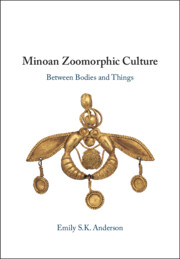
Since the earliest era of archaeological discovery on Crete, vivid renderings of animals have been celebrated as defining elements of Minoan culture. Animals were crafted in a rich range of substances and media in the broad Minoan world, from tiny seal-stones to life-size frescoes. In this study, Emily Anderson fundamentally rethinks the status of these zoomorphic objects. Setting aside their traditional classification as 'representations' or signs, she recognizes them as distinctively real embodiments of animals in the world. These fabricated animals-engaged with in quiet tombs, bustling harbors, and monumental palatial halls-contributed in unique ways to Bronze Age Aegean sociocultural life and affected the status of animals within people's lived experience. Some gave new substance and contour to familiar biological species, while many exotic and fantastical beasts gained physical reality only in these fabricated embodiments. As real presences, the creatures that the Minoans crafted artfully toyed with expectation and realized new dimensions within and between animalian identities.
Focusing on the long aftermath of the July Revolution of 1908 in the Ottoman Empire, this article examines the intellectual and popular climate of protest in the context of a crisis of sovereignty over Crete. Keeping the geographical focus on İstanbul and on the regions receiving tens of thousands of civilians displaced from this Mediterranean island around the turn of the twentieth century, I discuss how multiple segments of a refugee population animated a mass protest movement. Pursuing a multi-class perspective, the article demonstrates how the mobilization of the displaced rested on the actions of mutually reinforcing social clusters: an upper-class cohort of Cretans based in İstanbul and more numerous but equally vocal underprivileged groups from the provinces. Approaching displacement as a condition that generates not only victimhood but also impetus for collective action, I argue that the displaced Cretans became the leading agents of mass politics in the post-revolutionary Empire.
Already by the late thirteenth century, the laudes ceremony had become a weekly feature of civic life on the island, performed each Tuesday in the capital city of Candia in a ritual that symbolized interfaith relations on the island. It was folded into the veneration of icons and encounters with the miraculous, became a site for resolving personal disputes, and was referenced and represented deep within the rugged interior of the island in the decorative programs of rural chapels. Each of these configurations, explored in Chapter 2, reveals a different facet of a political imagination that gave music the power to represent the state in all its members, local and far-flung, visible and invisible, human and divine. Studying the performance of laudes in all its variety gives us glimpses into the chaotic reality out of which Venice’s project of empire was forged in the early years. Both Latin and Greek populations on the island adopted the laudes as a space to negotiate and contest colonial identity. Far from expressing unanimous agreement, the laudes had, by the fourteenth century, become a spectacular arena of dispute on the island.
Chapter 1 focuses on the practices and policies of music instituted in the earliest days of Venice’s empire in the eastern Mediterranean, and on the wide-reaching ramifications of music’s use as a technology of political representation on the island of Crete, the largest, longest-held, and most commercially profitable of Venice’s maritime colonies. Records from the first century of Venetian rule in Crete document the use of song as a bureaucratic tool, in which the singing of laudes—a genre with ambivalently political and liturgical usage—legitimized state contracts of taxation, transfer of property, and vassalage. The starting point of this chapter is a document known as the Concessio insulae Cretensis, drawn up by Doge Pietro Ziani in September 1211, one of the earliest records of Venice’s investment in music as an element of statecraft, and the origin of the laudes ritual on the island. This chapter uncovers the enormous and long-lasting importance of the laudes within the Venetian imperial enterprise, arguing that it served as the sounding image of the state’s claim to romanitas on which its legitimacy as an empire depended.
The tactics of Cretan citizen armies differed markedly from those utilized in most regions of the Classical and Hellenistic Greek world: instead of fighting in phalanxes, Cretans fought in open order, specializing in archery, skirmishing, ambushes and night actions. These tactics (and the cultural attitudes that went with them) were disparaged by mainland Greeks such as Polybios and explained in terms of moral deviancy: a sign of the duplicitous nature of the Cretans. This article demonstrates that these descriptions of Cretan tactics and behaviours are factual, but argues against the idea that they derive from moral deviancy. Rather, they represent the outcome of a different line of historical development than that followed in mainland Greece. Cretan tactics and attitudes stand far closer to those described by archaic poets (especially Homer, Archilochos and Kallinos); in this regard, Cretan city states displayed strong continuities with archaic social practices and values, detectable in other areas of Cretan society and culture. The stability of Cretan sociopolitical organization from the late seventh century down to the Roman conquest fostered the endurance of such practices and attitudes, leading to cultural divergence from mainland Greece and, accordingly, a generally hostile representation of Cretans in our main historiographical sources.
The relation between the opening section of Plato’s Laws and Xenophon’s Constitution of the Lacedaemonians usually goes unnoticed. I draw attention to its importance for understanding Plato’s project in the dialogue. Section 1 shows that the view proposed by Plato’s Athenian Visitor that Lycurgus made virtue in its entirety the goal of his statecraft was anticipated in Xenophon’s treatise. It has to be treated as an interpretation of the Spartan politeia alternative to that advanced by the Athenian’s interlocutors, which Plato could hope to be taken seriously as such. The second section focuses on the legislative programme the Athenian says he had hoped to hear ascribed to the Cretan and Spartan lawgivers. Plato can expect recognition by the reader that the programme is properly Spartan and Cretan by virtue of its echoes of the programme attributed to Lycurgus by Xenophon. The third section argues that in making law primarily concerned with fostering the proper development, conduct, and treatment of human beings at every stage of the life cycle, above all by provision for sound customary practices and the like, Plato adopts the approach to law making taken by Xenophon’s Lycurgus.
We present kinematic, radiometric, geochemical and PT data, which help to constrain the tectonometamorphic evolution of the Tripolitza Unit (TPU). The age of both the metamorphic peak (P = 0.4 ±0.2 GPa, T = ca. 310 °C) and top-to-the WNW mylonitic thrusting, attributed to the emplacement of the hanging Pindos nappe, has been constrained at 19 ±2.5 Ma using Rb-Sr on synkinematic white mica of a basal mylonite of NW Crete. This early tectonic event is also documented by the oldest generation of veins, which cut through less metamorphic (T = 240 ±15 °C) late Bartonian/Priabonian Nummulite limestone exposed as olistolith in TPU flysch of central Crete. Calcite of these veins yielded a similar U-Pb age at 20 ±6 Ma. U-Pb dating of matrix calcite, on the other hand, reflect the time of sedimentation (38.4 ±5.7 Ma and 37.6 ±1.2 Ma), which is in line with the faunal content of the black limestone. Geochemical data and U-Pb calcite ages of fibres of the Nummulite test (32.3 ±3.1 Ma and 34.6 ±0.9 Ma) suggest unexpected pseudomorphic fibre replacement during late Priabonian/early Rupelian diagenesis. Additional calcite veins, which developed at ca. 10–11 and 7 – 9 Ma (U-Pb on calcite), are attributed to top-to-the S thrusting and subsequent extension, respectively. The resulting anticlockwise rotation of the shortening direction within the TPU from WNW-ESE at ca. 20 Ma to N-S at ca. 10 Ma has significant implications for the geodynamic evolution of the External Hellenides.
Reference in the Linear B record to deities of the later pantheon, for instance Poseidon, Zeus, and Hera, among others, vividly attests to the Mycenaean pedigree of Greek religion. This chapter suggests that the resonance with local place, so foundational a characteristic of Hellenic belief in later times, also derived from Mycenaean origins. To this end, Susan Lupack decodes the complicated helix of Minoan and Mycenaean religion, illustrating that Mycenaean religion evolved through appropriations from the Minoans. The artefacts retrieved from the tomb of the Griffin Warrior in Pylos showcase the creative Minoan–Mycenaean mix. Tracing the movement of Mycenaean peoples to Crete, the linguistic examination of the famous Room of the Chariot-Tablets from Knossos demonstrates how the first wave of arrivals predominantly practised the religion they had brought with them from their mainland homes. A second assemblage from Knossos from only ca. sixty years later shows that the Mycenaeans now not only made an effort to worship Minoan deities, but also lent a new guise to their gods and goddesses, relating them to, and embedding them in, the land of the Minoans.