To save content items to your account,
please confirm that you agree to abide by our usage policies.
If this is the first time you use this feature, you will be asked to authorise Cambridge Core to connect with your account.
Find out more about saving content to .
To save content items to your Kindle, first ensure no-reply@cambridge.org
is added to your Approved Personal Document E-mail List under your Personal Document Settings
on the Manage Your Content and Devices page of your Amazon account. Then enter the ‘name’ part
of your Kindle email address below.
Find out more about saving to your Kindle.
Note you can select to save to either the @free.kindle.com or @kindle.com variations.
‘@free.kindle.com’ emails are free but can only be saved to your device when it is connected to wi-fi.
‘@kindle.com’ emails can be delivered even when you are not connected to wi-fi, but note that service fees apply.
How healthy you are is dependent on where you live. Americans suffer more cancers, heart disease, mental illness, and other chronic diseases than those who live in other wealthy nations, despite having the most expensive healthcare system in the world. Why? Embark on a journey to unravel the profound impact of public policies on American health from before birth in Born Sick in the USA: Improving the Health of a Nation. Delve into the intricate web where economic inequality weaves a tapestry of sickness stemming from a highly stressed society. This compelling read illuminates the need for transformative change in social safety nets and public policies to uplift national health and well-being. Through vivid storytelling, the book unveils the symptoms, diagnosis, and 'medicine' required to steer the nation toward a healthier future. Join the movement for a healthier America by embracing the insightful revelations and empowering calls to action presented within the pages of this eye-opening book.
The growth in economic inequality in the United States over the past forty years has stimulated interest among scholars in the effects of exposure to inequality on the American people. A prominent vein of scholarship explores whether exposure to inequality diminishes belief in a key pillar of the ‘American dream’ – the meritocratic ideal that hard work will translate to economic success. We offer this literature a novel test that explores the relationship between quotidian exposure to economic inequality in one’s adolescent residential context and belief in the American dream among roughly 1.3 million late-adolescent Americans entering college. We find that adolescent residence in high-inequality areas is associated with decreased belief in the American dream upon entering adulthood. Further analysis revealed that this relationship is most pronounced among young Americans raised in higher income households.
Why do both economically advantaged and disadvantaged voters sometimes converge in their support for conservative parties? This study examines how subjective class consciousness mediates the relationship between economic inequality and political behaviour in South Korea. Moving beyond conventional class-voting models based on income or occupation, it conceptualises class as a relational and perceptual construct formed through social comparison. This study argues that rising inequality weakens identification with the subjective middle class, generally associated with progressive orientations, while reinforcing symbolic divisions between those who perceive themselves as upper or lower class. Using nationally representative survey data and local administrative–level (si-gun-gu) electoral returns from 2012 to 2022, the analysis finds that both subjective class identification and local inequality are significantly associated with conservative support. At the individual level, voters identifying as either the upper or lower class are more likely to support conservative parties than those identifying as the middle class. At the local administrative-unit level, higher inequality corresponds with greater conservative vote shares. These findings suggest that inequality influences political behaviour not only through material conditions but also through perceptions of social hierarchy.
Standard economic reasoning makes a compelling case for taxing on a lifetime (or even multigenerational) scale, instead of annually. But, in addition to practical problems, lifetime accounting raises serious philosophical challenges and objections. The question of the relevant time period over which to distribute tax (and other fiscal) benefits and burdens is fundamental in a number of areas. Among them are the longstanding debate about income versus consumption taxation, the equity of retirement programmes, and the progressivity of various countries’ fiscal systems.
In China, the public has gradually shifted its focus from GDP growth to quality-of-life issues, presenting new challenges for the government. Food safety, as a prominent concern, exemplifies this shift. This chapter examines the impact of food safety issues on ordinary Chinese citizens’ trust in the government and their perceptions of governmental responsibility. The findings indicate that food safety problems diminish public trust in both central and local governments; however, this negative effect is mitigated among individuals with lower levels of education. Furthermore, the Chinese public is inclined to attribute primary responsibility for food safety crises to the central government rather than local authorities when assessing the severity of these issues. These results highlight the political implications of food safety concerns in China.
The past few decades have witnessed a significant religious revival in China, coinciding with a sharp increase in economic inequality. This chapter investigates the impact of religion on the Chinese public’s perceptions of income disparity and political trust. The findings reveal a notable difference in the perceived fairness of personal income distribution between religious and nonreligious individuals. Religious beliefs are positively correlated with a heightened sense of fairness regarding both personal and national income distribution. These perceptions of fairness, in turn, contribute to fostering people’s trust in political institutions and government officials. However, religious beliefs mitigate the positive effect of perceived fairness in income distribution on institutional trust. Consequently, when income distribution is perceived as unfair, institutional trust declines more sharply among religious believers compared to their nonreligious counterparts.
This study examines how Americans conceptualize democracy and whether their support for democratic principles remains consistent across different trade-offs. Using a conjoint experiment, we test whether citizens act as principle holders—maintaining support for democratic norms regardless of circumstances—or benefit seekers who prioritize material outcomes over liberal democratic norms. Our findings reveal that while respondents generally prefer democratic principles including rule of law, political equality, and freedom of expression, these preferences are moderated by economic well-being. When presented with scenarios featuring economic disadvantage, support for traditional democratic principles declines markedly. This context dependency challenges conventional survey measures of democratic attitudes, as we observe substantial divergence between participants’ self-reported understandings of democracy and their revealed preferences when forced to navigate trade-offs. These results help to explain why campaign appeals framing democracy as “on the ballot” proved ineffective in the 2024 US presidential election, as voters facing economic hardship privileged material concerns over abstract democratic principles. Our findings contribute to debates about democratic backsliding by demonstrating that economic conditions play a crucial role in shaping citizens’ commitment to democratic governance, with implications for understanding populist mobilization and the resilience of democratic norms during periods of economic uncertainty.
The last chapter is the Conclusion. After a brief overview of the book’s key themes, topics, and arguments, the chapter places India in a comparative perspective and asks the following questions. How analogous are political and economic trends in India when compared to similar countries? How do India’s achievements and shortcomings discussed in the book stand up against some other comparable countries?
Democratic innovations (DIs), such as deliberative mini-publics and referenda, are gaining traction in Europe, but their legitimacy depends on public support and their ability to address democratic discontent. While prior research focuses on individual-level drivers, structural conditions remain understudied. This study uniquely integrates the regional economic context into the analysis, combining survey data (N = 16,000) with economic indicators from ninety-one regions in thirteen European countries. Findings show that DIs receive slightly more support in poorer regions. Additionally, in these regions, economic hardship fuels demand for DIs by amplifying economic deprivation and political disaffection (‘enraged’ mechanism), whereas in wealthier regions, political interest is the key driver of public support for DIs (‘engaged’ mechanism). By incorporating economic conditions into the study of DIs, this research refines two key theories of DI support and offers a more nuanced understanding of when and why citizens support institutional change, thereby informing more context-sensitive participatory policies.
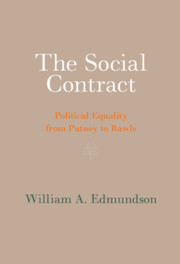
We are all parties to a social contract and obligated under it. Or is this mere fiction? How is such an agreement possible in a society riven by deep moral disagreement? William Edmundson explains the social-contract tradition from its beginnings in the English Revolution, through Hobbes, Locke, and Rousseau to its culmination in the work of John Rawls. The idea that legitimate government rests on the consent of free equals took shape in the seventeenth century and was developed in the eighteenth but fell into disuse in the nineteenth century even as democracy, toleration, and limited government gained ground. Edmundson shows how Rawls revived the idea of a social contract in the mid-twentieth century to secure these gains, as the then-dominant moral theories, such as utilitarianism, could not. The book also defends Rawls's conviction that political equality is integral to the idea of reciprocity at the heart of the tradition.
A growing literature explores the effect of economic inequality in citizens’ surrounding environment on their political attitudes and behavior. This literature typically relies on measures of income concentration or gap-size, which reflect under-tested presumptions about how citizens perceive the economic conditions surrounding them. Utilizing survey data to explore perception of economic inequality in Americans’ residential environment, this note finds that measures capturing income concentration or gap-size perform poorly relative to a measure capturing the joint prevalence of “haves” and “have-nots.” These results suggest that commonly used measures of economic inequality may not fully capture the features of people’s daily environment used to perceive the existence or magnitude of inequality. The results guide future research toward using contextual indicators that treat inequality as a compound phenomenon involving manifestations of poverty and affluence.
We examine factors that explain differences in opinions among Asian Americans and Latinos regarding the government’s responsibility in addressing economic inequality. We utilize a subjective social position framework to better understand variations in attitudes about the role the government should play in addressing the differences in income between people with high and low incomes. We use ordered logit models to assess 2020 Collaborative Multiracial Post-Election Survey data. Respondent’s age, feelings of marginalization, perceptions of local context, and use of alternative financial services are more important for predicting support or opposition to the government addressing income inequality. Taken together, the subjective social position of individuals goes a long way in explaining individuals’ attitudes regarding this matter.
Hume endorsed the long-standing belief that our mental and physical faculties are more or less equal at birth until distinguished by education. He was not an egalitarian, however; there would always be rich and poor, and property rights trumped compassion for the poor. Nevertheless, Hume strongly opposed the ‘utility of poverty’ doctrine as a hindrance to economic growth. Hume sought to raise the standard of living of the lower classes and to expand the ‘middle station’ of merchants and manufacturers. In several of his essays, he identified policies for trade and taxes to achieve these ends. In Britain, it was clear to Hume that commerce and trade, particularly of cloth, had already enabled labourers to lift themselves out of poverty through the acquisition of skills, and that this upward path might continue indefinitely. Hume’s desire to reduce the inequality of income was motivated by utilitarian ends: a more prosperous labouring class would result in a happier nation, not only because of the larger basket of goods in the household but also because citizens would become more law-abiding and thus promote representative government and political stability. Global prosperity would ensue as other nations became trading partners.
Most global inequality is between countries, but inequality perceptions have mostly been investigated within the country. Six studies (total N = 2656, 5 preregistered, 1 incentivized for accuracy, 1 with a sample representative of the USA) show that Westerners (U.S. American, British, and French participants) believe that developing and middle-income countries’ GDP per capita is much closer to developed countries’ than it actually is, and that people in developing and middle-income countries have higher rates of car ownership, larger houses, and eat out more frequently than they actually do, meaning that Westerners underestimate global inequality. This misperception is underpinned by a convergence illusion: the belief that over time, poorer countries have closed the economic gap with richer countries to a larger extent than they have. Further, overestimating GDP per capita is negatively correlated with support for aid to the target country and positively correlated with a country’s perceived military threat. We discuss implications for inequality perceptions and for global economic justice.
Edited by
Daniel Benoliel, University of Haifa, Israel,Peter K. Yu, Texas A & M University School of Law,Francis Gurry, World Intellectual Property Organization,Keun Lee, Seoul National University
The main purpose of this chapter is to study gender inequality within the inventive activities in three emerging countries – Brazil, India, and Mexico – using the framework of knowledge economics. It aims to determine which factors that influence a growing propensity of women to be inventors help reduce gender inequality in knowledge economies. In addition, the chapter contributes policy proposals that aim at increasing female participation in inventive activities. The key questions for this research are as follows: What are the characteristics and dynamics of female inventive activities in emerging countries with different economic development paths? What factors influence women’s propensity to invent? Based on the results of the econometric model proposed in this chapter, the inventive variables, such as the stock of prior knowledge, the size of inventor teams, the type of patent holder, technological field, and the presence of foreign researchers – positively influence women’s propensity to become inventors in a differentiated manner in each country. These findings validate how some variables could influence the inclusion of a greater number of women in research teams and the deployment of their potential inventive activities. The chapter proposes policies aimed at reducing gender inequality in the knowledge economy.
Edited by
Daniel Benoliel, University of Haifa, Israel,Peter K. Yu, Texas A & M University School of Law,Francis Gurry, World Intellectual Property Organization,Keun Lee, Seoul National University
This chapter provides an introduction to Intellectual Property, Innovation and Economic Inequality. It begins by discussing the problem of economic inequality, including the scale of that problem, types of economic inequality, and extant research on such inequality. The chapter then outlines the structure of this volume, which is divided into three parts: (1) theoretical, empirical, and policy issues; (2) intellectual property and national inequality; and (3) intellectual property and global inequality.
Edited by
Daniel Benoliel, University of Haifa, Israel,Peter K. Yu, Texas A & M University School of Law,Francis Gurry, World Intellectual Property Organization,Keun Lee, Seoul National University
This chapter criticizes the oversimplification of the binary North–South debate on intellectual property, innovation, and global inequality and highlights the wide geographic, sectoral, and income inequalities within middle-income countries. It begins by explaining why the arrival of these countries has called into question the North–South debate. The chapter then moves from the widely studied subject of global inequality to the underexplored topic of national inequality. Focusing on the intellectual property context, the discussion highlights the considerable subnational variations in the economic and technological conditions of middle-income countries. To combat national inequality, this chapter concludes by recommending interventions in three areas: (1) international norm-setting, (2) national policymaking, and (3) academic and policy research.
Edited by
Daniel Benoliel, University of Haifa, Israel,Peter K. Yu, Texas A & M University School of Law,Francis Gurry, World Intellectual Property Organization,Keun Lee, Seoul National University
Innovation is at the core of economic development, growth, and structural change. Yet, it does not spur in nor flow to all corners of the world. This chapter reviews and describes empirically the uneven geographical distribution of innovation and its dynamics, at both the national and subnational levels. It also compares such distribution in relation to other indicators of economic activity. The chapter then examines the potential consequences of such unequal distribution, particularly for its possible influence on inter-regional income inequality, and discusses how inevitable they might be. In light of available evidence, it explores what the role of policy could be.
Edited by
Daniel Benoliel, University of Haifa, Israel,Peter K. Yu, Texas A & M University School of Law,Francis Gurry, World Intellectual Property Organization,Keun Lee, Seoul National University
This chapter examines distributive justice (DJ) within the realm of international intellectual property (IP) laws, focusing on the digital era. It highlights DJ as a critical lens for understanding global IP laws, particularly where technology significantly influences the processes of creation. It also emphasizes the importance of global equity in achieving access to IP rights, within a comprehensive understanding of their scope. The United Nations Sustainable Development Goals focus on the context of peace, prosperity, and equality, though not explicitly centered on IP rights. Consequently, there is a need to redefine IP rights not only to address legal uncertainties but also to foster global equality. Moreover, the chapter delves into the roles of international entities like the World Intellectual Property Organization (WIPO) in managing challenges where global DJ and IP intersect. It highlights the importance of digital tools (e.g., blockchain) for authenticating original authors. The chapter asserts that proficient and reliable international organizations like WIPO are best suited to address these challenges. Furthermore, the chapter underscores the significance of an unbiased global investment system for promoting universal progress and equity. Ultimately, it explores how WIPO’s tools, such as WIPO Re:Search and WIPO Proof, exemplify DJ in the international IP framework.
Edited by
Daniel Benoliel, University of Haifa, Israel,Peter K. Yu, Texas A & M University School of Law,Francis Gurry, World Intellectual Property Organization,Keun Lee, Seoul National University
This chapter reviews available economic theories and empirical evidence about the potential roles intellectual property (IP) rights play in generating or reducing economic inequality, emphasizing international data. Basic evidence demonstrates the simultaneous growth in internal income inequality across countries and increasing IP protection in the prior 25 years. It is tempting to assign causality from IP to inequality but doing so confidently is challenging and has not yet been accomplished systematically. Through encouraging technology diffusion, global IP reforms likely contribute to convergence in average incomes between advanced economies and select emerging and developing countries.