To save content items to your account,
please confirm that you agree to abide by our usage policies.
If this is the first time you use this feature, you will be asked to authorise Cambridge Core to connect with your account.
Find out more about saving content to .
To save content items to your Kindle, first ensure no-reply@cambridge.org
is added to your Approved Personal Document E-mail List under your Personal Document Settings
on the Manage Your Content and Devices page of your Amazon account. Then enter the ‘name’ part
of your Kindle email address below.
Find out more about saving to your Kindle.
Note you can select to save to either the @free.kindle.com or @kindle.com variations.
‘@free.kindle.com’ emails are free but can only be saved to your device when it is connected to wi-fi.
‘@kindle.com’ emails can be delivered even when you are not connected to wi-fi, but note that service fees apply.
The chapter addresses: What Is a Motion Picture?; What Is an Instructional Video?; What Is the Role of Instructional Video in Education and Training?; Are Instructional Videos Effective? And How Can We Design Effective Instructional Videos?
How does preference disclosure by political principals shape regulatory outcomes downstream? While existing literature approaches this question in terms of principal-agent maneuvers, we argue that how leaders reveal their policy preferences and the effect on regulatory behavior can be understood through the lens of information processing. In-depth interviews with elite actors in China’s film sector indicate that leaders facing elite contestation limit disclosure to stabilize coalition support, whereas leaders free from such contestation often comment directly and expansively on regulatory decisions, while tying their revealed preferences to “big picture” considerations beyond the business of filmmaking. The expanded scope and scale of disclosure following regime consolidation transformed the informational environment for the film sector, prompting regulators to prioritize out-of-domain issues and curtail discretionary action to mitigate political risk. The findings point to the informational determinants of regulatory behavior in comparative settings.
This chapter examines Elizabeth Bowen’s relationship to audiovisual art forms. Given Bowen’s own relative lack of interest in film, one may wonder why adaptation should be included in an overall analysis of her work and its impact. One argument is largely commercial: be it through television, film, or radio, dramatisations of Bowen’s works contribute to increased public scrutiny of her fiction. For those already familiar with Bowen’s fiction, adaptations revitalise readings of her fiction. How her texts correspond to traditions and tropes of other media tells us much about the interplay of genres – from novel of manners and social satire to spy story or historical fiction – as they manifest themselves in the traditions of those media. Ultimately, an adaptation is also an interpretation and analysis of its source text. This examination of adaptations focuses on The Last September and The Heat of the Day, two of Bowen’s most-read works. These adaptations are the best known and most accessible audiovisual adaptations of her fiction.
What did audiences want when it came to 'race' on screen in twentieth-century Britain? This was the question that drove producers and makers of film and television as they competed for viewers, and organisations such as the BBC and ITV developed a new field of 'audience research' to address it. Christine Grandy examines how film and television producers, censors and researchers sought to locate audience preferences when it came to presentations of 'race'. Through empire films, home movies and television classics such as Love Thy Neighbour and The Cosby Show, this study explores what was at stake for white British audiences as they consumed material featuring problematic and positive presentations of Black and south Asian people. Race on Screen further uncovers the efforts of Black and south Asian audiences to draw attention to their own roles as overlooked audiences and to name film and television content as racist.
In this paper, I explore the poetic virtue of filmmaking. In the first part, I look at the virtue of art more generally, drawing on Catholic philosopher Jacques Maritain’s Aquinas-inspired conception of poetic virtue. In the rest of the paper, I then map Maritain’s poetic virtue onto the artform of the moving image, its processes of production and reception. Here, I show how poetic intuition is conceived by filmmakers such as David Lynch and translated into the realities of filmmaking in the Sci-Fi mystery thriller, The Silent Messenger, in which I was involved in as producer and performer. Enlisting the help of film philosopher Alain Badiou and film phenomenologist Vivian Sobchack, I claim that for the poetic virtue of film to come into full presence, both filmmaker and viewer need to take responsibility for their moral capacity for gaze. It is only when the viewer loses themselves (their self) in the shared sight of the filmmaker, and the artist respects the audience’s own intellectual creativity, that film can teach us that seeing is always a relational enterprise, one that brings our human relationships – in all its tragedy and beauty – into shared vision.
Chapter 4 considers how race and racism were presented in post-war television and film. Much of this chapter focuses on blacking-up practices on television, the success of The Black and White Minstrel Show with white audiences, and its defence by white producers, audiences and the press, when Black audiences in Britain protested against it in 1967 through the Campaign Against Racial Discrimination (CARD). It also traces the post-war life of the empire film content discussed in Chapter 2, when these films were consistently broadcast on both the BBC and ITV before the watershed and at ‘family viewing times’. The chapter also examines the broader enduring popularity of blacking-up practices on screen in the post-war period.
Chapter 2 outlines what ultimately made it to the screen when presenting racialised people, places and themes to British audiences from 1900 to the end of World War II. It concentrates on the thinking behind the production of the popular empire feature films, documentaries about empire and home movies of blacked-up Britons in the early twentieth century by white Britons such as John Grierson at the Empire Marketing Board and GPO Film Units, and William Sellers, director of the Colonial Film Unit during World War II. The chapter further outlines the ‘counter-storytelling’ that audiences of colour offered when encountering this material in film screenings in both Europe and the colonies and their varied responses to the racism on screen, including laughter.
This article is about the recent transformation of two powerful, paradoxical, and inseparable narratives of progress that developed in the postwar period: aesthetic autonomy and Holocaust remembrance. As far-right and illiberal parties have gained power across Europe, they adapted these foundational narratives of the liberal-democratic West to assert their own legitimacy and to reimagine the cultural inclinations of the European Union. This article examines how this process has taken place in the reception of Jonathan Glazer's Zone of Interest (2023) and Agnieszka Holland's Green Border (2023)—both international co-productions produced during the repressive eight-year reign of the Law and Justice Party (PiS) in Poland. A close reading of these films and their reception in different contexts, exposes a world more complicated than one-dimensional dichotomies between the liberal and the illiberal. Likewise, the reception of the two films makes apparent the entanglement of the national and transnational, as well as a process of translation and mistranslation that takes place as cultural materials move across geographical and ideological boundaries. Understanding such dynamics helps us to comprehend the options for criticism available to artists working within repressive contexts.
In 1969, Franco Zeffirelli invited Cohen to Italy to discuss scoring his film Brother Sun, Sister Moon. The collaboration did not advance, but in 1971 German director Rainer Fassbinder used Cohen’s songs for Beware the Holy Whore. A few years later, Robert Altman chose to use four songs from Cohen’s first album for the soundtrack of McCabe and Mrs. Miller (1971), for which Cohen also wrote some new material that Altman did not use. Since then, Cohen’s songs have been used in over 300 films and TV episodes. Roger Young’s Kiss the Sky (1998) includes eight Cohen songs on the soundtrack, and the film echoes themes that run throughout Cohen’s work. Sarah Polley’s Take This Waltz (2011) was inspired by Cohen’s song. “Hallelujah” has been used prominently in numerous films and television episodes, including Shrek, The West Wing, and Saturday Night Live. Cohen was also directly involved in the production of several films, including I Am a Hotel (1983), which features the surreal interactions of several sets of lovers at a hotel. This chapter explores the relationship of Cohen’s music and lyrics to these films and assess their role in his career.
Cultural exchange was another critically important mechanism for influencing popular emotions. This chapter looks at Sino-North Korean exchanges in theater, film, and the arts. It argues that these exchanges reached large audiences in both countries while inculcating official emotions.
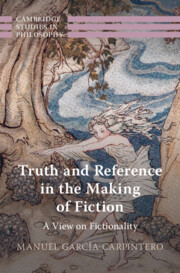
A standard feature of our engagement with fictions is that we praise them as if they offer true insights on factual, psychological or evaluative matters, or criticize them as if they purport to do it but fail. But it is not so easy to make sense of this practice, since fictions traffick in made-up narratives concerning non-existing characters. This book offers the reader conceptual tools to reflect on such issues, providing an overarching, systematic account of philosophical issues concerning fictions and illustrating them with analysis of compelling examples. It asks whether fiction is defined – as John Searle and others have claimed – by mere pretense – the simulation of ordinary representational practices like assertions or requests - or whether it is defined by invitations or prescriptions to imagine. And it advances an original proposal on the nature of fictions, explaining why fictions can refer to the world and state facts about it.
A survey of drama and performance in the period 1975-1980, with emphasis on the innovative plays and experimental productions that appeared in New York in 1976, along with consideration of surrounding developments in visual art, literature, film, and music, and attention to the politics of these transitional years.
A comprehensive examination of the plays and prose of Adrienne Kennedy, with particular focus on two works she premiered in 1976: A Rat’ s Mass / Procession in Shout, an operatic adaptation of her early play A Rat’ s Mass, composed and directed by the jazz composer and pianist Cecil Taylor; and A Movie Star Has to Star in Black and White, a play derived from Kennedy’s fascination with Hollywood film and her memory of her brother’s devastating car accident. The chapter also explores Kennedy’s experiments in visual art, with particular attention to her own and her mother’s scrapbooks, her assemblage of photographed objects ("Cherished Objects from the Past"), her use of quotation, and the mixed-media nature of her manuscripts.
Realism has been disparaged for over a hundred years as an outmoded form, and, more recently, as a pernicious illusion, typical of nineteenth-century novels and Hollywood movies alike. After a long period of disrepute, realism has had in recent years something of a revival among critics and theorists. Yet this revival still represents a minority, and much of the old critique of realism remains taken for granted. This book treats realism as a persistent aspect of narrative in American culture, especially after World War II. It does not seek to elevate realism above other forms of fictional narrative – that is, to restore it to some real or imagined past supremacy. Rather, the goal is to reclaim realism as a narrative practice that has remained vital despite a long history of critical disapproval, by showing how it functions in significant recent works across media.
This article considers the ambivalence of late colonial race politics in France and French Africa through the life and work of celebrated ethnographic filmmaker and pioneer of cinéma vérité, Jean Rouch (1917- 2004). Part of a special issue on late colonialism in Africa, this study shifts the focus from the continent itself to the legacies of late colonialism in Africa for race relations in postcolonial Europe.
The Introduction provides background on Iran and on the author, including the motivations for the book and the writing process. The book is based on ten years of fieldwork in Iran conducted from the 1990s until 2007; the Introduction explains how a study of the politics of daily life became the prism for inquiring into contemporary issues of power, freedom, and agency. For nonspecialist readers, an overview of Iran’s twentieth-century political and social history offers context. For all readers, the chapter offers a case study of an interpretative method, centered on the experience of watching an Iranian film in Chicago, and speaking about it with Iranian women in Tehran.
Cinema as a mirror of postrevolutionary cultural negotiations. After the revolution, Iranian cinema becomes a shared format for national self-representation. Despite censorship and practical constraints, filmmaking developed a coded but locally recognizable language to explore tensions around class, region, gender, history, and politics. Acquiescing to censorship requirement that women actors never unveil, even when represented in private alone or with other women, filmmakers and audiences found themselves undermining the dramatic artifice of the cinematic fourth wall, the convention of invisible, passive dramatic observation taken for granted in modern filmmaking. Instead, audiences became collaborators of cultural meaning, acknowledging cinematic artifice and the possibilities of symbolic representation. Canny directors involved their viewers as conscious partners in a community of interpretation, pushing the limits of cultural critique. These self-reflexive Iranian films provide the most accurate format for reflecting on postrevolutionary national and political developments, making postrevolutionary Iranian cinema a mirror for national subjectivity and society.
Although blackface minstrelsy is considered to be one of the first American pop culture products, its circulation in central and eastern Europe is relatively unknown. This article engages with the history of blackface performance and imagery in Poland, treating it as a lens granting insight into ways of imagining blackness in the region. It focuses on the interwar period as a time of rapid adaptation of colonial imagination with its global racial hierarchies in the public sphere of the newly independent country. Against the ideology of “colonial exceptionalism” and “white innocence” based on an assumption that Poland—as a state with no history of overseas colonies and Black slavery—is free of anti-black racism, we describe the active involvement of large groups of society in transnational colonial imagination, developed especially in the sphere of entertainment. The article not only demonstrates the existence of the tradition of blackface in Poland and reconstructs its distinct character but also suggests structural determinants that continue to affect ideas about blackness in Poland today.
This article analyses samples of unexplored photographic series produced by US photographer Alan Fisher (1913–88) in Brazil between 1950 and 1953. These images are part of visual reports produced for the United States Information Service (USIS) documenting the screening of newsreels, short films and cartoons in factories and rural communities in Brazil. The article repositions Fisher as a key figure for understanding US information warfare in mid-century Brazil. It theorises these screenings as political-performative events and develops an approach that accounts for the persuasive (and deceptive) dimension of these campaigns while acknowledging the audience’s agency and strategic complicity.
In the late 1960s and early 1970s, Pierre Boulez collaborated as a commentator and conductor on a series of challenging and distinctive BBC Television programmes about twentieth-century music. This chapter discusses the range of Boulez’s appearances on British television but focuses principally on this group of visually innovative broadcasts that combine musical analysis and performance to illuminate the creative processes of composers including Debussy, Berg, Schoenberg and Webern. Boulez’s own compositions, including ‘Improvisation II sur Mallarmé’ and Le Marteau sans maître, are also imaginatively visualised, with highly distinctive camerawork and cutting-edge graphics. Created initially for the television studio and later as individual film documentaries, these broadcasts often exploit the full potential of the medium of the time. Little seen since their initial transmission, these programmes remain provocative creative resources for all those engaged with combining music and moving images.