To save content items to your account,
please confirm that you agree to abide by our usage policies.
If this is the first time you use this feature, you will be asked to authorise Cambridge Core to connect with your account.
Find out more about saving content to .
To save content items to your Kindle, first ensure no-reply@cambridge.org
is added to your Approved Personal Document E-mail List under your Personal Document Settings
on the Manage Your Content and Devices page of your Amazon account. Then enter the ‘name’ part
of your Kindle email address below.
Find out more about saving to your Kindle.
Note you can select to save to either the @free.kindle.com or @kindle.com variations.
‘@free.kindle.com’ emails are free but can only be saved to your device when it is connected to wi-fi.
‘@kindle.com’ emails can be delivered even when you are not connected to wi-fi, but note that service fees apply.
The electoral consequences of the Great Recession are analysed in this article by combining insights from economic voting theories and the literature on party system change. Taking cues from these two theoretical perspectives, the impact of the Great Recession on the stability and change of Western, Central and Eastern European party systems is assessed. The article starts from the premise that, in order to fully assess the impact of the contemporary crisis, classic economic voting hypotheses focused on incumbent parties need to be combined with accounts of long‐term party system change provided by realignment and dealignment theories. The empirical analysis draws on an original dataset of election results and economic and political indicators in 30 European democracies. The results indicate that during the Great Recession economic strain was associated with sizable losses for incumbent parties and an increasing destabilisation of Western European party systems, while its impact was significantly weaker in Central and Eastern European countries, where political rather than economic failures appeared to be more relevant. In line with the realignment perspective, the results also reveal that in Western Europe populist radical right, radical left and non‐mainstream parties benefited the most from the economic hardship, while support for mainstream parties decreased further.
What makes some challenger parties succeed and others fail? Existing research on party‐level factors finds that it is essential for parties to close a representational gap. However, this condition cannot be sufficient. For each successful challenger, there are many others proclaiming a similar message but going unheard. Hence, we argue that, instead of only to the messages, more attention should be paid to parties’ abilities to communicate their messages effectively.
Using an original dataset on 74 challenger parties in five countries in a similar political and economic situation (during the post‐2008 economic crisis), we show that communication is key for electoral success. In particular, we show that challenger parties can win over voters by, on the one hand, harnessing the prominence of a well‐known personality (a locomotive) and by, on the other hand, establishing a means of contacting voters which bypasses the traditional news media and amplifies their message (like a megaphone). But this megaphone only works if it amplifies a message that fills a representational gap (here: an anti‐austerity message) – only then do parties benefit. Furthermore, we provide evidence for the widespread but unproven claim that populism helps challenger parties succeed, but this, too, depends on whether parties are able to contact voters on a large scale.
By including three crucial aspects of communication (sender, channel, and message), we can explain a large share of the high variability in challenger party success.
Recent cross‐national comparative studies have found no effect of countries’ macroeconomic performances on trust in national political institutions, once political explanations (most notably corruption) are taken into account. Although political trust is not determined by the comparison of national economic performance to other countries, it is argued in this article that it is affected by comparisons to their own past performance. In a multilevel, fixed effects analysis of Eurobarometer data (21 waves in 15 European Union Member States between 1999 and 2011) the extent to which within‐country variations in economic performance affect political trust longitudinally is tested. Three major conclusions are reached. First, within‐country, longitudinal changes in performance (growth, deficits, unemployment and inflation) affect political trust. Second, the impact of macroeconomic performance is stronger among the lower educated. Third, even in times of economic duress, budgetary deficits tend to undermine political trust.
This paper studies the interactions between governments, challengers and third party actors in the context of 60 contentious policy episodes in 12 European countries during the Great Recession. More specifically, we focus on the endogenous dynamics that develop in the course of these episodes. Based on the combination of a new event dataset, which allows for the construction of action sequences, and a novel method (contentious episode analysis) to study the impact of actor‐specific actions on subsequent actions within a sequence, we test a set of hypotheses on the determinants of actors’ overall action repertoires within specific contexts. Overall, our results are more supportive of the interdependence of cooperation than of the interdependence of conflict: the repression‐radical mobilisation‐external legitimation of conflictive behaviour nexus is weaker than the concession‐cooperation‐mediation nexus. While the literature tends to focus on conflict dynamics, we find that there is a more systematic dynamics of cooperation in the course of contentious episodes.
Who benefits from deep economic crises: the left, the right or neither? On the basis of evidence from elections in 1929–1933 and 2008–2013 in all states that were democracies in both periods, it is argued in this article that the electoral consequences of the Great Depression and the Great Recession were surprisingly similar: in both periods, right‐wing parties were at first more successful than left‐wing parties, although this effect only lasted for a few years. The manner in which a crisis develops over time should be taken into account when examining the effects of deep economic downturns on the electoral fortunes of the left and the right.
This article investigates the dynamics of support for income redistribution in Europe. With European Social Survey data spanning 2006 to 2012, it assesses whether the Great Recession resulted in substantial parallelism or increasing polarisation in preference change across various sub‐publics. After introducing hypotheses based on claims that social groups are affected differently by economic insecurity, the article proceeds in two empirical sections. First, whereas prior research suggests that hard times fuel diverging attitudinal patterns, it is found that income groups, ideological groups and educational groups did not shift differently over time during the first years of the crisis, thus providing strong evidence for the ‘parallel publics’ hypothesis in the European context and in times of economic turmoil. Next, the article addresses the extent to which change in aggregate support for redistribution came from changes in small minorities of the population, supposed to be more responsive to their economic environment. Using multilevel analysis, it is shown that the most educated significantly contributed to the overall change more than the others. As a result, they may have been partly driving the economic mood during the first years of the Great Recession.
Change is frequently afoot in the nonprofit sector, both in the wider institutional environment in which nonprofits operate and within the organizations themselves. Environmental transformations—funding sources, supply and demand for collective goods, and administrative norms—create the circumstances in which organizations operate. Internally, change involves the alteration of goals, practices, and personnel. To explore how multiple aspects of change intersect across levels, we ask how organizations’ practices influence their experience of and reaction to changes in the environment. Turning open systems theories inside out, we argue that internal planning, routines, and missions give rise to organizational mindsets that imbue evolving environmental circumstances with meaning. We illustrate our argument using a unique longitudinal dataset of 196 representative 501(c)(3) public charities in the San Francisco Bay Area from 2005 to 2015 to assess both accelerators and obstacles of change. Empirically, we investigate predictors of organizational insolvency and the ability to serve constituents in the wake of the Great Recession. We find that strategic planning decreases the likelihood of insolvency whereas an orientation toward the needy increases spending. We conclude with our contributions to understanding of multi-level organizational change and nonprofit strategy.
The myth of self-made success triumphed in the new millennium, incentivizing claims that are impervious to reality. Prominent examples include George W. Bush, Donald Trump, and Kylie Jenner, who began their lives in great financial and social wealth, yet they all believe they were self-made. Bush and Trump endorsed policies that lowered taxes for elites but cut programs that served everyone else, arguing that taxes punish success and social support programs foster irresponsibility. The myth eased reducing constraints on financial exploits, making possible both great fortunes and economic crises, such as the Great Recession that began in 2007 and led to taxpayers’ bailouts of private institutions. The megahit reality TV show Shark Tank displayed the myth on steroids, starring “self-made” entrepreneurs. In contrast, the despair of struggling people accused of self-made failure and willful irresponsibility has been deadly. Such accusations can be profitable, as J.D. Vance’s career has shown. This myth-made culture ignores the communities and institutions that make wealth generation possible. It frees tycoons to acquire and donate large fortunes, garnering acclaim as philanthropists.
The epilogue covers the development from Basel I to III and reflections on the evolution of capital regulation in the long run. Particular emphasis is given to the divergence of risk-weighted and risk-unweighted capital ratios among large, global banks – most of which have their roots in the nineteenth century. The chapter calls for a fundamental reassessment of banking regulation. From a historical perspective, regulatory frameworks are highly path dependent and seldom fundamentally reconsidered, aiming to increase financial stability. Moreover, once we accept a certain degree of banking instability in modern banking, the focus should be on who covers losses and how significant such losses can potentially be without the involvement of the public.
The new millennium started on an anxious note, although the much-feared millennium bug proved uneventful. What followed, though, was a series of crises until 2020 involving financial meltdown, a nuclear disaster, and a pandemic. Japan and Germany, like the rest of the world, emerged bruised and battered by the first and last of these calamities. Japan suffered the middle one on its own, although Fukushima also galvanised Germany’s opposition to nuclear power. This in turn reinforced the European country’s longstanding overreliance on Russian gas, a folly laid bare when Russia invaded Ukraine in spring 2022. Taken together, the crises exposed some of the vulnerabilities and deficiencies of Japanese and German capitalisms as they have evolved since the Second World War. But they also highlighted key sources of strength, not least resilience and adaptability in the face of extreme adversity. On balance, the two countries therefore weathered the crises better than most.
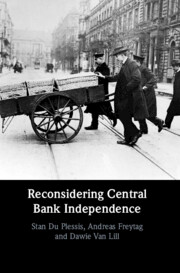
Central bank independence has become one of the most widely accepted tenets of modern monetary policy. According to this view, the main role of independent central banks is to maintain price stability through the adjustment of short-term interest rates. Reconsidering Central Bank Independence argues that the global financial crisis has undermined confidence in this view as central banks increasingly have to address concerns other than price stability, such as financial stability, the need for output recovery and other broader policy goals. Large balance-sheet expansion by central banks followed the global financial crisis, which overlapped considerably with the financial policy of their respective governments. Exploring the consequences of this shift to a more diverse set of policy challenges, this book calls for a return to the consensus role for central banks and analyses what this might mean for their future independence.
We investigate the role and impact of household debt on the economic performance of European economies during the double-dip recession of 2008–2013. We use a loan-level data set of millions of residential mortgages originated between 2000 and 2013 to calculate regional indicators of household debt. The granular information allows us to construct a measure of interest rate mispricing during the housing boom that we use to identify the effect of a credit shock (CS) on household debt. Our analysis provides three main conclusions. First, in the period 2004–2006, the measure of CS was negative in most European regions which indicates that credit conditions were significantly relaxed relative to earlier years. Second, we find that regions in which household leverage increased more rapidly during the 2002–2007 period experienced a more severe decline in output and employment after 2008. Third, we find that the CS had the largest effect on increasing leverage for the low-income and the middle-income households, although the leverage of the high-income households represents a more powerful predictor of the decline in economic activity.
On April 15, 2009, 1,022 Tax Day Tea Party rallies took place across the US. These rallies were transformative for the Tea Party and served to put the insurgency on the national stage. Soon after April 15, local Tea Party groups began appearing across the country. By the end of 2009, 743 local Tea Party chapters had come into existence. This chapter develops an explanatory account of the earliest wave of Tea Party protests and the early risers that followed. We emphasize the dual importance of material threats brought about by the Great Recession, and status threats linked to a perceived decline in social power among White conservative Christians. Our results show that the Tea Party was set in motion by powerful, well-resourced conservative groups. The groups honed the Tea Party’s message and built an online infrastructure allowing any potential activist to stage a rally or form a local Tea Party group. The grassroots expansion of the Tea Party took off and became the public face of the insurgency. Tea Party activism was most intense in communities with higher levels of both material threats and status threats.
The Tea Party’s local chapter network played an essential role in the insurgency’s momentum, but almost no research has examined these groups beyond accounting for their emergence. This chapter focuses on the external factors related to Tea Party organization building and maintenance. Using web crawlers and newspaper data, we analyzed the trajectory of the 3,587 local Tea Party chapters that had collectively embodied the insurgency, emphasizing when chapters were formed, how long they survived, and when they stopped showing any signs of organized activity. Between 2011 and 2012 – the peak years of the Tea Party’s organized activity – more than 2,000 chapters were active. Beginning in 2012, chapters began to disappear. By the end of 2014, less than 10% of all Tea Party groups showed any signs of activity. The decline of local Tea Party groups is associated with lowering material threats as the economy slowly recovered from the Great Recession. At the same time, status threats help account for the persistence of Tea activism. The election of politicians affiliated with the Tea Party had little impact on local chapter survival.
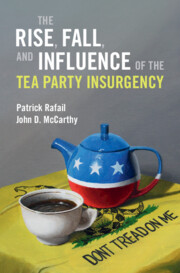
Emerging in 2009, the Tea Party movement had an immediate and profound impact on American politics and society. This book draws on a decade's worth of original, extensive data collection to understand why the Tea Party emerged, where it was active, and why it disappeared so quickly. Patrick Rafail and John McCarthy link the Tea Party's rise to prominence following the economic collapse that came to be known as the Great Recession. Paying special attention to the importance of space and time in shaping the Tea Party's activities, Rafail and McCarthy identify and explain the movement's disappearance from the political stage. Even though grassroots Tea Party activism largely ceased by 2014, they demonstrate the movement's effect on the Republican Party and American democracy that continues today.
This article analyses the impact of the Great Recession and radical labour market deregulation on employer associations’ (EAs) membership levels and composition in Southern Europe. It also reviews the literature and advances it in four relevant aspects. First, it verifies a general decrease in membership of EAs in Southern Europe, almost to the point of collapse in Greece. Secondly, it identifies the greater importance of large companies (more than Fordist economic sectors) in the composition of this membership. Thirdly, it confirms that sectoral bargaining (as a major determinant) and union representation (an element weakened by reforms) are strong company-level incentives for membership in EAs. Finally, it re-examines the reasons put forward in the scholarly literature to explain why EAs in Southern Europe have not been in favour of these significant institutional changes.
The Mexican economy experienced two large crises: in 1995 and in 2008. The dynamics and origins of the episodes are very different; nevertheless, is there a common underlying mechanism? First, by applying the Business Cycle Accounting method, we find that the efficiency wedge is the main driver of output during both episodes. We present an equivalence between the neoclassical growth model with distortions and a small open economy with imported intermediate goods inputs, in which relative price changes manifest themselves as changes on the efficiency wedge. This result proposes a solution for the theoretical puzzle regarding the relationship between terms of trade shocks and productivity. Finally, the model is able to reproduce both the intensities and velocities of the crises in Mexico.
This chapter recounts the cascade of problems that threated international liberalism and the Washington Consensus during the first part of the twenty-first century. The Global War on Terror launched under US leadership, the global financial crisis and the ensuring Great Recession, and the promise and dashed hopes of the Arab Spring all exposed the failure of the liberal internationalist system and the expanded international organizations to fulfill the hopes of the 1990s.
Iceland is a country of rugged beauty, volcanic mountains, countless waterfalls and, well, ice. Its inhabitants are even more exotic; 54 per cent of Icelanders, for example, believe in elves – or say it’s possible that they exist. Travelling through the desolate landscape, one can easily imagine how such beliefs emerge: Iceland is a country with fewer than 400,000 residents. To put that in perspective, almost double the number of people live in the 33 square kilometres of Macau than in the 100,000 square kilometres of Iceland.
Iceland might seem like a strange place to start a story about the largest global financial crisis since the Great Depression. But Iceland exemplifies both the worst and best of the crisis. The story begins several years before 2008, when Iceland’s bank managers saw an opportunity: they could attract the savings of Europeans, mostly residents of England and the Netherlands, by offering interest rates higher than those of the banks of those countries.
We examine the start date of the Great Recession across OECD countries. The Sahm Rule identifies the start of recession in the US to the beginning of 2008 but in most other OECD countries it identifies the start after that identified by two successive falls in quarterly GDP. We establish our own rule for predicting recession using the fear of unemployment series to predict recession. We show a 10-point rise in the series compared to its previous 12 month low predicted the onset of the Great Recession in both the United States and Europe.