To save content items to your account,
please confirm that you agree to abide by our usage policies.
If this is the first time you use this feature, you will be asked to authorise Cambridge Core to connect with your account.
Find out more about saving content to .
To save content items to your Kindle, first ensure no-reply@cambridge.org
is added to your Approved Personal Document E-mail List under your Personal Document Settings
on the Manage Your Content and Devices page of your Amazon account. Then enter the ‘name’ part
of your Kindle email address below.
Find out more about saving to your Kindle.
Note you can select to save to either the @free.kindle.com or @kindle.com variations.
‘@free.kindle.com’ emails are free but can only be saved to your device when it is connected to wi-fi.
‘@kindle.com’ emails can be delivered even when you are not connected to wi-fi, but note that service fees apply.
‘He thinks you’ve completely fucked yourselves.’ This was Washington DC in late June 2016, a couple of days after the Leave victory, lunch with one of Obama’s inner circle, and his response to my question about how the President had viewed the outcome. My guest continued, ‘We just don’t understand why you would call a referendum which you didn’t need to hold without being absolutely certain of getting the right answer. Why would you do that? And what happens now you’ve blown yourselves up?’ The Obama team had form in questioning David Cameron’s judgement. They blamed him for miscalculating UK Parliamentary opinion on a proposed US–UK–France attack on Syria, summoning Parliament back from holiday in August 2013, then losing the vote, and triggering a chronically cautious Obama to back away from his plan to bomb Assad’s military bases. Brexit, in their eyes, was more of the same. But the mood on the nightly Washington social circuit was similar: I noticed people staring at me with a near-horrified look in their eyes: ‘What have you done?’
Academic psychiatrists play a key role in mental health research and help the UK to punch well above its weight internationally. However, over the past two decades there has been a progressive decline in the number of academic psychiatrists in the UK: there are now 31% fewer than there were in 2006. Reversing this trend is critical for the health of psychiatric research.
This chapter explores organizational configuration—how work is structured through task division, coordination, authority, and hierarchy. It introduces four configurations: Simple (centralized, small firms), Functional (grouped by specialization, efficient but less adaptive), Divisional (semi-independent units by product or region, flexible but may duplicate efforts), and Matrix (combines functional and divisional, supports adaptability but complex to manage). Firms may also use contract-based or digital configurations to enhance responsiveness. The Law of Requisite Variety suggests that organizational complexity must match environmental complexity. Misfits between configuration and external demands can cause inefficiencies, poor coordination, and performance loss. Aligning structure with strategy and environment is essential for long-term success
The first “international” migration of humans began around 60,000 years ago, and the migrations continue to this day. International migration is migration that occurs between countries. Its dynamics differ from those of internal migration, that is, migration within the geographical boundaries of a single country. Thus, a separate chapter is devoted here to international migration. This chapter first considers some of the definitions and concepts used in the study of international migration. It next covers world immigration patterns over time. This is followed by a discussion of immigration to the United States. The chapter then considers some of the positive and negative economic issues pertaining to international migration. Considerations of legal and unauthorized immigration are next reviewed. The chapter concludes with a discussion of the meaning of the concept of zero net international migration.
Edited by
Latika Chaudhary, Naval Postgraduate School, Monterey, California,Tirthankar Roy, London School of Economics and Political Science,Anand V. Swamy, Williams College, Massachusetts
The chapter examines how India’s emergence as the world’s largest source of international migrants has affected its economy. It first provides a brief framework to understand international migration’s economic effects, arguing that these depend on selection and sorting effects inherent in migration: who goes, how many go, where they go, why they go and how many return. It then examines the different mechanisms and magnitudes of these effects through different types of financial flow via both the current account (remittances) and the capital account (bank deposits, bonds, FDI), via the network effects of the diaspora on trade and via human capital effects due to a ‘brain drain’. It concludes by arguing that the economic effects of migration on India have depended primarily on factors within India. People leave for a reason and will invest only if it makes financial sense to do so.
This chapter argues that the development of ‘the international’ into a collective singular serves as a powerful obstacle for understanding world politics. It traces how this has happened and why exactly this is problematic. Regarding the works of Barry Buzan, it demonstrates how these can be characterised as in many ways partaking in the more unquestioned, ‘singularized’ use of ‘the international’, but that based on a basic English School setting, he has moved beyond that. This moving beyond is particularly strong since the early 2000s, that is the period in which many of his works start to be about the ‘big picture’ beyond international society, starting with From International to World Society? and more recently resulting in Making Global Society.
The concluding chapter synthesizes the multifaceted legacy of Martin Luther King Jr.’s advocacy for Africa and the Black Diaspora. It interrogates the complexity and magnitude of his domestic and international efforts, examining the profound influence he exerted on African affairs and the global Black community. The chapter also reflects on the ways in which King has been honored across Africa and the Diaspora, offering insights into the enduring relevance of his vision and suggesting pathways for future engagement and scholarship.
This study examines how different types of international volunteering influence common program outcomes such as building organizational capacity, developing international relationships, and performing manual labor. Survey responses were collected from 288 development-oriented volunteer partner organizations operating in 68 countries. Data on the duration of volunteer service, the volunteers’ skill levels, and other variables were used to develop a rough typology of international volunteering. Binary logistic regression models then assessed differences in outcomes across five volunteering types. Findings suggest that future research needs to be more precise about how the nuances and complexity of diverse forms of international volunteering influence outcomes.
The use of tests and assessments in employment-related decision making has the potential to benefit organizations and individuals. However, their use is frequently criticized because of their adverse potential for bias and unfairness. The saliency of and attention to these issues may also vary from one country to another. Therefore, in addition to an overview of the handbook and its objectives, the present chapter presents a synthesis of the twenty-three chapters organized around four themes pertaining to bias and unfairness in employment testing, specifically, (1) historical and/or cultural issues, (2) legal and professional guidelines and issues, (3) psychometric issues, and (4) future- and forward-looking issues. Furthermore, the theory of cultural tightness-looseness is used in an exploratory manner to gain additional insights into patterns, or the lack thereof, across countries as reported in the chapters. The patterns of associations indicated that, relative to tight countries, loose countries were generally more attune to and have in place practices and regulations addressing employment testing bias and unfairness. Finally, some thoughts and suggestions for future research are discussed.
Richard Nixon stimulated the greatest antiwar activity in 1970 with the Cambodian invasion. Massive student protests in the spring grew spontaneously and by fall many campus activists channeled their energy into electoral campaigns. Liberal groups joined them. Government leaders, especially in the US Senate, tried unsuccessfully to restrict the war’s continuation. Leftists and radicals made a splash through the spring New Mobilization demonstrations and with the reemergence of Vietnam Veterans Against the War, but by year’s end the coalition split along ideological lines. By late 1970, mass demonstrations planned by umbrella coalitions were giving way to events conducted by single sponsors. This also reduced the movement’s radical presence. From this point antiwar activism appeared more locally and regionally, even as it retained national impact. Local actions, such as during the national student strike, often appeared and operated without waiting for national coordinating bodies to catch up. Most antiwar events occurred on college campuses and in local communities, not in Washington, DC, and they continued even when the lack of national demonstrations made it appear inactive.
In 1965, an antiwar movement with disparate constituencies united uneasily in a loose coalition, but remained so amorphous that no single entity could provide either leadership or direction. Local actions built around teach-ins, the international days of protest, or as independent events, dominated antiwar activism that year. Peace liberals and pacifists pursued moderate actions such as lobbying, education and persuasion, legal and peaceful rallies, and picketing, while hoping for change through an international solution or the electoral process. Radicals and leftists connected the war with domestic injustice and questioned some fundamental assumptions about American power. Despite its limitations, organized dissent provided a significant enough challenge that the Johnson administration felt compelled to push back. Government officials mixed efforts to persuade public opinion with denigrating activists as communist-inspired or threatening protesters with military induction. President Johnson aimed his April negotiating proposal and a brief December bombing halt over North Vietnam at impressing his domestic critics as much as his foreign adversaries.
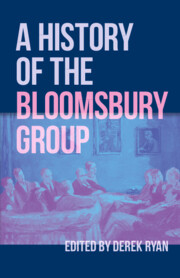
A History of the Bloomsbury Group ranges more widely across the Bloomsbury group's interdisciplinary activities and international networks than any previous volume. From innovations in the literary and visual arts to interventions in politics and economic policy, core members including Virginia Woolf, Leonard Woolf, E. M. Forster, Lytton Strachey, Vanessa Bell, Clive Bell, Duncan Grant, Roger Fry, and John Maynard Keynes are explored in relation to a diverse cast of lesser-studied figures to offer an expansive and multifaceted account of the group's achievements and influence. Leading international scholars provide authoritative and accessible commentaries on a variety of topics under the broad headings of 'Aesthetic Bloomsbury,' 'Global Bloomsbury,' 'Intimate Bloomsbury,' and 'Public Bloomsbury.' Whether addressing established narratives or pushing into new critical terrain, the book demonstrates that, more than a century on from its formation, the Bloomsbury group remains an active and dynamic force in the key critical debates of today.
Political legitimacy is highly important internationally—and probably increasingly so. The question of legitimacy is at the heart of some of the most vital and debated issues of international relations and international law. Think about the centrality of legitimacy with respect to just war theory, issues such as self-determination, the secession of a country and the creation of a new one, state recognition, tensions between the demands of national sovereignty and those of human rights, international humanitarian interventions, and so on. At stake in each of these situations is identifying what is the right course of action and what is legitimate and what is not—and how these situations are handled has an influence on the international system and its legitimacy. In this perspective, Chapter 7 shows that the significance of legitimacy at the international level unfolds in the context of the interactions between the national and international realms and the following distinctions: we/them, inside/outside, particularist/universalist, and system/society.
Prior to the Second World War, the Royal Opera House at Covent Garden was the home of ‘international’ opera (original-language performances, multinational casts, a cosmopolitan audience), and was an outlier in a country where ‘national’ opera (performances in English, predominantly British casts, ‘opera for the people’) was the norm. The theatre reinvented itself in 1946, launching a new national company that would perform in English and use unknown British singers. Within a short period of time, this modus operandi would fail. Focusing closely upon internal policy documents, this article examines how the company navigated a course between the two models, national and international, between 1946 and 1969. It found itself attempting to satisfy parties with diverging viewpoints: audiences who preferred international opera; the Arts Council, which demanded the company serve the nation; politicians who recognised opera as a tool of cultural diplomacy; competitor institutions overseas; and the public. The company had to strike a fine balance between two apparently contradictory imperatives: the need to consolidate its status as a key national institution, in order to justify public funding, while also establishing itself as a ‘transnational’ entity, projecting an image of British cultural confidence to those watching from abroad.
This paper aims to provide the first comprehensive evaluation of Carl Gustav Carus’s writings on race and human inequality. We demonstrate that Carus, an eminent nineteenth-century physician emblematic of romantic medicine, was deeply engrossed in racial science, exploring anatomical, anthropological, and craniological dimensions of race across no less than twenty-five works spanning three decades. Carus’s engagement with race stemmed from naturphilosophisch anatomical and physiological considerations, which evolved into physiognomic and psychological inquiries. While previous research has construed Carus as a precursor of Arthur de Gobineau, we argue that he was intellectually much more closely aligned with the ‘American School’ of ethnology, represented by figures such as Samuel G. Morton, George R. Gliddon, and Josiah C. Nott. Closely monitoring international discourses of scientific racism, Carus sought to propagate these notions among German readers and position himself within international debates. The international reception, however, was limited by the Romantic framework of Carus’s scientific racism, which was unintelligible to contemporaries. While sharing an implicit methodological bias with Morton and his followers, affirming white superiority and legitimising colonisation, the Romantic underpinning of his race treatises made it difficult for mid-nineteenth-century race theorists to fully endorse him. Nonetheless, Carus, often lauded as polymath with a humanistic orientation, besides his achievements, helped to create a theoretical basis for the othering and dehumanisation of large parts of the global population.
The use of the English language in many countries around the world greatly facilitates international communication. However, linguists have long pointed out that differences between established and emerging dialects of English may lead to miscommunication, especially because many users of the language may not be aware of many of these differences. Such issues may be particularly acute in high-stakes communicative endeavours such as persuading others to change their opinion or engage in a certain action. Psychologists have previously explored this construct mainly in experimental settings, whereas the present chapter uses a large database (‘corpus’) of natural language. The chapter thus provides an empirical, corpus-based analysis of the linguistic expression of persuasion across 21 international dialects (‘varieties’) of English from countries where English is widely used as a first or second language. Results indicate that there are substantial differences in the degree of overt expression of persuasion, with South Asian varieties of English indicating the lowest levels and (West) African varieties that greatest level of overt persuasion. The chapter concludes by discussing possible explanations of these patterns, implications for international communication as well as avenues for more detailed analyses of particular linguistic features involved in persuasion.
It is not often that international collaborations are sustained for any significant period, let alone for three decades. However, despite relying on largely voluntary contributions of individuals within its member institutions, the International Network of Agencies for Health Technology Assessment (INAHTA) has not only been an example of sustained collaboration over 30 years but also an example of how an initially modest collaboration can grow and thrive. Current and former serving Chairs and secretariat of the Network have come together to review network documents and outputs and reflect on the history of INAHTA, since its inception in Paris in 1993. Building on the paper from Hailey et al 2009 that documented the growth of the network after 15 years, we have considered and documented the factors that we believe have helped sustain the network and enable it to flourish in the subsequent 15 years. We have also considered the various challenges experienced along the way, as these too can aid in making a collaboration stronger. Future directions for the network have also been contemplated, given the evolving nature of HTA and the regional collaborations that have recently emerged. We hope that by sharing the lessons learned from this living example of international global collaboration relationships between like-minded organizations can be similarly fostered and enhanced into sustainable collaborations, for the benefit of all.
This chapter examines how women within the boundaries of the family and marriage became central to interwar Japan’s international relations. Scholars have argued that Japan’s politics, economy, and society shifted from liberalism and internationalism in the 1910s–1920s to conservatism and isolationism in the 1930s. While women’s history has been studied along the same lines, this chapter explores the continued reinterpretations of emerging ideals about gender, emphasizing the continuity and discontinuity of Japan’s modernity spanning those two decades. At the heart of those ideals were informal marital relationships – socialist and companionate marriages – introduced from Soviet Russia and the United States, and global concerns in the League of Nations about human trafficking involving prostitution and daughter adoption. Japanese intellectuals, social leaders, and diplomats continued to engage with reformist ideals to address women’s inequalities in marriage and the family. However, their appeals to progress redefined Japanese women in the preexisting family system and considered them to be promiscuous, reinforcing gendered burdens and sexual differences within Japan’s national contexts.
The novel of ideas was rejected by British-based modernist writers. In the international literary sphere there was less hostility to the fictional representation of philosophical, political and religious ideas, and there was also significant critical discussion of literature as a specific kind of speculative thinking. Outside Britain the representation of ideas and the formal experimentations of the modern novel were not seen as being in conflict with one another. Writers at the forefront of developments in the novel, including Fyodor Dostoevsky, André Gide, Thomas Mann, Rabindranath Tagore and Jean-Paul Sartre were both formally experimental and engaged with the novelistic implications of philosophical, religious or political thought. In this chapter I consider two kinds of modern novels of ideas, the ironic and the dialogistic. I focus on the writing of John Galsworthy in relation to Thomas Mann’s ironic Buddenbrooks and Graham Greene’s The Power and the Glory in relation to André Malraux’s dialogistic La Condition Humaine.
Although collaboration is an intensive way of working together, it is essential for such efforts to achieve shared goals. Health technology assessment (HTA) is transdisciplinary and has an important history of collaboration, with collaboration featuring increasingly in the strategic plans of HTA bodies and stakeholders. Collaboration can be between HTA bodies and between HTA bodies and other stakeholders—most notably regulators but increasingly payers, patient and caregiver organizations, clinicians–clinical societies, and academia. The 2024 HTAi Global Policy Forum (GPF) discussed collaborations involving HTA bodies, reviewing existing and previous collaborations to see what has worked and what can be learned. Core discussion themes included: (i) determining the collaboration purpose is essential but may be dynamic, changing over time; (ii) choosing the collaboration topic takes time, requiring upfront investment and stakeholder mapping; (iii) inviting the right participants and treating them equally is important, including those who can impact HTA, those who will be impacted by HTA and those who bring new information; (iv) collaborations need clear governance, defined roles, responsibilities, metrics, and case study–pilots can be a useful operational model; (v) resourcing collaborations sustainably is a challenge—the time, people, and money required are often under-estimated; (vi) undertaking continual, iterative learning reviews ensures ongoing value and impact of collaborations. Recommendations for future work include the development of a “go/no-go” checklist to determine when collaboration is needed, supplemented with a set of “best practice” principles for establishing and working in collaborations involving HTA bodies.