To save content items to your account,
please confirm that you agree to abide by our usage policies.
If this is the first time you use this feature, you will be asked to authorise Cambridge Core to connect with your account.
Find out more about saving content to .
To save content items to your Kindle, first ensure no-reply@cambridge.org
is added to your Approved Personal Document E-mail List under your Personal Document Settings
on the Manage Your Content and Devices page of your Amazon account. Then enter the ‘name’ part
of your Kindle email address below.
Find out more about saving to your Kindle.
Note you can select to save to either the @free.kindle.com or @kindle.com variations.
‘@free.kindle.com’ emails are free but can only be saved to your device when it is connected to wi-fi.
‘@kindle.com’ emails can be delivered even when you are not connected to wi-fi, but note that service fees apply.
This article explores how emotions can affect policies of hostage rescue and recovery. Any hostage rescue/recovery strategy must consider the relative weights of at least three major goals: 1) maximising chance of recovering/rescuing the hostages; 2) punishment of the kidnappers; and 3) avoidance of collateral damage and killing of bystanders. This article will show how an understanding of emotion can help explain why one of these goals comes to dominate another, why one goal fades in importance. The article will argue that a specific combination of two emotions – anger and contempt – drives the elevation of the punishment goal above that of maximising chances of hostage recovery while also greatly diminishing any value of collateral damage avoidance. The article considers these issues with a short case study of hostage taking at Attica Prison in 1971, which serves as a link to the main case – Israel’s post–October 7 hostage policy towards Gaza.
The chapter offers a unique perspective on strategy development and the role of a strategist, highlighting the importance of context-specific thinking, flexibility, and reflection. The chapter begins by examining Dayan’s early experiences as a revolutionary guerrilla fighter, which shaped his view of war as a phenomenon that can only be understood in its local, concrete geographical, cultural, and political contexts. This dismissal of rigid, established military patterns is central to Dayan’s approach to strategy development throughout his career. The chapter then explores Dayan’s unique approach to strategy development, which was characterized by contextualized learning, the application of the 80:20 principle for setting priorities, delegation and empowerment, time management for maximum flexibility, and the use of meetings to generate and test new ideas. Dayan’s ability to hold two opposing points of view simultaneously and his love for the land of Israel are also discussed. Overall, the chapter offers valuable insights into the development of a strategist and the importance of context-specific thinking and flexibility in strategy development.
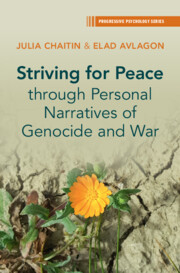
Personal narratives of genocide and intractable war can provide valuable insights around notions of collective identity, perceptions of the 'enemy,' intergenerational coping with massive social trauma, and sustainable peace and reconciliation. Written in an accessible and narrative style, this book demonstrates how the sharing of and listening to personal experiences deepens understandings of the long-term psychosocial impacts of genocide and war on direct victims and their descendants in general, and of the Holocaust and the Jewish–Arab/Palestinian–Israeli context, in particular. It provides a new theoretical model concerning the relationship between different kinds of personal narratives of genocide and war and peacebuilding or peace obstruction. Through its presentation and analysis of personal narratives connected to the Holocaust and the Palestinian–Israeli conflict, it provides a deep exploration into how such narratives have the potential to promote peace and offers concrete ideas for further research of the topic and for peacebuilding on the ground.
Chapter 1 presents an overview of the psychosocial literature on personal narratives, in general, and in connection to genocide and war, in particular. We begin with the concept of societies’ master narratives, emphasizing their long-term impacts on people’s personal narratives of genocide and war. We then look at the main characteristics and uses of personal narratives in psychosocial research. From there, we briefly present and discuss archives of personal narratives of survivors of gross human rights’ violations and their use in different truth commissions, followed by usages of personal narratives in research of genocide and war in different places in the world. Our focus in this chapter is mainly (though not exclusively) on the contexts of the Holocaust and the Israeli–Palestinian/Arab–Jewish conflicts.
In Chapter 7, we present examples of the four different kinds of personal narratives – distancing, victimhood, ambivalence/paradoxes, and embracing the other while remaining in one’s pain – connected to the Jewish–Arab/Israeli–Palestinian conflicts that appear to have the potential either to promote peacebuilding or to obstruct peace. We address these two connected, yet not identical, conflicts together for two main reasons. While the conflicts have differences (Arabs in Israel have citizenship and Palestinians in the Palestinian Authority/Gaza Strip do not, leading to different conflictual aspects), the dilemma is the same: should Israel be a Jewish State or a state of all of its citizens? Furthermore, when people share narratives about these conflicts, they often combine the two contexts. Thus, it would be artificial to separate them. Our examples come from different sources – interviews that we undertook over the years with Jewish-Israelis and Arabs, and Israelis and Palestinians, internet sources, research books that present narrative interviews, and memoirs and autobiographies that exemplify the different kinds of narratives. This chapter, then, presents concrete examples of the different kinds of personal stories that we find in the context of speaking and/or writing about the Israeli–Palestinian conflict.
In Chapter 8, through the presentation and analysis of our four conceptualized kinds of personal narratives of intractable war – distancing, victimhood, ambivalence/paradoxes, and embracing the other while remaining in one’s pain – we address a major issue, which has always divided Jewish-Israeli society: Arab–Jewish/Israeli–Palestinian relations. This issue tends to divide the left wing from the right wing and the secular from the religious Jewish citizens. This schism exploded in late 2022, when a very right-wing coalition was formed in the Israeli Knesset and government, which led to numerous legislative proposals that have been perceived by many as endangering Israel’s fragile democracy. This political upheaval further led to massive demonstrations and strikes that threw the country into turmoil. While this specific ideological/religious divide is mainly between Jews and Jews, it ties into the Jewish–Arab/Israeli–Palestinian conflict, as its roots connect to the question of the desired nature of the state and to the often-hostile intergroup relationships that characterize Israeli society. In this chapter, we present personal narratives connected to Jewish–Jewish relations, a very “hot” topic in Israeli society today.
Chapter 4 begins with a look at the decline of the IDF’s once-unassailable reputation due to perceived failures on the battlefield. In the aftermath of the debacle of the 1973 Yom Kippur War, the IDF underwent important changes, mirroring changes in Israeli society, which negatively impacted the generals’ role in shaping public opinion. The second Intifada, moreover, led the general public to conclude that Israel lacked a Palestinian negotiating partner – a widely accepted opinion that has been firmly entrenched in Israeli society in the first quarter of the twenty-first century. The “no partner” mantra has further diminished the generals’ clout given the security establishment’s association with the Israeli-Palestinian peace process. This chapter also addresses the implications of the national religious camp’s ascent and its increased influence in both the IDF and in the political arena.
Chapter 1 focuses on the Israeli security community’s desire to preserve Israel as a Jewish and democratic state, a sentiment that serves as the basis for the security veterans’ disproportionate support for the two-state solution. This chapter explores the assessments of the security establishment from the 1967 War to the Oslo peace process of the 1990s to the breakdown of the peace process in the 2000s. It shows that proposals for a Palestinian state in the West Bank and Gaza Strip were submitted by the IDF and intelligence services to the Eshkol government even before the conclusion of the 1967 “Six Day” War. Two decades later, the IDF top brass played an important role during the first Intifada in prodding the Rabin-led government to pursue peace talks with the PLO. During the second Intifada in the early 2000s, retired senior security establishment officials urged Prime Minister Sharon to resume peace diplomacy with the Palestinians. As this chapter shows, Israeli governments have varied in their commitment to pursuing a deal with the Palestinians based on the two-state solution, often putting them at odds with the national security community.
Chapter 3 focuses on the policy disagreements with the security community in the period following Netanyahu’s return to power in 2009, a decade after he lost his reelection to Barak. His dismissal of the two-state solution and aggressive settlement policy in the West Bank; his approach toward Hamas-led Gaza; and key aspects of his policy aimed at thwarting Iran’s nuclear program have encountered serious opposition by the security establishment and retired senior security officials. This chapter describes how civil-military tensions spiked following the formation of Netanyahu’s sixth government in December 2022 and its pursuit of its highly controversial legal overhaul.
Netanyahu’s worldview, his modus operandi, and the significant steps he has taken to keep the generals at bay are explored in Chapter 2. It is argued that he is a pragmatic hardliner – a lifelong right-wing ideologue and opponent of Palestinian statehood who nevertheless has displayed flexibility, enabling him to remain coy about his territorial vision for Israel. A master manipulator of the media, he has cultivated an image of himself as “Mr. Security” and sought, early on, to exclude the IDF generals from the decision-making process, associating them with the political left and seeing them as potential rivals. The security community, for its part, sees Netanyahu not as “Mr. Security” but, rather, as a politician who routinely places his personal and political interests ahead of national security concerns.
The ‘constitutional reform’ planned by the government that assumed power in Israel in December 2022 is not an end in itself. Its aim is to provide the basis for planned policies and actions of the government that are incompatible with Israel's present constitutional order, and that are unlikely to stand up to judicial review before the present judges of the Supreme Court. This article discusses the connection between various parts of the reform and the plans to make a radical change in Israel's policies in the occupied West Bank. It examines the coalition agreement between PM Netanyahu's Likud party and the Religious Zionist Party, and exposes the connection between the commitment in that agreement to the policies regarding the occupation and the planned ‘reform’.
Sacred or protected values have important influences on decision making, particularly in the context of intergroup disputes. Thus far, we know little about the process of a value becoming sacred or why one person may be more likely than another to hold a sacred value. We present evidence that participation in religious ritual and perceived threat to the group lead people to be more likely to consider preferences as protected or sacred values. Specifically, three studies carried out with Americans and Palestinians show: (a) that the more people participate in religious ritual the more likely they are to report a preference to be a sacred value (Studies 1–3); (b) that people claim more sacred values when they are reminded of religious ritual (Study 2); and (c) that the effect of religious ritual on the likelihood of holding a sacred value is amplified by the perception of high threat to the in-group (Study 3). We discuss implications of these findings for understanding intergroup conflicts, and suggest avenues for future research into the emergence and spread of sacred values.
This chapter’s ethnography of the “quality of life” West Bank development/settlement of Alfei Menashe describes the structural realities and security schematic narrative lens through which this Jewish Israeli audience filtered “the conflict” and understood the series. They are viewed from outside by stateless-nation Palestinians as living behind the “Wall Enclave” and by state-minority Arab/Palestinian Israelis as a “settlement” (most Jewish Israelis regard it as a “consensus settlement”). Alfei provides its children the greatest opportunity for contact with Palestinians, which the separation barrier has all but eliminated for Israelis. Neither interpersonal contact with Palestinian day laborers who build and clean their homes and playgrounds, nor imagined contact influenced their readings of the text. From secondary conversations, news media portrayals, and artifacts like the barrier constructed to maintain the secured existence of Israel, they learn Palestinians are those who commit terror. Via a binary logic, anyone allowed into Israel (or Sesame Street) is not Palestinian. Fearing harm, a majority erased Palestinian characters. These processes, not Sesame Street, were overwhelmingly socializing them, leading them to oppose the series’ attempt to communicate peace. They normalized and reproduced “the conflict,” assuming defensive play patterns; for them, the resolution is “evicting, killing or imprisoning” Palestinians.
The litmus test for measuring the extent of democratization of any given society is the legal status of minorities and their enjoyment of equal civic and human rights. The less discriminatory the society is against minorities, the more democratic it is. In this respect, Israel is struggling. Egalitarianism in terms of safeguarding basic civic and human rights for all is still in the making. Israel has navigated between liberalism, on the one hand, and promoting its religion and nationality as a Jewish state, on the other. Throughout the years, Israeli leaders have given precedence to Judaism and Jewishness over liberalism. While sometimes their language uttered liberal values, Israeli leaders’ actions were perfectionist in essence, preferring one religion and one nation over others. While accommodations were sought and some compromises were made, the underlying motivation was not to achieve just egalitarianism. This chapter argues for accommodating the interests of the Israeli-Arabs/Palestinians, and that Israel should strive to safeguard equal rights and liberties for all citizens – notwithstanding religion, race, culture, ethnicity, colour, gender, class or sexual orientation.
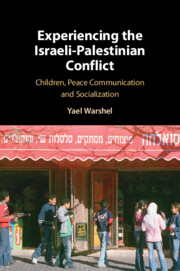
Over the last eighty years there has been a global rise in 'peace communication' practice, the use of interpersonal and mass communication interventions to mediate between peoples engaged in political conflict. In this study, Yael Warshel assesses Israeli and Palestinian versions of Sesame Street, which targeted negative inter-group attitudes and stereotypes. Merging communication, peace and conflict studies, social psychology, anthropology, political science, education, Middle Eastern and childhood studies, this book provides a template to think about how audiences receive, interpret, use and are influenced by peace communication. By picking apart the text and subtext of the kind of media these specific audiences of children consume, Warshel examines how they interpret peace communication interventions, are socialized into Palestinians, Jewish Israelis and Arab/Palestinian Israelis, the political opinions they express and the violence they reproduce. She questions whether peace communication practices have any relevant structural impact on their audiences, critiques such interventions and offers recommendations for improving future communication interventions into political conflict worldwide.
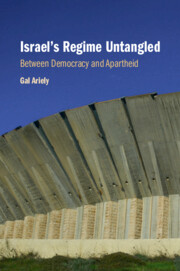
Israel attracts enormous attention among scholars, journalists, politicians, and the general public. Some regard the country as an apartheid regime that can only be challenged through boycotts and sanctions. Others believe it is a stable liberal democracy, created under extreme conditions. This book seeks to unravel these conflicting interpretations by focusing on three questions: How can the Israeli regime be classified? What are the borders of the Israeli regime? And what are the key factors that shape the regime and support its relative stability? Gal Ariely calls for an approach which disaggregates democracy into specific dimensions, examining the diverse aspects of the Israeli regime to determine the level of 'democraticness' exhibited rather than classifying the regime as a whole. In doing so he provides a comprehensive account of the Israeli regime, untangling conflicting interpretations and illustrates the advantages of using this approach for analysing disputed regimes more widely.
This chapter provides a comprehensive description of the regime across dimensions and zones of control based on a short historical overview combined with several indexes reflecting different components of the regime. It shows that in Israel proper the highest levels of democraticness are in political contestation followed by protection, while the levels of coverage are much more limited. The regime in Israel proper is, overall, fairly stable despite some increase in democraticness after state consolidation and some more recent signs of possible decline. In the Occupied Territories, on the other hand, the levels of democraticness are minimal in the dimension of political contestation and coverage and highly limited in the area of protection. The regime in the Occupied Territories is not as stable as the regime in Israel proper due to changes in the zones of control. The zones of control shifted after the 1990s – a shift that can be seen as the major transformation of the Israeli regime up to date.
This chapter outlines a possible explanation for the overall stability of the Israeli regime based on the concept of state capacity, namely, the ability of the state to use coercive and administrative capabilities to “get things done.” It therefore emphasizes the role of the state itself in explaining the regime. The first section provides a short conceptual clarification of the concept of state capacity and its relationship with regime stability. This is followed by a presentation of the historical origins of Israeli state capacity and some measures of its capacity. The main part of this chapter discusses the ways in which state capacity sustains the regime’s stability in light of three challenges: the internal aspect of the conflict, the challenge to state authority from political tensions among its Jewish citizens, and the ways in which the zones of control have shifted according to the limited ability of state capacity to ensure direct control of the entire Occupied Territories.
Chapter 3 addresses the challenge of defining the borders of the unit of analysis. After a short historical overview of Israel’s borders, it discusses the justifications provided in previous analyses of Israel for the boundaries chosen to define the unit of analysis and their weaknesses. Additionally, it demonstrates that the problem of choosing these borders is not fully addressed even by the cross-national indexes, which detracts from their applicability in regime classification efforts. A conceptual elaboration on state and regime shows that the units of Israel proper or Israel/Palestine cannot be used to define the borders of the regime. Instead, a spatial analysis, which divides the Israeli regime into different zones of control at different time periods is required. The major shift that occurred in the regime of the Occupied Territories was the move from direct control over the entire territories between 1967 and 1994 to direct control of only Area C thereafter. The Israeli regime does not, therefore, include the Gaza Strip or Areas A/B. The main shift in the Israeli regime was a consequence of the First Intifada and the establishment of the Oslo process in the 1990s.