To save content items to your account,
please confirm that you agree to abide by our usage policies.
If this is the first time you use this feature, you will be asked to authorise Cambridge Core to connect with your account.
Find out more about saving content to .
To save content items to your Kindle, first ensure no-reply@cambridge.org
is added to your Approved Personal Document E-mail List under your Personal Document Settings
on the Manage Your Content and Devices page of your Amazon account. Then enter the ‘name’ part
of your Kindle email address below.
Find out more about saving to your Kindle.
Note you can select to save to either the @free.kindle.com or @kindle.com variations.
‘@free.kindle.com’ emails are free but can only be saved to your device when it is connected to wi-fi.
‘@kindle.com’ emails can be delivered even when you are not connected to wi-fi, but note that service fees apply.
We study random integer-valued Lipschitz functions on regular trees. It was shown by Peled, Samotij, and Yehudayoff [22] that such functions are localized; however, finer questions about the structure of Gibbs measures remain unanswered. Our main result is that the weak limit of a uniformly chosen 1-Lipschitz function with 0 boundary condition on a $d$-ary tree of height $n$ exists as $n \to \infty$ if $2 \le d \le 7$, but not if $d \ge 8$, thereby partially answering a question posed by Peled, Samotij and Yehudayoff. For large $d$, the value at the root alternates between being almost entirely concentrated on 0 for even $n$ and being roughly uniform on $\{-1,0,1\}$ for odd $n$, leading to different limits as $n$ approaches infinity along evens or odds. For $d \ge 8$, the essence of this phenomenon is preserved, which obstructs the convergence. For $d \le 7$, this phenomenon ceases to exist, and the law of the value at the root loses its connection with the parity of $n$. Along the way, we also obtain an alternative proof of localization. The key idea is a fixed point convergence result for a related operator on $\ell ^\infty$ and a procedure to show that the iterations get into a ‘basin of attraction’ of the fixed point. We also prove some accompanying analogous ‘even-odd phenomenon’ type results about $M$-Lipschitz functions on general non-amenable graphs with high enough expansion (this includes for example the large $d$ case for regular trees). We also prove a convergence result for 1-Lipschitz functions with $\{0,1\}$ boundary condition. This last result relies on an absolute value FKG for uniform 1-Lipschitz functions when shifted by $1/2$.
This article examines the ways in which explanation has been achieved in scientific work on language change over the last two hundred years. Explanations have come in many forms and at many levels and are greatly influenced by what are taken as the leading questions, which themselves have varied significantly since the early nineteenth century.
This chapter is devoted to correlations. We take up the central limit theorem once again, first with a couple of specific examples solved with considerable – but instructive – effort: Markov chains and recurrent events. Then, we generalize the machinery of generating functions to multivariate, correlated systems of stochastic variables, until we are able to prove the central limit theorem and the large deviations theorem for correlated events. We go back to the Markov chain central limit example to show how the theorem massively simplifies things. Eventually, we show how correlations and the lack of a Gaussian central limit are linked to phase transitions in statistical physics.
The first part of the chapter is a not-so-small presentation of equilibrium phase transitions, which allows us to introduce key concepts for both equilibrium and nonequilibrium phase transitions. The lattice gas, that is, the Ising model with a conserved order parameter, is an appropriate model to analyze how an equilibrium model can be brought out of equilibrium and to highlight the importance of boundary conditions in nonequilibrium phase transitions. The driven lattice gas, introduced by Katz, Lebowitz, and Spohn around 40 years ago, allows to define the totally asymmetric simple exclusion (TASEP) model and subsequently also the BRIDGE model. The latter is a one-dimensional model displaying a nonequilibrium phase transition with a symmetry breaking between two equivalent classes of particles. This result, considering the short-range character of interactions, would not be possible at equilibrium. In an equally unexpected way, an external breaking of the symmetry (equivalent to the application of a magnetic field to the Ising model) does not make the phase transition disappear.
Distinguishing between different phases of matter and detecting phase transitions are some of the most central tasks in many-body physics. Traditionally, these tasks are accomplished by searching for a small set of low-dimensional quantities capturing the macroscopic properties of each phase of the system, so-called order parameters. Because of the large state space underlying many-body systems, success generally requires a great deal of human intuition and understanding. In particular, it can be challenging to define an appropriate order parameter if the symmetry breaking pattern is unknown or the phase is of topological nature and thus exhibits nonlocal order. In this chapter, we explore the use of machine learning to automate the task of classifying phases of matter and detecting phase transitions. We discuss the application of various machine learning techniques, ranging from clustering to supervised learning and anomaly detection, to different physical systems, including the prototypical Ising model that features a symmetry-breaking phase transition and the Ising gauge theory which hosts a topological phase of matter.
We model voting behaviour in the multi-group setting of a two-tier voting system using sequences of de Finetti measures. Our model is defined by using the de Finetti representation of a probability measure (i.e. as a mixture of conditionally independent probability measures) describing voting behaviour. The de Finetti measure describes the interaction between voters and possible outside influences on them. We assume that for each population size there is a (potentially) different de Finetti measure, and as the population grows, the sequence of de Finetti measures converges weakly to the Dirac measure at the origin, representing a tendency toward weakening social cohesion as the population grows large. The resulting model covers a wide variety of behaviours, ranging from independent voting in the limit under fast convergence, a critical convergence speed with its own pattern of behaviour, to a subcritical convergence speed which yields a model in line with empirical evidence of real-world voting data, contrary to previous probabilistic models used in the study of voting. These models can be used, e.g., to study the problem of optimal voting weights in two-tier voting systems.
There are many applications of the low-rank signal-plus-noise model 𝒀 = 𝑿 + 𝒁 where 𝑿 is a low-rank matrix and 𝒁 is noise, such as denoising and dimensionality reduction. We are interested in the properties of the latent matrix 𝑿, such as its singular value decomposition (SVD), but all we are given is the noisy matrix 𝒀. It is important to understand how the SVD components of 𝒀 relate to those of 𝑿 in the presence of a random noise matrix 𝒁. The field of random matrix theory (RMT) provides insights into those relationships, and this chapter summarizes some key results from RMT that help explain how the noise in 𝒁 perturbs the SVD components, by analyzing limits as matrix dimensions increase. The perturbations considered include roundoff error, additive Gaussian noise, outliers, and missing data. This is the only chapter that requires familiarity with the distributions of continuous random variables, and it provides many pointers to the literature on this modern topic, along with several demos that illustrate remarkable agreement between the asymptotic predictions and the empirical performance even for modest matrix sizes.
A 4-component clay-polymer-salt-water system was studied by neutron scattering. The clay-salt-water system consisted of n-butylammonium vermiculite, n-butylammonium chloride and heavy water, and the volume fraction of clay in the system was held constant, at r = 0.01. Three polymers in the molecular weight range 10,000 to 30,000 were studied, poly(vinyl methyl ether) (PVME), poly (ethylene oxide) (PEO) and poly(acrylic acid) (PAA), at a polymer volume fraction of v = 0.01. The addition of PAA suppressed the clay swelling, irrespective of the salt concentration, c. The addition of the neutral polymers had no effect on the phase transition temperature, Tc, between the gel and tactoid phases of the system, its value remaining at 14 °C for c = 0.1 M and 30 °C for c = 0.01 M. At c = 0.01 M, the neutral polymers also had a negligible effect on the lattice constant d along the swelling axis of the clay colloid, but at c = 0.1 M, the d-value was significantly lower than in the system without added polymer. For a PVME sample of molecular weight 18,000, both d and Tc were measured as a function of ν, for volume fractions between 0 and 0.04. The addition of polymer, up to v = 0.04, had no effect on Tc. However, even for v values as low as 0.001, the vermiculite layers in the gel phase were more parallel and more regularly spaced than in the system without added polymer. In the gel phase, d decreased exponentially as a function of v, from 12 nm at v = 0 to 8 nm at v = 0.04. In the tactoid phase, at T < 14 °C, the d-value in the crystalline regions was equal to 1.94 nm at v = 0 and v = 0.04, showing that the spacing between the vermiculite layers is not affected by the added polymer when they are collapsed by an increase in temperature. The addition of a PVME sample of molecular weight 110,000, at v = 0.001, had no noticeable effect on either d or Tc.
The swelling of n-butylammonium vermiculite in water was investigated as a function of the sol concentration (r), the salt concentration (c) and the temperature (T).
The interlayer spacing in the gel phase was investigated as a function of r and c by neutron diffraction and by laboratory experiments which measured how many times its own volume a crystal would absorb. The salt concentration was found to be the stronger variable with the interlayer spacing decreasing proportional to c0.5, which is consistent with previous results and with the Coulombic attraction theory. The sol concentration was found to affect the swelling for two reasons, the salt fractionation effect and the trapped salt effect. Both of these cause the salt concentration in the supernatant fluid to be greater than that originally added to the crystals and so reduce the swelling.
A new method was used for extracting the solution from inside the gels by collapsing the gels by the addition of potassium hydrogen carbonate. The Volhardt titration was carried out on the extracted and supernatant solutions from about 250 gels. The ratio of the external to the internal chloride concentration was found to be approximately constant across the range of salt concentrations. Its average value was equal to 2.6, again in agreement with Coulombic attraction theory and showing the surface potential to be constant at about 70 mV.
The (r, c, T) boundary of the two phase colloid region was investigated by three methods. A plot of log c against Tc was linear within experimental accuracy, with a gradient of 0.077 K−1 or 13 K per log unit. This shows that the surface potential varies by only 1 mV per decade in the salt concentration. The system is therefore governed by the Dirichlet boundary condition and not by the Nernst equation.
Few models in theoretical physics have been studied for as long, or in as much detail, as the Ising model. It’s the simplest model to display a nontrivial phase transition, and as such it plays a unique role in theoretical physics. In addition, the Ising model can be applied to a wide range of physical systems, from magnets and binary liquid mixtures, to adsorbed monolayers and superfluids, to name just a few. In this chapter, we present some of the background material that sets the stage for a detailed study of the Ising model in the chapters to come.
The Ising model provides a detailed mathematical description of ferromagnetism and is widely used in statistical physics and condensed matter physics. In this Student's Guide, the author demystifies the mathematical framework of the Ising model and provides students with a clear understanding of both its physical significance, and how to apply it successfully in their calculations. Key topics related to the Ising model are covered, including exact solutions of both finite and infinite systems, series expansions about high and low temperatures, mean-field approximation methods, and renormalization-group calculations. The book also incorporates plots, figures, and tables to highlight the significance of the results. Designed as a supplementary resource for undergraduate and graduate students, each chapter includes a selection of exercises intended to reinforce and extend important concepts, and solutions are also available for all exercises.
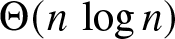
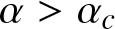
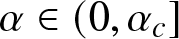
We consider a model of binary opinion dynamics where one opinion is inherently “superior” than the other, and social agents exhibit a “bias” toward the superior alternative. Specifically, it is assumed that an agent updates its choice to the superior alternative with probability α > 0 irrespective of its current opinion and opinions of other agents. With probability $1-\alpha$, it adopts majority opinion among two randomly sampled neighbors and itself. We are interested in the time it takes for the network to converge to a consensus on the superior alternative. In a complete graph of size n, we show that irrespective of the initial configuration of the network, the average time to reach consensus scales as $\Theta(n\,\log n)$ when the bias parameter α is sufficiently high, that is, $\alpha \gt \alpha_c$ where αc is a threshold parameter that is uniquely characterized. When the bias is low, that is, when $\alpha \in (0,\alpha_c]$, we show that the same rate of convergence can only be achieved if the initial proportion of agents with the superior opinion is above certain threshold $p_c(\alpha)$. If this is not the case, then we show that the network takes $\Omega(\exp(\Theta(n)))$ time on average to reach consensus.

A summary of classical concepts from thermodynamics concerning phase transitions and a survey of phase transitions for a variety of thermotropic and lyotropic systems. The Landau theory for first- and second-order transitions applied to nematics and smectics is discussed in detail. Classic lattice models (Ising, Heisenberg, XY, Lebwohl–Lasher, …) and critical exponents, often associated with certain liquid crystals transitions, are introduced. Examples of experimental phase diagrams for thermotropic and lyotropic liquid crystals are shown.
A simple introduction to the Metropolis Monte Carlo method with a discussion of the main types of boundary conditions. The location of phase transitions and the investigation of pair correlation functions, important for establishing the existence of long-range order in liquid crystal models is also introduced.
This clear and pedagogical text delivers a concise overview of classical and quantum statistical physics. Essential Statistical Physics shows students how to relate the macroscopic properties of physical systems to their microscopic degrees of freedom, preparing them for graduate courses in areas such as biophysics, condensed matter physics, atomic physics and statistical mechanics. Topics covered include the microcanonical, canonical, and grand canonical ensembles, Liouville's Theorem, Kinetic Theory, non-interacting Fermi and Bose systems and phase transitions, and the Ising model. Detailed steps are given in mathematical derivations, allowing students to quickly develop a deep understanding of statistical techniques. End-of-chapter problems reinforce key concepts and introduce more advanced applications, and appendices provide a detailed review of thermodynamics and related mathematical results. This succinct book offers a fresh and intuitive approach to one of the most challenging topics in the core physics curriculum and provides students with a solid foundation for tackling advanced topics in statistical mechanics.
Many different phases of matter can be characterized by the symmetries that they break.The Ising model for interacting spins illustrates this idea.In the absence of a magnetic field, there is a critical temperature, below which there is ferromagnetic ordering, and above which there is not.The magnetization is the order parameter for this transition: it is non-zero only when there is ferromagnetic ordering.The ferromagnetic phase transition in the Ising model is explored using the approximate method of mean field theory.Exact solutions are known for the Ising model in one and two dimensions and are discussed, along with numerical solutions using Monte Carlo simulations.Finally, the ideas of broken symmetry and their relationship to phase transitions are placed in the general framework of Landau theory and compared to results from mean field theory.
The new edition of this popular textbook provides a fundamental approach to phase transformations and thermodynamics of materials. Explanations are emphasised at the level of atoms and electrons, and it comprehensively covers the classical topics from classical metallurgy to nanoscience and magnetic phase transitions. The book has three parts, covering the fundamentals of phase transformations, the origins of the Gibbs free energy, and the major phase transformations in materials science. A fourth part on advanced topics is available online. Much of the content from the first edition has been expanded, notably precipitation transformations in solids, heterogeneous nucleation, and energy, entropy and pressure. Three new chapters have been added to cover interactions within microstructures, surfaces, and solidification. Containing over 170 end-of-chapter problems, it is a valuable companion for graduate students and researchers in materials science, engineering, and applied physics.
The fast-growing economies of the combined lower- and middle-income countries have propelled them into new strategic and economic alliances, often bypassing the developed world. These changing patterns of global connectivity are rewiring the underlying grid. The West is no longer blindly imitated by others, even among its developing-nation allies. The very quality that sets the Western legal tradition apart – its judicial institutions whose legitimacy resides in binding those who govern to the same laws as other citizens – has rarely transferred effectively to regions where the cultural antecedents are absent. It is no longer possible to deny that China’s spectacular performance in raising its living standards has shown an alternative. Inevitably, this divergence will be projected onto struggles for shaping the policies of global institutions, their governance, and perceptions of their legitimacy. How China or the West handle other threats – forced migration, internal displacement, global radicalization – will have a great bearing on their relative global influence and ability to shape the trajectory of the world economy.
The Ginzburg–Landau functional is a phase transition model which is suitable for classification type problems. We study the asymptotics of a sequence of Ginzburg–Landau functionals with anisotropic interaction potentials on point clouds Ψn where n denotes the number data points. In particular, we show the limiting problem, in the sense of Γ-convergence, is related to the total variation norm restricted to functions taking binary values, which can be understood as a surface energy. We generalize the result known for isotropic interaction potentials to the anisotropic case and add a result concerning the rate of convergence.
The consistency of a non-local anisotropic Ginzburg–Landau type functional for data classification and clustering is studied. The Ginzburg–Landau objective functional combines a double well potential, that favours indicator valued functions, and the p-Laplacian, that enforces regularity. Under appropriate scaling between the two terms, minimisers exhibit a phase transition on the order of ɛ = ɛn, where n is the number of data points. We study the large data asymptotics, i.e. as n → ∝, in the regime where ɛn → 0. The mathematical tool used to address this question is Γ-convergence. It is proved that the discrete model converges to a weighted anisotropic perimeter.