To save content items to your account,
please confirm that you agree to abide by our usage policies.
If this is the first time you use this feature, you will be asked to authorise Cambridge Core to connect with your account.
Find out more about saving content to .
To save content items to your Kindle, first ensure no-reply@cambridge.org
is added to your Approved Personal Document E-mail List under your Personal Document Settings
on the Manage Your Content and Devices page of your Amazon account. Then enter the ‘name’ part
of your Kindle email address below.
Find out more about saving to your Kindle.
Note you can select to save to either the @free.kindle.com or @kindle.com variations.
‘@free.kindle.com’ emails are free but can only be saved to your device when it is connected to wi-fi.
‘@kindle.com’ emails can be delivered even when you are not connected to wi-fi, but note that service fees apply.
This chapter concerns state responsibility. Responsibility is based upon the existence of an international legal obligation in force between the states in question and a violation of that obligation imputable to the state responsible, with consequential loss or damage. The nature of the fault is discussed, as are issues as to the identity of offending persons or organs, as well as the existence of direction or control by the state. A variety of circumstances may preclude wrongfulness and thus responsibility. For example, consent or the existence of a lawful act causing the damage, such as the exercise of self-defence, or where the act constitutes a lawful countermeasure where the other state has committed a prior unlawful act. Force majeure constitutes a further example. The consequences of internationally wrongful acts include cessation or reparation. The question of serious breaches of peremptory norms (jus cogens) is also noted and the nationality of claims is analysed. The need for exhaustion of local remedies is discussed, as is the treatment of aliens and foreign property in this context.
This chapter concerns international environmental law. It commences with a consideration of an argued human right to a clean environment and the increasing case law on this issue. The relationship between economic development and environmental protection is also addressed, before the key question of state responsibility is surveyed. The appropriate standard, whether or not actual damage is caused, the question of transboundary harm arising from hazardous activities, environmental impact assessments, the precautionary and polluter-pays principles are examined before turning to the range of international treaties on this topic. The question of atmospheric pollution is addressed before the chapter turns to a consideration of climate change and the various international instruments concerning this, including the important Paris Agreement of 2015. Environmental issues and outer space are then discussed, followed by a section on international watercourses and one on ultra-hazardous activities. Questions as to the requirements for the provision of information and assistance are covered.
This chapter explores the golden era of the classical doctrine of civil war, which lasted until the middle of the nineteenth century. Its focus is on the Spanish American revolutions and the emergence of the law of neutrality in the context of civil wars. The several case examples illustrate how the familiar questions and disputes from the previous chapters persisted and developed in state practice throughout the period. In addition to the Spanish American revolutions, the chapter also discusses the impact of European and American revolutionary ideologies on international movements and illustrates the significant practical limitations of the classical doctrine: while it stemmed from the practice of the transatlantic world, elsewhere in the world it often seemed absent or selectively applied to deny the legal standing of indigenous and colonial insurgents, or to legitimise local rebellions within Oriental empires.
The rules of state responsibility are set out in the International Law Commission’s (ILC) Articles on the Responsibility of States for Internationally Wrongful Acts. This chapter introduces the basic features of the ILC’s Articles on State Responsibility, beginning with an explanation of what constitutes an internationally wrongful act. It then discusses the circumstances precluding wrongfulness that may be invoked by states seeking to avoid responsibility for an internationally wrongful act. The chapter then covers the aftermath of an internationally wrongful act, which can involve legal consequences, such as reparations, as well as countermeasures. This chapter focuses specifically on the responsibility of states, rather than the responsibility of international organizations or individuals.
In the classical law of nations there was a doctrine of civil war. This book sets out to recover the forgotten legal tradition that shaped the modern world from 1575-1975. The result is an autonomous reassessment of four hundred years of the law of insurgencies and revolutions, both in state practice and in legal scholarship. Its journey through centuries of rebellion and the rule of law touches some of the most basic questions of international law across ages. What does it mean to stand among the nations of the world? Who should be welcomed among the subjects of international law, who should not, and who should decide? Its findings not only help make the classical doctrine understandable again, but also offer potential new insights for present-day lawyers about the origins, aspirations and vulnerabilities of the legal tradition with which they work today.
In December 2021, at the height of the COVID-19 pandemic, the World Health Assembly (WHA) authorised the creation of an intergovernmental negotiating body (INB) to draft and finalise a new international treaty to strengthen pandemic prevention, preparedness and response (PPPR). Early in the negotiations, a loosely formed coalition of World Health Organization (WHO) Member States formed the ‘Group of Friends of One Health’ to promote the integration of One Health as a core guiding principle. The concept of One Health, which emphasises how human, animal and environmental health are closely intertwined and interdependent, proved contentious during the negotiations because of concerns that it might lead to new obligations which low- and middle-income countries would struggle to fulfil. In April 2025, the INB concluded its work and the following month the 78th WHA adopted the Pandemic Agreement under Article 19 of the WHO Constitution. This article considers the significance of the Pandemic Agreement’s inclusion of the One Health approach to PPPR and the subsequent legal and practical implications for States Parties. The central claim of the article is that while the Pandemic Agreement ultimately encourages a One Health approach, the various caveats and qualifications inserted during the intergovernmental negotiations permit those governments that want to circumvent their obligations to do so, at least until and unless moral and political pressure is brought to bear during the Conference of the Parties (COP) meetings. The article’s findings have implications for future treaty negotiations given the importance of COP mechanisms for encouraging compliance.
Le droit à l’alimentation, vecteur de la sécurité alimentaire, a longtemps fait l’objet de débats contradictoires, d’une part, sur son appartenance à la catégorie des droits humains et, d’autre part, sur sa justiciabilité. Toutefois, au regard de son importance dans la vie de l’être humain, la prise de conscience semble avoir évolué sur son sujet. Des textes juridiques tant à l’échelle nationale qu’ internationale l’incorporent de plus en plus. Joint à cela, des théories à l’image de la théorie des trois niveaux d’obligations de Henry Shue en matière de mise en œuvre des droits humains et de la théorie générale des droits en filigrane, peuvent être mises à contribution afin de prouver son existence et sa justiciabilité. Dès lors, on pourrait affirmer qu’en sa qualité de personne morale de droit public qui se présente comme une entité souveraine, l’État a une responsabilité pour lutter contre l’insécurité alimentaire et favoriser la jouissance du droit à l’alimentation par sa population. Toutefois, cette réalité ne peut permettre de marginaliser l’existence de difficultés au niveau d’une telle mise en œuvre. C’est le cas du manque de reconnaissance universelle de ce droit, de l’insuffisance des textes juridiques à valeur contraignante qui l’encadrent ou encore de la marginalisation de certaines branches du droit international qui sont pourtant contributives à sa réalisation et à celle de la sécurité alimentaire. C’est à l’image du droit international de l’agroalimentaire et du droit international des sols. À cela, s’ajoutent d’autres défis. Ceux-ci sont liés aux disparités existantes entre les États au regard de leurs situations économiques différentes, mais aussi aux fléaux de plus en plus prononcés comme les changements climatiques et les conflits armés. De la sorte, l’insécurité alimentaire reste une problématique internationale qui nécessite une action collective de l’ensemble de la communauté internationale (États, organisations internationales, organisations non gouvernementales) pour son éradication.
In a resort-to-force setting, what standard of care must a state follow when using AI to avoid international responsibility for a wrongful act? This article develops three scenarios based around a state-owned autonomous system that erroneously resorts to force (the Flawed AI System, the Poisoned AI System, and the Competitive AI System). It reveals that although we know what the substantive jus ad bellum and international humanitarian law rules are, international law says very little about the standards of care to which a state must adhere to meet its substantive obligations under those bodies of law. The article argues that the baseline standard of care under the jus ad bellum today requires a state to act in good faith and in an objectively reasonable way, and it describes measures states should consider taking to meet that standard when deploying AI or autonomy in their resort-to-force systems. It concludes by explaining how clarifying this standard of care will benefit states by reducing the chance of unintended conflicts.
A framing case study examines Russia’s 2007 cyberattacks on Estonia. Then the chapter examines how states break international law. The chapter first discusses the law of state responsibility, including: (1) determining responsibility by assessing attribution and wrongfulness; and (2) the consequences of state responsibility, such as cessation, prevention, and reparation. The chapter then examines various theoretical accounts of why states break international law, including the enforcement, managerial, and flexibility perspectives.
This article is about state responsibility and its unique interaction with environmental law. While remedies in the main are reparative in nature, the ‘guarantees of non-repetition’ are qualitatively distinct, intended to prevent recurrence of a breach and, as such, this remedy brings added value to environmental law. Utilizing the Montara oil spill as a conceptual testing ground, this article argues that the future-oriented guarantees of non-repetition create an untapped opportunity for an injured state. Benefiting from the leverage attached to receiving guarantees of non-repetition, an injured state may evoke the International Law Commission’s Articles on Prevention of Transboundary Harm to negotiate future prevention and, where it sees fit, to seek to institutionalize future oversight by various joint-monitoring mechanisms, going so far as to call for a bilateral intergovernmental organization.
This article critically examines the International Court of Justice’s (ICJ) ruling on the preliminary objections in Sudan v. United Arab Emirates, focusing on the implications of the UAE’s reservation to Article IX of the Genocide Convention. It evaluates the Court’s interpretation of the scope and effect of such reservations, contrasting it with precedents set in Bosnia v. Serbia and The Gambia v. Myanmar. Drawing on the ICJ’s jurisprudence, principles of state responsibility, and international criminal law, the article highlights significant tensions and ambiguities in the Court’s approach to admissibility, complicity, and provisional measures. The study incorporates insights from the International Criminal Court and UN Human Rights Council resolutions to contextualise the legal and factual matrix. Ultimately, it argues for a more coherent doctrinal framework to address the impact of reservations on treaty obligations and jurisdictional competence in genocide-related disputes.
Chapter 11 examines issues of private liability and state responsibility for environmental harms inflicted on third-party states due to a hazardous activity undertaken by a state or by its nationals. We analyze the liability of private enterprises for oil spills, hazardous waste transfers, and nuclear accidents. We scrutinize how the strict but limited liability regime has come under fire, owing to environmental damage that exceeds the liability limits provided for by international conventions. States have tried to address the limitations of private liability regimes by establishing international funds put together by industry associations or the states themselves to supplement the compensation made available by the operators of hazardous activities. This chapter further explains how states can be held internationally liable for hazardous activities that take place within their territory because of their failure to meet the standard of due diligence; and how they can be held responsible for wrongful activities.
Chapter 19 looks at two landmark decisions that were issued after the submission of the full manuscript of this book for publication: the Advisory Opinion of the International Tribunal for the Law of the Sea on climate change and marine protection, and the judgment of the European Court of Human Rights in Verein KlimaSeniorinnen Schweiz and Others v Switzerland. The authors situate these decisions within the broader context of climate litigation, examining their implications for future cases and drawing connections to the themes explored in other chapters. They demonstrate how these decisions both reflect and advance emerging best practice in climate jurisprudence, potentially inspiring further innovation based on science and rigorous legal reasoning.
International environmental law provides a useful example of a rapidly developing field of international law, and demonstrates some of the difficulties involved in resolving modern global problems within the traditional legal framework. The environment did not feature in the Charter of the United Nations and none of the constituent bodies of the United Nations was expressly given an environmental mandate. Since the 1960s, however, and reflecting a similar trend in Australian domestic law, we can trace a steady growth in international law concerned with environmental issues. Early developments primarily focussed on particular instances of harm, resulting in international agreements that deal with a single issue such as the prevention of one type of pollution or protection of a particular wildlife species. As truly global problems became apparent - for example, depletion of the ozone layer, and global warming - the international community has developed agreements that are broader and more strategic in their approach.
A number of factors must be considered when reflecting on State responsibility and they are assessed in this chapter. First, what constitutes an internationally wrongful act for which a State may be responsible? Second, what conduct may be attributed to the State? Third, what reparation must a State make in the event it is held responsible for a wrongful act? Fourth, what defences might be available to a State that would preclude a finding of wrongfulness? Related issues such as diplomatic protection, nationality of claims, and the exhaustion of local remedies are also considered in this chapter.
Chapter 15 on State Responsibility provides an in-depth exploration of the circumstances under which States can be held responsible for climate change. The author starts by outlining the fundamental principles and conditions for State responsibility under international law. Her analysis bridges the gap between international and domestic law, shedding light on how each legal sphere influences the shape and contours of State responsibility in relation to climate change. Further, she enriches her analysis with insights drawn from key climate cases that have tested the limits of State responsibility. These cases reveal how courts and quasi-judicial bodies are grappling with the challenges of attributing climate harms to State actions and omissions, and the implications of holding States accountable for these harms. In distilling emerging best practice, the author identifies innovative judicial interpretations and legal strategies that have expanded the ambit of State responsibility in climate litigation.
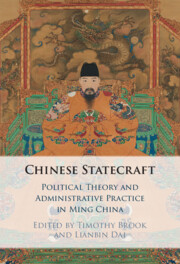
Engaging the writing of the fifteenth-century Confucian theorist and chancellor of the Imperial Academy, Qiu Jun, these essays enlarge our grasp of both Confucianism and the Chinese state, exploring what educated Chinese imagined as best practice in meeting the challenges of administering the realm. Rediscovering statecraft in the Ming period allows us to think about the tradition of applied Confucian duty without the moralism dominating conventional Chinese intellectual history, redirecting that history away from purely philosophical terms. As Qiu reminded Emperor Hongzhi, this 'is not empty talk. I humbly hope that your enlightened majesty will give these ideas your careful attention when you have the leisure to reflect. The people of the realm have no greater wish.' Drawing together a team of leading historians, this volume provides a vivid sense of the day-to-day policy calculations of Ming government, and brings Chinese political thought into the mainstream of comparative political theory.
If, at the beginning of the twentieth century, thanks also to the influential works of Triepel and Anzilotti, the law of state responsibility came to be regarded as a distinct field, it was only in the period between the two world wars that this area of international law became the object of an intense scientific debate. The present contribution aims to assess the development of the law of state responsibility until 1945 by focusing on the events that provided a major impulse for this development, on the attempt at codification, on the case law of international courts and tribunals, and on the new general theories developed by authors such as Strupp, Kelsen, Lauterpacht, Eagleton and Ago. While the contribution aims to deal comprehensively with the law of state responsibility and its development in the period under consideration, particular emphasis will be placed on three issues: the problems associated with attribution of wrongful conduct; the consequences of international responsibility, and in particular the debate over the role of sanctions against wrongful conduct – the early signs of the emergence of a multilateral dimension of state responsibility.
This chapter covers the right to personal integrity under international human rights law. It examines the normative foundations, interpretation, scope, and international obligations related to the right to integrity, including protection against torture and inhumane treatment. The chapter discusses the legal standards for protecting personal integrity, the mechanisms for monitoring and enforcing these standards, and the role of international bodies in addressing violations. It also highlights the importance of preventive measures, victim support, and accountability mechanisms in ensuring the protection of personal integrity.
The perpetration of torture in peacetime almost inevitably involves the responsibility of a State. Indeed, State responsibility is at the heart of the international human rights law prohibition of torture, which also applies in a situation of armed conflict. In the case of torture as a war crime, a crime against humanity, or genocide, however, an entity other than a State may be directly responsible for acts of torture. Nevertheless, as a matter of general international law, given the seriousness of the violation of a jus cogens norm, in all situations the victims and survivors of torture are entitled to a remedy to help compensate for the harm they have suffered. The same principle should pertain to other forms of ill-treatment even though their prohibition is not also a peremptory rule of international law. The consequences of being tortured for the individual and his or her family can be both devastating and lifelong. Rehabilitation may help to turn a victim into a survivor, but it will never fully dispel the harm that has been inflicted. Some of the techniques developed by dedicated experts and non-governmental organizations to promote physical and psycho-social rehabilitation are referred to in this chapter.