To save content items to your account,
please confirm that you agree to abide by our usage policies.
If this is the first time you use this feature, you will be asked to authorise Cambridge Core to connect with your account.
Find out more about saving content to .
To save content items to your Kindle, first ensure no-reply@cambridge.org
is added to your Approved Personal Document E-mail List under your Personal Document Settings
on the Manage Your Content and Devices page of your Amazon account. Then enter the ‘name’ part
of your Kindle email address below.
Find out more about saving to your Kindle.
Note you can select to save to either the @free.kindle.com or @kindle.com variations.
‘@free.kindle.com’ emails are free but can only be saved to your device when it is connected to wi-fi.
‘@kindle.com’ emails can be delivered even when you are not connected to wi-fi, but note that service fees apply.
A full conceptualization of discrimination requires that research focuses on preventing discriminatory behaviors, which are largely perpetrated by White individuals, as well as on larger systems of structural racism and White supremacy in which discrimination experiences are embedded and from which they emanate. The current chapter presents an integrated model of anti-racist socialization for White parents, synthesizing the critical consciousness, anti-racism, and parental racial socialization literatures. The model includes three elements of anti-racist racial socialization: (1) racial content, (2) socioemotional competencies, and (3) parenting processes. The model grounds anti-racist racial socialization in White families as part of the daily activity settings of parent–child interactions, positioning anti-racist socialization as regular, ongoing, and integrated into daily life.
This chapter advances the premise that one way in which racism impacts health and developmental outcomes is through the experiences of the finite resource of time. Although all humans experience the same twenty-four hours in a given day, how those hours are allocated, how much agency over how those hours are spent, and the lived experiences of that time are stratified by structural systems such as racism. Taking a lifecourse perspective, we describe how human development is shaped as much by social factors as biological influences, using time as an example. Ultimately, stratified experiences of time set the stage for racism to shape even the most fundamental of human experiences. We call upon the field to deepen our study of the connections between time, racism, and health inequities, and offer a few recommendations for future research.
Research is another area of social work subject to racial biases. Historically, research was used as a weapon against BIPOC, designed to “prove” their inferiority. While less overtly racist nowadays, research continues to promote a racial divide through several different means: overreliance on a positivist paradigm for researching social questions; holding on to theories based on white normative assumptions, failure to proportionally include people of color in sampling, or include them in defining the research question in cultural and locational contexts.
This essay assesses Susan Sturm’s What Might Be: Confronting Racism to Transform Our Institutions as a major contribution to Critical Race Theory, socio-legal theory, and the practice of institutional anti-racism. It argues that Sturm’s central achievement is to reframe anti-racism not as a discrete legal remedy or diversity initiative, but as a sustained institutional practice of navigating paradox. Drawing on Sturm’s earlier work on complex discrimination, the essay shows how her critique of formal adjudication and liability-centered antidiscrimination law develops into a broader theory of organizational transformation. Institutions, Sturm argues, are not race-neutral arenas; they reproduce racial hierarchy through norms, routines, role structures, and patterns of interaction that often appear ordinary or neutral. The essay emphasizes three linked dimensions of Sturm’s intervention. First, anti-racism requires working through contradictions rather than resolving them: race must be acknowledged because it is materially consequential, yet racial categories must also be destabilized because they help reproduce hierarchy. Second, institutions often become trapped in cycles of reform and retrenchment, producing what Sturm calls “Groundhog Day” dynamics in which diversity initiatives generate temporary movement but fail to alter underlying structures. Third, meaningful transformation depends on trust, linked fate, stretch collaboration, and organizational catalysts that can create durable forms of shared inquiry and collective action.
Few studies have examined the relationship between racial identity and baseline assessment performance in collegiate athletes, and even fewer have contextualized results using structural factors linked to test performance. This study examined racial differences in baseline assessment performance before and after controlling for performance on a word-reading task as a proxy for education quality. We hypothesized that there would be racial differences in baseline performance but that controlling for education quality would reduce these differences.
Methods:
For this observational cross-sectional study, 875 collegiate athletes were grouped based on racial identity (White = 661, Black = 165, Another Race = 49) and underwent a comprehensive neuropsychological battery. Cognitive composite scores and intraindividual variability (IIV) were calculated for two neurocognitive domains: attention/processing speed and memory. Education quality was assessed with the Wechsler Test of Adult Reading (WTAR). ANCOVAs were used to examine racial differences in these cognitive domains before and after controlling for WTAR scores.
Results:
There were significant racial differences in both composite scores and in attention/processing speed IIV, p’s < .001, f = 0.13–0.21. However, there were no significant racial differences in memory IIV, p = .97. After controlling for WTAR scores, there were no significant racial differences in the attention/processing (p = .530, f = 0.03) or memory (p = .183, f = 0.06) composite scores, and the relationship between racial identity and attention/processing speed IIV was less prominent (p = .014, f = 0.10).
Conclusions:
Results suggest that racial differences at baseline assessment can be largely accounted for by education quality as assessed by the WTAR, which underscores the importance of considering sociocultural context when assessing racially diverse athletes.
Public policies contribute to structural racism and health inequities. To dismantle structural racism and advance health equity, methods aligning scientific evidence, community priorities, and political will are needed to implement equity-focused interventions. This study combined community-based participatory research and legal epidemiology methods to inform local policy in East Point, Georgia. The community informed a comprehensive policy approach to address social determinants of health (SDOH) and advance health equity and identified East Point’s Comprehensive Plan Update as an opportunity to advance health equity through policy. Key findings informed a legal epidemiology study to assess variation in including equity and health equity in comprehensive plans across 32 jurisdictions. Limited adoption of equity and health equity provisions were found, revealing opportunities to inform the East Point policymaking process. Research findings were summarized and disseminated to the community and policymakers. In 2023, East Point adopted equity, health, and health equity into its comprehensive plan for the first time. This case study demonstrates that collaborative, multi-sector, community-centered approaches can support policy interventions that address historical race-based, health-harming policies, and thereby dismantle structural racism. Inclusion of health equity in East Point’s comprehensive plan provides a foundation for future implementation of policies that address SDOH and health inequities.
Chapter 1 introduces the book’s key themes by describing the Buchanan v. Warley case in its historical social-movement context in Louisville and nationally, the legal theory behind the Supreme Court’s invalidation of racial zoning, and the 100+ years in which many subsequent land use policies and practices have segregated American landscapes and perpetuated racial injustice. The chapter provides a multi-dimensional snapshot of racially unjust land-use conditions in the U.S. more than 100 years after the nation’s missed opportunity to embrace an anti-subordination vision of land use. Based on distributive, procedural, and social justice concepts and the insights of the nine core chapters in the book, three major themes are identified: (1) racial inequity is deeply and systemically embedded in American land use in multi-faceted ways; (2) cross-disciplinary scholarly study is essential to understanding race and land use; and (3) American land use is characterized both by the intransigence of systemic racism and by social, legal, and policy changes that advance racial justice.
Chapter 9’s case study of a major market-driven development project in Baltimore, the Port Covington project, explores how racial segregation and economic segregation are implicitly assumed to be normal parts of zoning’s spatial ordering of American cities. Inner cities are now places where private developers in a global neoliberal economy seek to use both public and private investments to create new exclusive, elite spaces for higher wealth consumers. Port Covington, a forty-two-block multi-use redevelopment of a vacant industrial site, is one such example on a massive scale. Although Baltimore’s relatively weak inclusionary zoning ordinance forced the developers to agree to include a limited number of affordable housing units in its new development plan, there were no discussions about whether or how to remedy Baltimore’s racialized geography and its legal and policy history of segregation, exclusion, and unequal opportunity. Major land-use decisions should not only embrace mixed-income and mixed-use policy goals but also government-provided affordable housing units and robust inclusionary measures to redress the subordinating dynamics of entrenched structural racism in local zoning.
This chapter identifies two recurring themes that, beginning with Teodoro Ramos Blanco and Alberto Peña in the 1920s–1930s, has continued to define the conceptual basis of many Afro-Cuban artists up to the present. One is their efforts to conceptualize and celebrate their African cultural heritage. The other direction focuses on Afrodescendants’ social conditions and engages with political struggles against structural racism. Challenging the established historical arc accepted by the scholarship, the chapter identifies the 1940s as the most radical moment of Afrodescendant rupture in Cuban arts. It involved the revolutionary visual language of Uver Solis, Roberto Diago Querol, and Wifredo Lam, as well as the reformist executions of unknown artists such as Nicasio Aguirre, grounded on ideas of racial inclusion and black honorability. It also questions the assumed divide between pre- and post-1959, noting how revolutionary institutions continued to function under the common sense of the superiority of Western-centric art. It points to how the defining feature of the supposedly “new” revolutionary art, socially engaged figurative expression, was long established in Republican Cuba. The serious explorations of African-based cultures pioneered in the 1940s also continued in the 1960s–1970s with Grupo Antillano.
Mapping the statements of Afro-Cuban artists on the Afrodescendant social condition and their cultural heritage during the revolutionary period, this chapter delves into the Afro-centric art of Manuel Mendive, Rafael Queneditt, Rogelio Rodríguez Cobas, and others who, during the 1960s–1980s, pointed their emphasis to the Yoruba and Bantú worlds that shaped Antillean societies despite the regime’s religious intolerance. Along with Adelaida Herrera Valdés, Julia Valdés Borrero, and others, they formed the Group Antillano, the first visual art collective grounded on notions of Afrodescendant consciousness that Cuba had ever experienced. The chapter moves chronologically, noting how what could constitute the groundbreaking “New Cuban Art” of the post-1959 period is not Volumen I, but the art of the Queloides collective. While their works were not the first to be concerned with issues of structural racism, they were an unprecedented endeavor that moved beyond previous reformist visions and instead aimed to dismantle the fundamental tenets of Cuban national narratives. The chapter concludes with the internationalization of Afro-Cuban art and how migration and diaspora shape the work of contemporary Afro-Cuban artists.
Historically, African-Americans have found work disproportionately in the public sector, including in local school districts, and I argue that this has created impediments to improving public education in majority Black cities. Educational reforms are evaluated primarily based on how they impact adult employment opportunities, not student learning. Often, the loss of local democratic control is necessary to overcome opposition to reforms driven by employment concerns. I illustrate these dynamics with two case studies of (1) the integration of schools in the South after Brown v. Board of Education and (2) the state takeover of New Orleans schools after Hurricane Katrina.
In Where Do We Go from Here: Chaos or Community? the Reverend Dr. Martin Luther King, Jr. speaks with conviction on the need for and importance of community. King depicts American society and modern civilization as a great “world house” that is inhabited, inherited—and imperiled. Behind the metaphor of the world house is a prophetic vision and dream—the realization of what he called the “beloved community.” In this article, the author considers King’s beloved community ideal through a housing lens. Engaging with King’s metaphor, the author frames the beloved community as an apologetic for integrated community. The author views the metaphor of the world house as a significant means to expand understanding of beloved community, elevate housing as a moral-ethical concern, and engender radical structural solutions that can be realized through racial justice in the housing sector.
The Introduction of the book exposes students to key concepts surrounding how U.S. law has constructed and maintained the idea of race in society. Introducing the framework of individual and systemic oppression, the chapter explores the dualistic role that the law plays in the democratic process by both advancing and preventing societal change, based on how it is wielded.
Health care comprises a major segment of the US economy and is a critical influence upon citizens’ quality of life. The quality of health care and access to it are negatively affected by corruption. So too is citizen compliance with public health policies, a fact that became apparent during the COVID-19 pandemic. Stay-at-home orders, for example, were significantly less effective in states with more extensive corruption. Low levels of trust in government contributed to those disparities. Such effects are more pronounced in poorer areas and Black communities. Racial contrasts in vaccine equity – access to vaccinations and related services – were pronounced and, again, reflected levels of corruption. Particularly intractable problems of collective action posed by structural corruption and structural racism must be addressed if disparities in the quality of health care are to be reduced.
Global health law in theory and practice can either work to ameliorate the devastating consequences of colonialism, class hierarchies, and structural racism in health, or it can ratify and exacerbate them. It can protect, under protect, overprotect, or fail to protect – it is not and cannot be neutral. Global health law reflects the choices and practices of States and other actors, which includes both action and inaction. Inaction or silence on the part of global health law is a choice that ratifies the status quo of coloniality, class exploitation, and structural racism in health.
Chapter 1 addresses the false belief that prejudice and discrimination are individual in nature and not systemic or institutional. Many people believe that racism, sexism, or homophobia comprise an individual’s negative feelings toward marginalized groups – a person has hate in their heart and discriminates against the relevant target. It is certainly the case that people can hate members of certain groups and that hate can manifest in discrimination. However, inequality is also refleted in insitutions. It is systemic and structural. That is, inequality is reflected in laws, policies, and practices, and is baked into insititutions such as health care, the criminal legal system, marriage, education, the military, and so on. Chapter 1 describes the key terms associated with systemic inequality, and describes the process by which systemic inequality is established and maintained. The chapter concludes with strategies to reduce systemic and structural inequality.
The twenty-first century COVID-19 epidemic revealed a U.S. public health system that countenanced health inequities and a U.S. public that resisted disease containment policies. This crisis, however, was only the most recent chapter in a longer struggle in the United States to institutionalize public health. We focus on two early twentieth-century public health campaigns in the American South, the unhealthiest U.S. region at the time. Black southerners—denied basic health, political, economic, and social rights under a rising Jim Crow regime—self-organized health services networks, including through the Tuskegee Woman’s Club, the Negro Organization Society of Virginia, and the Moveable School (1890s–1915). Around the same time, a philanthropic project, the Rockefeller Sanitary Commission (RSC, 1909–1914), seeded state-level public health agencies in eleven southern states, thereby installing public health in a top-down manner. We use archival data sources to explore key similarities and differences in the public health concerns and coalition-building approaches of each campaign and southern resistance to their efforts. We find Black-led campaigns often blurred the color line to form coalitions that provided services to the underserved while tackling environmental health risks at the community level. In contrast, RSC affiliates in southern states, as directed by RSC administrators, provided health services as short-term public dispensaries. Services reached Black and White communities willing to participate but in a manner that did not overtly challenge Jim Crow-era practices. Southern resistance to public health expansion persisted under each approach. The legacies of these struggles remain; the political-economic and ideological forces that limited public health expansion while marginalizing Black community health efforts reverberate in public health inequities today.
This chapter challenges the myth that rural communities lack racial diversity and that “rural” is synonymous with “white.” The chapter addresses in particular the misconception that, where rural regions do overrepresent white people, there is something natural or innate about the connection between rurality and whiteness. The chapter uses a critical-legal lens to examine the history and modern conditions associated with rural landownership and livelihoods. This analysis helps illustrate, in the words of Jess Shoemaker, “how rural landscapes got so white.” Certain experiences of the Gullah-Geechee people of South Carolina offer a case study for exploring heirs’ property, racial discrimination, and other mechanisms used to contribute to rural racial minorities’ land dispossession. The discussion demonstrates how property law, federal interventions, and other areas of law have facilitated the construction of rural regions as disproportionately white and racially stratified. Once again, the analysis reveals how rural America is a manmade project of public creation, rather than the product of benign or natural forces.
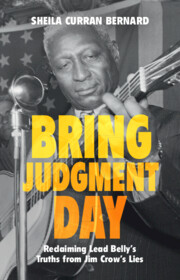
Known worldwide as Lead Belly, Huddie Ledbetter (1889–1949) is an American icon whose influence on modern music was tremendous – as was, according to legend, the temper that landed him in two of the South's most brutal prisons, while his immense talent twice won him pardons. But, as this deeply researched book shows, these stories were shaped by the white folklorists who 'discovered' Lead Belly and, along with reporters, recording executives, and radio and film producers, introduced him to audiences beyond the South. Through a revelatory examination of arrest, trial, and prison records; sharecropping reports; oral histories; newspaper articles; and more, author Sheila Curran Bernard replaces myth with fact, offering a stunning indictment of systemic racism in the Jim Crow era of the United States and the power of narrative to erase and distort the past.
Medical-legal partnerships (MLPs) attempt to integrate the social determinants of health into health care delivery to eliminate health inequities. Yet, MLPs have not fully adapted to identify and address structural racism, one of the root causes of health inequities. This article provides a health justice perspective on the role of MLPs to challenge legal regimes to address structural racism and reimagine systems rooted in joy, safety, and collective liberation.