To save content items to your account,
please confirm that you agree to abide by our usage policies.
If this is the first time you use this feature, you will be asked to authorise Cambridge Core to connect with your account.
Find out more about saving content to .
To save content items to your Kindle, first ensure no-reply@cambridge.org
is added to your Approved Personal Document E-mail List under your Personal Document Settings
on the Manage Your Content and Devices page of your Amazon account. Then enter the ‘name’ part
of your Kindle email address below.
Find out more about saving to your Kindle.
Note you can select to save to either the @free.kindle.com or @kindle.com variations.
‘@free.kindle.com’ emails are free but can only be saved to your device when it is connected to wi-fi.
‘@kindle.com’ emails can be delivered even when you are not connected to wi-fi, but note that service fees apply.
The environment has been leveraged as a tool of control in conflict settings throughout human history. Capturing or enclosing and controlling the resources needed for everyday needs and livelihoods has been a feature of most conflicts. Understanding how this happens and what the implications are for the environment in conflict is critical to addressing environmental and conflict issues. This chapter lays out how this has unfolded in many contexts and highlights critical nuances for different environmental mediums and across space and time.
Growing environmental instability around the globe has the potential to contribute to the onset of violent conflict. However, there is rarely a clear, direct causal pathway between environmental change and conflict because these interactions are always mediated by institutions – social norms, governance, and policy. How the environment can be a potential trigger for conflict is a critical part of the environment-conflict nexus. This chapter explores the broad literature on the topic, drawing out where there is more and less consensus and what the implications are for understanding the environment in conflict.
Theatrical presentation encompasses diverging perspectives on water ecologies, ecological divisions and extremes of wet and dry in tropical and desert climates. While twentieth-century drama points to how water sources in Australia have been divided up to restrict access through land proprietorship, polarising attitudes and racial injustice, innovative twenty-first century performance emphasises the interconnectedness of water flows, seepage and below ground storage. An appreciation of water flow is particularly evident in First Nations performance, which includes the influential work of Bangarra Dance Theatre. Performance explores values and practices that resist the way water is polluted and detrimentally reconfigured in binary divisions to restrict access and divert flows and highlights the need for water availability for all species in a climate change era. Australian theatrical performance points to emotional feelings and values that protect and preserve water and its river flows even as human impact on the climate means its patterns are no longer predictable.
At the turn of the twentieth century, agriculture in the Gulf was characterised by pastoralism, oasis horticulture, and irrigation systems. As a result of the emergence of the region’s nation states and the oil economy, these activities underwent decline and were replaced by forms of agribusiness and large-scale agriculture. The most conspicuous result of this was the establishment of large enclosures in which members of the ruling class were allocated large areas of land and water resources. The scale of these projects was vast and ambitious. This frontier provided an opportunity for enormous enrichment, but it also led to the exhaustion of non-renewable water reserves. As a result, domestic production was scaled down by the 2000s, leading to an impetus for a greater emphasis on external imports.
The Mono Lake case reached court in the early 1980s, but the crisis that led to the case began almost a century earlier, when the city of Los Angeles first began to run out of water. Moving water to Los Angeles, California’s most populous and economically dynamic city, has been a state priority since the turn of the 20th century. This chapter explores the water struggles that led to the construction of the Los Angeles Aqueduct and ultimately to the Mono Lake litigation. It reviews the history of water exports from the Owens Valley in the early 1900s and the devastating effects on the local community and ecology – prompting the decline of its once thriving agricultural economy (and an open rebellion by Owens Valley farmers). It then recounts the St. Francis Dam disaster of 1928, which terrified the population and tempered judgements about the safety risks of large-scale water projects near population centers, further prompting water speculation in more remote areas of the state. The sobering loss of life in that infamous disaster testifies to the high stakes involved in managing water scarcity dilemmas that continue to bedevil California and arid regions throughout the world.
Edited by
Latika Chaudhary, Naval Postgraduate School, Monterey, California,Tirthankar Roy, London School of Economics and Political Science,Anand V. Swamy, Williams College, Massachusetts
In principle, economic development can be environmentally sustainable and compatible with the rights of the poor to the commons – forests, water and land. In practice, however, the economic transformation of India since independence – rapid increase in agricultural productivity, industrialization, urbanization and the building of much-needed infrastructure, has come at the expense of environmental degradation and the rights of the poor to common property resources. Indian economic policy has for the most part favoured ‘development’ over environmental concerns. But India is a democracy in which civil society and the people can protest and exert pressure to prevent environmental degradation and defend their rights to the commons. The Indian judiciary, the Supreme Court in particular, has also been proactive in intervening to protect the environment. As of now, the impetus toward natural-resource-intensive and polluting growth is winning the day, but the struggle to find a better balance continues. Climate change is making the task much harder.
The California Supreme Court’s decision to protect Mono Lake provides a paragon example of how the public trust doctrine can serve as an environmental guardian – as well as a story full of intrigue, suspense, and high stakes. One unusual aspect of the story is that two of the most important characters are neither people nor cities, nor even geological formations on the land – they are laws. In the Mono Lake case, advocates invoked the public trust doctrine to protect public law interests in the environmental values of the waterway, defending them against private law claims to the water within it. To understand how these public and private interests came into conflict at Mono Lake – and why they continue to harbor conflict across all arid lands – it is important to understand the legal doctrines that govern different aspects of water governance. For this reason, the book begins with the law – tracing the history of the public trust doctrine from its ancient Roman and English roots to its reception in the United States, and the conflict posed by independently developing doctrines of private water allocation law, especially the prior appropriations doctrine of the American West.
Some forty years after the aqueduct first began tapping the Owens Valley, L.A. leaders realized that the city needed still more water. They also realized that there was a wealth of unappropriated water in the next watershed up, just 200 miles further north – the Mono Lake Basin. This chapter explores the extension of the aqueduct to the Mono Basin in 1940 and the acceleration of Mono exports after the second barrel was built in 1970. It begins by introducing the extraordinary features of the Mono Lake ecosystem itself – the trillions of brine shrimp, clouds of alkali flies, and millions of migratory birds that depend on a hypersaline sea – suspended in a high-desert basin marked by dormant volcanism, geothermal activity, and limestone tufa towers rising from calcium laden springs entering Mono’s carbonate-rich waters. It also reviews the human communities of the Basin, including the indigenous Kutzadika’a Paiute and the European settlement that followed the California Gold Rush. Finally, it explores the human and environmental consequences that followed Los Angeles’s acquisition of rights to take water from the Basin, setting the stage for the legal controversy that would follow.
Religion is central to Seamus Heaney’s work. Alongside his preoccupations with Catholic and Celtic belief, ancient Greek and Roman religions are significant in Heaney’s methodological palette, in which ‘low intensity’ allusions to aspects of religious culture can inform operations of poetry and ritual. Greek and Roman culture provides Heaney with a repository of spirit-guide figures, symbolic characters such as Heracles and Tiresias, forms and tropes, including funerary rituals, burial, pilgrimage, and katabasis, and entire works which the poet reimagined, such as Sophocles’s Philoctetes and Euripides’s Antigone, in which civic and religious duties intersect in ways germane to the poet’s reflections on his own time.
Drylands account for a disproportionate share of the world’s armed conflicts, a pattern frequently interpreted through the lens of resource scarcity – where climate change and water stress are seen as primary drivers of violence. While this framing underscores critical environmental pressures, it risks simplifying the complex social, ecological and political realities of these regions. This article critically examines the climate-conflict narrative surrounding Syria, which posits that drought-induced agricultural collapse and rural outmigration significantly contributed to the onset of civil war. Building on this critique, the paper advocates for a broader conceptual shift – viewing drylands not solely as zones of vulnerability, but as landscapes of endurance. In these regions, communities often navigate both extreme climatic conditions and chronic insecurity, which together constrain agricultural productivity and perpetuate poverty. This perspective highlights the adaptive capacities of dryland populations and the lessons they offer for understanding survival under compound stress. It also challenges dominant narratives and opens space for interdisciplinary approaches that integrate quantitative and qualitative perspectives. The article calls for a more nuanced research agenda that centers lived experience, long-term adaptation and the interplay between environmental and political pressures.
There is clear evidence that rapid warming has been fuelling significant changes in the ocean and cryosphere in the Antarctic Peninsula region. Less is known about how terrestrial biological ecosystems, particularly plants, are responding to warming and hydroclimatic change. We show that high evaporative environmental conditions and microclimate associated with topography lead to humidity-dependent evaporative effects on the oxygen isotope ratios (δ18O) of moss waters and α-cellulose in the northern Antarctic Peninsula, based on a spatial (> 400 km) isotopic survey at 14 sites over 24 days during summer 2020. The δ18O of moss waters define a water line of δ2H = 4 × δ18O + 37 for Polytrichum strictum and δ2H = 3.8 × δ18O + 38.9 for Chorisodontium aciphyllum, indicating enrichment compared to line slopes ranging from 6.7 to 8.5 for snow, standing water, previous published snapshots of moss waters and the long-term local meteoric water lines along the Antarctic Peninsula. The δ18O of moss waters negatively correlated with relative humidity (which ranged from ~50% to 100%) and not with temperature or latitude, where a higher δ18O indicates increased evaporative enrichment or dry conditions. A positive correlation between the δ18O of moss waters and α-cellulose (ρ = 0.397, P = 0.011) for P. strictum (ρ = 0.533, P = 0.007) but not C. aciphyllum suggests that the high evaporative conditions from the season imprinted on the cellulose. Lastly, we found significant positive correlations between topographic aspect (north-exposedness) and the δ18O of moss waters (ρ = 0.569, P < 0.001) and α-cellulose (ρ = 0.579, P < 0.001), indicating that irradiance on north-facing slopes promotes drier conditions and evaporative enrichment. Topographic aspect (and resulting microclimate) is an important and predictable determinant of the δ18O of moss waters and α-cellulose. This study highlights that mosses are sensitive recorders of climatic and non-climatic conditions in polar terrestrial ecosystems.
A framing case study describes the Paris Climate Agreement and the worldwide movement to combat climate change. The chapter then discusses international environmental law. The chapter first discusses important concepts from environmental law, its historical evolution, and major principles. It then describes how states have attempted to protect the environment in the realm of the atmosphere, water, and living resources. Finally, the chapter examines how international environmental law interacts with topics discussed earlier in the book, including: trade, investment, human rights, and armed conflict.
The viscosity (η) of a geofluid dictates its roles within the Earth, such as migration in subduction zones and volcanism. High pressures and temperatures at depth influence visocity (η). The falling sphere method is effective to measure viscosity at high-pressures for geofluids that form solids at ambient temperature. A typically metallic sphere is placed atop a solid sample, which is then compressed to high-pressure and later melted by heating. This method is more challenging for geofluids that do not form solids at ambient temperature. A diamond-anvil-cell (DAC) is often used to contain such geofluids, but requires a small sample chamber and that the sphere either falls parallel to the diamond culet faces or rolls along one face. This geometry produces complicated drag effects on a sphere fall and additional frictional forces for a roll. The sphere may also adhere to chamber surfaces, preventing its fall/roll. To circumvent these issues, in this study, we quantify the viscosity of a geofluid (H2O) at pressures <2.5 GPa using the Brownian motions of suspended particles in DAC. Previous high-pressure efforts used particles of polystyrene, which are unstable at ≥300°C, or silica, but only at ambient temperatures. Such temperatures are relatively low for hydrothermal to supercritical geofluids. We tested quartz particles (∼1–2 µm diameter) with heating, as quartz does not significantly dissolve/melt until ≥600°C. Although three times denser than water, the particles remained suspended and displayed Brownian motions for long timescales at temperatures ≤200°C. The measured viscosities are relatively high due to drag from the culets and particle–particle interactions. Regardless, our measured pressure-effect on viscosity shows excellent agreement with the standard reference for water. After correcting for the drag, the η are very low (< 2 mPa s) highlighting that H2O-rich geofluids should be highly mobile at depth.
Wetlands have deep geological histories, stories of bedrock, sediment, and sea rise. But the direction and speed of flow has been shaped just as surely by human interests and intervention. This chapter asks how wetland commons were used, managed, and disputed in the centuries and decades prior to improvement projects. Moving from the action of ice sheets and mosses to national legislation and daily work, it examines how environmental and political scales intersected. By the late sixteenth century, communities in the northern fens faced amplified flood risks and conflict over shared commons. But these challenges did not necessarily strengthen intervention by state-sanctioned institutions capable of coordinating at a larger scale. A less linear and more fragmented picture emerges in the northern fens, where environmental politics pivoted on rights and responsibilities defined by local custom. Fen custom was reproduced by communal decision-making and participatory acts of walking, remembering, and working. It formed a flexible fabric, adapted in response to dynamic waterways and porous boundaries and negotiated through confrontations on riverbanks as well as courtrooms.
While international humanitarian law (IHL) offers protections for infrastructure indispensable to civilian survival, the personnel who operate, maintain and repair these systems remain largely invisible in legal frameworks and humanitarian discourse. Drawing on operational experience, this article examines the systemic threats faced by essential services personnel in contemporary urban warfare, including direct attacks, mobility constraints and the cumulative effect of protracted conflict, all of which undermine the resilience of essential services. Through exploring existing legal frameworks, recent political initiatives and practical measures already undertaken by humanitarian actors and service providers to enhance personnel safety, the article argues that safeguarding essential services personnel is not only a legal and moral imperative but also an operational necessity for preserving civilian life during conflict. While the authors acknowledge the lack of explicit special protection of essential services personnel under IHL, they advocate for a principled, good-faith interpretation and application of IHL that embraces its humanitarian spirit, arguing that the protection of “objects indispensable to the survival of the civilian population” must logically extend to the people who keep those objects and services functioning. The article concludes by proposing future avenues for strengthening protection, including improved visibility, multidisciplinary and essential service provider-centred preparedness planning, and the potential recognition of a distinctive sign for essential services personnel. Ultimately, the article calls for essential services personnel to be better recognized as indispensable to the survival of civilian populations and urges all actors to move beyond infrastructure to protect the systems – including the people – that sustain life in war.
Volume I offers a broad perspective on urban culture in the ancient European world. It begins with chronological overviews which paint in broad brushstrokes a picture that serves as a frame for the thematic chapters in the rest of the volume. Positioning ancient Europe within its wider context, it touches on Asia and Africa as regions that informed and were later influenced by urban development in Europe, with particular emphasis on the Mediterranean basin. Topics range from formal characteristics (including public space), water provision, waste disposal, urban maintenance, spaces for the dead, and border spaces; to ways of thinking about, visualising, and remembering cities in antiquity; to conflict within and between cities, economics, mobility and globalisation, intersectional urban experiences, slavery, political participation, and religion.
This chapter documents the conflicts among Đông Triều Coal Company (also known as SCDT), the city of Hải Phòng, and the French colonial government in Tonkin over the protection of potable water at a time when uncontrolled mining expansion in the Đông Triều highland, where SCDT was based, threatened to pollute the Hương River – Hải Phòng city’s source of potable water. This chapter argues that the French colonial state’s environment-centered attempts to safeguard the Hương River and public health, such as the creation of a massive water protection zone, were primarily driven by French concerns about the lack of hygiene and infectious diseases circulating within the indigenous communities located close to the Hương River rather than the industrial pollution caused by SCDT. The chapter also underlines issues pertaining to environmental laws, such as the logistical challenges of surveying and protecting water sources, and the lack of compliance with environmental regulations by big coal companies such as SCDT. More importantly, the chapter underscores the complex impact of mining expansion and environmental regulations on local ethnicities, such as the Dao communities.
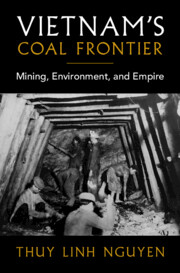
In one of the first energy histories of Southeast Asia, Thuy Linh Nguyen explores the environmental, economic, and social history of large-scale coal mining in French colonial Vietnam. Focusing on the Quảng Yên coal basin in northern Vietnam, known for the world's largest anthracite coal mines, this deeply researched study demonstrates how mining came to dominate the landscape, restructuring the region's environment and upending local communities. Nguyen pays particular attention to the role of various non-state local actors, often underrepresented in grand narratives of modern Vietnam, including Vietnamese and Chinese migrant mine workers, timber traders, loggers, and local ethnic minorities. Breaking away from the metropole-colony paradigm, Nguyen offers a new lens through which to explore the dynamics of colonial rule and the importance of inter-Asian networks, arguing that the colonial energy regime must be understood as a complex, multilayered interaction between empire, capital, labor, water, sea, land, and timber forests.
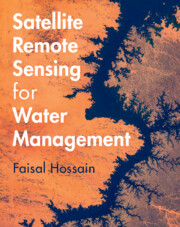
This textbook reflects the changing landscape of water management by combining the fields of satellite remote sensing and water management. Divided into three major sections, it begins by discussing the information that satellite remote sensing can provide about water, and then moves on to examine how it can address real-world management challenges, focusing on precipitation, surface water, irrigation management, reservoir monitoring, and water temperature tracking. The final part analyses governance and social issues that have recently been given more attention as the world reckons with social justice and equity aspects of engineering solutions. This book uses case studies from around the globe to demonstrate how satellite remote sensing can improve traditional water practices and includes end-of-chapter exercises to facilitate student learning. It is intended for advanced undergraduate and graduate students in water resource management, and as reference textbook for researchers and professionals.
Water is rarely a subject of Euro-American literary attention, even if it is one of the most essential commodities today. But this is not the case for literary studies in places such as Oceania and the Caribbean, and in our world’s moment of environmental crises the status of water as (and as not) a commodity is more important than ever. This chapter first sketches out broader trends of water’s commodification in several canonical literary texts. The chapter then examines imaginaries of transnational waters, hydro-power, and water contamination in works by Ruth Ozeki and Nnedi Okorafor. Finally, I focus on contemporary authors from Oceania who prioritise water’s critical importance as they challenge notions of it as a commodity and complicate the ‘Blue Humanities’. This chapter considers shows how fictions and poetry can creatively engage with forms of water’s commodification but also theorise alternative water futures.