Refine search
Actions for selected content:
9 results
NONCONGRUENT NUMBERS OF THE FORM $2pq$ WITH $pq\equiv 5\ (\textbf {mod } 8)$
- Part of
-
- Journal:
- Bulletin of the Australian Mathematical Society , First View
- Published online by Cambridge University Press:
- 23 February 2026, pp. 1-10
-
- Article
- Export citation
-
Let p and q be two primes with $(p,q)\equiv (1,5)$ or $(7,3) \pmod 8$. Lagrange [‘Nombres congruents et courbes elliptiques’, Séminaire Delange-Pisot-Poitou. Théorie des Nombres 16(1) (1974–1975), Article no. 16] and Qin [‘Congruent numbers, quadratic forms and $K_2$’, Math. Ann. 383(3–4) (2022), 1647–1686] showed that if $(\frac {q}{p})=-1$, then $2pq$ is not a congruent number. By using Qin’s method, we prove that if $(p,q)\equiv (1,5) \pmod 8$ and $(\frac {q}{p})=1$ with $h(-pq)\not \equiv p-1 \pmod {16}$, then $2pq$ is not a congruent number; if $(p,q)\equiv (7,3) \pmod 8$ and $(\frac {q}{p})=1$ with $h(-2pq)\not \equiv p+1 \pmod {16}$, then $2pq$ is not a congruent number. Here, $h(-d)$ denotes the class number of the imaginary quadratic field $\mathbb {Q}(\sqrt {-d})$.


On class groups of abelian extensions
- Part of
-
- Journal:
- Canadian Mathematical Bulletin , First View
- Published online by Cambridge University Press:
- 04 February 2026, pp. 1-13
-
- Article
- Export citation
-
Let K be an absolutely abelian number field, and t be a positive integer relatively prime to $[K: \mathbb {Q}]$. We provide a method to use the t-rank of the class group of K to obtain a lower bound on the t-rank of class groups of any cyclotomic fields (or real cyclotomic fields) that contain this K. As an application, for any odd integer $t> 1$, we provide a family of cyclotomic fields whose class groups have t-rank at least $2$. Furthermore, we prove that the class number of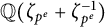 $\mathbb {Q}(\zeta _{p^e} + \zeta _{p^e}^{-1})$ cannot be equal to $2$, where p is a prime, $e \geq 1$ is an integer, and $\zeta _{p^e}$ denotes a primitive $p^e$-th root of unity. We also provide an upper bound for the class number of a real cyclotomic field.


ON STARK’S CLASS NUMBER CONJECTURE AND THE GENERALISED BRAUER–SIEGEL CONJECTURE
- Part of
-
- Journal:
- Bulletin of the Australian Mathematical Society / Volume 106 / Issue 2 / October 2022
- Published online by Cambridge University Press:
- 10 January 2022, pp. 288-300
- Print publication:
- October 2022
-
- Article
- Export citation
-
Stark conjectured that for any $h\in \Bbb {N}$, there are only finitely many CM-fields with class number h. Let $\mathcal {C}$ be the class of number fields L for which L has an almost normal subfield K such that $L/K$ has solvable Galois closure. We prove Stark’s conjecture for $L\in \mathcal {C}$ of degree greater than or equal to 6. Moreover, we show that the generalised Brauer–Siegel conjecture is true for asymptotically good towers of number fields $L\in \mathcal {C}$ and asymptotically bad families of $L\in \mathcal {C}$.


Averages and moments associated to class numbers of imaginary quadratic fields
- Part of
-
- Journal:
- Compositio Mathematica / Volume 153 / Issue 11 / November 2017
- Published online by Cambridge University Press:
- 14 August 2017, pp. 2287-2309
- Print publication:
- November 2017
-
- Article
-
- You have access
- HTML
- Export citation
-
For any odd prime $\ell$ , let $h_{\ell }(-d)$ denote the $\ell$ -part of the class number of the imaginary quadratic field $\mathbb{Q}(\sqrt{-d})$ . Nontrivial pointwise upper bounds are known only for $\ell =3$ ; nontrivial upper bounds for averages of $h_{\ell }(-d)$ have previously been known only for $\ell =3,5$ . In this paper we prove nontrivial upper bounds for the average of $h_{\ell }(-d)$ for all primes $\ell \geqslant 7$ , as well as nontrivial upper bounds for certain higher moments for all primes $\ell \geqslant 3$ .


Finiteness theorems for algebraic groups over function fields
- Part of
-
- Journal:
- Compositio Mathematica / Volume 148 / Issue 2 / March 2012
- Published online by Cambridge University Press:
- 30 November 2011, pp. 555-639
- Print publication:
- March 2012
-
- Article
-
- You have access
- Export citation
Stickelberger Elements for Cyclic Extensions and the Order of Vanishing of Abelian L-Functions at s=0
-
- Journal:
- Compositio Mathematica / Volume 138 / Issue 2 / September 2003
- Published online by Cambridge University Press:
- 04 December 2007, pp. 157-163
- Print publication:
- September 2003
-
- Article
-
- You have access
- Export citation
Indivisibility of Class Numbers and Iwasawa λ-Invariants of Real Quadratic Fields
-
- Journal:
- Compositio Mathematica / Volume 126 / Issue 3 / May 2001
- Published online by Cambridge University Press:
- 04 December 2007, pp. 249-256
- Print publication:
- May 2001
-
- Article
-
- You have access
- Export citation
On Positive Integer Solutions of the Equation xy + yz + xz = n
-
- Journal:
- Canadian Mathematical Bulletin / Volume 39 / Issue 2 / 01 June 1996
- Published online by Cambridge University Press:
- 20 November 2018, pp. 199-202
- Print publication:
- 01 June 1996
-
- Article
-
- You have access
- Export citation
Class Number Divisibility in Real Quadratic Function Fields
-
- Journal:
- Canadian Mathematical Bulletin / Volume 35 / Issue 3 / 01 September 1992
- Published online by Cambridge University Press:
- 20 November 2018, pp. 361-370
- Print publication:
- 01 September 1992
-
- Article
-
- You have access
- Export citation
-
Let q be a positive power of an odd prime p, and let Fq(t) be the function field with coefficients in the finite field of q elements. Let
 denote the ideal class number of the real quadratic function field obtained by adjoining the square root of an even-degree monic
  . The following theorem is proved: Let n ≧ 1 be an integer not divisible by p. Then there exist infinitely many monic, squarefree polynomials,
  such that n divides the class number,
  . The proof constructs an element of order n in the ideal class group.
 denote the ideal class number of the real quadratic function field obtained by adjoining the square root of an even-degree monic
  . The following theorem is proved: Let n ≧ 1 be an integer not divisible by
  such that
  . The proof constructs an element of order