Refine search
Actions for selected content:
42 results
Towards a new compact for health financing in Lao People’s Democratic Republic
-
- Journal:
- Health Economics, Policy and Law , First View
- Published online by Cambridge University Press:
- 16 July 2026, pp. 1-14
-
- Article
-
- You have access
- Open access
- HTML
- Export citation
Design of a compact high-gain antipodal Vivaldi antenna for UWB applications
-
- Journal:
- International Journal of Microwave and Wireless Technologies , First View
- Published online by Cambridge University Press:
- 14 July 2026, pp. 1-8
-
- Article
- Export citation
Miniaturized multiband dipole-loaded C-shaped resonating patch linear–circular and linear-cross angular stable reflective polarization converter
-
- Journal:
- International Journal of Microwave and Wireless Technologies / Volume 17 / Issue 4 / May 2025
- Published online by Cambridge University Press:
- 25 July 2025, pp. 620-628
-
- Article
- Export citation
Adapting the comprehensive assessment of acceptance and commitment therapy processes (CompACT) questionnaire for contextual relevance in Uganda: A comprehensive approach
-
- Journal:
- Cambridge Prisms: Global Mental Health / Volume 12 / 2025
- Published online by Cambridge University Press:
- 02 June 2025, e57
-
- Article
-
- You have access
- Open access
- HTML
- Export citation
Compact eight-channel diplexer based on quad-mode stepped impedance resonator
-
- Journal:
- International Journal of Microwave and Wireless Technologies / Volume 16 / Issue 10 / December 2024
- Published online by Cambridge University Press:
- 30 January 2025, pp. 1713-1721
-
- Article
- Export citation
A compact ultrawide bandpass filter along notch characteristics with rectangular resonator through a machine learning approach
-
- Journal:
- International Journal of Microwave and Wireless Technologies / Volume 16 / Issue 8 / October 2024
- Published online by Cambridge University Press:
- 27 January 2025, pp. 1414-1422
-
- Article
- Export citation
A compact self-quintuplexing antenna by HM-SIW cavity
-
- Journal:
- International Journal of Microwave and Wireless Technologies / Volume 16 / Issue 9 / November 2024
- Published online by Cambridge University Press:
- 18 December 2024, pp. 1561-1569
-
- Article
- Export citation
Design and realization of a compact substrate integrated coaxial line butler matrix for beamforming applications
-
- Journal:
- International Journal of Microwave and Wireless Technologies / Volume 16 / Issue 5 / June 2024
- Published online by Cambridge University Press:
- 08 January 2024, pp. 812-818
-
- Article
- Export citation
-
This article presents the modeling and realization of a compact substrate integrated coaxial line (SICL) based butler matrix operating at 5 GHz for beam-forming applications. The proposed 4 × 4 butler matrix is developed using SICL-based hybrid coupler, crossover, and phase shifter. A compact 90∘ coupler comprising of center tapped unequal stubs is designed to enhance the size reduction as well as to extend the out of band rejection. Wideband SICL-based crossover operating from DC to 10 GHz is conceived for the proposed butler matrix using a plated through hole as transition. The SICL crossover features very high measured isolation of 65 dB owing to the reduction in coupling between the two signal paths within a lateral footprint of only 0.034 $\lambda_g^2$. A meandered SICL-based line is used in order to provide the necessary 45∘ and 0∘ phase shift to realize the butler matrix. The fully shielded and self-packaged compact 4 × 4 SICL-based butler matrix is fabricated and experimentally validated to operate at 5 GHz.

New method based on genetic algorithm and Minkowski fractal for multiband antenna designs
-
- Journal:
- International Journal of Microwave and Wireless Technologies / Volume 16 / Issue 3 / April 2024
- Published online by Cambridge University Press:
- 03 October 2023, pp. 466-477
-
- Article
- Export citation
-
In this paper, a new method based on a genetic algorithm and Minkowski Island fractal is proposed for multiband antennas. Three-antenna configurations are chosen to validate the proposed optimization procedure. The first configuration is a wide-band antenna, operating in the WLAN (wireless local area network) UNII-2C band. The second configuration is a dual-band antenna, operating in the WLAN UNII-2 and UNII-2C bands. In contrast, the third is a tri-band antenna operating in the UNII-2, UNII-2C, and UNII-3 bands. The optimization process is accelerated by using the Computer Simulation Technology (CST) Application Programming Interface which allows all genetic operators to be performed in MATLAB while the numerical calculations are running in the internal CST Finite-Difference Time-Domain -solver using parallel computing with GPU acceleration. All three designed configurations are manufactured using a $\textstyle0.8\;\text{mm}$ thick FR4 epoxy substrate with a relative dielectric constant of $4.8$. The return loss and the radiation pattern’s measurements agree well with the simulation results. Further, the methodology presented can be very effective in terms of size reduction; the designed antennas are $24 \times 24 \times 0.8\;{\textrm{m}}{{\textrm{m}}^3}$ (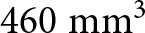 $460\;{\textrm{m}}{{\textrm{m}}^3}$).

Miniaturization of folded circular SIW cavity filters
-
- Journal:
- International Journal of Microwave and Wireless Technologies / Volume 15 / Issue 6 / July 2023
- Published online by Cambridge University Press:
- 05 May 2023, pp. 993-1000
-
- Article
-
- You have access
- Open access
- HTML
- Export citation
-
This contribution presents miniaturization techniques for folded circular substrate integrated waveguide (FCSIW) cavity filters. The cavities support dual-mode operation. Two of these cavities are combined to form a fourth-order filter. Two filter designs are implemented. The first one serves as a reference and exhibits good manufacturability. For the second one, the cavity is modified, which leads to $50\%$
 more compactness. The designs are experimentally verified with 10 GHz bandpass filters. Even though the achieved level of compactness requires higher technological effort, the measurements validate the miniaturization concept. The out-of-band rejection exceeds 40 dB between 11.2 and 30 GHz for the reference filter and between 11.3 and 33 GHz for the miniaturized one. The implemented components are compared with state-of-the-art filters.

Highly miniaturized wideband angular stable linear–circular and linear–cross polarization converter for Ka-band satellite applications
-
- Journal:
- International Journal of Microwave and Wireless Technologies / Volume 15 / Issue 9 / November 2023
- Published online by Cambridge University Press:
- 03 May 2023, pp. 1557-1569
-
- Article
- Export citation
-
This work proposes a novel, extremely miniaturized wideband linear–circular and linear–cross metasurface-enabled reflective polarizer. This design comprises a Meander-line structure with horizontal dipoles as the top frequency selective surface, printed on a 1 mm thin-grounded FR-4 substrate. The x/y-polarized incident electromagnetic wave is converted as circularly polarized from 10.60 to 10.92 GHz (LHCP/RHCP), 12.12 to 17.32 GHz (RHCP/LHCP), and 22.72 to 37.76 GHz (LHCP/RHCP) during reflection with 2.97, 35.33, and 49.74% Fractional Bandwidth (FBW). In addition, this design shows linear–cross conversion with a minimum 90% polarization conversion ratio from 11.41 to 12, 19.01 to 22.34, and 40.74 to 46.82 GHz with an FBW of 5.04, 16.11, and 13.89%. The device performance is considerably stable under different oblique incidences, and the polarizer's unitcell is compact with a structural periodicity of 0.089 × 0.064 $\lambda _L^2$
 , and ultra-thin low-profile substrate thickness of 0.035λL. The proposed prototype is fabricated, and the measured results are in good agreement with the simulated one. This article also mentions how this polarizer could be tuned for dual-band K- and Ka-band satellite applications. The authors believe that the design's novelty lies in the multiband conversion with circular-polarization orthogonality, a highly miniaturized unitcell's volume of 0.199 $\lambda _L^3$
 /1000, and better angular stability made this design a potential candidate for real-time satellite applications.


Compact modified hourglass-shaped aperture-coupled antenna for radar applications
-
- Journal:
- International Journal of Microwave and Wireless Technologies / Volume 15 / Issue 9 / November 2023
- Published online by Cambridge University Press:
- 05 April 2023, pp. 1592-1600
-
- Article
- Export citation
-
This paper furnishes a compact modified hourglass-shaped aperture-coupled antenna for radar applications. The effect of slots of various shapes and various slot lengths on the input impedance, radiation pattern, and gain of the antenna are analyzed. The proposed antenna, designed using a modified hourglass-shaped aperture, offers a gain of 8.214 dBi for an compact antenna with a dimension of 20.4 × 20.4 × 1.041 mm3 and an aperture area of 2.495 mm2. Implementation of this proposed modified hourglass-shaped aperture offers a high gain per unit radiating patch area of 40.26 dB/$\lambda _g ^2$
 and a high gain per unit aperture area of 1324.84 dB/$\lambda _g ^2$
 . The proposed aperture feeds a circular patch which radiates at its resonant frequency of 10.5 GHz. The proposed design is fabricated and the simulated results are verified experimentally. Equivalent circuit analysis is also done. A measured gain of 7.2 dBi is observed at 10.5 GHz. The physical area of the antenna is reduced without compromising the gain by judiciously choosing the shape of slot with more degree of freedom for impedance matching. The proposed antenna is well suited for the unit cell of phased array antennas for X-band missile radar applications.


6 - State Challenges to the Supreme Court’s Control over Constitutional Interpretation
-
- Book:
- Monitoring American Federalism
- Published online:
- 05 January 2023
- Print publication:
- 26 January 2023, pp 163-195
-
- Chapter
- Export citation
2 - Classical Sobolev Spaces
-
- Book:
- Fractional Sobolev Spaces and Inequalities
- Published online:
- 06 October 2022
- Print publication:
- 13 October 2022, pp 18-23
-
- Chapter
- Export citation
Broadband and compact folded substrate integrated waveguide phase shifter and its application to 180° directional coupler
-
- Journal:
- International Journal of Microwave and Wireless Technologies / Volume 15 / Issue 4 / May 2023
- Published online by Cambridge University Press:
- 08 August 2022, pp. 554-559
-
- Article
- Export citation
A compact UWB antenna with triple band notch reconfigurability
-
- Journal:
- International Journal of Microwave and Wireless Technologies / Volume 13 / Issue 8 / October 2021
- Published online by Cambridge University Press:
- 07 December 2020, pp. 826-832
-
- Article
- Export citation
Introduction
-
- Book:
- The Antebellum Origins of the Modern Constitution
- Published online:
- 16 October 2020
- Print publication:
- 29 October 2020, pp 1-22
-
- Chapter
- Export citation
Conclusion
-
- Book:
- The Antebellum Origins of the Modern Constitution
- Published online:
- 16 October 2020
- Print publication:
- 29 October 2020, pp 245-257
-
- Chapter
- Export citation
5 - Theories of the Federal Compact in the 1830s
-
- Book:
- The Antebellum Origins of the Modern Constitution
- Published online:
- 16 October 2020
- Print publication:
- 29 October 2020, pp 116-124
-
- Chapter
- Export citation
7 - The Congressional Crisis of 1836
-
- Book:
- The Antebellum Origins of the Modern Constitution
- Published online:
- 16 October 2020
- Print publication:
- 29 October 2020, pp 158-186
-
- Chapter
- Export citation
