To save content items to your account,
please confirm that you agree to abide by our usage policies.
If this is the first time you use this feature, you will be asked to authorise Cambridge Core to connect with your account.
Find out more about saving content to .
To save content items to your Kindle, first ensure no-reply@cambridge.org
is added to your Approved Personal Document E-mail List under your Personal Document Settings
on the Manage Your Content and Devices page of your Amazon account. Then enter the ‘name’ part
of your Kindle email address below.
Find out more about saving to your Kindle.
Note you can select to save to either the @free.kindle.com or @kindle.com variations.
‘@free.kindle.com’ emails are free but can only be saved to your device when it is connected to wi-fi.
‘@kindle.com’ emails can be delivered even when you are not connected to wi-fi, but note that service fees apply.
The half-century prior to 1914 was not just a belle époque of world fairs and art nouveau; it was also a period of increasingly contentious international relations, characterized by the developing force of public opinion. Patriotic humanities scholars acquired a new role as public intellectuals, ‘explaining the ways of history to men’. The French–German debates over Germany’s annexation of Alsace-Lorraine in 1871 were a formative moment in the longer time-frame of alternating lost wars between 1804 and 1918, marking the crystallization of French revanchism and German triumphalism. These debates became the breeding ground, paradoxically, both of Ernest Renan’s seminal and still authoritative ‘voluntaristic’ theory of national identity and of a type of chauvinistic propaganda that reached almost hysterical levels in 1914. The fervent jingoism of the Great War, fomented and rationalized by learned disquisitions from prestigious academics, marks the zenith of nationalism as a force in European relations. One committed participant, Emile Durkheim, recognized that self-righteous patriotism could lead to something like national narcissism.
In the wake of the 2011 uprising in Syria, a number of Syrian intellectuals were forced into exile. Many of these intellectuals played a crucial role in mobilising people in the early days of the movement, but once in exile an irreconcilable tension emerged between their revolutionary narratives and the violent reality on the ground. Zeina Al Azmeh explores this tension, shedding light on whether and how exile influenced narratives, strategies, and political agency. Drawing on extensive ethnographic fieldwork and interviews in Paris and Berlin, Al Azmeh examines how writers and artists work to reconcile revolutionary ideals with the realities of war and displacement. Bringing together insights from cultural sociology, postcolonial thought, and migration studies, Syrian Intellectuals in Exile provides new analytical tools for understanding the intersection of intellectual work and social movements. This study blends empirical research with personal narratives, offering a timely reflection on exile, memory, and the limits of intellectual activism.
This chapter examines the post-independence cultural policy debates in Algeria. Following independence in 1962, Algeria emerged as a leader of the Global South but struggled internally to chart a path to “recover its personality” from French colonialism. In the periodical Révolution Africaine, FLN party intellectuals attempted to shape the state’s cultural policy. This periodical hosted a series of debates and acrimonious exchanges which involved Mostefa Lacheraf and Mourad Bourboune, and after the 1965 military coup, Malek Bennabi and Ahmed Taleb. These debates appeared to center on whether bilingualism or Arabization would best serve Algeria’s modernization and its cultural revival. Yet, this chapter argues, all of these interventions left untouched key notions of “backwardness” in their policy proposals, all of which had been inherited from the colonial period. As such, Algerian attempts to leap into independence were frustrated by its leaders prioritizing the need for action to make up for their so-called historical delay. This chapter also contextualizes Algerian cultural debates in its North African framework while reflecting on how this periodical was initially able to host these debates until it was co-opted by state imperatives.
The article investigates the intellectual foundations of the political projects led by Jarosław Kaczyński and Viktor Orbán. We demonstrate that next to homegrown populist and traditionalist ideas, the radicalisation of conservative thought in the West, particularly in the USA, facilitated the illiberal turn of these two countries during the 2010s. The state-, nation- and family-centred narratives, born out of this West–East cross-fertilisation, were then re-exported abroad with considerable financial support from the countries’ respective governments. The collaboration of politicians and intellectuals, and the tolerance within the circle of the critics of liberal democracy, appear as important factors behind their success. The regimes led by PiS and Fidesz provided Western conservatives with a “proof-of-concept”, demonstrating the viability of their ideas and emboldening them to further challenge the liberal consensus.
Much has been written over the past decade about the rise and success of far-right parties as key actors of dissensus over liberal democracy. Less attention, however, has been devoted to similar transformations taking place within civil society. This article examines the role played by think tanks in Poland and Hungary in building a new illiberal field. Drawing on Gramsci’s concept of cultural hegemony and Bourdieu’s notion of cultural capital, we theorize four core functions performed by illiberal think tanks: mediating, building, disseminating, and legitimizing this emerging field. Using Twitter data, we analyze how these illiberal think tanks operate as crucial nodes in connecting national, European, and American intellectuals and actors. Through their work and accumulation of cultural and academic capital, they contribute to fostering dissensus over liberal democracy in Central and Eastern Europe and beyond.
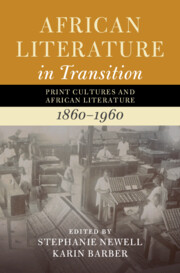
This book offers a compelling vision of the dynamism of local printing presses across colonial Africa and the new textual forms they generated. It invites a reconceptualisation of African literature as a field by revealing the profusion of local, innovative textual production that surrounded and preceded canonical European-language literary traditions. Bringing together examples of print production in African, Europea and Arabic languages, it explores their interactions as well as their divergent audiences. It is grounded in the material world of local presses, printers, publishers, writers and readers, but also traces wider networks of exchange as some texts travelled to distant places. African print culture is an emerging field of great vitality, and contributors to this volume are among those who have inspired its development. This volume moves the subject forward onto new ground, and invites literary scholars, historians and anthropologists to contribute to the on-going collaborative effort to explore it.
This essay explores the evolution of the discourse of leadership in pre-imperial (pre-221 bc) China. I show how the formation of the ideology of monarchism during the formative age of traditional Chinese culture was accompanied by subtle bifurcation between the concept of the ruler and that of the leader. Chinese intellectuals of what is often dubbed the age of the Hundred Schools of Thought agreed that the monarch should possess absolute power, but they had carefully shaped the monarch’s image in the way that allowed much leverage to the members of their own stratum. A subtle and yet well-pronounced bifurcation between political leadership of the monarch and the moral and intellectual leadership of an outstanding minister or an aspiring minister remained one of the major features of Chinese political thought and political culture for millennia to come.
Chapter 6 shows that Russian hawks entered the regime’s market for ideology in the years 2005–12. Transactional relations were established between modernist conservatives and the ruling party, whereby the former’s ideological discourse was sponsored as a strategic resource for the regime’s legitimation against oppositional forces and for its distinction against the Western model of liberal democracy. In 2012, the creation of the Izborskii Klub provided institutional form to this interelite network aimed at gaining policy influence over more liberal-inclined elite networks.
Chapter 4 shows how the Russian hawks’ ideas moved from the fringes to the center of the public sphere in the early 2000s. It investigates the 2001–02 controversy that surrounded the publication of a novel written by one of the most radical conservative ideologues, Aleksandr Prokhanov. It demonstrates that the controversy reconfigured the formerly consensual distinction between legitimate and transgressive public discourse. It explains that the intellectual legitimation of Prokhanov thrived on Russia’s political and intellectual elites’ backlash against the legacy of the 1990s and the standards of Western liberalism. The controversy eventually contributed to normalizing modernist conservatism, which gained a new audience among the younger generation of intellectuals.
Chapter 5 demonstrates that in the years 2000–05 a new generation of Russian hawks born around the 1970s, the “Young Conservatives,” acquired a reputation as professional media intellectuals and developed a new type of collective ideological entrepreneurship. They naturalized modernist conservatism’s eclectic blend of concepts into a full-fledged ideology, “dynamic conservatism.” Moreover, they established themselves as a legitimate stratum of Russia’s intellectual elites contributing public policy recommendations.
Expo 70 in Osaka was a watershed, in the histories of post-war Japan and of exhibitions. Following the Tokyo Olympics, it substantiated Japan’s reemergence on the international stage of the Cold War world. In time, it also proved a turning point from the productionism of the immediate post-war years to the consumerism of the 1970s and 1980s. Most significant, it confirmed the Japanese state’s embrace of mega-events as a way of implementing the national planning regime, and thereby canalizing development. This chapter explores Expo 70 in detail, situating it in both the post-war reemergence of international exhibitions around the world and the benefits and costs of high economic growth in Japan. It shows how the Expo became a magnet, for intellectuals and creatives, both for and against, and for visitors, who flocked in greater numbers than for any expo before. It also explores in detail how the expo became a media event. Newspapers and TV attested to the implacable but manifold nature of development, which was evident in the ability of the Expo to conjure infrastructure and catalyse demand, even while it accommodated a fractured world, teeming crowds, and intransigent protest.
Spain’s greatest modern philosopher, José Ortega y Gasset (1883-1955), wrote about many aspects of education including its aims; the education of children, nations, and elites; types of pedagogy; the reform of the university; and the challenges facing educators in an era of “triumphant plebeianism.” The article examines all aspects of Ortega’s educational thought, with a particular focus on his ideas about elites and their education, drawing on writings unavailable in English, including texts not published during his lifetime. At the heart of his writing is a vision of the qualities needed to enable individuals to make what he called a “project” out of their lives along with a powerful advocacy of the non-utilitarian and Socratic pedagogies that would help achieve that vision. The article looks at the balance of radical and conservative elements within Ortega’s educational thought and its relation to earlier “progressive” thinkers, and concludes with an evaluation of his legacy.
Qin imperial unification in 221 bce is often conceived of as the ‘unification of China’. Although from the long-term perspective of Chinese history this view is surely valid, it obscures some of the major trends of the Warring States period (453–221 bce). Back then, the Zhou (‘Chinese’) world was moving in the direction of the internal consolidation of large territorial states amid increasing political and cultural separation from their neighbours. This process unmistakably recalls similar developments in early modern Europe, where, as is well known, these resulted in the formation of nation-states. In China, by contrast, the development trajectory was markedly different. The potential transformation of the competing Warring States into fully fledged separate entities never materialized. The unified empire was eventually accepted as the sole legitimate solution to political turmoil, whereas individual states were denied the right to exist. Why, despite strong parallels, did the Chinese development trajectory ultimately diverge so conspicuously from what happened in modern Europe?
In search of an answer, this article focuses on the extraordinary role played by politically active intellectuals of the Warring States period. By prioritizing the common good of ‘All-under-Heaven’ over that of an individual polity, by denigrating local identities, and by rejecting the legitimacy of regional states, these intellectuals paved the way for the political unification of the Zhou world long before it occurred. This article addresses the idealistic and egoistic reasons for this choice and explores the cosmopolitan undertones of the universalist outlook of the Warring States-period intellectuals.
Dominant historiography in Singapore celebrates Sinnathamby Rajaratnam as one of the city-state’s founding national fathers, and the intellectual superintendent of state-sponsored multiculturalism in what has been characterized as an ‘illiberal democracy’. Little attention, however, has been paid to the extensive periods of Rajaratnam’s life in which he was not in governance with the People’s Action Party, and thus had considerable intellectual autonomy. This article examines the first of these periods—his sojourn in London from 1935 to 1947—marked by connections with overlapping communities of anti-colonial intellectuals drawn from Africa, the Caribbean, and East and South Asia. Close reading of Rajaratnam’s London lifeworld, his published fiction and journalism, and the many annotations he made in the books he read reveals a very different intellectual history than the one that we think we know, and allows us to better understand his lifelong uneasiness with capitalism and racial governmentality. Re-reading Rajaratnam as an autonomous intellectual disembeds his early intellectual life from the story of the developmental state, enabling a focus on the role of affect and form in his writing. The process also offers new insights into Singapore today, where the legacies of state-sponsored multiculturalism are increasingly challenged, and where citizens, residents, and migrants seek new forms of solidarity in and across difference.
Although the earliest political text from early China, namely the Canon of Documents, comprises speeches attributed to ancient kings, for most of the Eastern Zhou period (770–255 BCE) monarchs remained conspicuously silent. This article surveys the instances of the rulers’ speeches in major historical collections and a sample of philosophical texts from the Warring States period. I demonstrate that the rulers’ voice in these texts is overwhelmingly confined to short questions, approval of proposed policies, or other insignificant uttering. I argue that this silence was deliberately built into the texts by their composers, so as to preserve the intellectual authority in the hands of the educated elite. It was only with the imperial unification of 221 BCE and the dramatic change in the balance of power between the emperors and the intellectuals that the royal speech regained its prominence and political importance.
Spain’s greatest modern philosopher, José Ortega y Gasset (1883-1955), wrote about many aspects of education including its aims; the education of children, nations, and elites; types of pedagogy; the reform of the university; and the challenges facing educators in an era of “triumphant plebeianism.” The article examines all aspects of Ortega’s educational thought, with a particular focus on his ideas about elites and their education, drawing on writings unavailable in English, including texts not published during his lifetime. At the heart of his writing is a vision of the qualities needed to enable individuals to make what he called a “project” out of their lives along with a powerful advocacy of the non-utilitarian and Socratic pedagogies that would help achieve that vision. The article looks at the balance of radical and conservative elements within Ortega’s educational thought and its relation to earlier “progressive” thinkers, and concludes with an evaluation of his legacy.
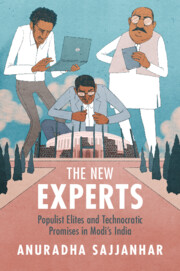
If right-populists have had enough of establishment experts, how do they replace them, with whom, and to what effect? Presenting the first in-depth analysis of India's new intellectual elite in the wake of a Hindu supremacist government, The New Experts investigates the power of appointed experts in normalising ideologies of governance, beyond party rhetoric. The New Experts presents an accessible narrative of how and why particular ideas gain prominence in elite policy and political discourse. Drawing on in-depth interviews and ethnographic research with national and international policy makers, politicians, bureaucrats, consultants, and journalists, this book analyses how political leaders in India strategically use modes of populist spectacle and established technocratic institutions to produce shared visions of glorified technological and hyper-nationalist futures. This title is part of the Flip it Open Programme and may also be available open access. Check our website Cambridge Core for details.
The reformist religious intellectuals of the 1990s and the 2000s sought to articulate a new jurisprudence that drew inspiration from dynamic, reason-centered ijtihad. The characteristics of the new, reconstituted fiqh were meant to include a comprehensive research program of reformism, deconstruction of commonplace understanding of religion and religion hermeneutic, and reexamining religious experiences and expectations. It was also meant to historicize religion and reimagine jurisprudence through the application of secular and scientific tools and methods. The project’s spectacular failure, slowly made clear about a decade after its zenith in the mid-2000s, owed much to the right’s merciless and multipronged onslaught. But that failure – more accurately, its violent obstruction – did not come until after the project of deconstructing hermeneutics and ijtihad had been taken to their logical extension, namely efforts to construct a sustained theory of Islamic democracy.
The Introduction turns to Terry Eagleton’s comment on reading Naipaul (“Great art, dreadful politics”) and asks how critics have addressed this quandary about a great writer. It looks at the critical essays on Naipaul by Homi Bhabha, Edward Said, and Sara Suleri in particular to examine how Naipaul’s works challenge the idea of “postcolonial arrival.” The overall thesis of the book is summed up as a reading in which an author “reads us.” To undertake this project, the work is grounded in a systematic examination of all of the author’s published and unpublished works, the secondary bibliography, and material deposited in the Naipaul Archive, McFarlin Library, University of Tulsa. To make a case for Naipaul’s place in global literary culture, there are four key impulses that govern the book. They are: history, aesthetics, textual engagement, and archival knowledge. To give meaning to that achievement, this book is written with thematic unities in mind. Although chronology is not totally dispensed with, the chapters are structured with the aim of establishing connections within Naipaul’s heterogeneous corpus. But for that interconnectedness to succeed, Naipaul followed an uncompromising commitment to writing as an aesthetic endeavour, uninhibited by fashion or ideology.
The Classical Greek sophists – Protagoras, Gorgias, Prodicus, Hippias, and Antiphon, among others – are some of the most important figures in the flourishing of linguistic, historical, and philosophical reflection at the time of Socrates. They are also some of the most controversial: what makes the sophists distinctive, and what they contributed to fifth-century intellectual culture, has been hotly debated since the time of Plato. They have often been derided as reactionaries, relativists or cynically superficial thinkers, or as mere opportunists, making money from wealthy democrats eager for public repute. This volume takes a fresh perspective on the sophists – who really counted as one; how distinctive they were; and what kind of sense later thinkers made of them. In three sections, contributors address the sophists' predecessors and historical and professional context; their major intellectual themes, including language, ethics, society, and religion; and their reception from the fourth century BCE to modernity.