To save content items to your account,
please confirm that you agree to abide by our usage policies.
If this is the first time you use this feature, you will be asked to authorise Cambridge Core to connect with your account.
Find out more about saving content to .
To save content items to your Kindle, first ensure no-reply@cambridge.org
is added to your Approved Personal Document E-mail List under your Personal Document Settings
on the Manage Your Content and Devices page of your Amazon account. Then enter the ‘name’ part
of your Kindle email address below.
Find out more about saving to your Kindle.
Note you can select to save to either the @free.kindle.com or @kindle.com variations.
‘@free.kindle.com’ emails are free but can only be saved to your device when it is connected to wi-fi.
‘@kindle.com’ emails can be delivered even when you are not connected to wi-fi, but note that service fees apply.
This book argues that in the antebellum US South, enslaved people developed their own emotional ideologies, styles and practices to refuse, resist and survive the institution of slavery. In response to the devastating experiences of sale and separation, enslaved people created their own affective value system to aid them in maintaining familial relationships in the face of enslavers’ attempts to decimate them. The Epilogue emphasises that racialised ideologies surrounding Black emotion and white people’s attempts to restrict Black people’s emotional expressions have not ended, evidenced by the epidemic of violence against Black Americans in the twenty-first century. In resistance to such violence, activists centre emotions such as rage, anger and joy within their protest movements. African Americans’ investment in their own understandings and expressions of joy, love, hope, anger and grief in their resistance strategies ultimately has roots in enslaved people’s responses to the violence they had to endure.
Happiness is a complex concept that has been intensively researched from many perspectives, but the linguistic aspects of this phenomenon are still under-researched. Using corpus-based analysis of semantically similar words (word embedding), the author studies lexical units denoting happiness and joy in three West Slavic languages (Polish, Czech, Slovak) and compares them with the corresponding lexical units in English. The results show that despite the mutual linguistic and non-linguistic ties, the Polish, Czech and Slovak understanding of happiness exhibits not only similarities (e.g. the relationship between happiness and joy and the outward orientation of joy) but also significant differences (e.g. the different value of the component ‘luck’ in happiness, a different relationship between joy, sadness and fear, and cross-cultural differences related to religion). The results also highlight similarities and differences between West Slavic languages and English. In addition to this, the study tests the advantages and limitations of the word-embedding analysis for the analysis of concepts and their culturally specific features. The author believes that the method is useful because it offers new insights into the analysed data, but it also requires human oversight and careful interpretation.
This chapter considers what kind of utopian articulations can be glimpsed in contemporary British experimental poetry. Three experimental poets writing in the 2010s are analysed in detail: Sean Bonney, Verity Spott, and Callie Gardner. The chapter situates these poets within the British experimental poetry scene, tracing an ecosystem of small-scale independent publishing. DIY poetry magazines such as Zarf (produced in Cardiff, Leeds, and Glasgow) and presses such as the87press, Aquifer, DATABLEED, Sad Press, and many others operated outside of formalised spheres of paid labour. In the 2010s, communities of British poets, publishers, audiences, and readers sustained themselves through a non-commercial ethos of gift exchange. This ethos was explicitly utopian in its attempt to construct an alternative to capitalism through non-alienated economic and social structures. Whilst Herbert Marcuse’s utopian theorisation of the 1960s counterculture feels relevant to this moment in the British experimental poetry scene, the chapter explores how many of these poets expressed scepticism about the form’s inherent political potential. For them, politics, rather than aesthetics, contained the germs of utopian possibility. Their experimental works offer precursors to a futurity that is not yet here, but the arrival of which is necessary for the survival of progressive politics.
Chapter 4 brings together the works of French poet and lyricist Guillaume de Machaut with those of bilingual English poet John Gower, as well as some of Geoffrey Chaucer’s lyrics. These authors take part in the ‘intellectualisation’ of love poetry that sees the language of phantasmatic love’s joy be confronted with that of Boethian happiness and sufficiency. This confrontation, I argue, demonstrates the incompatibility of love’s joy with happiness: the latter is a form of self-mastery whereas the former fragments the subject in self-delusion. This chapter also traces the transmission of the French language of joie d’amour into Middle English and its relationship with the native blisse, which I show to be at the convergence between philosophical, mystical and erotic languages of love. While Gower foregoes the native blisse, Chaucer’s lyrics bring the languages of joie and bliss together to build a new form of love’s joy as the consummation of desire and an escape from earthly temporality.
This book on the language of love’s joy starts with the acknowledgement that such a language has repeatedly been expressed as impossible. The poetic and vernacular tradition of joie d’amour originates in the lyrics of the troubadours, which famously sing the absence of fulfilment in the endless prolongation of desire: it is thus born in a lyrical language that presupposes its impossibility. This study on the language of love’s joy is thus grounded in the paradox that love’s joy is beyond language. The elusive nature of the emotion has resulted in a lack of studies on love’s joy. If there is an important scholarly tradition on the semantics of Old Occitan joi, this critical interest has been confined to the French literature of the twelfth and thirteenth centuries and has not been picked up by the field of emotion history nor by more recent studies on medieval love literature.
The book concludes with a reflection on one of the main features of the joy of love, its unreality: joy is or feels like it is out of this world. For many of the authors surveyed in this book, joy’s unreality does not suggest its naivety or foolishness but its very power to bridge phantasm and reality, the transcendent and the immanent. The conclusion opens up onto the European Renaissance: while the language of phantasmatic love’s joy is taken up by Petrarchist poetry, it is in seventeenth-century metaphysical poetry that is found the continuation of a language of love’s joy as the arresting and expansion of the present moment. John Donne and Thomas Traherne write of a joy that is here and now yet experienced as an everywhere, they write of its power to bring us out of ourselves and to reveal the transcendent within human love.
Chapter 5 is a study of Troilus and Criseyde, a poem that showcases Chaucer’s transformation of the language of blisse into that of erotic and transcendent joy. Chaucer constructs a new language of love’s joy indebted to the French and Italian traditions while at the same time shaped around an innovative semantics of love’s blisse. This language, crucially, constructs itself in opposition to philosophical felicity: in quasi-apophatic discourse, the poem expresses the ‘passing’ quality of the lovers’ joy, which exists beyond the conceptual language of philosophical happiness. This last chapter focuses on the writing of love’s joy within tragedy: the bliss of love is what it is because of its precarity, because it is surrounded by death. But if Chaucer’s Troilus and Criseyde offers an exceptionally memorable scene of joy, it is because of its use of a transcendent language of bliss that arrests, albeit briefly, the passage of time.
Joy in literature and culture remains a little-studied subject, one sometimes even viewed with suspicion. Here, Lucie Kaempfer reveals its place at the crux of medieval discourses on love across the philosophical, spiritual and secular realms. Taking a European and multilingual perspective stretching from the twelfth century to the metaphysical poets of the seventeenth, she tells a comparative literary history of the writing of love's actual or imagined fulfilment in medieval Europe. Kaempfer attends to the paradox of the endlessness of desire and the impossibility of fulfilment, showing the language of joy to be one of transcendence, both of language and of the self. Identifying, through close analysis of many arresting examples, a range of its key features – its inherent lyricism, its ability to halt or escape linear narrative, its opposition to self-sufficient happiness – she uncovers a figurative and poetic language of love's joy that still speaks to us today.
The 10-item Attunement with Exercise Scale (AwE; Calogero et al., 2024) assesses the extent to which a person’s physical activity experiences reflect joy and connection with their body and safety during exercise. The AwE can be administered online and/or in-person to adolescents and/or adults and is free to use in any setting. This chapter first discusses the development of the AwE and then provides evidence of its psychometrics. More specifically, the AwE has been found to have a 3-factor structure within exploratory and confirmatory factor analyses and has demonstrated invariance between women and men. Internal consistency reliability, test-retest reliability, convergent validity, discriminant validity, and incremental validity support the use of the AwE. Next, this chapter provides the AwE items in their entirety, instructions for administering the AwE to participants, the item response scale, and the scoring procedure. Logistics of use, such as permissions, copyright, and contact information, are provided for readers.
Generosity and gratitude are prime examples of gracious traits – traits of concern for the other for the other’s sake. They are virtues of direct caring. They are complementary dispositions, readying their possessors to occupy reciprocal roles in gracious transactions. Their grammar contrasts with that of virtues of requirement such as justice and the sense of duty. Gratitude and justice both involve debt and obligation, but in different senses of ‘debt’ and ‘obligation.’ Certain cases of genuine gratitude in which the subject doesn’t believe the reason for his gratitude confirm the superiority of the view of emotions as concern-based construals over judgment theories. The concepts of gratitude and generosity specify, in their grammar, reasons that are internal to (definitive of) gratitude or generosity, but they can also be incited by reasons that don’t belong to their grammar, as long as such external reasons can trigger internal ones.
Chapter 5 explores the effects of identity strategies. In this chapter, an intersectional approach illuminates the parameters of identity and affect that define the universal citizen. The chapter argues that when activists embody identity strategies in public events, activists politicize the terms of personhood and citizenship, giving rights a specific, embodied form. The chapter first examines Free Gender’s deployment of their strategy of commensurability during their participation in memorial services for deceased lesbians. It shows how memorial services are a moment when members of the organization can provide support to the deceased’s family, the local community, and each other. By embodying the confluence of the identities of lesbian, African, and community member during this community activity, the organization challenges dominant notions of who is entitled to the right to live free of violence. The chapter then examines La Fulana’s participation in the annual Pride march in Buenos Aires. The deployment of lesbian visibility challenges the gendered and heteronormative parameters of the ideal citizen through lesbians’ embodied enjoyment and pleasure in public activity. The chapter concludes by considering the importance of embodiment and emotional context to the successful deployment of identity strategies.
This chapter invites readers to engage in a daily morning dance practice, highlighting the numerous physical, mental, and emotional benefits of dancing. It suggests a curated playlist of diverse music genres, spanning the last hundred years, to accompany this practice. The author encourages readers to personalize their dance experience, emphasizing the importance of enjoyment and positive emotions. By promoting a shared experience of dancing, the chapter aims to foster a sense of community and well-being, ultimately demonstrating how music can invigorate and uplift our daily lives.
This chapter explores the powerful role of music in regulating emotions and enhancing well-being. It delves into the science of how music affects our mood, highlighting its ability to evoke specific emotions and induce physiological changes. The author provides practical strategies for utilizing music as ’emotional first aid’, helping individuals cope with stress, anxiety, and negative emotions. The chapter also discusses the importance of self-regulation and offers guidance on using music to interrupt negative emotional spirals. It emphasizes the significance of creating personalized playlists tailored to specific emotional needs, promoting a proactive approach to emotional well-being through music. Additionally, the chapter explores the concept of ’mood repair’, showcasing how music can shift our emotional state from negative to positive. It provides insights into the diverse ways individuals can harness the power of music to cultivate joy, resilience, and overall emotional balance.
Opening the mind to paradoxes and paradoxical thinking requires a malleable and plastic brain. The brain can be influenced by various factors, such as rehabilitation, physical exercise, and noninvasive transcranial brain stimulation; combining these interventions can have a synergistic impact on inducing neuroplasticity. The Feldenkrais approach uses atypical yet gentle and mindful sets of movements to expand the range of motion in a balanced way. This is done through augmenting neuroplasticity and new neuronal pathways related to the new movements. The Feldenkrais approach is used for enhancing the neuroplasticity and, consequently, creativity of an individual’s mind. It was also found that creating metaphors activates parts of brain that involve flexible imagination. In research metaphors were used to spark divergent thinking. The subjects of a study encompassing global creative people, above all, enjoyed discovering and innovating. When asked to choose from a list of what life experience delivers the most pleasure, the answer most frequently chosen was “designing or discovering something new.” They simply enjoy discovering and creating above all else. Joy plays a key role in boosting creativity. The influence of dancing on enhancing the brain’s structural and functional capacities has been documented in several studies.
The Lost Sheep parable’s straying sheep are comparable to Joseph when he wandered in the wilderness in search of his brothers, who treated him badly. Although Joseph later acted on his own vengeful feelings against the brothers, joyful reconciliation ensued, the positive moment being reflected in the parable. The Lost Coin parable puzzlingly associates a woman’s joy at finding a lost coin in her home with a call for repentance for sin. Evoked are developments in the Judah and Tamar story that include questionable behavior on both their parts and resulted in the birth of Perez, ancestor of Jesus.
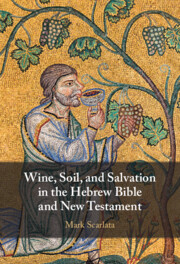
Biblical authors used wine as a potent symbol and metaphor of material blessing and salvation, as well as a sign of judgement. In this volume, Mark Scarlata provides a biblical theology of wine through exploration of texts in the Hebrew Bible, later Jewish writings, and the New Testament. He shows how, from the beginnings of creation and the story of Noah, wine is intimately connected to soil, humanity, and harmony between humans and the natural world. In the Prophets, wine functions both as a symbol of blessing and judgement through the metaphor of the cup of salvation and the cup of wrath. In other scriptures, wine is associated with wisdom, joy, love, celebration, and the expectations of the coming Messiah. In the New Testament wine becomes a critical sign for the presence of God's kingdom on earth and a symbol of Christian unity and life through the eucharistic cup. Scarlata's study also explores the connections between the biblical and modern worlds regarding ecology and technology, and why wine remains an important sign of salvation for humanity today.
This article relates Chesterton’s theology, and that of other theologians, to existing theories of humor. It asks: With regard to the understanding of humor, what is offered by a theological perspective—especially by Chesterton’s theology—that cannot be supplied by philosophical and psychological theories? The article situates Chesterton’s work in relation to three theories of humor: the superiority theory, the release theory, and the incongruity theory. It then examines two important relationships: first, that between humor, worship, and joy; then, that between humor, cognition, and theology. While focusing on Chesterton’s writing, it also considers relevant aspects of the work of other thinkers, including Ian Ker, Duncan Reyburn, Thomas Aquinas, Søren Kierkegaard, Reinhold Niebuhr, Karl Rahner, Peter Berger, Ingvild Sælid Gilhus, Terry Lindvall, and Brian Edgar. The article concludes by suggesting the beginnings of an outline of a theology of humor.
A Feeling and Body Investigator would be incomplete without in-depth explorations of joyous sensations. We explore what it feels like to be so filled with energy that you cannot sit still (Ernie the Energy Ball) or when you have so much music in your heart that you have to dance around (Dancing Darrin). We investigate moments when you are so filled with joy that you feel your heart might burst out of your chest (Bursting Bella), or when you are laughing so hard that your side hurts (Lulu the Laughing Pain). In this session we move. We dance. We giggle. We explore ways to take these joyous sensations and share them and make them even bigger.
The Coda returns to the example with which the book begins: the story about the gentleman caller and the naked lady in the bathroom told by the character Fabienne in Truffaut’s film Stolen Kisses (1968). The aim of the Coda is to revisit key aspects of the theory and history of tact developed in the course of the book, and to draw its findings to a close.
Today we can barely understand why millions were swept along by the mass National Socialist gatherings and euphorically idolised their ‘Führer’. This chapter shows how after defeat in the Second World War, the time for waves of national enthusiasm seemed to be over, to be replaced by political sobriety. It was only in 1954, when the Federal Republic’s national football team unexpectedly won the FIFA World Cup, that the Germans, now divided, were united in cheers of joyful celebration once again. The ‘miracle of Bern’ was followed in the West by the economic miracle, which provided West Germans with growing wages and a previously unimaginable ability to purchase consumer goods. Meanwhile, the GDR was trying in vain to awaken its citizens’ enthusiasm for socialism. When the Berlin Wall fell in 1989, East and West Germans celebrated together in pure collective joy that was felt around the world. But most people show joy primarily in private and value ‘small happiness’ with family or among friends, and that has also to do with the experience of how often enthusiasm has been politically manipulated and instrumentalized throughout the twentieth century.