To save content items to your account,
please confirm that you agree to abide by our usage policies.
If this is the first time you use this feature, you will be asked to authorise Cambridge Core to connect with your account.
Find out more about saving content to .
To save content items to your Kindle, first ensure no-reply@cambridge.org
is added to your Approved Personal Document E-mail List under your Personal Document Settings
on the Manage Your Content and Devices page of your Amazon account. Then enter the ‘name’ part
of your Kindle email address below.
Find out more about saving to your Kindle.
Note you can select to save to either the @free.kindle.com or @kindle.com variations.
‘@free.kindle.com’ emails are free but can only be saved to your device when it is connected to wi-fi.
‘@kindle.com’ emails can be delivered even when you are not connected to wi-fi, but note that service fees apply.
The ‘logic’ of charity in modern Britain has been understood as ‘complex’ and ‘varied’: ‘a loose and baggy monster’. Charity after Empire takes this complexity as the basis for a new interpretation. First, the indeterminacy of the role and function of charity lay behind its popularity and growth. With no fixed notions of what they should be or what they should do, charities and NGOs have expanded because they have been many things to many people. Second, the messy practices of aid meant success could always be claimed amidst uncertain objectives and outcomes, triggering further expansion. Third, just as charity was welcomed as a solution to poverty overseas, its scope and potential were contained by powerful political actors who restricted its campaigning and advocacy work. Fourth, racial injustice, especially apartheid, shaped not only humanitarianism overseas but also the domestic governance of charity in Britain. It all resulted not only in the massive expansion of charity but also limitations placed on its role and remit.
The government of the Communist Party of China (CPC) rolled out a national policy to contract out social and welfare services to non-governmental organizations (NGOs) in 2013. This study explores how government contracting of services affects NGOs. We examine three areas: marketization, financial dependency, and autonomy. We find significant convergence of the effects of contracting on NGOs in China with NGOs’ experiences in liberal democratic countries, despite divergent political regimes. Found effects are explained by the combination of the authoritarian government of the CPC with the neoliberal governance structures introduced by contracting. Convergence with international experience despite divergent political regimes is attributed to the neoliberal essence of the policy of contracting of services.
Governments depend on nonprofit, voluntary sector organisations to deliver social and community services, and public funding is the sector’s most important income source. However, in many countries, public funding for social services is becoming more limited, conditional and precarious, and governments are encouraging nonprofits to diversify their funding base, and shift their reliance to income from market activity and private donations. This article is concerned with access to philanthropic and commercial funding among nonprofits, and the factors affecting it. It firstly discusses an emerging policy agenda to promote private funding among nonprofit community service providers. Then, multivariate analysis of survey data from 521 Australian nonprofits shows which organisations access income from client fees, business activities, community fundraising, and philanthropic foundations. By exploring inequalities in the distribution of these main sources of private funding, the article helps identify the types of organisations that face challenges in establishing and sustaining streams of private income, and which are likely to require ongoing public support.
Welfare is the largest expenditure category in all advanced democracies. Consequently, much literature has studied partisan effects on total and policy‐specific welfare expenditure. Yet, these results cannot be trusted: the methodological standard is to apply time‐series cross‐section regressions to annual observation data. But governments hardly change annually. Thus, the number of observations is artificially inflated, leading to incorrect estimates. While this problem has recently been acknowledged, it has not been convincingly resolved. This article proposes mixed‐effects models (also known as ‘multilevel models’ or ‘hierarchical models’) as a solution, which allows decomposing variance into different levels and permits complex cross‐classification data structures. It is argued that mixed‐effects models combine the strengths of existing methodological approaches while alleviating their weaknesses. Empirically, partisan effects on total and on disaggregated expenditure in 23 OECD countries in the period 1960–2012 are studied using several measures of party preferences and revealing several substantially relevant findings.
This article compares trust, political activeness, and associational participation of lower secondary students in 22 countries all over the world representing different political and welfare regimes. The analyses are based on the ICCS 2009 survey. Comparison between the countries shows that the level of trust and political activeness/level of association participation of 8th graders correlate negatively with each other whereas in adult populations the correlation is positive. The level of political and associational activeness was highest in the Dominican Republic, Thailand and Paraguay, and the lowest in Finland, Taiwan, Sweden, and Denmark. Moreover, young people in the Nordic countries are less interested in political and societal issues even though the level of their civic knowledge is highest of all the countries. Nordic 8th graders have a very high level of trust in other people and in institutions. Differences in the level and type of welfare state (especially the level of children’s welfare and their educational rights) are probably the most important social factors in the explanation of national differences. High level of child welfare tends to increase the level of 8th graders’ trust but decrease their association activeness. Bourdieu’s theoretical repertoire (especially the concept of the causality of the probable) was adopted in the interpretation of the differences in trust and political cum associational activeness between countries included in the analysis.
Research on differences between public, for-profit, and nonprofit providers of welfare services has provided mixed findings, depending on welfare state arrangement, regulation, and service area. This paper’s objective is to study the differences between public, nonprofit (cooperatives and other nonprofits), and for-profit welfare providers from the perspective of the users in the tightly regulated Scandinavian context. We ask how the users perceive the providers from different sectors differently and how this variation can be explained. The study relies on a large-scale survey carried out in 2015 in the city of Oslo, Norway. From the survey, we identify the two main results. First, despite limited differences, users of nonprofit kindergartens are generally more satisfied than users of for-profit and public kindergartens. Second, an important explanation for variations in user satisfaction among kindergartens is identified in a pocket of regulatory leniency: the quality of food service. This is the only expense that varies among kindergartens in Norway. These results indicate that more lenient regulations could potentially increase provider distinctiveness. Based on the existing literature, we discuss why nonprofit providers seem to fare better in the minds of users than public and for-profit providers.
Why did charity become the outlet for global compassion? Charity After Empire traces the history of humanitarian agencies such as Oxfam, Save the Children and Christian Aid. It shows how they obtained a permanent presence in the alleviation of global poverty, why they were supported by the public and how they were embraced by governments in Britain and across Africa. Through several fascinating life stories and illuminating case studies across the UK and in countries such as Botswana, Zimbabwe and Kenya, Hilton explains how the racial politics of Southern Africa shaped not only the history of international aid but also the meaning of charity and its role in the alleviation of poverty both at home and abroad. In doing so, he makes a powerful case for the importance of charity in the shaping of modern Britain over the extended decades of decolonization in the latter half of the twentieth century.
In this paper, we develop a model economy to study how financial innovations affect financial access and inequality. Financial innovations alter distribution of costs. In this way, the measure of buyers is endogenous regarding the payment method. In studying financial innovations in an economy with limited commitment, it is possible to bridge two existing literatures. When comparing stationary equilibria, we find that the results depend on the scarcity of collateral. Moreover, the expected welfare and inequality are affected by consumers access to the form of payment systems.
This paper investigates the welfare implications of the rise of shadow banking in China, driven by regulatory arbitrage and implicit guarantees. Although shadow banking can improve social welfare by relaxing constraints on banks’ capacity to expand credit, it may also hurt social welfare due to the risk-taking behavior induced by implicit guarantees. We study the optimal level of guarantees and shadow banking in a model that balances these benefits and costs. Our findings suggest that reducing the existing degree of guarantees and shrinking the shadow banking sector could enhance social welfare in China.
How did populist governments handle the COVID-19 pandemic? Did they act as erratic, irrational and unsound – in short: ‘populist’ – as observers expected them to do? Through which social policies did they respond to the hardships caused by the pandemic? And, what does populist governance explain about these governments’ social policies? This article explores these questions through a comparative analysis of a diverse set of six populist governments. We first conceptualize, operationalize and measure populist governance by constructing a novel Populist Governance Index. Second, we describe and measure governments’ welfare policies through a novel Social Policy Response Index. Third, we relate social policy responses to variations in populist governance across countries. Our mixed-method study suggests that populism explains the politics rather than the policies of populist governments. We conclude that this is the case because populism fundamentally defines a mode of governance rather than policy content
This chapter justifies the book’s moral foundation, rooted in sentientism. Sentience, understood as the ability to feel, is interpreted as the capacity for welfare. The chapter also identifies the species possessing this ability and, therefore, belonging to the moral community.
Centring on key state functions of protection and the promotion of the economic and social well-being of its citizens, the welfare state describes a range of functions related to state intervention aimed at reducing the risk of market failure, ensuring a decent living standard and a certain degree of equality and intergenerational distribution. The welfare state thus often plays a central role in relation to essential issues of people’s daily lives such as housing, employment, income security, health and education. Nevertheless, despite some initial explorations of the relevance of perspectives grounded in sustainability transitions for understanding processes of change and innovation in welfare states, the question of welfare remains a neglected area in transition studies and, until recently, in environmental studies more broadly. Yet the welfare state can both be used to enable and hardwire social protection into transitions to protect ‘stranded workers’ and also have a key role to play, and be heavily impacted by, the social costs and adjustments brought about by the disruptions and dislocations that transitions inevitably bring in their wake. The chapter concludes with a discussion of what ‘sustainable welfare’ might look like as part of a transformation of the welfare state.
This study addresses the urgent need for low-carbon energy transition (LCET) in the Global South, where vulnerability to climate change is high and most countries have ratified the Paris Agreement and Nationally Determined Contributions. It emphasizes the importance of research in supporting this transition, particularly through the lens of digital technologies. Despite its relevance, existing studies on the topic remain limited and fragmented. This study reviews the literature on digital infrastructure in LCET, identifies key gaps and ambiguities and offers insights to inform future research and policymaking in the Global South.
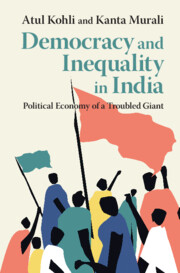
This chapter provides an introduction to the book. It sets the stage by highlighting contrasts in India’s economy, democracy, and society. It then discusses the main topics covered in the book – democracy and governance, growth and distribution, caste, labor, gender, civil society, regional diversity, and foreign policy. The chapter also outlines the three themes that comprise the main arguments of the book. First, India’s democracy has been under considerable strain over the last decade. Second, growing economic inequalities that accompanied India’s high-growth phase over the last three and a half decades are associated with the country’s democratic decline. Third, society has reacted to changes from below but there are limits to societal activism in contemporary India.
Chapter 2 discusses how India’s rulers have used state power to promote economic development, both growth and its distribution. While India’s growth record is relatively impressive, it is also the case that this growth has not been accompanied by the creation of well-paying jobs, and economic inequality in India has increased sharply.
Contemporary India provides a giant and complex panorama that deserves to be understood. Through in-depth analysis of democracy, economic growth and distribution, caste, labour, gender, and foreign policy, Atul Kohli and Kanta Murali provide a framework for understanding recent political and economic developments. They make three key arguments. Firstly, that India's well-established democracy is currently under considerable strain. Secondly, that the roots of this decline can be attributed to the growing inequalities accompanying growth since the 1990s. Growing inequalities led to the decline of the Congress party and the rise of the BJP under Narendra Modi. In turn, the BJP and its Hindu-nationalist affiliates have used state power to undermine democracy and to target Indian Muslims. Finally, they highlight how various social groups reacted to macro-level changes, although the results of their activism have not always been substantial. Essential reading for anyone wishing to understand democracy in India today.
Chapter 1, “‘We Are Not Immune’: A New Branch of the Feminist Women’s Health Movement,” begins by describing the emergence of a new coalition of feminists who turned their attention to the HIV epidemic in an attempt to understand how the virus would impact women. Together they realized that HIV was killing women more often than the those in charge of the AIDS response acknowledged. The failure to recognize and respond to issues facing women with HIV was due, in part, to the Centers for Disease Control and Prevention definition of AIDS that did not include gynecological infections. The incomplete definition of AIDS resulted in a lack of data on women with HIV and impacted the Social Security Administration’s determinations of who should receive benefits. Allying with lawyers and fellow activists, feminists set out to challenge the law and science of the epidemic.
Chapter 2, “Litigating Risk: The Law and Politics of Disease in the Administrative State,” turns to the litigation and activism that resulted in the shift in the Centers for Disease Control and Prevention definition of AIDS and turned attention to women’s risk of contracting HIV. The chapter tracks how litigation and advocacy were central to the shift in the CDC definition of AIDS. Feminist success would result in many more women being diagnosed with HIV, resulting in a greater ability to access benefits. This life-changing shift would mark a major victory for the feminist women’s health movement.
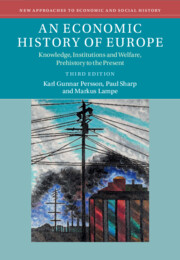
In this revised and updated edition, An Economic History of Europe re-establishes itself as the leading textbook on European economic history. With an expanded scope, from prehistory to the present, it will be invaluable source for students, educators and researchers seeking to better understand Europe's long-run economic development. The authors cover key themes including the rise of institutions, technological advancements, globalization, and the Industrial Revolution, with a fresh emphasis on the wider impact of economic policies on welfare reflecting a broader understanding of societal well-being. The chronological structure, clear explanations, case studies, and minimal use of complex mathematics make this an accessible approach that allows students to apply economic theories in historical practice. The new edition also connects historical development to urgent contemporary issues such as modern-day sustainability goals. This comprehensive guide provides students with both a historical narrative of Europe's economic transformation, and the essential tools for analysing it.
The Conclusion reflects on the long-term trajectory of welfare in Europe, highlighting the substantial increases in living standards that have occurred over the past centuries. It considers how technological and institutional developments have enabled sustained economic growth, while also acknowledging the environmental and social challenges that have emerged, particularly in the context of climate change. The Epilogue discusses the potential for future crises, including economic and environmental shocks, and whether Europe’s economic system is resilient enough to manage these challenges. The chapter concludes by emphasizing the importance of learning from historical experiences to address contemporary and future issues related to sustainability, inequality and economic development. By framing modern problems within the context of long-term economic history, the authors offer an optimistic yet cautious outlook on Europe’s ability to continue improving welfare in a sustainable manner.