To save content items to your account,
please confirm that you agree to abide by our usage policies.
If this is the first time you use this feature, you will be asked to authorise Cambridge Core to connect with your account.
Find out more about saving content to .
To save content items to your Kindle, first ensure no-reply@cambridge.org
is added to your Approved Personal Document E-mail List under your Personal Document Settings
on the Manage Your Content and Devices page of your Amazon account. Then enter the ‘name’ part
of your Kindle email address below.
Find out more about saving to your Kindle.
Note you can select to save to either the @free.kindle.com or @kindle.com variations.
‘@free.kindle.com’ emails are free but can only be saved to your device when it is connected to wi-fi.
‘@kindle.com’ emails can be delivered even when you are not connected to wi-fi, but note that service fees apply.
The problem of the existence of a universal structure omitting a finite set of forbidden substructures is reducible to the corresponding problem in the category of graphs with a vertex coloring by two colors. It is not known whether this problem reduces further to the category of ordinary graphs. It is also not known whether these problems are decidable.
Many classical statements of set theory are settled by the existence of generic elementary embeddings that are analogous the elementary embeddings posited by large cardinals. [2] The embeddings analogous to measurable cardinals are determined by uniform, κ-complete precipitous ideals on cardinals κ. Stronger embeddings, analogous to those originating from supercompact or huge cardinals are encoded by normal fine ideals on sets such as [κ]<λ or [κ]λ.
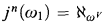
The embeddings generated from these ideals are limited in ways analogous to conventional large cardinals. Explicitly, if j: V → M is a generic elementary embedding with critical point κ and λ supnЄωjn(κ) and the forcing yielding j is λ-saturated then j“λ+ ∉ M. (See [2].)
Ideals that yield embeddings that are analogous to strongly compact cardinals have more puzzling behavior and the analogy is not as straightforward. Some natural ideal properties of this kind have been shown to be inconsistent:
Theorem 1 (Kunen). There is no ω2-saturated, countably complete uniform ideal on any cardinal in the interval [ℵω, ℵω).
Generic embeddings that arise from countably complete, ω2-saturated ideals have the property that sup . So the Kunen result is striking in that it apparently allows strong ideals to exist above the conventional large cardinal limitations. The main result of this paper is that it is consistent (relative to a huge cardinal) that such ideals exist.
The selection rules discussed in Sec. 3.5 forbid many kinds of transitions that are frequently observed or exploited. It must be remembered that these “rules” are based on the approximations of Sec. 3.2, but of course, those can be extended. Such expansions to higher orders of approximation may seem to be little more than a tedious exercise, but this chapter will show that the results are extremely important, because they cause qualitatively different kinds of transitions. Since they involve both the electric and magnetic components of the light, their atomic dipole moments will be identified with the superscript E and B for the remainder of this chapter. The magnetic dipole transitions, called M1, discussed in Sec. 4.2.1 that arise from extension of the electric dipole approximation encompass all of magnetic resonance, including atomic clocks, forced evaporative cooling in Bose–Einstein Condensation (BEC), MRI, and astrophysical processes such as generation of the all-important 21 cm radio frequency line. The electric quadrupole transitions, called E2, discussed in Sec. 4.2.2 describe myriad stellar spectral features as well as the vast majority of nuclear γ-ray transitions.
Even with these extensions there are many cases where the relaxation of the electric dipole (E1) selection rules to include M1 and E2 transitions as in Sec. 4.2 still do not account for observed processes. Thus other approximations have to be extended so that their limitations can be relaxed as well. Extension of the perturbation approximation (see Sec. 4.3.1) provides an analytical description of most of non-linear optics, including second harmonic generation, four wave mixing, Raman spectroscopy, and the fabled decay of the hydrogen 2S state.
A semi-classical description of the interaction between radiation and atoms can begin with a multipole expansion of the Hamiltonian. The lowest-order term is just from the point charges α located at, and vanishes for neutral atoms. The next-order term is the electric dipole interaction that arises from the non-isotropic distribution of charges induced by the electric field of the light. This term produces the electric dipole transitions (E1) that have been described in some detail in Chap. 3.
Many words and expressions are viewed as 'taboo', such as those used to describe sex, our bodies and their functions, and those used to insult other people. This 2006 book provides a fascinating insight into taboo language and its role in everyday life. It looks at the ways we use language to be polite or impolite, politically correct or offensive, depending on whether we are 'sweet-talking', 'straight-talking' or being deliberately rude. Using a range of colourful examples, it shows how we use language playfully and figuratively in order to swear, to insult, and also to be politically correct, and what our motivations are for doing so. It goes on to examine the differences between institutionalized censorship and the ways individuals censor their own language. Lively and revealing, Forbidden Words will fascinate anyone who is interested in how and why we use and avoid taboos in daily conversation.
Matsu in early times was not an immigrant society but rather a stopover or temporary place to live, with people coming and going in a constant state of flux. Lying beyond the reaches of state power, the islands were almost deserted, becoming a lawless place where “the strongest fist took everything.” The island society during this period was characterized by transience and brokenness. The history of Matsu in this period is reviewed.
In the spring of 1941, Landau gave an outline for a series called Forbidden Music to a B'nai B'rith lodge in Forest Hills, a well-to-do neighborhood in Queens. She thought her parents’ participation in the lodge in Halle and Leipzig might act as an entrée in New York. The series would be devoted to many of the Jewish composers she had researched and talked about before. But, without the pressure and constraints of Nazi Germany, the New York series would be entirely her own—at least initially. In its original conception, it was a continuation of past work on her own terms. And those terms included a new, more expansive aim: she wanted to shine a light on all music suppressed in Axis-controlled countries, not just Jewish music. Far from Germany, she was standing up again.
After one year, in early 1942, the lodge got back to her when they had a cancellation in their regular lineup of lecturers. The scheduled speaker, Abram Leon Sachar, was ill. Landau was contacted a week before the lecture. She knew immediately that the audience planning to attend would be large, given Sachar's stature. He was the author of A History of the Jews (1938) and Sufferance Is the Badge (1939) as well as the leader of the B'nai B'rith Hillel Foundation. And he would be appointed the inaugural president of Brandeis University (near Boston) in 1948.
Undaunted, Landau agreed to fill in. She had to hurry to prepare, quickly calling together “her artists” once again. Among them was soprano Mascha Benya, from Lithuania, who had regularly performed with Landau in Berlin and who had also made her way to the United States after Kristallnacht. Landau would introduce Benya with special flare as “the star of our Culture League opera in Berlin.” In the lecture the two would be “reunited.” At the piano Landau enlisted a recent acquaintance, Kurt Adler, from the Friendship House. The program was advertised in one paper under the heading “The Nazis Banned Them” with photos of Landau and Benya. The apparent draw was both the forbidden music and the forbidden artists—Landau included.
Although humans are omnivores, some potential foods are in practice unavailable, while others that are available, edible and nutritious are rejected or not even considered as food, food for humans that is. Among edible things treated as unfoods, some are rejected for reasons of taste, but will be eaten if necessary, in emergencies – they are famine foods – whereas others are forbidden as food. They are taboo. In this chapter I ask why it is that some social groups and communities impose food restrictions on their members, while others, the taboo against cannibalism excepted, do not. The Israelites of the Old Testament and beyond, and certain religious and philosophical groups within Greek and Roman pagan society, followed restrictive dietary rules, whereas Graeco-Roman society in general was ‘tolerant’ in this respect. Of course, food consumption is only one of the possible areas of restrictive regulation, and the range of prohibited practices will vary from society to society. As Freud observed, Greeks and Romans (as well as Jews) had their equivalents of the Polynesian taboo, in agos, sacer (compare the Jewish Kodaush), and taboo restrictions did penetrate to some extent their social, political and legal structures, as well as regulating sexual relations. But this did not happen on anything like the Jewish scale. Nor did Graeco-Roman societies lack altogether the concept of physiological pollution, the belief that contact with certain physical products or the performing of certain physical functions – including eating particular foods – might be dangerous for the society and the individual. The normal response among such communities, however, was to regulate the behaviour of only a few individuals with priestly functions.
This chapter investigates ‘forbidden’ knowledge, examining the structures and processes that impede the production of knowledge, and how such knowledge can threaten powerful interests mediated through institutions and sociopolitical and religious cultures. This can entail both formal and informal processes including self-censorship, peer review, internal university restrictions, and external sociopolitical restrictions. The chapter considers the construct of ‘forbidden’ knowledge, recognising it as more than gaps in knowledge, and also in terms of structural and sociopolitical processes, consolidating this knowledge as too dangerous or ‘taboo’ to produce. Drawing on empirical accounts of the daily lived experiences of academics operating within this terrain, four areas of forbidden knowledge – ‘bioethics, psychology, and genetics’; ‘Palestine’; ‘gender and sexuality; and ‘race, religion, security, and extremism’ are explored. In addition, questions of power, agency, positionality, and sociopolitical and historical contexts are critically elucidated.
In this chapter we extend some structural characterizations of line graphs to generalized line graphs, with an emphasis on the technique of forbidden subgraphs. We describe a collection of minimal forbidden subgraphs for graphs whose smallest eigenvalue is at least —2, and we note some implications concerning the characterization of certain graphs by their spectra.
Line graphs
In this section we discuss characterizations of line graphs and the extent to which a root graph is determined by its line graph. We give three characterizations of line graphs, two of which will be extended to generalized line graphs in Section 2.3. The first, due to J. Krausz, is in terms of an edge-covering by cliques (complete subgraphs).
Theorem 2.1.1 [Kra]. A graph is a line graph if and only if its edge set can be partitioned into non-trivial cliques such that:
(i) two cliques have at most one vertex in common;
(ii) each vertex is in at most two cliques.
The proof of Krausz's theorem is not difficult (see, for example, [Har]): in a line graph L(G), a non-trivial clique K(v) arises from each vertex v of degree at least 2 in G, and the collection of all such cliques satisfies (i) and (ii). For the converse, given a collection C of non-trivial cliques satisfying (i) and (ii), we add to C a trivial clique for every vertex in just one clique of C, and construct a root graph as the intersection graph on the enlarged collection of cliques. In this way we establish a one-to-one correspondence between root graphs and systems of cliques satisfying conditions (i) and (ii). Such systems are said to be complete.
Following the fall of Mubo, the 2/5th Battalion was ordered to occupy the Goodview area on the high ground north of the Bitoi River. This would enable a shorter supply line from the coast at Tambu Bay to be opened, relieving the strain on aerial supply and on the hard-pressed native carriers bringing supplies from Wau. On 10 July Conroy had received orders to move two companies to relieve the 2/3rd Independent Company at Goodview Junction. Captain Bill Morse's C Company moved forward along Vial's Track from Observation Hill towards Goodview Junction on 12 July and, the next morning, Captain Cam Bennett's B Company followed; the two companies combined late that afternoon to form Bennett Force. Bennett also provided food and ammunition to Warfe's hard-pressed men. Captain Mick Walters’ A Company and Captain Lin Cameron's D Company moved up behind Bennett Force over the next few days. Captain Delmar Newman's C Company from the US 1/162 Battalion was also attached to Conroy's command.
Captain Vernon ‘Mick’ Walters was a 23-year-old Tasmanian who had enlisted in 1939 and had been commissioned in July 1940. He had arrived in the Middle East in 1941 as a 2/12th Battalion reinforcement but had been transferred to the 2/5th Battalion soon thereafter. When his battalion had been deployed to New Guinea, Walters had flown into Wau and fought that battle in command of 17 Platoon before being promoted to captain and given command of A Company.
British academic and diplomat Reginald Fleming Johnston (1874–1938) published Twilight in the Forbidden City in 1934. The work is a memoir of Johnston's time in Beijing between 1919 and 1924, at the court of the Qing Dynasty, where he served as tutor to Aisin-Gioro Puyi (1906–1967), last emperor of China. Johnston was one of only two foreigners who were permitted to enter the imperial palace, and so his account provides a unique Western perspective on the epochal events of the period. The work has a preface by the emperor Puyi and includes detailed descriptions of palace rituals, including Puyi's wedding ceremony; translations of key documents; Johnston's perspective on the revolution of 1911 and the 1917 restoration; his observations on Chinese society as a whole; and eye-witness accounts of the political intrigues of the palace. The memoir was dramatised in Bernardo Bertolucci's cinematic masterpiece, The Last Emperor.
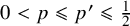
Let n be a positive integer, let $0<p\leqslant p'\leqslant \frac 12$, and let $\ell \leqslant pn$ be a nonnegative integer. We prove that if $\mathcal {F},\mathcal {G}\subseteq \{0,1\}^n$ are two families whose cross intersections forbid $\ell $—that is, they satisfy $|A\cap B|\neq \ell $ for every $A\in \mathcal {F}$ and every $B\in \mathcal {G}$ – then, setting $t:= \min \{\ell ,pn-\ell \}$, we have the subgaussian bound

The world of crystallography was forced to reassess its rules about thirty years ago with the introduction of the concept of quasicrystals, solids with rotational symmetries forbidden to crystals, by Levine and Steinhardt (1984) and the discovery of the first examples in the laboratory by Shechtman et al. (1984). Since then, >100 different types of quasicrystals have been synthesized in the laboratory under carefully controlled conditions. The original theory suggested that quasicrystals can be as robust and stable as crystals, perhaps even forming under natural conditions. This thought motivated a decade-long search for a natural quasicrystal, culminating in the discovery of icosahedrite (Al63Cu24Fe13), an icosahedral quasicrystal found in a museum sample consisting of several typical rock-forming minerals combined with exotic rare metal alloy minerals like khatyrkite and cupalite. Here we briefly recount the extraordinary story of the search and discovery of the first natural quasicrystal.
We prove that for every poset P, there is a constant CP such that the size of any family of subsets of {1, 2, . . ., n} that does not contain P as an induced subposet is at most
$$C_P{\binom{n}{\lfloor\gfrac{n}{2}\rfloor}},$$
settling a conjecture of Katona, and Lu and Milans. We obtain this bound by establishing a connection to the theory of forbidden submatrices and then applying a higher-dimensional variant of the Marcus–Tardos theorem, proved by Klazar and Marcus. We also give a new proof of their result.
By now we are sufficiently familiar with Muslim scholasticism not to expect simple answers to apparently simple questions. So when we ask how one is to forbid wrong, we can be sure that there will be no one way of doing it. In fact we have already met a key Prophetic tradition according to which there are three modes of forbidding wrong: with the hand, with the tongue and in the heart – or, as some understand the usage, with the heart. This threefold division is a useful one. It is widely known, and frequently used by the scholars as a basic building block for their doctrines. Yet it has its limits.
For one thing, the schema was not employed by everyone. The Sunnīs, Ibāḍīs and Imāmīs made extensive use of it. But the Muʿtazilites rarely did so, and the Zaydīs only resorted to it in later centuries under Sunnī influence. More surprisingly, Ghazzālī seems to have had no interest in it, though he must have been well acquainted with it (indeed he quotes the tradition together with its frame-story). The schema is also a bit crude for many purposes. It does not, for example, distinguish between a delicate hint and a ruthless tongue-lashing, or between a restraining hand and recourse to arms. Finally, there is something rather peculiar about the sequence. The tradition tells you to right a wrong with your hand, and failing that with your tongue, and failing that in your heart.
Although the last chapter dealt with deadly duels, bloodthirsty ogres and horrific sorcerers' battles, there cannot be any doubt that a romanticizing tendency was at work there. Our vidyādharas, nāgas, etc. are made to appear quite amiable on the whole. The odd man-eating yaksa or demon may crop up, but there is always the chance of pacifying the creature and obtaining a vidyā from him, or of winning the love of a girl through him. As far as the vidyās are concerned, they are treated as related more to the ‘battle’ between the sexes than to anything really dangerous, such as the making of things by interfering in nature, breaking nature up and reconstituting it at will, or annihilating it altogether. This in turn means that, as far as the material discussed so far is concerned, the nightmarish fears which we find in our own imaginative projection of what our vidyās can do are not expressed. I am thinking here of all-pervasive themes like the mad German scientist or the ‘Dr No's of our popular films and novels; of alien empires that must be destroyed through our futuristic weapon technology. Our Indian stories read much more like the exploits of modern heroes such as 007, although even here an unease about the role of science in the wrong hands does express itself.
Thus, to suggest against the background of Western fears and doubts a correlation of the Grand Story and its related material with Western science may not appear obvious.