To save content items to your account,
please confirm that you agree to abide by our usage policies.
If this is the first time you use this feature, you will be asked to authorise Cambridge Core to connect with your account.
Find out more about saving content to .
To save content items to your Kindle, first ensure no-reply@cambridge.org
is added to your Approved Personal Document E-mail List under your Personal Document Settings
on the Manage Your Content and Devices page of your Amazon account. Then enter the ‘name’ part
of your Kindle email address below.
Find out more about saving to your Kindle.
Note you can select to save to either the @free.kindle.com or @kindle.com variations.
‘@free.kindle.com’ emails are free but can only be saved to your device when it is connected to wi-fi.
‘@kindle.com’ emails can be delivered even when you are not connected to wi-fi, but note that service fees apply.
This chapter discusses the various social changes experienced in Nigeria during its colonial phase. It brings together the various events, changes, and processes established in previous chapters, focusing on their impacts, specifically on the social landscape of Nigeria. It takes important topics such as women’s rights and industry and explores what they were like in precolonial times, the changes seen during the colonial period, and the social ramifications of these changes. In colonial Nigeria, colonial officials fostered social change to promote British economic and political interests. Generally, this meant the diffusion of Western ideas, customs, material culture, and institutions, among many others. These were to be promoted (often violently) at the direct expense of their Indigenous counterparts (except for Northern Nigeria, which retained many Islamic and Indigenous institutions). The specific impacts of these efforts and the social changes seen during this period will be explored in detail. Finally, the chapter explores the social development of Nigeria’s Western-educated elite. Through direct exposure to Western customs and their hypocrisy, they would organize in opposition to colonial rule, culminating in Nigeria’s independence.
The historiography of Nigerian independence from colonial rule has not often considered the role played by trade unions. This chapter seeks to correct this gap in the literature by tracing the history of Nigerian trade unions from the precolonial period to 1960 and beyond. Far from a British import, trade unions were rooted in local craft organizations that predated colonization. The protectionist goals of these organizations informed the development of the first formal trade union in Nigeria in 1912, named the Civil Service British Workers’ Union. This union and others soon expanded their purview from labor conditions to a broader anticolonial agenda, especially because of shared leadership and institutional affiliation with nationalist organizations. As trade unions became politically radicalized, nationalist groups borrowed tactics developed by the unions such as strikes and collective bargaining. Trade unions were instrumental in the nationalist movement and remain powerful engines of social and economic justice.
This chapter will address the various peoples, polities, individuals, movements, and the social-political and economic conditions of Nigeria before the colonial era (1900). It will also go over the processes that spurred ongoing transformations in the complex patchwork of political, cultural, and religious entities that dominated what is known today as Nigeria. This chapter names five principal events as the primary catalysts for these transformations. They are the abolition of the slave trade and the switch to legitimate trade; the Sokoto Jihad; the decline and eventual collapse of the Old Oyo Empire; freed captives returning from Sierra Leone along with the arrival of missionaries; and the advent of colonial rule. These events would result in an environment of instability which gave way to new powers prompted by shifting demands from an increasingly industrialized and interconnected world. The chapter explores the social and economic shifts that resulted from these political changes and how these social and economic processes impacted the political changes in question. Finally, the chapter gives specific examples of lifestyle changes experienced by millions during this period, such as changes in clothing, religious practices, and diet.
This chapter explores how aspects of culture informed the compositions of Nigeria’s various precolonial and colonial societies. These happenings will be shown through several unique customs and practices, such as dance, music, and art. The second part of the chapter explains how the onset of colonialism shifted the cultural landscape of Nigeria. These cultural transformations are framed in three primary ways: the often racist and violent diffusion of Western culture, the retainment of Indigenous cultures, and the fusion of the former and latter. The social, economic, and political ramifications of these transformations will be detailed, along with the subtle, often insidious role colonialism and Western culture had to play in the changing mental constructs of the Nigerian people, most prominent amongst the growing class of Western-educated elites.
To date, there is no systematic research on the overlapping challenges of wildlife conservation and security in South Sudan, where the wildlife service (WLS) has institutionally survived for over a century while contending with poor state capacity and responsibility for protected areas (PAs) that cover vast territories characterized by chronic insecurity and food scarcity. Integrated into the country’s “Organized Forces,” South Sudan’s park rangers play roles beyond conservation as armed actors in complex conflicts. Data obtained from archival research and field interviews shows that South Sudan’s wildlife authorities have persisted since the colonial period in spite and because of chronic warfare.
This paper examines the naming episode in the Quran's Adam story, in which God teaches Adam “the names, all of them”, to counter the angels' objection to the creation of the human creature on the basis that he will “spread corruption … and will shed blood”. I try to show that the traditional understanding of this narrative in Western scholarship, which connects it ultimately to the Genesis 2 episode in which Adam names all the creatures of the land and sky, fails to do justice to a close reading of the quranic text itself. Instead, I argue for an alternative reading of the passage already suggested by early Muslim exegetes, in which God's teaching Adam the “names” refers to Adam being introduced to his future offspring. This, in turn, is central to the Quran's engagement with the problem of theodicy.
Vernacular discourse about science reveals theorizations of it as a power-laden, morally charged experimentation with the world guided by (often implicit) ethical orientations. Applying these vernacular theorizations to interpret professional class science on the continent, the author argues that this science has been shaped most profoundly by the politics of independence. While indigenous projects, European imperialism, and neoliberalism shape scientific institutions, African independence continues to inform the moral and political ends toward which science is thought to work. Understanding the alignment of professional class science with nation-building can help guide the recalibration of science toward the goal of substantive independence.
African contemporary choreographers increasingly delink from Eurocentric performance conventions and work toward establishing local conditions of production and consumption by performing in public spaces. Although the labor undertaken to shift power asymmetries does not always result in structural changes, their art may be considered decolonial creative expression. Based on ethnographic research at the third and fourth editions (2022 and 2023) of Fatou Cissé’s street performance festival, La ville en mouv’ment (The City in Movement), in Dakar, Senegal, the author argues that decolonial potentiality extends beyond the precarious economic conditions to encapsulate the artists’ return to public space and futurist aesthetics.
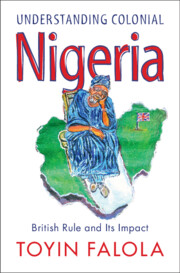
In this landmark new history, Toyin Falola analyses the impact of Britain's colonization of Nigeria from the late nineteenth century to 1960, when the country regained independence. Falola covers major events in depth, from the initial conquest and denial of Indigenous sovereignty, to the emergence and functioning of the colonial state, and later nationalist movements, offering fascinating insights into labour and trade relations, regionalism and nationalism, and Nigeria's role during the First and Second World Wars. Understanding Colonial Nigeria assesses the economic, political, social, and cultural changes that culminated in the emergence of a coalition of diverse groups agitating for the end of colonial rule from the 1940s – from labor coalitions and politicians to youth groups and market women. From the country's borders and state structure, to the present conflicts, Falola powerfully reflects on the lasting consequences of British intervention in the affairs of Nigerian states and communities.
This paper focuses on a group of Old Tibetan manuscripts from Dunhuang that are currently in the Stein and Pelliot Collections, some of which will be reordered and reunited. These texts were previously believed to concern the offering to the seven Tathāgatas or the texts about the former aspirations of the seven Buddhas. However, as my study shows, they actually pertain to liturgies for the seven Tathāgatas including Bhaiṣajyaguru. Based on earlier studies, this research seeks to establish a stronger connection between “pre-canonical” texts and canonical works in Tibetan and Chinese, and to establish a hitherto unknown link in the chain of the textual transmission of this liturgy. After revealing the structure of the liturgy, it seeks to fill the gap between the Bhaiṣajyaguru-sūtra itself and the religious practices of worshipping the seven Tathāgatas including Bhaiṣajyaguru. These are done through a two-dimensional textual analysis, i.e.: 1) identifying the connection between the Old Tibetan materials and the Tibetan canonical version; and 2) analysing the process of the liturgicalization of the sūtra.
Since the bicentennial of Haitian independence in 2004, the field of Haitian literary and cultural studies has expanded considerably. It is no longer possible to claim with the same degree of urgency that Haitian history and literature are being ignored in North Atlantic academe. Not only have Haitian literature panels become a central part of the often social science-focused Haitian Studies Association (which has been in existence for more than thirty years), but numerous conferences and colloquia on both sides of the Atlantic have now been devoted almost singularly to the topic of Haitian literary studies.1 We are witnessing, in fact, something of a revival in Haitian literary studies. Various scholars from both French and Francophone Studies, as well as English, History, and American Studies, are turning their attention to Haiti’s robust literary culture.
This chapter presents the political organisation and power dynamics during the reign of Kigeri Rwabugiri, the last king of precolonial Rwanda. At the end of the nineteenth century, European overrule, under the form of German colonisation and missionary activity, profoundly modified political dynamics.
This chapter focuses on Haiti’s twentieth-century periodicals, and more specifically on the literary magazine. By bringing to light the complex stories of literary revue culture during key historical moments I show how these specific forms of publications, which played a major role in Caribbean countries, have influenced Haiti’s sociopolitical and intellectual life. At its core, this chapter addresses the tension between the aesthetics and politics of several literary revues by highlighting, first, literary and/or socially engaged magazines predominantly concerned with the development of Haiti’s literature and culture, and, second, those with a clear political agenda, some of which were infused with an explicit objective: the forging of a Haitian national voice.
Why have we been so quick to dismiss late nineteenth-century Haitian novels in the field of francophone postcolonial studies? What have we failed to recognize as francophone or postcolonial in these texts? And how can we now begin to revisit them? This chapter proposes to answer these questions by drawing attention to the historical predicament that led nineteenth-century Haitian intellectuals and writers to embrace the West’s narratives of civilization and modernity when such discourses were in fact integral to North Atlantic imperialisms and white supremacy. It first provides a historical overview of the Haitian novel from its inception in the mid-nineteenth century to its booming production in the early 1900s. It then sheds light on Demesvar Delorme’s Francesca and Louis Joseph Janvier’s Une Chercheuse, two novels that help us understand how Haitian intellectuals sought to exist in a Eurocentric, international lettered sphere. Finally, it concludes by considering some of the ethical and intellectual challenges we must face in order to do justice to such works and their authors.
This chapter considers how the zonbi has served twentieth-century Haitian writers as a valuable trope through which to account for and contest the horrors of everyday life under and in the wake of Duvalierism. The chapter examines the literary configuration of the zonbi from three distinct yet interrelated perspectives: as a figure of immanent and even imminent revolt; as a lens through which to reckon with gender in Haiti and beyond; and as a metaphor for the alienation and trauma of exile. The chapter calls for an appreciation of the zonbi as a popular cultural figure whose inherent ambivalence has allowed Haiti’s writers to embrace the unresolved tensions of the nation’s oft-evoked resilience in the face of seemingly relentless tragedy, both within the island and in its diasporas.