Refine search
Actions for selected content:
125516 results in Asian Studies
Al-Ṣafadī’s veiled criticism of Ibn Taymiyya: esotericism, language, and reason in al-Ghayth al-Musajjam fī Sharḥ Lāmīyat al-ʿAjam
-
- Journal:
- Journal of the Royal Asiatic Society / Volume 35 / Issue 4 / October 2025
- Published online by Cambridge University Press:
- 22 October 2025, pp. 895-918
- Print publication:
- October 2025
-
- Article
-
- You have access
- Open access
- HTML
- Export citation
The history of the Dengjue Temple: a social microcosm of Yunnan in the Ming Dynasty
-
- Journal:
- Journal of the Royal Asiatic Society / Volume 35 / Issue 4 / October 2025
- Published online by Cambridge University Press:
- 21 November 2025, pp. 941-968
- Print publication:
- October 2025
-
- Article
- Export citation
Wang Yuanlu, the first ‘curator’ of the Stein collection’s Dunhuang corpus
-
- Journal:
- Journal of the Royal Asiatic Society / Volume 35 / Issue 4 / October 2025
- Published online by Cambridge University Press:
- 05 December 2025, pp. 821-845
- Print publication:
- October 2025
-
- Article
- Export citation
Sunila S. Kalé and Christian Lee Novetzke: The Yoga of Power. Yoga as Political Thought and Practice in India New York: Columbia University Press, 2025. ISBN 978 023117924 9.
-
- Journal:
- Bulletin of the School of Oriental and African Studies / Volume 88 / Issue 3 / October 2025
- Published online by Cambridge University Press:
- 06 October 2025, pp. 636-638
- Print publication:
- October 2025
-
- Article
- Export citation
BSO volume 88 issue 3 Cover and Front matter
-
- Journal:
- Bulletin of the School of Oriental and African Studies / Volume 88 / Issue 3 / October 2025
- Published online by Cambridge University Press:
- 14 November 2025, pp. f1-f3
- Print publication:
- October 2025
-
- Article
-
- You have access
- Export citation
Imagining the Lūṭī and the people of Lūṭ
-
- Journal:
- Journal of the Royal Asiatic Society / Volume 35 / Issue 4 / October 2025
- Published online by Cambridge University Press:
- 14 November 2025, pp. 985-1009
- Print publication:
- October 2025
-
- Article
-
- You have access
- Open access
- HTML
- Export citation
Cooking meat in ancient China: luan 臠, zi 胾, and the origins of the kebab
-
- Journal:
- Journal of the Royal Asiatic Society / Volume 35 / Issue 4 / October 2025
- Published online by Cambridge University Press:
- 04 December 2025, pp. 1051-1066
- Print publication:
- October 2025
-
- Article
-
- You have access
- Open access
- HTML
- Export citation
JRA volume 35 issue 4 Cover and Back matter
-
- Journal:
- Journal of the Royal Asiatic Society / Volume 35 / Issue 4 / October 2025
- Published online by Cambridge University Press:
- 19 January 2026, pp. b1-b4
- Print publication:
- October 2025
-
- Article
-
- You have access
- Export citation
Globalising Vietnam’s national identities in the early twentieth century
-
- Journal:
- International Journal of Asian Studies / Volume 23 / Issue 1 / January 2026
- Published online by Cambridge University Press:
- 01 October 2025, pp. 153-171
-
- Article
-
- You have access
- Open access
- HTML
- Export citation
Khitan and Mongol Imperial Women in the Chinese Imagination: Ming Fantasies about Conquest Dynasty Harems By Olivia Milburn. 240 pp. Liverpool, Liverpool University Press, 2025.
-
- Journal:
- Journal of the Royal Asiatic Society / Volume 35 / Issue 4 / October 2025
- Published online by Cambridge University Press:
- 27 October 2025, pp. 1095-1097
- Print publication:
- October 2025
-
- Article
- Export citation
Sir James Mackintosh and the first linguistic survey of India, 1806–1811
-
- Journal:
- Journal of the Royal Asiatic Society / Volume 35 / Issue 4 / October 2025
- Published online by Cambridge University Press:
- 21 November 2025, pp. 847-866
- Print publication:
- October 2025
-
- Article
- Export citation
Emotions and political legitimacy in eighteenth-century North India: the case of the Afghan text Ḵẖulāṣat ul-Ansāb
-
- Journal:
- Journal of the Royal Asiatic Society / Volume 35 / Issue 4 / October 2025
- Published online by Cambridge University Press:
- 24 October 2025, pp. 1011-1029
- Print publication:
- October 2025
-
- Article
-
- You have access
- Open access
- HTML
- Export citation
Changing Self-Identifications Through Trans-Contextual Migration Experiences? – A Case Study of Multiethnic and Multiracial Japanese in Japan and Beyond
-
- Journal:
- TRaNS: Trans-Regional and -National Studies of Southeast Asia / Volume 14 / Issue 1 / May 2026
- Published online by Cambridge University Press:
- 30 September 2025, pp. 116-131
-
- Article
-
- You have access
- Open access
- HTML
- Export citation

Politicizing Business
- How Firms Are Made to Serve the Party-State in China
-
- Published online:
- 29 September 2025
- Print publication:
- 25 September 2025

The Cambridge Companion to Periyar
-
- Published online:
- 27 September 2025
- Print publication:
- 20 November 2025
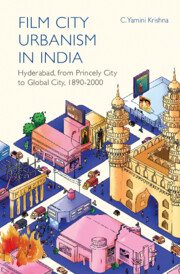
Film City Urbanism in India
- Hyderabad, from Princely City to Global City ,1890-2000
-
- Published online:
- 26 September 2025
- Print publication:
- 04 September 2025

Resilient Communities
- Household, State, and Ecology in Southern Panjab, c.1750–1900
-
- Published online:
- 26 September 2025
- Print publication:
- 04 September 2025

An Empire of Images
- Visual Culture and the British in India, 1688–1815
-
- Published online:
- 26 September 2025
- Print publication:
- 16 October 2025

Chips from a Calcutta Workshop
- Comparative Religion in Nineteenth Century India
-
- Published online:
- 26 September 2025
- Print publication:
- 16 October 2025
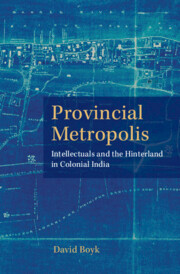
Provincial Metropolis
- Intellectuals and the Hinterland in Colonial India
-
- Published online:
- 25 September 2025
- Print publication:
- 04 September 2025
