Refine search
Actions for selected content:
7008 results in Algorithmics, Complexity, Computer Algebra, Computational Geometry
12 - Mathematics of Reinforcement Learning
- from Part III - Artificial Intelligence
-
- Book:
- Mathematics for Future Computing and Communications
- Published online:
- 03 December 2021
- Print publication:
- 16 December 2021, pp 329-374
-
- Chapter
- Export citation
6 - Mathematics, Information Theory, and Statistical Physics
- from Part II - Communications
-
- Book:
- Mathematics for Future Computing and Communications
- Published online:
- 03 December 2021
- Print publication:
- 16 December 2021, pp 153-186
-
- Chapter
- Export citation
Editors and Contributing Authors
-
- Book:
- Mathematics for Future Computing and Communications
- Published online:
- 03 December 2021
- Print publication:
- 16 December 2021, pp 384-388
-
- Chapter
- Export citation
5 - Mathematics and Compressed Sensing
- from Part II - Communications
-
- Book:
- Mathematics for Future Computing and Communications
- Published online:
- 03 December 2021
- Print publication:
- 16 December 2021, pp 138-152
-
- Chapter
- Export citation
Contents
-
- Book:
- Mathematics for Future Computing and Communications
- Published online:
- 03 December 2021
- Print publication:
- 16 December 2021, pp v-viii
-
- Chapter
- Export citation
1 - Mathematics, Models and Architectures
- from Part I - Computing
-
- Book:
- Mathematics for Future Computing and Communications
- Published online:
- 03 December 2021
- Print publication:
- 16 December 2021, pp 6-53
-
- Chapter
- Export citation
Part III - Artificial Intelligence
-
- Book:
- Mathematics for Future Computing and Communications
- Published online:
- 03 December 2021
- Print publication:
- 16 December 2021, pp 225-229
-
- Chapter
- Export citation
9 - Mathematics, Information and Learning
- from Part III - Artificial Intelligence
-
- Book:
- Mathematics for Future Computing and Communications
- Published online:
- 03 December 2021
- Print publication:
- 16 December 2021, pp 230-284
-
- Chapter
- Export citation
2 - Mathematics and Software Verification
- from Part I - Computing
-
- Book:
- Mathematics for Future Computing and Communications
- Published online:
- 03 December 2021
- Print publication:
- 16 December 2021, pp 54-73
-
- Chapter
- Export citation
7 - Mathematics of Data Networking
- from Part II - Communications
-
- Book:
- Mathematics for Future Computing and Communications
- Published online:
- 03 December 2021
- Print publication:
- 16 December 2021, pp 187-210
-
- Chapter
- Export citation
11 - Mathematics, Optimization and Machine Learning
- from Part III - Artificial Intelligence
-
- Book:
- Mathematics for Future Computing and Communications
- Published online:
- 03 December 2021
- Print publication:
- 16 December 2021, pp 309-328
-
- Chapter
- Export citation
Part IV - Future
-
- Book:
- Mathematics for Future Computing and Communications
- Published online:
- 03 December 2021
- Print publication:
- 16 December 2021, pp 375-376
-
- Chapter
- Export citation
Tuning as convex optimisation: a polynomial tuner for multi-parametric combinatorial samplers
- Part of
-
- Journal:
- Combinatorics, Probability and Computing / Volume 31 / Issue 5 / September 2022
- Published online by Cambridge University Press:
- 15 December 2021, pp. 765-811
-
- Article
- Export citation
A spanning bandwidth theorem in random graphs
- Part of
-
- Journal:
- Combinatorics, Probability and Computing / Volume 31 / Issue 4 / July 2022
- Published online by Cambridge University Press:
- 13 December 2021, pp. 598-628
-
- Article
- Export citation
-
The bandwidth theorem of Böttcher, Schacht and Taraz states that any n-vertex graph G with minimum degree $\big(\tfrac{k-1}{k}+o(1)\big)n$ contains all n-vertex k-colourable graphs H with bounded maximum degree and bandwidth o(n). Recently, a subset of the authors proved a random graph analogue of this statement: for $p\gg \big(\tfrac{\log n}{n}\big)^{1/\Delta}$ a.a.s. each spanning subgraph G of G(n,p) with minimum degree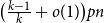 $\big(\tfrac{k-1}{k}+o(1)\big)pn$ contains all n-vertex k-colourable graphs H with maximum degree $\Delta$, bandwidth o(n), and at least $C p^{-2}$ vertices not contained in any triangle. This restriction on vertices in triangles is necessary, but limiting. In this paper, we consider how it can be avoided. A special case of our main result is that, under the same conditions, if additionally all vertex neighbourhoods in G contain many copies of $K_\Delta$ then we can drop the restriction on H that $Cp^{-2}$ vertices should not be in triangles.


Mathematics for Future Computing and Communications
-
- Published online:
- 03 December 2021
- Print publication:
- 16 December 2021
The Shortest Path to Network Geometry
- A Practical Guide to Basic Models and Applications
-
- Published online:
- 02 December 2021
- Print publication:
- 06 January 2022
-
- Element
- Export citation
A blurred view of Van der Waerden type theorems
- Part of
-
- Journal:
- Combinatorics, Probability and Computing / Volume 31 / Issue 4 / July 2022
- Published online by Cambridge University Press:
- 26 November 2021, pp. 684-701
-
- Article
- Export citation
-
Let $\mathrm{AP}_k=\{a,a+d,\ldots,a+(k-1)d\}$ be an arithmetic progression. For $\varepsilon>0$ we call a set $\mathrm{AP}_k(\varepsilon)=\{x_0,\ldots,x_{k-1}\}$ an $\varepsilon$-approximate arithmetic progression if for some a and d, $|x_i-(a+id)|<\varepsilon d$ holds for all $i\in\{0,1\ldots,k-1\}$. Complementing earlier results of Dumitrescu (2011, J. Comput. Geom. 2(1) 16–29), in this paper we study numerical aspects of Van der Waerden, Szemerédi and Furstenberg–Katznelson like results in which arithmetic progressions and their higher dimensional extensions are replaced by their $\varepsilon$-approximation.


Higher-Order Networks
-
- Published online:
- 23 November 2021
- Print publication:
- 23 December 2021
-
- Element
- Export citation
On the smallest singular value of symmetric random matrices
- Part of
-
- Journal:
- Combinatorics, Probability and Computing / Volume 31 / Issue 4 / July 2022
- Published online by Cambridge University Press:
- 05 November 2021, pp. 662-683
-
- Article
- Export citation
-
We show that for an $n\times n$ random symmetric matrix $A_n$, whose entries on and above the diagonal are independent copies of a sub-Gaussian random variable $\xi$ with mean 0 and variance 1, This improves a result of Vershynin, who obtained such a bound with
 \begin{equation*}\mathbb{P}[s_n(A_n) \le \epsilon/\sqrt{n}] \le O_{\xi}(\epsilon^{1/8} + \exp(\!-\Omega_{\xi}(n^{1/2}))) \quad \text{for all } \epsilon \ge 0.\end{equation*} $n^{1/2}$ replaced by $n^{c}$ for a small constant c, and $1/8$ replaced by $(1/8) - \eta$ (with implicit constants also depending on $\eta > 0$). Furthermore, when $\xi$ is a Rademacher random variable, we prove that The special case
 \begin{equation*}\mathbb{P}[s_n(A_n) \le \epsilon/\sqrt{n}] \le O(\epsilon^{1/8} + \exp(\!-\Omega((\!\log{n})^{1/4}n^{1/2}))) \quad \text{for all } \epsilon \ge 0.\end{equation*} $\epsilon = 0$ improves a recent result of Campos, Mattos, Morris, and Morrison, which showed that $\mathbb{P}[s_n(A_n) = 0] \le O(\exp(\!-\Omega(n^{1/2}))).$ Notably, in a departure from the previous two best bounds on the probability of singularity of symmetric matrices, which had relied on somewhat specialized and involved combinatorial techniques, our methods fall squarely within the broad geometric framework pioneered by Rudelson and Vershynin, and suggest the possibility of a principled geometric approach to the study of the singular spectrum of symmetric random matrices. The main innovations in our work are new notions of arithmetic structure – the Median Regularized Least Common Denominator (MRLCD) and the Median Threshold, which are natural refinements of the Regularized Least Common Denominator (RLCD)introduced by Vershynin, and should be more generally useful in contexts where one needs to combine anticoncentration information of different parts of a vector.


Extending the Tutte and Bollobás–Riordan polynomials to rank 3 weakly coloured stranded graphs
- Part of
-
- Journal:
- Combinatorics, Probability and Computing / Volume 31 / Issue 3 / May 2022
- Published online by Cambridge University Press:
- 25 October 2021, pp. 507-549
-
- Article
- Export citation
