To save content items to your account,
please confirm that you agree to abide by our usage policies.
If this is the first time you use this feature, you will be asked to authorise Cambridge Core to connect with your account.
Find out more about saving content to .
To save content items to your Kindle, first ensure no-reply@cambridge.org
is added to your Approved Personal Document E-mail List under your Personal Document Settings
on the Manage Your Content and Devices page of your Amazon account. Then enter the ‘name’ part
of your Kindle email address below.
Find out more about saving to your Kindle.
Note you can select to save to either the @free.kindle.com or @kindle.com variations.
‘@free.kindle.com’ emails are free but can only be saved to your device when it is connected to wi-fi.
‘@kindle.com’ emails can be delivered even when you are not connected to wi-fi, but note that service fees apply.
If you never quote a numerical value, never use units, never use graphs, and never write equations then you can safely skip this chapter.
Numerical values
The meaning and usage of ‘number’, ‘numeral’, ‘digit’, ‘value’, and ‘figure’ is not entirely clear.
‘Number’ has the broadest meaning. Illuminating accounts of the relationships between different sorts of number – integer, rational, irrational, imaginary, complex, transcendental – are given in Feynmann, Leighton, & Sands (1963) and in Sondheimer & Rogerson (1981). ‘Number’ is commonly used as well for counted items: ‘The number of sheep’, and in a general sense as in ‘the numbers show …’.
‘Value’ applies to variables, variates, parameters, and constants. (The proper expression of such a value is considered later in this chapter.) Each has a ‘value’ that comprises two components: a number and zero or more units, as in ‘24.6 mg’. In most places in this book I use ‘numerical value’ for the number part of the overall value to emphasise this point, but the simple ‘value’ is widely used for the numerical component alone.
‘Numeral’ is most often used for Roman quantities (as in dates such as MCCCCLVIII).
‘Digit’ is one of the single Arabic symbols ‘0’ … ‘9’ corresponding to human fingers or toes. Thus all real numbers can be expressed as a combination of Arabic digits with the symbols ‘+’, ‘–’, ‘.’ and perhaps ‘e’, or ‘E’, or ‘×’.
‘Figure’ is unclear, and has a different and specific use for illustrations, so is best kept for them alone.
The ill and unfit choice of words wonderfully obstructs the understanding.
Francis Bacon, Novum Organum, 1620
Style books often contain lists of words that are commonly misspelled or misunderstood. Many of these words form pairs, some with opposite or similar-sounding partners, others with a similar (or identical: ‘rowing’ and ‘rowing’) spelling but different meanings. I will not repeat here, except for a few hardy perennials, what is amply and expertly explained in other works. Buy a dictionary of about 1000 A5 pages or so (and use it) and consult Gowers revised Greenbaum & Whitcut (1986) and Fowler revised Gowers (1968).
What follows is in two lists: misused common words, then often misunderstood more technical terms (usually with longer explanations). The technical terms are also listed without details in the first list.
Many well-educated people would consider a lot of the distinctions that follow in the first list to be mere pedant-fodder – they are – but some impede understanding, and these are certainly worth noting. Remember, too, that a characteristic of good scientific style is that it causes no distractions. Why annoy even a few of your readers when you could easily avoid doing so?
Most scientists work at the intersection of three processes (the hatched area in Figure 8.1): (1) specifying what question to ask of Nature; (2) expressing the question as a model (often mathematically even if vaguely as, for example, ‘Is there a relation between variables x and y?’); and (3) collecting and analysing data from a survey or experiment.
It is easy to ask the wrong question or to specify the wrong model. A plant physiologist observed that the kinetics of uptake of nitrate from solution by the roots of young barley plants resembled the kinetics of enzyme action and asked ‘What is the Michaelis constant of the enzyme?’ But this was a blind alley: the kinetics he observed were overwhelmingly the result of diffusion through the unstirred layer around the roots. Even when he had recognised this he specified an incorrect mathematical model, though he got close agreement to it with his data. Asking the right question and specifying it in the right form for testing are at the core of advance in understanding. They are specific to the particular problem though and are therefore outside the scope of this book. But the analysis of data (Figure 8.1), and the sorts of error we need to recognise, are within our scope.
As scientific meetings got bigger some attendees were not able to give a talk because there was not enough time. The scientific poster was invented to allow these disadvantaged persons to display their work.
Poster sessions have been common for only a few decades, so procedures and poster design techniques are still evolving. The poster is the least formal of the three main communication methods, and corralling viewers for it is competitive. It has the same relationship to the formal article as a painted miniature does to a Vermeer portrait. The advantage of presenting a poster (at anything other than a small meeting for specialists) is that you have an opportunity to interest people outside your special field. It will be clear then that visual presentation is the key to designing a poster that gets noticed. Of the three forms of presentation the poster, as the name implies, is the one that has the largest element of deliberate advertising in it. You need to attract attention. Of course the substance of what you present must be interesting too.
You will probably get an opportunity to talk about your work before you have to write about it. You use some of the same evidence in a talk as in an article, though prepared differently, mostly in visual form with tables and figures as ‘slides’. But speaking is a performance art in real time and needs different skills from writing. When writing you have time to reconsider and revise; when giving a talk you have only one chance to get it right. Detailed preparation and at least some practice are essential. Giving a successful talk that interests the audience can be a satisfying, if nerve jangling, experience. It is a rapid way to recognition amongst peers in your subject .
When writing or showing a poster you are competing for attention, but a talk is different. Your audience is captive. This advantage is also a responsibility: the members of your audience have come hoping to learn something and, perhaps, be entertained too. The stakes are high.
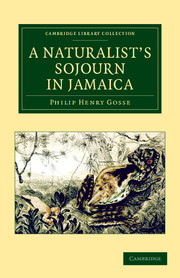
The English naturalist Philip Henry Gosse (1810–88) travelled to Jamaica in 1844 and stayed for eighteen months to observe the diverse wildlife there. Upon his return he described his findings in a trilogy of books. The first two examined the island's birds - he has been hailed as the 'father of Jamaican ornithology' - but he used the present work, first published in 1851, to describe all the other forms of life on the island, from beetles to fruit trees. Lamenting that natural history was too often presented as a 'science of dead things', Gosse made his investigations come alive in this work by writing it in a diary form, discussing what he encountered as his journey progressed, and providing a number of illustrations. His lively and engaging style won him a wide audience, and this work remains an important early example of popular natural history.
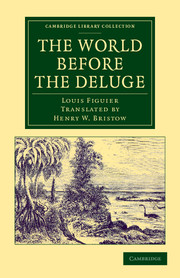
Louis Figuier (1819–94) was destined to remain in academia until disagreements with fellow scholars led him to abandon this path and instead pursue 'the idea that scientific knowledge, which until then had been almost exclusively the property of the learned, should be put within the reach of the reading public'. Published in 1863, La Terre avant le déluge became a classic of popular science and introduced palaeontology to a wider readership; that this English translation appeared only two years later is an indication of its impact. Figuier wrote that his aim was 'to trace the progressive steps by which the earth has reached its present state … and to describe the various convulsions and transformations through which it has successively passed'. The book was also celebrated for its inclusion of more than 200 illustrations by a pupil of Doré, Édouard Riou (1833–1900), who became famous as Jules Verne's illustrator a few years later.
From humble origins, and trained by the London Missionary Society in theology, printing and rudimentary medicine, William Ellis (1794–1872) sailed for the Society Islands in 1816. He found himself at the cusp of major cultural change as Western influences affected the indigenous Polynesians. During his time there, Ellis became a skilled linguist and able chronicler of the traditional yet rapidly shifting way of life. He succeeded in capturing vivid stories of a leisured people who, without written language, had developed a rich oral tradition, social structure and belief system. Published in 1829, this two-volume collection proved to be an important reference work, notably for its natural history; it soon accompanied Darwin aboard the Beagle. Volume 1 covers the voyage to Tahiti, the development of Tahitian orthography, the conversion of chief Pomare II, the establishment of a printing press on Moorea, and Ellis's first sermon in Tahitian, delivered on Huahine.
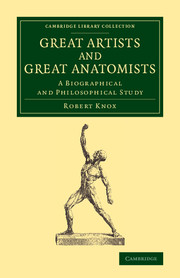
A gifted yet controversial anatomical teacher, Robert Knox (1791–1862) published this remarkable study in 1852. It explores the influence of anatomy on evolutionary theories and fine art respectively. The first part of the work discusses the lives and scientific insights of the eminent French naturalists Georges Cuvier (1769–1832) and Étienne Geoffroy Saint-Hilaire (1772–1844). Rejecting the explanations offered by natural theology, Knox maintains that descriptive anatomy can give answers to questions surrounding the origin and development of life in the natural world. The latter part of the book is concerned with the relation that anatomy bears to fine art, specifically the painting and sculpture of the Italian Renaissance. Entering the debate about the importance of anatomical knowledge in art, Knox focuses on 'the immortal trio' of Leonardo da Vinci, Michelangelo and Raphael. Henry Lonsdale's sympathetic biography of Knox has also been reissued in this series.
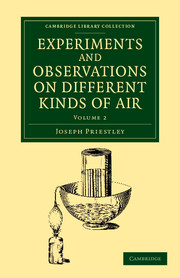
By the late eighteenth century, scientists had discovered certain types of gas, such as 'fixed air' (carbon dioxide), but their composition was little understood. Relatively few investigations into gases had taken place, and so the polymath Joseph Priestley (1733–1804) was able to make major breakthroughs in the field using a range of experimental techniques. While living near a brewery, he found that it was possible to outline the shape of the gas above fermenting beer with smoke, and that fire would burn with varying strength depending on the composition of the air. This three-volume collection first appeared between 1774 and 1777. Following the international interest and new discoveries prompted by the publication of its predecessor, Volume 2 - reissued here in its corrected 1776 second edition - includes accounts of further experiments, Priestley's paper on the conducting power of charcoal, and, most significantly, notes on what he calls 'dephlogisticated air' (oxygen).
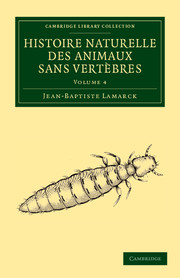
Best known for his ideas relating to evolution, French naturalist Jean-Baptiste Lamarck (1744–1829) first built his reputation as a botanist and was elected to the prestigious Académie des Sciences in 1779. His career took a new turn in 1793 when he was made professor of 'insects, worms and microscopic animals' at the Muséum National d'Histoire Naturelle, although he lacked prior knowledge of the subject area. Undaunted, Lamarck set out to classify organisms which few naturalists had considered worthy of study since Linnaeus. He was the first to distinguish vertebrates from 'invertebrates' - a term he coined - by the presence of a vertebral column. In this groundbreaking seven-volume work, published between 1815 and 1822, he arranges invertebrates into twelve classes, laying the foundations for the modern study of these organisms. Volume 4, first published in 1817, continues to classify insects.
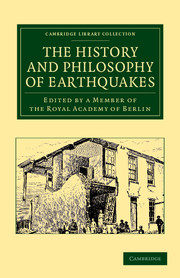
The aftershocks of the devastating Lisbon earthquake of 1755 were not only physical: the scientific investigations undertaken in its wake formed the basis of the science of seismology. Published in 1757, the present work is, in the words of its presumed editor, John Bevis (1695–1771), 'a repertory of all that has been written of earthquakes and their causes', and includes several recent papers published by the Royal Society. At the time, scientists suggested subterranean fires or electrical shocks in the atmosphere as possible causes of earthquakes. This reissue also incorporates a brief 1760 work by John Michell (1724/5–93), which uses Bevis' collection as a source and suggests that earthquakes were caused by seismic waves through the earth: it was one of the first to propose that tsunamis were the result of undersea earthquakes. Both these works rank as important steps in the developing understanding of one of nature's most destructive phenomena.
Having previously embarked on a collecting expedition to the Pyrenees, backed by Sir William Hooker and George Bentham, the botanist Richard Spruce (1817–93) travelled in 1849 to South America, where he carried out unprecedented exploration among the diverse flora across the northern part of the continent. After his death, Spruce's writings on fifteen fruitful years of discovery were edited as a labour of love by fellow naturalist Alfred Russel Wallace (1823–1913), whom Spruce had met in Santarém. This two-volume work, first published in 1908, includes many of the author's exquisite illustrations. Showing the determination to reach plants in almost inaccessible areas, Spruce collected hundreds of species, many with medicinal properties, notably the quinine-yielding cinchona tree, as well as the datura and coca plants. Volume 1 contains Wallace's biographical introduction and a list of Spruce's published works. The narrative includes discussion of Pará, Santarém, and the Negro and Orinoco rivers.
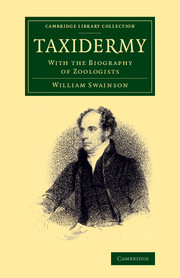
First published in 1840 as a volume in the Cabinet Cyclopaedia - a series published between 1830 and 1844, intended for the self-educating middle class - this work was written by the naturalist and artist William Swainson (1789–1855). The first part is a treatise on taxidermy, showcasing methods of Victorian science that may appear gruesome to modern readers. It discusses the best ways to collect, preserve and present animals for scientific study. Swainson gives detailed advice, making allowances for naturalists working in different locations and searching for a range of species. The directions for skinning and mounting animals are not for the faint-hearted, but they offer a fascinating insight into the practices of the time. The work's second part is a zoological bibliography, with short biographies of notable authors. Zoological painters and engravers, such as Thomas Bewick (1753–1828), are also featured.
This tract, which first appeared in 1774, considers the characteristics, cultivation and uses of the coffee plant. Its author, John Ellis (c.1710–76), was a botanist and zoologist who from 1770 to 1776 served as a London agent for the government of Dominica. Published in order to promote the prosperity of the island, the work reflects the difficulties faced by the coffee growers. Ellis begins by describing the flower and fruit of the coffee plant. He then presents his historical survey, drawing on contemporaneous travel writing to illuminate coffee-related practices around the globe. The narrative takes in the plant's early uses in Arabia, its cultivation in the colonies, and the growth of coffee houses in Europe. This reissue also contains a 1770 work by Ellis which gives instructions on transporting plants overseas. Reissued elsewhere in this series is The Early History of Coffee Houses in England (1893).
One of the world's leading electrical engineers and involved in projects across the globe, Sir Philip Dawson (1866–1938) was at the forefront of the new technology of electric locomotion. Published in 1897, less than twenty years after the first successful demonstration of an electric passenger locomotive and just seven years after the opening of London's first electrified underground line, this handbook covers all aspects of the building and running of a successful electric railway, ranging from the construction of the permanent way and different means of delivering current through to financial accounting, staff organisation and discipline. Impressed by the speed of American progress, Dawson is keen to impress upon his reader the need for Europe to keep up. With some 500 illustrations, this work offers a uniquely revealing picture of the earliest days of a technology that is now taken for granted.