To save content items to your account,
please confirm that you agree to abide by our usage policies.
If this is the first time you use this feature, you will be asked to authorise Cambridge Core to connect with your account.
Find out more about saving content to .
To save content items to your Kindle, first ensure no-reply@cambridge.org
is added to your Approved Personal Document E-mail List under your Personal Document Settings
on the Manage Your Content and Devices page of your Amazon account. Then enter the ‘name’ part
of your Kindle email address below.
Find out more about saving to your Kindle.
Note you can select to save to either the @free.kindle.com or @kindle.com variations.
‘@free.kindle.com’ emails are free but can only be saved to your device when it is connected to wi-fi.
‘@kindle.com’ emails can be delivered even when you are not connected to wi-fi, but note that service fees apply.
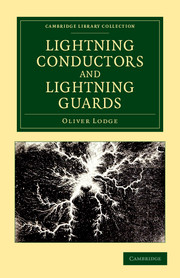
A Treatise on the Protection of Buildings, of Telegraph Instruments and Submarine Cables, and of Electrical Installations Generally, from Damage by Atmospheric Discharges
As a result of being asked to give public lectures on the subject, the eminent physicist Oliver Lodge (1851–1940) published in 1892 a pioneering study of the protection of buildings, cables and telegraphic instruments from the devastation caused by lightning strikes. This work led him almost immediately to the discovery of electromagnetic wave transmission and ultimately to the development of a version of radio telegraphy. Lodge also saw that many of the current theories about the nature of lightning were seriously in error, and his investigations led to a number of significant changes in the design of lightning conductors and lightning guards. Some of the methods and procedures that Lodge advocated have since become standard practice. They are described with Lodge's characteristic flair and accompanied by a wealth of illustrations that give a fascinating insight into how contemporary scientists and engineers tackled this significant problem.
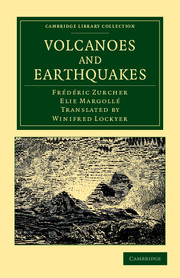
The original French edition of this book appeared in 1866 as part of Hachette's extensive, popularising Bibliothèque des Merveilles series, which included several science titles by Frédéric Zurcher (1816–90) and Elie Margollé (1816–84). Their books were illustrated with attractive wood-cuts, and remained in print until the 1880s; they were also translated into English. This volume was published in London in 1868, and is a good example of popular science publishing in Victorian Britain. The material is organised geographically, beginning in Europe with Vesuvius, Etna and Icelandic volcanoes including Hecla, all of which had recently seen major eruptions. The authors quote from eyewitness accounts, and refer to scholarly publications on volcanoes including Darwin (1844) and Scrope (1862), also reissued in the Cambridge Library Collection. Later chapters describe oceanic volcanoes, the Andes, the volcanic zone of New Zealand's North Island, and recently discovered volcanoes such as Mt Erebus in Antarctica.
Alexander von Humboldt (1769–1859), 'the greatest scientific traveller who ever lived' according to Darwin, made groundbreaking contributions to the fields of geography, oceanography, climatology and ecology. In 1804, he returned from a five-year exploration of Latin America with an incredible wealth of specimens and data which provided the foundations for his theories on the natural order. He expounds them in this book, which was printed in German in 1808 before being translated by the geographer Jean-Baptiste Benoît Eyriès (1767–1846) and published in French in 1828. Humboldt does more than provide descriptions of the great features and phenomena of the Earth, ranging from the geological character of immense plains and steppes to the structure and action of volcanoes. He combines a rigorous scientific approach with his emotional and aesthetic responses to the natural world, thereby constructing a true 'philosophy of nature'.
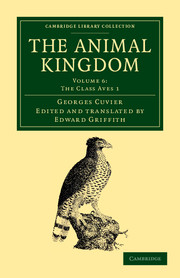
Georges Cuvier (1769–1832), made a peer of France in 1819 in recognition of his work, was perhaps the most important European scientist of his day. His most famous work, Le Règne Animal, was published in French in 1817; Edward Griffith (1790–1858), a solicitor and amateur naturalist, embarked on in 1824, with a team of colleagues, an English version which resulted in this illustrated sixteen-volume edition with additional material, published between 1827 and 1835. Cuvier was the first biologist to compare the anatomy of fossil animals with living species, and he named the now familiar 'mastodon' and 'megatherium'. However, his studies convinced him that the evolutionary theories of Lamarck and St Hilaire were wrong, and his influence on the scientific world was such that the possibility of evolution was widely discounted by many scholars both before and after Darwin. Volume 6 is the first of three books on birds.
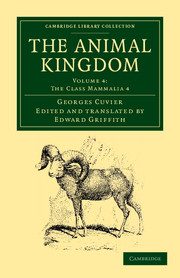
Georges Cuvier (1769–1832), made a peer of France in 1819 in recognition of his work, was perhaps the most important European scientist of his day. His most famous work, Le Règne Animal, was published in French in 1817; Edward Griffith (1790–1858), a solicitor and amateur naturalist, embarked on in 1824, with a team of colleagues, an English version which resulted in this illustrated sixteen-volume edition with additional material, published between 1827 and 1835. Cuvier was the first biologist to compare the anatomy of fossil animals with living species, and he named the now familiar 'mastodon' and 'megatherium'. However, his studies convinced him that the evolutionary theories of Lamarck and St Hilaire were wrong, and his influence on the scientific world was such that the possibility of evolution was widely discounted by many scholars both before and after Darwin. Volume 4 is the last of four books on mammals.
First published in 1880, this study of the biology and geography of islands investigates some of the most pressing questions of nineteenth-century natural science. Why do countries as far-flung as Britain and Japan share similar flora and fauna when those of neighbouring islands in Malaysia are utterly unalike? What is the origin of life in New Zealand? And why do the geological formations of Scotland and Wales appear to be the result of glaciers when those countries lie in the temperate zone? Dismissing popular theories of submerged continents and 'special creation', Alfred Russel Wallace (1823–1913) presents extensive evidence of the mass migration of species, and of drastic and repeated climatic changes across the globe. Drawing on a vast range of sources and the newest ocean soundings to support his theories, Wallace wrote the text for the intelligent general reader. It remains a fascinating introduction to the subject matter today.
Among the widely agreed facts of physics in the late nineteenth century was the existence of luminiferous ether: the medium through which light was thought to travel. Theorised to be a highly rarefied substance, the ether accounted for the movement of light, gravity and even heat across a vacuum. It also had great implications for spiritualism. Where thought was not proven to be a result of chemistry in the brain, the presence of ether allowed for the idea that cognition and emotion might exist independently of a physical body. First published in 1925, this monograph by the eminent physicist and ether advocate Sir Oliver Lodge (1851–1940) was written for the non-scientific reader. With a focus on straightforward explanations rather than mathematical theory, his book still represents a fascinating introduction to the topic today.
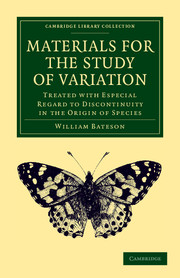
Building on the work of Darwin and Mendel, the biologist William Bateson (1861–1926) was the first scientist to combine the study of variation, heredity and evolution, and to use the term 'genetics'. This book was first published in 1894 after many years of experimental and theoretical work - particularly in the embryology of the acorn worm genus Balanoglossus - which had been guided by the principle that embryonic developmental stages replay the evolutionary transitions of adult forms of an organism's ancestors. Bateson was the first to challenge this theory, which made him unpopular among the scientific establishment of the time, but he was proved right. Organising his material by anatomical sections, Bateson explores speciation, phylogeny and discontinuous and continuous variation among a wide range of species, including vertebrates, invertebrates and plants. This pioneering work offers great insight into how the study of genetics and inheritance itself evolved.
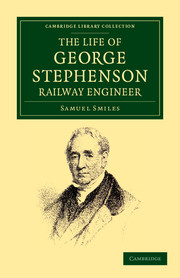
A political and social reformer, Samuel Smiles (1812–1904) was also a noted biographer in the Victorian period, paying particular attention to engineers. His first biography was of George Stephenson (1781–1848), whom he met at the opening of the North Midland Railway in 1840. After Stephenson died, Smiles wrote a memoir of him for Eliza Cook's Journal. With the permission of Stephenson's son, Robert, this evolved into the first full biography of the great engineer, published in 1857 and reissued here in its revised third edition. This detailed and lively account of Stephenson's life, which proved very popular, charts his education and youth, his crucial contribution to the development of Britain's railways, and his relationships with many notables of the Victorian world. It remains of interest to the general reader as well as historians of engineering, transport and business.
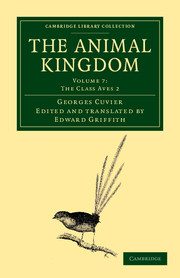
Georges Cuvier (1769–1832), made a peer of France in 1819 in recognition of his work, was perhaps the most important European scientist of his day. His most famous work, Le Règne Animal, was published in French in 1817; Edward Griffith (1790–1858), a solicitor and amateur naturalist, embarked on in 1824, with a team of colleagues, an English version which resulted in this illustrated sixteen-volume edition with additional material, published between 1827 and 1835. Cuvier was the first biologist to compare the anatomy of fossil animals with living species, and he named the now familiar 'mastodon' and 'megatherium'. However, his studies convinced him that the evolutionary theories of Lamarck and St Hilaire were wrong, and his influence on the scientific world was such that the possibility of evolution was widely discounted by many scholars both before and after Darwin. Volume 7 is the second of three books on birds.
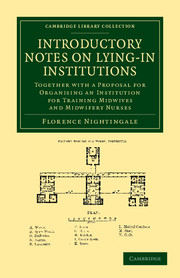
The greatest postnatal killer of the nineteenth century was puerperal fever. A vicious and usually fatal form of septicaemia, puerperal or childbed fever was known to occur in maternity hospitals far more frequently than at home births, and to spread faster in crowded wards than in those with fewer patients. Its cause was unknown. In this precise statistical analysis of the facts, gathered from several sources across the major cities of Europe, Florence Nightingale (1820–1910) explores the mystery of puerperal fever and its possible causes. She stresses the necessity of good ventilation in hospitals, condemning those with overcrowded wards, and cites instances where the layout of wards has a noticeable correlation with the number of deaths. Published in 1871, just before Pasteur's work on germ theory proved that the problem could be all but eradicated if doctors washed their hands more rigorously, this work remains clear, scholarly and engaging.
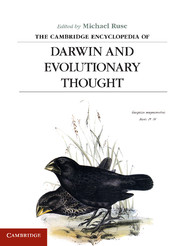
This volume is a comprehensive reference work on the life, labors and influence of the great evolutionist Charles Darwin. With more than sixty essays written by an international group representing the leading scholars in the field, this is the definitive work on Darwin. It covers the background to Darwin's discovery of the theory of evolution through natural selection, the work he produced and his contemporaries' reactions to it, and evaluates his influence on science in the 150 years since the publication of On the Origin of Species. It also explores the implications of Darwin's discoveries in religion, politics, gender, literature, culture, philosophy and medicine, critically evaluating Darwin's legacy. Fully illustrated and clearly written, it is suitable for scholars and students as well as the general reader. The wealth of information it provides about the history of evolutionary thought makes it a crucial resource for understanding the controversies that surround evolution today.
In his study of optics, Newton postulated that light, like sound, must be carried through a medium, and that this medium must exist even in a vacuum. By the late nineteenth century, this theoretical substance was known as the luminiferous ether. But the ether theory faced several problems. If the earth moved through ether, there would be ether wind, and light travelling against the flow would move more slowly than light travelling with it. That was soon disproven. Nor could the ether be stationary: by 1905, Einstein's work on relativity had disproven absolute motion. In this fascinating advocacy of ether, first published in 1933, Sir Oliver Lodge (1851–1940) fiercely defends ether against the new physics, arguing for solid models over mathematical abstractions, and urging new ether experiments. With in-depth references to Einstein, Jeans and Eddington, this book is still relevant to students in the history of science.
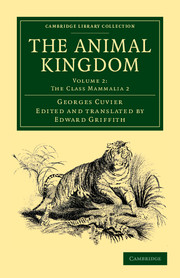
Georges Cuvier (1769–1832), made a peer of France in 1819 in recognition of his work, was perhaps the most important European scientist of his day. His most famous work, Le Règne Animal, was published in French in 1817; Edward Griffith (1790–1858), a solicitor and amateur naturalist, embarked on in 1824, with a team of colleagues, an English version which resulted in this illustrated sixteen-volume edition with additional material, published between 1827 and 1835. Cuvier was the first biologist to compare the anatomy of fossil animals with living species, and he named the now familiar 'mastodon' and 'megatherium'. However, his studies convinced him that the evolutionary theories of Lamarck and St Hilaire were wrong, and his influence on the scientific world was such that the possibility of evolution was widely discounted by many scholars both before and after Darwin. Volume 2 is the second of four books on mammals.
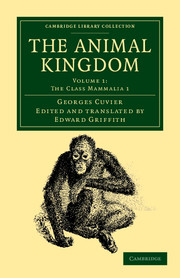
Georges Cuvier (1769–1832), made a peer of France in 1819 in recognition of his work, was perhaps the most important European scientist of his day. His most famous work, Le Règne Animal, was published in French in 1817; Edward Griffith (1790–1858), a solicitor and amateur naturalist, embarked on in 1824, with a team of colleagues, an English version which resulted in this illustrated sixteen-volume edition with additional material, published between 1827 and 1835. Cuvier was the first biologist to compare the anatomy of fossil animals with living species, and he named the now familiar 'mastodon' and 'megatherium'. However, his studies convinced him that the evolutionary theories of Lamarck and St Hilaire were wrong, and his influence on the scientific world was such that the possibility of evolution was widely discounted by many scholars both before and after Darwin. Volume 1 is the first of four books on mammals.
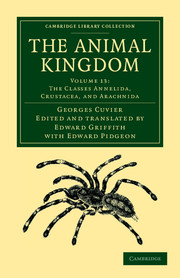
Georges Cuvier (1769–1832), made a peer of France in 1819 in recognition of his work, was perhaps the most important European scientist of his day. His most famous work, Le Règne Animal, was published in French in 1817; Edward Griffith (1790–1858), a solicitor and amateur naturalist, embarked on in 1824, with a team of colleagues, an English version which resulted in this illustrated sixteen-volume edition with additional material, published between 1827 and 1835. Cuvier was the first biologist to compare the anatomy of fossil animals with living species, and he named the now familiar 'mastodon' and 'megatherium'. However, his studies convinced him that the evolutionary theories of Lamarck and St Hilaire were wrong, and his influence on the scientific world was such that the possibility of evolution was widely discounted by many scholars both before and after Darwin. Volume 13 covers annelids, crustaceans and arachnids.
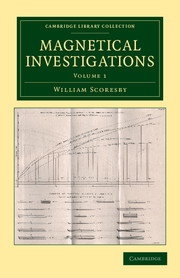
Published between 1839 and 1852, this two-volume work records the contribution of William Scoresby (1789–1857) to magnetic science, a field he considered one of 'grandeur'. The result of laborious investigations into magnetism and (with James Prescott Joule) electromagnetism, Scoresby's work was particularly concerned with improving the accuracy of ships' compasses. A whaler, scientist and clergyman, he epitomised the contribution which could be made to exploration and science by provincial merchant mariners - men often less celebrated than their counterparts in the Royal Navy or in metropolitan learned societies. In addition to his pioneering work on magnetic science, Scoresby furthered knowledge of Arctic meteorology, oceanography and geography. Volume 1 considers the magnetism of steel and suggests ways to determine its quality and hardness.
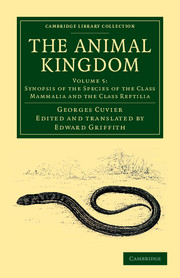
Georges Cuvier (1769–1832), created a peer of France in 1819 in recognition of his work, was perhaps the most important European scientist of his day. His most famous work, Le Règne Animal, was published in French in 1817; Edward Griffith (1790–1858), a solicitor and amateur naturalist, embarked on in 1824, with a team of colleagues, an English version which resulted in this illustrated sixteen-volume edition with additional material, published between 1827 and 1835. Cuvier was the first biologist to compare the anatomy of fossil animals with living species, and he named the now familiar 'mastodon' and 'megatherium'. However, his studies convinced him that the evolutionary theories of Lamarck and St Hilaire were wrong, and his influence on the scientific world was such that the possibility of evolution was widely discounted by many scholars both before and after Darwin. Volume 5 is an overview of mammals and reptiles.
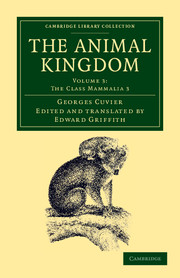
Georges Cuvier (1769–1832), made a peer of France in 1819 in recognition of his work, was perhaps the most important European scientist of his day. His most famous work, Le Règne Animal, was published in French in 1817; Edward Griffith (1790–1858), a solicitor and amateur naturalist, embarked on in 1824, with a team of colleagues, an English version which resulted in this illustrated sixteen-volume edition with additional material, published between 1827 and 1835. Cuvier was the first biologist to compare the anatomy of fossil animals with living species, and he named the now familiar 'mastodon' and 'megatherium'. However, his studies convinced him that the evolutionary theories of Lamarck and St Hilaire were wrong, and his influence on the scientific world was such that the possibility of evolution was widely discounted by many scholars both before and after Darwin. Volume 3 is the third of four books on mammals.
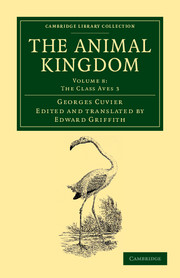
Georges Cuvier (1769–1832), made a peer of France in 1819 in recognition of his work, was perhaps the most important European scientist of his day. His most famous work, Le Règne Animal, was published in French in 1817; Edward Griffith (1790–1858), a solicitor and amateur naturalist, embarked on in 1824, with a team of colleagues, an English version which resulted in this illustrated sixteen-volume edition with additional material, published between 1827 and 1835. Cuvier was the first biologist to compare the anatomy of fossil animals with living species, and he named the now familiar 'mastodon' and 'megatherium'. However, his studies convinced him that the evolutionary theories of Lamarck and St Hilaire were wrong, and his influence on the scientific world was such that the possibility of evolution was widely discounted by many scholars both before and after Darwin. Volume 8 is the third of three books on birds.