To save content items to your account,
please confirm that you agree to abide by our usage policies.
If this is the first time you use this feature, you will be asked to authorise Cambridge Core to connect with your account.
Find out more about saving content to .
To save content items to your Kindle, first ensure no-reply@cambridge.org
is added to your Approved Personal Document E-mail List under your Personal Document Settings
on the Manage Your Content and Devices page of your Amazon account. Then enter the ‘name’ part
of your Kindle email address below.
Find out more about saving to your Kindle.
Note you can select to save to either the @free.kindle.com or @kindle.com variations.
‘@free.kindle.com’ emails are free but can only be saved to your device when it is connected to wi-fi.
‘@kindle.com’ emails can be delivered even when you are not connected to wi-fi, but note that service fees apply.
Originally published in 1981, this generously illustrated volume marked the 150th anniversary of the acquisition by the University of Cambridge of the site for its 'New Botanic Garden'. Written by a distinguished authority on British and European plants, the book honours the eminent scientists and key ideas that have been most influential not only in the history of the Botanic Gardens but also in guiding the development of botany itself from the foundations laid by John Ray in the mid-seventeenth century. It also includes rarely seen archival material . The core theme of the book is whole-plant botany, as distinct from cell biology or the study of the 'lower plants' (bacteria and fungi). Relatively little emphasis is given to genetics, plant physiology or ecology. The reader is nevertheless richly rewarded by this engaging and erudite account of Cambridge botany over more than three centuries.
Charles Darwin (1809–1882) first published this work in 1868 in two volumes. The book began as an expansion of the first two chapters of On the Origin of Species: 'Variation under Domestication' and 'Variation under Nature' and it developed into one of his largest works; Darwin referred to it as his 'big book'. In volume 2, concerned with how species inherit particular characteristics, Darwin first published his 'provisional hypothesis' of pangenesis. This theory of 'gemmules' was not met with much acceptance and today is not valuable as scientific explanation, but it was important in laying down the key questions that needed to be answered regarding the processes of genetic inheritance. Darwin also used volume 2 to challenge the theories of evolution by design, expounded by the botanist Asa Gray. Darwin's arguments were some of the very first in a long debate that remains hot today.
Jeans's primary aim with the first edition of his book, originally published in 1904, was to 'develop the theory of gases upon as exact a mathematical basis as possible'. Twenty years later and those theories were being revolutionised by Quantum Theory. In this fourth edition, Jeans does not attempt to avoid the discoveries of this topical science, but rather exposes the many difficulties that classical theory was experiencing, and how those problems disappeared with Quantum Theory. This edition therefore offers a fascinating insight into a field of physics in transition between two great models of physical science.
This collection of essays explores the complex and contested histories of drugs and narcotics in societies from ancient Greece to the present day. The Greek term pharmakon means both medicament and poison. The book shows how this verbal ambivalence encapsulates the ambiguity of man's use of chemically-active substances over the centuries to diminish pain, fight disease, and correct behaviour. It shows that the major substances so used, from herbs of the field to laboratory-produced synthetic medicines, have a healing potential, and have been widely employed both within and outside the medical profession. The boundary lines between use and abuse in society have been powerfully contested, while 'alternative' medicine has often sought to develop milder, purer, or more natural drugs. Clearly, these issues remain unresolved today: some highly addictive and dangerous substances such as cigarettes remain freely available, others are available only on prescription, while others are illegal and the objects of international contraband trade and the targets of 'drugs wars'.
The Home Life of Sir David Brewster, originally published in 1869, records the remarkable life of inventor, physicist, mathematician and astronomer, Sir David Brewster (1781–1868). Written by his daughter, Mrs Margaret M. Gordon, the book is aimed at a non-academic audience, and details the extraordinary life and work of this amazing scientist, who began his studies at Edinburgh University at the age of just twelve, and who is best known for his invention of the kaleidoscope and of the apparatus that initially formed the structure of the core of the lighthouse, and thus his work on the polarization of light. Mrs. Gordon cites Brewster's many activities, including the publication of over 2,000 scientific papers, though she stresses that she has written about her father as the man, and not the scientist. The book will appeal to anyone interested in the life and career of this undoubtedly brilliant Scotsman.
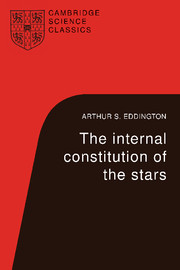
The publication of The Internal Constitution of the Stars by Arthur Eddington in 1926 was a major landmark in the development of modern theoretical astrophysics. Not only did Eddington effectively create the discipline of the structure, constitution, and the evolution of the stars, but he also recognised and established the basic elements of our present understanding of the subject. The influence of the book is indicated by the remark by H. N. Russell in 1945: 'This volume has every claim to be regarded as a masterpiece of the first rank'.
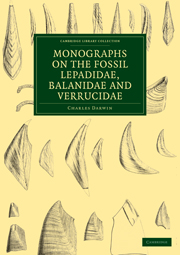
These two short monographs, published under the auspices of the Palaeontographical Society in 1851 and 1854, show Charles Darwin as a meticulous research scientist, poring over fossils collected by himself and other enthusiasts in Britain and in Europe. The first volume is devoted to the Lepadidae, and the second to the Balanidae and Verrucidae (all types of barnacle, members of the infraclass Cirripedia). Darwin's interest in barnacles had first arisen in his student days in Edinburgh, under the guidance of Robert Grant, and increased during his detailed work in dissecting and classifying the specimens he had collected on the Beagle voyage. The publication of his findings cemented his reputation as a expert taxonomist and biologist, and his observations over eight years of the minute differences between males, females and an apparent hermaphroditic stage of development lent support to his developing theory of evolution.
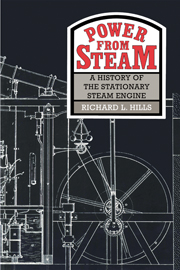
Power from Steam is the first comprehensive history of the steam engine in 50 years, following the development of the reciprocating steam engine. Hills covers its history from its earliest form to the beginning of the twentieth century when it was replaced by the steam turbine. Although the first steam engine was used to pump water, its development really started with the mechanisation of the textile industry. This development is studied closely and the theoretical understanding of its operation is covered. The background of thermodynamics is introduced to show how science and design coupled to produce increasingly more efficient and powerful engines. This book will be indispensable to steam power enthusiasts as well as historians of technology.
This study of the world of scholarship and scholarly texts in the Renaissance, the so-called respublica literaria, affords insights into the intellectual infrastructure and modes of thought of the period by its examination of contemporary attitudes towards women. It addresses the questions: What is the notion of woman to be found in Renaissance texts, and how does it evolve? What is the relationship between the notion of woman and that of sex difference, and how is sex difference related in turn to other differences and to the concept of difference itself? Theology, medicine, ethics, politics, and law are examined in succeeding chapters. The threads of the investigation are then drawn together and Dr Maclean shows how the notion of woman was influenced by both forces of conservatism and forces which fostered change, forces which were to be found both inside the confines of intellectual life and beyond them. The final section offers a context for the understanding of European Renaissance feminism and sketches its connections with social and political evolution, humanist scholarship, religious thought and finally problems of language and expression.
More than half a century has elapsed since the first edition of The Elements of Aerofoil and Airscrew Theory appeared in 1926, a period in which massive advances have been made in the understanding and description of aerodynamic phenomena. Yet Glauert was an acknowledged master of his subject and his book remains the most lucid and best organised introduction to the fundamental principles of aerodynamics that has ever been written. This new paperback edition reprints the text of the second edition of 1947, with supplementary notes by H. B. Squire.
The Elements of MATLAB Style is a guide for both new and experienced MATLAB programmers. It provides a comprehensive collection of standards and guidelines for creating solid MATLAB code that will be easy to understand, enhance, and maintain. It is written for both individuals and those working in teams in which consistency is critical. This is the only book devoted to MATLAB style and best programming practices, focusing on how MATLAB code can be written in order to maximize its effectiveness. Just as Strunk and White's The Elements of Style provides rules for writing in the English language, this book provides conventions for formatting, naming, documentation, programming and testing. It includes many concise examples of correct and incorrect usage, as well as coverage of the latest language features. The author also provides recommendations on use of the integrated development environment features that help produce better, more consistent software.
This a paperback edition of Professor Walker's full-scale examination of the German efforts to harness the economic, military and political power of nuclear fission between 1939 and 1949. The book explains clearly, in terms that the non-specialist can understand, what was involved in the Germans' quest, and in what ways the German scientists succeeded or failed in the development of 'the bomb'.
Michael Faraday (1791–1867) made foundational contributions in the fields of physics and chemistry, notably in relation to electricity. One of the greatest scientists of his day, Faraday held the position of Fullerian Professor of Chemistry at the Royal Institution of Great Britain for over thirty years. Not long after his death, his friend Henry Bence Jones attempted 'to join together his words, and to form them into a picture of his life which may be almost looked upon as an autobiography'. Jones' compilation of Faraday's manuscripts, letters, notebooks, and other writings resulted in this Life and Letters (1870) which remains an important resource for learning more about one of the most influential scientific experimentalists of the nineteenth century. Volume 2 (1831–1867) describes his research on electricity and electromagnetism, his work as a scientific adviser to the government and industry and his service to education.
Joseph Priestley (1733–1804) was an eighteenth-century English polymath with accomplishments in the fields of science, pedagogy, philosophy, and theology. Among his more notable achievements were the discovery of oxygen and his work in establishing Unitarianism. Often a controversialist, Priestley's efforts to develop a 'rational' Christianity and support for the French Revolution eventually made him unwelcome in his native land. His 1807 Memoirs relate the story of his life until the time of his 1794 emigration to America and include other biographical materials written by his son. This second volume contains a lengthy discussion of Priestley's theological writings as well as four of his sermons. Priestley's memoirs are an important source for anyone interested in the state of epistemology, rationalism, and religious belief in the age of the Enlightenment, and in a man who, in the words of his son, 'gave unremitting exertions in the cause of truth'.
This simple and clear guide to lecturing is an example-based account of effective strategies for exciting and successful lectures for academic and business lecturers. From the lecturing mindset, combating fear and nervousness, to lecturing tricks and tactics, this book discusses a wide array of practical ideas that may surprise and help even the most experienced public speakers and lecturers. The author provides unique insights into lecturing for twenty-first century audiences, based on his academic and non-academic lecturing experiences at the University of Toronto and Stanford University; experiences which have resulted in numerous institutional, provincial, and international teaching and lecturing awards. Further resources for this title, including lecture slides and videos of presentations and lectures, are available online from www.cambridge.org/9780521876100.
Statistics is the mathematics of measurement and data. The data might come from measuring the height of a friend, the sizes of fish in a lake, flipping coins, the rate electrons are ejected from a metal illuminated by light, or mathematics test scores of students in Iowa. The tools of statistics are needed whenever the data are partly predictable and partly influenced by factors too complex fully to understand. Statistics makes it possible to summarize the meaning of huge numbers of measurements in a compact form, and to explain the significance of the measurements even when chance makes them uncertain. Two of the main reasons to learn statistics are to deal with measurement error and to be able to describe distributed quantities.
Measurement error
Chapter 2 discussed the fact that almost any attempt to measure values obtains numbers that vary from one trial to the next. It provided recipes for dealing with the variation but no explanation for why the recipes work. This chapter returns to the problem and explains the solutions in more detail.
Suppose you are trying to measure the height of your friend Anne with a ruler. You make the measurement a first time and find she is 1.721 m tall. When you repeat the measurement, the meter stick tilts at a slight angle, and you get 1.722 m. You try again, and she slouches slightly, so you get 1.718 m.
This is an overview of ways to reduce the risk of an accident and to minimize the impact of one if it does occur. The most important part of laboratory safety is the prevention of accidents. However, it is also important to understand how to respond to the various kinds of accidents that can occur in a laboratory setting. You are responsible for reviewing the following rules and following them. The most common laboratory safety equipment is listed below and you are responsible for knowing its location in your laboratory and knowing when and how to use it.
Proper attire Proper laboratory attire includes long pants, close-toed shoes, and shirts that cover the full torso. If you work with any chemicals in the laboratory, you must arrive wearing the appropriate clothing. If not, you may be asked to change clothing before engaging in your experiment, especially if you are using chemicals. Always stand – do not sit – when working with chemicals since in the event of a spill, ability to move out of the way is critical.
Cleanliness and safeness of work area You will always be expected to maintain a clean and uncluttered work area. Be sure to clean and return all materials to the appropriate storage space before leaving the lab. If left unclean and/or cluttered, you will be required to return to the lab on your own time and clean up what you left behind.
The basic outlines of hypothesis-driven research were provided in Section 1.3.1, but when setting out to create an experiment to test a hypothesis, there is much more to consider.
Your experiment should have at least one control or independent variable, and at least one response or dependent variable. The independent variable is something you are sure will change during the course of experimental measurements. The dependent variable is what you will measure, although you may not be sure if it will change. Indeed the point of the experiment may be to determine if it does or does not change. In laboratory experiments it is common to call the independent variable a control variable because you decide upon its value and control it. For example, in an experiment concerning the effect of fertilizer doses on size of tomatoes, you control the concentration of fertilizer given to each plant. In observational research, the independent variable may be something you cannot control. For example, you might conduct a study of tomatoes grown outside and investigate whether they grow faster on hot days than on cool days. In this case, nature will bring you the hot and cold days; you cannot control when they will happen, but you can still study their effects. Experiments are usually better when the investigator controls the independent variable, but this is not always possible.