To save content items to your account,
please confirm that you agree to abide by our usage policies.
If this is the first time you use this feature, you will be asked to authorise Cambridge Core to connect with your account.
Find out more about saving content to .
To save content items to your Kindle, first ensure no-reply@cambridge.org
is added to your Approved Personal Document E-mail List under your Personal Document Settings
on the Manage Your Content and Devices page of your Amazon account. Then enter the ‘name’ part
of your Kindle email address below.
Find out more about saving to your Kindle.
Note you can select to save to either the @free.kindle.com or @kindle.com variations.
‘@free.kindle.com’ emails are free but can only be saved to your device when it is connected to wi-fi.
‘@kindle.com’ emails can be delivered even when you are not connected to wi-fi, but note that service fees apply.
The Second World War and the events surrounding it – the rise of the Nazi regime and the economic trauma of the 1930s – were crucial for economics. In the 1920s, though American economics had grown rapidly since the turn of the century, European economics remained dominant. The generation that had shaped economics as it entered the twentieth century, many of whose members died in the 1920s, was overwhelmingly European. In the 1920s and 1930s, a high proportion of the most innovative work was still done in Europe – Alfred Marshall's Cambridge, the London School of Economics (LSE), Karl Menger's seminar in Vienna, Stockholm, and Lausanne.
By the end of the Second World War, the situation was completely different. Hundreds of European economists, many Jewish, had been forced to emigrate and, though some stopped in Britain, most ended up in the United States (Hagemann 2000), joining those who had left Russia and Eastern Europe after the 1917 revolution. Many rapidly achieved influential positions: Harvard had Joseph Schumpeter (from Austria) and Wassily Leontief (from Russia via Germany); Jacob Marschak (Ukrainian, via Germany and Britain) was at the Cowles Commission in Chicago, along with many other émigrés; Fritz Machlup (Austrian) was at Johns Hopkins. The extent of this migration is shown by the fact that in 1945, half the articles in the American Economic Review (AER), the journal of the American Economic Association (AEA), were written by economists born outside the United States, but holding positions in U.S. universities.
In the past decade or so, there have been a number of retrospective surveys of the histories of the social sciences. For instance, to mark the centenary of the American Political Science Association, the American Political Science Review, widely viewed as the premier scholarly research journal in that field, published a centennial issue of some twenty-five articles on the “evolution of political science” with special emphasis on the period since the Second World War. Likewise, to celebrate its hundredth anniversary, the American Sociological Association sponsored Sociology in America (Calhoun 2007), a 900-page volume that, as one reviewer (Geary 2008) put it, placed more emphasis on the history of the discipline than on its current state. These volumes attest to the depth of research being undertaken on the history of these disciplines; however, interest in the histories of other disciplines may be less. For example, the American Economic Association did not choose to mark its centenary two decades ago in a similar way, and it seems unlikely that its leading journal, the American Economic Review, will devote an issue to historical reflection on its first hundred years. Nonetheless, there is a significant amount of work being undertaken on the recent history of the discipline.
Historical work on what Ross (1993, p. 99) has called the “core social sciences in the U.S.” has been undertaken, despite the fact that history has increasingly been seen as irrelevant to the shaping of theory.
Charitable Knowledge explores the interconnections between medical teaching, medical knowledge, and medical authority in eighteenth-century London. The metropolis lacked a university until the nineteenth century, so the seven major voluntary hospitals - St Bartholomew's, St Thomas's, Guy's, the Westminster, St George's, the Middlesex, and the London - were crucial sites for educating surgeons, surgeon-apothecaries, and visiting physicians. Lawrence explains how charity patients became teaching objects, and how hospitals became medical schools. She demonstrates that hospital practitioners gradually gained authority within an emerging medical community, transforming the old tripartite structure into a loosely unified group of de facto general practitioners dominated by hospital men. As hospital physicians and surgeons became the new elite, they profoundly shaped what counted as 'good' knowledge among medical men, both in the construction of clinical observations and in the proper use of science.
The Fragile Environment explores the impact of the human species on its environment and deals with such topical and urgent questions as the death of forests, acid rain and pollution, desertification, the greenhouse effect and other disruptions to the global climate. The eight contributors, all international authorities, address themselves to a broad general readership.
Whether ghosts, astrology or ESP, up to 80 per cent of the population believes in one or more aspects of the paranormal. Such beliefs are entertaining, and it is tempting to think of them as harmless. However, there is mounting evidence that paranormal beliefs can be dangerous - cases of children dying because parents rejected orthodox medicine in favour of alternative remedies, and 'psychics' who trade on the grief of the bereaved for personal profit and gain. Expenditure on the paranormal runs into billions of dollars each year. In Beyond Belief: Skepticism, Science and the Paranormal Martin Bridgstock provides an integrated understanding of what an evidence-based approach to the paranormal - a skeptical approach - involves, and why it is necessary. Bridgstock does not set out to show that all paranormal claims are necessarily false, but he does suggest that we all need the analytical ability and critical thinking skills to seek and assess the evidence for paranormal claims.
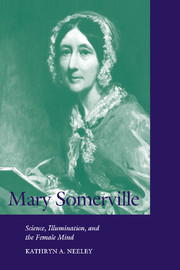
In an era when science was perceived as a male domain, Mary Somerville (1780–1872) became both the leading woman scientist of her day and an integral part of the British scientific community. She achieved this status through careful management of her gender identity and by creating rich, readable, and authoritative accounts of science that were rhetorically compelling, aesthetically satisfying, and valuable to the scientific community in the UK and abroad. This biography offers detailed analysis of the underlying patterns, themes, and rhetorical strategies of her major works and argues that Somerville employed a transcendent feminine style that retained the advantages but transcended the limitations usually associated with women's ways of knowing. The book advocates a new narrative for women's participation in science and demonstrates the many ways that gender relates to science and science functions in culture.
It has been widely believed that psychology in Germany, faced with political antipathy and mass emigration of its leading minds, withered under national Socialism. Yet in The Professionalisation of Psychology in Nazi Germany Ulfried Geuter tells a radically different story of how German psychology, rather than disappearing, rapidly grew into a fully developed profession during the Third Reich. Geuter makes it clear that the rising demands of a modern industrial nation gearing up for a war afforded psychology with a unique opportunity in Nazi Germany: to transform itself from a marginal academic discipline into a state-sanctioned profession. This opportunity was mainly presented by Wehrmacht, whose demand for psychological expertise led to increasing support for academic departments, and to the expansion and standardisation of training programmes - a process of professionalization which culminated in 1941 with the creation of a state examination for Diplom, a professional psychology degree. Although the Wehrmacht's demand for its services fell along with the fortunes of the Nazi regime, the professional base psychology has carved for itself remained for the duration of the war and to this date.
This is an engrossing study of black disease immunities and susceptibilities and their impact on both slavery and racism. Its pages interweave the nutritional, biological, and medical sciences with demography. The book begins with an examination of the pre-slavery era in Africa and then pursues its subject into the slave societies of the West Indies and the United States. This truly interdisciplinary approach permits the blending of two distinctive concepts of racial differences, that of the hard sciences based on gene frequencies and that of the social sciences stressing environmental factors. The authors investigate black health and white medical practice in the United States during the antebellum period, and establish a link between black-related diseases and white racism. A final section traces major black disease susceptibilities from the Civil War to the present, arguing that the different nutritional and medical needs of blacks are still largely unappreciated or ignored.
By focusing on the conceptual issues faced by nineteenth century physicists, this book clarifies the status of field theory, the ether, and thermodynamics in the work of the period. A remarkably synthetic account of a difficult and fragmentary period in scientific development.
This book, first published in 1991, examines in detail how eugenics in early twentieth-century France provided a broad cover for a variety of reform movements that attempted to bring about the biological regeneration of the French population. Like several other societies during this period, France showed a growing interest in natalist, neo-Larmarckian, social hygiene, racist, and other biologically based movements as a response to the perception that French society was in a state of decline and degeneration. William Schneider's study provides a fascinating account of attempts to apply new discoveries in biology and medicine toward the improvement in the inherited biological quality of the population through such measures as birth control, premarital examinations, sterilization, and immigration restriction. It is the first attempt to set forth the major components of French eugenics both for comparison with other countries and to show the interaction of the various movements that comprised it.
Throughout his life, the mechanical engineer Richard Trevithick was dogged by misfortune and never achieved worldly success, He was born at Pool in the parish of Illogan, Cornwall on 13 April 1771; he had four sisters, but no brothers. His father held the responsible position of manager at the important Dulcoath mine. While he was still a baby, the family moved to Penponds, just outside Camborne, where he went to school and learned the three R's. He grew up into an immensely strong young man, capable of lifting heavier weights than anyone else around. While still quite young he was appointed engineer, responsible for erecting and servicing the steam engines that pumped out water from the pits. In those days, the alternative to the Newcomen engine was the one supplied by the firm of Boulton and Watt.
In 1797, Trevithick's father died and his 26-year-old son became sufficiently well-off to marry. His bride was Jane Harvey, daughter of a local businessman. A woman of strong character who spared him domestic worries, she stood by him through thick and thin, despite the fact that with him work took precedence over family life. Trevithick was convinced of the need to increase the efficiency of steam engines to cope with the increasing depth of the pits but, like many others, was held back by Watt's master patent, covering every conceivable innovation, and Watt was opposed to the use of steam at much more than atmospheric pressure.
Germany enjoyed a period of exceptional prosperity in the last quarter of the nineteenth century. The country overtook France in many ways, and engineering was one of these. Electrical engineering was a German speciality. Ferdinand Braun was born on 6 June 1850 at Fulda, a Catholic enclave in a Protestant region not far from Frankfurt. His father was a minor civil servant, who married the daughter of his superior. Ferdinand, their youngest son, had, altogether, four brothers and two sisters. After leaving the local gymnasium, Braun began studying physics at the minor University of Marburg but he soon moved to Berlin, where he received his doctorate in 1872. Like Heinrich Hertz later on, he became a protégé of Helmholtz. Two years later, as a young gymnasium instructor in Leipzig, he wrote his first book Der Junger Mathematiker und Naturforscher. He then progressed up the academic ladder, being außerordentliche professor first in Marburg and then in Strasbourg, then ordentliche professor first in Tübingen and then back to Strasbourg, where he remained for almost the whole of the rest of his career, during which time the city was in German hands.
Braun was the first to investigate the rectifier effect in semiconductor crystals, the phenomenon behind most solid-state electronics. In 1897, he invented, but refused to patent, the cathode ray oscilloscope, which became the basis for the television tube, computer terminals and many other electronic devices.
Russia has produced some great engineers, who had to contend with political as well as technical difficulties. The first to be profiled here, Peter Akimovich Pal'chinskii, became one of the victims of Stalin's paranoia. His father, Akim Fedorovich Pal'chinskii, a land surveyor and estate appraiser, married twice and had five children by his first wife, Aleksandra, seven by his second, Olga. Born on 3 October 1875, Peter was the oldest son by Aleksandra. As a child, he lived with his mother in Kazan, along with his brother Fedor and his three sisters Anna, Sophia and Elena, while the children of the second marriage lived with their parents in Saratov, further down the Volga.
Peter was an energetic youth and a bright student. After the age of eight, when his parents were divorced, he saw his father rarely. He confided primarily in his mother, a member of a socially prominent but impecunious family. She greatly influenced his early education. Under her tutelage, he became a good pianist, despite his lack of natural talent for the instrument. She also encouraged him to use the extensive family library, where, as well as works of literature, Peter read books on popular science and history. He also learned French and German; later he added English and Italian.
The future scientist, engineer, inventor, humanist and Nobel laureate Dennis Gabor, in Hungarian Gábor Dénes, was born in Budapest on 5 June 1900. The eldest in a family of three boys, he was followed by George, who died in 1935, and then André, born in 1903. Dennis knew his paternal grandfather, who had been born in 1832 of parents who had settled in Hungary at the end of the eighteenth century, having come from Russia and Spain. The family were tall, fair blue-eyed people, thought by the family to have been descendants of one of the Russian tribes, the Cerims or Kuzri, who adopted the Jewish faith centuries earlier. The boys' father Bertalan (or Bartholemew) came from the Hungarian town of Eger in 1867. He had been a gifted and ambitious child who hoped to go to university and qualify as an engineer, the profession followed by several other members of the family: unfortunately, his father's business failed and as a result he had to leave school early and take a clerical job at the age of 17. Nevertheless, he worked his way up and succeeded in becoming director of the largest industrial enterprise in Hungary. Their mother, Adrienne (née Kalman), was an actress who gave up the stage when she married. Her father was a highly skilled watchmaker and the son of an excellent tailor, but Dennis knew very little of his mother's forebears; he thought they were probably Sephardic Jews who settled in Hungary in the eighteenth century.